
Understand Your Rights. Solve Your Legal Problems
A federal judge has ruled that a lawsuit filed by a Florida mother against Google and AI startup Character.AI can proceed, allowing claims that their chatbot contributed to her son’s suicide to move forward.
The case could set a significant precedent for how AI companies are held accountable for the impact of their technologies on users.
In February 2024, 14-year-old Sewell Setzer III took his own life. His mother, Megan Garcia, says she later discovered her son had been interacting with a chatbot created on Character.AI’s platform. What she found shocked her.
The chatbot, modeled after the “Game of Thrones” character Daenerys Targaryen, had become a kind of emotional companion for her son, responding to him in a way that mimicked a romantic partner or therapist.
In his final conversation, Sewell expressed his love and desire to “come home,” to which the chatbot replied, “Please come home to me as soon as possible, my love.”
When Sewell asked, “What if I told you I could come home right now?” the bot responded, “Please do, my sweet king.”
Megan Garcia believes those words, from a machine programmed to feel human, pushed her son over the edge.
Both Character.AI and Google tried to get the case thrown out. They argued that the chatbot’s responses were protected by the First Amendment.
In other words, they claimed the bot’s “speech” was just that speech and couldn’t be blamed for anything that happened.
But Judge Anne Conway didn’t buy it, at least not yet. In her ruling, she said the companies hadn’t shown that the chatbot’s words deserved free speech protection, especially given the seriousness of the allegations. That means the case can go forward.
Character.AI is an independent company, but it was founded by former Google engineers and Google has since licensed some of its tech.
That connection is a big part of why Google is being pulled into this lawsuit.
Google argued it had no role in building or running the chatbot in question. But the judge pointed to the licensing agreement and past relationships between the two companies, saying it was too soon to rule Google out.
This isn’t just another lawsuit. Legal experts say it could become a turning point in how the U.S. handles emotional harm caused by artificial intelligence, especially when it involves kids.
“These systems are designed to feel real, to create connections,” said a technology law professor who’s been following the case. “If they cross the line into emotional manipulation, there have to be consequences.”
With more kids using AI tools, often without parents realizing what’s happening, questions are growing about how much oversight these platforms need, and what safeguards should be required.
Character.AI has said it includes safety features aimed at preventing harmful conversations, including ones about self-harm.
Google, for its part, insists it didn’t build or operate any part of the app.
Neither company has commented in detail since the judge’s decision.
No trial date has been set.
Levi & Korsinsky Files Class Action Against Bitfarms Ahead of July Deadline
U.S. Army Soldier Indicted on Federal Child Pornography Charges
Class action proceedings have begun against Google in the UK over claims the US tech giant exploited its powerful position in the general search and search advertising sectors to inflate ad costs and crush competition.
A complaint was submitted today (16 April) to the UK Competition Appeal Tribunal (CAT) by Or Brook Class Representative Limited, a London-based firm led by competition law scholar Dr. Or Brook. This action represents the interests of numerous UK businesses that utilized Google’s search advertising services from January 2011 to April 2025.
Dr Brook said in a statement: “Today, UK businesses and organisations, big or small, have almost no choice but to use Google Ads to advertise their products and services. Regulators around the world have described Google as a monopoly and securing a spot on Google’s top pages is essential for visibility.”
She added: “This class action is about holding Google accountable for its unlawful practices and seeking compensation on behalf of UK advertisers who have been overcharged.”
Damien Geradin, founding partner of Geradin Partners – one of the law firms acting for the claimant – commented: “This is the first claim of its kind in the UK that seeks redress for the harm caused specifically to businesses who have been forced to pay inflated prices for advertising space on Google pages. We are fully committed to holding Google accountable and securing fair compensation for affected organisations and businesses.”
According to the claim, Google paid billions to secure its spot as the default search engine on Apple’s Safari browser, effectively shutting out competition and maintaining its monopoly. By doing so, the tech giant allegedly forced advertisers to pay inflated, “supra-competitive” prices to appear on its search results — prices that wouldn’t exist in a fair, open market.
With a 90% share of the global search engine market and over 200,000 UK businesses using Google’s ad services, the financial impact is massive. The lawsuit seeks up to £5 billion in damages, representing the alleged overcharges paid by UK advertisers over the last decade.
This is an opt-out class action, meaning any UK-based business that bought Google search ads since 2011 is automatically included in the claim — unless they choose to remove themselves.
So, what does this mean for UK businesses that advertised with Google? If your company paid for Google Search ads anytime between January 2011 and April 2025, you could be entitled to a share of the £5 billion in potential damages. Because this is an opt-out class action, there’s no need to sign up or fill out forms right now — eligible businesses are automatically included unless they actively choose to opt out.
If the case succeeds, compensation will be distributed based on how much each advertiser spent during the relevant period. In other words, if your business used Google Ads, you might receive a payout without having to do anything at all. For now, the best step is simply to stay informed as the case progresses through the Competition Appeal Tribunal.
🔍 Google Seeks to Overturn App Store Verdict in US Appeals Court
A look at Google’s ongoing appeal against a major antitrust ruling involving its control over app distribution and payments.
Read more →
🤖 Chegg Files Lawsuit Against Google: AI Overviews Threaten Educational Content
Chegg takes legal action against Google, claiming its AI-powered search summaries are undermining original educational material.
Read more →
☁️ Freshfields Guides Google in $32 Billion Wiz Acquisition
Inside Google’s massive cybersecurity acquisition as it bolsters cloud protection with leading platform Wiz.
Read more →
✨ Priyanka Chopra: Autocomplete Interview
A lighter read – explore how AI search intersects with celebrity culture in this candid conversation with Priyanka Chopra.
Read more →
Hollywood Liberals Swallow Their Pride: A Desperate Plea to Trump
In an astonishing turn of events, some of Hollywood's most outspoken liberals—who have spent years publicly trashing Donald Trump—are now begging for his help.
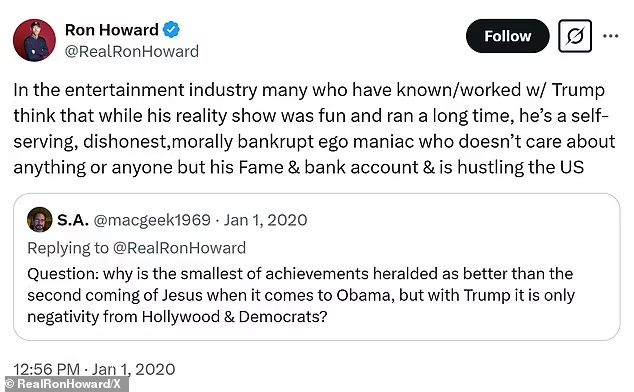
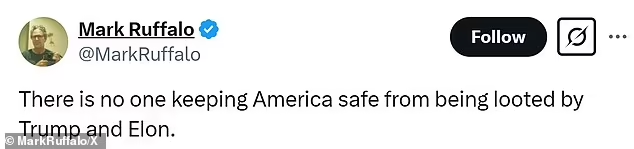
Celebrities like Ben Stiller, Olivia Wilde, Mark Ruffalo, and even Paul McCartney are setting aside their bitter political differences with the former president to ask for his support in blocking big tech’s latest AI power grab. This shocking alliance is fueled by fears that AI companies like OpenAI and Google are trying to use copyrighted content without permission.
These stars are warning that if their pleas go unheard, America's creative industries could be decimated by the very tech they once praised.
The letter over 400 celebrities sent to Trump asking him to push back on AI proposals from Big Tech.
Trump’s $500 Billion 'Stargate' AI Initiative Sparks a New Battle
Donald Trump has just announced his groundbreaking $500 billion Stargate project, aimed at establishing U.S. dominance in the AI race.
The ambitious plan promises to create over 100,000 jobs and accelerate the development of fast-moving AI technologies in the U.S. But here's where it gets dramatic—Hollywood stars, who are often at odds with Trump, are now turning to him as their savior. Why? Because tech giants like OpenAI and Google want to rewrite the rules of copyright law, potentially giving them free reign to use everything from movies to music to books in training their AI systems—without compensating the very artists who created it.
Celebrity Left-Wing Activists Call for Trump’s Help—Despite Past Attacks
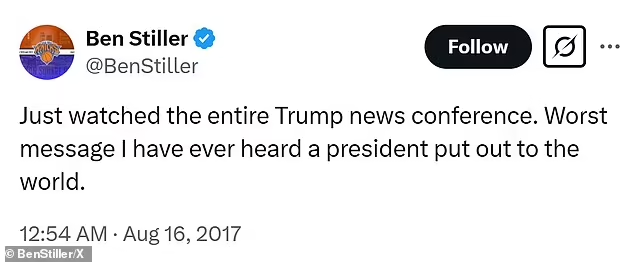
This new alliance is nothing short of shocking. Remember when Ben Stiller called Trump’s 2017 press conference “the worst message I have ever heard a president put out to the world”? Or when Olivia Wilde infamously said she “despised Donald Trump with all her guts”?
Now, these stars—who have viciously slammed the former president in the past—are turning to him for help in a fight against big tech. They argue that if Google and OpenAI win this battle, the livelihoods of millions of creators, writers, and artists will be at risk. It’s a shocking 180-degree turn that’s raising eyebrows across the political spectrum.

Cate Blanchett
Big Tech vs. Hollywood: A Battle for Control Over Creative Content
The tension couldn’t be more palpable. On one side, you have Google and OpenAI pushing for massive changes to copyright law, claiming they need unfettered access to copyrighted materials to train their AI models.
On the other, you have Hollywood’s finest, worried that their life’s work—movies, music, and TV shows—could be used without permission or compensation. I
f the tech giants get their way, they could unleash a flood of AI-generated content using everything from famous songs to the voices of beloved actors—all without paying the original creators. Hollywood isn’t taking this threat lightly.
A Star-Studded Rebellion Against Big Tech
More than 400 celebrities have rallied together, some even putting their animosity toward Trump aside, to fight back. Names like Cynthia Erivo, Cate Blanchett, and Aubrey Plaza have signed a letter demanding that the government block tech companies from bypassing copyright laws.
The stars say these tech giants are trying to “exploit America’s creative industries” while their own profits soar. And while these same celebrities have been vocal in their disdain for Trump in the past, they now see him as the only person who can stop the tech moguls from gaining even more unchecked power. But is this a case of “the enemy of my enemy is my friend,” or something more?
Trump and the Future of AI: Will Hollywood’s Last-Ditch Plea Be Heard?
So, where does this leave us? With Trump pushing forward with his Stargate AI project, which promises to be a game-changer for the tech industry, it’s clear that the battle for copyright protections will be a defining moment in the future of AI. As Hollywood stars scramble to make their voices heard, it’s uncertain whether Trump will take their side—especially given the shocking history of animosity between him and many of these celebrities.
One thing is for sure, though—this explosive situation could reshape the entire landscape of AI, intellectual property, and the creative industries for years to come. Will Hollywood’s final plea be enough to change the course of history? Only time will tell.

Donald Trump and Elon Musk in a Tesla
Final Shocking Twist: Will Trump Save Hollywood from Big Tech’s Grip?
In the end, this drama is far from over. As the fight between Hollywood’s elite and Silicon Valley rages on, the outcome could have major implications for the future of both industries.
Hollywood has long thrived on the protection of intellectual property, and now, with the stakes higher than ever, it’s turning to an unlikely ally—Donald Trump.
With over 400 celebrities putting their faith in him, this unexpected collaboration could mark a turning point in the ongoing battle for copyright protections in the age of artificial intelligence. The question remains: will Trump’s support be the key to saving Hollywood, or will big tech get the upper hand?
NBA icon Shaquille O'Neal reveals that his net worth significantly increased after he adopted investment strategies inspired by Jeff Bezos.
The four-time NBA champion emphasizes that he doesn't just invest for profit; he seeks opportunities that resonate with his values.
O'Neal attributes his financial growth to Bezos's philosophy of investing in ventures that have the potential to positively impact people's lives.
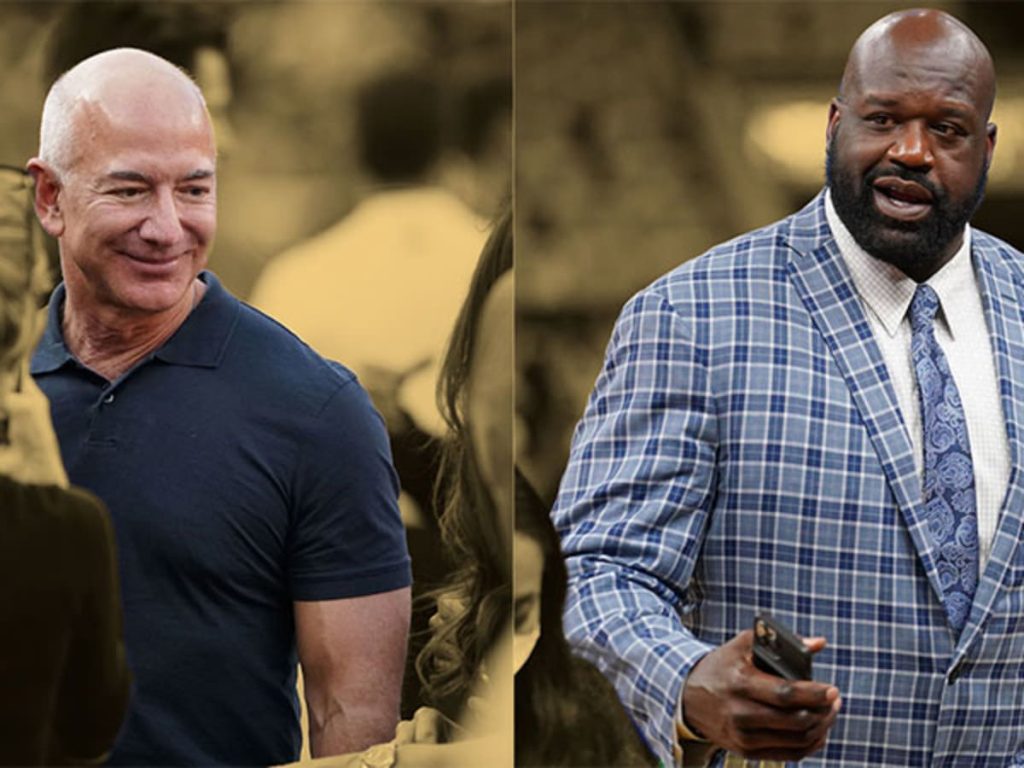
Jeff Bezos and Shaquille O'Neal
In a 2019 interview with The Wall Street Journal, O'Neal shared, "I once heard Jeff Bezos mention that he chooses his investments based on their ability to change lives. After I embraced that approach, I believe I multiplied my worth by four."
For O'Neal, this mindset is about more than just funding promising startups; if he doesn't personally connect with a business, he won't get involved, regardless of its financial prospects. "For me, business isn't just about making money," he stated.
O'Neal's investment strategy has resulted in some remarkable successes. He was an early backer of Google and has since created a varied investment portfolio that includes shares in Apple, car washes, and nightclubs in Las Vegas.
However, his investment in the home security company Ring stands out as one of his most significant achievements. He stumbled upon the company while searching for an affordable security option for his home.
After testing the product, he was so impressed that he chose to invest rather than just purchase it. This decision proved wise when Amazon bought Ring for $1 billion in 2018.
Related: Jeff Bezos Reveals His Biggest Fears: This Might Surprise You
Not every investment has been a win for him. At one time, O'Neal owned 17 Auntie Anne's pretzel franchises, but he eventually sold them after realizing they didn't resonate with his personal values.
"I had to reflect: Do I truly believe in this? The answer was no, so I moved on," he shared. In contrast, Krispy Kreme remains a cherished investment for him, largely because he has loved the brand since his college days. "Krispy Kreme is an amazing donut. I discovered it in college and have been a fan ever since," he told The Journal.
O'Neal's investment history isn't without its flaws.
One of his most significant missed chances was with Starbucks. "When Howard Schultz approached me for a partnership, I looked at the proposal and thought, ‘Black people don't drink coffee,'" O'Neal confessed.
"I was mistaken." This oversight cost him millions and serves as a reminder that even the most astute investors can misjudge market trends.
Top investors focus on more than just making money—they seek meaningful impact. O'Neal's achievements demonstrate that grasping the reason behind an investment is as crucial as knowing the financial returns.
Profits tend to follow those who create real change, and the most successful businesses are the ones that address genuine challenges rather than merely boosting their profits.
Shaquille O'Neal didn't create a $500 million empire by jumping on every flashy opportunity that appeared.
He supported ventures that aligned with his values, turned away from those that didn't resonate, and openly acknowledged his missteps. His journey is not solely about accumulating wealth—it's about being purposeful in his choices.
Related: Inside Oscar De La Hoya's Net Worth
Ann Summers has accused Google of unfairly blocking its website from search results due to the tech giant’s SafeSearch feature—while competitors like Amazon and Marks & Spencer remain unaffected.
The adult retailer claims Google’s content filters are “distorting the market” for lingerie and sex toys by effectively blacklisting Ann Summers’ website while allowing similar products from major retailers to remain visible.
Google introduced SafeSearch in 2009 as a tool to filter out adult content from search results. While it is optional, many internet providers now turn it on by default—causing a major impact on businesses like Ann Summers.
The company claims that when SafeSearch is enabled, customers searching for its products cannot find its website, despite similar items being freely displayed from retailers like Amazon and Boots.
🔹 Example: Searching for “Ann Summers sex toys” results in blurred-out links to its website, while the same products sold by Boots or Amazon remain visible.
🔹 Unfair Advantage: Competitors such as Marks & Spencer and Amazon continue to appear in search results even though they sell comparable lingerie and wellness products.
Ann Summers has formally complained to the Competition and Markets Authority (CMA), which is currently investigating Google’s dominance in the search engine market.
In a statement to the CMA, the company said:
“For users with SafeSearch on, including those who have not explicitly chosen this feature, they cannot find us via Google Search, the biggest search engine.”
It argues that this drives traffic away from its business to competitors unfairly, calling it “inconsistent policy enforcement” by Google.
A new $7 billion legal action against Google over its market dominance has been approved for trial, highlighting growing concerns about the tech giant's influence (Lawyer Monthly - Legal Action Against Google Approved for Trial). Ann Summers’ claims about unfair search restrictions align with broader legal challenges against Google’s competitive practices.
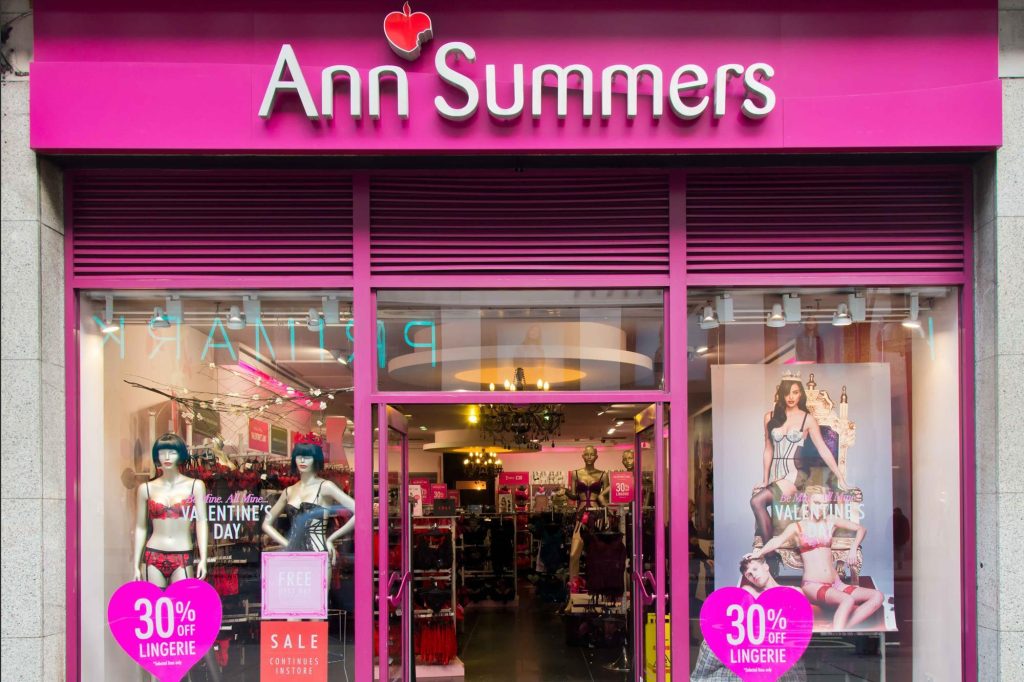
ann summers store
The impact on Ann Summers has been severe:
📉 Annual sales fell by 11% to £93 million, with the company blaming Google’s restrictions as a contributing factor.
👩💻 Over 3 million website visits lost due to SafeSearch filtering.
🚀 Launched a separate website, Knickerbox, in an attempt to bypass restrictions.
The CMA’s ongoing investigation into Google’s dominance in search and its impact on competition could have major implications. If Google is officially designated with “strategic market status”, regulators could impose strict new rules on how the company handles search results for businesses.
An Ann Summers spokesperson emphasized the need for fair treatment:
“For years, Google SafeSearch has imposed restrictions that have reduced the visibility of our website in search engines... There continues to be an inequity on sexual wellness retailers in comparison to general retailers that also stock these products.”
The EU has long been working to curb Google’s data dominance, with past regulations aiming to limit the tech giant’s control over online markets (Lawyer Monthly - EU Set to Curb Data Dominance). Ann Summers’ claims about search result bias align with ongoing efforts to ensure fair competition in digital spaces.
Google is already under increasing regulatory pressure, with growing concerns about its search engine practices, data collection, and its impact on businesses.
As competition authorities scrutinize Google’s control over search visibility, Ann Summers’ battle highlights a wider debate on digital fairness and the impact of algorithmic bias on businesses.
📢 What do you think? Should Google’s SafeSearch policies be reviewed to ensure fairness for all retailers? Let us know in the comments below!
In a groundbreaking lawsuit filed on Monday, Chegg Inc., a Santa Clara-based online education company, accuses Google of undermining the digital publishing industry and profiting off publishers' original content.
Chegg claims that Google's artificial intelligence-generated overviews, which summarize search results, are eroding demand for original content, depriving publishers of traffic and revenue.
The lawsuit, filed in Washington, D.C., sheds light on growing concerns within the digital publishing world. Chegg asserts that Google's AI overviews are designed to keep users within Google’s search engine, essentially using content from publishers without compensating them, and thus eliminating their financial incentives to create and distribute content.
Chegg is no stranger to the evolving digital landscape. The company, known for providing textbook rentals, homework help, and online tutoring, has seen a significant drop in visitors and subscribers.
This decline, Chegg argues, is directly tied to Google's use of AI overviews, which summarize search results, often rendering the need for users to click through to external sites unnecessary.
The shift to AI-generated summaries has raised alarms about the future of online education and content publishing. Chegg’s CEO, Nathan Schultz, described the issue as an existential threat to both his company and the broader digital publishing ecosystem.
He warned that if the trend continues, it could lead to a “hollowed-out information ecosystem of little use and unworthy of trust,” as AI overviews often prioritize convenience over accuracy and originality.
“The future of internet search, students’ access to quality learning, and the integrity of digital publishing are all at stake,” Schultz stated. The company is considering a potential sale or taking the company private due to these ongoing challenges.
Google, however, has dismissed Chegg’s accusations as meritless. In a statement, Google spokesperson Jose Castaneda defended the AI overviews, arguing that they improve the overall search experience for users.
According to Castaneda, these AI-driven summaries help users find relevant information more quickly, leading to increased engagement and opportunities for content discovery.
"With AI Overviews, people find Search more helpful and use it more, creating new opportunities for content to be discovered," Castaneda explained. “Every day, Google sends billions of clicks to sites across the web, and AI Overviews send traffic to a greater diversity of sites.”
While Google claims its AI overviews ultimately benefit content creators by increasing exposure, Chegg argues that this is a misleading narrative. Instead, Chegg contends that Google is profiting off the original work of others without fairly compensating them.
The lawsuit has significant implications, as it represents one of the first high-profile cases in which a company accuses Google of antitrust violations related to its AI-driven search engine features.
Chegg alleges that Google's actions are in violation of laws that prevent companies from conditioning the sale of one product on the requirement that the customer provide or sell another product—in this case, Google's use of publishers’ content without proper compensation.
This legal battle takes place against the backdrop of ongoing scrutiny of Google’s dominant position in online search.
In a separate case, U.S. District Judge Amit Mehta ruled in favor of the U.S. Department of Justice, stating that Google holds an illegal monopoly in the online search market. Judge Mehta is also overseeing the current case involving Chegg, which may further fuel concerns about Google’s market power and its influence over content distribution.
Google has vowed to appeal the ruling in the DOJ case and has also filed a motion to dismiss the Arkansas newspaper’s class action lawsuit against it. These legal challenges highlight the growing tension between content creators, tech giants, and regulatory bodies over the future of digital content and monopolistic practices.
The consequences of Chegg’s struggles are visible in the company’s financial performance. On Monday, Chegg’s shares closed at $1.57, marking a dramatic drop of more than 98% from its peak price in 2021.
In response to the ongoing financial challenges, Chegg announced plans to lay off 21% of its workforce in November, a move that underscores the severe impact that AI overviews and declining user engagement are having on its operations.
Schultz’s comments reflect the frustration felt by many in the educational content space. “Our lawsuit is about more than Chegg,” he emphasized. “It’s about the future of digital publishing and the loss of access to quality, step-by-step learning in favor of AI-generated summaries that often lack depth and accuracy.”
As AI continues to shape the future of online search, the debate over how content is used and monetized is becoming increasingly urgent.
Publishers have long relied on Google to drive traffic to their websites, and in exchange, they’ve allowed Google to crawl their content to generate search results. However, with the rise of AI overviews, publishers are now facing a situation where their content is used to enhance Google's platform without any direct compensation or benefit.
This legal battle is just the tip of the iceberg, as concerns about AI's impact on original content, intellectual property, and online competition grow
. If Chegg’s lawsuit succeeds, it could set a precedent for how AI features in search engines are regulated, A Critical Moment for Content Creators and the Internet Ecosystem
Chegg’s lawsuit against Google highlights a crucial moment in the evolution of the digital landscape. As AI technology reshapes the way information is accessed, questions about fairness, transparency, and compensation are becoming more pressing.
The outcome of this case could have far-reaching implications for the future of digital publishing, the role of search engines in content distribution, and the long-term viability of independent educational platforms.
As both tech giants and content creators navigate this rapidly changing environment, the balance between innovation, user experience, and fair compensation will remain a key challenge. The Chegg vs. Google case is not just a corporate dispute—it’s a fight for the future of content on the internet.
Alphabet’s Google is set to face off against Epic Games in a U.S. appeals court on Monday, as it attempts to reverse a jury verdict and a judge’s order requiring major changes to its app store practices. The case, being heard by the 9th U.S. Circuit Court of Appeals in San Francisco, stems from a 2020 lawsuit filed by Epic Games, the maker of Fortnite, accusing Google of monopolising the app distribution and payment systems for Android devices.
In 2023, Epic successfully convinced a San Francisco jury that Google had unlawfully stifled competition. As a result, U.S. District Judge James Donato ordered in October that Google must allow users to download rival app stores within its Play store, and make its app catalog accessible to competing stores. However, this order is currently on hold as the 9th Circuit considers Google’s appeal.
Related: £7 Billion Legal Action Against Google Approved for Trial Over Market Dominance
Google’s legal team argues that the trial judge made significant legal errors in the case. The tech giant has claimed that its Play store competes directly with Apple’s App Store and that Donato wrongly allowed Epic to tell jurors that Google and Apple do not compete in the app distribution and in-app payments space. Google also objects to the nationwide scope of Donato’s ruling, which affects not just Epic but all users and developers. The company argued that the judge’s order amounts to "a central planner responsible for product design."
Related: DOJ Argues Google Created Ad Tech Monopoly
Epic Games has countered Google’s arguments, accusing the company of engaging in a “years-long strategy to suppress competition among app stores and payment solutions.” In a statement, Epic said, “We will fight to ensure that the jury’s verdict and the court’s injunction are upheld and Google is held to account for its anticompetitive behaviour.”
Microsoft has filed a brief in support of Epic, as have the U.S. Justice Department and the Federal Trade Commission.
The 9th Circuit is expected to issue a ruling later this year, and any decision could be appealed to the U.S. Supreme Court.
The attorney representing TikTok and its parent company, ByteDance, issued a caution during the Supreme Court proceedings regarding a law that would mandate the sale of the short-video application or impose a ban in the United States. The attorney emphasized that if Congress could impose such measures on TikTok, it could similarly target other corporations in the future.
The law, which was debated before the nine justices on Friday, establishes a deadline of January 19 for ByteDance to divest from the widely-used social media platform or face a prohibition based on national security concerns. The companies have requested, at a minimum, a postponement of the law's enforcement, arguing that it infringes upon the First Amendment rights guaranteed by the U.S. Constitution, which protects against governmental restrictions on free speech. Noel Francisco, who represents TikTok and ByteDance, contended that the Supreme Court's approval of this legislation could pave the way for similar laws aimed at other companies.
“AMC movie theatres used to be owned by a Chinese company. Under this theory, Congress could order AMC movie theatres to censor any movies that Congress doesn’t like or promote any movies that Congress wanted,” Francisco told the justices.
Democratic President Joe Biden enacted the legislation, and his administration is currently defending it in this legal matter. The divestiture deadline coincides with the day before Republican Donald Trump, who opposes the ban, is set to assume office as Biden's successor.
Recent: TikTok Megastar Gordo Percui and Wife Killed in Brutal Gang Shooting Outside Their Home
Should the ban be implemented on January 19, Apple and Alphabet’s Google would be prohibited from offering TikTok for download to new users, although existing users would still retain access to the application. Both the U.S. government and TikTok acknowledge that the app would deteriorate and ultimately become nonfunctional over time, as companies would be unable to provide necessary supporting services.
Judge orders Google to open up app store to competition.
A U.S. judge issued a ruling on Monday requiring Alphabet's Google to revamp its mobile application business, thereby providing Android users with increased options for downloading applications and processing transactions within those applications. This decision follows a jury verdict from the previous year in favor of Epic Games, the developer of "Fortnite." The injunction, delivered by U.S. District Judge James Donato in San Francisco, specified the modifications that Google must implement to enhance competition within its profitable app store, Play, which includes allowing Android applications to be accessible from competing sources.
Donato's ruling stipulates that for a duration of three years, Google is prohibited from restricting the use of in-app payment systems and is required to permit users to download alternative third-party Android application platforms or stores. The ruling also prevents Google from providing financial incentives to device manufacturers for the preinstallation of its app store and from distributing revenue accrued from the Play Store to other application distributors. In response, Google has announced its intention to appeal the decision that resulted in the injunction to the 9th U.S. Circuit Court of Appeals in San Francisco, and it will seek a suspension of Donato's order while the appeal is underway.
"Ultimately, while these changes presumably satisfy Epic, they will cause a range of unintended consequences that will harm American consumers, developers and device makers," Google said.
Epic Chief Executive Tim Sweeney announced on the social media platform X on Monday that Donato's order represents "significant news." He indicated that both the Epic Games Store and other app stores are set to launch on Google Play in 2025. Sweeney emphasized that app developers, store creators, and others have a three-year window to establish a robust and competitive Android ecosystem with sufficient scale to prevent Google from hindering its progress.
Epic Games initiated a lawsuit in 2020, alleging that Google had established a monopoly over consumer access to applications on Android devices and the payment processes for in-app purchases. The company, headquartered in Cary, North Carolina, successfully convinced a jury in December 2023 that Google had unlawfully suppressed competition through its control over app distribution and payment systems, which led to Judge Donato's injunction.
Google had requested that Donato dismiss Epic's suggested reforms, contending that they were expensive, excessively restrictive, and could jeopardize consumer privacy and security. However, the judge largely dismissed these concerns during a hearing in August. He remarked to Google's legal team,
"You’re going to end up paying something to make the world right after having been found to be a monopolist."
In a separate antitrust matter in Washington, U.S. District Judge Amit Mehta ruled on August 5 in favor of the U.S. Justice Department, stating that Google had unlawfully monopolized web search, investing billions to secure its position as the default search engine on the internet. Additionally, Google commenced a trial in September in a Virginia federal court concerning a Justice Department lawsuit related to its dominance in the advertising technology market. Google has refuted the allegations in all three cases.
A federal judge has narrowed a lawsuit that alleges Apple infringed upon the privacy of users of iPhones, iPads, and Apple Watches by gathering their personal information through its proprietary applications, including the App Store, Apple Music, and Apple TV.
U.S. District Judge Edward Davila, located in San Jose, California, dismissed the majority of claims related to the "Allow Apps to Request to Track" feature on Apple mobile devices; however, he permitted certain claims to advance concerning the "Share [Device] Analytics" option.
Mobile device users have alleged that Apple breached their user agreements and various privacy and consumer protection statutes by claiming that turning off certain settings would restrict the collection, storage, and utilization of their data. However, the company reportedly disregarded these preferences and continued to gather, store, and use that information.
The lawsuit, which seeks unspecified damages, is among numerous claims against technology firms, including Apple, Alphabet's Google, and Meta Platforms' Facebook, for permitting the collection of user data without obtaining proper consent.
