
Understand Your Rights. Solve Your Legal Problems
Securities fraud, also referred to as stock or investment fraud, is a type of serious white-collar crime that can be committed in a variety of forms but primarily involves misrepresenting information investors use to make decisions.
Examples of securities fraud include Ponzi schemes, pyramid schemes and late-day trading. Securities fraud can also include false information, pump-and-dump schemes, or trading on insider information.
While always actionable under common law fraud, Congress, the Securities and Exchange Commission (SEC) and states provide for criminal and civil liability for securities fraud.
The broadest federal anti-securities fraud measure is Rule 10b-5, promulgated under Section 10(b) of the Exchange Act of 1934. Under Rule 10b-5, individuals may be civilly liable if the plaintiff establishes the following elements: (1) that the individual misrepresented a material fact; (2) that the individual did so knowingly, i.e. scienter; (3) that the plaintiff relied on the individual’s material misrepresentation; and (4) that the plaintiff’s reliance on the material misrepresentation caused their loss. If the SEC establishes those elements, then the individual may be criminally liable.
Additionally, issuers who misrepresent materials facts in a registration statement can be civilly liable under Section 11. Unlike Rule 10b-5 liability, which requires knowledge of the misrepresentation, Section 11 imposes strict liability on issuers. That is, regardless of whether issuers know of material misrepresentations, they could still be liable for securities fraud if their registration statement contains a material misrepresentation.
Typically, that involves determining two factors:
For stock price inflation, a statistical technique known as an event study is typically conducted at the time the misinformation is revealed to be false. For shares affected, there are several different types of models used to estimate how many shares were purchased during the stock price inflation period and held until after the revelation of the misinformation.
So, for example, if it is determined that stock price inflation was $2 per share and that 2 million shares are affected, total damages would be $4 million.
Securities fraud ... can be committed in a variety of forms but primarily involves misrepresenting information investors use to make decisions.
Most importantly, research skills – meaning the ability to perform an independent analysis that is scientifically accepted, outlining all assumptions needed to perform a reasonable economic estimate. Specifically, this includes deep knowledge of statistics, econometrics, financial modeling, valuation and accounting.
First, it is important to simplify technical analyses into a form the non-technical person will understand. After explaining how damages will be calculated at a very high-level and using non-technical terminology, we then get into the details and technical nuances. For example, we first explain how stock price inflation due to misinformation is calculated, then we explain that we need to determine shares affected and how those can be estimated.
Once we have agreement on the approach in general, we then describe the reason for some of the technical factors that come into play. At DMA Economics, we believe in providing rigorous analysis that is clearly communicated.
The idea of experts as hired guns or advocates for their clients. The best experts are independent and objective.
[ymal]
The current laws have been used for almost 90 years, so I think it is more a matter of enforcement and issues like who is appointed to head the SEC. On this I have no prediction other than to note that enforcement seems to be stronger when Democrats are in charge.
Dr Donald May, Managing Partner
4 Lynwood Ct Cortlandt Manor, NY 10567
Tel: +1 212-390-0595
Dr Donald May is a former MIT finance professor with a wealth of experience in testifying, as a world-leading expert on the valuation of damages. Possessing over 30 years’ worth of experience in the field, Dr May provides consulting, valuation and litigation support in addition to a broad range of damage analyses and valuations for all kinds of businesses.
DMA Economics works on behalf of plaintiffs and defendants to calculate damages in high-stakes commercial litigation. Damage calculations may relate to securities fraud, product defects, theft of trade secrets or business interruption, among other areas. The team’s past clients have included billion-dollar investment funds under SEC investigation and SMEs concerned with the impact of potential litigation.
The world in 2022 looks very different than it did even five years ago. Shifts in economic, consumer, and working practices were already underway; Covid-19 has accelerated these changes at a pace once unimaginable. Central to many of these developments in how we work, live and shop is digital innovation, which brings with it new communication and transactional opportunities for platforms, brands, and consumers.
However, regulation of this digital frontier has lagged behind the pace of new innovations. Benefits of convenience for online consumers must be balanced with the myriad dangers of rapid growth; fraudulent activity; counterfeit, scams; hate speech; fake reviews and unauthorised goods, now common in the digital marketplace. According to research by consumer rights group Which?, cases of fraud reported to the UK police unit Action Fraud rose by one third during 2020 due to the boom in online shopping caused by Covid-19.
Until now, online platforms and marketplaces have not been liable for user-generated content on their sites, and the legislation of platforms has failed to evolve as the digital world has developed and expanded. But change is afoot.
This cannot come too soon, says one expert in the field. Chris Downie is the co-founder of Pasabi, a technology company that helps organisations weed out fake goods and content online:
“To date, online platforms and marketplaces have enjoyed considerable success without legal responsibility or ramifications for their content. They have been focused on growth which has been accelerated by the shift to digital during the pandemic. Managing risk has not been their top priority resulting in consumers being exposed to counterfeit goods, fake reviews and online fraud.”
The EU has responded to the need for digital regulation of online platforms with the creation of the Digital Services Act (DSA). Recently opened up to negotiation by the EU member states, the DSA aimed to define how digital services should operate and moderate content in the EU. It focuses on creating a safer digital space for online consumers and companies through safe, trusted and transparent platforms. Among core concerns addressed by the legislation are the trade and exchange of illegal goods, services and content online, and algorithms that help spread disinformation. Users will have more control over what they see, the choice to allow targeted advertising and clear information about why specific content is aimed at them.
One significant element of the DSA is how platforms should respond to illegal content. Across the 27 EU member states, there are four types of illegal content: child sexual abuse material, racism and xenophobia, terrorism, and Intellectual Property Rights infringements. Online platforms will be liable for users’ unlawful behaviour if they are aware of illegal content and fail to remove it.
The new legislation, expected to take effect from June 2022, applies to UK businesses offering products and services to businesses or individuals in the EU. Trading in the EU means complying with the DSA, regardless of your physical location. Platforms without a physical EU presence must designate an EU-based legal representative responsible for cooperating with supervisory authorities, the European Commission and the European Board for Digital Services. Designated legal representatives can be held liable for non-compliance.
The DSA will require platforms to take counterfeit seriously. Online marketplaces will be required to ‘trace their traders’ – to know their business customers and discourage traders selling unsafe or counterfeit goods. Platforms will be requested to create a system of ‘trusted flaggers’ to help ensure easier and faster identification and removal of fake goods and public authorities will be provided with new tools to order the removal of unsafe products.
For larger platforms that reach more than 10% of Europe’s 450 million users, the DSA has specific and additional rules. These include:
It is essential that all platforms and digital services providers, regardless of size, are proactive in advance of the DSA. Content monitoring will require an active approach, specifically for content moderation and product listings, and how interactions take place on platforms.
Non-compliance with the requirements of the DSA can mean fines of up to 6% of annual income or turnover, plus periodic penalty payments for continuous infringements of up to 5% of average daily turnover in the previous financial year. But platforms that proactively detect any illegal content themselves are not liable for it.
Chris Downie at Pasabi welcomes the change:
“Innovation in technology is happening so quickly that regulators thus far haven’t been able to keep up with it. The tide is now turning, as greater efforts are being made to safeguard users online. Consumers are looking for change and regulators are finally starting to take proper notice and action.”
About the author: Catherine McGregor, author of Business Thinking in Practice for In-House Counsel: Taking Your Seat at The Table. (Globe Law & Business 2020), provides thought leadership consultancy and workshops on a range of subjects relating to human-centred skills in business and Diversity, Equity and Inclusion. She is currently the editor of Modern Lawyer which focuses on ideas, opinions, learning and creativity for legal leaders.
Yoshie Midorikawa of Miura & Partners expounds on these aspects of Japanese law and how they have shaped the landscape of white-collar crime in the country today.
The most common types of fraud investigations in Japan involve accounting fraud, falsification of data or quality of products, and insider trading. Regarding falsification of data or quality of products, companies often conduct their own investigation and issue a news release on their own, even if the falsification is not likely to trigger a compulsory recall or any serious violation of regulations. Companies conduct their investigations to avoid damage to their reputation from being seen as trying to hide their problems from the public.
In addition to these classic fraud cases, investigations concerning “greenwashing” are likely to become the next trend. Since 2017, when the Government Pension Investment Fund (GPIF) – the largest of its kind in the world – began allocating its funds to ESG investment, more and more Japanese companies have embarked on ESG-related investments. Although there are not yet any disclosure rules that specifically regulate ESG-related investments in Japan, the market awaits the disclosure regulations on “greenwashing.”
Once the regulators implement the disclosure rules, violations would fall within the scope of false statements of the securities report, which could become another type of fraud investigation.
When a listed company finds a sign of fraud, the most common response is to voluntarily establish a committee to conduct an internal investigation or a special committee to conduct an independent investigation. The sign of fraud could be found through an internal audit process, whistleblowing, or tipping off from business partners or consumers. It is important for the suspected company to commence its own investigation voluntarily to show good faith to the market and consumers even before the beginning of governmental investigations. In most cases, the company appoints accountants and lawyers as their investigation committee members if they establish a special committee. Former judges and prosecutors are the preferred candidates.
Companies conduct their investigations to avoid damage to their reputation from being seen as trying to hide their problems from the public.
The report prepared by the committee is often released to the public to show the company’s good faith to the market and consumers. This is a practice that is unique to Japan. The report often identifies the causes of the problem, who is responsible for the problem, and what the company should do to prevent a similar case from occurring in the future.
The release of the report may trigger a formal government investigation. In a case regarding false statements in securities reports, the Securities and Exchange Surveillance Commission (SESC) may commence their own investigation which could result in an administrative fine on the company. Following the SESC investigation, interested parties may subsequently opt for litigation. For example, parties that were involved in fraudulent transactions without realising that the transactions were fraudulent could seek damages against the company. Another example would be securities litigation. Some investors may commence litigation against the company to seek damages caused by the scandal. The investors may also commence deliberative action against directors of the company.
The company should be mindful of this possible series of events which might follow the disclosure of the reports by the investigation committee. In practice, the committee prepares two sets of reports, one for the company and another to be disclosed to the public. The publicly disclosed report is carefully censored so that the names of employees who committed wrongdoing or names of other companies which were involved in the scandal are deleted and their identities anonymised.
Attorney-client privilege is not generally recognised in Japan. In the voluntary investigation by the company’s special committee, interviews are often conducted with the directors and employees who were suspected to be involved in the fraud. Usually, a team of lawyers conducts these interviews. As the summaries of interviews are not protected by attorney-client privilege under Japanese law, the regulators could request these documents for their investigations. On the other hand, information regarding the company’s voluntary investigation could be protected in the civil or criminal proceedings by different theories.
Attorney-client privilege is not generally recognised in Japan.
For example, lawyers have the right to refuse testimony in the civil or criminal proceedings under the confidentiality obligation to the client pursuant to the Code of Civil Procedure or the Code of Criminal Procedure. The employee who was interviewed in the voluntary investigation by the committee may refuse to give evidence if it would incriminate themselves pursuant to the Code of Civil Procedure or the Code of Criminal Procedure.
In practice, investigation committees of Japanese companies that operate globally usually explain to the interviewee that attorney-client privilege belongs to the company if it applies, but not to the interviewee (i.e. an employee or a director) in case attorney-client privilege is recognised in other jurisdictions. In such cases, the relevant documents prepared through the voluntary investigation are marked as “privileged and confidential” to be protected in other jurisdictions.
Another legal issue which companies should be mindful of is the managerial responsibilities of independent directors, who are not executive directors and are often professionals like lawyers, accountants and professors. In a recent fraud case, the committee’s report identified that some independent directors failed to fulfill their managerial responsibilities to prevent the fraud. It was not common for reports of an investigation committee to find that independent directors were responsible for the fraud. Now that the Companies Act and the Corporate Governance Code of Japan require listed Japanese companies to appoint independent directors, both they and executive directors should be aware of their potential legal liabilities in case of fraud at the company.
In Japan, a plea-bargaining scheme was introduced in 2018. This new scheme was intended to press charges against a high-ranking criminal with the witness evidence provided by lower-ranked criminals in exchange for dropping their criminal charges. There have been only a few such cases so far in Japan. Unfortunately, the scheme was used for prosecuting an employee in the very first case.
[ymal]
In this case, the company benefited from the plea-bargaining scheme by giving statements to prosecute its former officer in a bribery case. The second case was the false accounting scandal by Carlos Ghosn, the former CEO of Nissan, which attracted widespread attention from the media. This time, the scheme worked as it was intended. A lower-ranked official made a statement to prosecute the former CEO. However, we are concerned that Japanese courts showed a rather cautious attitude towards the witness evidence provided through the plea-bargaining scheme in some cases.
Every time I take part in an investigation, I recall an investigation case in which a government agency committed fraud on the public pension fund. The investigation committee appointed by the Ministry of Health, Labour and Welfare (MHLW) conducted countless interviews with officials as well as the victims of the fraud, which enabled us to reach the origin of the fraud and the techniques that had been used to conceal the fraudulent activity for years. As a lawyer in the early stages of my career, I learned a lot from the exceptionally talented committee members.
After the investigation, the government agency was reorganised and replaced by a new agency to prevent further fraudulent activities. The investigation contributed to improving the public trust of the government pension fund. Japan is facing the challenges of an aging society much earlier than other advanced countries, and the government pension fund is an irreplaceable social safety net for the public. It was fulfilling to find that our efforts made some contribution to improving the system.
Yoshie Midorikawa, Partner
3F East Tower Otemachi First Square 1-5-1, Otemachi, Chiyoda-ku, Tokyo 100-0004
Tel: +81-3-6270-3515
Fax: +81-3-6270-3501
E: yoshie.midorikawa@miura-partners.com
Yoshie Midorikawa was admitted to the Bar in Japan in 2007 and New York in 2015. Her areas of expertise include many aspects of litigation, alternative dispute resolution, corporate governance and commercial disputes, and her insights on Japanese law have been published widely.
Miura & Partners was established in 2019 as an independent law firm in Tokyo with the aim of creating a new platform for innovative and business-minded professionals. Ever since, the team has handled various cutting-edge cases in the areas of investigations and commercial disputes. Asian Legal Business has listed Miura & Partners as one of the FAST 30: Asia’s fastest-growing firms in 2021.
This month we hear from Fran Marwood, head of PwC UK’s Digital and Forensic Investigations team, who shares his perspective on the current landscape of international fraud and integrity risks.
The expertise we have in the team helps our clients to regain stability and trust, and to emerge stronger when the unexpected happens. That can be fraud, accounting misstatement, or some other matter where the extent and financial consequences are unknown.
I have been fortunate enough to advise on a lot of the most prominent fraud and accounting misstatement investigations in recent years. The role involves bringing together the different experts and technology we have to establish exactly what has happened, often within tight timescales.
We have seen many of these cases before, but our clients are often experiencing these for the first time in their careers. Often a huge amount rests on the clients’ shoulders to get the response right and one of the most rewarding parts of the job is helping them to navigate the challenges that arise. These often involve interactions with regulatory and law enforcement bodies, the company’s auditors and other stakeholders, and helping the client to avoid common pitfalls.
The fraud and integrity space includes a surprisingly broad range of wrongdoing, which is increasingly perpetrated in a coordinated manner by organised crime. Most businesses have experienced losses as the result of this wrongdoing, and the cost to the wider UK economy is huge, often estimated to be in excess of £200 billion.
Fraud and economic crime rates are currently at record highs, impacting more companies in more diverse ways than ever before. There are daily references to it in the press, and for businesses who get it wrong, the consequences are significant. Not only do they face disruption and often reputational damage, but fines of several billions are not unusual.
The fraud and integrity space includes a surprisingly broad range of wrongdoing, which is increasingly perpetrated in a coordinated manner by organised crime.
These sorts of issues often stem from problems with related control environments. A key lesson is to make appropriate investment in identifying fraud risks and ensuring appropriate fraud prevention and detection measures are in place. Counter-fraud technology is playing an increasing role in this area and is something we have invested heavily in as a business. It is also especially important that appropriate integrity, diligence and healthy scepticism is applied to business partners and transactions.
Technology is a continuing theme. Advancements in technology have allowed malicious actors to penetrate many companies’ control frameworks or security infrastructures, so it is unsurprising that cybercrime is one of the most common and disruptive types of fraud experienced by UK companies. We have all heard the stories of fake payment requests being sent to finance teams and many more businesses have fallen victim to this than is reported in the press.
Interestingly, technology presents both a fraud risk and a great opportunity for companies to strengthen their anti-fraud controls. At PwC we use a number of disruptive technologies and automation methods, such as machine learning and AI, which allow us to review whole populations of data to identify fraudulent transactions. This is helping our clients to be more proactive in managing their risks than ever before. Companies are increasingly using these technologies to mitigate potential losses and secure recoveries.
We are also seeing an increasing focus on directors’ responsibilities relating to fraud risk. This is driven by greater stakeholder expectations and a regulatory desire to build confidence across UK corporate governance. The UK’s Department for Business, Energy and Industrial Strategy (BEIS) consultation, ‘Restoring trust in audit and corporate governance’, indicates that directors of ‘public interest entities’ will be required to report on the actions they have taken to prevent and detect material fraud. Whilst the recommendations have not yet been published, many clients are pre-empting these and seeking help to improve their fraud management activities.
Interestingly, technology presents both a fraud risk and a great opportunity for companies to strengthen their anti-fraud controls.
The ‘fraud triangle’ continues to be a great way to think about the fraud risk environment by considering pressures, opportunity and rationalisation. COVID-19 has undoubtedly created a much more favourable environment for the fraudster. New fraud opportunities emerged as organisations moved to working remotely and existing internal controls, such as payment approval processes, and monitoring activities were relaxed. Concerns over business survival have incentivised would-be fraudsters, and government support was also targeted. Moreover, individuals may have been more easily able to rationalise wrongdoing through the lack of positive contact with colleagues.
The pandemic has also disrupted the supply chains of many organisations. In an increasingly regulated and uncertain world, businesses’ reliance on extended global supply chains and networks of third parties heightens the importance of managing risk and resilience across these networks.
The ESG agenda is also causing an increase in non-financial reporting requirements, regulation and scrutiny. Regulators, investors and customers are becoming increasingly focused on fraud concerning ESG issues, whether that is criminal behaviour or exploitation in supply chains, or false claims or reporting concerning green credentials. Most larger businesses are currently working to improve ESG governance throughout their supply chains and operations, and robust intelligence work plays a key role in managing these risks.
With increasing globalisation of trade and investments, risks to organisations are increasing in scale and complexity.
A key issue for businesses is trust. The relationships between global businesses and their counterparties are not subject to the same level of trust that has been built historically through personal contact over a number of years. We see global organisations with increasingly autonomous parts of the business, and this leaves the door open to manipulation.
Where businesses are geographically spread, with a changing profile of suppliers and stakeholders, it is especially important that they do reliable diligence on counterparties to minimise their exposure to risk. This is an area of growth in the work we do, and our intelligence specialists help clients to address a range of business issues and mitigate risk in the supply chain.
The relationships between global businesses and their counterparties are not subject to the same level of trust that has been built historically through personal contact over a number of years.
Global organisations also face the challenge of meeting the requirements of a number of different regulators and regulations, be that multifaceted international sanctions regimes or challenges presented by global data regulations.
Sanctions is an area of economic crime that has become increasingly important, and one where we are repeatedly seeing our clients spotting the risks and seeking our help.
The use of economic sanctions to protect national interests or enforce peace has rarely been more prevalent than in more recent years. We have also seen the breadth of supranational (the UN Security Council) or unilateral (individual nations) sanctions programmes widen since the early 2000s. These often target not only individuals and organisations, but also sea vessels, specific addresses and locations (and even crypto-wallets), and entire national industries.
The increasing globalisation of trade and investments, together with this expansion of sanctions, has made navigating this complex regulatory space even more difficult for our clients. They are exposed to greater risks and challenges to comply with sanctions programmes imposed by multiple government agencies and international bodies. In addition, new “smart sanctions” (e.g. sectoral sanctions imposed by the US Office of Foreign Assets Control) and targeted restrictions mean that measures to ensure compliance need to become iterative and more sophisticated. On top of this, increasing fines and penalties are making non-compliance even more costly.
It is important for businesses to have a sound understanding of their global supply chain so they can assess the risk of sanctions exposure via third parties.
We are seeing organisations looking to enhance their sanctions compliance programmes, monitor sanctions risks and regulatory development, and respond to them rapidly and cost-effectively. Our regulatory team can quickly and accurately assess and improve our clients’ sanctions compliance programmes.
[ymal]
Technology is increasingly being used for continuous monitoring of sanctions risks. We are helping clients to outsource sanctions screening and alert review processes or build their own based on the latest tools, advanced methodologies and international best practices.
Historically, forensic work was more reactive in nature – helping clients to understand, quantify and evaluate fraud or misconduct following an incident. We are now doing much more proactive work with our clients to mitigate the risks of incidents occurring.
The best defence to the growing threat of fraud is strong and proactive risk management. At PwC, we have developed a Fraud Risk Management solution, which is designed to help our clients understand the key elements needed for an effective control environment and to improve the processes and controls they have in place to prevent and detect fraud. The framework has five components: governance, risk assessment, monitoring and prevention, detection and response.
It is about helping businesses to have an awareness of the risks that they’re exposed to across their supply chain. Key fraud risks need to be identified, and then mapped to the business’s control environment to facilitate effective ongoing risk management. Our team provides clients with data-driven insights to give greater clarity and flexibility in tracking and managing risks and resilience levels in supply chains and third parties.
Fran Marwood, Partner
Tel: +44 (0)7841 491 400
Fran Marwood is a forensic accountant and counter fraud specialist, with 25 years’ worth of experience helping clients with complex investigations across the UK and globally. He leads PwC UK’s Digital and Forensic Investigations practice. The team is based across the UK regional centres and London and includes 250 forensic accountants and investigators, technologists and specialists in intelligence, contracts and asset tracing. They help their clients to protect value by preparing for, responding to and recovering from crisis events and business threats.
With offices in 156 countries and more than 295,000 people, PwC is among the leading professional services networks in the world. The UK firm has 22,000 employees across Assurance, Tax, Deals, Risk and Consulting.
Updated: July 9, 2025
Elizabeth Holmes, founder of defunct health tech startup Theranos, is appealing her conviction on four felony counts related to defrauding investors. Convicted on January 3, she was sentenced to 11 years and 3 months in federal prison but remains free on a $500,000 bond secured by property.
Holmes plans to ask the trial judge to overturn the verdict. If denied, she is expected to appeal to a higher court and may seek to delay her prison sentence pending that appeal.
Theranos, launched by Holmes in 2003, claimed to perform dozens of blood tests from a single finger prick. At its peak, the company was valued at $9 billion. However, investigations revealed the technology did not work as advertised. Most tests were run on conventional machines, and results were often inaccurate.
In 2015, The Wall Street Journal exposed major flaws in Theranos’ technology. Federal prosecutors charged Holmes with misleading investors about the company’s capabilities and financial performance.
Former Theranos COO and Holmes’ ex-partner, Sunny Balwani, was also convicted on similar charges and began serving a 12-year, 11-month sentence in 2023.
What was Elizabeth Holmes convicted of?
Three counts of wire fraud and one count of conspiracy to commit wire fraud.
Is Elizabeth Holmes in jail now?
No. She remains free on bond while appealing her conviction.
What did Theranos claim to do?
It claimed to perform dozens of blood tests using just a finger prick.
Why did Theranos fail?
Its technology was unreliable, and the company misled investors and the public about its accuracy.
What happened to Sunny Balwani?
He was convicted on 12 counts of fraud and is currently serving his prison sentence.
In the motion filed on Friday, Robinhood argued that the temporary limits it imposed on trading during a social media-fueled rally in January 2021 were not deceptive as they were publicly announced by the company. The company also said that investors do not have a plausible claim that it stood to profit from lower share prices caused by the restrictions it introduced.
The proposed class action seeks to recover losses for traders who sold shares in nine different companies, including GameStop and AMC Entertainment Holdings, between January 28 and February 4, 2021, when the company imposed temporary limits. For a day during this period, Robinhood users were unable to buy certain stocks when its deposit requirement inflated to $3 billion amid heightened demand. Robinhood also introduced temporary limits on the number of shares users could buy in some hot stocks.
In November, Chief Judge Cecilia Altonaga dismissed a similar lawsuit that accused Robinhood of illegally conspiring to stop a “short squeeze” that was causing losses in the billions for hedge funds that were betting on stock prices falling.
Updated: July 9, 2025
Once hailed as a visionary in biotech, Elizabeth Holmes now sits behind bars, an emblem of Silicon Valley’s dark side. Her company, Theranos, promised to transform medicine with a single drop of blood. But as the world soon learned, the technology was nowhere near what Holmes claimed. It was smoke, mirrors and a $9 billion illusion.
Back in 2003, Holmes dropped out of Stanford at 19, pitching investors a dream: blood tests that required no needles, no vials, and delivered fast, accurate results from a simple finger prick.
That dream drew in high-powered backers, from Rupert Murdoch to former U.S. Secretaries of State. Theranos even struck partnerships with Walgreens and Safeway.
But behind the scenes, it was a different story. And in 2015, when The Wall Street Journal published a damning exposé, the cracks in the Theranos foundation became impossible to ignore.
In 2022, after months of courtroom drama, a federal jury found Holmes guilty on four felony counts: one count of conspiracy to commit wire fraud and three counts of wire fraud against investors. She was acquitted on four charges involving patients, while the jury was hung on three others.
Each conviction carried a potential sentence of up to 20 years in prison, a staggering fall from grace for someone once gracing magazine covers as “the next Steve Jobs.”
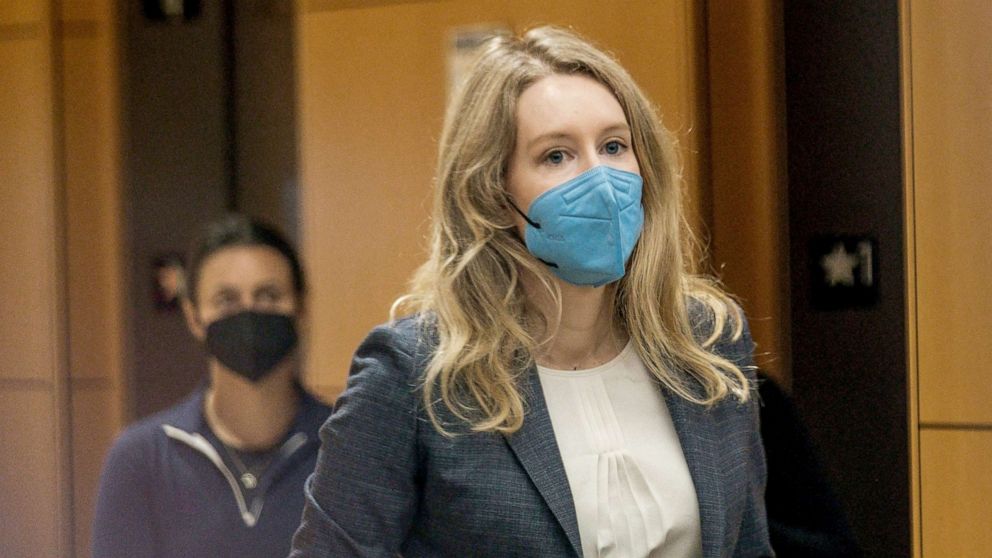
Elizabeth Holmes arrives at federal court in San Jose wearing a COVID mask during her fraud trial.
Despite pleading not guilty and maintaining her innocence, Holmes was sentenced in November 2022 to 11 years and 3 months in federal prison. Her defense team requested she remain out of custody as she pursued appeals, citing her responsibilities as a new mother.
But in May 2023, after her appeal was denied, Holmes reported to Federal Prison Camp Bryan, a low-security women’s facility in Texas. She’s expected to serve most of her sentence, with possible reductions for good behavior.
Holmes wasn’t the only one facing consequences. Ramesh “Sunny” Balwani, Theranos’ former COO and her ex-boyfriend, stood trial separately. He was convicted on 12 counts of fraud, including deceiving both investors and patients.
In late 2022, Balwani was sentenced to 12 years and 11 months in prison. He began serving his sentence in California in early 2023. Like Holmes, his fall was dramatic: once an influential figure in the startup's operations, now another cautionary tale.
It’s hard to overstate just how high Theranos soared and how quickly it fell.
By 2014, Theranos had raised more than $700 million and was valued at $9 billion. Holmes herself was briefly considered the youngest self-made female billionaire in America.

Theranos claimed its blood-testing machines could detect dozens of conditions from a single finger prick. The reality proved very different.
But the truth unraveled fast. Whistleblowers inside the company revealed that Theranos wasn’t using its own devices for most tests, it was secretly relying on traditional machines made by Siemens and others.
Even worse, the small amount of blood the devices did handle often produced inaccurate and inconsistent results.
As the fraud came to light, Holmes and Balwani faced mounting scrutiny from regulators, prosecutors, and the media. By 2018, Theranos officially shut down, and Holmes was criminally charged.
Today, Holmes’ name is synonymous with deception. The Theranos saga sparked major shifts in biotech regulation, investor scrutiny, and how startups market unproven technology. The FDA and CMS ramped up oversight of lab-developed tests, and investors became more wary of hype-heavy pitches in the healthtech space.

Amanda Seyfried stars as Elizabeth Holmes in Hulu’s Emmy-winning series The Dropout, which dramatizes the rise and fall of Theranos.
The scandal’s cultural impact is just as strong. It inspired books, documentaries, and Hulu’s hit drama The Dropout, in which Amanda Seyfried earned an Emmy for her haunting portrayal of Holmes.
More broadly, Theranos forced the public to ask hard questions:
How did so many smart, powerful people fall for it?
What blind spots exist in the tech world when it comes to due diligence?
And why do we elevate charisma over credibility?
The answers still ripple through Silicon Valley today.
Holmes is currently serving her sentence at FPC Bryan, a minimum-security facility with dorm-style housing and limited amenities. Reports suggest she’s kept a low profile, participating in basic prison programs and parenting classes while maintaining contact with her partner and two young children.
While some speculate she might seek sentence reductions or speak publicly again, for now, Holmes remains silent, her once-famous voice now behind razor wire.
Where is Elizabeth Holmes now in 2025?
As of 2025, Holmes is incarcerated at Federal Prison Camp Bryan in Texas. She began her sentence in May 2023 and is expected to remain in custody until 2033, with the possibility of early release for good behavior.
Did Elizabeth Holmes admit guilt?
No. Holmes has consistently denied knowingly committing fraud. At her sentencing, she expressed regret for her "failures" but stopped short of a full admission of guilt.
How much money did investors lose in Theranos?
Roughly $600 million was lost by investors, including high-profile figures like Rupert Murdoch, the Walton family, and Betsy DeVos.
What happened to Sunny Balwani?
Balwani was convicted of 12 counts of fraud and is currently serving a 12-year, 11-month sentence at a federal prison in California.
Is Theranos still in operation?
No. Theranos was dissolved in 2018 following multiple federal investigations and mounting legal pressure. Its assets were liquidated, and the company no longer exists.
In the ruling, Delaware Superior Court Judge Eric Davis said that the voting machine company had demonstrated that “it is reasonably conceivable that Dominion has a claim for defamation per se.”
Dominion filed a lawsuit earlier in the year against Fox News claiming that some of the media giant’s employees elevated false charges that Dominion had changed votes in the 2020 election via algorithms in its voting machines created in Venezuela to rig elections for Hugo Chavez. There was no evidence of widespread fraud in the 2020 election, a fact confirmed by several election officials across the US.
Dominion says Fox presenters brought on Trump allies who spread the claims, which were also amplified on Fox News’ social media platforms.
Judge Davis said that Dominion’s complaint “supports the reasonable inference that Fox either (i) knew its statements about Dominion’s role in election fraud were false or (ii) had a high degree of awareness that the statements were false.”
Judge Davis also said that despite emails from Dominion attempting to factually address Fox’s allegations, the media giant continued to report Dominion’s “purported connection to the election fraud claims without also reporting on Dominion’s emails.”
In a statement, Fox News said it remained committed to “defending against this baseless lawsuit and its all-out assault on the First Amendment.”
On Friday, the prosecution will have the opportunity to present a rebuttal before the case goes to the jurors.
Elizabeth Holmes faces 11 charges of defrauding investors, medical professionals, and patients over Theranos’ blood-testing technology, which the company claimed could carry out hundreds of tests with just a single drop of blood. Holmes faces up to 20 years in prison and has pleaded not guilty.
Prosecutor Jeff Schenk presented the jury with a recap of arguments that Holmes deliberately lied about the capabilities of Theranos’ devices and said the evidence shows that Holmes “made the decision to defraud her investors and then to defraud her patients.” Schenk said the Theranos founder “chose fraud over business failure.”
The defence is set to conclude its closing arguments on Friday, with a jury of eight men and four women to be handed the case following jury instructions. They will deliberate the case over the holiday week.
Syed Rahman of financial crime specialists Rahman Ravelli examines the fraud-friendly faults that have been highlighted in the government’s Bounce Back Loan Scheme.
As an end-of-year report, the National Audit Office’s assessment of the government’s fraud prevention measures for its Covid-19 Bounce Back Loan Scheme has a very strong “could do better’’ tone about it.
The NAO has branded the government’s measures inadequate and has made it clear that improvements need to be made if there is to be any chance of recovering the estimated £5 billion that has been stolen. It has pointed to a current focus on organised crime’s attempts to abuse the programme, which it says will mean that many lower-level fraudsters will go undetected or at least unpunished.
There have been accusations of too little being done too late. For a scheme that guaranteed bank loans of up to £50,000 to help businesses during the pandemic, its emphasis was on delivering the money as swiftly as possible with the bare minimum of checks being made. This was always going to attract fraudsters like bees to the honey pot. So there can be little surprise that the NAO has now made it clear that the fund was vulnerable to fraud and losses – and this was still the case when it had been in operation for seven months.
In its defence, the government has used the National Crime Agency and the National Investigation Service (Natis) to combat this type of fraud. Natis has been charged with recovering at least £6 million of fraudulent Bounce Back Loans over three years. Yet the NAO says Natis is only capable of working on 50 cases a year. With the number of reports of such fraud now past the 2,100 mark, we have a clear case, to continue the analogy, of far too few beekeepers and way too many illegally-enriched bees. This is a point that has been made in the strictest of terms by the NAO, which has referred to the government needing to improve on its track record on fraudulent loans.
But, however critical the NAO is of the government, the fact is that the anti-fraud awareness now being exercised by the government is coming into effect far too late. It almost defies belief that the compliance teams now monitoring the loans were not in place at the time the loans were being handed out. Simple logic tells us that there is less chance of being left out of pocket due to fraud if proper, worthwhile checks are made before any money is given out. Scrambling around afterwards trying to get back money that should never have been given out in the first place is a much more time consuming and costly way of doing things.
HM Revenue and Customs (HMRC) will now have to plough significant resources into efforts to recover the losses. This will mean a raft of fraud investigations and the setting up of new units and departments specifically targeting these types of fraud. It will also mean scrutiny of regulated professionals, with HMRC and other enforcement agencies looking to assess whether reporting obligations have been met.
There is no doubt that the picture painted by the NAO is a depressing one. It depicts a situation where the authorities are now scurrying to regain cash that should never have been paid out.
