
Understand Your Rights. Solve Your Legal Problems
A confirmed mass shooting at Sydney’s Bondi Beach on Sunday, 14 December 2025, has killed at least 16 people, and injured at least 40 others including police officers, and triggered a continuing multi-agency emergency operation affecting public access and safety according to ABC Australia.
New South Wales Police said the shooting occurred near Bondi Park Playground along Campbell Parade. One man believed to be one of the shooters was confirmed dead, while a second alleged shooter was taken to hospital in a critical condition.
UPDATE (Late Sunday):
New South Wales Police have confirmed that the shooting occurred near a Jewish community gathering at Bondi Beach. Authorities said there is no ongoing threat to the public and stressed that investigations into motive are ongoing. Police have not formally classified the incident as terrorism.
At least 16 people have been confirmed dead following a shooting at Bondi Beach in Sydney, New South Wales Police said on Sunday evening, as officers continued a major operation in the area.
Emergency services were called to Campbell Parade at about 6:45 p.m. local time after reports of shots being fired near the northern end of the beach.
Police said one of the dead is a man believed to be one of the shooters, while a second alleged shooter was taken to hospital in a critical condition. A further 40 people were reported injured, including two police officers.
The incident has immediate public-interest significance because Bondi Beach is one of Australia’s most heavily visited public spaces and sits alongside dense housing, transport routes and scheduled community events. Police warned that casualty numbers could change as medical assessments continue and urged the public to avoid the area while specialist officers secure the scene and examine suspicious items.
👉👉 Bondi Beach shooter identified by UK media 👈👈
In a verified media release issued at 8:57 p.m. on Sunday, New South Wales Police said the shooting involved two men in a public place along Campbell Parade, near Bondi Park Playground. Officers from Eastern Suburbs Police Area Command responded, supported by specialist resources drawn from across Sydney.
Police confirmed that 16 people are dead, including one man believed to be one of the shooters. The second alleged shooter is in hospital in a critical condition. At least 40 other people were injured, among them two police officers who were responding to the incident.
An extensive exclusion zone remains in place as specialist officers examine a number of suspicious items located nearby. Police said there have been no reports of any other incidents in Sydney connected to the shooting.
Takeaway: Police have confirmed the deaths, injuries and custody status while maintaining strict scene control.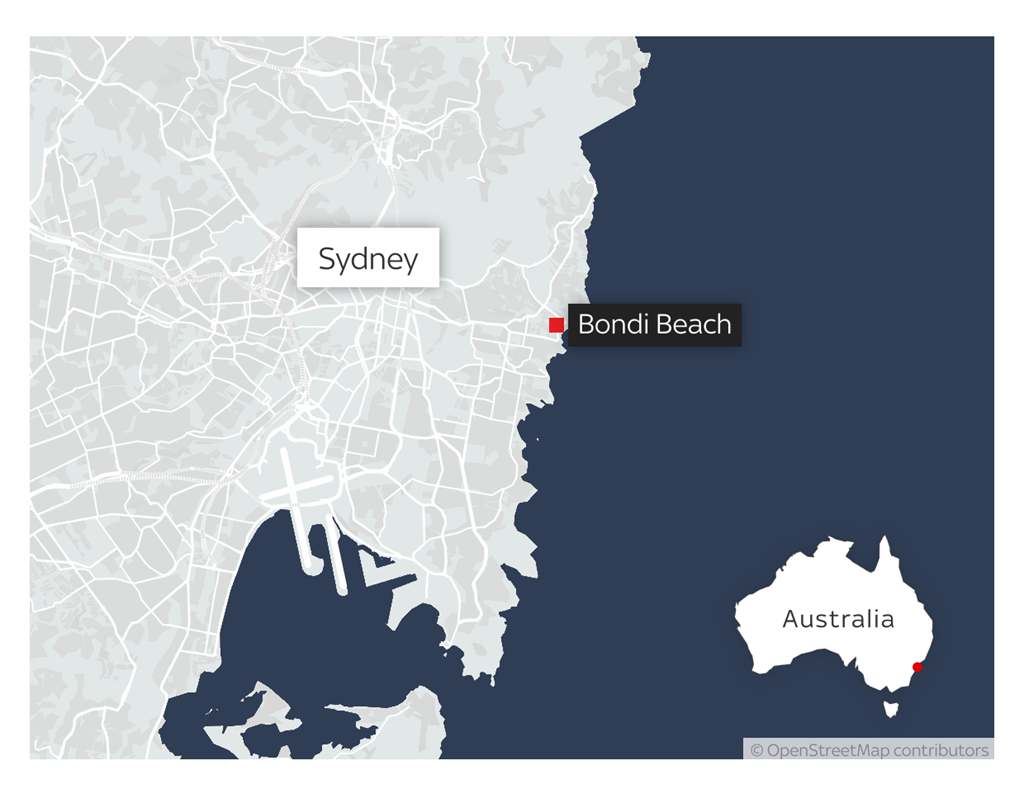
6:45 p.m. (Sunday): Emergency services called to Campbell Parade after reports of gunfire.
Shortly after: Officers from Eastern Suburbs Police Area Command arrive, supported by citywide specialist units.
Evening: Exclusion zones established around Bondi Beach and nearby streets as paramedics treat the injured.
8:57 p.m.: NSW Police issue a verified media release confirming 16 deaths, 40 injuries and no related incidents elsewhere in Sydney.
Later evening: Police confirm there is no longer an active threat but warn the operation remains ongoing.
Takeaway: Authorities have provided time-stamped updates as the response and investigation progress.
Police confirmed the shooting occurred in proximity to a Jewish community gathering marking the start of Chanukah. While several political figures have described the incident as terrorism, NSW Police said investigations into motive remain ongoing and no formal classification has been made.
Prime Minister Anthony Albanese said the scenes at Bondi Beach were “shocking and distressing” and confirmed he had spoken with the Australian Federal Police commissioner and the New South Wales premier. He urged people in the area to follow directions from NSW Police and rely on confirmed information.
Police repeatedly warned against sharing unverified reports, noting that misinformation during active incidents can interfere with emergency response and cause unnecessary alarm. Authorities also stressed that casualty figures may change as inquiries continue and medical conditions evolve.
— Anthony Albanese (@AlboMP) December 14, 2025
Bondi Beach and surrounding streets along Campbell Parade remain subject to police closures, affecting pedestrian access, traffic movement and nearby businesses. Residents and visitors were advised to avoid the area entirely until restrictions are lifted.
The northern end of Bondi Beach is frequently used for family activities and organised community gatherings, which can complicate evacuation and emergency medical access during incidents of this scale. Police exclusion zones are standard practice to protect the public and preserve evidence during investigations involving firearms.
Past major incidents in crowded public locations have led authorities to review crowd-management planning, patrol deployment and emergency response coordination once investigations conclude.
Takeaway: The shooting has disrupted a major public area and may influence future safety planning.
NSW Ambulance said injured patients were transported to multiple hospitals across Sydney, reflecting standard mass-casualty distribution protocols designed to prevent any single facility from being overwhelmed. Police said injury numbers may be updated as medical assessments continue.
Two police officers were among those injured while responding to the incident, underscoring the risks faced by first responders during active public-place shootings.
Takeaway: Emergency services remain engaged across multiple sites as patient care continues.
Australia’s firearms laws are governed by the National Firearms Agreement, introduced after the 1996 Port Arthur massacre. The framework requires firearm licensing and registration and restricts access to many weapon types.
Because mass-casualty shootings are rare under this system, each incident attracts heightened scrutiny from law enforcement and policymakers. Reviews typically focus on enforcement, intelligence sharing and early-intervention mechanisms rather than immediate legislative change.
Takeaway: The rarity of such incidents heightens national attention on prevention and response systems.
Police are appealing for anyone with mobile phone footage or dashcam vision relevant to the incident to contact Crime Stoppers. Information can be provided confidentially by calling 1800 333 000 or through the Crime Stoppers NSW website. Police asked the public not to submit information via social media.
People near Bondi Beach should continue to follow directions from officers on the ground and avoid all exclusion zones. Emergencies in Australia should be reported via Triple Zero (000).
Takeaway: Authorities are seeking public assistance while maintaining strict safety controls.
New South Wales Police said at least 16 people have been confirmed dead following the Bondi Beach shooting, including one man believed to be one of the shooters. Police cautioned that the death toll may change as the operation continues and medical assessments are finalised.
Police said 16 people were injured in the Bondi Beach shooting, including two police officers who were responding to the incident. Injured victims were transported to multiple hospitals across Sydney under standard mass-casualty protocols.
Police said there is no longer an active threat to the public at Bondi Beach, but stressed the scene remains active due to forensic examinations and safety checks. Authorities continue to enforce exclusion zones while the investigation proceeds.
New South Wales Police said there have been no reports of any other incidents in Sydney connected to the Bondi Beach shooting. Police urged the public to avoid sharing unverified information or rumours.
Authorities advised residents and visitors to avoid Bondi Beach and surrounding streets, follow all police directions, and remain clear of exclusion zones until restrictions are lifted. Police said official updates will be provided through verified channels as the operation continues.
Police said an extensive crime scene has been established and formal inquiries are underway. Specialist officers will continue forensic examinations and assess suspicious items located near the scene.
Further updates are expected once immediate operational steps and victim identification processes are completed. Any criminal proceedings would follow standard New South Wales legal processes once charges, if any, are laid.
Takeaway: Confirmed information will be released progressively as procedural steps are completed.
The Bondi Beach shooting has resulted in multiple deaths and injuries at one of Australia’s most recognisable public locations. It affects victims’ families, first responders, residents, businesses and visitors, while raising broader public-safety concerns. In a country where mass shootings are rare, the incident underscores the importance of emergency preparedness, verified information and public cooperation. Authorities say the public should continue to rely on official updates as the investigation continues.
Snapchat requires users to be at least 13 to hold an account, but app-store ratings and device settings still allow many children to download the app on phones and tablets.
Snapchat states in its terms of service that people must be at least 13 years old to use the service, mirroring age thresholds used by other major social media platforms and influenced by children’s privacy laws such as the U.S. Children’s Online Privacy Protection Act (COPPA).
Yet the Snapchat app remains visible and downloadable for younger users in Apple’s App Store, where it is listed with a 12+ content rating.
Parents in the United States, the United Kingdom and other countries often discover that a child can install Snapchat even though they are technically too young to hold an account.
This gap between platform rules and app availability has become more visible as regulators push for stronger protections for minors online.
Countries such as Australia have moved toward stricter account-based rules for social media, while app-store policies and device-level parental controls remain largely unchanged.
The result is a complex system in which children can still download Snapchat, and responsibility for enforcement is split between platforms, device makers, governments and families.
Snapchat’s minimum age requirement appears in its terms of service and help materials, which state that users must be at least 13 years old to use the platform.
The threshold is designed to align with child-privacy rules, particularly COPPA in the United States, which limits the collection of personal data from children under 13 without verifiable parental consent.
When people sign up, Snapchat asks for a date of birth and uses this to determine eligibility.
If Snapchat later identifies an account as belonging to a child under 13, it can disable or remove that account under its policies.
However, this rule is enforced on Snapchat’s systems, not in the app store or on the device itself.
The requirement applies to account creation and use, not to the act of downloading or installing the application.
Apple assigns age ratings to every app in its App Store, using categories such as 4+, 9+, 12+ and 17+.
These ratings indicate the suitability of app content rather than legal or contractual age limits set by developers. Snapchat is classified as 12+, meaning Apple’s review process considers its content appropriate for users aged 12 and above.
This 12-plus rating determines whether Snapchat appears when a child browses the App Store, and it also interacts with Apple’s Screen Time feature, which allows parents to limit apps by age rating.
Unless parents manually change these settings or block app installation altogether, children who use an Apple ID can still see and download Snapchat despite Snapchat’s own 13-plus policy.
App stores and platforms operate separate systems. Apple and Google manage app distribution, while Snapchat controls user accounts and personal data.
App-store operators do not see the dates of birth that users enter when they sign up for Snapchat, nor do they access Snapchat’s internal records of who is allowed to have an account.
That information is handled by the platform itself in accordance with its privacy and security policies.
Because app stores are not integrated with Snapchat’s account database, they cannot automatically block a download based on the age a user has given to Snapchat.
Likewise, Snapchat cannot change whether the app appears in the store; it can only restrict access once the app is installed and a user attempts to create or maintain an account.
In the United States, COPPA and related guidance focus on how services handle data from children under 13 rather than banning children from downloading apps.
Platforms such as Snapchat set their own minimum ages and are responsible for enforcing them at the account level.
There is no nationwide rule that prevents a child from installing a social media app, although some U.S. states have considered or passed social media age-verification laws that are still being tested in the courts.
The United Kingdom’s Online Safety Act, together with the Information Commissioner’s Office’s Children’s Code, imposes duties on platforms to consider children’s rights and safety, but it does not set a universal minimum age for downloading social apps.
The focus is on design, transparency and content controls. In both the U.S. and U.K., this means that a child can often install Snapchat on a device, but Snapchat remains responsible for ensuring that under-13 accounts are not allowed to exist.
Australia has taken a different approach by amending its online safety framework to introduce a higher minimum age for social media accounts, typically set at 16 for services including Snapchat.
The reforms place legal obligations on platforms to take reasonable steps to verify user ages and prevent children under 16 from maintaining accounts, with penalties for non-compliance.
Even under this stricter regime, the legislation targets account access rather than app-store listings. Apple and other app-store operators are not required to remove Snapchat or hide it from younger users.
Instead, the burden falls on Snapchat and similar platforms to screen users and close accounts that do not meet the higher age threshold.
This underlines that even strong national rules may not change whether children can download the app in the first place.
Because neither Snapchat’s 13-plus rule nor national laws automatically block app-store access, parents and guardians remain the last line of control on many devices.
On Apple devices, adults can use Screen Time to restrict apps by age rating, disable app installation entirely, or require approval for every download made with a child’s Apple ID.
Similar tools exist on Android devices through Google Play and family-control settings.
For older teenagers who meet Snapchat’s minimum age but whose usage still raises concerns, families can combine device-level controls with platform tools, such as Snapchat’s Family Center, which allows linked accounts and some oversight of interactions.
These measures help bridge the gap between platform policies, laws and day-to-day use.
Why can my child download Snapchat even though they are under 13?
Because Snapchat’s 13-plus rule applies to accounts, while Apple’s 12-plus rating keeps the app visible in the store unless parents change device settings.
Is Snapchat breaking the law if under-13s download the app?
Downloading the app is not the focus of most laws; Snapchat is expected to block under-13 accounts and comply with child-privacy rules, particularly on data collection.
Can Apple stop children from downloading Snapchat automatically?
Apple provides age ratings and parental controls, but it does not enforce Snapchat’s internal age rules by default; parents must enable restrictions.
Does Australia block under-16s from using Snapchat?
Australia requires platforms to prevent under-16s from having accounts on designated services, but it does not require app stores to remove or hide those apps.
What is the most effective way to stop a child from getting Snapchat?
The most direct method is to use device-level parental controls to disable app installation or restrict apps by age rating, combined with monitoring of app usage.
Children are still able to download Snapchat because the company’s age rule governs who may hold an account, while app stores decide only how the app is displayed.
Snapchat screens users when they sign up, but Apple’s age rating keeps the app visible unless a parent changes device settings.
In the United States, the United Kingdom and Australia, most rules focus on how platforms manage children’s information and access not on whether the app can be downloaded.
In practice, it is parents and guardians who must rely on device controls and platform tools to decide whether Snapchat is available on a child’s phone.
👉 Snapchat Age Crackdown Begins Ahead of Australia’s Under-16 Social Media Ban 👈
Should App Stores Block Social Media Apps More Strictly for Children?
A dramatic shift in the digital lives of young Australians began today as Snapchat launched mandatory age-verification checks, racing to comply with Australia’s world-first ban on users under 16, which begins December 10.
The law places enormous pressure on tech companies, with fines of up to AU$49.5 million awaiting any platform that fails to prevent under-age access.
The rollout has already set off concern among families wondering how teenagers will stay connected once the ban takes effect. Many teens fear losing contact with friends and school groups, while privacy advocates are watching as bank-linked verification enters everyday social media for the first time.
With Snapchat estimating more than 400,000 Australian users aged 13–15, this single platform is now the proving ground for whether the new system can actually work.
Snapchat has begun asking Australian users to verify their age through either ConnectID, a bank-developed identity tool, or k-ID, an international age-assurance service.
Both methods give the platform a simple confirmation of whether someone is over 16 without exposing sensitive banking data or government ID details.
The upcoming ban applies to nearly every major platform Instagram, TikTok, Facebook, YouTube, X, Reddit, Twitch and Kick among them. Only a small group of services, such as WhatsApp, Discord, Pinterest and Lego Play, hold temporary exemptions.
Under the new rules, companies must prevent new under-age sign-ups and remove any existing accounts that fail verification.
Australia has approved two clear verification pathways rather than a long list of options. ConnectID checks a user’s age based on records already held by banks and returns only a yes-or-no response to the platform.
k-ID offers an alternative route, allowing users to upload ID or provide a photo that can estimate their age within a regulated range.
Both are intended to limit data exposure while giving platforms reliable tools to comply with the under-16 restriction.
Some teenagers say they are nervous about how quickly they will be able to verify their age, while many parents are already working out how children will stay connected with school, family and friends once the ban comes into effect.
Australia’s new under-16 social-media law is built on regulatory powers the government already uses for digital-safety enforcement, which means the rules are far simpler than many parents expect.
Platforms must verify a user’s age and act quickly if someone cannot prove they are 16 or older. For regulators, the bar is also clear: they only need to establish that an under-age user was able to open or maintain an account and that the platform failed to take “reasonable steps” to prevent it.
Those reasonable steps usually involve using one of the approved verification systems, removing accounts that fail checks and keeping records that show compliance.
The aim is to pressure platforms into serious age enforcement without forcing families to hand over unnecessary personal data.
The world is watching closely. Malaysia has already announced plans for its own under-16 ban next year. New Zealand is preparing similar youth-safety legislation, while Indonesia is drafting rules focused on preventing online harm to minors.
Across Europe, several countries are jointly testing a shared age-verification app to create a consistent system across the region.
Meanwhile, tech giants in the United States are battling lawsuits over youth mental-health impacts, adding momentum to the global push for tougher rules.
If Australia’s enforcement model proves effective, it may become the blueprint for how other nations regulate children’s access to social media.
Parents and child-safety groups say they’re preparing for the practical realities of the ban. Some believe the restrictions will reduce exposure to harmful content. Others worry teenagers may simply migrate to riskier, less regulated apps that fall outside the scope of the new law.
Youth advocates also warn that, for some teens, major platforms are a gateway to news, school communication and emotional support.
Early surveys show young people hold a mix of preferences: many enjoy in-person connection, while others rely heavily on digital spaces for their social lives.
Families are being encouraged to start discussing how teens will stay connected as the ban rolls out and verification requests increase.
Global law firm Clifford Chance has advised Pemba Capital Partners on its acquisition of Hunter Premium Funding, Allianz’s insurance premium funding business in Australia and New Zealand.
The firm also provided comprehensive legal counsel on the associated financing arrangements, regulatory approvals, and co-investment structures.
"This deal involved the implementation of a complex multi-party transaction structure and engagement with FIRB and the ACCC. We are delighted to have supported our client Pemba Capital Partners in this important and complex transaction." said Mark Currell, Managing Partner of Clifford Chance in Australia.
This transaction further strengthens Clifford Chance’s longstanding relationship with Pemba Capital Partners, including advising on their previous acquisition of SuperConcepts, a leading self-managed superannuation fund administration and software business acquired from AMP.
“We are excited to announce our partnership with Hunter,” said Robert Haybittel, Managing Director at Pemba Capital Partners.
“Hunter is a well-established brand with a strong reputation, and we see tremendous potential for growth and innovation. Our focus is on building upon Hunter’s solid foundation, working closely with their talented team to expand capabilities and deliver even greater value to brokers and customers.”
The deal team was led by Mark Currell, with key contributions from senior associates Rob Colemeadow and Ffion Williams, and associates Suryansh Gupta and Bridget Clarebrough on M&A and co-investment matters.
Debt finance advice was provided by Elizabeth Hundt-Russell (partner), Isabella Bogunovich (counsel), and Amy Pham (associate). Elizabeth Richmond (partner) led on competition and regulatory aspects, supported by senior associates Angel Fu and Sam Frouhar.
Hunter Premium Funding is a leading provider of insurance premium funding solutions in Australia and New Zealand. Established in 1977 and operating under the Hunter name since 1992, the company enables businesses to manage their insurance premiums through regular instalments, enhancing cash flow and financial flexibility. With a dedicated team of 60 professionals, Hunter delivers over 90,000 funding solutions annually. The firm is an accredited member of the Australian Finance Industry Association (AFIA) Insurance Premium Funding Code of Practice, underscoring its commitment to industry standards and customer service excellence.
Pemba Capital Partners is a Sydney-based private equity firm established in 1998. The firm specializes in partnering with founders and management teams of high-growth, entrepreneurial businesses across Australia and New Zealand. Pemba provides not only capital but also strategic support to help businesses scale and achieve sustainable growth. With over 25 years of experience and more than $2 billion in funds raised, Pemba has completed over 200 transactions, focusing on sectors such as business services, healthcare, financial services, and technology.
Clifford Chance is a global law firm with over a century of history and a presence in 23 countries through 34 offices. A member of the prestigious Magic Circle, the firm is recognized for its deep expertise in banking, corporate law, finance, dispute resolution, and tax. It advises a broad spectrum of clients, including multinational corporations, financial institutions, governments, and not-for-profits by combining international best practices with local market insight. Known for its collaborative culture and forward-thinking approach, Clifford Chance delivers innovative, high-quality legal solutions across every major industry and sector.
Ropes & Gray has advised InfraBuild, Australia’s only fully integrated steelmaker, on a $150 million bond issuance and related amendments to its existing notes.
The deal, strongly backed by bondholders, enhances InfraBuild’s liquidity and financial flexibility amid a tough market environment.
A substantial majority of bondholders approved the transaction, enabling InfraBuild to repay its outstanding asset-based loan facility, originally dated May 26, 2023, with proceeds from the new notes.
Following the repayment, the notes will be secured on a first-lien basis over substantially all of the company’s assets.
The deal also releases previously escrowed funds from ABTL financing back to InfraBuild’s balance sheet, boosting its pro forma free cash position to more than AU$700 million as of March 31, 2025.
Alongside the financial restructuring, InfraBuild secured an extension to file its audited FY24 financial statements, now due by May 31, 2025.
The company also implemented enhanced governance measures and strengthened internal controls, aimed at improving transparency and reinforcing investor confidence.
InfraBuild’s CEO Francisco Irazusta described the deal as a crucial step forward, saying it places the company on firmer financial ground during a volatile period while supporting long-term growth and sustainability goals.
Mr. Irazusta emphasized that the agreement allows InfraBuild to keep investing in innovation and technology, efforts that align with its mission to provide high-quality, sustainable steel for the Australian construction and infrastructure sectors.
"With the financial surety of this transaction, InfraBuild can continue its work supporting the building of Australia with sustainable steel made in this country, while investing in growing our business using new technology and innovation to deliver the very best products and services for our customers."
The company also announced that two board members, Monica Middleton and Sandip Biswas, have stepped down following meaningful contributions to InfraBuild’s recent evolution.
Mr. Irazusta thanked them for their leadership and said their influence would have a lasting impact. New board appointments are expected soon.
A spokesperson representing a group of bondholders praised the outcome, calling it a win-win that strengthens InfraBuild’s credit profile, enhances governance practices, and secures bondholders’ position through new first-lien protections.
The representative said the group remains confident in InfraBuild’s ability to navigate current headwinds and come out stronger as the market recovers.
The legal team at Ropes & Gray was led by finance partner Michael Kazakevich and counsel Alexandru Mocanu, with support from associates Clara Melly, Alma Yasin, and Anushka Shah.
Ropes & Gray is a global law firm providing comprehensive legal services to clients across a wide range of industries. With a reputation for excellence, the firm is known for its expertise in areas such as corporate law, private equity, M&A, intellectual property, litigation, regulatory matters, and finance.
Founded in 1865, Ropes & Gray has grown to include offices in major cities around the world, including New York, London, Hong Kong, and Boston.
DLA Piper has advised Hoist Global Tech Solutions (HOIST), a prominent systems integrator and services provider specializing in IFS enterprise software, on securing a significant growth investment from WestView Capital Partners.
WestView, a Boston-based private equity firm, focuses exclusively on partnering with middle-market growth companies.
The deal, led by DLA Piper Canada with support from the firm’s international offices, marks a major milestone for HOIST as it looks to accelerate its global expansion.
HOIST is known for its deep expertise in implementing and supporting the full suite of IFS’s industry-focused enterprise software and industrial AI solutions. The company, founded by a team of seasoned IFS professionals, employs more than 200 people worldwide.
Over the years, HOIST has become one of the largest independent partners dedicated to IFS services.
“DLA Piper Canada is proud to have advised HOIST in securing this transformational transaction. We look forward to continuing to advise HOIST as it expands its capabilities and global reach in the enterprise software market.” said Robert Fonn, a partner at the firm’s Toronto office.
HOIST’s leadership also welcomed the partnership. “WestView’s investment is a strong testament to our continued commitment to our customers, our team members, and our strong belief in IFS’s capabilities and vision. We are excited to have WestView’s support as we continue to deliver high quality services and business value to our customers alongside IFS.” said Nick Mezher, Co-Founder and CEO of HOIST.
"HOIST’s deep IFS technical expertise and customer-centric approach, combined with the passionate leadership of Nick, Dale, and Chief Revenue Officer, Patrick Zirnhelt, position the Company well to continue its impressive growth trajectory." said Matt Carroll, Managing Partner at WestView.
Jeff Klofas, Vice President at WestView, added that the deal builds on the firm’s long history of investing in founder-led, software ecosystem-focused services companies.
IFS itself has welcomed the news. Mark Moffat, CEO of IFS, highlighted the strategic importance of the partnership.
“With over EUR 1 billion in ARR delivered last year and 350 new customers onboard, we are seeing significant demand for IFS software from the world’s largest industrial companies. WestView’s endorsement represents not only an investment in Hoist’s expansion plan, but also validation of IFS’s technology innovation and vision of becoming the undisputed category leaders in Industrial AI software. We look forward to the continued success of our partnership.”
WestView was represented by Latham & Watkins LLP and Stikeman Elliott LLP. martinwolf acted as HOIST’s exclusive financial advisor, while DLA Piper (Canada) LLP served as HOIST’s legal counsel.
The DLA Piper Canada team was led by Robert Fonn and included Kevin Fritz (Tax), Jamie Mandell, Mackenzie Jordan, Elexa Clement, Sophie Gadbois (Corporate), Matt Demeo (Employment), and Dave Spratley (IPT). The Canadian team was supported by DLA Piper colleagues across the US, UK, Netherlands, Belgium, Australia, Brazil, and Dubai.
WestView Capital Partners is a Boston-based private equity firm founded in 2004. It focuses on partnering with founder-led, growth-oriented companies. WestView has raised five funds totaling $2.7 billion and invested in over 50 businesses. The firm offers flexible ownership structures and specializes in growth capital, recapitalizations, and buyouts, emphasizing long-term partnerships with entrepreneurs.
DLA Piper is a global law firm with a strong reputation for providing legal services across a broad spectrum of industries and sectors. With offices in more than 40 countries, the firm offers comprehensive legal solutions in areas such as corporate law, litigation, intellectual property, real estate, and regulatory matters. DLA Piper serves a diverse range of clients, including multinational corporations, governments, and individuals, delivering innovative and strategic advice. The firm is known for its collaborative approach, providing tailored legal expertise to address complex, cross-border issues while maintaining a commitment to exceptional client service.
John Kabealo & Evan Sills Join Kirkland & Ellis
Read more ›
Rosen Law Firm Launches Kyndryl Shareholder Investigation
Read more ›
US Bankruptcy Filings Surge in 2025
Read more ›
Donald Trump’s Uncle Reviewed Tesla’s ‘Death Ray’ Secrets
Read more ›
Texas House Advances Antisemitism Bill 2025
Read more ›
Nike is facing serious legal trouble. A $5 million class-action lawsuit has been filed in the U.S. District Court for the Eastern District of New York, accusing the sportswear giant of misleading customers through its digital brand, RTFKT. Buyers claim they were sold non-fungible tokens (NFTs) that should have been registered as securities.
Back in 2021, Nike made headlines by acquiring RTFKT, a company known for creating sneaker-themed NFTs. The idea was bold: blend the world of collectible sneakers with the rising metaverse. Buyers could trade these digital sneakers, show them off online, and even "wear" them with their avatars.
But in late 2024, Nike abruptly announced RTFKT was shutting down. The news sent NFT values crashing almost overnight, leaving thousands of investors out of pocket.
Lead plaintiff Jagdeep Cheema, who lives in Australia, argues that Nike never properly warned customers about the risks involved.
The lawsuit says Nike broke consumer protection laws in New York, California, Florida, and Oregon by using deceptive marketing tactics.
Buyers believed their NFTs would climb in value alongside Nike's digital push. Instead, the sudden collapse blindsided collectors and caused major financial hits.
If the court rules that Nike's NFTs should have been treated as securities, it could change everything for the NFT industry. Companies would need to rethink how they market digital assets and possibly register them with regulators.
For lawyers, blockchain businesses, and corporate advisors, this case is one to watch closely. It could rewrite the playbook for how digital collectibles are handled legally.
Nike hasn't made a public statement about the lawsuit yet. Many legal analysts believe the company will argue that the NFTs were simply digital collectibles — not financial investments requiring regulation.
If Nike loses, businesses diving into NFTs could face major new hurdles, including:
Nike's legal battle isn't happening in isolation. Lately, other big brands have been stumbling in the NFT space too. Take Adidas, for example. They rolled out their "Into the Metaverse" NFT project with a lot of buzz, but soon found themselves flooded with customer complaints about delayed perks and confusion over what buyers actually owned.
At the same time, the Securities and Exchange Commission (SEC) has been turning up the heat on digital asset sales. Dapper Labs, the team behind NBA Top Shot, is already caught up in a legal fight over whether its NFTs count as securities.
Willed, the online estate planning platform based in Victoria, has emerged as a game-changer in Australia’s burgeoning estate planning sector thanks to its simple and quick Will creation process.
Recently, the company secured AU $6 million in funding and won the Best Newcomer Award at the Victorian Government's Start-Up Awards.
We asked David Kaplan, Co-founder of Willed, to discuss the company's journey, its innovative approach, and its vision for the future of estate planning.
The inspiration for Willed came from our personal experiences with the complexities and inefficiencies of traditional estate planning.
We could see there was a significant gap in the market for a user-friendly, accessible solution that could demystify the process. One that would make it available to everyone rather than those who could afford a traditional legal Will.
We aim to democratise estate planning by making it affordable and accessible to all Australians, regardless of their financial status or legal knowledge.
Secondly, we want to educate people about the importance of having a Will and then to empower them with the tools they need to take control of their legacy.
That’s what Willed is all about: simplifying the process and innovating to remove the barriers that have traditionally kept many Australians from creating a Will.
Trillions of dollars is expected to change hands between generations over the next two decades. That’s a lot of money in anyone’s terms. But it presents both challenges and opportunities. At Willed, we're acutely aware of this impending shift and are tailoring our services to address it.
We're focusing on educating both the older generation about the importance of preparation and the younger generation about responsible inheritance management. Our platform makes it easy to document wishes for specific assets, even for digital assets like cryptocurrency.
It is our goal to make the wealth transfer process as smooth as possible.
Certainly. At the core of our offering is our online Will creation platform where customers can create a legally binding Will in as little as 20 minutes. We provide clear instructions throughout, supported by plain-language explanations.
Once a customer has made their Will, we securely store a copy of it and whatever related documents are required. Then, when things change later on down the track, they can log in and update it easily.
Beyond that, we also offer legal services around probate and letters of administration, and pre-paid funeral plans.
Willed customers can account for digital assets like cryptocurrency, social media accounts, and online businesses in their Will.
Our platform guides customers through cataloguing these assets and provides clear instructions for executors on how to access and distribute them.
We're thrilled about these recent milestones, but this is just the beginning for Willed.
We’re investing in our team, our platform, and in marketing to raise awareness about the importance of end of life planning and the accessibility of our solution.
One of our biggest challenges has been overcoming the inertia and misconceptions surrounding end of life planning.
A lot of Australians believe it's only for the wealthy or that it's just too complex and time-consuming, so they do nothing about it.
We’re investing heavily in educational content to draw attention to the importance of having a Will — and just how easy it is to make one.
Ultimately, we aim to make end of life planning as straightforward as possible and to be the go-to platform for online Wills in Australia.
Speaking more broadly to the future of the industry, we envision a future where estate planning is fully integrated with other aspects of financial planning, from retirement savings to insurance.
Jeffrey James Godfrey, 53, has pleaded guilty to manslaughter after strangling his estranged wife, Vanessa Godfrey, 46, on Valentine's Day 2022. The incident occurred at the Pelican Waters Resort on the Sunshine Coast, where the couple, who had been separated for some time, were staying.

Vanessa Godfrey. Photo: Vanessa Godfrey/Facebook
The Brisbane Supreme Court heard that the couple had been married for 27 years but remained in contact despite their separation. Prosecutors revealed that Godfrey, who had struggled with methamphetamine use for a decade, was suffering from paranoia and delusions at the time of the killing. Although he was not under the influence of drugs during the incident, he believed his wife had stolen his driver’s license and Medicare card.
RELATED: Netflix Docuseries Explores Gabby Petito's Final Days
The situation escalated when Vanessa asked Jeffrey for a neck massage on the morning of February 14. According to court reports, he then strangled her. After her death, he reportedly cut her arms, believing she was still alive, and later attempted to harm himself before hotel staff discovered the scene.
Initially charged with murder, Godfrey’s charge was reduced to manslaughter after he was diagnosed with drug-induced psychosis. During the hearing, Godfrey’s daughter, Olivia, delivered a victim impact statement, describing how her mother’s death had "changed her life in every way possible." She expressed the deep emotional trauma caused by her father’s actions.
The prosecution has recommended a 10-year prison sentence, while the defence has argued for a 9-year sentence. Justice Glenn Martin will deliver the final sentence on January 30.
Social media platforms are calling on the Australian government to postpone its proposed age restrictions that would prevent children under 16 from accessing social media. A representative from the digital industry has urged Parliament to delay the implementation of the legislation until the results of a government-commissioned assessment on age verification technologies are completed in June.
Sunita Bose, Managing Director of Digital Industry Group Inc, voiced concerns during a Senate committee hearing regarding the groundbreaking bill introduced in Parliament last week. Bose pointed out that the legislation could be passed without a clear understanding of how it would work in practice, especially in terms of verifying users' ages. “Parliament is being asked to pass a bill this week without knowing how it will work,” she stated, emphasizing the need for a more thorough review before taking action.
The proposed laws aim to impose significant fines—up to 50 million Australian dollars—on platforms that fail to prevent young children from creating social media accounts. The legislation includes strict penalties for platforms that do not comply, which would hold them accountable for the safety and security of young users. Lawmakers have stressed that these new rules are necessary to protect children from the harmful effects of online content, which can include exposure to inappropriate material, cyberbullying, and mental health challenges.
If passed, the bill could become law by Thursday, supported by major political parties. The regulations would take effect one year after the bill’s enactment, giving platforms time to create technological solutions that also prioritize user privacy. The delay would allow social media companies to work on implementing age verification systems that balance both safety and privacy concerns, with a focus on data protection.
Australia’s Communications Minister, Michelle Rowland, who has expressed strong support for the bill, believes that social media in its current form is unsafe for children. “There is more to life than constant notifications, endless scrolling, and the pressure to conform to false and unrealistic perfectionism.”
Michelle Rowland emphasized the need for parents to have the power to decline their children’s requests to use social media. “Social media is not a safe product for them,” she added. Rowland has underscored the importance of providing a safer digital environment for young people, as research continues to reveal the negative psychological impacts of social media on adolescents.
In addition to protecting children, the proposed legislation aims to help parents regain control over their children's online activities. Under the new regulations, parents would be able to block social media use for their children or enforce stricter privacy settings. Lawmakers also believe that the bill would encourage tech companies to improve their platforms to better support children’s wellbeing and create more secure environments.
As the Australian government moves closer to approving the legislation, the digital industry continues to push for a delay, citing concerns over the bill’s practical implications and the importance of a comprehensive assessment before implementation. The ongoing debate highlights the tension between the need for child protection and the complexities of enforcing such restrictions on global social media platforms, especially when age verification methods are still evolving.
With growing public concern over the impact of social media on children, this legislation is seen as a critical step in regulating online activity and ensuring that the digital world is safer for younger generations. Social media can have both positive and negative impacts on kids. On the one hand, it offers a platform for creativity, learning, and connecting with others.
However, excessive use can lead to issues like cyberbullying, unrealistic body image pressures, and addiction to constant validation. Kids may struggle with the pressure to conform to online trends and face challenges with managing their mental health. It’s crucial for parents and educators to guide children in using social media responsibly, fostering a healthy balance between the digital world and real-life interactions. Proper age restrictions and digital literacy education can also help mitigate risks.
