
Understand Your Rights. Solve Your Legal Problems
The investigation is Europe’s fourth into Google, with Google-owned video-sharing platform YouTube catching the investigator’s attention this time around.
As part of the European Commission’s antitrust probe, the “obligation” to use Google services, such as the Good Ads platform to purchase online display ads, will be examined. The European Commission has also stated that it will assess the “obligation” to use Google Ad Manager. The platform facilitates the sales and purchases of ads across several ad networks, serving online display on YouTube. YouTube has a strong market position, with its ads constituting around $6 billion of Alphabet’s first-quarter profits this year. The figure is 11% of Google’s total income over that period.
Google has said it will continue to engage constructively with the European Commission whilst demonstrating the benefits of its products and services to businesses across Europe.
Johnson & Johnson did not admit liability or wrongdoing in the settlement with New York. The $230 million payment will remove the firm from a trial that was due to begin on Tuesday and in which numerous large opioid manufacturers and distributors are defendants. Johnson & Johnson have said that the settlements were consistent with a previous agreement to pay out $5 billion.
As part of the settlement, Johnson & Johnson will also stop selling opioids nationwide. Although they can be purchased as legal prescription medications to block pain, the powerful drug is also used illegally as a recreational drug. Within America, addiction to both legal and illegal opioid has been a serious and ongoing problem for many years. Between 1999 and 2019, there were almost 500,000 deaths from overdoses.
Johnson & Johnson, AmerisourceBergen, Cardinal Health, and Mckesson - the largest distributors of drugs in the US - have proposed a payout with a combined total of $26 billion to bring an end to thousands of opioid lawsuits.
The Competition And Markets Authority (CMA) will launch a formal investigation into whether Amazon and Google have breached consumer law. Last year, an initial probe was launched when the CMA examined whether the online firms were sufficiently protecting consumers. The probe raised specific concerns about the two companies, with the main concern being whether or not Amazon and Google have been doing enough to detect fake and deceptive reviews on their platforms. In some reported instances, users reviewed the same products or sellers at similar times to each other, without there being any connection between the products or businesses. There have also been examples where it appears that a reviewer has received some sort of incentive, monetary or otherwise, to post a positive review to Amazon and Google's platforms.
The CMA will also investigate whether Amazon and Google look into and take down fake and deceptive reviews in a timely manner. The CMA will explore what penalties the companies place on users who post such reviews.
According to the watchdog, Amazon and Google could be subjected to enforcement action if they are found to have breached consumer protection law. This may involve securing formal commitments from the companies to change their systems for addressing fake and misleading reviews. However, if required, the situation could escalate to court action.
In reaction to the CMA investigation, a spokesperson for Amazon has said: "To help earn the trust of customers, we devote significant resources to preventing fake or incentivized reviews from appearing in our store. We work hard to ensure that reviews accurately reflect the experience that customers have had with a product. We will continue to assist the CMA with its enquiries and we note its confirmation that no findings have been made against our business. We are relentless in protecting our store and will take action to stop fake reviews regardless of the size or location of those who attempt this abuse."
Back in 2015, a group of customers from six states filed a lawsuit against CVS Pharmacy. The group claimed that CVS had overcharged both them and their insurance companies for generic drugs, whilst cash-pay customers were charged low prices through a discount programme. However, on Wednesday, a California federal jury unanimously determined that CVS’s Health Savings Pass programme did not violate statutes across the six states.
The Health Savings Pass programme has proven controversial, with several other insurers also filing lawsuits against CVS. However, no decisions are yet to be made on these suits.
CVS cancelled its Health Savings Pass programme back in 2016 but has since replaced it with a similar programme called the Value Prescription Savings Card. Both of the programmes were designed to support those who are uninsured. Patients can pay a monthly fee, which allows them discounts on generic medications. Each suit filed against CVS claims that the pharmacy used the programmes to purposefully obscure the cost of drugs and fleece specific customers for more money. However, CVS has said the allegations are baseless.
The world needs to prepare in combating complex molecular strains of invisible microbes. Researchers, scientists, and healthcare professionals working in pharmaceutical companies are striving hard to develop new vaccines to prepare for the existing and future health needs of the public. Because new viruses and bacteria are proliferating and mutating, vaccines need to undergo continuous comprehensive studies.
Vaccines stimulate the production of antibodies by the immune system. It works by exposing the body to the disease with just enough material to develop immunity but not cause severe signs and symptoms. Vaccines have been developed for viral diseases such as measles, flu, and polio. Now with the COVID-19 pandemic, people rely on the promising effects of vaccines in combating life-threatening complications of this viral infection. One of the common questions people raise is whether vaccines can cause health problems. This article will discuss the possibility of such.
Vaccines are the most effective way to prevent infectious diseases. Every year, they prevent 3 million deaths worldwide. However, in some very rare cases, it is possible that vaccines may cause health problems.
People need vaccines as vital protection against viral diseases. The vaccine helps a recipient’s immune system “recognise” the virus and deal with it in a stronger way. However, there are times when rare and isolated incidents occur, causing vaccine-related injuries, such as anaphylaxis, thrombocytopenia, or massive bleeding due to low platelet count and wrongful death.
For patients who are exposed to such health risks, talking to vaccine injury lawyers is a step in the right direction. Lawyers can help patients demand damages and charge negligent companies or vaccine administrators if there is negligence on their part. In many instances, health issues that are reported by some patients are not caused by the vaccine per se. Rather, it’s because of the mishandling of the vaccine.
Drug or pharmaceutical companies follow strict health and safety protocols to pass the series of checks by healthcare organisations and government agencies like the Food and Drug Administration (FDA). They conduct several trials for newly discovered vaccines over a five-year period to ensure everyone’s safety upon mass vaccination. However, there could still be a possibility of manufacturing error. Here are the examples of manufacturing errors:
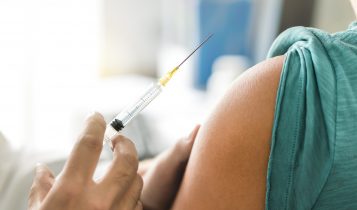
Other examples of administration vaccination errors include the following:
Healthcare agencies are responsible for identifying vulnerable or high-risk groups for vaccination, such as patients with spinal cord injuries. They need to disseminate the right information to the public across various media channels and deployment of healthcare workers in local communities.
If healthcare workers fail to do these preliminary activities, vaccination could result in severe health problems. For instance, one of the contraindications of some vaccines is hypertension or high blood pressure. If the nurse fails to obtain the patient’s blood pressure with an existing medical condition, it could result in cardiovascular problems and even wrongful death.
Vaccines are the most effective way of protecting ourselves and our loved ones against infectious diseases. However, in very rare incidents, vaccines can potentially cause health problems, especially if the manufacturer was negligent in labelling and representing their product. There are many reasons that could result in vaccine-related injuries as discussed above. If you or a loved one is a victim of vaccine-related health problems and injury, talk to a personal injury lawyer as soon as possible to determine your legal options.
The ruling is the fourth determining that Deliveroo’s riders are self-employed rather than employed by the food delivery giant directly. This fourth ruling followed decisions by two High Court judgements and the Central Arbitration Committee. The Court of Appeal has said that Deliveroo’s riders cannot form a collective bargaining unit as they are not in an “employment relationship” with the company.
Deliveroo riders first lost their fight to gain union recognition in 2018, and have been pushing for recognition ever since. Whilst Deliveroo has said its riders earn only £10.00 per hour on average, a recent analysis by The Bureau of Investigative Journalism found that many riders were being paid significantly less. In some cases, Deliveroo riders have reportedly earned as little as £2.00 per hour. Had Deliveroo riders won their fight to become recognised as employees of Deliveroo, then they would be entitled to the UK minimum wage.
As well as the block on Hoshine solar products, the Biden administration has also added five polysilicon companies to the commerce department’s “entity list”. The list requires US-based businesses to first secure a license from the government before any trading is permitted. The block comes as part of the Biden administration’s attempt to pressurise the Chinese government over the incarceration of over 1 million Uyghurs and other minorities in Xinjiang.
The US has been working with Canada, the UK, and the EU to impose sanctions on Chinese officials over its treatment of Uyghurs. Last month, diplomat John Kerry announced that the US was considering tougher sanctions on China. However, he did not state whether these sanctions would involve a ban on solar imports from the Xinjiang region or further measures against Beijing officials. Congress is reportedly considering introducing legislation requiring companies to provide assurances that their supply chains are not connected to forced Chinese labour.
Officials in China have labelled the allegations of forced labour as a US attempt to undermine international competition of the solar industry.
John Binns, partner at BCL Solicitors LLP, details the issues surrounding corporate criminal liability.
Two things, at least, are clear from the Law Commission’s latest discussion paper on corporate criminal liability. The first is that there is a high degree of consensus (from those whose opinions seem to matter, namely investigators, prosecutors, pressure groups, and the Commission itself) that there is something wrong with the current law. The second is that there is no consensus at all on precisely what is wrong, and what to do about it.
Nearly 50 years on from the case still referred to for the general principle of corporate liability, Tesco Supermarkets Ltd v Nattrass [1971] UKHL 1, its facts still provide a neat illustration of the issue: when a poorly supervised shop assistant switched the prices on a discounted washing powder, and the manager left the discount sign up, the court held that Tesco itself was not criminally liable, because neither assistant nor manager was a "directing mind and will" of the company.
Exceptions to that general principle have been growing since then. A New Zealand case, Meridian Global Funds Management Asia Ltd v Securities Commission [1995] UKPC 5, has often been cited as the basis for interpreting various statutes so that companies can be guilty of breaching them if the alternative would defeat their purpose. Various offences of strict liability, for instance in health and safety, have been used to convict companies and to impose large fines on them.
A handful of statutes have made more sophisticated inroads into the principle. Most famously, companies can now be liable under the Corporate Manslaughter and Corporate Homicide Act 2007, where the way in which their activities are organised causes a death and amounts to a gross breach of their duty of care. Secondly, the Bribery Act 2010, where an associated person pays a bribe and they cannot prove that they had adequate procedures to prevent it.
The last few years have seen an evident appetite from the government to extend both the liability of companies and the means of bringing them to justice, though not without controversy. In 2010, the Law Commission recommended that future statutes should be clearer about how companies should be liable and encouraged courts to use Meridian meanwhile to interpret laws more strictly against companies. Under the Crime and Courts Act 2013, Deferred Prosecution Agreements (DPAs) have enabled large penalties against companies for offences, including many under the Bribery Act, although convictions of individuals said to have been involved have been notably absent.
The new discussion paper is the next step in a process that started with a call for evidence in 2017, since when the ground has shifted still further, first with new corporate offences of failing to prevent the facilitation of tax evasion (adapted from the Bribery Act template) under the Criminal Finances Act 2017 (CFA), and then with the judgement in SFO v Barclays [2018] EWHC 3055 (QB), [2020] 1 Cr App R 28, which reaffirmed the Tesco principle. Responding to the call for evidence, after a long delay, in 2020, the government tasked the Law Commission with laying out some options.
With all this background in mind, it is perhaps not surprising that much of the discussion paper is devoted to the legal detail of the Tesco principle and its exceptions, to comparators in civil law and other jurisdictions (such as the US, where, broadly speaking, companies are criminally liable for most things their employees do on their behalf). One recurring theme is that the Commission would have preferred the courts to use Meridian to expand the exceptions and see Barclays (in which they declined to apply it to an allegation of fraud) as a backward step; another is whether there is scope to expand the Bribery Act/CFA model. But there must be a risk that in focussing on these aspects, it has thereby missed the chance to engage the public on a major issue for society: for what conduct do we want to hold companies guilty of crime?
At a basic level, this is an issue about where we place the costs and risks of dealing with criminal conduct, particularly financial crime. Following the US example would surely raise compliance overheads for companies, and increase the number of incidents where shareholders, employees, and others suffer from the financial and reputational hit of a criminal allegation – even where, as is often the case, no crime in fact occurred. This is surely a decision not for the courts (notwithstanding Meridian) but for Parliament, where the economic impact of making a major change (such as enacting a new Bribery Act/CFA-type offence of failing to prevent fraud) would doubtless be the subject of fierce debate on these grounds.
An even trickier issue, which the discussion paper gives only peripheral attention to, is the impact that criminal proceedings against a company have on individual suspects. The DPAs we have seen so far – including one, aptly, against Tesco – starkly illustrate the risk that companies, prosecutors, and courts will gladly incriminate legally innocent individuals. The injustice against those who are factually innocent will only be undone in part if, and when, they are eventually acquitted (as, in fact, happened to the executives in Barclays). Before making a change that knowingly exacerbates that problem, we should at least ask whether there are safeguards that can begin to address it.
If there is a compromise to be found, it may lie in another theme that runs through the discussion paper, but that may merit more attention – the distinction between crimes where an individual is at fault (which may be attributed, by one means or another, to a company) and crimes a company can commit by systemic failures, omissions, and breaches of duty (like corporate homicide).
In the context of money laundering, for example, while it would be rare to find a "directing mind" of a company that had knowingly dealt with criminal property, it is (sadly) much more common for banks and other regulated businesses to face fines for not having the proper systems they are obliged to have, to prevent that conduct. In the same way that we are now used to companies having responsibilities under health and safety and environmental law, perhaps the discussion we should be having is what responsibilities they should have (either in general or in particular sectors) in the context of financial crime, from which would follow a set of offences when those responsibilities were breached.
One key advantage of that approach is that we do not start from zero, with an ever-growing sector of businesses that already do a great deal to prevent money laundering, and a more general corporate culture that has adapted, thanks to the Bribery Act and (to a lesser extent) the CFA, to develop crime prevention systems. While it would increase compliance costs and risks, it would not overturn the Tesco principle, and it may not be quite the revolutionary change that investigators and prosecutors want. But it may point the way towards corporate structures being seen not as a perennial problem in tackling financial crime, but as an important part of the solution.
On Tuesday, the UK’s largest tour operator, TUI, announced it has joined several airlines in suing the UK government over its traffic light travel system. The travel giant condemned the decision by UK ministers to move Portugal onto the amber travel list last month and voiced disappointment in their decision not to move the Greek and Balearic Island to the green list. Travel association ABTA has also said it is considering joining TUI, Virgin Atlantic, Ryanair, British Airways’ parent company IAG, and the Manchester Airport Group in taking legal action against the UK government.
Ryanair chief executive Michael O’ Leary has described the government’s foreign travel policy as a “shambles”, whilst TUI managing director, Andrew Flintham, accused the government of ignoring the industry’s needs following aviation minister, Robert Courts’, failure to attend the ABTA Travel Matters conference due to a clash in his diary appointments.
Health Secretary Matt Hanock has said the government is working on allowing fully-vaccinated passengers to travel to amber list destinations without having to isolate on their return. However, the government has said that the move is yet to be advised by scientists.
On Tuesday, the EU launched a formal antitrust investigation into allegations that Google has abused its leading role in the ad-technology sector. The Europe Commission's investigation, which informally began in 2019, will assess numerous allegations of anti-competitive business practises surrounding Alphabet Inc’s brokering of advertisements and distribution of user data with advertisers across mobile apps and websites.
Last year, there was a similar case filed against Google led by the US state of Texas. The EU’s investigation is expected to examine the same issues covered by the Texas case, including Google’s alleged favouring of its own ad-buying tools in its advertising auctions. However, the Europe Commission will also explore complaints that are yet to be the subject of formal probing anywhere. The Commission look into allegations that Google has been excluding its competitors from brokering ad buys on video-sharing platform YouTube, which the tech giant owns.
