Who Controls the Nile After Trump’s Mediation Offer?
In recent days, the long-running dispute between Egypt and Ethiopia over the River Nile has returned to the headlines, after Donald Trump offered to help broker talks on the operation of the Grand Ethiopian Renaissance Dam (GERD).
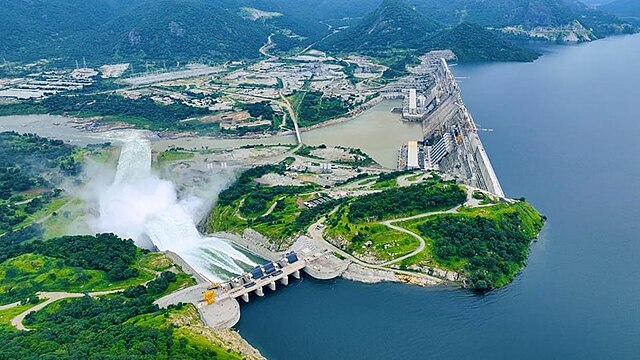
The dam, now fully built and operational, gives Ethiopia significant control over the Blue Nile, the tributary that supplies most of the water flowing downstream to Egypt.
The political back-and-forth is familiar. What is less well understood is the legal reality beneath it. Many readers assume rivers are “owned” in the same way land or territory is owned.
In international law, that is not how shared waterways work and that misunderstanding sits at the heart of this dispute.
This matters now because the dam is no longer hypothetical. Decisions about how it is filled and operated will affect water flows for decades, regardless of who is mediating talks this year.
Why This Affects More Than the Nile
At first glance, a dispute over the Nile can feel remote. But the legal rules behind it apply far more widely than most people realise.
Around 260 rivers worldwide cross at least one international border, supplying water, power and food to hundreds of millions of people. Shared systems like these are the norm, not the exception.
What this case shows is what happens when there is no final referee. International water law sets broad principles, not guarantees.
If a factory upstream in your own country polluted a river, a regulator could step in, impose penalties, or shut it down. On an international river, there is no equivalent authority with automatic enforcement powers.
Instead, the system relies on cooperation. Countries are expected to notify neighbours about major projects, share information, and avoid causing serious harm downstream.
But if one state moves ahead regardless, the consequences tend to be political and economic, not immediate legal enforcement.
For Egypt, this means that even if dam operations are seen as threatening agriculture or electricity generation at the Aswan High Dam, there is no global body that can simply order Ethiopia to change course.
Any outcome depends on negotiation, pressure, or a voluntary agreement.
The same dynamic plays out globally. If your water supply, energy costs, food prices or transport networks depend on infrastructure that crosses borders, stability often rests more on diplomacy and cooperation than on enforceable legal rights.
What International Law Really Means
For most people, there is no direct action to take on the Nile dispute itself. But there are clear lessons in how international resource conflicts actually work and how to interpret the claims made around them.
The first is to be cautious of absolute language. International law rarely “forbids” or “authorises” major projects in simple terms.
Instead, it sets expectations. Countries sharing a river are meant to use it fairly and take account of each other’s needs, but those principles are not automatic stop-buttons.
This is where the idea of “equitable and reasonable use” comes in. In plain terms, every country along a shared river is entitled to a fair share, assessed by factors such as population, existing dependence, climate conditions and economic needs.
No state gains permanent priority simply because it has relied on the water for longer.
There is also a duty to avoid causing significant harm downstream. In theory, an upstream country should not operate infrastructure in a way that seriously damages neighbours.
In practice, what counts as “significant” is often disputed and hard to measure, especially with large dams designed to regulate water over many years.
What matters most, however, is enforcement or the lack of it. These rules are not self-policing. There is no global water regulator, and international courts can hear disputes only if countries accept their authority.
Even then, rulings depend on cooperation to be put into effect.
That is why control on the ground changes the legal landscape. Once a dam is built and operating, leverage shifts. The law still applies, but remedies become slower, more political and less predictable.
For readers following disputes like this especially those working in agriculture, energy, infrastructure or finance, the key takeaway is to look beyond legal principles alone.
Binding agreements matter more than broad statements, and geopolitical risk often sits alongside legal compliance. In international water disputes, the absence of enforcement can be just as important as the rules themselves.
Why Control Matters More Than Ownership
The dispute over the Nile is not really about ownership. Under international law, no country “owns” a shared river. Instead, the law focuses on how countries are expected to manage shared resources when interests collide and enforcement is limited.
What this episode shows is that international water law provides a framework for negotiation, not a safety net that guarantees outcomes. Agreements matter more than broad legal principles, and control over infrastructure often matters more than political statements.
When vital resources cross borders, stability depends as much on cooperation, trust and timing as it does on legal rights written on paper.