Understand Your Rights. Solve Your Legal Problems


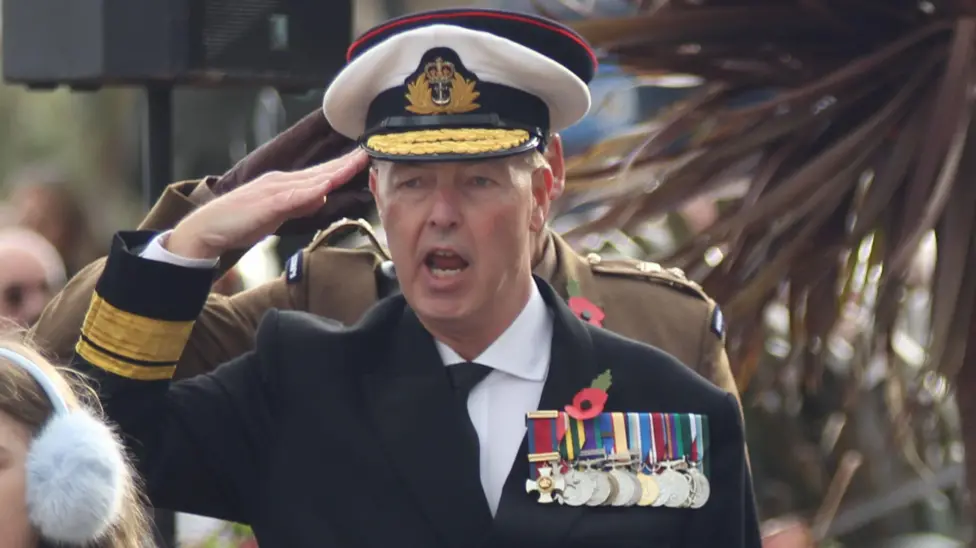
The integrity of the British military honours system relies upon a rigid, statutory framework that distinguishes genuine service from fraudulent representation.
On 5 January 2026, the conviction of Jonathan Carley at Llandudno Magistrates’ Court transitioned from a local curiosity into a significant case study regarding the enforcement of the Uniforms Act 1894.
Carley, a 65-year-old former history teacher, admitted to wearing a uniform bearing the marks of His Majesty's Forces without permission, specifically the regalia of a Royal Navy Rear Admiral.
This adjudication underscores a rare but resolute application of Victorian-era legislation within a modern judicial context.
While the physical act of dressing in naval lace and epaulettes may appear theatrical, the legal repercussions reflect a documented commitment by the Crown Prosecution Service to protect the symbolic and institutional capital of the Ministry of Defence.
The legal trigger for this intervention was not merely the aesthetic imitation of rank, but the public performance of authority during a high-profile state ceremony.
Carley’s appearance at the Llandudno Remembrance Sunday service, replete with a Distinguished Service Order (DSO) and a ceremonial sword, constituted a direct challenge to the Royal Navy's command hierarchy.
Under the 1894 Act, the threshold for prosecution is met when the unauthorized wearing of a uniform is likely to bring contempt upon that uniform.
By saluting the war memorial and engaging with the Lord Lieutenant’s office under false pretences, Carley crossed the threshold from private eccentricity into a criminal contravention of the Armed Forces' statutory protections.
The North Wales Police, acting on intelligence from vigilant veterans and serving personnel, executed a search warrant at Carley’s Harlech residence, uncovering the physical evidence required to secure a conviction under Section 1 of the Act.
The conviction of a fake admiral serves as a critical reminder of the institutional density surrounding British military protocols and the specific legal mechanisms designed to insulate them from fraud.
Jonathan Carley’s long-term deception was not an isolated incident but a calculated series of appearances across North Wales, including events at Harlech Castle and Rorke’s Drift memorials.
Each instance of his larger than life persona required the misappropriation of specific naval identifiers—the sleeve lace of a Rear Admiral and the DSO medal.
While the DSO itself is not protected by a specific Stolen Valour law akin to those found in the United States, its presence on a fraudulent uniform provides the contempt element necessary for a conviction under the Uniforms Act 1894.
The court’s decision to fine Carley £500 signifies a punitive baseline for what the judiciary views as a breach of public order and institutional trust.
The role of the Ministry of Defence and the Royal Navy in these proceedings is one of indirect but essential validation. Evidence provided by high-ranking officers, such as Rear Admiral Dr Chris Parry, established the statistical impossibility of Carley’s claims.
In a service where only a small percentage of personnel reach the rank of Rear Admiral—eight ranks above a recruit and only two below the First Sea Lord—the presence of an unverified officer at a public wreath-laying ceremony represents a security failure and a reputational risk.
The institutional exposure extends to the Lord Lieutenant’s office, which Carley claimed had invited him. This false claim of official sanction highlights the vulnerability of civic institutions to sophisticated social engineering.
The legal focus remains on the preservation of the mark of His Majesty's Forces, a protection that ensures the public can rely on the authenticity of those in command.
The prosecution of Jonathan Carley reveals a significant tension between the commemorative nature of public events and the commercial liabilities faced by their organizers.
Llandudno Town Council, as the primary coordinator for the Remembrance Sunday service, operated under an implicit duty of care to ensure the authenticity and security of the proceedings.
When an individual successfully embeds themselves among dignitaries and participates in a formal wreath-laying ceremony, it exposes a critical failure in the verification protocols governing high-profile civic engagements.
From a commercial standpoint, such breaches can jeopardize an organization’s standing with its liability insurers, particularly if contemptuous or fraudulent activity occurs under its supervision.
Insurers increasingly demand robust risk management strategies that account for the authenticity of participants, especially when those participants are afforded access to prohibited or restricted ceremonial spaces alongside legitimate state representatives.
Furthermore, the civil exposure for institutions is not limited to reputational damage. The presence of an unauthorized individual posing as a high-ranking naval officer introduces a vector for liability should any harm or public disorder arise from their actions.
While Carley’s intent was described in court as a quest for belonging, the legal reality is that he set out to deceive. For commercial readers, the Outcome
Matrix below illustrates how the transition from traditional trust-based systems to a 2026 reality of mandated verification is reshaping the legal landscape for public events.
| Former Status Quo | Strategic Trigger | 2026 Reality |
|---|---|---|
| Trust-Based Attendance: Ceremonial participants were largely accepted on the basis of their uniform and medals without formal identity checks. |
The Carley Conviction: High-profile prosecution of a “fake admiral” highlights the ease with which statutory protections can be circumvented. |
Mandated Verification: Local councils and event organizers now require the HM Armed Forces Veteran Card or digital ID for all participants in ceremonial ranks. |
| Passive Enforcement: The Uniforms Act 1894 was rarely invoked, functioning primarily as a deterrent rather than a tool for active prosecution. |
Public/Social Media Outcry: Viral images of fraudulent officers led to increased police intervention and “Stolen Valour” civilian investigations. |
Proactive Policing: Search warrants for residences and seizure of regalia are now standard procedure for suspected breaches of the Uniforms Act. |
| Limited Financial Penalty: Fines for uniform impersonation were seen as nominal, with little regard for the wider costs of the investigation. |
Judicial Sternness: District Judges now emphasize the “great pain” caused to families, leading to higher surcharges and total legal costs. |
Increased Recovery: Prosecution costs and victim surcharges (e.g., £200 in the Carley case) are aggressively levied to offset institutional exposure. |
The defense strategy employed by Mark Haslam on behalf of Jonathan Carley centered on the concept of public humiliation as a pre-emptive punishment.
By the time Carley appeared at Llandudno Magistrates’ Court, he had been subjected to intense media scrutiny and the outing of his history by groups like the Walter Mitty Hunters Club.
In the eyes of the law, this loss of social standing, combined with mental and physical health issues, serves as a mitigating factor, yet it does not absolve the criminal liability.
The court acknowledged that Carley was the author of his own misfortune, using his sentencing as a public-facing deterrent to others who might seek to misappropriate military honours for personal affirmation.
For senior commercial leaders, this case underscores the high cost of deceptive belonging.
Carley’s previous roles—teaching at Cheltenham College and coaching at the University of Oxford—were built on a genuine foundation that has now been irreversibly tarnished by his fraudulent naval persona.
The legal system’s focus on the sad reflection of his actions reflects a broader judicial trend: the use of social and professional consequences to bolster relatively light financial penalties.
However, when deception moves into the realm of financial gain or fraudulent employment, the Fraud Act 2006 would likely supersede the Uniforms Act, leading to significantly more severe custodial sentences.
In this instance, the 1894 Act provided the necessary chokepoint to halt a long-term pattern of deception before it escalated into more tangible civil or criminal fraud.
The prosecution of Jonathan Carley highlights the specific jurisdictional chokepoints where military and civilian law intersect.
While the Royal Navy maintains internal discipline via the Service Prosecuting Authority (SPA) for active personnel, civilians who misappropriate military insignia fall under the direct purview of the Crown Prosecution Service (CPS) and Home Office police forces.
The Uniforms Act 1894 serves as the primary instrument in these instances, providing a summary jurisdiction that allows Magistrates’ Courts to address what the legislation defines as the unauthorized wearing of the distinctive mark of His Majesty's Forces.
The legal complexity in the Carley case arose from the dual nature of his deception: he was not merely wearing a costume, but was actively performing a role that demanded recognition from state dignitaries and the public alike.
The North Wales Police, specifically Chief Inspector Trystan Bevan’s team, had to navigate the threshold between a civil annoyance and a criminal contravention.
For a conviction to hold under Section 2 of the Act, the prosecution must demonstrate that the uniform was worn in a manner likely to bring contempt upon the service.
In Llandudno, this was evidenced by Carley’s decision to lay a wreath and salute the memorial alongside genuine veterans.
This act of public performance provided the necessary contempt element, as it diluted the sanctity of the service for those with a legitimate right to be there.
The jurisdictional boundary is clear: once a civilian uses military regalia to claim a status they do not hold, they move into the territory of statutory criminal liability.
The resolution of the Carley case required the coordinated efforts of several high-level legal and military entities to validate the fraud and execute the prosecution. These institutions form the chokepoint that prevents such deceptions from remaining unpunished:
Llandudno Magistrates’ Court: The judicial body responsible for the final adjudication and sentencing under the summary jurisdiction of the 1894 Act.
The Crown Prosecution Service (CPS): The authority that determined the public interest threshold was met for a prosecution, specifically citing the pain caused to the veteran community.
North Wales Police: The lead investigative agency that executed the search warrant at Carley’s Harlech residence to recover the unauthorized naval regalia.
The Ministry of Defence (MoD): The central body providing the statutory definitions of authorized uniforms and marks that Carley was found to have breached.
The Service Prosecuting Authority (SPA): While not the lead prosecutor, the SPA provides the expert verification of rank and entitlement necessary for civilian courts.
The Office of the Lord Lieutenant: The institutional body whose authority Carley falsely invoked to gain access to the inner circle of the Remembrance ceremony.
The final adjudication in the Carley case establishes a contemporary precedent for how the British legal system handles Stolen Valour in a landscape of digital verification.
While the defendant sought affirmation, the court prioritized the preservation of the sanctity of the military covenant.
By imposing a fine and a victim surcharge, District Judge Gwyn Jones signaled that the judiciary will not view such deceptions as harmless eccentricities.
The legal consequence is a permanent criminal record for a man whose professional history—spanning Eton, Oxford, and Cheltenham—is now structurally compromised.
This serves as a vital warning to any individual contemplating the misappropriation of state identifiers: the legal system's reach extends to the very tunic and lace used in the deception.
For the legal community and institutional stakeholders, the case highlights the necessity for rigorous vetting of all participants in state-sponsored events.
The prosecution of Jonathan Carley was not an attack on a loner, but a defense of an institutional boundary. As we move further into 2026, the reliance on visual cues of authority will continue to diminish in favor of digital credentials.
This shift will ensure that the Distinguished Service Order remains a mark of genuine valor rather than a retail acquisition.
The ultimate legacy of this case is the reinforcement of a simple legal truth: the uniform of the Crown is a protected asset, and its unauthorized use carries a price that far exceeds any monetary fine.
Legal Insight: 👉 The 2012 Policy Backfire: How GOP Health Safeguards Shielded Wyoming Abortion Access 👈
What is the maximum penalty under the Uniforms Act 1894? The Act allows for a fine (Level 3 on the standard scale) for wearing a uniform without permission in a manner likely to bring contempt upon it.
Is it illegal to wear military medals that you did not earn? While wearing the uniform is a crime under the 1894 Act, wearing medals alone is not currently a specific criminal offense in the UK unless used to commit fraud.
What defines contempt in the context of the Uniforms Act? Contempt is usually established if the wearer acts in a way that demeans the military or falsely performs official duties.
How do I verify if someone is a genuine Royal Navy Rear Admiral? Official ranks can be verified through the Navy List or via the Ministry of Defence’s media office for public-facing figures.
Does the UK have a Stolen Valour law? The UK uses a combination of the Uniforms Act 1894 and the Fraud Act 2006 rather than a single Stolen Valour statute.
Can reenactors be prosecuted under the Uniforms Act? No, the Act specifically exempts uniforms worn for stage plays or bona fide military representations.
What was Jonathan Carley's actual military experience? Carley’s only documented military link was a brief stint in a school’s Combined Cadet Force in 1991.
Jonathan Carley, Uniforms Act 1894, Stolen Valour UK, Royal Navy Fraud, Llandudno Magistrates Court, Legal Analysis, Military Impersonation, Crown Prosecution Service, Rear Admiral Fraud.