
Understand Your Rights. Solve Your Legal Problems
President Donald Trump, 78, declared a national emergency at the U.S.-Mexico border on Monday, directing the U.S. military to take action against "forms of invasion," including illegal immigration and drug trafficking. This announcement marks a significant escalation in Trump's efforts to enforce stringent immigration policies and secure the southern border.

A soldier from the 1st Armored Division, stationed at Fort Bliss, Texas, observes the international border near Nogales, Arizona, on February 27, 2019. (Keith Anderson/U.S. Army)
resident Donald Trump has declared a national emergency at the U.S.-Mexico border, directing the military to tackle illegal immigration and drug trafficking. His executive orders aim to enforce stricter immigration policies, including birthright citizenship reforms and the completion of the border wall. This bold move sets the stage for significant changes in U.S. immigration enforcement and border security.
In his statement, Trump said, “I will declare a national emergency at our southern border. All illegal entry will be immediately halted and we will begin the process of returning millions and millions of illegal aliens back to the places from which they came.” The announcement, made just before 9 p.m., set the stage for a series of executive actions aimed at addressing what he referred to as the "widespread chaos" at the border under the Biden administration.
Trump’s executive orders outline a comprehensive approach to border enforcement, including several controversial measures. These include halting refugee resettlement, completing the construction of the border wall, restricting entry from "countries of concern," and pursuing a move to end birthright citizenship for children born to certain foreign nationals.
White House officials revealed that the administration would also classify criminal cartels as “global terrorist organisations,” which would enable the deployment of military forces to target these criminal entities. While the specifics regarding military engagement remain unclear, this designation is expected to help combat drug trafficking and violence along the border.
In addition, the Trump administration plans to utilise the Alien Enemies Act of 1798 to combat foreign-affiliated criminal gangs. As Trump stated, “I will direct our government to use the full and immense power of federal and state law enforcement to eliminate the presence of all foreign gangs and criminal networks bringing devastating crime to the U.S. soil, including our cities and inner cities.”
A significant aspect of Trump’s emergency declaration is the allocation of funds for border security measures, particularly the construction of the border wall. Elizabeth Goitein, senior director for liberty and national security at the Brennan Center for Justice, noted that invoking the national emergency power could allow Trump to access funds from the Department of Defence for this purpose. “This is going to be fought out in the courts,” Goitein explained, indicating that legal battles are expected to challenge the reallocation of military funds for the border wall.
Additionally, the administration is facing opposition from immigrant advocacy groups, which are preparing to contest the executive orders through legal means. Paige Austin, a litigation attorney at Make the Road New York, noted that legal action might be necessary to safeguard birthright citizenship, a constitutional right that could be at risk under Trump’s proposals.
Several immigrant advocacy organisations have already filed legal motions in response to these executive actions. For instance, the Las Americas Immigrant Advocacy Center in El Paso has argued that the cancellation of CBP One appointments, which allowed migrants to schedule entry appointments at the border, undermines the right to seek asylum.
Greisa Martínez Rosas, executive director of United We Dream Action, criticised the new measures, describing them as part of a “terror campaign against immigrants.” She stated, “We will be faced with the chaos. The terrain we are facing is horrendous and devastating.”
Trump's push for a "mass deportation" policy has been a hallmark of his administration. However, his plans face significant legal hurdles, particularly regarding the status of birthright citizenship. Goitein pointed out that previous federal courts had ruled against the border wall's funding under military construction laws, although the issue remains unresolved as it is pending Supreme Court review.
Despite the challenges, Trump has remained resolute in his efforts to reshape U.S. immigration policies. His proposed reforms are in line with his campaign promises to secure the border, dismantle criminal cartels, and overhaul the immigration system. The creation of the national emergency is the latest step in his broader strategy to curb illegal immigration and protect national security.
Chad Wolf, former acting secretary of Homeland Security, supported the executive order classifying Mexican cartels as terrorist organisations, asserting, “To secure our borders, protect our communities, and defend our sovereignty, we must confront the cartels with the full force of the law.”
With the legal landscape set to shift in the coming months, Trump's plans will likely continue to spark debate and provoke challenges in both the courts and public discourse.
In the past, Donald Trump took a firm stance on immigration, focusing heavily on deportation efforts along the U.S.-Mexico border. One of his central promises was to address illegal immigration and remove individuals living unlawfully in the U.S.
Trump's deportation efforts led to a significant increase in arrests and removals of undocumented immigrants. The administration expanded the criteria for who could be targeted for deportation, including individuals without criminal records, which resulted in widespread raids across the country.
A key policy introduced in 2018 was the "zero tolerance" approach, which aimed to deter illegal border crossings by prosecuting all individuals who entered the U.S. unlawfully, even those seeking asylum. This controversial policy led to family separations, drawing widespread criticism and legal challenges.
Trump also took action against sanctuary cities—local governments that limit cooperation with federal immigration authorities. The administration sought to cut federal funding to these cities, arguing they hindered immigration enforcement.
The U.S.-Mexico border became the focal point for these deportation measures, and Trump prioritised the construction of a border wall. His administration also sought to end DACA (Deferred Action for Childhood Arrivals), a program that protected certain undocumented immigrants brought to the U.S. as children.
These policies led to increased deportations but also faced legal challenges and sparked public debates about immigration reform, deeply dividing opinions across the U.S.
Nigel Farage delivered a surprising political forecast on Friday 17 January, asserting that he will ascend to the position of Prime Minister of Britain before the year 2030.
During a well-attended event in Washington DC organized in his honor, the Reform Leader was celebrated by Republican attendees as a prospective Prime Minister. He addressed the audience with a view of the White House, stating that Donald Trump's triumph represents not only a success for America but also for the free world at large. Mr. Farage emphasized that comparable movements are currently emerging across Europe, including in the United Kingdom.
Nigel Farage is a name that divides opinion in British politics. To some, he is a visionary who spearheaded the campaign for Brexit and fundamentally reshaped the UK’s political landscape. To others, he is a divisive figure, known for his blunt rhetoric and controversial views. However, despite the polarisation surrounding him, there is a compelling argument to be made for why Nigel Farage should be the next Prime Minister of the United Kingdom. His experience, populist appeal, and unwavering commitment to national sovereignty, alongside the growing dissatisfaction with the current political system, make him a candidate worth considering.
Farage’s political journey has been one of persistence and gradual influence. He first entered the political sphere with the UK Independence Party (UKIP), which was, at the time, a fringe party. UKIP’s primary focus was to advocate for the UK’s withdrawal from the European Union, a cause that Farage believed was essential for the future of the nation. Under his leadership, UKIP grew from a small group of disillusioned voters to a significant political force.
Farage’s ability to lead UKIP through difficult times and to maintain his position as the figurehead of the party demonstrated his political acumen. His understanding of the electorate, his ability to communicate directly with the public, and his tenacity in the face of adversity were qualities that would later serve him well in the battle for Brexit.
Farage’s leadership of UKIP culminated in the 2014 European Parliament elections, where the party achieved a historic victory. UKIP topped the polls in the UK, and Farage was lauded for his ability to galvanise voters and draw attention to the issue of the UK’s membership in the European Union. The results were a clear sign that there was a large section of the British public that was dissatisfied with the status quo and yearned for a leader who would take action on their concerns.
If there is one issue that has defined Nigel Farage’s political career, it is Brexit. Farage was not only a staunch advocate for leaving the European Union, but he was also one of the most prominent voices in the successful campaign to leave. The 2016 referendum on EU membership marked a pivotal moment in British politics, and Farage played a crucial role in shaping the debate.
The Brexit campaign, led by Farage and his allies, argued that the UK’s membership in the European Union undermined the nation’s sovereignty, control over its borders, and ability to make independent decisions. The "Leave" campaign resonated with millions of voters who felt that their voices had been ignored by the political establishment. Farage was able to tap into this frustration and communicate it to the wider public, presenting himself as a champion of the people against the elite.
The victory of the "Leave" campaign was, in large part, due to Farage’s leadership and his ability to rally voters who were sceptical of the EU. The result of the referendum—52% of voters chose to leave the EU—shocked the political establishment, but Farage remained steadfast in his belief that the UK was better off outside the European Union.
While the Brexit process has been fraught with challenges and disagreements, Farage’s influence on the outcome cannot be overstated. He was instrumental in shaping the national conversation around Europe, and his dogged determination in the face of opposition helped push the issue to the forefront of British politics.
One of the reasons that Farage has gained such a devoted following is his ability to connect with ordinary people. Unlike many of his political peers, who are seen as part of the establishment, Farage has cultivated an image of being an outsider—a man of the people. He speaks directly to his audience, often using blunt language and adopting a no-nonsense approach that appeals to voters who feel that their concerns are ignored by the political elite.
Farage’s populist appeal has been a central feature of his political career. He has consistently positioned himself as a champion of the working class, focusing on issues such as immigration, national sovereignty, and the erosion of British culture and identity. In an era of growing disenchantment with traditional politics, Farage’s rhetoric has struck a chord with many voters who feel disconnected from the political class.
His ability to speak to the concerns of ordinary people is perhaps best exemplified by his comments during the Brexit campaign, where he highlighted the impact of immigration on local communities and the need for the UK to take control of its borders. Farage’s willingness to discuss sensitive issues that many politicians avoid has earned him both admiration and criticism, but it has undeniably solidified his place as a leader of the populist movement in the UK.
If Farage were to become Prime Minister, his vision for the future of the UK would undoubtedly be shaped by his long-standing beliefs in national sovereignty, free markets, and the importance of individual freedom. His advocacy for a smaller government, lower taxes, and a free-market economy is in line with traditional conservative principles. Farage has consistently argued that the UK should focus on its own interests rather than being beholden to international agreements or bureaucracies, such as the European Union.
At the heart of Farage’s political ideology is a belief in the importance of national sovereignty. His argument for Brexit was based on the idea that the UK should be free to make its own laws, control its own borders, and pursue policies that are in the best interest of the British people. As Prime Minister, Farage would likely prioritise policies that restore the UK’s independence from international organisations and focus on promoting national interests.
Additionally, Farage has long championed the idea of a “Global Britain” post-Brexit. He envisions a UK that is free to forge its own trade deals with countries around the world, independent of EU restrictions. Under his leadership, the UK would likely focus on building strong trade relationships with emerging markets, while also strengthening ties with traditional allies such as the United States and Commonwealth nations. Farage’s vision of a post-Brexit Britain is one where the country is economically competitive, globally connected, and politically sovereign.
One of the most compelling reasons to consider Farage for Prime Minister is his ability to represent the growing number of people who feel disenfranchised by the current political system. The UK’s political establishment has been under increasing scrutiny in recent years, with many voters expressing frustration at the failure of mainstream parties to address their concerns.
Farage has consistently positioned himself as a voice for the voiceless, speaking for those who feel that their concerns have been ignored by the political elite. His populist rhetoric, which emphasises the importance of listening to the people and challenging the establishment, resonates with voters who are tired of the status quo. Farage’s ability to tap into this disillusionment has made him a powerful force in British politics, and his influence is only likely to grow as more people seek an alternative to the traditional parties.
Farage has also been vocal in his criticisms of the media, which he believes plays a significant role in shaping public opinion and perpetuating the political establishment’s narrative. He has often accused the media of bias and of failing to represent the views of ordinary people. This anti-establishment stance, combined with his willingness to speak his mind, has endeared him to many voters who feel that the mainstream media is out of touch with their concerns.
While there are many reasons why Nigel Farage could make an effective Prime Minister, there are also significant challenges that he would need to overcome. One of the biggest hurdles is the need to unite a fractured political landscape. The UK’s political parties are deeply divided, and Farage would need to find a way to bridge these divisions and create a government that is capable of governing effectively.
Farage’s history of leading smaller parties, such as UKIP and the Brexit Party, could be seen as both an asset and a liability. While his leadership of these parties has demonstrated his ability to build and lead political movements, it also highlights the challenges he faces in gaining the support of a wider electorate. For Farage to become Prime Minister, he would need to attract support from not only the populist right but also more centrist voters who may be sceptical of his approach.
Another challenge for Farage is his controversial reputation. His outspoken views on issues such as immigration, the European Union, and political correctness have earned him a great deal of criticism. For some, his rhetoric is seen as divisive, and his style of politics is viewed as inflammatory. Farage would need to address these concerns and present himself as a leader who can unite the country, rather than deepen divisions.
After an earlier fall out this month, Nigel Farage has said he wants to "mend fences" with Elon Musk, after the billionaire Trump adviser called for him to be replaced as leader of Reform UK. Just before Christmas, Farage told journalists that his party was in "negotiations" with Mr Musk, the world's richest man, about a potential donation.
However, by the new year, the relationship had soured, with Tesla boss Mr Musk stating that Farage "did not have what it takes" to lead the party.
Farage suggested that the rift was due to a disagreement over Mr Musk’s support for the jailed far-right activist Tommy Robinson. Speaking on LBC, Farage explained that he planned to repair his relationship with Mr Musk during a forthcoming "four or five" day trip to the US for Donald Trump's inauguration as president on 20 January.
"Of course I want his support, of course I will talk to him in America in a few days' time, of course I want to mend any broken fences that might exist," he said.
"I have no desire to go to war with Elon Musk and I'm not going to, and I haven't done," he added. "I'm a huge admirer of him - I think he's an heroic figure."
He reiterated his belief that losing Mr Musk's support would damage the party’s chances with younger voters, as the tech entrepreneur was "a cult hero figure" and "he kind of makes us look cool."
However, Farage made it clear he "would not be moved" over Mr Musk’s call to free Tommy Robinson, whose real name is Stephen Yaxley-Lennon. Robinson was jailed in October last year for repeating false claims against a Syrian refugee.
The Reform UK leader said many of his "American friends" had only "seen one side of the Robinson story" and were unaware of Robinson’s criminal record.
"He has been in prison many times over the years... Once he almost brought down a trial at which gang rapists were ultimately convicted," Farage said.
He added that embracing Robinson would do Reform UK "immense harm, and probably rightly so."
However, Farage insisted that Mr Musk’s backing was "not crucial" and suggested the falling out with the billionaire could ultimately benefit Reform UK in the future.
He added: "The fact that I've stood up on a point of principle - even if in the short term it's to my detriment - in the long run may even work in our favour."
For Nigel Farage to become the next Prime Minister of the UK, he must navigate several significant challenges. First and foremost, he needs to unite the fragmented right-wing of British politics. While Farage has a loyal following among populist voters, particularly those who supported Brexit, he must consolidate support from other factions on the right. This includes gaining the backing of groups such as his own Reform UK, UKIP, and potentially appealing to dissatisfied Conservative Party voters. To do so, Farage would need to forge strategic alliances and present a clear alternative to the more centrist leadership currently in place.
Expanding his appeal beyond his traditional populist base is another crucial step. Farage has a strong following among those who feel disillusioned with the establishment, but for him to secure the role of Prime Minister, he must broaden his support. This means attracting centrist and moderate left-leaning voters who may not be swayed by his strong stances on issues like immigration or political correctness. To do so, Farage would need to adjust his rhetoric, toning down some of his more divisive views and positioning himself as a leader who can represent all sections of British society.
Building a strong and influential political party is essential for Farage’s chances of becoming Prime Minister. Reform UK, or any political vehicle he uses, must gain substantial representation in Parliament. This means securing more Members of Parliament and forming a credible opposition to the Labour and Conservative parties. Farage must continue to strengthen Reform UK and develop a comprehensive policy platform that addresses the key concerns of the electorate, such as healthcare, education, and the economy. Without a solid political foundation, Farage’s path to Downing Street would be tenuous at best.
Farage must also present clear, pragmatic policies on the pressing national issues that will resonate with voters. His leadership in the Brexit campaign has defined his political career, but now he needs to show that he can govern on a range of other topics. For many voters, issues such as the post-Brexit economy, healthcare, and national security are paramount. Farage needs to develop well-thought-out policies on these matters that can convince the public that he is the right person to lead the country beyond Brexit.
Managing his public image will be critical for Farage, especially given the criticism he has faced for his divisive rhetoric. His blunt, combative style has alienated some potential supporters who see him as too extreme. If Farage is to broaden his appeal, he must tone down his more controversial statements while still maintaining his strong stance on issues like national sovereignty and immigration. Balancing his populist appeal with a more moderate image will be a delicate task but is necessary if he hopes to attract undecided voters and those wary of his extreme views.
One of Farage’s key advantages is the growing disillusionment with the political establishment. Many voters feel that traditional political parties, including Labour and the Conservatives, no longer represent their interests. Farage can tap into this anti-establishment sentiment by positioning himself as an outsider who understands the frustrations of ordinary people. By continuing to challenge the political elite and advocating for the concerns of the public, Farage could further galvanise support and create a sense of momentum for his leadership bid.
Finally, Farage would need to run a highly effective election campaign. His ability to galvanise support in the lead-up to Brexit demonstrated his political acumen. Farage must replicate this success by targeting key constituencies, crafting a compelling and unified message, and engaging in grassroots mobilisation. Raising funds, gaining media coverage, and building a broad coalition of voters will all play a critical role in securing a path to the Prime Minister’s office.
To become Prime Minister, Farage must overcome several hurdles, including uniting right-wing factions, broadening his appeal, and presenting a practical, unifying vision for the UK’s future. While these challenges are considerable, with the right strategy, policy platform, and public image, Farage could rise to lead the country. However, whether he can navigate these obstacles remains to be seen.
Some fans of Snoop Dogg are contemplating severing ties with him following a contentious appearance. The 53-year-old rapper performed on Friday at an event in Washington, D.C., where cryptocurrency leaders gathered to commemorate the inauguration of President-elect Donald Trump.
The Inaugural Crypto Ball, hosted at the Andrew W. Mellon Auditorium, promoted itself on its website as an occasion "designed to honor the 60th Presidential Inauguration, America's first 'crypto president,' President-elect Donald J. Trump, along with his incoming cabinet and administration."
Although the president-elect did not attend, David Sacks, who is set to be Trump's crypto advisor, acted as the emcee for the event.
On social media, critics of Trump expressed their discontent regarding the participation of the "Drop It Like It's Hot" artist in the Crypto Ball, which took place just before the swearing-in ceremony scheduled for Monday.
One post on X stated, "It's time to throw @SnoopDogg in the dumpster with the rest of Trump's white supremacist, insurrectionist allies." Another user commented, "I have deleted all Snoop Dogg songs from my playlists and have blocked him from my accounts."
Numerous critics have labeled Snoop Dogg as hypocritical, referencing a 2017 video in which the rapper stated he would "roast" any artist willing to perform at Trump's inauguration.
Carrie Underwood and Lee Greenwood are among those scheduled to perform at the inauguration. Snoop Dogg has previously expressed his disapproval of Trump.
In a 2020 interview, he mentioned that, despite never having voted before, he intended to participate in that year's election to ensure Trump's removal from office.
Hanging with the legendary Snoop Dogg, who is set to perform at President Trump's inauguration.
President Trump is unifying the country and will bring us into the GOLDEN AGE!
Welcome to MAGA, Snoop! pic.twitter.com/Bq3plmttzV
— Bo Loudon (@BoLoudon) January 18, 2025
"I think I'm going to get out and vote because I can't stand to see this punk in office one more year," he stated during an appearance on Big Boy's Neighborhood on Real 92.3.
However, in a 2024 interview with the Sunday Times, Snoop Dogg later commended Trump, expressing "nothing but love and respect" for the former president. "Donald Trump? He hasn't done anything wrong to me," he remarked.
"He has only done great things for me." Recently, Carrie Underwood has also faced backlash for her decision to perform at Trump's inauguration on Monday. In response, Whoopi Goldberg defended Underwood on "The View," asserting, "I stand behind her.
If I believe I have the right to make up my mind to go perform someplace, I believe they have the same right. So I have to support her."
TikTok has ceased operations in the US just hours before a new law prohibiting the platform was set to take effect. Users in the US received a notification on the app stating that the law banning TikTok is now in place, which means "you can't use TikTok for now." The video-sharing platform faced a ban due to concerns regarding its connections to the Chinese government and was given until January 19 to be sold to a US-approved buyer. President Joe Biden indicated that he would leave the decision to his successor, Donald Trump, who has mentioned that he will "most likely" grant TikTok a 90-day extension before enforcing a ban once he assumes office on Monday.
"The 90-day extension is something that will be most likely done, because it's appropriate," Trump told NBC News on Saturday.
"If I decide to do that, I'll probably announce it on Monday."
Users have indicated that the app has been taken down from both the Apple and Google US app stores, and TikTok.com is currently not displaying any videos.
"We are fortunate that President Trump has indicated that he will work with us on a solution to reinstate TikTok once he takes office," the message displayed after the ban went into force read.
The Supreme Court confirmed on Friday the law enacted in April of last year, which prohibits the app in the US unless its parent company, ByteDance, based in China, sells the platform by Sunday—a deadline that has not been met. TikTok contends that this law infringes on the free speech rights of its 170 million users in the nation. Following the decision, TikTok's CEO, Shou Zi Chew, reached out to Trump, expressing gratitude for his "commitment to collaborate with us in finding a solution." Mr. Chew is anticipated to be present at Trump's inauguration on Monday. In the final hours before the social media platform was set to go offline, content creators shared videos to bid farewell to their followers.
President-elect Donald Trump announced late Thursday that he is ready to engage in discussions with Russian President Vladimir Putin, signaling that arrangements for a potential meeting are underway. While Trump did not provide a specific timeline, he emphasized his commitment to addressing the ongoing war in Ukraine, which he referred to as a "bloody mess."
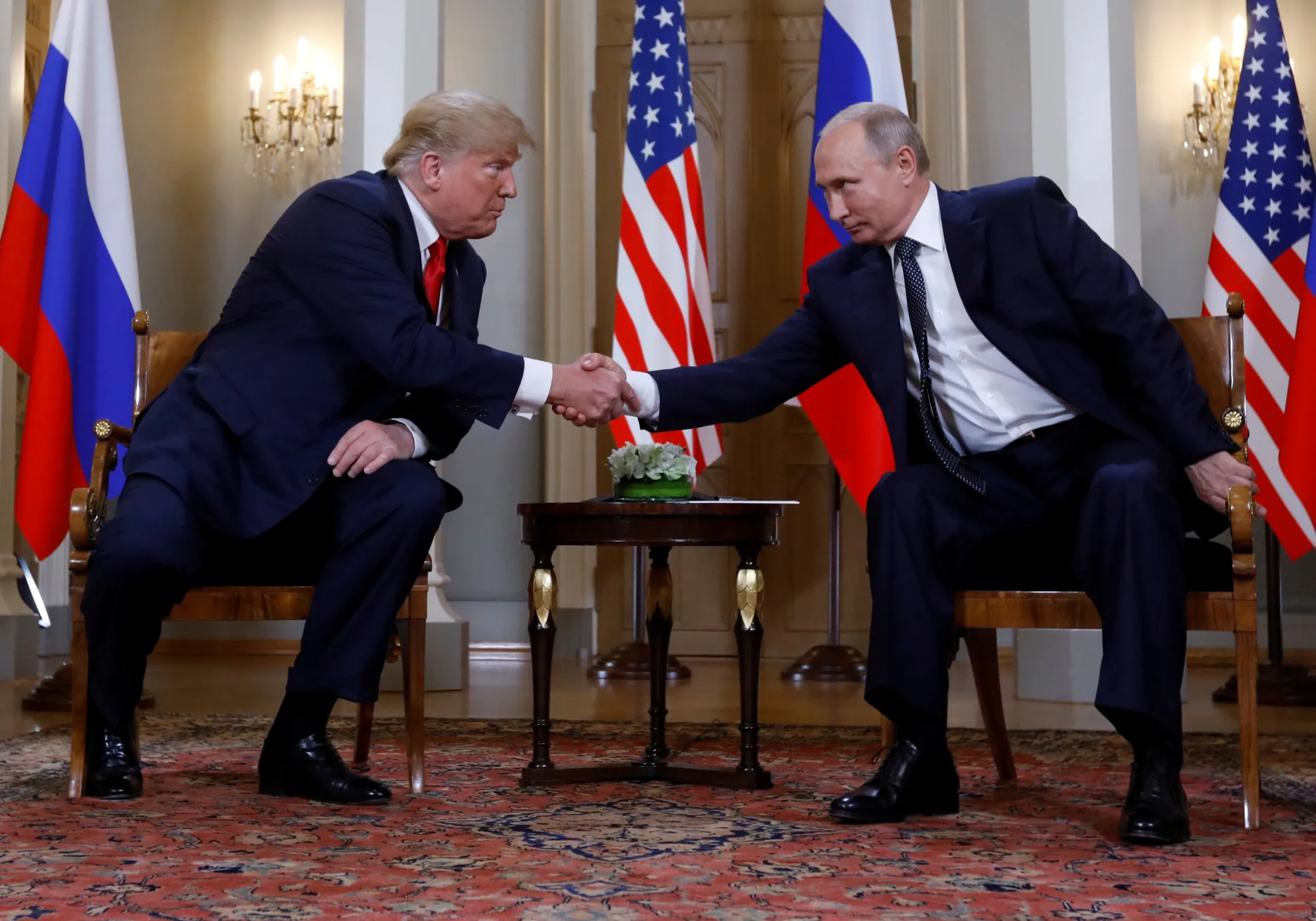
Donald Trump recently announced his willingness to meet Russian President Vladimir Putin to discuss peace talks for the ongoing Ukraine war. Trump, who has emphasized the importance of ending the conflict, stated that preparations for the meeting are underway, although no specific date has been set.
This announcement comes amid rising concerns about the war's impact and ongoing U.S. support for Ukraine. In this article, we explore the potential for peace talks, Trump's stance on the war, and the implications of a possible meeting with Putin.
Trump remarked during a press conference at his Mar-a-Lago resort in Palm Beach, Florida, "He wants to meet, and we are setting it up." He further noted, "He has said that even publicly, and we have to get that war over with."
The Kremlin confirmed on Friday its willingness to facilitate a meeting between Trump and Putin, though no specific arrangements have been finalized. Dmitry Peskov, the spokesman for President Putin, stated, "If, after taking office, the political will to resume contacts at the highest level remains, then of course President Putin will only welcome this."
There has been no immediate response from Ukrainian President Volodymyr Zelenskyy’s government regarding the potential meeting.
Since Russia's invasion of Ukraine in February 2022, the Biden administration has pledged billions of dollars in aid and military support to Ukraine.
The potential return of Trump to the White House has sparked hopes for a diplomatic resolution to the nearly three-year conflict, but it has also raised concerns about the terms of any peace agreement, particularly if Ukraine would be forced to make significant territorial concessions to Russia.
Trump has voiced skepticism about the continued U.S. security aid to Ukraine, with some of his advisors, including Keith Kellogg, appointed as his special envoy to Ukraine and Russia, proposing potential solutions that could see Ukraine relinquish parts of its territory.
Throughout his first term in office, Trump and Putin held numerous meetings, with at least five encounters taking place across various global summits in countries such as Finland and Vietnam.
Trump has previously stated that his strong rapport with Putin could allow him to end the war in Ukraine "within 24 hours." However, Trump suggested earlier this week that a six-month timeline might be a more realistic goal for achieving peace.
"I hope to have six months," Trump told reporters, adding, "I hope long before six months."
The President-elect of the United States does not dismiss the possibility of employing military force to seize control of Danish territory, which hosts a US military installation.
During a press conference held at his Mar-a-Lago estate in Florida on Tuesday, President-elect Donald Trump of the United States reaffirmed his interest in acquiring Greenland, asserting that it is vital for American national security.
The Republican leader, who is scheduled to be inaugurated on January 20, did not dismiss the possibility of employing military or economic measures to realize the objective of annexing the self-governing Danish territory. Additionally, Trump has expressed intentions to make Canada the 51st state of the United States and to take control of the Panama Canal, as part of his broader agenda for territorial expansion following his electoral victory in November.
This raises the question: why does Trump seek to acquire Greenland, a territory that is predominantly covered in ice and located over 3,000 kilometers (1,864 miles) from Washington, DC? Is this the first instance of the United States attempting to obtain Greenland?
Geographically, Greenland is situated between the Arctic Ocean and the North Atlantic Ocean, making it the largest island in the world and a part of North America. While Australia is significantly larger and surrounded by water, it is classified as a continent rather than an island. Greenland is inhabited by approximately 56,000 individuals, primarily Indigenous Inuit people.
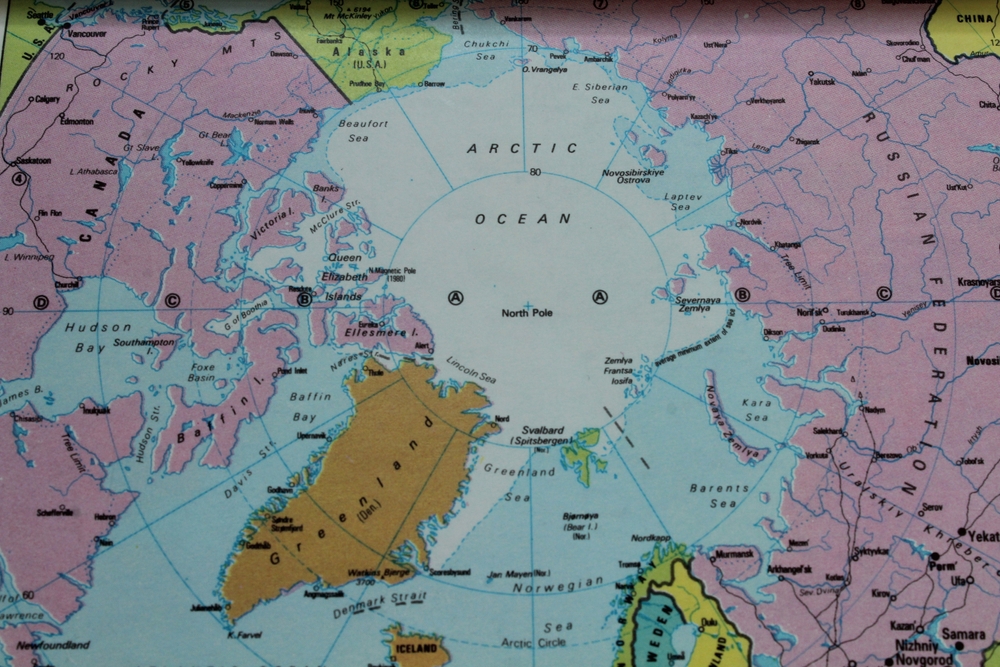
Greenland is the world’s largest island, spanning 2.17 million square kilometers.
Nuuk, the capital of Greenland, is situated closer to New York City, approximately 2,900 kilometers (1,800 miles) away, than to Copenhagen, which lies 3,500 kilometers (2,174 miles) to the east. Greenland was governed by Denmark from the early 18th century until it achieved self-governing status in 1979.
Since 2009, the territory has had the option to pursue independence through a referendum. Prime Minister Mute Egede of Greenland has advocated for independence from Denmark. The Arctic island is one of Denmark's two autonomous territories, the other being the Faroe Islands. As Denmark is a member of NATO, Greenland is automatically included in the North Atlantic military alliance. Although Greenland is not a member of the European Union, it is associated with the EU as one of the 25 overseas countries and territories (OCTs).
According to an EU law website, "OCT nationals are EU citizens," which means that Greenlanders are recognized as EU citizens. In 1973, Greenland became a member of the European Community alongside Denmark but withdrew in 1985. The European Community has since been succeeded by the EU. The EU has not provided an official response to recent statements made by Trump.
On December 23, Trump stated on his Truth Social media platform that “the ownership and control of Greenland is an absolute necessity.” In response, Greenland’s elected Prime Minister, Egede, firmly declared that the island is not for sale. “Greenland is ours. We are not for sale and will never be for sale.
We must not lose our long struggle for freedom,” Egede emphasized in a written statement. In light of Trump's intentions regarding the autonomous territory, the Danish government announced an increase in defense spending in Greenland amounting to $1.5 billion. On Tuesday, prior to his son Donald Trump Jr.'s visit to Greenland, the US President-elect reiterated on his Truth Social platform that “Greenland is an incredible place, and the people will benefit tremendously if, and when, it becomes part of our Nation….” Following Trump's recent remarks, Egede convened with Danish King Frederik X in Copenhagen on Wednesday, although the specifics of their discussion were not disclosed. Danish Prime Minister Mette Frederiksen asserted on Tuesday that “Greenland belongs to the Greenlanders,” while Foreign Minister Lars Lokke Rasmussen stated that the island has no intention of becoming a federal state within the United States.
This is not the first occasion on which Trump has shown interest in acquiring the island, which is home to a US military base. He previously canceled a planned visit to Copenhagen after Denmark, a key US ally, declined his proposal to purchase the island during his first term. Greenland provides the most direct route from North America to Europe, offering the US a strategic advantage for military operations and its ballistic missile early-warning system. The US has indicated a desire to enhance its military presence in Greenland by installing radars in the waters that connect Greenland, Iceland, and the United Kingdom. These waters serve as a critical passage for Russian and Chinese vessels, which the US aims to monitor.
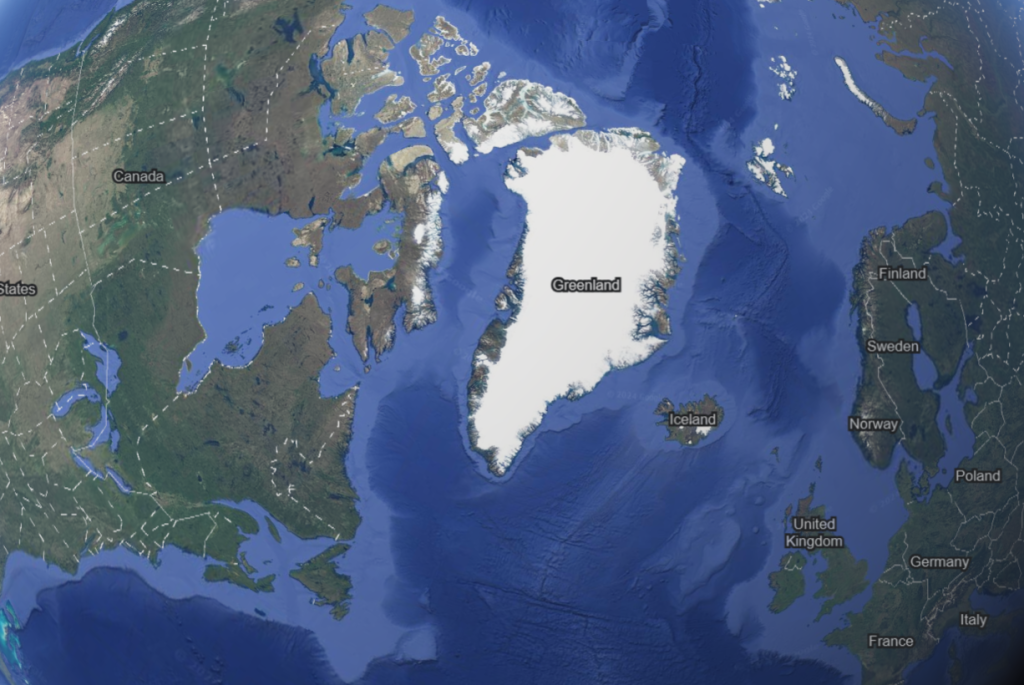
Google Earth
The island possesses a significant abundance of minerals, including rare earth elements essential for battery production and advanced technological applications. A 2023 assessment revealed that 25 out of 34 minerals classified as "critical raw materials" by the European Commission are present in Greenland. Greenland does not engage in the extraction of oil and gas, and its mining activities face opposition from the Indigenous communities. The island's economy primarily depends on its fishing industry.
Indeed, the United States has shown a longstanding interest in Greenland. The United States has contemplated acquiring Greenland on at least two occasions, notably in 1867 and again in 1946, when President Harry S. Truman proposed a purchase for $100 million. This proposal was declined by Denmark.
In 1867, the United States acquired Alaska from Russia. Following this, Secretary of State William H. Seward sought to negotiate the acquisition of Greenland from Russia, but this effort was unsuccessful. The United States occupied Greenland in 1941 after Nazi Germany invaded Denmark during World War II. A military and radio presence was established on the island, and American forces have maintained a continuous presence at Pituffik Space Base, formerly known as Thule Air Base, located in the northwest of Greenland.
Latest: Yakuza Boss Takeshi Ebisawa Admits Role in Trafficking Nuclear Materials from Myanmar
While Greenland was still under Danish colonial rule in 1946, Truman proposed the purchase of the island for $100 million, an offer that Denmark rejected. This proposal was made under the veil of Cold War secrecy and only became public knowledge in 1991 through an Associated Press report.
Certain world maps can distort the perception of Greenland's true size. The Arctic island spans 2.17 million square kilometers (836,330 square miles), making it approximately three times larger than the U.S. state of Texas.
The perception of Danish territory appears larger when viewed on maps. This discrepancy arises from the prevalent use of the Mercator projection in modern cartography, a method developed by the European cartographer Geert de Kremer in 1569. This projection has faced criticism for its distortion of landmass proportions. In the Mercator representation, Greenland is depicted as nearly the same size as Africa; however, in reality, Africa can accommodate 14 times the area of Greenland.
He arrived on the island on Tuesday, with the Greenland government stating that he was there "as a private individual," and that no meetings with Greenlandic representatives were scheduled. Nonetheless, Trump expressed on his Truth Social platform on Monday that he had heard the people of Greenland were supportive of the Make America Great Again movement.
“I am hearing that the people of Greenland are ‘MAGA’”, referring to the Make America Great Again movement.
“My son, Don Jr, and various representatives, will be traveling there to visit some of the most magnificent areas and sights.
“Greenland is an incredible place, and the people will benefit tremendously if, and when, it becomes part of our nation,” Trump added. “We will protect it, and cherish it, from a very vicious outside world.”
The global response to Trump's remarks has been largely negative, particularly among European leaders. German Chancellor Olaf Scholz criticized Trump's notion on Wednesday, asserting, “Borders must not be moved by force. This principle applies to every country, whether in the East or the West,” He further noted that discussions with European partners revealed a sense of unease regarding recent statements from the United States, emphasizing the need for unity.
“In talks with our European partners, there is an uneasiness regarding recent statements from the US. It is clear: We must stand together.”
French Foreign Minister Jean-Noel Barrot told national radio on Wednesday that there was “no question of the EU letting other nations in the world, whoever they may be, attack its sovereign borders.”
| Fact | Details |
|---|---|
| Largest Island | Greenland is the world’s largest island, spanning 2.17 million square kilometers. |
| Autonomy | An autonomous territory of Denmark with self-rule since 1979. |
| Population | Around 56,000 people, mostly Inuit. |
| Capital | Nuuk is Greenland's capital and largest city. |
| Geographic Location | Located between the Arctic and North Atlantic Oceans. |
| Natural Resources | Rich in minerals, including rare earth elements. |
| Strategic Military Base | Home to the U.S. Thule Air Base, a key military installation. |
| Environmental Conditions | Mostly covered by ice, with vast glaciers and extreme conditions. |
| Independence Movement | Ongoing discussions about full independence from Denmark. |
| Climate Change Impact | Greenland is significantly impacted by climate change, contributing to rising sea levels. |
U.S. President Joe Biden is set to prohibit new offshore oil and gas exploration along the majority of the U.S. coastlines, a decision that may pose challenges for President-elect Donald Trump, who has expressed intentions to enhance domestic energy production. On Monday, the White House announced that Biden will exercise his authority under the Outer Continental Shelf Lands Act, a statute that has been in place for 70 years, to safeguard all federal waters off the East and West coasts, the eastern Gulf of Mexico, and certain areas of the northern Bering Sea in Alaska.
This ban will encompass approximately 625 million acres (253 million hectares) of ocean. Biden indicated that this action aligns with his climate change initiatives and his objective to conserve 30% of U.S. lands and waters by the year 2030. He referenced the 2010 Deepwater Horizon oil spill in the Gulf of Mexico, asserting that the limited drilling potential in the affected areas does not warrant the public health and economic risks associated with future leasing.
"My decision reflects the long-held views of coastal communities, businesses, and beachgoers: that drilling in these regions could inflict irreversible harm on cherished locations and is unnecessary for fulfilling our nation's energy requirements," Biden stated. "The risks are not justified."
You Might Like: Plains All American Pipeline Agrees to $72.5 Million Settlement
This announcement arrives as Trump has committed to reversing Biden's conservation and climate policies upon assuming office later this month. During his presidency, Biden restricted new oil and gas leasing on federal lands and waters, which drew criticism from states and companies reliant on drilling. However, the Lands Act, which empowers presidents to withdraw areas from mineral leasing and drilling, does not provide the legal means to rescind previous bans, as established by a 2019 court ruling.
This ruling was a response to Trump's attempts to overturn Arctic and Atlantic Ocean withdrawals enacted by former President Barack Obama at the conclusion of his term. Notably, Trump also utilized this law to prohibit the sale of offshore drilling rights in the eastern Gulf of Mexico off Florida's coast until 2032. Biden's decision will similarly protect this area indefinitely.
Karoline Leavitt, a spokesperson for Trump's transition team, described Biden's decision as "disgraceful" on X, while reaffirming Trump's commitment to enhance U.S. drilling, although she did not provide specific details. A trade association representing the oil and gas sector stated that this decision would jeopardize American energy security and urged Congress to overturn it.
Biden's decision to ban offshore oil and gas drilling in extensive areas marks a bold step toward his climate and conservation goals. While it aligns with environmental priorities, the move faces challenges from Trump, who aims to reverse such policies, highlighting the ongoing tension between energy production and environmental protection.
Republican President-elect Donald Trump has indicated his intention to extend clemency to certain supporters involved in the January 6, 2021, assault on the U.S. Capitol, which aimed to obstruct Congress from certifying President Joe Biden's victory in the 2020 election.
Update: Trump asks Supreme Court to delay hush money case before sentencing
Trump has stated that he anticipates initiating this process soon after his inauguration on January 20, although he has not specified how many of the over 1,580 individuals charged in connection with the incident may receive clemency. The following information outlines key details.
Trump's statements regarding potential clemency recipients have been inconsistent. He has at times indicated that "many" individuals will be granted clemency, while also suggesting that there may be exceptions for those who acted violently. John Pierce, a defense attorney representing over 50 defendants from January 6, remarked, "I expect he will act swiftly and broadly in his decisions." He added that failing to issue a comprehensive pardon on his first day could lead to significant criticism.
Legal experts believe that the largest group of January 6 offenders likely to receive pardons consists of those charged with misdemeanor offenses, such as trespassing or unlawful assembly on Capitol grounds, without any allegations of violence. Notable individuals facing only misdemeanor charges include Couy Griffin, founder of Cowboys for Trump and a former Republican official from New Mexico, as well as Rebecca Lavrenz, known as the "J6 Praying Grandma," whom Trump has described as "unfairly targeted by Crooked Joe Biden's DOJ."
In principle, Trump could issue a blanket pardon encompassing all defendants charged or convicted of misdemeanors related to January 6.
Over 170 individuals have been charged with offenses involving deadly weapons or assaults on law enforcement during the January 6 events.
The group comprises Julian Khater, who received a sentence exceeding six years in prison for executing a pepper-spray assault on Capitol Police Officer Brian Sicknick and two additional individuals. Sicknick passed away the following day, with a medical examiner determining that his death was due to natural causes.
You Might Like: Lawyer Sacked For Alleged Involvement In US Capitol Riot
ABC News has agreed to settle a lawsuit by paying $15 million to the presidential library of U.S. President-elect Donald Trump. The settlement comes after a legal dispute regarding remarks made by ABC anchor George Stephanopoulos during a broadcast on March 10, 2024, which were linked to a civil case filed by writer E. Jean Carroll against Trump.
The lawsuit, filed in the U.S. District Court for the Southern District of Florida on March 19, accused Stephanopoulos of making false and malicious comments during an interview with U.S. Representative Nancy Mace. During the interview, Stephanopoulos had discussed Trump’s legal battles and remarked that the former president had been deemed liable for rape, leading to widespread dissemination of these statements.
The plaintiffs claimed that the comments were made with malicious intent and led to reputational harm. As part of the settlement, ABC News is required to pay $15 million to Trump’s presidential library, in addition to issuing a public statement.
"We are pleased that the parties have reached an agreement to dismiss the lawsuit on the terms outlined in the court filing," an ABC News spokesperson said.
The lawsuit specifically referenced a moment during the March 10 interview with Representative Mace, who has openly discussed her own experience as a rape survivor. Stephanopoulos asked her why she would endorse Trump, despite his ongoing legal issues, particularly a civil case brought against him by Carroll.
As part of the settlement agreement, ABC News will also issue a statement clarifying their position on the matter. The network and Stephanopoulos will express regret over the comments made during the interview, acknowledging that they were misinterpreted and should have been framed more carefully.
The full statement from ABC News is expected to be published by Sunday, following the conclusion of an online article related to the interview. The settlement closes a contentious chapter between the network, Trump, and the parties involved in the lawsuit.
The lawsuit involving ABC News and George Stephanopoulos stems from comments made during an interview on March 10, 2024, with U.S. Representative Nancy Mace. In this interview, Stephanopoulos made comments regarding Donald Trump’s legal troubles, specifically referencing his civil case with writer E. Jean Carroll, in which Carroll accused Trump of sexual assault.
Stephanopoulos mentioned that Trump had been "deemed liable for rape" and questioned Mace about why she continued to endorse him despite these allegations. The plaintiff's legal team argued that Stephanopoulos' remarks were made in a way that could be deemed defamatory and intended to damage Trump’s reputation. The lawsuit, filed by Trump’s legal team, alleged that these statements were made with malicious intent, spreading misinformation and harm to his reputation.
The lawsuit ultimately ended with ABC News agreeing to pay $15 million to the Donald Trump presidential library. The settlement comes with the condition that ABC News also issue a formal statement of regret for the comments made during the interview. The network and Stephanopoulos are expected to publicly acknowledge that their remarks were misleading or incorrectly phrased and could have been construed as defamatory.
Key Elements of the Settlement:
The case highlights the tensions between media outlets and public figures when it comes to coverage of legal battles and the potential for defamatory comments. It also underscores the responsibility that journalists and news organizations have when discussing sensitive topics such as allegations of sexual assault, especially when those allegations are tied to powerful individuals like Trump.
Donald Trump has requested that a federal judge in Pennsylvania dismiss the lawsuit brought against him by members of the Central Park Five, which stems from remarks he made during a presidential debate earlier this year.
He contends that the plaintiffs are misrepresenting constitutionally protected “political rhetoric” and “substantially true” statements as defamation. In a motion filed on Wednesday to dismiss the complaint, Trump asserted that his comments regarding the individuals were simply a reflection of “the opinion that he had held” following their 1989 arrests, specifically that he believed they were guilty.
The motion states, “Plaintiffs now attempt to recast political rhetoric and debate about criminal justice and public safety as ‘defamation.’ This ignores well-established First Amendment jurisprudence that safeguards the President-elect’s speech on matters of public interest. The plaintiffs’ claims do not satisfy the necessary elements for defamation, as President-elect Trump’s statements, when considered in context, were protected opinions based on true disclosed facts, lacked any defamatory impact, and were substantially true.”
Trump further contended that additional allegations of false light and intentional infliction of emotional distress should also be dismissed for similar reasons. In the complaint, Antron Brown, Kevin Richardson, Raymond Santana, Korey Wise, and Yusef Salaam assert that during his debate with Kamala Harris, Trump “falsely stated that Plaintiffs killed an individual and pled guilty to the crime.” Defense attorney Karin Sweigart noted in her letter to U.S. District Judge Wendy Beetlestone that “Plaintiffs allege that these statements, which pertain to public safety and criminal justice, constitute defamation, false light, and intentional infliction of emotional distress.
However, these claims fail on both procedural and substantive grounds, and Plaintiffs’ attempt to use the courts to suppress political discourse is prohibited by Pennsylvania law.”
Latest: TikTok Hires Former Trump Administration Lawyer for Supreme Court Appeal
The discussion in question arose when Harris asserted that throughout his life and career, Trump has “sought to exploit race to create divisions among the American populace.” She cited as an example the full-page advertisement he published in The New York Times and other outlets in 1989, which called for the execution of five young Black and Latino boys who were innocent — the Central Park Five.
In response, Trump remarked, “They come up with things like what she just said going back many, many years when many people, including Mayor Bloomberg, concurred with me regarding the Central Park Five.” “They admitted — they stated they pled guilty. And I remarked, well, if they pled guilty, they severely harmed a person, ultimately leading to a death,” he continued. “And if they pled guilty — then they claimed we’re not guilty.”
Latest: Hannah Kobayashi Found After Month-Long Disappearance in Mexico
The complaint indicated that these statements were “demonstrably false.” “Plaintiffs never pled guilty to any crime and were later exonerated of all wrongdoing. Additionally, the victims of the Central Park assaults were not killed,” the lawsuit asserted.
In a filing on Wednesday, Trump contends that his remarks — which reached approximately 67 million viewers — are safeguarded by Pennsylvania’s anti-SLAPP statute, as he is being sued “for a matter of public interest.” Anti-SLAPP refers to “Anti-Strategic Lawsuits Against Public Participation,” and such legislation aims to protect individuals from being intimidated or silenced by the threat of costly litigation.
The motion to dismiss argues that it is “beyond dispute” that Trump’s comments during the debate represent speech on “matters of public concern,” particularly regarding crime, punishment, policing, and “race and politics in this country.”
Trump contended that his remarks do not constitute defamation, as he was simply articulating his reasoning for placing the advertisement in The New York Times, which he characterized as being “about crime and punishment.” He asserted that following Harris's accusation of him advocating for the execution of the Central Park Five, he clarified that the ad was taken out because “at that time, Plaintiffs had admitted guilt to heinous crimes.” “The Plaintiffs acknowledge this as a true fact,” the motion indicates. “President-elect Trump presented his debate comments as his interpretation of the evidence available to him in 1989.”
Latest: Who is Luigi Mangione, Suspect in UnitedHealthcare CEO Murder?
The document further emphasizes that Trump did not contest Harris's claim that the members of the Central Park Five were ultimately exonerated. The president-elect further maintained that his statements could not be deemed defamatory as they were “substantially true,” arguing that the distinction between formally pleading guilty in a court of law and “admitting guilt” is merely a matter of legal terminology. “Plaintiffs claim that President-elect Trump defamed them by asserting that they had ‘pled’ guilty to the Central Park Assaults in 1989, when in reality, Plaintiffs had ‘admitted’ guilt regarding the assaults,” the motion explains. “In essence, Plaintiffs take issue with the technically inaccurate application of the legal term ‘pled.’
However, the assertion that Plaintiffs initially ‘pled’ guilty rather than ‘admitting’ guilt represents a technical inaccuracy within the inherently complex realm of criminal law that ‘cannot serve as the foundation for a defamation claim.’” Moreover, the motion argues that when Trump stated, “if they pled guilty, they badly hurt a person, killed a person ultimately,” it does not amount to defamation, even though no one was killed in the incident, as one of the victims was described as being “virtually dead.”
In 1989, the then-teenagers were falsely accused of raping Trisha Meili while she was jogging in Central Park.
While in police custody, the plaintiffs endured prolonged periods of coercive interrogation, conducted under duress, without the presence of legal counsel and often lacking a parent or guardian, as detailed in the lawsuit. Initially, the plaintiffs denied any involvement in the Central Park assaults. However, after extensive interrogation, four of them consented to provide written and videotaped statements in which they falsely confessed to being present during the incidents.
Subsequently, the Central Park Five faced trials, consistently asserted their innocence, were convicted by juries in 1990, and sentenced to prison. They were ultimately exonerated decades later when the actual perpetrator, Matias Reyes, confessed to the crime against Meili, and DNA evidence "conclusively" established Reyes as the "true perpetrator," according to court documents. The lawsuit emphasized that the plaintiffs had no involvement in the assaults and that their statements were obtained through coercion and duress. It noted that all plaintiffs recanted their coerced statements shortly after the interrogations. Ultimately, the Central Park Five were exonerated, their convictions were overturned, and New York City agreed to settle a lawsuit for $41 million.
Latest: Bankruptcy Judge Blocks Sale of Alex Jones' Infowars to The Onion
Donald Trump's legal team argues that his comments during the 2020 presidential debate about the Central Park Five were protected under the First Amendment as political rhetoric. Trump claims that his statements were based on opinions formed in 1989, reflecting his belief in the guilt of the five men involved in the infamous case. The plaintiffs, however, contend that his remarks were defamatory and false, as they were exonerated years later. The outcome of the motion to dismiss will have significant implications for the intersection of free speech, defamation law, and public discourse on sensitive issues.
