
Understand Your Rights. Solve Your Legal Problems
Ukrainian President Volodymyr Zelensky, 47, has made a significant proposal to the United States, offering access to Ukraine’s rich reserves of rare-earth minerals in exchange for security guarantees amid ongoing geopolitical tensions. This offer could transform U.S.-Ukraine relations, emphasizing the strategic importance of these crucial minerals in the global economy.
Ukraine holds significant deposits of rare-earth minerals, including lithium, uranium, and titanium, all vital for the production of advanced technologies like electric vehicles, renewable energy systems, and electronics. These minerals are currently in high demand globally, particularly by the United States, which is keen to reduce its dependency on other countries, especially China, for such essential resources.
In a statement about the deal, President Zelensky emphasized the importance of Ukraine’s role in the global supply chain, saying:
"Ukraine is ready to collaborate with the United States on its rare-earth resources to strengthen both our economies. This partnership is not only beneficial for Ukraine but for the global market, and especially the U.S."
Rare-earth materials are essential for manufacturing consumer electronics and electric engines. Zelensky has raised concerns that Russia might supply these resources to its allies, including North Korea and Iran, the latter of which the U.S. imposed additional sanctions on just last week. "We must stop Putin and protect what we have, especially the resource-rich Dnipro region in central Ukraine." Zelensky reportedly stated.
In exchange for access to these precious minerals, Zelensky has proposed a security agreement with the U.S. He believes that a mutual partnership with the U.S. could significantly bolster Ukraine’s defenses while securing vital resources. The arrangement would ensure continued American support for Ukraine’s military needs, even as the country faces ongoing conflicts on its borders.
Zelensky expressed his vision for this deal, stating:
"This is an opportunity for us to ensure our national security while contributing to a more secure global market. The United States has been a critical ally, and with this deal, we can strengthen our ties even further."
U.S. President Donald Trump, who has consistently supported Ukraine’s fight for sovereignty, responded positively to the proposal. He highlighted the mutual benefits of this deal, particularly in terms of securing rare-earth supplies for the U.S. military and technology sectors.
Trump noted:
"Ukraine has essentially agreed to give the United States access to its $500 billion worth of rare-earth minerals. This will not only help secure the U.S. in terms of defense capabilities but will also reduce our dependency on other nations for these crucial resources."
The deal, if finalized, will mark a historic collaboration between the two countries, highlighting the strategic importance of both military and economic alliances in today’s global environment.
This proposal underscores Ukraine’s growing role in the global economy and its strategic importance to U.S. national security. Access to Ukraine’s rare-earth reserves would help strengthen the U.S. position in the increasingly competitive global market for critical minerals. At the same time, Ukraine would benefit from security guarantees and continued U.S. support.
Zelensky added:
"I believe this partnership can serve as a model for future international cooperation. It’s not just about minerals; it’s about creating a safer and more stable world."
"I'd like to see that war end," Trump said last week. "We're looking to do a deal with Ukraine where they're going to secure what we're giving them with their rare earth and other things."
President Trump has directed the U.S. Treasury Department to stop minting new pennies, citing the rising costs of producing the one-cent coin.
In a post on his Truth Social site Sunday night, Trump voiced frustration over the ongoing expense of minting pennies. "For far too long the United States has minted pennies which literally cost us more than 2 cents. This is so wasteful!" Trump wrote, adding that he had instructed the Secretary of the Treasury to halt new penny production.
This decision is part of a broader push by the Trump administration to enact sweeping changes across various sectors, including immigration, gender issues, and even the naming of geographical locations. While Trump didn’t bring up eliminating the penny during his campaign, recent discussions on social media, particularly a post by Elon Musk’s Department of Government Efficiency, have reignited the conversation.
According to the U.S. Mint, the production of nearly 3.2 billion pennies in fiscal year 2024 cost the government $85.3 million. Each penny cost approximately $0.037 to produce, a slight increase from $0.031 the previous year. The mint also faces similar losses with the nickel, which costs roughly $0.14 to make.
It remains unclear whether Trump has the legal authority to halt penny production unilaterally. The specifications for U.S. currency, including coin production, are typically determined by Congress. However, Robert K. Triest, an economics professor at Northeastern University, suggested there could be some leeway. “The process of discontinuing the penny in the U.S. is a little unclear. It would likely require an act of Congress, but the Secretary of the Treasury might be able to simply stop the minting of new pennies,” he explained.
Over the years, lawmakers have introduced several proposals to either suspend or eliminate the penny, citing cost-saving benefits and faster transactions at cash registers. Many other countries, including Canada, have already stopped minting their one-cent coins. Canada made the decision in 2012.
This isn’t the first time the U.S. has eliminated a low-value coin; the half-cent coin was discontinued by Congress in 1857.
Trump’s administration has been focused on cutting costs, with Musk at the helm of the government’s efficiency efforts. Musk is targeting wasteful spending across federal agencies, with a goal of saving $2 trillion. "Let’s rip the waste out of our great nation’s budget, even if it’s a penny at a time," Trump concluded in his post.
Trump’s announcement came as he was departing New Orleans after attending the first half of the Super Bowl.
Tariffs, taxes imposed on imported goods, have been a key feature of the United States’ trade policy under President Donald Trump. Trump’s administration has introduced a series of tariffs, particularly on goods from Mexico, Canada, and China, escalating tensions with America’s major trading partners. These tariffs have sparked debates over their potential impact on businesses, consumers, and the global economy.
Tariffs are taxes levied on imported goods, which effectively raise the price of those goods for domestic consumers. The most common form of tariff is the ad valorem tariff, calculated as a percentage of the value of the product. For example, if the price of an imported product is $100 and a 25% tariff is applied, the price increases by $25.
Other types of tariffs include specific tariffs, which impose a fixed fee per unit of an imported product, and tariff-rate quotas, which apply higher taxes once an import threshold is surpassed.
The primary goal of tariffs is to protect domestic industries from foreign competition by making foreign goods more expensive, thus encouraging consumers to purchase domestic products instead. Tariffs can also generate revenue for the government. However, they often lead to higher costs for businesses that depend on foreign imports, which can result in higher prices for consumers.
Though President Trump has argued that foreign countries bear the brunt of tariff costs, the reality is that U.S. companies importing goods are responsible for paying the tariffs. These businesses must pay the duty to U.S. Customs and Border Protection. Afterward, businesses may pass the increased costs onto consumers, leading to higher prices on everyday goods. According to estimates from financial services firm ING, if Trump follows through with all his proposed tariffs, the average American household could see a rise of $2,400 per year in costs due to higher prices on goods.
The latest round of tariffs primarily targets Mexico, Canada, and China, three of the United States' largest trading partners. Here’s why Trump has targeted these nations:
President Trump argues that tariffs serve multiple purposes, including:
At the World Economic Forum in Davos, Switzerland, Trump encouraged companies to relocate their manufacturing to the U.S., saying, “Come make your product in America. But if you don’t make your product in America, you will have to pay a tariff.”
Economists are concerned that Trump’s tariff policy could lead to inflationary pressures. As the cost of goods rises, consumers may face higher prices for everyday items, from groceries to electronics. The U.S. effective tariff rate is expected to increase significantly, potentially pushing inflation up to 4%, well above the Federal Reserve’s 2% target.
Higher inflation could, in turn, lead to higher interest rates and more expensive borrowing for businesses and consumers. Additionally, tariffs on key manufacturing components and auto parts could disrupt supply chains, making products like cars more expensive and potentially leading to job losses in sectors dependent on international trade.
Latest: Elon Musk Promises to Cancel Grants Following Access to US Treasury System
While many Republicans have supported Trump’s tariffs, industry groups and Democrats have warned that the policy could have negative economic consequences. The National Foreign Trade Council has cautioned that tariffs could significantly increase the price of many goods, from avocados to automobiles.
The immediate effects of these tariffs have been currency fluctuations and a decline in stock markets. The Mexican peso and Canadian dollar have weakened against the U.S. dollar, while global investors have shown concerns over the growing trade tensions.
China has already vowed to take countermeasures in response to the tariffs, including challenging them at the World Trade Organization (WTO). The trade war between the U.S. and China, which intensified during Trump’s first term, could reignite as a result of these new tariffs.
The legality of Trump’s tariffs has been questioned, as he has invoked the International Emergency Economic Powers Act and the National Emergencies Act to justify the imposition of tariffs. Critics, including Democratic lawmakers, have accused him of abusing executive power.
In the past, retaliatory tariffs have hurt U.S. exporters. For instance, American farmers lost billions of dollars when China imposed tariffs on soybeans and corn during Trump’s first term. Now, with tariffs targeting a broad range of goods, the risk of a prolonged trade war looms large.
If the tariffs continue, trade wars could disrupt international supply chains and lead to further job losses in key U.S. industries, especially those reliant on trade with Mexico, Canada, and China. The possibility of further tariffs on steel, aluminium, semiconductor chips, and pharmaceuticals could have wide-reaching consequences for the global economy.
As Mexico, Canada, and China prepare retaliatory measures and legal challenges, businesses and consumers should prepare for increased costs and economic ripple effects in the months ahead.
The future of U.S. trade policy remains uncertain, with many wondering how far the Trump administration will push its tariff agenda and how other nations will respond. As history has shown, retaliatory tariffs could spark a broader trade conflict, making the global economic outlook even more volatile.
A tragic collision between a military Black Hawk helicopter and American Airlines Flight 5342 on Wednesday night has sparked wild conspiracy theories, with some online sleuths suggesting that the helicopter was involved in rehearsing an evacuation route for President Trump to a nuclear bunker.
The incident occurred around 9pm as American Airlines Flight 5342, carrying four crew members and 60 passengers, was approaching Washington's Reagan National Airport. The Black Hawk helicopter, which was conducting a night training exercise as part of a Continuity of Government (COG) mission, collided with the plane before both aircraft crashed into the Potomac River, resulting in the deaths of 67 people. The helicopter was carrying three soldiers during the exercise, which was described by Pete Hegseth, Trump's defence secretary, as a "routine" operation. "The military does dangerous things. It does routine things on a regular basis. Tragically, last night, a mistake was made," Hegseth said.
Despite the official explanation, conspiracy theorists quickly turned to social media, claiming that the crash was not an accident but rather an intentional act, suggesting that military helicopters are not known to fly into civilian aircraft. A growing number of these theorists have posited that the helicopter was engaged in a secretive mission to rehearse President Trump's evacuation route to a secure location, such as a classified nuclear bunker, as part of a larger COG contingency.
A COG mission in the U.S. refers to a series of policies and procedures designed to ensure that government functions can continue in the event of a catastrophe, such as a nuclear attack or other major crisis. One crucial aspect of these operations involves safeguarding key personnel, which has led many to speculate that the helicopter’s mission was linked to this protocol, possibly involving an emergency evacuation of the president.
"CIA has a long history of plotting and executing air disasters. You don’t have to be a conspiracy theorist to find a Black Hawk on a vaguely defined CoG mission striking an airliner sus as hell," one X/Twitter user posted, suggesting the collision was far from accidental.
Another user questioned the rationale behind the helicopter’s flight path, asking, “What the hell were they doing in the tower? Why was a damn Black Hawk helicopter flying a COG training mission in civilian airspace on a Wednesday?”
Further speculation emerged regarding the possibility of a hidden weapon being on the plane, with one user commenting, “If the Black Hawk indeed was on a COG mission, was there a weapon hidden on the plane that needed to be neutralized before it landed? The good of the many outweighing the good of the few...”
Another social media user expressed disbelief at the location of the exercise, stating, “This isn’t about DEI. You should be asking why a Black Hawk is doing COG exercises at one of the busiest airports in the air.”
The incident has sparked a wide array of conspiracy theories, with some alleging that the helicopter appeared to be “chasing” the Bombardier plane as it approached the airport for landing, drawing comparisons to a "1970s-style assassination." Other theorists have demanded to know who was aboard the passenger plane, speculating that the incident might have been a "targeted hit."
Further conspiracy-fueled comments claim that trained pilots would have known how to avoid such a collision, adding to the suspicions surrounding the crash.
As the investigation continues, these conspiracy theories persist, with many questioning the official explanation of the tragic event.
The American Lung Association has sharply criticised President Joe Biden for his failure to finalise a ban on menthol cigarettes, a move that was initially promised in 2021. The proposed ban was hailed by public health experts as a vital step in reducing smoking rates, but as the Biden administration left office without taking decisive action, it has led to ongoing concerns about public health and the influence of the tobacco industry.
The controversy surrounding menthol cigarettes has long been a point of contention. Flavoured cigarettes, excluding menthol, have been banned in the United States since 2009, but the minty flavour of menthol cigarettes has continued to be an exception. For many smokers, menthol not only makes the cigarettes taste smoother, but also reduces throat irritation, making it particularly difficult for individuals to quit.
In 2021, the Biden administration expressed its intention to impose a menthol cigarette ban. A formal proposal was made in 2022, and experts predicted the rule would be implemented by summer 2023. However, this deadline came and went without action, and the decision was further delayed until spring 2024. By the time Biden left office, the ban had not been finalised.
The American Lung Association has been outspoken in its disappointment. Thomas Carr, director of national policy for the association, said, “We’re really disappointed in former President Biden and him bowing to tobacco industry pressure." Carr’s words reflect a growing sense of frustration within the health community, which believes that the ban could have saved countless lives and reduced the burden of smoking-related illnesses, which cause over 490,000 deaths annually in the United States.
Biden’s failure to act on the ban is seen as a major victory for the tobacco industry, which has lobbied heavily to maintain the status quo. This influence has been particularly evident in efforts to prevent the menthol ban, which has been framed by some as a key issue for Black communities. The concern is that banning menthol cigarettes could exacerbate over-policing in communities of colour, leading to unnecessary confrontations with law enforcement. In fact, a 2020 study found that 80% of Black adults who smoke prefer menthol cigarettes.
Diane Goldstein, executive director of the Law Enforcement Action Partnership, warned that the proposed menthol ban could be compared to the war on drugs. “This ban would have been yet another extension of the war on drugs, further undermining the relationships with our communities that are absolutely essential to our ability to fight crime,” Goldstein argued.
Sarah Mills, an expert on racial disparities in tobacco consumption, echoed similar concerns, adding that much of the pushback against the menthol ban was driven by the tobacco industry itself. “Overpolicing is a very serious issue for Black and other communities, and the tobacco industry should not be using this serious issue to advance their own policy agenda,” said Mills, who has conducted research into how tobacco companies disproportionately target Black communities with menthol cigarette promotions.
The failure to finalise the ban has left many in the public health community disheartened. Mills expressed particular disappointment after the Trump administration reversed the proposal, labelling it a “devastating” blow to public health. “My hope is that cities and states continue to move forward with implementing local and statewide bans,” she said, underscoring the importance of continued action at a local level.
The decision by the Trump administration to retract the menthol cigarette ban has been warmly received by leading tobacco manufacturers such as Altria and Reynolds American. Luis Pinto, vice president of communications at Reynolds American, noted, “We are pleased that the new Administration recognizes prohibitionary policies don’t work. There are more effective ways to transition adult smokers away from cigarettes.”
Despite these objections, the American Lung Association is urging the federal government to find alternative solutions to mitigate the health risks associated with smoking. Carr suggested the FDA could implement a tracking system to combat the growing issue of counterfeit tobacco products. He also called on Congress to introduce legislation requiring e-cigarette manufacturers to contribute fees to the FDA to support its regulatory functions.
As the debate around menthol cigarettes continues, many are left wondering whether further inaction could result in continued harm to public health. The American Lung Association’s report serves as a stark reminder of the critical importance of regulatory measures in combating the nation’s smoking epidemic.
Dr. Dorothy Fink, acting health secretary under Trump, has urged a temporary communication freeze until February 1, meaning it remains to be seen whether the Biden administration or other authorities will provide a clearer response in the near future.
In the meantime, states like Massachusetts, California, and Washington, D.C. have already taken matters into their own hands by implementing bans on menthol cigarettes, leaving the federal government to decide whether it will follow suit or continue to bow to pressure from the tobacco industry.
There have been multiple discussions and proposals in the past regarding a potential ban on menthol cigarettes, stretching back several decades.
Throughout these years, the tobacco industry has opposed such measures, arguing that a menthol ban could drive consumers to the black market and result in unfair targeting of certain communities, particularly Black Americans, who have historically been the primary consumers of menthol cigarettes.
Despite these efforts and proposals, no formal ban was put in place until the Biden administration's 2021 announcement. However, states such as Massachusetts, California, and Washington, D.C. have acted independently to impose local menthol bans.
The historical trajectory of menthol cigarette regulation in the U.S. reveals a growing awareness of the public health risks associated with menthol, yet also highlights the influence of the tobacco industry, which has made such a ban a difficult political issue for many years.
President Donald Trump has extended an offer to millions of federal employees, offering significant severance packages for those who choose to resign rather than return to the office. This move is part of his ongoing efforts to reduce the size of the US government.
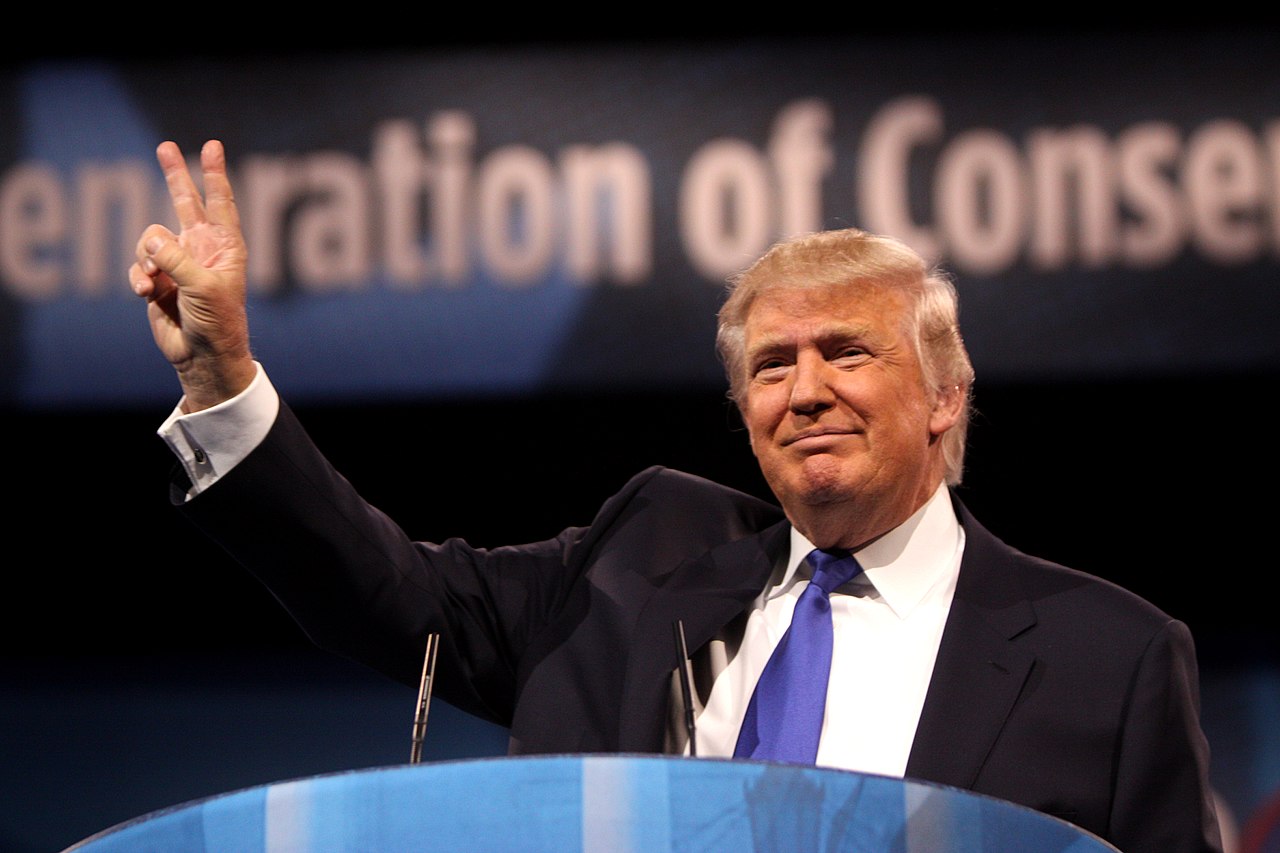
Donald Trump
In an email sent to federal workers on Tuesday, Trump’s administration outlined a "deferred resignation program." Employees must decide by 6 February if they wish to participate in the program. Those who agree to resign by the deadline will receive a severance package equivalent to approximately eight months’ salary.
The Trump administration anticipates that around 10% of the federal workforce, or roughly 200,000 out of more than two million employees, will take the offer, according to CBS News. Senior officials suggested that these buyouts could save the government as much as $100bn (£80bn).
The offer applies to most federal workers, with recipients instructed to respond to the email with "resign" in the subject line if they wish to accept the deal. The severance includes both salary and benefits until 30 September.
However, some federal employees are excluded from the offer, including postal workers, military personnel, immigration officers, and certain national security staff.
The email from the Office of Personnel Management, the government’s human resources agency, also hinted at possible future layoffs, warning employees that those who choose to remain could face uncertainty. "We cannot give you full assurance regarding the certainty of your position or agency but should your position be eliminated you will be treated with dignity," the message stated.
This announcement follows Trump’s earlier decision to require federal employees, who have been working remotely since the Covid pandemic, to return to the office five days a week. Stephen Miller, White House deputy chief of staff for policy, told CNN on Tuesday that the two million federal workers were "overwhelmingly left of centre," adding that it was crucial for Trump to "get control of government." Trump has long pledged to reduce the size and spending of the federal government, a key campaign promise.
To further this goal, Trump enlisted entrepreneur Elon Musk and Vivek Ramaswamy to lead an advisory body aimed at cutting regulations, federal spending, and headcount. Ramaswamy has since left the "Department of Government Efficiency" (Doge).
The mass buyout offer on Tuesday closely mirrored one Musk made to Twitter, now X, employees in 2022 after acquiring the social media platform. Musk had asked Twitter staff to email their intentions to stay at the company, a move that raised similar concerns.
Tuesday’s announcement also came after Trump issued a memo halting federal grants, loans, and other assistance, a plan that was met with confusion and concern. A district judge temporarily suspended the order, which had been set to take effect Tuesday afternoon, until the following Monday. The White House sought to reassure the public that Social Security payments and Medicaid services would not be impacted.
In a separate development on Tuesday, Trump signed an executive order aimed at restricting gender care for minors. The order, titled "Protecting Children from Chemical and Surgical Mutilation," prohibits funding for procedures related to gender transition for those under the age of 19. The policy states that the United States will not fund, sponsor, or support such transitions. The order’s implementation remains unclear, and it is expected to face legal challenges.
Bitcoin fell below the $100,000 mark on Monday, hitting its lowest point in 11 days. Analysts attributed the decline to a wave of caution sweeping the markets, triggered by the surging popularity of a Chinese artificial intelligence model, which sparked a selloff in Western AI-related stocks.
The world’s largest cryptocurrency struggled to maintain momentum last week. A rally that had seen Bitcoin surpass $100,000 following the election of U.S. President Donald Trump eventually lost steam, failing to build on earlier gains.
As of 1156 GMT, Bitcoin was trading at $98,852.17, down approximately 6% for the day. The cryptocurrency had dropped sharply in early trading, reaching its lowest level since January 16.
The broader tech sector also saw significant losses, with traders growing concerned that the rise of Chinese AI startup DeepSeek could challenge the dominance of Western firms in the artificial intelligence space. Some observers have referred to this development as AI’s “Sputnik moment,” drawing parallels to the Soviet Union’s launch of its satellite in the late 1950s, which marked the beginning of the space race.
Geoffrey Kendrick, global head of digital asset research at Standard Chartered, added that the drop in Nasdaq futures had negatively impacted cryptocurrency markets. However, he also pointed to disappointment over the Trump administration's cryptocurrency policy as a key factor contributing to the selloff. Last week, after taking office, President Trump failed to address cryptocurrency in his day-one announcements, leaving many investors dissatisfied. In a subsequent executive order on Thursday, Trump announced the creation of a working group to draft new regulations for cryptocurrency and explore the idea of a crypto stockpile. However, the U.S. Securities and Exchange Commission (SEC) blocked accounting guidance that the crypto industry had hoped would spur wider adoption.
The uncertainty surrounding interest rates also weighed on riskier assets. Thomas Puech, CEO of digital asset hedge fund Indigo, explained that the prospect of interest rates remaining high for an extended period had further strained market sentiment.
U.S. Federal Reserve policymakers are set to meet this week, and it is expected that they will keep interest rates on hold, a decision that could further impact the performance of risk-sensitive assets like Bitcoin.
US President Donald Trump has emerged victorious in a standoff with Colombia after threatening a trade war when the country refused to accept deported migrants.
Trump had warned of "urgent and decisive" retaliation, including imposing 25% emergency tariffs on Colombian goods, after Colombia rejected two US military planes carrying migrants being deported as part of his tough immigration crackdown.
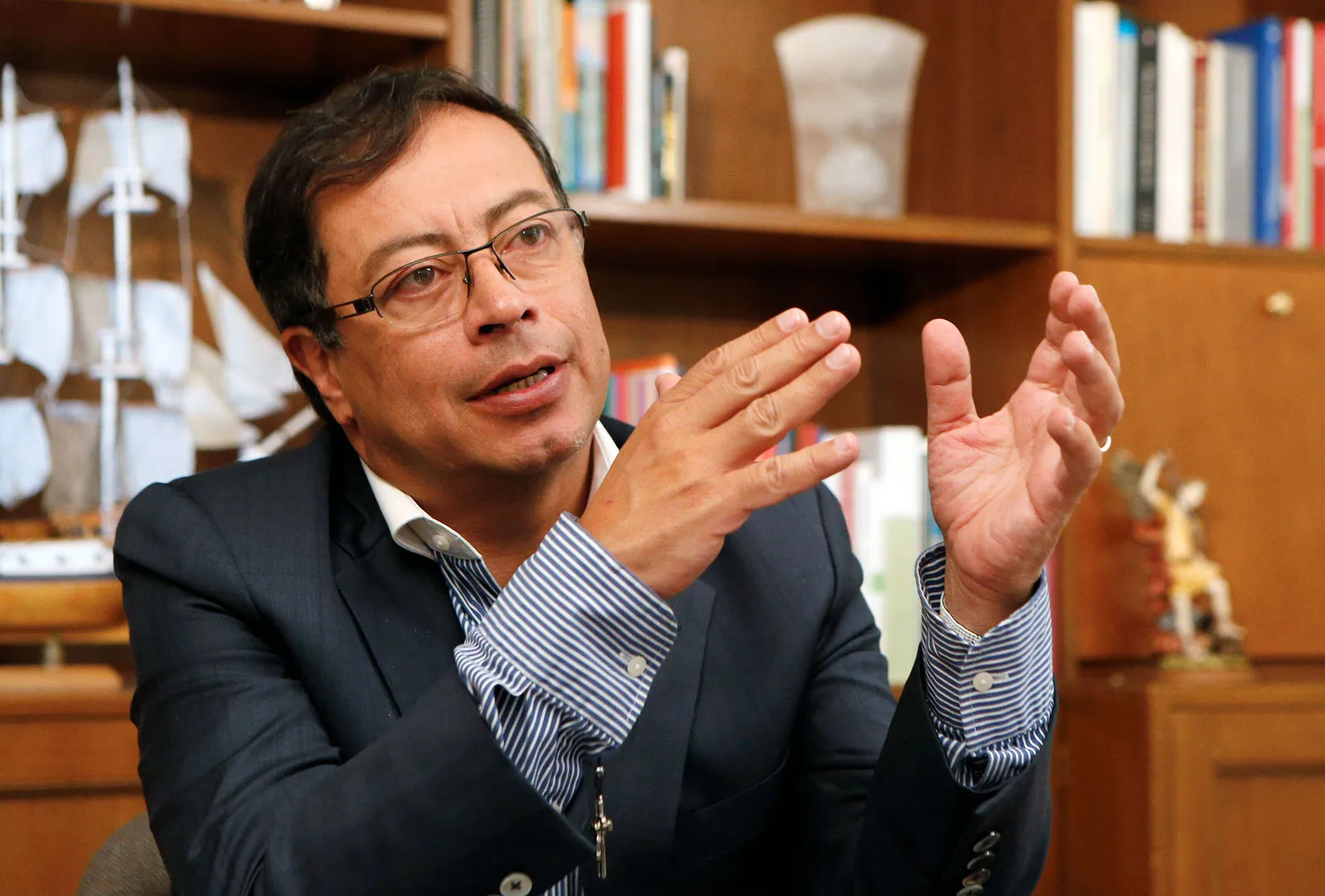
Gustavo Petro
However, in a statement on Sunday, the White House announced that Colombia had capitulated. "The Government of Colombia has agreed to all of President Trump's terms, including the unrestricted acceptance of all illegal aliens from Colombia returned from the United States, including on US military aircraft, without limitation or delay," the statement read. Trump had previously accused Colombian President Gustavo Petro of jeopardising "the national security and public safety of the United States" in a post on Truth Social.
Initially, Colombia’s response was defiant. President Petro threatened to impose 50% tariffs on American goods, declaring in a post on X: "Your blockade does not scare me, because Colombia, besides being the country of beauty, is the heart of the world." Trump shot back with a message of his own: "We will not allow the Colombian government to violate its legal obligations with regard to the acceptance and return of the criminals they forced into the United States!"
Trump’s post was soon followed by an AI-generated image of him wearing a fedora, alongside the phrase FAFO, which stands for "f*** around, find out."
Colombian Foreign Minister Luis Gilberto Murillo later announced: "We have overcome the impasse with the US government." The White House statement added that any draft orders imposing tariffs or sanctions on Colombia would be "held in reserve, and not signed, unless Colombia fails to honour this agreement."
There was also a pointed message for other nations: "Today's events make clear to the world that America is respected again. President Trump... expects all other nations of the world to fully cooperate in accepting the deportation of their citizens illegally present in the United States."
Before backing down, President Petro had demanded that deported migrants from the US be treated with "dignity and respect." "The US cannot treat Colombian migrants as criminals," Petro wrote on X, referencing the 15,660 Americans living without proper immigration status in Colombia. Colombia's refusal to accept US military migrant flights followed a similar move by Mexico, which rejected a request to allow a US military aircraft to land with deported migrants on Thursday.
In the face of Trump’s mass deportations, South American countries are growing increasingly dissatisfied. On Saturday, Brazil’s foreign ministry condemned the "degrading treatment" of Brazilian nationals on a commercial deportation flight. Brazilian officials insisted the handcuffs be removed when the plane landed, and President Luiz Inácio Lula da Silva arranged for a Brazilian Air Force (FAB) flight to continue the migrants’ journey, according to a statement issued on Saturday.
The use of military aircraft for deportation flights stems from Trump’s national emergency declaration on immigration issued on Monday. While US military planes have been used for emergencies such as the US withdrawal from Afghanistan in 2021, this marks the first instance in recent memory of their use for deportation purposes, according to a US official. On Friday, military aircraft conducted two deportation flights, each carrying approximately 80 migrants, to Guatemala.
A federal judge has issued a temporary restraining order against an executive order by President Donald Trump, which aimed to end birthright citizenship in the United States. The order, which was set to take effect on February 19, is now facing five separate lawsuits, and the ruling marks a significant legal setback for the Trump administration.
Judge John Coughenour, who is presiding over the case in Seattle, deemed the executive order “blatantly unconstitutional.” The restraining order came after a request by four states led by Democratic governors. These states have expressed concerns that the order would have a sweeping and detrimental effect on citizenship rights, particularly for children born in the U.S. to non-citizen parents.
The executive order, which Trump signed on his first day in office, aimed to deny citizenship to children born in the U.S. if neither of their parents is a U.S. citizen or a legal permanent resident. The move has sparked fierce opposition from civil rights groups and Democratic attorneys general, who argue that the order infringes on the U.S. Constitution, specifically the 14th Amendment, which guarantees citizenship to anyone born on U.S. soil.
At the hearing, Lane Polozola, the Washington Assistant Attorney General, stressed the importance of the case, telling Judge Coughenour that the president’s executive order would effectively strip newborns of their citizenship. Polozola, who is representing the Democratic attorneys general from Washington, Arizona, Illinois, and Oregon, urged the judge to block the enforcement of the order, which would impact children born as early as February 19.
The restraining order issued by Judge Coughenour comes amid mounting legal challenges to the executive order. This case in Seattle is progressing more quickly than the other four lawsuits, and Judge Coughenour, appointed by Republican President Ronald Reagan, could issue a ruling after hearing arguments or take time to draft a decision before the order’s scheduled implementation.
The legal challengers, led by Democratic states, assert that Trump’s directive violates the 14th Amendment, which has been interpreted for over 100 years to grant citizenship to all children born in the United States, regardless of their parents’ immigration status. The Department of Justice, on the other hand, contends that Trump’s order is a necessary step in reforming the U.S. immigration system, particularly as the nation grapples with challenges at the southern border.
If Trump's executive order had been allowed to take effect, any children born in the U.S. after February 19 whose parents are not U.S. citizens or lawful permanent residents would have been denied citizenship. This would have had significant consequences, including the deportation of those children, restrictions on obtaining Social Security numbers, limited access to government benefits, and obstacles to working legally as they matured.
According to the Democratic-led states, over 150,000 newborns would be denied citizenship each year if the order was upheld. This would fundamentally alter the longstanding interpretation of the Constitution's citizenship clause, which has been in place for more than 127 years.
The challengers argue that the 14th Amendment, ratified in 1868 after the Civil War, unequivocally grants citizenship to all individuals born on U.S. soil. This clause overturned the U.S. Supreme Court's infamous 1857 decision in Dred Scott v. Sandford, which had ruled that African Americans, including freed slaves, could not be considered U.S. citizens. Since then, the 14th Amendment has been understood to provide citizenship to children born in the U.S. regardless of their parents' legal status.
The Justice Department, however, contends that the 14th Amendment was never intended to grant citizenship to all children born on U.S. soil. Instead, it argues that the 1898 Supreme Court decision in United States v. Wong Kim Ark, which confirmed the citizenship of a child born in the U.S. to Chinese immigrants, applied only to the children of legal permanent residents, not undocumented immigrants. The department further stated that only individuals—not states—can bring claims under the citizenship clause, questioning the standing of the states involved in the lawsuit.
In a related development, thirty-six Republican members of the U.S. House of Representatives have introduced a separate piece of legislation that seeks to limit automatic citizenship to children born only to U.S. citizens or lawful permanent residents. This legislative push highlights the ongoing divide between Democratic and Republican lawmakers on the issue of birthright citizenship.
As the case progresses, the temporary restraining order remains in place, preventing the implementation of the controversial executive order. Judge Coughenour’s decision serves as a critical turning point in the legal battle over birthright citizenship, a battle that is likely to have far-reaching implications for the future of immigration policy in the United States.
As of now, the fate of Trump's executive order remains uncertain, with further legal proceedings set to unfold in the coming weeks. The outcome of this case will not only determine the future of birthright citizenship but also shape the broader debate over immigration reform in the United States.
The American Civil Liberties Union (ACLU) took legal action on Monday against President Donald Trump’s executive order aimed at abolishing birthright citizenship, a principle enshrined in the U.S. Constitution for generations. The order, which was one of Trump’s first moves after his inauguration as the 47th president, declares that children born in the U.S. will not automatically receive citizenship if their parents are "unlawfully present" in the country or hold temporary legal status, such as work or student visas.
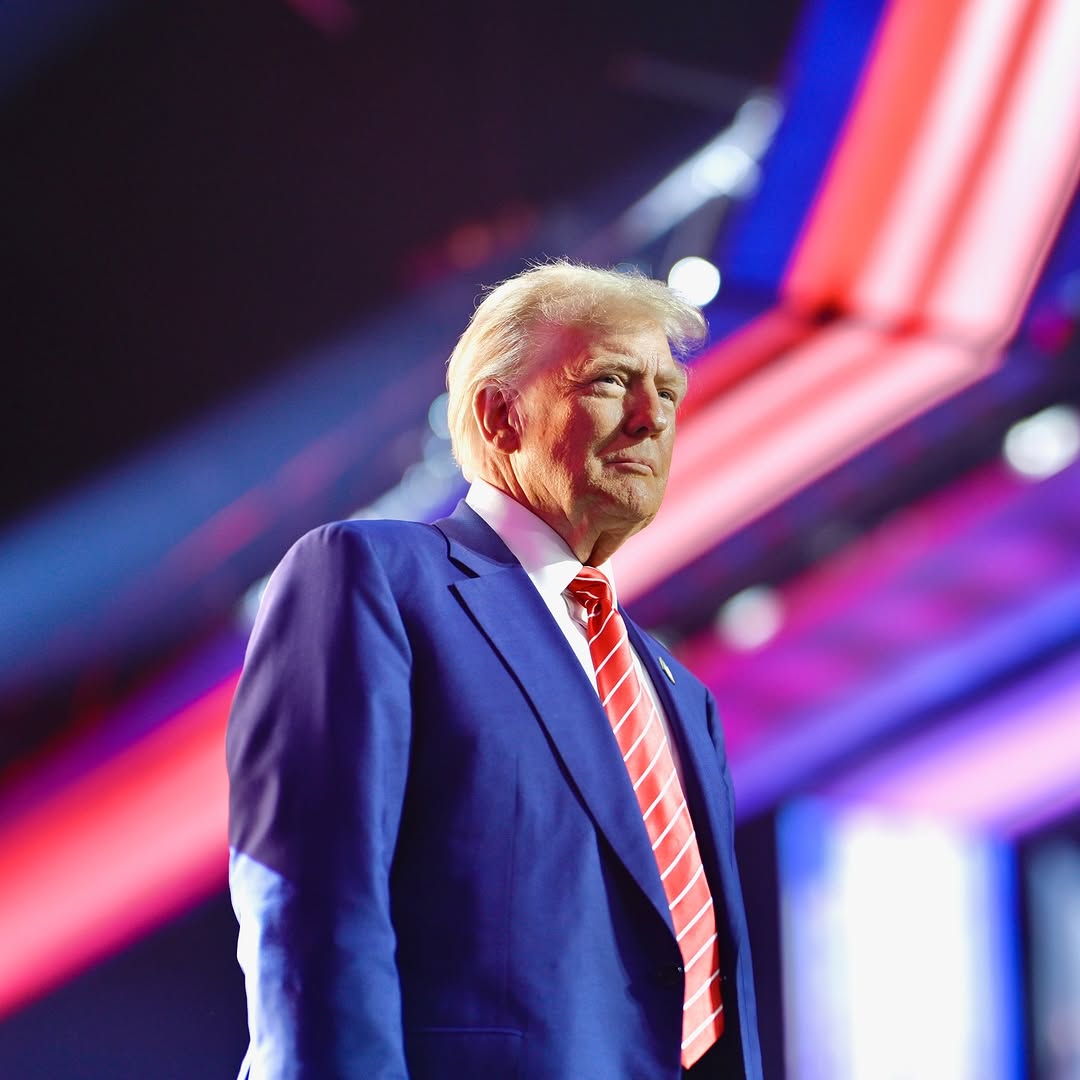
President Donald Trump (@realdonaldtrump Instagram)
President Donald Trump had promised to end birthright citizenship during his campaign, despite widespread legal concerns about its feasibility. The 14th Amendment, ratified in 1868, ensures that anyone born in the U.S. is a citizen, irrespective of their parents’ legal status. The ACLU's lawsuit argues that the executive order violates this constitutional right.
ACLU's Response
Anthony Romero, executive director of the ACLU, condemned the order, stating: "Denying citizenship to U.S.-born children is not only unconstitutional -- it's also a reckless and ruthless repudiation of American values. Birthright citizenship is part of what makes the United States the strong and dynamic nation that it is. This order seeks to repeat one of the gravest errors in American history, by creating a permanent subclass of people born in the U.S. who are denied full rights as Americans."
View this post on Instagram
The lawsuit was filed in the U.S. District Court for the District of New Hampshire and represents immigration rights organisations advocating for expectant parents with diverse immigration statuses. The ACLU claims the order will create a permanent underclass of individuals born in the U.S. who would be denied essential legal recognition.
The 14th Amendment and Its Historical Significance
The 14th Amendment, which became law after the Civil War in 1868, was designed to grant citizenship to those born in the United States, including children of formerly enslaved Black Americans. The principle of birthright citizenship was upheld by the Supreme Court in 1898 in a landmark ruling, ensuring that children born to immigrant parents were entitled to U.S. citizenship.
Potential Consequences of the Executive Order
The ACLU's lawsuit highlights the potential consequences for children born under this policy, who would lose their right to vote, face the possibility of deportation, and experience heightened scrutiny regarding their citizenship status. The suit warns that this could especially harm children of colour, who may face persistent questioning of their citizenship.
“By attacking the principle that all children born in this country are citizens, the order will invite persistent questioning of the citizenship of children of immigrants -- particularly children of color,” the lawsuit states.
It also points to the fear and harm experienced by families, particularly those concerned that their children's removal could lead to deportation to countries where their lives or freedom could be at risk.
Governors and State Responses
The executive order has sparked strong opposition, with Democratic governors across the country voicing their objections. California Governor Gavin Newsom quickly labelled the order unconstitutional. Illinois Governor JB Pritzker warned that this could be the start of efforts to undermine the rule of law, vowing to oppose any unconstitutional measures. New York Governor Kathy Hochul also stated that the state is evaluating the order and will take action to ensure that those born in New York have the rights and protections granted to previous generations of Americans.
President Donald Trump consistently sought to challenge birthright citizenship during his tenure. Birthright citizenship, established by the 14th Amendment of the U.S. Constitution, guarantees that anyone born in the United States automatically becomes a citizen, regardless of their parents’ immigration status.
Trump first raised concerns about birthright citizenship during his 2016 campaign, promising to end the practice as part of his efforts to curb illegal immigration. He argued that children born in the U.S. to undocumented immigrants should not automatically receive citizenship.
In October 2018, Trump pushed forward with a proposal to end birthright citizenship via an executive order. He claimed that he had the authority to make this change, despite widespread legal disagreement. Many experts, including constitutional scholars, argued that altering birthright citizenship would require a constitutional amendment, not just an executive action, due to the protection it holds under the 14th Amendment.
The proposed executive order faced significant opposition, with organizations like the American Civil Liberties Union (ACLU) filing lawsuits, asserting that such a move was unconstitutional. This sparked a legal battle, but Trump’s efforts to unilaterally end birthright citizenship ultimately did not succeed, highlighting the ongoing debate and division over U.S. immigration policies. Birthright citizenship remains protected by the U.S. Constitution.
