Ron Paul Questions U.S. Senators Over Ukraine Strikes.
Ron Paul addressed the escalating Ukraine conflict, referencing reports of a Ukrainian military strike on strategic bombers deep inside Russia.
Just hours before a massive Ukrainian operation targeting Russian strategic bombers deep inside Russia, Senator Lindsey Graham and his colleague Sen. Richard Blumenthal were in Kiev again urging Ukraine to keep fighting.
Reports indicate that Ukrainian forces targeted strategic sites deep inside Russian territory. Ron Paul pointed to the timing of these attacks, noting they occurred soon after Senators Lindsey Graham and Richard Blumenthal visited Kyiv to express U.S. support for Ukraine’s efforts against Russia.
Ron Paul argued that this timing highlights a disconnect between the Biden administration’s official policy and public statements by key political figures.
While former President Trump has consistently advocated for ending the conflict, Paul suggested that certain U.S. lawmakers, whom he described as “neocons”, may be pushing Ukraine toward continued military escalation.
Paul has long raised alarms about U.S. involvement in foreign conflicts, warning that it often entangles the country in protracted wars.
His latest comments reflect a belief that Washington’s approach, whether through public statements or quiet diplomatic pressure, risks escalating the conflict rather than fostering a resolution.
With Ukraine stepping up its military push and some U.S. leaders voicing strong support, the situation is becoming more volatile.
Ron Paul’s comments add fuel to the debate about whether American policymakers are really working to end the war or are quietly backing more escalation.
RFK Jr. Unveils ‘Make America Healthy Again’ Plan.
Health and Human Services Secretary Robert F. Kennedy Jr. formally introduced the “Make America Healthy Again” report, a sweeping public health proposal.
Flanked by a sea of officials from across the federal government, Mr. Kennedy declared this moment a turning point. The message? America's health system is broken and it’s time to go all in on fixing it.
Make America Healthy Again 🇺🇸
"This is a milestone. Never in American history has the federal government taken a position on public health like this. And because of President Trump's leadership, it's not just one cabinet secretary, it's the entire government..." –@SecKennedypic.twitter.com/2S9aMAhq2M
Robert F. Kennedy Jr. was direct in his remarks. “We’ve been patching up symptoms for decades,” he stated. “Now we’re getting to the root of the problem.”
The MAHA report presents an ambitious vision: improving childhood health, removing harmful chemicals from food and the environment, and reevaluating the role of pharmaceutical companies in public wellness.
More than a set of policy recommendations, it reflects a broader shift in how the federal government approaches health.
Throughout the announcement, President Donald Trump’s influence was frequently acknowledged. Officials pointed to his leadership approach as a catalyst for uniting the federal government behind a comprehensive health strategy, a theme that remained prominent throughout the rollout.
So What’s Actually in This Report?
It’s not light reading. The document runs nearly 100 pages, and some of its ideas are already fueling fierce debates in medical circles and beyond.
Among the key takeaways:
A call for deeper scrutiny of childhood vaccines, including suggestions for new placebo-based safety trials, something that’s stirred immediate pushback from mainstream scientists.
Strong language around removing synthetic chemicals from food, particularly glyphosate, a controversial weed killer still common in American agriculture.
Fresh attention to the role of screen time, EMF exposure, and ultra-processed foods in childhood development.
A hard look at pharmaceutical companies and what Kennedy called the “medicalization of everyday life.”
In short, it’s a vision for health that leans organic, natural, and skeptical of large institutions.
A Health Revolution or Just More Controversy?
Public health advocates aren’t staying quiet. Some praised the attention on real, everyday threats to wellness, while others say the report downplays urgent risks like gun violence, car crashes, and environmental hazards.
And then there’s the budget issue. Even as the administration talks about a full-force government response, health agencies like the NIH and CDC are facing deep cuts. Critics are calling that a dangerous contradiction.
The Trump Factor: A Comeback Without the Campaign
Although Donald Trump hasn’t held office in years, his presence loomed large at the press event. Kennedy spoke of him with reverence, crediting the former president with “breaking the mold” of public health policy.
It’s surprising to see RFK Jr. and Donald Trump aligned, but they’re united by a belief that the system is broken and that health policy needs to get back to basics.
For some, it’s inspiring. For others, alarming.
The MAHA report isn’t law, not yet. But it’s already stirring up passionate conversations from coast to coast. Supporters are hoping it marks the beginning of a healthier, more independent America. Detractors worry it’s a step back from hard-earned progress in science and medicine.
What Connects RFK Jr. and Trump on Health Policy
Robert F. Kennedy Jr. was once considered for a vaccine safety commission by Donald Trump during the 2016–17 presidential transition. The idea was ultimately dropped after backlash, but it marked one of the earliest public intersections between the two figures on health policy.
Despite coming from opposite political dynasties, both men have built reputations as anti-establishment outsiders. Kennedy has been heavily criticized for his vaccine skepticism, while Trump famously battled federal health agencies over COVID-19 restrictions and vaccine mandates.
RFK Jr. is a longtime environmental attorney who previously led efforts against major chemical polluters and mercury in vaccines and waterways. His public health views often merge environmental concerns with wellness ideology, a rare blend in American politics.
The “Make America Healthy Again” slogan is a direct play on Trump’s “Make America Great Again,” signaling a deliberate attempt to attract the same populist energy, but with a focus on food systems, pharmaceuticals, and chronic illness rather than immigration or trade.
Both men have been accused of spreading misinformation, Trump during the COVID-19 pandemic and RFK Jr. through his work with Children’s Health Defense. Yet both continue to draw strong followings from Americans skeptical of government and corporate power.
Trump Bans Nonconsensual Deepfakes Under ‘Take It Down Act’
President Donald Trump has signed into law a major new measure that takes direct aim at the growing crisis of nonconsensual imagery online, including revenge porn and AI-generated deepfakes.
During the White House signing ceremony, President Donald Trump underscored the urgent need for stronger protections against digital exploitation.
He highlighted the growing danger posed by both real and AI-generated intimate content shared without consent, particularly targeting women and minors.
“This will be the first-ever federal law to combat the distribution of explicit imagery posted without subjects' consent,” Trump said. “We will not tolerate online sexual exploitation.”
The Take It Down Act, which takes effect immediately, is one of the strongest federal efforts yet to protect people, particularly women and minors from having intimate images shared online without their consent.
What the Law Actually Does
At its core, the Take It Down Actmakes it a federal crime to share or even threaten to share explicit content of someone without their permission, whether that content is real or artificially created.
The law also requires tech platforms to act fast when flagged: they now have just 48 hours to remove offending content once it’s reported.
On top of that, they’re expected to prevent the same images or videos from being reuploaded.
The law includes real consequences. If someone’s found guilty, especially in cases involving minors , they could face up to three years behind bars and steep financial penalties.
Melania Trump Steps In
First Lady Melania Trump became a prominent voice in support of the bill, linking it to her “Be Best” initiative, which focuses on the safety and well-being of children in the digital world.
Melania Trumpspoke passionately about the emotional damage caused by these violations, particularly when the lines between real and fake have been blurred by artificial intelligence.
Until now, victims of revenge porn and deepfake abuse have had very few tools to fight back. While some states have passed their own laws, there’s never been a unified national standard.
The Take It Down Actfills that gap and sends a strong message that online exploitation will no longer be ignored.
It also brings new accountability to tech companies. Platforms like social media networks and content-hosting sites now carry legal responsibility for how they handle these violations.
The Federal Trade Commission will be watching to ensure they follow through.
Not Everyone's Applauding
While the law has been widely praised by victim advocacy groups, it’s also stirred up criticism from digital rights organizations. Some argue the legislation might go too far or at least, that its wording is too vague.
Groups like the Electronic Frontier Foundation warn that platforms might overreact to avoid legal trouble, leading to unnecessary censorship or the silencing of legitimate content.
The concern is that, in trying to avoid penalties, companies will take down anything that seems even remotely controversial.
The Deepfake Dilemma
What’s especially alarming and why the law feels so urgent, is how quickly deepfake technology is evolving.
With just a few tools and some online photos, people can now create disturbingly realistic fake videos that look and sound like real individuals. In many cases, these clips have been used to humiliate, extort, or damage reputations and often with little recourse for the victims.
By acknowledging that both real and AI-generated material can be weaponized, this law is stepping into territory lawmakers have largely avoided until now.
The law is already in force, and platforms have one year to get their compliance systems in place.
The FTC will oversee enforcement and ensure the rules are followed, especially when it comes to content takedowns and repeat offenses.
The Take It Down Actwas introduced by Senators Ted Cruz and Amy Klobuchar, received strong bipartisan support, and is now federal law.
Senator Amy Klobuchar voiced strong support for the bipartisan Take It Down Act, underscoring its importance in safeguarding individuals from online exploitation.
In an official statement, she emphasized the law’s role in protecting victims and establishing clear accountability in the digital age.
“Passing the TAKE IT DOWN Act into law is a major victory for victims of online abuse, giving people legal protections and tools for when their intimate images, including deepfakes, are shared without their consent, and enabling law enforcement to hold perpetrators accountable.
This is also a landmark move towards establishing common-sense rules of the road around social media and AI.”
“No Kings Day” Protests Set to Disrupt Trump’s $45M Birthday Military Parade.
On June 14, a date that commemorates both the 250th anniversary of the U.S. Army and the 79th birthday of former President Donald J. Trump, the streets of the nation’s capital are expected to swell, not only with tanks, soldiers, and fighter jets, but with thousands of protestors prepared to send a very different message.
In a show of political theater unprecedented in recent years, Trump and his allies are staging what they’ve dubbed a “patriotic celebration,” complete with more than 6,000 uniformed troops, 150 military vehicles, and a dramatic aerial flyover.
The event, organizers say, is intended to honor America’s armed forces. Critics, however, see something more troubling: a public spectacle designed to cement the image of Trump as commander-in-chief, long after leaving office.
But while the parade commands the headlines, another force is quietly gaining momentum and it’s aiming to steal the spotlight.
A Protest With a Purpose: ‘No Kings Day’
Born from frustration and sharpened by years of political tension, a broad coalition of advocacy groups is organizing a massive counter-movement under the banner “No Kings Day.”
It’s not just a protest, they say. It’s a rejection of the authoritarian imagery they believe the parade represents.
Organizers from groups including the 50501 Movement and Refuse Fascism say they’re mobilizing demonstrations in over 100 cities nationwide, with Washington, D.C. serving as the focal point.
Estimates suggest between 10,000 to 20,000 demonstrators will gather in Meridian Hill Park before marching toward the National Mall.
“It’s not about hating Trump, it’s about preserving democracy,” said Angela V., a volunteer coordinator in Maryland who’s helping coordinate buses into the city. “We can’t normalize tanks in the streets every time a former president wants a birthday party.”
Though the name “No Kings Day” may sound theatrical, the intentions behind it are serious.
Protestors plan to highlight what they see as Trump’s attempts to centralize power and glamorize military dominance, particularly during a time when the former president faces multiple indictments related to election interference, classified documents, and alleged abuse of power.
Celebration or Spectacle?
The official reason for the parade is the Army’s 250th birthday. It’s a milestone worth recognizing, many agree. But the optics of the event, scheduled precisely on Trump’s birthday, have left even some military officials uneasy.
The estimated cost, according to Pentagon sources, could climb as high as $45 million.
Questions have already emerged over whether that money could be better spent on VA services, military housing, or even rebuilding infrastructure damaged by previous military displays.
D.C. Mayor Muriel Bowser, while not opposing the parade outright, has voiced concerns about damage to city roads, especially if heavy tracked vehicles like tanks are used.
A similar event in 2018 left lasting damage to city infrastructure, prompting a quiet feud between local officials and federal planners.
Meanwhile, many veterans groups have distanced themselves from the event altogether. Some argue that true military honor is shown in care, not in pageantry.
Who’s Organizing the Protest?
The 50501 Movement, which takes its name from its ambitious goal of activating protests in all 50 states and the District of Columbia, has played a central role.
Launched in the final years of Trump’s presidency, the group quickly built a national presence by organizing resistance campaigns focused on civil liberties, racial justice, and climate action.
Refuse Fascism, another key organizer, brings a more confrontational tone. Its members describe Trump not just as a controversial political figure but as a symbol of creeping autocracy.
Their messaging is blunt, even provocative: “This parade is a warning. We refuse to be ruled by it.”
Despite differences in tone, both groups are united in purpose. They view June 14 as a moment of reckoning, not just for Trump, but for the country’s direction in the lead-up to the 2026 elections.
What to Expect on the Ground
The protest in D.C. is expected to begin early in the day, with demonstrators assembling at Meridian Hill Park before marching south toward Constitution Avenue.
Organizers say they’ve secured permits, legal support, and are coordinating with local authorities to ensure the event remains peaceful.
Rather than mirroring the pageantry of the military parade, “No Kings Day” events will feature art installations, musical performances, and “un-parades” designed to promote alternative visions of patriotism rooted in equity, democracy, and anti-militarism.
“We’re here to celebrate the people,” said José Mendez, a protest coordinator from Philadelphia. “Not the politicians. Not the billionaires. Not the tanks.”
Elsewhere, satellite protests are being planned in Los Angeles, Chicago, New York, Atlanta, Seattle, and dozens of smaller cities.
Many are being organized independently, using shared hashtags and toolkits provided by national groups but tailored to local issues.
Did You Know?
– Trump’s 2019 Fourth of July “Salute to America”cost over $13 millionand drew criticism for using military resources in a politically charged setting. The June 14 parade is expected to cost more than triple that amount.
– June 14is not only Trump’s birthday, but also Flag Dayin the U.S., a holiday that commemorates the adoption of the American flag in 1777.
– The U.S. military typically avoids political displays, and past Pentagon leadership has expressed unease about using service members in partisan events.
– Meridian Hill Park, the planned protest site in D.C., has a long history of political gatherings from civil rights rallies to anti-war demonstrations during the Vietnam era.
– The 50501 Movementtakes its name from a symbolic goal: activating civic resistance in all 50 U.S. states and one federal district (D.C.).
– In 1939, Adolf Hitler held a lavish military paradeon his 50th birthday in Berlin. Protestors have cited historical echoes of “leader-centered” parades as a reason for opposing modern displays of military power tied to a single figure.
– As of May 2025, Donald Trump is facing multiple felony indictments, including charges related to the 2020 election and mishandling classified documents—making the symbolism of the parade even more controversial.
58 Crypto Wallets Cashed In $1 Billion on Trump’s Meme Coin. Is It Legal?
When President Donald Trump launched his official meme coin, $TRUMP, in January 2025, few could have predicted how much wealth it would create or how many legal and ethical questions it would raise.
According to a recent analysis, 58 cryptocurrency wallets collectively profited more than $1.1 billion from trading the token. Each wallet earned at least $10 million.
Meanwhile, roughly 764,000 smaller investors lost money, many of them everyday Americans who bought in after the initial hype.
Now, attorneys, regulators, and lawmakers are examining how the coin was launched, who benefited, and whether the enterprise crossed legal lines.
An Unprecedented Windfall
The $TRUMP coin debuted just days before Trump’s second inauguration. Within 24 hours, it surged to a staggering $27 billion market capitalization.
But beneath the headlines of record-breaking growth, a pattern emerged: a handful of wallets earned millions while the vast majority of holders took losses.
Critics say the launch created an uneven playing field, rewarding insiders while exposing retail investors to significant risk.
“What we’re seeing is a textbook example of wealth concentration in an unregulated market,” said a securities law professor at Georgetown University.
“And when political figures are involved, the legal exposure increases exponentially.”
Legal and Ethical Questions Multiply
Several potential legal violations are now under scrutiny:
Market Manipulation: Was the price of $TRUMP artificially inflated? The clustered profits suggest possible insider activity or coordinated trading.
Conflict of Interest: Reports indicate that Trump-affiliated companies control as much as 80% of the coin’s total supply, raising serious concerns about whether public office was leveraged for private gain.
Securities Violations: If $TRUMP qualifies as a security under U.S. law, its sale without proper SEC registration could be illegal.
Campaign Finance Issues: Some fear profits from the coin may have indirectly funded political activities, potentially violating Federal Election Commission (FEC) rules.
Regulators and Lawmakers Step In
The controversy has already spurred action on Capitol Hill. Senators Richard Blumenthal and Chris Murphy introduced the MEME Act (Maintaining Ethical Market Engagement), which would bar federal officials from profiting from digital assets while in office.
At the same time, both the Securities and Exchange Commission (SEC) and the Commodity Futures Trading Commission (CFTC) are believed to be reviewing the coin’s trading history.
Private class-action lawsuits may also be forthcoming, particularly from investors who suffered losses.
The Blurring of Public and Private Wealth
Adding to the unease are reports that exclusive $TRUMP coinholder events, including a private dinner hosted by Donald Trump himself, are planned for later this year.
Critics argue that this access-for-investment model risks turning political support into a commodity.
“We are witnessing the merging of political capital and financial capital in a way that undermines both public trust and market integrity,” said a former ethics lawyer from the Obama administration.
For legal professionals, the $TRUMP coin raises several urgent issues:
Crypto Compliance: Advising clients on evolving digital asset regulations is becoming a core competency.
Securities Litigation: If enforcement actions proceed, lawyers specializing in securities law will be in high demand.
Political Law: The intersection of campaign finance, ethics rules, and cryptocurrency is an emerging legal frontier.
As investigations continue, one thing is certain. The $TRUMP meme coin is no longer just a quirky footnote in the world of digital assets. It has become a flashpoint in a broader debate about political power, financial innovation, and investor risk.
In January 2025, President Donald Trump launched the $TRUMP coin in the days leading up to his second inauguration, setting off a frenzy in the crypto markets.
Within 24 hours, it soared to a $27 billion market cap - an astonishing figure even by meme coin standards. For 58 well-positioned wallets, it generated profits of at least $10 million each.
But for hundreds of thousands of small investors, it quickly became a costly gamble.
Today, the coin’s meteoric rise and uneven outcomes are drawing the scrutiny of lawmakers, regulators, and legal scholars. What started as a political novelty may soon shape the legal landscape for cryptocurrency and the future of campaign finance.
Donald Trump Wants to Reopen Alcatraz for America’s “Worst Criminals”
President Donald Trump announced on May 4 that his administration intends to reopen and expand the infamous Alcatraz prison.
The facility, which opened as a federal penitentiary in 1934 and once held America’s most notorious criminals, including Al 'Scarface' Capone, George "Machine Gun" Kelly, Alvin 'Creepy' Karpis, has stood dormant since 1963.
Now, it could once again become a fortress for what Trump has described as the nation’s "most ruthless and violent offenders."
“A Symbol of Law and Order”
Taking to his Truth Social platform, Trump decried what he called a “weak and chaotic” criminal justice system and laid out plans to transform Alcatraz into a state-of-the-art facility.
He directed the Bureau of Prisons, along with the Department of Justice, FBI, and Homeland Security, to initiate the process.
“This will be a symbol of law and order,” the president wrote. “We will no longer tolerate the chaos destroying our cities.”
Federal Response: First Steps and Feasibility
William K. Marshall III, the newly appointed director of the Federal Bureau of Prisons, confirmed that a feasibility study is already underway. “We will vigorously pursue all avenues to support and implement the President’s agenda,” he said in a statement.
While no timeline has been provided, the directive marks the first serious federal effort to reassess the use of Alcatraz since it was closed due to deteriorating infrastructure and unsustainable maintenance costs over six decades ago.
Swift Political Reactions
The announcement sparked immediate reactions from lawmakers and public officials, many of them critical.
Former House Speaker Nancy Pelosi dismissed the proposal outright, calling it an unserious distraction from deeper issues plaguing the criminal justice system. California Senator Scott Wiener was even more blunt, labeling the plan “absurd.”
“Alcatraz is a protected historic site and a vital part of San Francisco’s tourism economy,” Wiener said. “The idea of turning it back into a prison is not just legally questionable, it’s economically reckless.”
Experts Warn of Cost and Complexity
Criminal justice experts have also raised red flags. Martin Horn, former commissioner of New York City’s Department of Correction, pointed out that Alcatraz’s infrastructure is not only outdated but fundamentally incompatible with modern correctional standards.
“You would essentially need to demolish the existing structures and start from scratch,” Horn explained. “And the logistical nightmare of operating a secure facility on an isolated island would drive costs through the roof.”
Tourism and Preservation Concerns
The Golden Gate National Parks Conservancy, which helps manage Alcatraz as a national historic landmark, voiced alarm over the proposal.
The site draws more than 1.4 million visitors annually and serves as both an educational resource and a place of reflection on America’s penal history.
“Reopening Alcatraz as a prison would erase decades of work preserving it as a symbol of resilience and change,” a spokesperson said.
Potential Link to Immigration Enforcement
Some observers have speculated that the move could also serve Trump’s broader immigration agenda. U.S. Border Czar Tom Homan suggested that Alcatraz might be considered as an option for housing certain undocumented immigrants, particularly amid the ongoing shortage of detention space nationwide.
Political Symbolism or Policy Shift?
While supporters have praised the initiative as a bold return to law and order, critics argue it’s more about political posturing than practical governance.
“This is about making a statement, not finding solutions,” said Horn. “It’s a symbol, but the costs, both financial and societal, would be enormous.”
The Bureau of Prisons will continue its feasibility assessment, but any attempt to repurpose Alcatraz faces significant legal, logistical, and public relations hurdles.
Whether the iconic prison will once again hold inmates or remain a relic of America’s penal past, remains to be seen.
Did You Know?
Alcatraz never had a successful escape. While 36 inmates tried, the fate of three who fled in 1962 remains a mystery—and inspired the Clint Eastwood film Escape from Alcatraz.
Native American activists occupied Alcatraz from 1969 to 1971 in a protest that drew national attention to Indigenous rights. The event remains a pivotal moment in civil rights history.
Al Capone reportedly played banjo in the Alcatraz prison band and performed for other inmates on Sundays.
Operating Alcatraz was extremely expensive. In 1963, it cost three times more to house a prisoner there than in other federal prisons - one reason it was shut down.
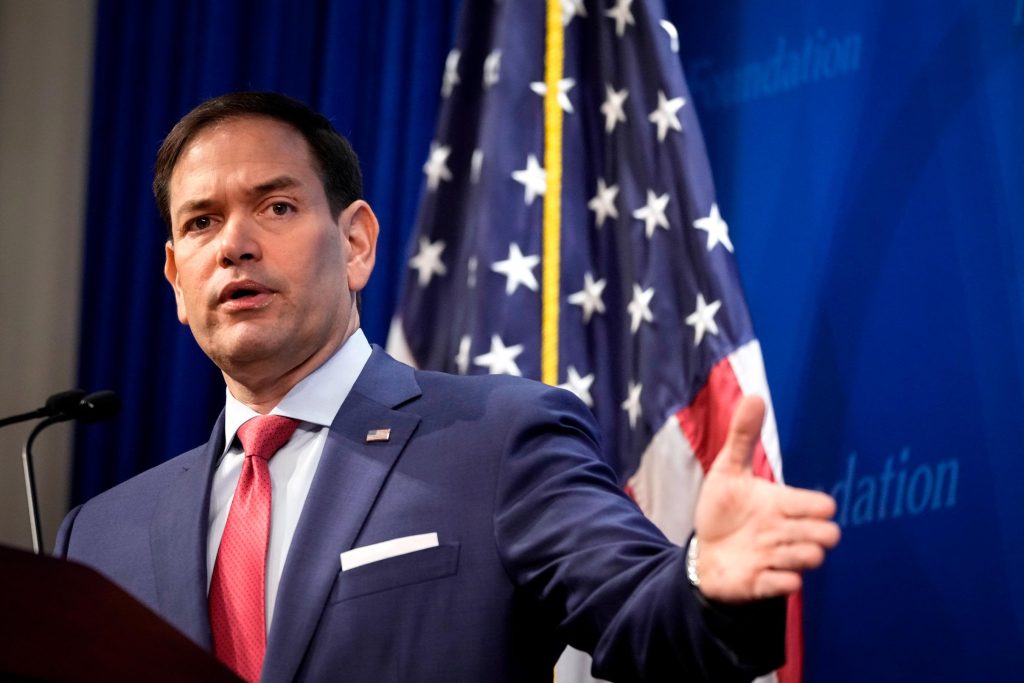
Trump to walk away from Ukraine-Russia peace deal in days—Rubio warns he has 'other priorities.
Donald Trump is prepared to walk away from brokering a Russia-Ukraine peace agreement within days unless meaningful progress is achieved, a senior U.S. official warns. If the president doesn't detect momentum toward a deal, he will pull the plug, saying he has 'other priorities' to address, U.S. Secretary of State Marco Rubio said on Friday.
'We're not going to continue with this endeavor for weeks and months on end. So we need to determine very quickly now, and I'm talking about a matter of days whether or not this is doable in the next few weeks. 'If it is we're in. If it's not, then we have other priorities to focus on as well,' Rubio made the statement in Paris after urgent meetings with European and Ukrainian leaders.
Rubio indicated that Trump remains interested in reaching an agreement but is prepared to move on if there are no immediate indications of progress. During his election campaign, Trump pledged to conclude the war within his first 24 hours in office. Upon taking office, he tempered that assertion, proposing a potential deal by April or May as challenges continued to arise. Rubio's remarks highlight the growing frustrations regarding the lack of advancement in addressing an increasing array of geopolitical issues. This follows Trump's assertion that the war in Ukraine would not have occurred "if Zelensky was competent," as he promised to "stop the killing."
On Monday, Trump attributed the war to Ukrainian President Zelensky, Russian President Vladimir Putin, and his predecessor Joe Biden, suggesting that Putin would not have invaded if he had been in power in the United States. "If Biden were competent, and if Zelensky were competent, and I question whether he is... that war should never have been allowed to happen," he stated to reporters at the White House on Monday. He reiterated his belief that "everyone is to blame" for the conflict, emphasizing, "Biden could have prevented it, Zelensky could have prevented it, and Putin should never have initiated it."
'I'm not saying that anybody's an angel, but I went four years and it wasn't even a question. He would never - and I told him 'don't do it, you're not going to do it.' And it was the apple of his eye, but there was no way that he would've done it,' he added.
Secretary of State Marco Rubio
Trump slams Ukraine war efforts as envoy claims Putin may be ready for ‘permanent peace’
Donald Trump ramped up his criticism of the Ukraine war just as his special envoy, Steve Witkoff, revealed that Vladimir Putin could be open to a “permanent peace” deal.
Witkoff, who met with the Russian leader last week, said the U.S. and Russia “might be on the verge of something very, very important for the world at large.”
Trump also reignited controversy by blaming “millions of deaths” on just “three people,” referencing the war and his recent Oval Office clash with Ukrainian President Volodymyr Zelensky.
'Let's say Putin number one, but let's say Biden, who had no idea what the hell he was doing, number two, and Zelensky,' Trump said.
'He's always looking to purchase missiles,' he said dismissively of the Ukrainian leader's attempts to maintain his country's defense against the Russian invasion.
'When you start a war, you got to know that you can win the war,' Trump said.
'You don't start a war against somebody that's 20 times your size, and then hope that people give you some missiles.'
Zelensky has made efforts to mend relations, including dispatching a delegation to Washington last week to negotiate a mineral agreement proposed by Trump, which would grant the United States preferential access to Ukrainian natural resources. However, in recent days, Trump has intensified his rhetoric, asserting that a resolution to the Ukraine conflict is achievable, despite Ukrainian claims that Moscow is delaying progress.
'I want to stop the killing, and I think we're doing well in that regard. I think you'll have some very good proposals very soon,' Trump said.
Could a Peace Deal Even Hold Up Legally?
Even if Trump manages to get Russia and Ukraine to the table—and even if both sides actually agree on something—there’s still one big question that could throw the whole thing off course: would it even be legal?
Presidents do have a lot of wiggle room when it comes to foreign policy. But once a deal crosses into things like lifting sanctions, sending weapons, or giving U.S. companies special access to Ukrainian resources, that’s when Congress tends to raise its hand and say, “Not so fast.”
The Constitution lays it out pretty clearly: formal treaties need Senate approval. Of course, that hasn’t stopped presidents from trying to go around that rule before. Barack Obama’s Iran nuclear deal and the Paris Climate Accord were both done without full Senate sign-off—and both sparked serious legal and political headaches.
If Trump tries something similar, legal experts say he might hit the same wall. Congress could push back, especially if they think the deal messes with military spending, sanctions policy, or long-standing commitments. And depending on how it's structured, the whole thing could end up challenged in court or torn up by the next administration.
In other words, even if there’s political will and diplomatic movement, the legal fight might just be getting started.
Trump reaches record high approval rating amid tariff chaos.
President Donald Trump's fluctuating tariff policy didn't send his poll numbers into decline.
A new survey from DailyMail.com/J.L. Partners revealed that the Republican president remains popular with over half of the nation. His current approval rating stands at 54 percent, the survey showed, tying his all-time high.
'For all the events of the past ten days, we find the President's approval rating unchanged and now at its joint highest ever,' said pollster James Johnson.
Over the course of 10 days, Trump initially intended to roll out broad tariffs and increase reciprocal tariffs on many nations. However, he had a change of heart, settling for just 10 percent tariffs and pausing the higher ones, except for those targeting China. This led to some fluctuations in the stock market, but polls indicated that most voters weren't really bothered by it.
'Among the noise and criticism, there does seem to be a simple truth: the more coverage there is of Trump's changes, the more voters reward him for what they see as the pace and purpose that many of them voted for,' Johnson explained.
The latest DailyMail.com/J.L. Partners poll was taken from April 10 to April 14, right after Trump changed his stance on tariffs last week.
An online survey was conducted with 1,002 registered voters, resulting in a margin of error of plus or minus 3.4 percent. Trump is still the favorite among younger voters, with those aged 18 to 29 giving him a 64 percent approval rating. Other age groups rated him in the 50s: 54 percent from voters aged 65 and older, 52 percent from those aged 30 to 49, and 51 percent from voters aged 50 to 64.
Additionally, Trump has a stronger approval rating among men at 61 percent compared to 47 percent among women, showing a 14-point gap. White voters also tend to rate Trump more favorably than black and Hispanic voters.
Hispanic voters are currently giving him a 46% approval rating, while black voters rate him at 43%. Trump has usually performed better with those lacking a college degree, but he's also gaining traction with college graduates now.
His approval among graduates has jumped to 56%, up from 47% in early April, and it's at 52% for those without degrees. Earlier this month, non-graduates had rated him at 57%. Right now, his approval rating among Republicans is a solid 94%, while independents rate him at 48%. Among Democrats, his approval is just 22%.
Supreme Court Approves Trump-Era Migrant Deportations Under 1798 Wartime Law.
The U.S. Supreme Court has given the green light for the government to resume deporting undocumented migrants under a centuries-old wartime law, handing a temporary win to the Trump administration.
A Rare Law, Revived in 2025
In a 5-4 decision released Monday, the Court lifted a lower court's order that had stopped the deportation of dozens of Venezuelan migrants.
The ruling allows the federal government to continue removing migrants under the Alien Enemies Act, a law from 1798 that was originally designed for use during declared wars.
While the justices sided with the government on technical grounds, they also made it clear that individuals facing deportation under the act must be given a chance to challenge it in court.
Trump's Use of the Law Sparks Controversy
Donald Trump cited the Alien Enemies Act last month to justify rounding up suspected gang members from Venezuela. The administration claimed these individuals were linked to Tren de Aragua, a violent criminal group with roots in South America.
Videos released by federal authorities showed migrants in chains, their heads shaved, being transported to a maximum-security prison in El Salvador. The images were meant to send a message: the administration was serious about enforcing immigration laws.
Trumpcelebrated the ruling on Truth Social, writing:
"The Supreme Court has upheld the Rule of Law… A GREAT DAY FOR JUSTICE IN AMERICA!"
Legal Roadblocks – and What Comes Next
The ruling came after District Judge James Boasberg temporarily blocked the deportations in March. His order stopped further flights after several migrants had already been sent out of the country.
One key issue was where the case should be heard. The migrants involved were detained in Texas, but their attorneys had filed the lawsuit in Washington, D.C.
The Supreme Court decided the restraining order couldn’t stand due to that jurisdiction mismatch.
Still, the justices were clear: just because the Alien Enemies Act is being used doesn't mean migrants lose their rights.
"Those subject to removal under the AEA must be notified and given a chance to contest it," the Court wrote.
Lawyers Say Innocent People Were Deported
Attorneys for some of the deported migrants say the government got it wrong. They argue their clients had no ties to gangs, had not committed any crimes, and were targeted largely because of their tattoos or appearance.
Critics are warning that this kind of enforcement, based on a law from more than 200 years ago, could lead to mistakes—or worse, abuse of power.
What Is the Alien Enemies Act?
The Alien Enemies Act of 1798 is a rarely used U.S. law that allows the government to detain or deport non-citizens from countries the United States is at war with. Originally passed as part of the controversial Alien and Sedition Acts, it remains the only one of those laws still in effect today.
The law grants the president broad authority to act against nationals of enemy states during wartime, even without criminal charges. Historically, it was used during the War of 1812, World War I, and World War II to target citizens of Britain, Germany, Japan, and Italy who were living in the U.S.
In modern times, its use has become highly controversial, especially as it's now being invoked outside of a formally declared war.
Critics argue this stretches the law’s original intent and raises serious concerns about due process and civil liberties, particularly when it's used to justify immigration enforcement based on perceived threats rather than wartime status.
Bitcoin Beats Stocks—Treasury Secretary Calls It Gold Rival.
Bitcoin and crypto prices have been rocked by U.S. president Donald Trump’s barrage of tariffs—with the Federal Reserve poised to boost the bitcoin price.
The price of bitcoin experienced a significant decline following concerns raised by China regarding a potential "crisis scenario." However, it has since recovered, decoupling from its previous correlation with the stock market. Currently, the CEO of BlackRock, Larry Fink has suggested that bitcoin may be a "safer bet" compared to the U.S. dollar, while Treasury Secretary Scott Bessent has referred to bitcoin as an emerging "store of value," likening it to gold.
“Bitcoin is becoming a store of value, gold’s has historically been a store of value,” Bessent told podcaster Tucker Carlson, adding there are “a lot of different stores of value over time.”
Bessent’s comments come as stock markets around the world fall sharply following Trump's announcement of what he termed Liberation Day, during which the United States established a universal import tax of 10% and imposed even steeper tariffs on products from numerous nations.
Gold, recognized as a conventional safe haven asset, has increased by approximately 15% this year as investors and central banks acquire it to protect themselves from economic and geopolitical uncertainties.
The U.S. stock market has seen a rapid decline of nearly 10% since Trump implemented his global tariff policy, which proved to be more forceful than traders expected. In a social media update, Trump remarked, “Trump is purposely crashing the market.”
Meanwhile, the price of bitcoin has risen throughout the week, diverging from its recent relationship with the stock market, particularly the technology-focused Nasdaq including Apple, Alphabet, Amazon, Microsoft, Netflix, Nvidia, and Tesla amongst others.
Dark Mode
About Lawyer Monthly
Legal Intelligence. Trusted Insight. Since 2009
Follow Lawyer Monthly
Manage your privacy
To provide the best experiences, we and our partners use technologies like cookies to store and/or access device information. Consenting to these technologies will allow us and our partners to process personal data such as browsing behavior or unique IDs on this site and show (non-) personalized ads. Not consenting or withdrawing consent, may adversely affect certain features and functions.
Click below to consent to the above or make granular choices. Your choices will be applied to this site only. You can change your settings at any time, including withdrawing your consent, by using the toggles on the Cookie Policy, or by clicking on the manage consent button at the bottom of the screen.
Functional
Always active
The technical storage or access is strictly necessary for the legitimate purpose of enabling the use of a specific service explicitly requested by the subscriber or user, or for the sole purpose of carrying out the transmission of a communication over an electronic communications network.
Preferences
The technical storage or access is necessary for the legitimate purpose of storing preferences that are not requested by the subscriber or user.
Statistics
The technical storage or access that is used exclusively for statistical purposes.The technical storage or access that is used exclusively for anonymous statistical purposes. Without a subpoena, voluntary compliance on the part of your Internet Service Provider, or additional records from a third party, information stored or retrieved for this purpose alone cannot usually be used to identify you.
Marketing
The technical storage or access is required to create user profiles to send advertising, or to track the user on a website or across several websites for similar marketing purposes.
To provide the best experiences, we use technologies like cookies to store and/or access device information. Consenting to these technologies will allow us to process data such as browsing behaviour or unique IDs on this site. Not consenting or withdrawing consent, may adversely affect certain features and functions.
Functional
Always active
The technical storage or access is strictly necessary for the legitimate purpose of enabling the use of a specific service explicitly requested by the subscriber or user, or for the sole purpose of carrying out the transmission of a communication over an electronic communications network.
Preferences
The technical storage or access is necessary for the legitimate purpose of storing preferences that are not requested by the subscriber or user.
Statistics
The technical storage or access that is used exclusively for statistical purposes.The technical storage or access that is used exclusively for anonymous statistical purposes. Without a subpoena, voluntary compliance on the part of your Internet Service Provider, or additional records from a third party, information stored or retrieved for this purpose alone cannot usually be used to identify you.
Marketing
The technical storage or access is required to create user profiles to send advertising, or to track the user on a website or across several websites for similar marketing purposes.