
Understand Your Rights. Solve Your Legal Problems
A group of 10 MPs in Ghana has revived a controversial bill that would impose some of the strictest restrictions on LGBT rights in Africa.
The bill, which was initially passed by parliament last year, proposes harsh penalties for those who identify as gay. Under the legislation, individuals who identify as gay could face up to three years in prison, while those who promote or advocate for LGBT rights could be sentenced to between five and ten years behind bars.
While the bill was passed by parliament in 2024, the former president, Nana Akufo-Addo, declined to sign it into law before his term ended in January 2025, citing ongoing legal challenges. This has led to renewed discussions about the bill's future in the new parliament.
At the dissolution of the previous parliament in December 2024, all bills that had not completed the legislative process—including those awaiting the president's signature—were dropped. It remains unclear whether the new parliament speaker will allow the bill to be resubmitted for consideration.
Currently, gay sex in Ghana is punishable by up to three years in prison. However, if the bill passes, the penalties for promoting or advocating for LGBT rights would increase significantly.
The bill has been widely condemned by both local and international human rights organizations. Many argue that it is a step backward for Ghana’s progress on human rights, with some calling it draconian.
Neela Ghoshal, Senior Director of Law, Policy, and Research at Outright International, stated, “Ghana’s anti-LGBTQ bill tramples human rights, undermines family values of acceptance and unity, and risks derailing economic development and eroding democratic gains. Banning the very existence of queer people and their allies is unprecedented. The hostility this bill displays toward LGBTQ Ghanaians will put lives and livelihoods at risk.”
Human Rights Watch researcher Larissa Kojoué also warned that the bill "flies in the face of Ghana's long-standing tradition of peace, tolerance, and hospitality." She added that the law could lead to increased violence against LGBT people and their allies.
Va-Bene Elikem Fiatsi, a Ghanaian trans woman and LGBT activist, expressed her dismay at the bill’s reintroduction, calling it "disheartening and hard to process." She emphasized that LGBT activism in Ghana would continue regardless of the legislative developments.
One of the key concerns raised by critics of the bill is its potential economic impact. Ghana’s former finance minister warned that passing the bill could lead to the country losing up to $3.8 billion in development funding from the World Bank and could affect its $3 billion IMF support program.
Despite these concerns, some political figures, such as opposition lawmaker John Ntim Fordjour, believe that Ghana no longer needs to fear economic sanctions. He pointed to the election of Donald Trump as U.S. president as an example of how conservative values are becoming more widely accepted globally.
Supporters of the bill argue that it is necessary to preserve what they consider Ghanaian culture and family values. However, former President John Mahama has suggested that the bill should be state-sponsored, with broader support and consultation from the public. He emphasized the need for national consensus before moving forward.
"I do think that we should have a conversation on it again so that all of us, if we decide to move that bill forward, move it forward with a consensus," Mahama said.
This bill, originally introduced in 2021, has faced several delays. As it moves through the legislative process again, it will likely continue to spark debates about human rights, culture, and Ghana's role in the international community. As of now, the future of the bill remains uncertain, and it is unclear how the new government will handle the controversial issue.
Michael Reagan, son of former President Ronald Reagan, has shocked many by defending Donald Trump’s tariff policies, despite being a longtime critic. His change of stance comes as Trump faces backlash over new tariffs against Mexico, Canada, and China.
Michael Reagan, a conservative commentator and head of the Reagan Legacy Foundation, has not always been in Trump’s corner.
Despite these past critiques, Reagan took to social media on Friday to defend Trump’s stance on tariffs, arguing that times have changed.
Trump’s latest tariff policies have sparked controversy, with some critics pointing to a 1987 speech by Ronald Reagan as evidence against them.
The New York Post reported that JPMorgan CEO Jamie Dimon has been sharing a video clip of Reagan calling tariffs "stupid." In the video, Reagan states:
"We’re in the same boat with our trading partners. If one partner shoots a hole in the boat, does it make sense for the other one to shoot another hole in the boat? Some say yes and call that getting tough. Well, I call it stupid."
However, Michael Reagan is pushing back against this argument. He claims critics are misusing his father’s words, arguing that Reagan’s views evolved over time.
“Yes, my father spoke about tariffs when he was POTUS… that was 40 years ago. It’s a different time with a different POTUS.”
He also urged people to stop using his father’s legacy to attack Trump, writing:
“For God’s sake, quit using my father to bash Trump.”
Reagan further argued that his father also used tariffs when necessary, citing examples of tariffs placed on Japanese goods in 1987. He even warned Trump critics:
“Remember, my dad ended up kicking your a**es.”
Yes my father spoke about Tariffs when he was POTUS..that was 40yrs ago,it is different time with a different POTUS,for Gods sake quit using my father to bash Trump…FYI it is amazing that you all of a sudden support my father when for 8 yrs you treated him like you are treating…
— Michael Reagan (@ReaganWorld) March 7, 2025
— QM2(SS) (@FortPatriot) March 8, 2025
Trump’s tariff battle is escalating, with major economic and political implications.
Canada & Mexico Tariffs:
Canadian Lumber & Dairy Tariffs:
Auto Industry Exemptions:
In another major policy shift, Trump threatened economic sanctions on Russia, signaling a tougher stance on the Ukraine conflict.
Posting on Truth Social, Trump warned:
“Based on the fact that Russia is absolutely ‘pounding’ Ukraine on the battlefield right now, I am strongly considering large-scale Banking Sanctions, Sanctions, and Tariffs on Russia until a Ceasefire and FINAL SETTLEMENT AGREEMENT ON PEACE IS REACHED.”
This marks a notable shift from Trump’s earlier friendlier stance toward Vladimir Putin, which had worried some U.S. allies.
With April 2 set as the deadline for major tariff decisions, the global economic impact of Trump’s trade war is still unfolding. Meanwhile, Michael Reagan’s unexpected defense of Trump has reignited debates over Ronald Reagan’s true stance on tariffs.
Will Trump’s new trade strategy pay off, or will it lead to further economic retaliation from U.S. allies? Stay tuned.
Kansas City Chiefs quarterback Patrick Mahomes, 29, is making headlines ahead of the 2025 Super Bowl, where the Chiefs will battle the Philadelphia Eagles for a third consecutive championship. During a pre-game press conference on February 5, Mahomes shared his thoughts on recent comments made by President Donald Trump, who praised Mahomes' skills on the football field.
When asked about Trump's remarks, Mahomes said, “It’s cool to hear” that the former president, who is set to attend the game in New Orleans on Sunday, February 9, appreciates his talent. Trump had been questioned about the upcoming Super Bowl match-up and declined to pick a side. Instead, he expressed admiration for Mahomes, saying, "There's a certain quarterback that seems to be a pretty good winner."

Patrick & Brittany Mahomes' Family (@patrickmahomes Instagram)
Although Mahomes hadn’t seen the clip at the time, he was pleased to know that Trump had been watching his games. "It's great to know that he appreciates the sport and what I do," Mahomes added.
When asked about the possibility of playing in front of a sitting president at the Super Bowl, Mahomes expressed enthusiasm, saying, "Yeah, I mean it’s always cool to be able to play in front of a sitting president, someone that is at the top position in our country."
Mahomes' teammate, Travis Kelce, was also asked about the potential for Trump’s attendance. The 35-year-old tight end shared similar sentiments: "That's fantastic. It's a real privilege. Regardless of who the president is, I’m thrilled because this is the biggest game of my life."
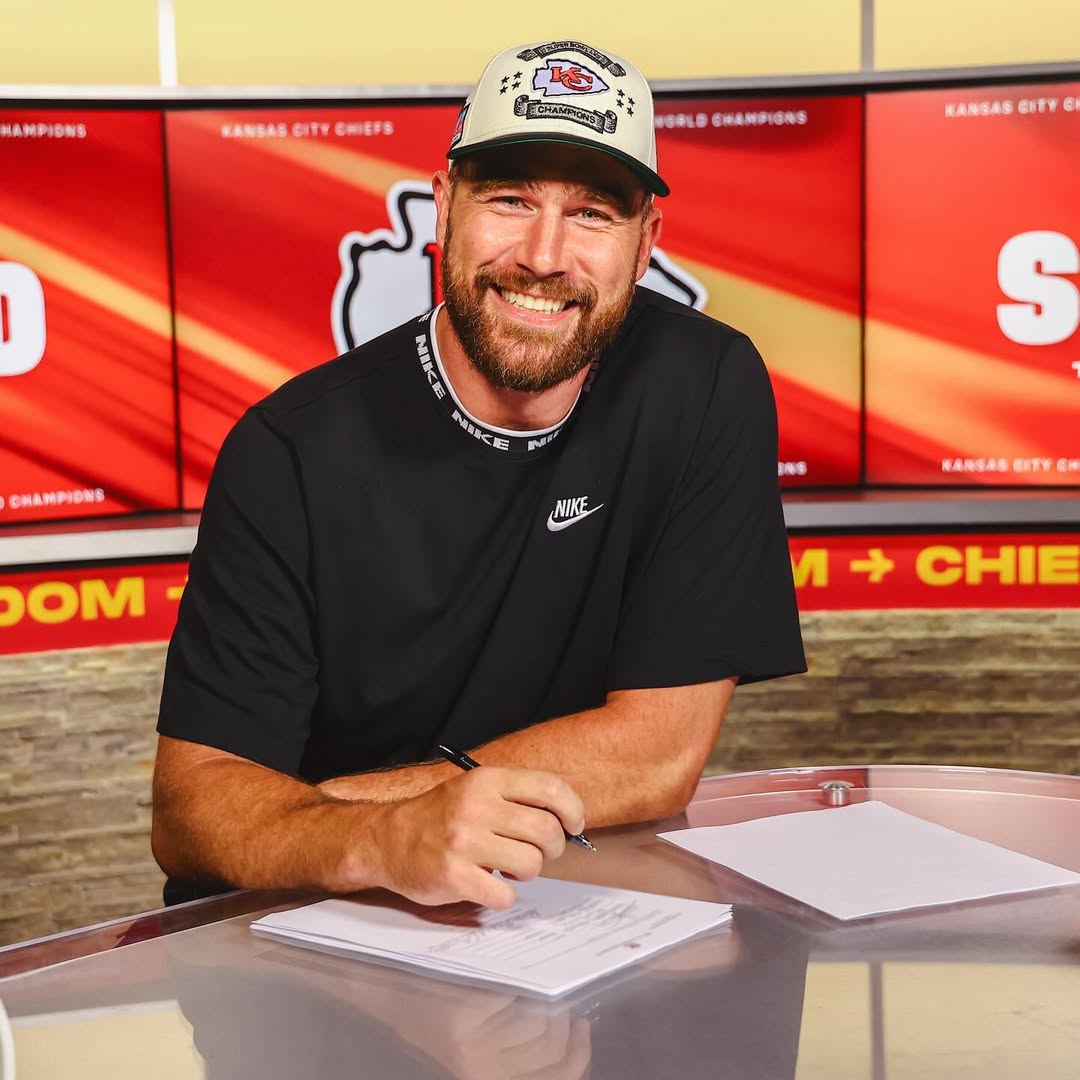
Travis Kelce (@killatrav Instagram)
While Mahomes is excited about the opportunity to play in front of the president, he has been consistent about steering clear of political endorsements. In a statement made earlier in September 2023, Mahomes said, “I don’t want my place or my platform to be used to endorse a candidate either way. I think my place is to inform people to get registered to vote, to inform people to do their own research and then make their best decision for them and their family.”
Mahomes has continued to stay neutral in political discussions, despite his wife Brittany's social media activity, which included liking one of Trump’s Instagram posts earlier in the year. The move sparked mixed reactions online but did not sway Mahomes' stance on politics.
As Mahomes prepares to lead the Chiefs into the 2025 Super Bowl, it’s clear that he remains focused on the game, his team, and his role as a sports ambassador.
Donald Trump attended Super Bowl LIV in Miami in February 2020, where he made a high-profile appearance as a VIP guest. He attended the game alongside his wife, Melania Trump, and other notable figures. The event took place at the Hard Rock Stadium, and the Kansas City Chiefs defeated the San Francisco 49ers in a thrilling 31-20 victory.
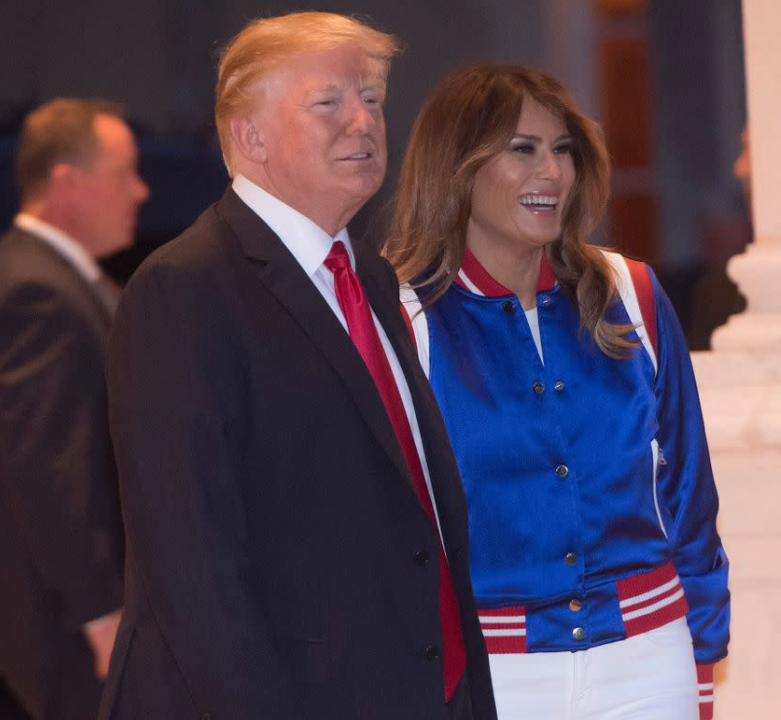
Donald and Melania Trump Arrive Together at a Super Bowl Party in West Palm Beach
During his time at the Super Bowl, Trump did not make many public remarks on the game itself but enjoyed the spectacle. His presence generated plenty of attention, with many observers focusing on the political significance of the event. Trump also attended the game in the context of his broader public appearances during the period, as his administration sought to align itself with the entertainment industry and high-profile sporting events.
Trump shared some thoughts on social media following the event, posting on Twitter to express his excitement: "Great game, great people, and great fun at the #SuperBowl. Congratulations to the Kansas City Chiefs!" His attendance added a touch of glamour to the event, but his presence also sparked mixed reactions, with some praising it as a display of national unity, while others saw it as controversial.
Donald J. Trump, the 45th President of the United States, is a proud father of five children and grandfather to ten grandchildren, with another one on the way. From his eldest son Donald Trump Jr. to his youngest daughter Tiffany Trump, the Trump family continues to grow and capture the public’s attention. Here’s a closer look at the Trump grandchildren and their journeys, as well as the heartwarming family moments they’ve shared.
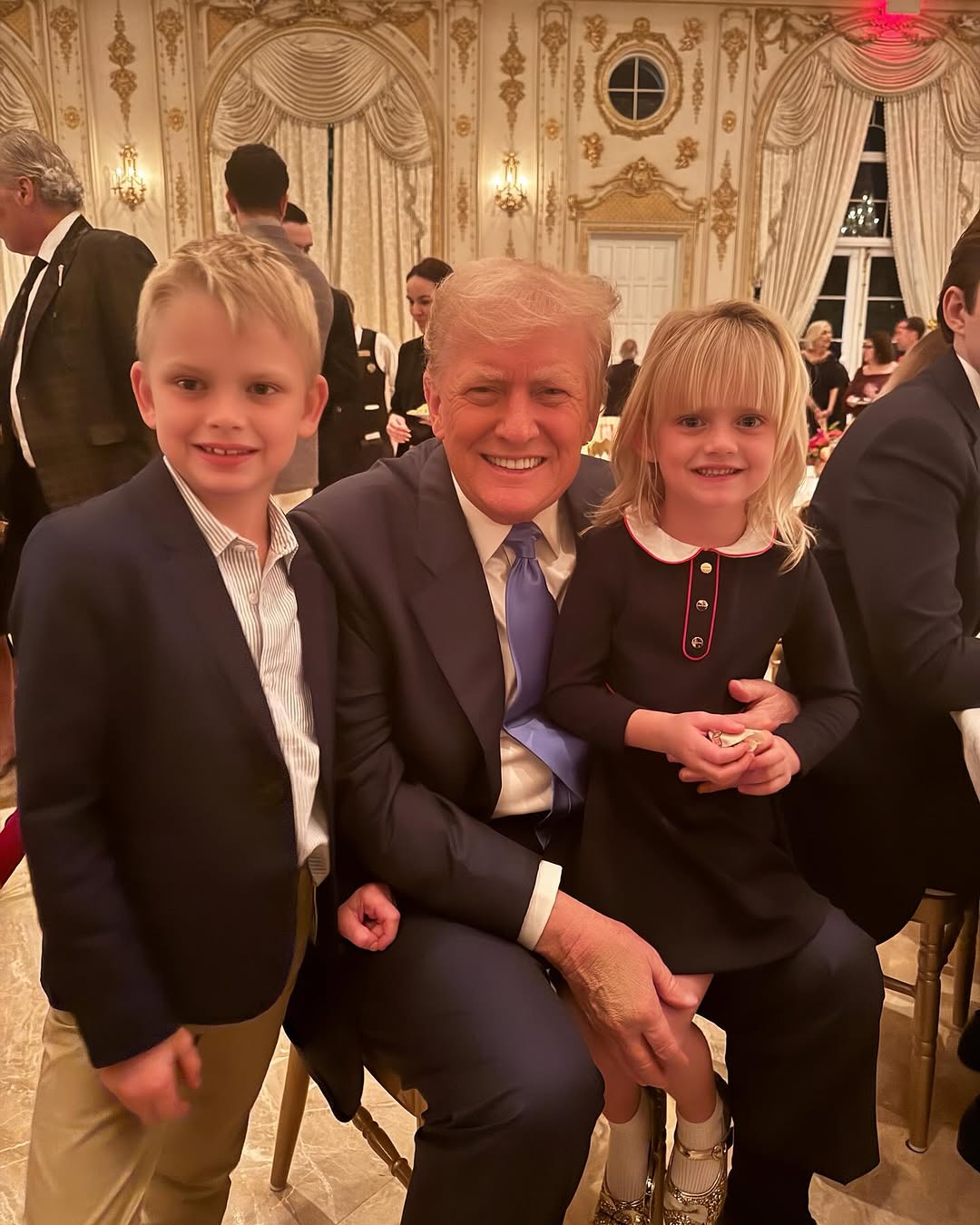
Luke and Carolina with Donald Trump (@laraleatrump Instagram)
Donald Trump Jr., 47, the eldest son of the former president, has five children from his first marriage to Vanessa Haydon: Kai, Donald III, Tristan, Spencer, and Chloe.
Kai is Donald Jr. and Vanessa's eldest child, born on May 12, 2007. At 17 years old, she has shown a strong passion for golf, which she shares with her maternal grandfather, Danish jazz musician Kai Ewans. Kai recently made headlines by announcing that she would be playing collegiate golf at the University of Miami, expressing her gratitude to her grandfather for his support in helping her access great golf courses. She’s also made an impression with her speech at the 2024 Republican National Convention, where she described her grandfather, Donald Trump, as “just a normal grandpa,” noting how he spoils the grandchildren with candy and soda when their parents aren’t around.

(@donaldjtrumpjr Instagram)
Born on February 18, 2009, Donald Trump III, also known as "Donny," is currently 15 years old. He was very young when the family was involved in filming "The Apprentice," but has since grown into a teenager involved in family events. He seems to enjoy a close-knit relationship with his father, often appearing alongside Donald Jr. in social media posts and family gatherings.
Tristan is the third child of Donald Jr. and Vanessa, born on October 2, 2011. Now 13 years old, he has a more private profile compared to some of his siblings. In an Instagram post, Donald Jr. referred to him as “the best little man ever,” clearly expressing his affection for his son. His family often shares his adventures, and he’s a regular fixture in family moments shared on social media.
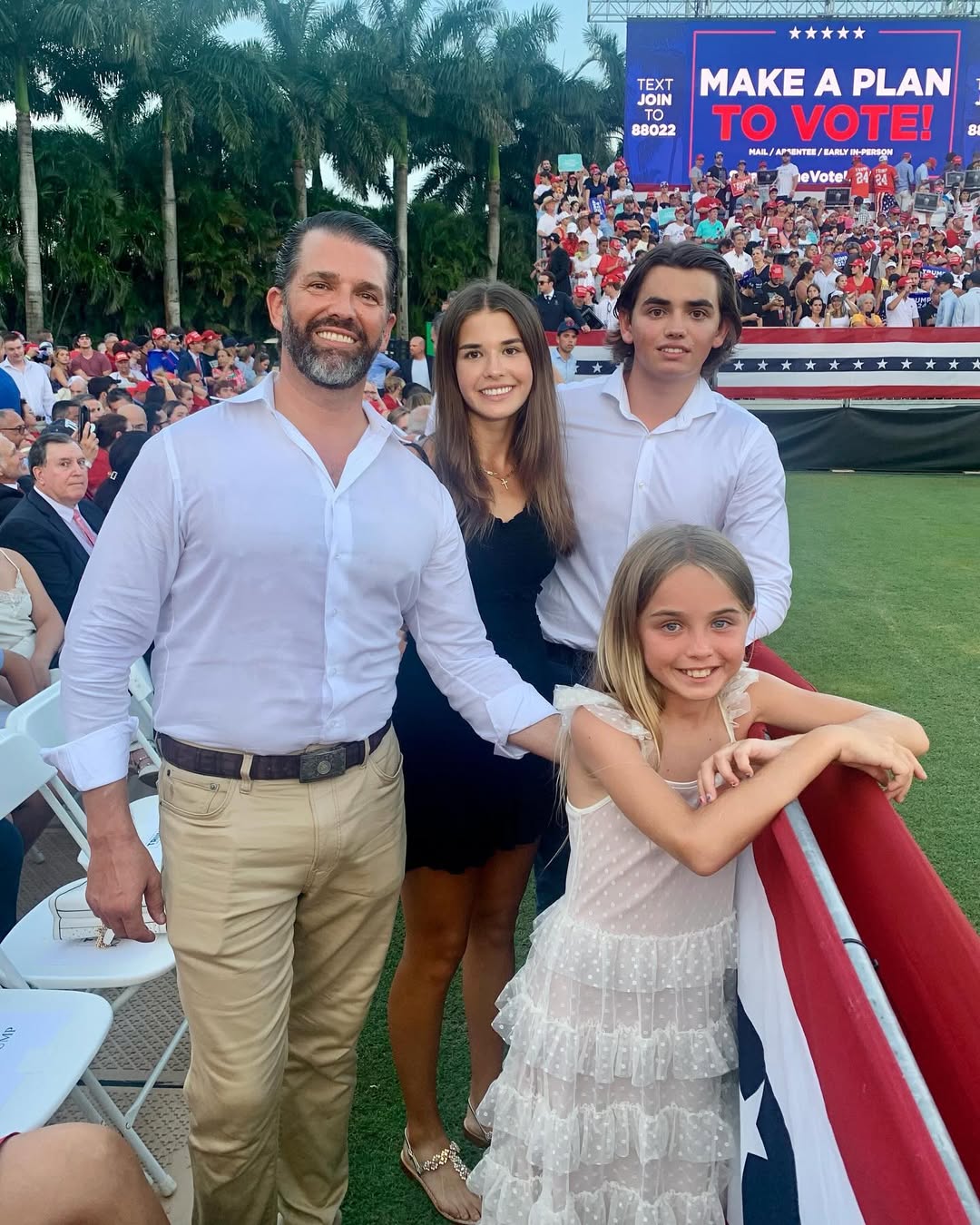
(@donaldjtrumpjr Instagram)
Spencer is the fourth child of Donald Jr. and Vanessa, born in October 2012. At 12 years old, Spencer is just a year younger than his brother Tristan. While not much is publicly known about Spencer’s personal interests, he is often seen enjoying family activities and events with his siblings and parents. His playful and loving relationship with his family is often evident in photos and posts.
Chloe is the youngest of Donald Jr.'s children, born on June 16, 2014. Recently, Donald Jr. posted a picture of Chloe enjoying a fishing trip with him, showing the bond they share. As the youngest, Chloe is often seen with her siblings in family outings and private moments, enjoying the outdoors and activities with her father.
Donald Jr. is clearly a devoted father, regularly sharing moments with his children on social media, and his kids seem to share a strong connection with each other and their extended family. Whether it’s at political events or family gatherings, the Trump grandchildren, including Donald Jr.'s five kids, often show a loving and close-knit relationship.
Arabella is Ivanka, 43, and Jared’s eldest child, born on July 17, 2011. She celebrated her Bat Mitzvah in June 2023, an important Jewish rite of passage, marking her transition into adulthood. Ivanka shared her pride on Instagram, describing Arabella as a young woman with a "generous spirit and dedication to making a difference." Arabella has many talents, including singing, playing the piano, horseback riding, and practising jujitsu, as Ivanka often highlights in social media posts.
Joseph was born on October 14, 2013, making him the second child of Ivanka and Jared. He is known for his creative and compassionate nature, which Ivanka has praised in several Instagram posts. On his 9th birthday, Ivanka described him as “a paramount teacher of presence, kindness, and awe.” His family often shares his inquisitive personality, and Ivanka frequently celebrates his curiosity and growing talents.
The youngest of Ivanka’s children, Theodore was born on March 27, 2016. Ivanka has often expressed admiration for his enthusiasm for learning and exploring new things. For his 8th birthday, Ivanka shared a post on Instagram, noting, “Every day, you amaze us with your relentless pursuit of learning, exploring, and mastering new skills.” Theodore’s curiosity and joy in discovering the world around him have made him a source of joy for the family.
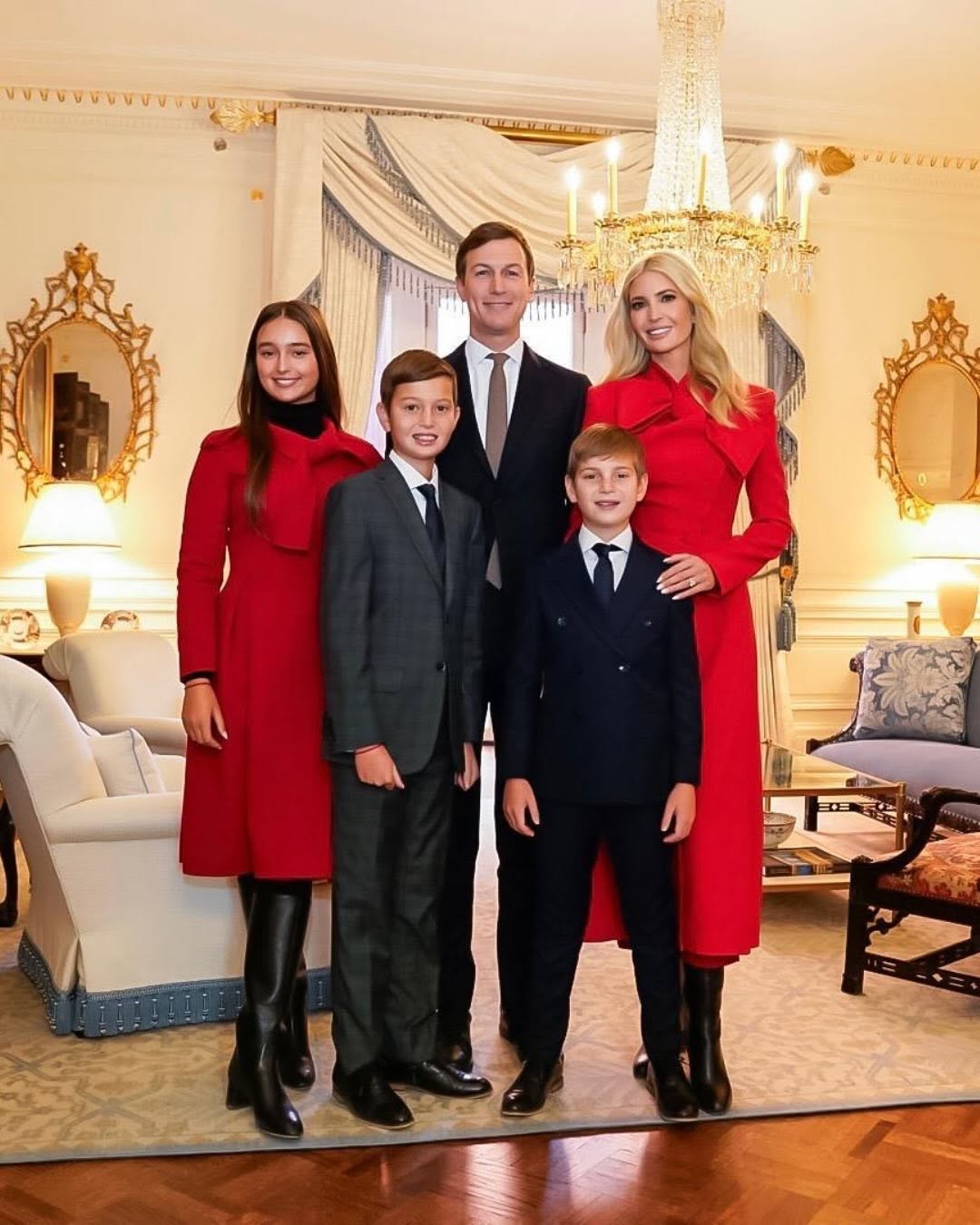
(@ivankatrump Instagram)
Eric Trump, 41, the second son of former President Donald Trump, has two children with his wife, Lara Trump, 42. They are often seen in family photos and have become a key part of the Trump family's next generation. Here’s a closer look at Eric’s two children:
Eric's eldest child, Eric Luke Trump, was born on September 12, 2017. Although he shares a name with his father, Eric prefers to go by his middle name, Luke. As a young child, Luke has been part of several public appearances, often seen attending family events and gatherings with his parents. He is frequently featured in family social media posts, and his parents have expressed their pride in him in various heartwarming captions.
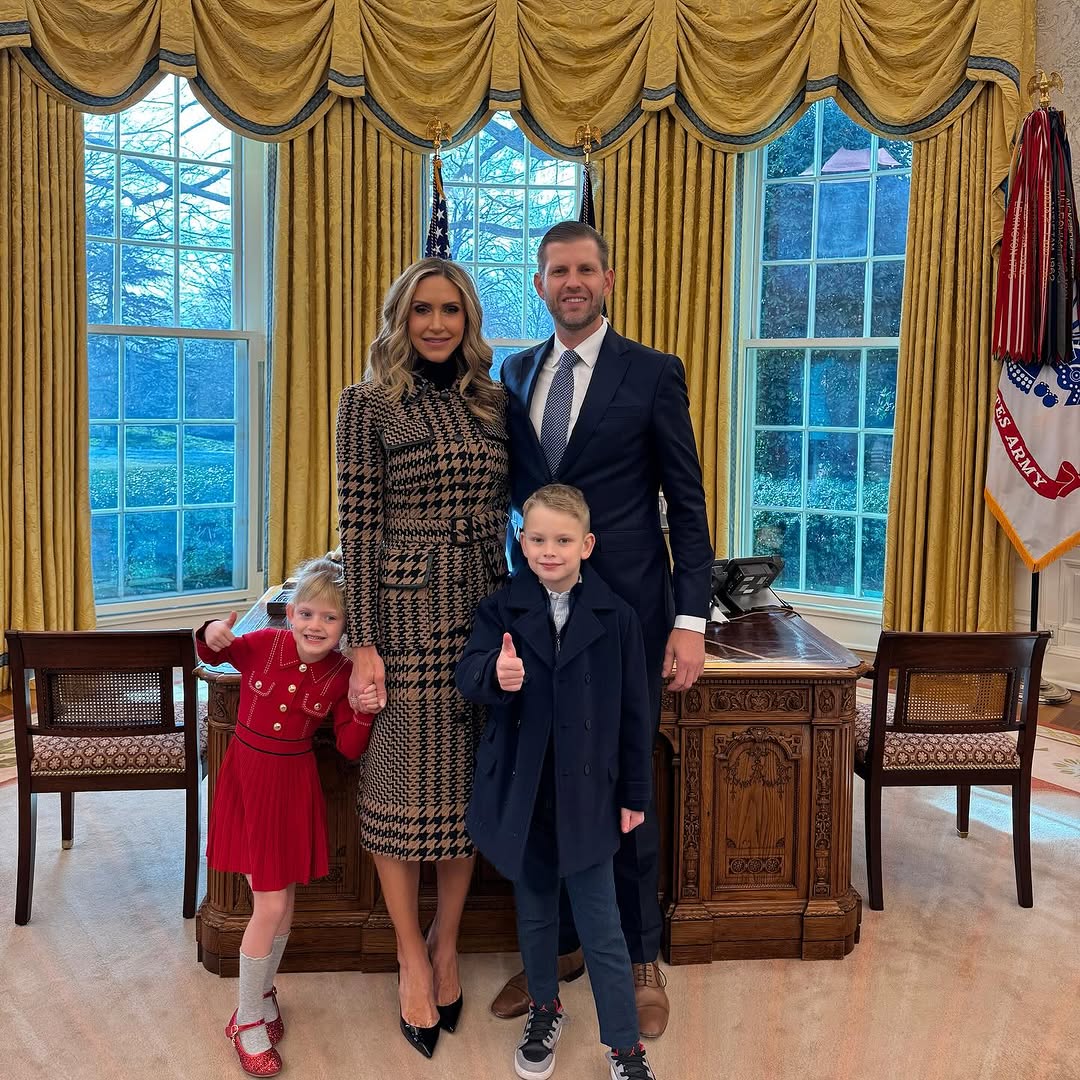
(@laraleatrump Instagram)
Carolina is Eric and Lara Trump’s second child, born on August 19, 2019. Just under two years younger than her brother Luke, Carolina has already made an impression on her family, who describe her as a fun and lively presence. Lara has shared playful moments with Carolina on Instagram, including the cheeky comment that her daughter is “already cooler than I’ll ever be.” The Trump family often shares snapshots of their time spent together, capturing the love and joy they experience with their young children.
Eric and Lara Trump have been very open about their experiences as parents, sharing moments from their children’s lives and expressing their deep love for them on social media. The two little ones, Luke and Carolina, are part of the growing Trump family and continue to create special memories with their parents and extended family.
Tiffany Trump, 31, the youngest daughter of former President Donald Trump, is expecting her first child with her husband, Michael Boulos. This exciting news was announced by her father during a speech at the Detroit Economic Club on October 10, 2023. Tiffany has not yet welcomed her baby as of early 2025, but the announcement has sparked much anticipation, with the couple expected to become parents sometime in 2025.
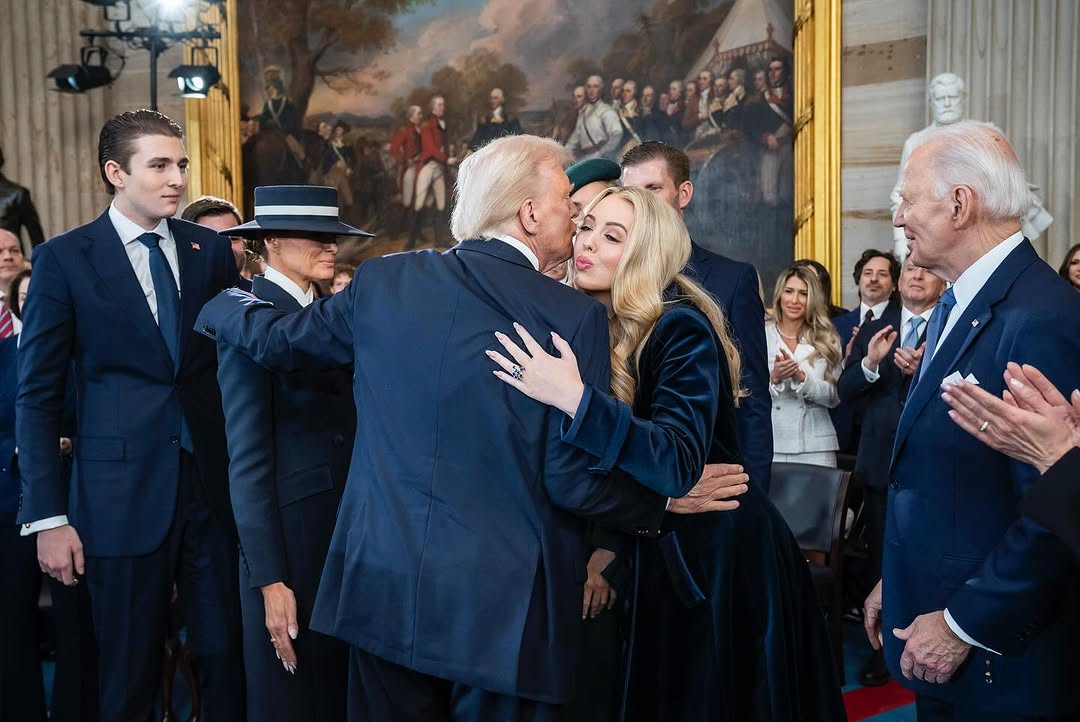
(@tiffanytrump Instagram)
As Tiffany Trump prepares to welcome her first child in 2025, the Trump family continues to grow, with each generation adding new stories, milestones, and achievements to the family legacy. From the successful careers of Donald Trump Jr. and Ivanka Trump to the youngest grandchildren carving their own paths, it’s clear that family remains at the heart of the Trump story.
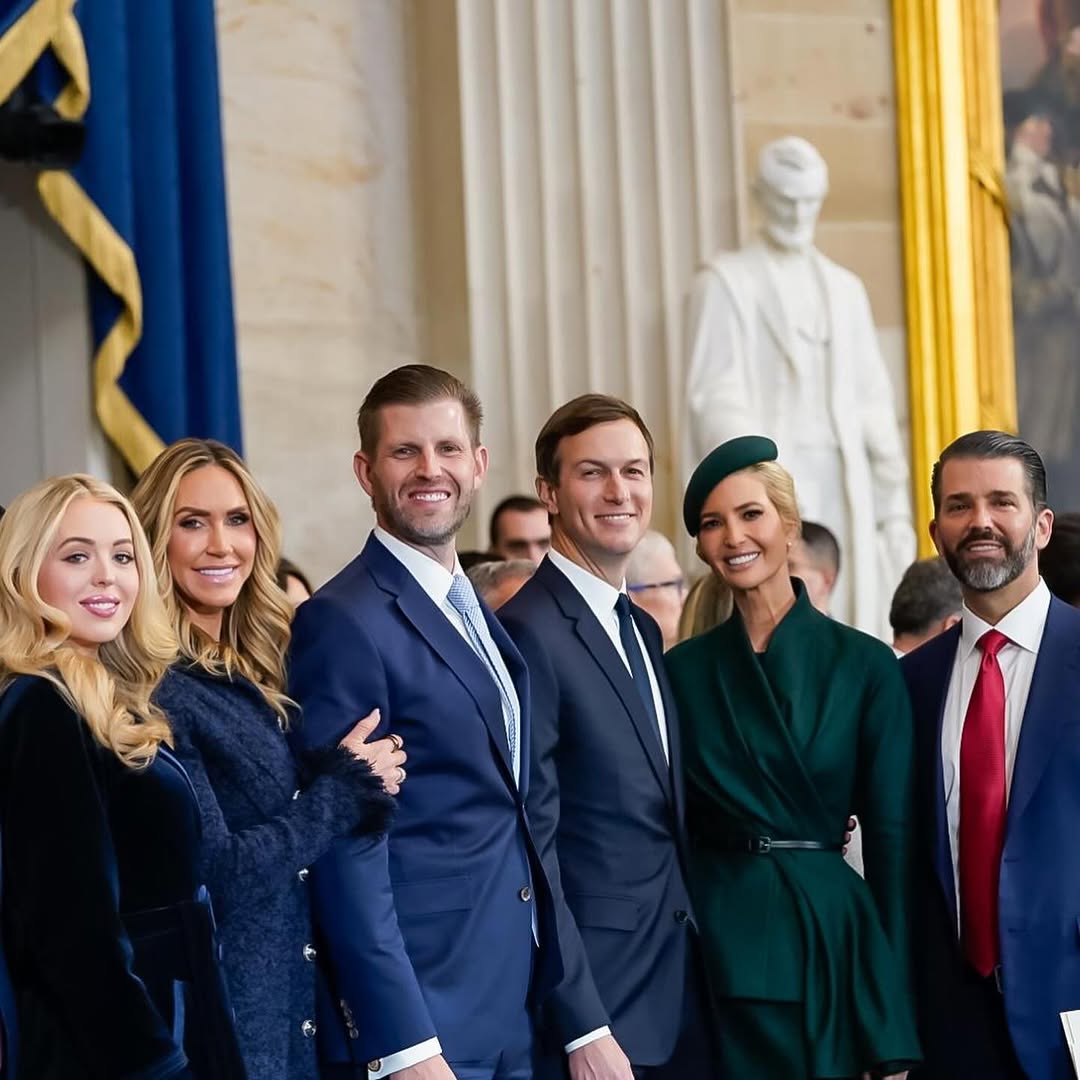
(@ivankatrump Instagram)
With the excitement surrounding Tiffany's pregnancy and the many memorable moments shared by Donald Trump's children and grandchildren, it’s evident that the former president's family continues to play an important role in both personal and public life. As the Trump grandchildren grow up and continue to make their mark, it will be interesting to see how they continue to shape the future of the Trump family.
Kid Rock, 54, recently shared an unexpected conversation he had with President-elect Donald Trump, 78, revealing that the future president reached out to him directly about a joke he made involving strippers and the Secret Service. The artist known for “Bawitdaba” explained that Trump had heard about the joke through someone else and wanted to clarify if the Secret Service had really prohibited him from having pole dancers perform at a rally in Washington, D.C.
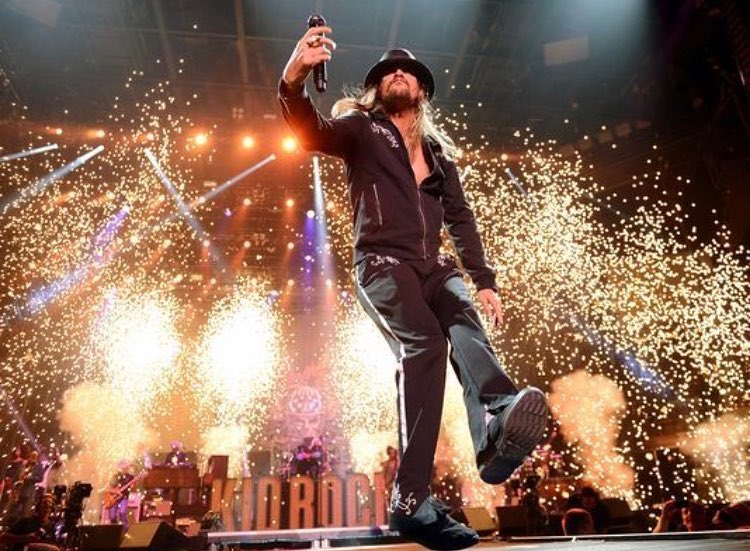
Kid Rock (@kidrock Instagram)
Kid Rock recently shared a surprising phone call with President-elect Donald Trump, who reached out to clarify a joke about strippers and the Secret Service. Trump, curious if the Secret Service had really restricted pole dancers at a rally in Washington, D.C., called Kid Rock directly. The musician quickly assured Trump it was just a joke. The conversation also covered Trump’s decision to move the inauguration indoors due to extreme cold weather, with Kid Rock offering his input. This candid exchange highlights the unexpected and light-hearted dynamic between the musician and the future president.
“Friday morning I got a call from the President and [Trump’s spouse] Melania and it was kind of mind-blowing, I’ve tried to leave him alone, he’s got a lot on his plate, I would think, right now,” Kid Rock said. “He called and he goes, ‘Did the Secret Service really tell you that you can’t use strippers?’”
Kid Rock quickly assured Trump that he wasn’t serious: “No, sir, I was just joking around.”
Trump, laughing, replied, "Ah, that’s funny," according to Kid Rock’s recollection.
The conversation didn’t end there, as Trump also sought Kid Rock’s opinion on holding the Inauguration ceremony indoors due to the predicted extreme cold weather in Washington D.C. Kid Rock was surprised that the President-elect would turn to him, given his history of songs like “You Never Met A Motherf—er Quite Like Me” and “Redneck Paradise.”
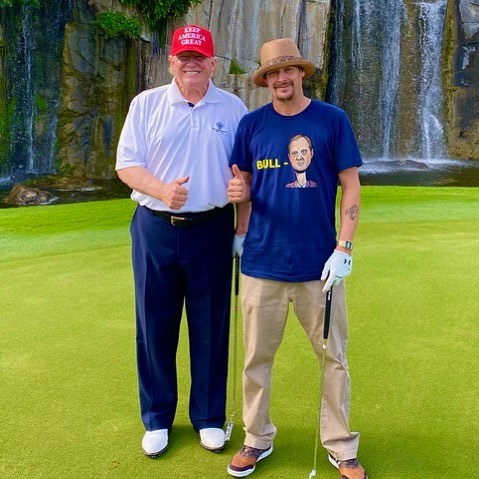
Donald Trump with Kid Rock (@kidrock Instagram)
Kid Rock recalled Trump’s query: "Let me ask you a question—people could really have a bad experience, maybe some people could get hurt, our first responders—what do you think about me moving the inauguration indoors?"
Kid Rock mimicked confusion and said, “I’m like—uhhhhh.” The conversation ended with Trump ultimately deciding to move the ceremony indoors for safety reasons.
Kid Rock has been a vocal supporter of Donald Trump over the years, and the two have developed a friendly relationship. The musician has publicly expressed his admiration for Trump, often aligning himself with the former president’s political views. Kid Rock even performed at Trump’s inauguration in January 2017, and his support for Trump continued throughout the latter's presidency.
Kid Rock has praised Trump as "the best thing to happen to America in a long time," appreciating the president’s outsider status and his no-nonsense approach to politics. In interviews, Kid Rock has highlighted Trump's straightforwardness and how he admires his ability to challenge the political establishment.
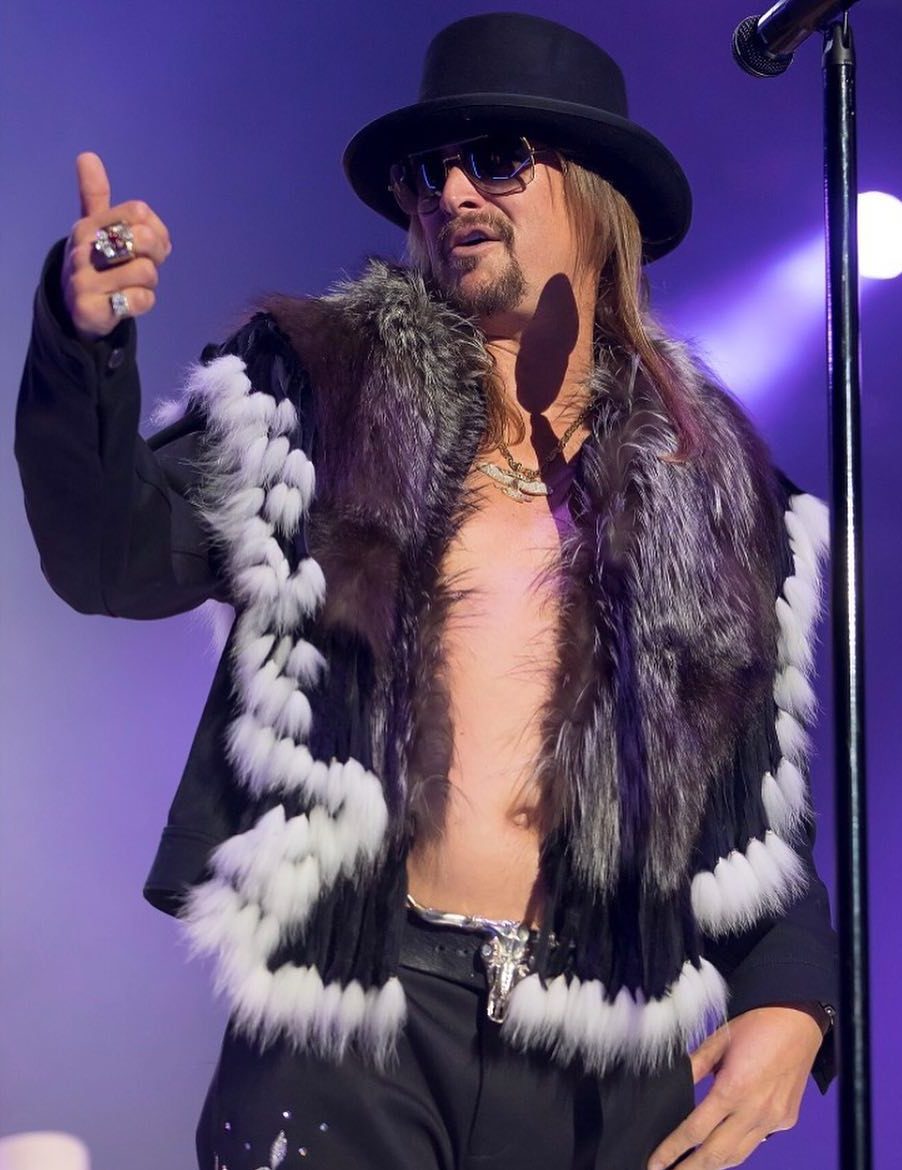
Kid Rock (@kidrock Instagram)
In addition to publicly supporting Trump, Kid Rock has described their personal relationship as one where they share mutual respect. Trump, in turn, has praised Kid Rock’s music and persona. The relationship between the two has been marked by their shared political views, with Kid Rock frequently voicing his approval of Trump’s policies.
However, while their bond appears to be based on mutual admiration and political alignment, their interactions have often been light-hearted. Kid Rock jokingly recalled one instance when Trump called him about strippers at a rally, showing the humorous side of their relationship. "I let him know I was just joking around," Kid Rock said, with Trump responding, "Ah, that’s funny." Their exchanges reveal a camaraderie that balances both political alignment and playful banter.
Nigel Farage delivered a surprising political forecast on Friday 17 January, asserting that he will ascend to the position of Prime Minister of Britain before the year 2030.
During a well-attended event in Washington DC organized in his honor, the Reform Leader was celebrated by Republican attendees as a prospective Prime Minister. He addressed the audience with a view of the White House, stating that Donald Trump's triumph represents not only a success for America but also for the free world at large. Mr. Farage emphasized that comparable movements are currently emerging across Europe, including in the United Kingdom.
Nigel Farage is a name that divides opinion in British politics. To some, he is a visionary who spearheaded the campaign for Brexit and fundamentally reshaped the UK’s political landscape. To others, he is a divisive figure, known for his blunt rhetoric and controversial views. However, despite the polarisation surrounding him, there is a compelling argument to be made for why Nigel Farage should be the next Prime Minister of the United Kingdom. His experience, populist appeal, and unwavering commitment to national sovereignty, alongside the growing dissatisfaction with the current political system, make him a candidate worth considering.
Farage’s political journey has been one of persistence and gradual influence. He first entered the political sphere with the UK Independence Party (UKIP), which was, at the time, a fringe party. UKIP’s primary focus was to advocate for the UK’s withdrawal from the European Union, a cause that Farage believed was essential for the future of the nation. Under his leadership, UKIP grew from a small group of disillusioned voters to a significant political force.
Farage’s ability to lead UKIP through difficult times and to maintain his position as the figurehead of the party demonstrated his political acumen. His understanding of the electorate, his ability to communicate directly with the public, and his tenacity in the face of adversity were qualities that would later serve him well in the battle for Brexit.
Farage’s leadership of UKIP culminated in the 2014 European Parliament elections, where the party achieved a historic victory. UKIP topped the polls in the UK, and Farage was lauded for his ability to galvanise voters and draw attention to the issue of the UK’s membership in the European Union. The results were a clear sign that there was a large section of the British public that was dissatisfied with the status quo and yearned for a leader who would take action on their concerns.
If there is one issue that has defined Nigel Farage’s political career, it is Brexit. Farage was not only a staunch advocate for leaving the European Union, but he was also one of the most prominent voices in the successful campaign to leave. The 2016 referendum on EU membership marked a pivotal moment in British politics, and Farage played a crucial role in shaping the debate.
The Brexit campaign, led by Farage and his allies, argued that the UK’s membership in the European Union undermined the nation’s sovereignty, control over its borders, and ability to make independent decisions. The "Leave" campaign resonated with millions of voters who felt that their voices had been ignored by the political establishment. Farage was able to tap into this frustration and communicate it to the wider public, presenting himself as a champion of the people against the elite.
The victory of the "Leave" campaign was, in large part, due to Farage’s leadership and his ability to rally voters who were sceptical of the EU. The result of the referendum—52% of voters chose to leave the EU—shocked the political establishment, but Farage remained steadfast in his belief that the UK was better off outside the European Union.
While the Brexit process has been fraught with challenges and disagreements, Farage’s influence on the outcome cannot be overstated. He was instrumental in shaping the national conversation around Europe, and his dogged determination in the face of opposition helped push the issue to the forefront of British politics.
One of the reasons that Farage has gained such a devoted following is his ability to connect with ordinary people. Unlike many of his political peers, who are seen as part of the establishment, Farage has cultivated an image of being an outsider—a man of the people. He speaks directly to his audience, often using blunt language and adopting a no-nonsense approach that appeals to voters who feel that their concerns are ignored by the political elite.
Farage’s populist appeal has been a central feature of his political career. He has consistently positioned himself as a champion of the working class, focusing on issues such as immigration, national sovereignty, and the erosion of British culture and identity. In an era of growing disenchantment with traditional politics, Farage’s rhetoric has struck a chord with many voters who feel disconnected from the political class.
His ability to speak to the concerns of ordinary people is perhaps best exemplified by his comments during the Brexit campaign, where he highlighted the impact of immigration on local communities and the need for the UK to take control of its borders. Farage’s willingness to discuss sensitive issues that many politicians avoid has earned him both admiration and criticism, but it has undeniably solidified his place as a leader of the populist movement in the UK.
If Farage were to become Prime Minister, his vision for the future of the UK would undoubtedly be shaped by his long-standing beliefs in national sovereignty, free markets, and the importance of individual freedom. His advocacy for a smaller government, lower taxes, and a free-market economy is in line with traditional conservative principles. Farage has consistently argued that the UK should focus on its own interests rather than being beholden to international agreements or bureaucracies, such as the European Union.
At the heart of Farage’s political ideology is a belief in the importance of national sovereignty. His argument for Brexit was based on the idea that the UK should be free to make its own laws, control its own borders, and pursue policies that are in the best interest of the British people. As Prime Minister, Farage would likely prioritise policies that restore the UK’s independence from international organisations and focus on promoting national interests.
Additionally, Farage has long championed the idea of a “Global Britain” post-Brexit. He envisions a UK that is free to forge its own trade deals with countries around the world, independent of EU restrictions. Under his leadership, the UK would likely focus on building strong trade relationships with emerging markets, while also strengthening ties with traditional allies such as the United States and Commonwealth nations. Farage’s vision of a post-Brexit Britain is one where the country is economically competitive, globally connected, and politically sovereign.
One of the most compelling reasons to consider Farage for Prime Minister is his ability to represent the growing number of people who feel disenfranchised by the current political system. The UK’s political establishment has been under increasing scrutiny in recent years, with many voters expressing frustration at the failure of mainstream parties to address their concerns.
Farage has consistently positioned himself as a voice for the voiceless, speaking for those who feel that their concerns have been ignored by the political elite. His populist rhetoric, which emphasises the importance of listening to the people and challenging the establishment, resonates with voters who are tired of the status quo. Farage’s ability to tap into this disillusionment has made him a powerful force in British politics, and his influence is only likely to grow as more people seek an alternative to the traditional parties.
Farage has also been vocal in his criticisms of the media, which he believes plays a significant role in shaping public opinion and perpetuating the political establishment’s narrative. He has often accused the media of bias and of failing to represent the views of ordinary people. This anti-establishment stance, combined with his willingness to speak his mind, has endeared him to many voters who feel that the mainstream media is out of touch with their concerns.
While there are many reasons why Nigel Farage could make an effective Prime Minister, there are also significant challenges that he would need to overcome. One of the biggest hurdles is the need to unite a fractured political landscape. The UK’s political parties are deeply divided, and Farage would need to find a way to bridge these divisions and create a government that is capable of governing effectively.
Farage’s history of leading smaller parties, such as UKIP and the Brexit Party, could be seen as both an asset and a liability. While his leadership of these parties has demonstrated his ability to build and lead political movements, it also highlights the challenges he faces in gaining the support of a wider electorate. For Farage to become Prime Minister, he would need to attract support from not only the populist right but also more centrist voters who may be sceptical of his approach.
Another challenge for Farage is his controversial reputation. His outspoken views on issues such as immigration, the European Union, and political correctness have earned him a great deal of criticism. For some, his rhetoric is seen as divisive, and his style of politics is viewed as inflammatory. Farage would need to address these concerns and present himself as a leader who can unite the country, rather than deepen divisions.
After an earlier fall out this month, Nigel Farage has said he wants to "mend fences" with Elon Musk, after the billionaire Trump adviser called for him to be replaced as leader of Reform UK. Just before Christmas, Farage told journalists that his party was in "negotiations" with Mr Musk, the world's richest man, about a potential donation.
However, by the new year, the relationship had soured, with Tesla boss Mr Musk stating that Farage "did not have what it takes" to lead the party.
Farage suggested that the rift was due to a disagreement over Mr Musk’s support for the jailed far-right activist Tommy Robinson. Speaking on LBC, Farage explained that he planned to repair his relationship with Mr Musk during a forthcoming "four or five" day trip to the US for Donald Trump's inauguration as president on 20 January.
"Of course I want his support, of course I will talk to him in America in a few days' time, of course I want to mend any broken fences that might exist," he said.
"I have no desire to go to war with Elon Musk and I'm not going to, and I haven't done," he added. "I'm a huge admirer of him - I think he's an heroic figure."
He reiterated his belief that losing Mr Musk's support would damage the party’s chances with younger voters, as the tech entrepreneur was "a cult hero figure" and "he kind of makes us look cool."
However, Farage made it clear he "would not be moved" over Mr Musk’s call to free Tommy Robinson, whose real name is Stephen Yaxley-Lennon. Robinson was jailed in October last year for repeating false claims against a Syrian refugee.
The Reform UK leader said many of his "American friends" had only "seen one side of the Robinson story" and were unaware of Robinson’s criminal record.
"He has been in prison many times over the years... Once he almost brought down a trial at which gang rapists were ultimately convicted," Farage said.
He added that embracing Robinson would do Reform UK "immense harm, and probably rightly so."
However, Farage insisted that Mr Musk’s backing was "not crucial" and suggested the falling out with the billionaire could ultimately benefit Reform UK in the future.
He added: "The fact that I've stood up on a point of principle - even if in the short term it's to my detriment - in the long run may even work in our favour."
For Nigel Farage to become the next Prime Minister of the UK, he must navigate several significant challenges. First and foremost, he needs to unite the fragmented right-wing of British politics. While Farage has a loyal following among populist voters, particularly those who supported Brexit, he must consolidate support from other factions on the right. This includes gaining the backing of groups such as his own Reform UK, UKIP, and potentially appealing to dissatisfied Conservative Party voters. To do so, Farage would need to forge strategic alliances and present a clear alternative to the more centrist leadership currently in place.
Expanding his appeal beyond his traditional populist base is another crucial step. Farage has a strong following among those who feel disillusioned with the establishment, but for him to secure the role of Prime Minister, he must broaden his support. This means attracting centrist and moderate left-leaning voters who may not be swayed by his strong stances on issues like immigration or political correctness. To do so, Farage would need to adjust his rhetoric, toning down some of his more divisive views and positioning himself as a leader who can represent all sections of British society.
Building a strong and influential political party is essential for Farage’s chances of becoming Prime Minister. Reform UK, or any political vehicle he uses, must gain substantial representation in Parliament. This means securing more Members of Parliament and forming a credible opposition to the Labour and Conservative parties. Farage must continue to strengthen Reform UK and develop a comprehensive policy platform that addresses the key concerns of the electorate, such as healthcare, education, and the economy. Without a solid political foundation, Farage’s path to Downing Street would be tenuous at best.
Farage must also present clear, pragmatic policies on the pressing national issues that will resonate with voters. His leadership in the Brexit campaign has defined his political career, but now he needs to show that he can govern on a range of other topics. For many voters, issues such as the post-Brexit economy, healthcare, and national security are paramount. Farage needs to develop well-thought-out policies on these matters that can convince the public that he is the right person to lead the country beyond Brexit.
Managing his public image will be critical for Farage, especially given the criticism he has faced for his divisive rhetoric. His blunt, combative style has alienated some potential supporters who see him as too extreme. If Farage is to broaden his appeal, he must tone down his more controversial statements while still maintaining his strong stance on issues like national sovereignty and immigration. Balancing his populist appeal with a more moderate image will be a delicate task but is necessary if he hopes to attract undecided voters and those wary of his extreme views.
One of Farage’s key advantages is the growing disillusionment with the political establishment. Many voters feel that traditional political parties, including Labour and the Conservatives, no longer represent their interests. Farage can tap into this anti-establishment sentiment by positioning himself as an outsider who understands the frustrations of ordinary people. By continuing to challenge the political elite and advocating for the concerns of the public, Farage could further galvanise support and create a sense of momentum for his leadership bid.
Finally, Farage would need to run a highly effective election campaign. His ability to galvanise support in the lead-up to Brexit demonstrated his political acumen. Farage must replicate this success by targeting key constituencies, crafting a compelling and unified message, and engaging in grassroots mobilisation. Raising funds, gaining media coverage, and building a broad coalition of voters will all play a critical role in securing a path to the Prime Minister’s office.
To become Prime Minister, Farage must overcome several hurdles, including uniting right-wing factions, broadening his appeal, and presenting a practical, unifying vision for the UK’s future. While these challenges are considerable, with the right strategy, policy platform, and public image, Farage could rise to lead the country. However, whether he can navigate these obstacles remains to be seen.
French far-right politician Jean-Marie Le Pen has passed away at the age of 96, as confirmed by a family statement released to AFP.
Le Pen, who had been residing in a care facility for several weeks, died on Tuesday at noon "surrounded by his loved ones," according to his family. A Holocaust denier and an unrepentant extremist regarding issues of race, gender, and immigration, Le Pen established the French far-right National Front party in 1972.
He notably advanced to the presidential election runoff against Jacques Chirac in 2002. In 2011, Le Pen's daughter, Marine, assumed leadership of the party, subsequently rebranding it as National Rally, which has since evolved into one of France's principal political entities.
Jean-Marie Le Pen - founder of the French far right and 'Devil of the Republic' Jordan Bardella, who took over as party leader from Marine Le Pen in 2022, remarked that Jean-Marie had "always served France" and "defended its identity and sovereignty."
You Might Like: Yvette Wang Sentenced to 10 Years for $1 Billion Fraud Scheme
Far-right nationalist Eric Zemmour expressed on X that "despite the controversies and scandals," Le Pen would be remembered for being "among the first to alert France to the existential threats that loomed." Jean-Luc Mélenchon, leader of the radical left France Unbowed (LFI), stated that while respecting the dignity of the deceased and the sorrow of their family "does not negate the right to evaluate their actions," he found Le Pen's actions "unbearable." He added, "The struggle against the man is over. The fight against the hatred, racism, Islamophobia, and antisemitism that he propagated continues." For many years, Le Pen was regarded as one of France's most contentious political figures.
His critics labeled him a far-right bigot, and he faced multiple convictions in court for his radical statements. In 2015, he was expelled from the National Rally after reiterating his notorious Holocaust denial. This expulsion coincided with a public dispute with his daughter, who accused him of reviving Holocaust denial in an attempt to "rescue himself from obscurity."
Republican Matt Gaetz has expressed his outrage after failing to prevent the public release of a report detailing his alleged sexual and drug-related misconduct. The former representative, who recently stepped down as Donald Trump's nominee for attorney general, is accused of paying multiple women and a 17-year-old girl for sexual encounters.
The report's final draft indicates that Gaetz made payments exceeding $90,000 to 11 women and the minor between 2017 and 2020. On Monday morning, Gaetz initiated a lawsuit against the House Ethics Committee, aiming for a temporary restraining order to stop the investigation's findings from being made public.
In his lawsuit, Gaetz argues that the media coverage would be "immediate and widespread," which he believes would be detrimental. He also claims that, as a private citizen now, he should not fall under the committee's jurisdiction. The report includes several shocking allegations against the outspoken Republican. According to the report, Gaetz allegedly engaged in sexual activity with "Victim A," a 17-year-old who had just completed her junior year of high school, during a party in 2017. "Victim A recalled receiving $400 in cash from Representative Gaetz that evening, which she understood to be payment for sex," the report notes. She also stated that she did not inform Gaetz of her age at the time, nor did he inquire about it.
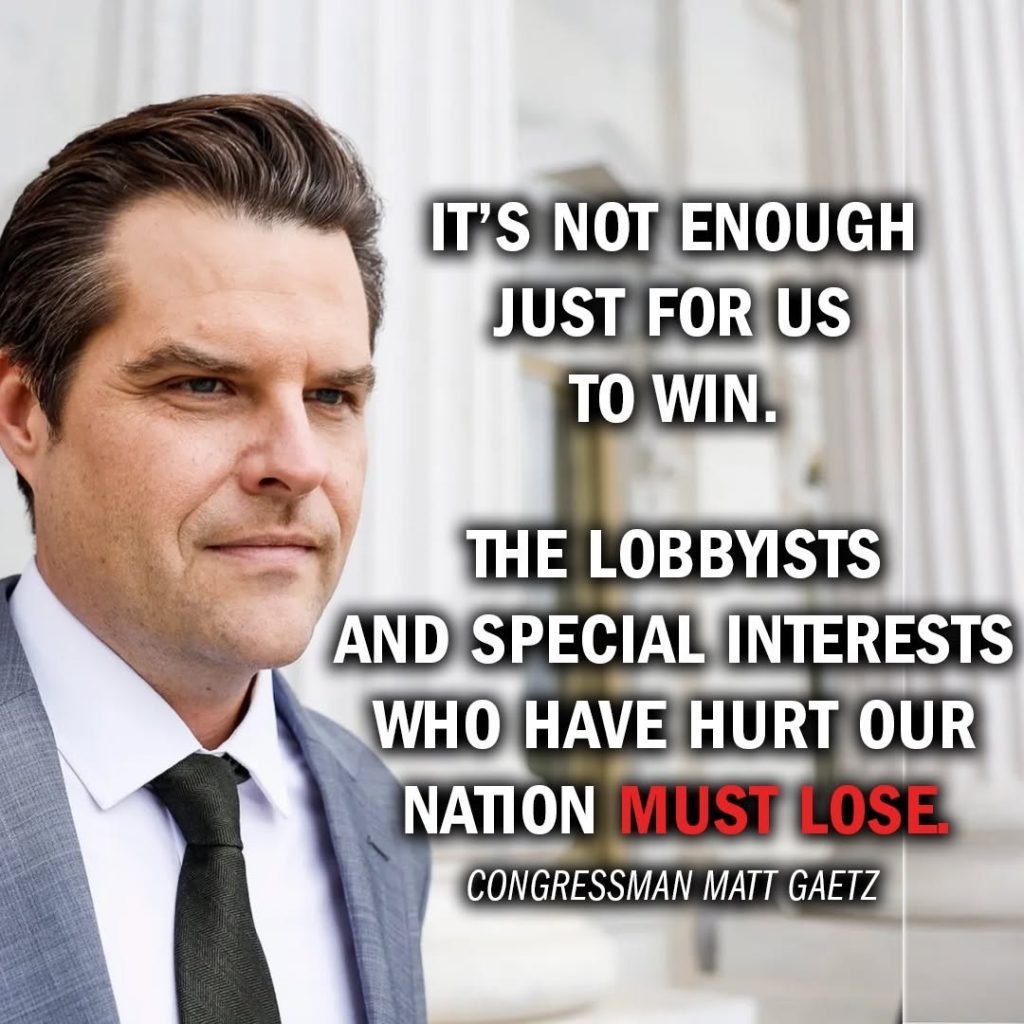
The report claims that Gaetz was involved in parties characterized by sex and drugs, including a 2018 trip to the Bahamas where he reportedly used ecstasy and engaged with four women.
While all the women who provided testimony stated that their interactions with Gaetz were consensual, one woman mentioned to the committee that the drug use at the party had "impaired" her ability to "fully consent." Gaetz has denied any sexual involvement with a minor in his written statements to the committee. Following the release of his lawsuit, he took to X, previously known as Twitter, to share his thoughts.
"Is giving money to someone you're dating—without them asking for it and without it being 'charged' for sex—now considered prostitution?!?" he questioned. "There’s a reason this was done in a report on Christmas Eve-Eve instead of a courtroom where I could present evidence and confront witnesses. "This is testimony from one of the so-called 'prostitutes' that you won’t find in the report!" In a subsequent post, he stated, "ANOTHER one of the ethics witnesses, who was labeled a 'prostitute,' claimed she was NOT when pressed during a deposition.
This won’t be included in the 'ethics' report, naturally." All the alleged incidents took place before Gaetz married his wife, Ginger Luckey Gaetz. Ginger, who married Gaetz in 2021, has remained supportive of her husband amid the allegations. After he announced his withdrawal as Trump's nominee for attorney general, she posted a photo of them walking together, captioning it, "The end of an era." She added, "No one loves America more than this guy."
Donald Trump to Appear on Joe Rogan's Podcast.
The interview is set to happen at Joe Rogan’s studio located in Austin, Texas. Donald Trump and Joe Rogan share some common supporters, including Robert F. Kennedy Jr., who backed Trump after he withdrew from the presidential race, along with tech mogul Elon Musk. With approximately 15.7 million followers, Joe Rogan's podcast audience has amassed around 17.5 million subscribers on YouTube and 19.3 million followers on Instagram. When accounting for Spotify listeners, Rogan's total reach is an impressive 52.5 million, making his podcast the most popular on the platform.
Joe Rogan has previously expressed humility regarding his political insights, stating on X in August that he doesn't see himself as a definitive source for political commentary and said: "That's politics. They do it on the left. They do it on the right. They gaslight you, they manipulate you. They promote narratives. The only one who's not doing that is Robert F. Kennedy Jr. I am a fan. He's the only one that makes sense to me. He doesn't attack people. He attacks actions and ideas. He’s much more reasonable and intelligent."
Donald Trump, in a playful response on social media, teased about Rogan’s upcoming UFC appearances, stating, "It will be interesting to see how loudly Joe Rogan gets BOOED the next time he enters the UFC Ring??? MAGA2024."
In addition to the podcast appearance, Donald Trump mentioned that his son, Barron, 18, the youngest of Trump’s five children is playing a role in efforts to engage Generation Z voters, hinting at strategic outreach to younger demographics in the lead-up to the 2024 election.
Legal and international relations theorists are often puzzled. They come face to face with empirical realities that are complex and contradictory, imbued with double standards and differing courses of action, although the cases can be very similar and involve violation of international humanitarian law. Thus, they soon come to realise that power, not law, is the element that governs social and political relations. Some examples in the European theatre will suffice to demonstrate this.
In March 2022, the International Court of Justice (ICJ), which is attached to the UN and handles cases involving states – the International Criminal Court (ICC) being a different Court based on the “Statute of Rome” of 1998, and dealing with crimes by individuals – issued a sharp warning against Russia’s invasion of Ukraine. It ruled that Russia should immediately stop military operations and restore the legal border between itself and Ukraine. President Biden and State Department officials were outspoken in defending Ukraine’s rights and condemning the invasion as an act of aggression against international law. Yet when, on 24 May 2024, the same Court produced a similar order asking Israel to comply with its obligation under the Genocide Convention and immediately halt its offensive in Rafah, United States officials and Biden himself remained silent. The official position of the United States on the matter is that “Israel’s incursion of Rafah has been a limited operation to root out remaining Hamas fighters, while avoiding undue civilian harm and to free around 100 living and dead Israeli hostages” (U.S. silent as global condemnation of Israel’s Rafah offensive grows - The Washington Post). Clearly, this is Israel’s position adopted by the United States in its entirety.
In July 1974 the island of Cyprus was brusquely divided into two parts. Turkey, the invader, forced partition and population exchange. The Greek Cypriots (about 167,000) were forced to move to the South and the Turkish Cypriots, initially held in the British military bases there, were uprooted to the North, where Turkey installed a puppet regime. The Republic of Cyprus, founded in 1960, is a member of the UN, although its independence depended on a colonial “Treaty of Guarantee” that contravened the UN Charter (Cyprus: A Modern History | Request PDF (researchgate.net)). But Turkey’s invasion was illegal both from the point of view of the UN Charter and the “Treaty of Guarantee”. This is because the treaty stipulated that the three “guaranteeing powers” had the right to intervene, but only in order to restore the status quo ante, that is the legitimate government of the Republic of Cyprus. Turkey did not do that. Instead, it turned the northern third of the island into a security zone, disappointed the Turkish Cypriots, many of whom migrated abroad, mostly to the UK, and transferred settlers from mainland Turkey, placing them in the abandoned houses of Greek Cypriots. Neither the United States nor Britain, a guarantor power, moved to stop the illegal Turkish invasion, turning a blind eye to Turkey’s actions. Today, the issue appears to have been swept under the carpet, especially since the remaining two thirds of the island, the truncated Republic of Cyprus, is a member of the EU and the Eurozone. However, from the point of view of international law, it remains an issue of illegal invasion and occupation, as Turkey forcibly uprooted over 200,000 Cypriots, both Turkish and Greek Cypriots.
Similar arguments have been advanced by legal experts as regards the bombing of Belgrade by NATO from March to June 1999, ostensibly on humanitarian grounds, whereas Israel and Turkey go unpunished for their respective maltreatment of Palestinians and Kurds. The list is long. There are, of course, counter-arguments. Putin – and not only – argues that he had warned the West that any expansion of NATO into Ukraine would be met by force. Turkey maintains that her intervention was necessitated by the Greek junta’s coup against the legitimate government of Archbishop Makarios and that Greece should be grateful as it was her Cyprus operation that triggered the fall of the junta and the restoration of democracy. And Israel’s current position is that its offensive in Gaza is a response to Hamas’ unprecedented and surprising attack on 7 October 2023. In fact, this was the key argument of the Israeli judge, Aharon Barak, who sits on the 15-member ICJ and voted, together with Ugandan jurist Julia Subutinde, against the decision.
However, Israel’s recent attack on Rafah pushed the goalposts of comparisons further, distancing wider layers of media and public opinion from its point of view. No other conflict, bar confirmed genocidal cases such as that of Rwanda, has shown so much recklessness and disregard of international law on the part of the powerful side, and so much indifference on the part of the key great powers to contain it. The United States, Britain, Germany or the EU as a whole have given no signs of joint or separate action towards enforcing peace on Israel. But both Israeli and Hamas leaders have now been put on the spot by the ICC. Many friendly media sources go as far as to ask whether Israel has a policy of starving the Gazans, since the Rafah and the Philadelphi corridors with Egypt are closed (The ICC arrest request is a fire alarm for Israel. Will it take heed? | Jo-Ann Mort | The Guardian). Israel argues that the corridors/crossings are being used for supplying Hamas with weaponry and funds, but this is a moot point. What matters from a humanitarian and legal perspective is that aid cannot reach the civilians, especially women and children, caught in the cross-fire of the parties in conflict. Moreover, the conflict is deeply asymmetrical. The Israeli Defence Force (IDF) boasts one of the best-trained and best (technologically) equipped armed forces in the world. Hamas’ weaponry is elementary. A new peace process initiated by Egypt, Qatar and the United States has stalled. At the moment, the Europeans seem to be busy with the Euro-elections of 9 June, whereas in Britain the public debate seems to have shifted to the forthcoming general election of 4 July. But the landscape in the United States is different. Paradoxically, American civil society is vastly more energetic in condemning Israel’s war in Gaza than in Europe or the UK. Thus, President Biden may have a chance to be re-elected if he rectifies his position on the conflict (Opinion | In Gaza, Biden Gets the Chance to Do the Right Thing - The New York Times (nytimes.com)).
International law is increasingly being seen as a dependent and subordinate variable of power-politics. It is used at convenience in order to justify action on somebody and inaction on somebody else. Thus, whereas the law seems to be an ideal close to perfection, in real life there are double standards. This being the case, the situation in Gaza has taken a dramatic turn and exceeds many similar situations in the past. One of the greatest German-Jewish philosophers of the 20th century put it as follows: “only the law that is studied and no longer practiced is the gateway to justice” (Walter Benjamin).
