
Understand Your Rights. Solve Your Legal Problems
Albanian Prime Minister Edi Rama ignited fresh political tensions in Brussels today after forcefully defending his country’s push to join the European Union and rejecting criticism that crime and corruption threaten Albania’s membership prospects. Speaking during a high-profile enlargement forum attended by senior European officials, Rama insisted Albania has delivered a decade of tough reforms and argued that organised crime “is not an Albania-only problem,” pointing toward concerns inside EU capitals themselves.
The exchange comes as Brussels reassesses whether Albania has made enough progress to stay on track for a potential 2030 entry date. With EU leaders weighing the geopolitical risks of slowing down Western Balkan integration — especially after Russia’s invasion of Ukraine — today’s confrontation lifted Albania’s accession talks into renewed urgency. Officials monitoring the process will now decide whether the country’s latest reforms, combined with strong political backing from Italy, are enough to keep the bid moving forward.
Rama’s comments landed during a major EU enlargement gathering in the Belgian capital. The event was designed to review progress across Western Balkan candidates but quickly shifted focus after renewed questions surfaced about Albania’s record on corruption, money-laundering prevention, and judicial independence.
European officials have repeatedly flagged these areas in progress reports, and today’s session was no exception. What changed was Rama’s tone: he dismissed the idea that Albania uniquely struggles with organised crime and reframed the issue as one facing many European cities, not just Tirana. His stance injected unexpected tension into a meeting that had been expected to remain technical — not political.
Support for Albania’s membership has grown in recent years, partly due to the sweeping institutional reforms that reshaped its justice system and policing structures. Government officials point out that Albania’s small population — around 2.3 million — means it can be absorbed into the EU far more easily than larger candidate states.
The geopolitical climate is equally influential. Russia’s invasion of Ukraine pushed the EU to strengthen relationships with pro-European neighbours, accelerating several Western Balkan files. In that environment, Albania has been repeatedly labelled a frontrunner. Rama’s message today was blunt: delaying enlargement risks weakening Europe’s unity at a time when stability matters most.
A major factor behind Albania’s accelerated trajectory is its unusually close relationship with Italy. The two nations signed a controversial migration agreement in 2023 allowing Italy to operate processing centres on Albanian soil. The deal drew international attention but also showcased a strategic partnership stronger than most bilateral relationships in the region.
For Albania’s EU ambitions, Italy’s support is essential. Any new member must be approved unanimously by all 27 member states, and Italy has positioned itself as one of Albania’s most vocal backers. Rama reiterated today that the migration agreement was a response to Italy’s request for assistance — a decision that reinforced political goodwill at a key moment in the accession process.
EU membership follows a structured, rule-based pathway that applies to every candidate country. The key steps include:
Screening and Negotiation Chapters
The EU divides its laws into thematic chapters. Albania must demonstrate that its legislation, institutions, and enforcement systems meet the standards for each chapter before they can be closed.
Reform Monitoring and Enforcement
Progress on judicial reforms, anti-corruption measures, and crime prevention is tracked through regular EU assessments. The focus is on measurable, functional improvements — not perfection.
Unanimous Member-State Approval
Even after all negotiation chapters close, every EU country must vote in favour of admitting the candidate. This final stage is political and requires strong diplomatic relationships.
These mechanisms explain why Albania cannot be guaranteed a fixed date, even as it advances toward the end of negotiations.
The outcome of today’s Brussels exchange will shape discussions across multiple EU capitals in the months ahead. Officials are evaluating whether Albania remains on schedule with its stated accession goals and whether reforms show consistent, credible progress.
The next stage hinges on demonstrating continued judicial improvements, reinforcing anti-crime systems, and maintaining close diplomatic ties — especially with Italy — before the decisive unanimous vote. As the EU reviews its future enlargement path, Albania’s position will depend on both its technical progress and the political dynamics shaping Europe’s broader security concerns.
Is Albania currently a member of the European Union?
No. Albania is an official candidate country and remains in advanced negotiations.
What prevents Albania from joining the EU right now?
The EU requires sustained reforms in justice, corruption prevention, and crime-fighting systems before granting approval.
Is there an official date for Albania’s EU entry?
No confirmed date exists. Albanian leaders have floated 2030 as a target, but the final decision depends on reform benchmarks and unanimous approval from all EU member states.
Does the Italy migration agreement affect Albania’s EU bid?
The deal strengthened Albania’s political ties with Italy, one of its strongest EU supporters, though it also sparked debate among other member states.
👉 Latest: Donald Trump Orders Epstein Files Released: DOJ Given 30 Days as Survivors and MAGA World Collide 👈
Following widespread condemnation, President Donald Trump has called off the planned deployment of federal agents and the National Guard to San Francisco. The decision came after a key call with Mayor Daniel Lurie, who presented new data showing overall citywide crime is down nearly 30% in 2025. This summary confirms that the threatened federal surge will not proceed, concluding a high-stakes standoff with state and local leaders.
In a stunning turn of events that played out just hours ago, President Donald Trump reversed his plan to send a massive surge of federal agents and National Guard troops into San Francisco. The extraordinary decision, which came as federal agents were reportedly already staging nearby, was directly influenced by a flurry of urgent, last-minute calls from the Bay Area’s most powerful tech CEOs.
The President announced the sudden halt on social media, claiming that "friends of mine who live in the area called last night to ask me not to go forward with the surge." He explicitly named technology giants, including Jensen Huang of Nvidia and Marc Benioff of Salesforce, as key influencers in the cancellation, highlighting the unprecedented political sway of Silicon Valley. Trump wrote that these "Great people... want to give it a ‘shot.’ Therefore, we will not surge San Francisco on Saturday." This dramatic intervention shifts the focus from a purely political battle to a private power play, giving this story a compelling new angle.
Mayor Daniel Lurie confirmed the intense discussion, stressing that he provided the President with hard data and a firm stance against military intervention. “I told him the same thing I told our residents: San Francisco is on the rise,” Lurie stated, emphasizing that the city is already achieving significant results on its own terms.

San Francisco’s skyline stands at the center of a national debate after President Trump halted plans to deploy federal troops to the city following an eleventh-hour call with Mayor Daniel Lurie and leading tech CEOs.
“Yesterday, I spoke to San Franciscans about a potential federal deployment in our city. I said then what I have said since taking office, that keeping San Franciscans safe is my top priority.
“Late last night, I received a phone call from the President of the United States. I told him the same thing I told our residents: San Francisco is on the rise. Visitors are coming back, buildings are getting leased and purchased, and workers are coming back to the office. We have work to do, and we would welcome continued partnerships with the FBI, DEA, ATF, and U.S. Attorney to get drugs and drug dealers off our streets, but having the military and militarized immigration enforcement in our city will hinder our recovery. We appreciate that the president understands that we are the global hub for technology, and when San Francisco is strong, our country is strong.
“In that conversation, the president told me clearly that he was calling off any plans for a federal deployment in San Francisco. Secretary of Homeland Security Kristi Noem reaffirmed that direction in our conversation this morning.
“My team will continue to monitor the situation closely, and our city remains prepared for any scenario.
“I am profoundly grateful to all the San Franciscans who came together over the last several days. Our city leaders have been united behind the goal of public safety. And our values have been on full display—this is the best of our city.”
The Mayor’s pushback was backed by undeniable figures showing the city’s successful public safety efforts. Local law enforcement data reveals that overall crime is down nearly 30% citywide in 2025, reaching its lowest point in decades. Specifically, homicides are on track for a 70-year low, and car break-ins have hit 22-year lows.
This strong statistical rebuttal dismantled the administration's main argument that San Francisco was a "mess" and required emergency federal intervention. Mayor Lurie acknowledged the need for targeted, professional assistance, but made it clear that military action would be detrimental.
He warned: “We would welcome continued partnerships with the FBI, DEA, ATF, and U.S. Attorney to get drugs and drug dealers off our streets, but having the military and militarized immigration enforcement in our city will hinder our recovery.”
Salesforce CEO Marc Benioff, who previously drew massive backlash for suggesting he would welcome troops, was among the loudest voices opposing the surge this week. The CEO, who recently apologized for his earlier comment, reinforced his commitment to local solutions by announcing a $1 million donation to support larger hiring bonuses for new police officers in San Francisco.
The decision to back off was not just a political concession; it was a tactical retreat from what legal experts called a guaranteed court defeat. The controversy centers on the Posse Comitatus Act, which strictly prohibits using active-duty military for civilian law enforcement, and the Insurrection Act, which provides the President’s only statutory exception to this rule.
According to analysis reviewed by Lawyer Monthly, legal scholars were prepared to argue that the administration could not legally invoke the Insurrection Act because San Francisco did not meet the rigorous legal threshold. The law requires conditions that amount to an actual rebellion, insurrection, or an obstruction of federal law so severe that it makes ordinary judicial proceedings impossible.
California’s Attorney General Rob Bonta and Governor Gavin Newsom had already prepared a lawsuit, vowing to challenge the deployment “within nanoseconds.” This threat was potent, especially given a recent ruling by a federal judge in Los Angeles that found a similar deployment of federalized troops in that city violated the Posse Comitatus Act.
The certainty of immediate legal scrutiny over the President’s assertion of “unquestioned power” to send troops was likely the final, decisive factor. District Attorney Brooke Jenkins emphasized the local authority: “When San Francisco needs help from state or federal agencies, we have no problem asking for it — but the key word is asking. Resources imposed upon our communities are fundamentally different.” The withdrawal confirms that the administration was unwilling to risk setting a new, unfavorable legal precedent.
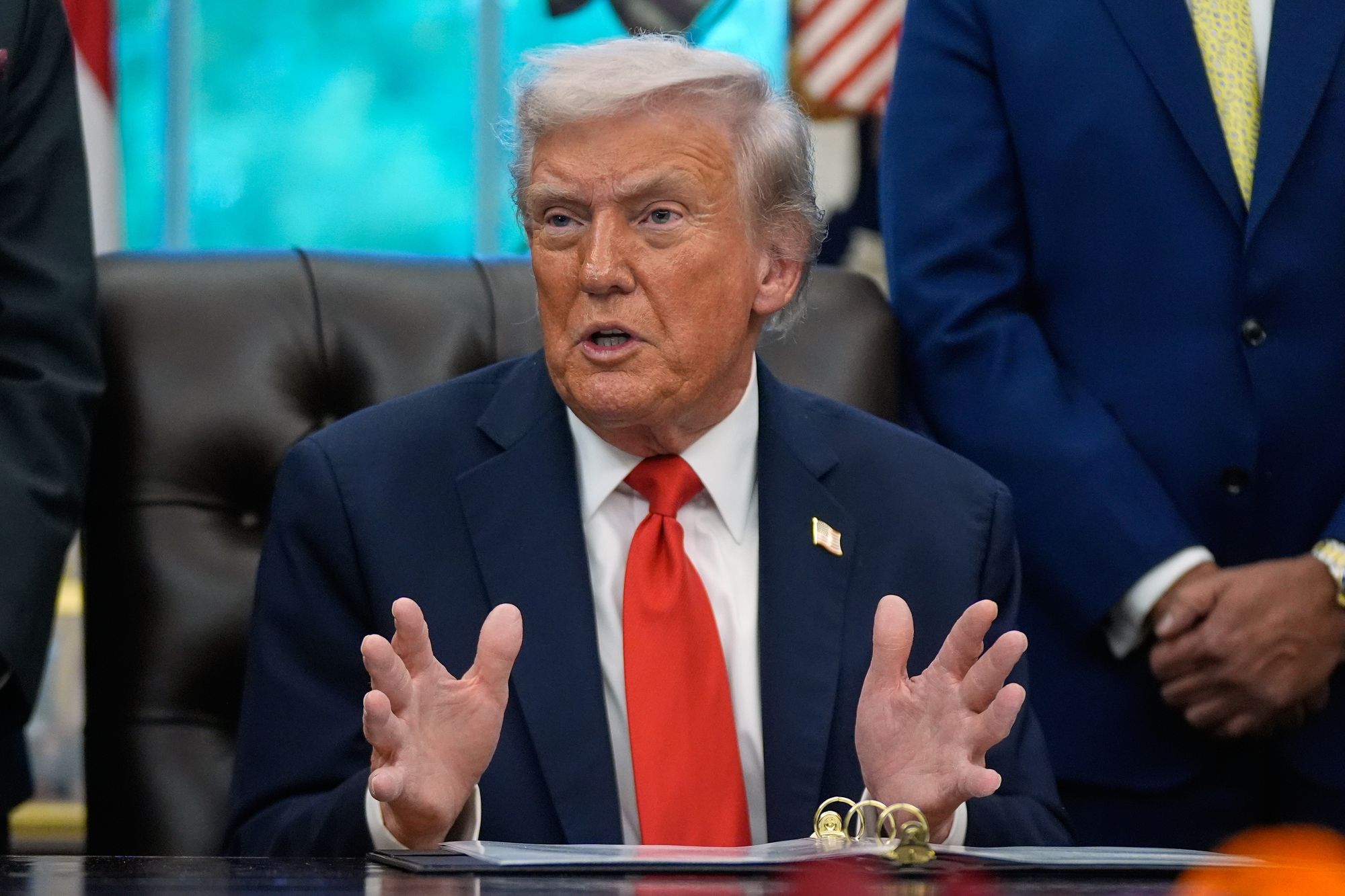
President Donald Trump speaks from the Oval Office after reversing plans to deploy federal troops to San Francisco, following a late-night call with Mayor Daniel Lurie and several prominent tech CEOs.
Mayor Daniel Lurie, the man whose eleventh-hour conversation with President Trump—reportedly brokered by top Tech CEOs—resulted in the SF troop surge reversal, is a political newcomer with a history rooted in both immense wealth and large-scale philanthropy. His unique background provides essential context for his unprecedented victory in the standoff.
Lurie is an heir to the Levi Strauss fortune, a key fact that establishes his deep ties to the Bay Area's elite business and tech communities—the same influential group that privately lobbied the White House. This connection allowed him to leverage political and economic influence in a way few other mayors could.
Prior to entering public service, Lurie was best known for founding the Tipping Point Community, a successful anti-poverty non-profit that raised over half a billion dollars for Bay Area initiatives. This prior experience is critical because it underpins his credibility on data and local effectiveness:
In short, Lurie's distinct blend of private-sector resources, measurable philanthropic success, and a stubborn refusal to conform gave him the leverage needed to negotiate a halt to the federal deployment and declare a victory for local control.
Q: Who were the top tech CEOs that persuaded President Trump? A: The two prominent tech executives confirmed by the President to have called for the reversal were Marc Benioff, CEO of Salesforce, and Jensen Huang, CEO of Nvidia.
Q: Why did Trump agree to halt the federal troop surge to San Francisco? A: President Trump cited a "late-night call" from Mayor Daniel Lurie, who "very nicely" asked for a chance to demonstrate the city's ability to handle the situation. The calls from tech CEOs also assured the President that "the future of San Francisco is great."
Q: Is the federal deployment to San Francisco permanently canceled? A: No, the deployment is temporarily suspended or on hold. The President explicitly stated he was giving the Mayor a "chance to turn it around," and ended his announcement with the phrase: "Stay tuned!"
Q: What was the federal surge intended to do in San Francisco? A: The federal surge was reportedly planned to address crime and homelessness, but was primarily framed by the administration as a stepped-up immigration enforcement operation, which San Francisco leaders widely opposed.
Carrie Elizabeth Romney, the sister-in-law of former U.S. senator and presidential nominee Mitt Romney, was found dead late Friday evening, October 10, 2025, near a parking structure in the Town Center area of Valencia, on the outskirts of Los Angeles.
She was 64 years old. According to officials, investigators are treating the incident as a death investigation after preliminary findings suggested she may have jumped or fallen from the five-story structure beside a Hyatt hotel.
The discovery was made around 8:30 p.m., according to Los Angeles County law enforcement sources.
Deputies arrived to find a woman unresponsive near the entrance of the parking structure, and paramedics pronounced her dead at the scene.
The Los Angeles County Medical Examiner’s Office later listed the cause of death as “deferred,” pending the results of toxicology and autopsy reports.
In a family statement released Monday, a spokesperson for Mitt Romney said:
“Our family is heartbroken by the loss of Carrie, who brought warmth and love to all our lives. We ask for privacy during this difficult time.”
Carrie lived quietly in the Valencia community with her husband, G. Scott Romney, Mitt’s older brother and a longtime attorney.
Friends described her as gracious, humorous, and deeply devoted to family, someone who preferred staying out of the public eye even as the Romney name remained one of the most recognized in American politics.
Investigators from the Los Angeles County Sheriff’s Department’s Homicide Bureau continue to examine the circumstances of the incident.
Surveillance footage and witness statements are being reviewed, though no evidence of foul play has been confirmed at this stage.
The medical examiner’s records list Carrie’s place of death as “street,” and her body as “ready for release.” A full autopsy and toxicology analysis are expected to clarify the cause of death in the coming weeks.
Mitt Romney, now 78, has been a central figure in American politics for more than two decades.
He served as Governor of Massachusetts from 2003 to 2007, became the Republican Party’s presidential nominee in 2012, and later represented Utah in the U.S. Senate from 2019 until early 2025.
Known for his measured, independent approach, Romney announced in 2023 that he would retire at the end of his term, citing a desire to “make room for a new generation of leaders.”
The news has shaken residents of Valencia’s Town Center area, a quiet suburban district north of Los Angeles.
Locals described the event as deeply saddening and said it was unusual for such a tragedy to occur in their community.
Authorities are urging anyone who may have seen or heard anything relevant that night to contact the L.A. County Sheriff’s Office, Homicide Bureau, as the investigation remains ongoing.
Who was Carrie Elizabeth Romney?
Carrie was the sister-in-law of Mitt Romney, married to his older brother, attorney G. Scott Romney. She lived in Valencia, California, and was 64 at the time of her passing.
How did Carrie Romney die?
Authorities say she may have jumped or fallen from a five-story parking structure in Valencia on October 10, 2025. Her cause of death remains under investigation pending autopsy results.
Was foul play suspected?
As of October 14, 2025, the Los Angeles County Sheriff’s Department has not confirmed foul play. The case is being treated as a death investigation.
What did Mitt Romney say about her death?
Romney’s family issued a statement expressing heartbreak and asking for privacy, remembering Carrie as a source of “warmth and love.”
Norwegian Nobel Committee awarded the 2025 Nobel Peace Prize to Venezuelan opposition leader María Corina Machado for her “tireless work toward a peaceful transition to democracy.”
The recognition of Machado, long seen as a symbol of resistance to authoritarianism came as a disappointment to former U.S. President Donald Trump, who had openly campaigned for the honor while claiming credit for resolving what he called “seven unendable wars.”
At 58, Machado’s life has been defined by risk. She has endured travel bans, arrests, and public vilification while trying to unite Venezuela’s fragmented opposition.
The committee’s chair, Jørgen Watne Frydnes, told reporters that decisions “are based only on the will of Alfred Nobel,” adding that the panel “does not respond to campaigns or media pressure.”
Meanwhile, Trump’s aides had been privately hopeful. Since returning to office in January, he has boasted about brokering ceasefires from the Middle East to Southeast Asia, and aides reportedly prepared a statement anticipating victory.
Yet the committee had already chosen its laureate days before his latest ceasefire announcement making the result a foregone conclusion.
In Norway, lawmakers braced for Trump’s reaction. “When a president behaves this unpredictably, we prepare for anything,” said Kirsti Bergstø, leader of Norway’s Socialist Left Party.
“The Nobel Committee is independent, but I’m not sure Trump knows that.”
Nobel Peace Prize is governed by strict legal and procedural rules established in Alfred Nobel’s 1895 will.
Under Article 6 of the Nobel Foundation Statutes, the Peace Prize must be awarded by a five-member committee appointed by the Norwegian Parliament (Stortinget).
That committee operates independently of any government, and its deliberations are confidential for 50 years under Norwegian law.
No individual, not even a head of state, can campaign or apply for the prize.
Nominations must be submitted by approved nominators such as professors of history or political science, past laureates, and members of national assemblies.
Lobbying or public campaigning such as Trump’s, carries no formal weight and, according to the Foundation’s Code of Conduct § 3, can actually disqualify consideration if seen as manipulative or self-serving.
This legal independence is central to the committee’s legitimacy. As the Nobel Foundation itself states, “neither the Norwegian government nor any foreign authority may influence the decision.” (nobelprize.org)
For observers, the choice between Machado and Trump reads like a referendum on two kinds of power: moral versus performative. Machado’s victory highlights how peace work is often slow, local, and dangerous, while Trump’s diplomacy has relied heavily on televised summits and campaign rhetoric.
Analysts say the decision also fits a recent pattern. In the past decade, the Nobel Committee has favored activists journalists in Belarus, climate campaigners, and women’s rights defenders in Iran over global leaders.
The reasoning, according to Oslo political scientist Åse Gilje Østensen, is simple: “The committee has grown wary of rewarding political deals that may unravel. It prefers individuals whose work endures beyond election cycles.”
Inside Venezuela, Machado’s Nobel Peace Prize has become more than a symbolic victory it represents a rare moment of international validation for a society that has endured decades of corruption, authoritarian governance, and systemic human-rights violations.
Her recognition arrives at a delicate legal and political juncture, where Venezuela’s fragile institutions remain caught between constitutional reform and continued executive dominance.
For many Venezuelans, the award signals renewed hope that the rule of law can one day be restored.
Supporters filled social media with calls for “Peace through courage” and “Freedom for Venezuela,” but the deeper resonance lies in how the prize may bolster domestic reform movements seeking to revive democratic processes within the framework of the 1999 Venezuelan Constitution.
That charter amended repeatedly under former President Hugo Chávez and later interpreted expansively by Nicolás Maduro’s administration, has long been criticized for weakening the independence of the judiciary and the National Assembly.
Internationally, Machado’s Nobel recognition could strengthen the legal standing of Venezuela’s pro-democracy campaigners.
By affirming her commitment to peaceful advocacy, the award may lend additional legitimacy to ongoing Organization of American States (OAS) proceedings and International Criminal Court (ICC) investigations into alleged crimes against humanity committed by state forces.
Under Article 7 of the Rome Statute, such investigations depend in part on credible civil leadership demonstrating a non-violent path toward justice — a standard Machado’s activism exemplifies.
Economically, the impact could also be profound. Global donors and democratic allies, particularly within the European Union and the Inter-American Development Bank, are expected to revisit humanitarian aid and rule-of-law funding previously suspended due to political instability.
Should Venezuela approach credible elections in 2026, Machado’s elevated international profile might pressure the Maduro government to permit broader electoral monitoring under Article 3 of the Inter-American Democratic Charter, which enshrines citizens’ right to participate in free and fair elections.
Ultimately, her Nobel win reframes Venezuela’s struggle in legal rather than purely political terms.
It positions democracy, human rights, and international law not as abstract ideals but as tools for rebuilding national legitimacy reminding the world that peace, in its truest legal sense, depends on accountability and the restoration of lawful governance.
For Donald Trump, who once dismissed the Nobel process as “rigged,” the loss is both personal and political.
Since returning to office, he has repeatedly cited his diplomatic “wins” including ceasefire talks in Israel–Gaza and Ukraine–Russia — as proof of his credentials as a peacemaker.
Yet his transactional approach to diplomacy, emphasizing leverage and strength over long-term institutional reform, contrasts sharply with the Nobel Committee’s criteria of sustained humanitarian and legal impact.
Analysts note that Trump’s pursuit of recognition highlights a broader tension between political image and international legitimacy.
While his efforts may yield temporary calm, they often lack the legal frameworks and accountability mechanisms that define lasting peace.
Whether his record ultimately earns historical validation remains uncertain, but for now, his campaign for the Nobel underscores the enduring divide between power politics and principled diplomacy.
Who won the 2025 Nobel Peace Prize?
Venezuelan opposition leader María Corina Machado won the 2025 Nobel Peace Prize for her peaceful fight to restore democracy and human rights in Venezuela.
Why did Donald Trump want the Nobel Peace Prize?
Trump argued that his foreign policy achievements, including ceasefire efforts in the Middle East and Eastern Europe, made him deserving of the award. However, the Nobel Committee emphasized independence and humanitarian impact over political lobbying.
Is it legal for a U.S. president to accept the Nobel Peace Prize?
Yes. The U.S. Department of Justice’s Office of Legal Counsel confirmed in 2009 that the prize does not violate the Emoluments Clause, since it comes from a private foundation, not a foreign government.
How does the Nobel Committee decide who wins?
The Norwegian Nobel Committee, appointed by the Norwegian Parliament, evaluates nominations confidentially under the Nobel Foundation Statutes. It bases its decision solely on contributions to peace and humanitarian progress, not on political campaigns or public image.
What impact could Machado’s Nobel win have on Venezuela?
Her recognition is expected to strengthen Venezuela’s pro-democracy movement, increase global attention on human rights abuses, and pressure the Maduro government to allow freer elections and international legal oversight.
Texas Attorney General Ken Paxton’s office has dropped its lawsuit against an El Paso physician accused of breaking the state’s new ban on gender-affirming care for minors, concluding that no laws were violated.
Dr. Hector Granados, a pediatric endocrinologist based in El Paso, was among the first doctors in the country sued under Senate Bill 14 (SB 14), the 2023 Texas law restricting most gender-affirming medical treatments for minors.
The state alleged that Granados had continued prescribing puberty blockers and cross-sex hormones after the law took effect on September 1, 2023, and even falsified medical records to hide it.
Dr. Hector Granados denied the accusations from the start, maintaining that he had already stopped providing this form of care before the law was enacted.
Following a review of Granados’s complete medical records, the Attorney General’s office acknowledged that no violations occurred and dismissed the case. In its statement, the office noted that while Granados was cleared, other lawsuits against doctors remain active.
According to a statement from Paxton’s office, the cases against Dr. May Lau and Dr. M. Brett Cooper are still active, and the two physicians will “face justice for harming Texas children both physically and emotionally.” Attorneys representing the doctors did not immediately respond to requests for comment on Wednesday.
The Attorney General’s team also struck a combative tone, vowing that Paxton will continue to use the full weight of Texas law against what they described as left-wing medical professionals responsible for imposing so-called ‘gender’ ideology on minors.
Relieved by the dismissal, Granados criticized the way the case had been brought, pointing out that state officials never contacted him directly to verify the allegations before suing.
Civil rights groups, including the ACLU, argue that even short-lived cases like this one create a chilling effect, discouraging medical providers from offering care to transgender patients.
Texas’s SB 14 bans puberty blockers, hormone therapy, and surgical procedures for minors seeking gender transition. Physicians who were already treating patients when the law passed were ordered to taper them off these medications. Lawsuits challenging SB 14 are still moving through the courts, with critics arguing the measure violates both medical ethics and constitutional rights.
Dr. Hector Granados has been cleared of any wrongdoing, yet his case highlights the broader legal and political struggle over transgender health care in Texas. His dismissal offers some relief, but other physicians remain under investigation, and the fate of SB 14 is still being contested in the courts.
Pamela Bondi didn’t hold back. The Attorney General has directed the DOJ to withdraw its long-running lawsuit against Georgia’s Senate Bill 202, ending a legal saga that’s drawn national attention.
The lawsuit, originally filed during the Biden administration, claimed that Georgia’s voting law was a deliberate attempt to suppress Black voters. But Bondi says that narrative simply didn’t hold up.
“Black voter turnout actually went up under SB 202,” she said. “There was no suppression — just political spin. Georgians want secure elections, not scare tactics.”
When Georgia passed SB 202 in 2021, it triggered a firestorm. Critics compared it to Jim Crow. Cable news exploded. Major League Baseball even pulled its All-Star Game from Atlanta — a move that reportedly cost the state over $100 million.
The law itself? Pretty straightforward. It added ID requirements for absentee ballots, streamlined the early voting calendar, and aimed to tighten how results are reported.
Supporters said it was about restoring trust in elections. Opponents claimed it was voter suppression in disguise.
But here’s the kicker: turnout went up. Especially among Black voters.
Now, after years of legal wrangling, the DOJ is backing off.
“The Department of Justice is done with this disgrace,” said Acting Associate Attorney General Chad Mizelle. “There’s nothing racist about protecting the vote.”
Bondi made it clear: the DOJ won’t be used as a political weapon. Not on her watch.
“We’re focused on real civil rights issues,” she said. “Not chasing boogeymen that don’t exist.”
This wasn’t just about ending a lawsuit, it was about making a point. It’s a reminder that facts still matter, and that tossing out serious accusations like racism without real proof can carry serious consequences.
For Bondi and for allies like President Trump, it’s about changing the conversation. They’re pushing back on what they see as a politically driven narrative and working to restore trust in how elections are run.
In Georgia, no matter who you are or how you vote, this move brings a welcome shift — less political noise, fewer distractions, and a clearer focus on what really matters: making sure every vote counts.
Pam Bondi shutting down the case sends a pretty clear message — sometimes the story we’re told doesn’t match the reality. Georgia’s voting law didn’t stop voters. Turnout actually went up, including among Black voters.
Maybe it’s time to stop shouting about suppression and start talking about what actually helps people vote: clarity, access, and confidence in the system.
SB 202 sparked plenty of outrage. But now that the dust has settled and the numbers are in, maybe we can take a breath and ask the real question: what are we actually fighting for?
Par Funding CEO Sentenced for Massive Fraud Scheme
A former CEO faces sentencing after being found guilty in a multi-million dollar fraud case tied to Par Funding.
Fani Willis Ordered to Pay $54K for Violating Georgia’s Open Records Laws
The embattled DA is penalized for breaching transparency laws in a high-profile public records dispute.
Sidley Welcomes Former CFTC Chief Ian McGinley to New York Office
Big Law news as Ian McGinley joins Sidley Austin, bringing top-tier regulatory expertise to the firm’s NY team.
The tech mogul says the U.S. needs a builder, not another career politician — but the Constitution may stand in his way.
It started with a single sentence — casual, almost throwaway — but enough to ignite headlines around the world.
“If the Constitution allowed it, I’d run.”
That’s what Elon Musk said during a Q&A at the Future of Civilization Summit in Austin, and the room didn’t quite know how to react. Some laughed. Others held their breath.
He wasn’t joking.
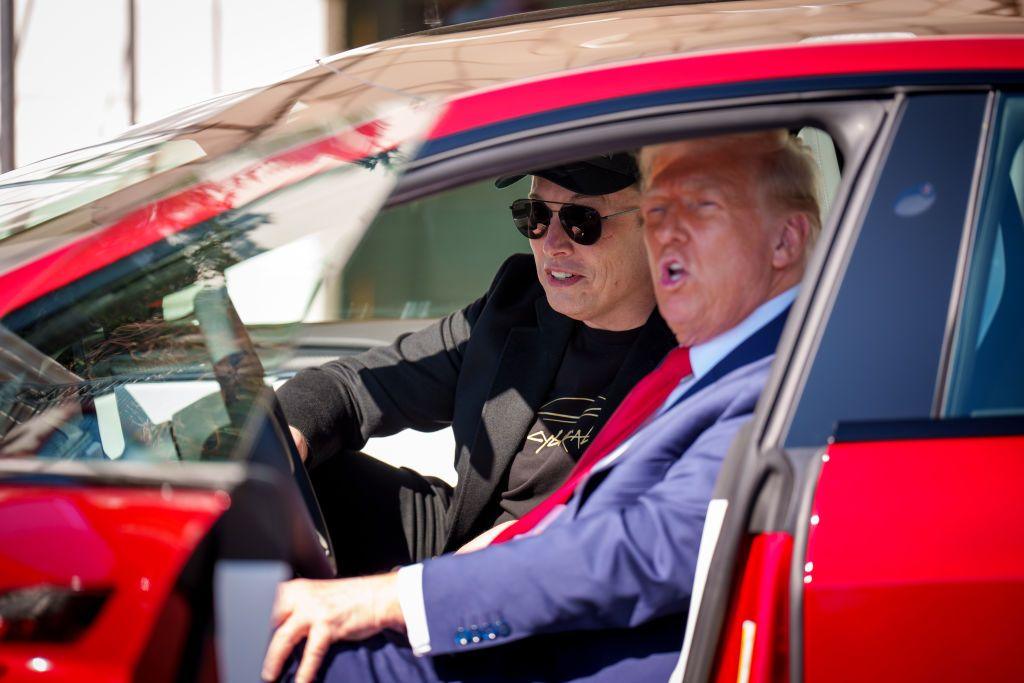
Donald Trump and Elon Musk in a Tesla
Musk, who’s built rockets, redefined electric cars, (Tesla) and recently rebranded Twitter as X, told the crowd he’s grown tired of what he calls “performative politics.”
“This country was built by people who made things. Engineers. Inventors. Builders,” he said. “We need more of that thinking — not more lawyers in suits.”
Musk isn’t exactly subtle these days. He’s been increasingly vocal about everything from AI regulation to border security, using his social media platform to weigh in on issues politicians usually tiptoe around.
Now, he says it’s time for someone who “understands the future” to actually run the country.
Here’s the catch: Elon Musk wasn’t born in the United States. He grew up in South Africa and became a U.S. citizen later in life — and under the Constitution, that makes him ineligible to run for president.
It’s a rule written centuries ago, and Musk isn’t shy about calling it outdated.
“That clause might’ve made sense in the 1700s,” he said. “It doesn’t make sense now. We’re limiting ourselves because of geography.”
Sources close to him say he’s looking at legal paths forward — possibly pushing for a constitutional amendment that would allow naturalized citizens to run.
Tall order? Absolutely. But if anyone’s willing to challenge the system, it’s Musk.
After the event, it didn’t take long for the idea to catch fire online. Supporters flooded X with the hashtag #Musk2028, posting mock campaign logos and slogans like “In Elon We Trust.”
Critics weren’t far behind. Some say a billionaire trying to rewrite the rules just to get into office sets a dangerous precedent. Others argue that wealth and innovation don’t necessarily make someone presidential material.
Still, the buzz is real — and growing.
Legally? Not yet. But in the court of public opinion, Musk’s odds aren’t bad.
A quick pulse-check on social media shows a surprising mix of tech enthusiasts, centrists, and even some independents rallying behind the idea. Not everyone agrees on Musk's politics, but they agree on one thing: he gets things done.
If he were allowed to run, political analysts say he'd be a serious contender — especially in a race where people are craving someone outside the mold.
Musk didn’t confirm a campaign, and he stopped short of calling it a formal plan. But knowing him, it’s never just talk.
He’s the kind of person who starts with an idea and ends up launching a rocket — or buying a platform — or now, maybe, changing American politics forever.
Can Elon Musk legally run for president?
No, not right now. The Constitution requires presidential candidates to be born in the U.S. Musk became a citizen later, which disqualifies him under current rules.
Is he trying to change the Constitution?
He hasn’t announced anything formal, but he's clearly frustrated with the current law and has suggested it no longer fits a modern, globalized America.
What political party does Musk belong to?
He hasn’t claimed a specific party, though he’s criticized both sides and tends to support policies that lean libertarian or centrist.
Would people actually vote for him?
There’s no hard polling yet, but online support has surged, and his base — tech fans, futurists, and entrepreneurs — is loud and growing.
Say what you want about Elon Musk — that he’s brilliant, controversial, unpredictable. But when he sets his mind on something, things tend to move. And whether or not he ever steps inside the Oval Office, he’s already reshaping the conversation about who should.
Kim Kardashian & Kanye: North’s Viral Song Sparks Controversy
The White Lotus Season 3, Episode 7 Recap: Did Anything Actually Happen?
Former Bachelorette Star DeAnna Pappas Hit with Restraining Order After Arrest
UK Tycoon at Center of Explosive Gagging Order & Blackmail Scandal
Florida Influencer Arrested for Shocking Allegations Involving Dog
Marjorie Taylor Greene has made a name for herself as one of the most controversial and divisive figures in American politics. Since taking office in 2021, she’s captured national attention for her unwavering far-right beliefs, combative rhetoric, and a tendency to escalate political conflicts rather than seek resolution. Representing Georgia’s 14th district in Congress, Greene has been both a beacon for conservative voters and a lightning rod for criticism due to her extreme views and inflammatory statements.
Greene’s political rise is tied closely to her outspoken support for former President Donald Trump, but it’s her toxic rhetoric and controversial actions that have really set her apart. While she has a loyal base of supporters, her confrontational approach to politics has made her one of the most divisive public figures in the U.S. Today, we take a closer look at how her combative attitude and controversial views have contributed to a growing political divide and what her rise means for the future of American politics.
When Greene ran for Congress in 2020, she quickly captured the attention of Georgia’s far-right voters. She wasn’t the typical political candidate—she came from a background in business, and her campaign was largely fueled by her strong support for Donald Trump and her fiery rhetoric. Greene’s message resonated with voters who felt disillusioned with the political establishment and wanted someone who would challenge the norms.
From the very beginning, Greene’s rise was marred by her association with conspiracy theories and extremist views. She openly supported QAnon, a far-right, fringe movement that pushes the bizarre notion that a secret group of elites controls the world. Although Greene later distanced herself from QAnon, her involvement with such radical beliefs set the stage for the kind of toxic politics she would continue to embrace throughout her career.
One of the hallmarks of Greene’s political style is her constant embrace of dangerous conspiracy theories. Early in her career, she expressed strong support for QAnon, even posting about it on social media. Though she later tried to walk back her involvement with the group, the damage had been done. Greene had publicly aligned herself with a movement that is built on baseless and damaging lies.
But Greene didn’t stop there. She continues to promote wild conspiracy theories, most notably the baseless claim that the 2020 election was “stolen” from Donald Trump. Despite the fact that courts across the country, along with a wide range of independent investigations, found no evidence to support these claims, Greene refuses to let go of the narrative that the election was rigged. Her refusal to back down on these matters has only deepened the divide in American politics, turning her into a figure that thrives on misinformation and division.
Another hallmark of Greene’s toxic approach to politics is her ongoing war with the media. Instead of engaging in dialogue with journalists or addressing legitimate questions, Greene often resorts to dismissing the press as “fake news” or as enemies of her beliefs. One particularly contentious moment came when Greene was asked by a British reporter about the Trump administration’s connections to certain controversial groups. Her response? She told the reporter to "go back to your country."
Greene's interactions with the media are often hostile, and instead of using her platform to foster understanding, she uses it as a tool to attack and discredit the press. This is part of a broader strategy to build distrust in the mainstream media and rally her supporters against perceived enemies. For Greene, conflict with the media isn’t just inevitable—it’s a key part of her political identity.
Perhaps the most alarming part of Marjorie Taylor Greene’s career is the way her rhetoric often borders on hate speech and division. In 2021, she made a comparison between COVID-19 safety measures—such as mask mandates and lockdowns—and the Holocaust. Her comment was widely condemned across the political spectrum for its insensitivity and historical inaccuracy.
Rather than apologizing for the harm caused by her remarks, Greene doubled down, claiming that she was simply speaking out against government overreach. This refusal to acknowledge the pain her comments caused has become a pattern for her. Instead of moderating her tone or attempting to repair the damage, Greene embraces confrontation, using provocative language to maintain her status as a divisive figure in the media.
Beyond her comments about the Holocaust, Greene has also peddled anti-Semitic conspiracy theories. She has been linked to the absurd claim that “Jewish space lasers” were responsible for California’s wildfires. These comments, which have no basis in fact, only serve to amplify the harmful rhetoric that already permeates much of the far-right fringe.
Greene’s rise is also indicative of the broader shift within the Republican Party. Once known for its traditional conservative values, the GOP has increasingly been overtaken by far-right elements, with figures like Greene now at the forefront of the party’s new direction. While some Republicans have distanced themselves from her extreme positions, Greene has found a home among those who share her populist, often combative, political style.
This shift is part of a broader trend in American politics—one where compromise and civil discourse are increasingly abandoned in favor of hard-line, polarizing tactics. Greene’s willingness to embrace conspiracy theories, escalate conflicts, and engage in vitriolic rhetoric is becoming a hallmark of the party’s new identity. Whether this approach will continue to resonate with voters in the long run remains to be seen.
Marjorie Taylor Greene’s political career has been built on a foundation of controversy, divisiveness, and toxic rhetoric. But what does the future hold for her? Will her brand of politics continue to thrive, or will the American public eventually reject her extreme positions?
As we move toward 2025, Greene remains one of the most recognizable figures in the Republican Party. Her influence has shaped the party’s shift toward the far right, and her combative, often hateful rhetoric has become a central feature of her public persona. Whether this approach will pay off in the long run is uncertain. What is clear, however, is that Greene’s rise has left a lasting impact on the political landscape of the United States, fueling further polarization and division.
Ultimately, the question isn’t just about Greene’s future—it’s about the future of a political system that seems to be increasingly defined by division, rather than cooperation. As Greene continues to shape the discourse, only time will tell whether her brand of toxic politics will continue to dominate, or whether a more inclusive, civil approach to politics will eventually take hold.
Background and Initial Involvement: Marjorie Taylor Greene entered the political arena by actively supporting the Trump administration and the Republican Party’s most conservative positions. She initially gained attention for her support of conspiracy theories, particularly those related to QAnon, a far-right movement centered around the idea of a deep state attempting to undermine Trump.
Controversial Comments and Connections: As Greene ran for Congress in Georgia’s 14th district, her history of controversial remarks came to light. She expressed support for QAnon and was associated with Facebook groups that promoted violent rhetoric and conspiracy theories.
Disavowing QAnon: During her campaign, Greene publicly distanced herself from QAnon, though her previous support and the presence of QAnon-linked content on her social media raised concerns among critics.
Taking Office: In January 2021, Greene was sworn into the U.S. House of Representatives after winning her election. She quickly became a prominent figure in the GOP’s far-right wing.
First Major Controversy - Endorsement of Conspiracy Theories: Greene’s association with QAnon and other fringe theories came under intense scrutiny after taking office. She repeatedly supported debunked conspiracy theories about the 2020 election and the COVID-19 pandemic. Greene’s comments and social media posts raised concerns about her credibility and suitability for office.
House Resolution to Remove Greene from Committees: In February 2021, following her support for violent rhetoric and conspiracy theories, the House of Representatives voted to remove Greene from her committee assignments. The vote was largely bipartisan, with 11 Republicans joining Democrats in stripping her of her positions on the Education and Labor Committee and the Budget Committee.
Greene’s Response: Greene rejected the decision, calling it politically motivated and accusing Democrats of punishing her for her conservative views. She continued to promote her agenda and maintained strong support from her base.
Controversial Holocaust Remarks: Greene faced backlash in March 2021 after comparing COVID-19 safety measures, such as mask mandates and lockdowns, to the Holocaust. She made the comparison while speaking to supporters in a video posted on social media. The comment was widely condemned by both Democrats and Republicans, leading to an apology from Greene.
Greene's Defense: Greene defended her remarks, claiming they were misunderstood and that she was simply trying to express frustration with the government’s pandemic response.
The "Jewish Space Laser" Controversy: In a resurfaced social media post from 2018, Greene suggested that a "Jewish space laser" was responsible for California’s wildfires. This comment was widely denounced as anti-Semitic and deeply offensive.
Greene's Apology: Under mounting pressure, Greene apologized for her past statements, claiming that she was simply sharing ideas from others without fully understanding their implications.
Continued Support for Conspiracy Theories: Throughout 2022, Greene continued to express support for QAnon and other fringe conspiracy theories, despite disavowing them publicly. She also endorsed several conspiracy-laden candidates in local races, further solidifying her position as a leading figure in far-right politics.
Clashes with Democratic Lawmakers: Greene had numerous public clashes with Democratic lawmakers, particularly regarding the impeachment of President Joe Biden and the handling of the pandemic. Her combative style led to frequent media coverage and amplified her voice in conservative circles.
Clash with a British Reporter: In 2023, Greene faced widespread criticism after an encounter with a British reporter at a press event. When asked about her connections to a controversial group chat involving Trump administration officials, Greene snapped at the reporter, telling him to "go back to your country." The incident sparked outrage, with many accusing her of xenophobia and intolerance.
Greene’s Response: Greene dismissed the backlash, claiming that her comments were taken out of context and that she was simply defending her right to express her views without foreign interference.
Chairing a Congressional Hearing on NPR and PBS: In 2024, Greene chaired a contentious congressional hearing where she accused NPR and PBS of left-wing bias and called for cuts to their funding. The hearing was part of her broader campaign to challenge what she sees as liberal media influence in American politics.
Public Response: Greene’s actions were met with mixed reactions. Supporters applauded her stance on media accountability, while critics argued that it was a politically motivated attack on public broadcasters.
Legislative Focus and Ongoing Controversies: As of 2025, Greene remains a prominent and controversial figure in Congress, pushing for conservative legislation and continuing to provoke debate over her stance on issues like gun control, LGBTQ+ rights, and election integrity. Her polarizing influence on the political landscape shows no signs of abating, and her future in politics remains a topic of ongoing speculation.
One of Greene’s earliest and most significant controversies was her public support for QAnon, a far-right conspiracy theory that claims a secret group of elites is running a global child sex trafficking ring. Greene was a vocal advocate of QAnon before she was elected to Congress, sharing posts and messages that aligned with the movement. Although she later tried to distance herself from the group after coming under scrutiny, her past statements and actions have kept her tied to the conspiracy, and she has continued to make comments that resonate with QAnon followers.
In 2021, Greene sparked outrage when she compared COVID-19 safety measures, such as mask mandates and lockdowns, to the Holocaust. She made these comments while speaking to supporters, and the backlash was swift and fierce. Critics from both sides of the political aisle called her remarks deeply offensive and insensitive, given the gravity of the Holocaust and its historical significance. Greene eventually apologized, but her refusal to back down initially only intensified the controversy.
Greene faced another wave of criticism when past social media posts resurfaced, in which she had suggested that “Jewish space lasers” were responsible for starting wildfires in California. This bizarre and anti-Semitic conspiracy theory was widely condemned. Greene later apologized for her involvement in the post, but the damage was done, and it reinforced her reputation for engaging in fringe and harmful rhetoric.
Greene has also been linked to violent rhetoric in the past. She was known to have liked and shared social media posts that advocated for violence against politicians, including Speaker Nancy Pelosi. Some of these posts even called for Pelosi to be executed. Though Greene has since claimed she doesn’t support violence, the posts and her history of incendiary remarks have raised concerns about her approach to political discourse.
In 2018, prior to her congressional campaign, Greene suggested that the Parkland school shooting in Florida was a "false flag" operation, meaning she believed it was a hoax orchestrated by government actors to push for gun control. She also spread misinformation about the shooting, which led to public outcry once these statements were uncovered. After being elected, Greene disavowed these views, but the damage to her credibility was already done.
Greene has consistently made headlines for her combative approach to the media. She frequently attacks reporters who ask questions she doesn’t like, calling them "fake news" or accusing them of spreading propaganda. One particularly infamous incident involved Greene telling a British journalist to "go back to your country" when questioned about her involvement in a controversial group chat involving Trump administration officials. Her hostility toward the media is part of a broader effort to paint herself as a victim of biased reporting, which resonates with her political base.
In February 2021, following public pressure over her past controversial statements and support for conspiracy theories, Greene was removed from her assignments on the House Education and Labor Committee and the Budget Committee. The decision was largely bipartisan, with both Democrats and Republicans condemning her actions. Greene reacted by saying the decision was politically motivated and that she had been unfairly targeted due to her outspoken views.
Greene has been outspoken against transgender rights, particularly in relation to transgender women participating in women’s sports. She has introduced legislation to prevent transgender women from competing in women’s sports, claiming that allowing them to compete is "unfair." Her stance on transgender rights has contributed to her image as a divisive figure in American politics, particularly as it relates to LGBTQ+ rights.
Greene’s views on the January 6th Capitol riot have been a significant point of controversy. While she later condemned the violence, her initial comments on the event, which included questioning the legitimacy of the 2020 election and supporting efforts to overturn the results, created backlash. Greene was also reportedly in contact with the White House in the days leading up to the Capitol riot, which raised questions about her involvement in the events surrounding that day.
JD Vance, the US vice-president, was booed by the audience as he took his seat at a National Symphony Orchestra concert at Washington’s Kennedy Center on Thursday evening.
The negative reaction from the audience came just weeks after President Donald Trump seized control of the cultural institution. Vance, 40, attended the event with his wife, Usha Vance, who was recently appointed to the Kennedy Center’s board by Trump.
A video shared by The Guardian’s Andrew Roth captured the moment, showing audience members booing as Vance took his seat to watch the National Symphony Orchestra and violinist Leonidas Kavakos perform Petrushka by Stravinsky. Some attendees could be heard swearing, while Vance casually sipped his drink and waved at the crowd. The New York Times reported that the booing lasted approximately 30 seconds.
The public backlash comes after Trump announced on Feb. 7 via Truth Social that he was taking control of the Kennedy Center. He declared his intent to fire multiple board members, including the chairman, to reshape the institution’s artistic direction.
"At my direction, we are going to make the Kennedy Center in Washington D.C. GREAT AGAIN," Trump wrote. "I have decided to immediately terminate multiple individuals from the Board of Trustees, including the Chairman, who do not share our Vision for a Golden Age in Arts and Culture."
Despite Trump’s claims, the Kennedy Center stated that it had not officially received any communication from the White House about the board changes. However, reports confirmed that several trustees had been notified of their termination.
Trump later explained his decision to intervene in the Kennedy Center’s operations during a press conference aboard Air Force One on Feb. 9. He criticized past performances, labeling them "terrible" and "woke," saying, “I want to make sure it runs properly… I’ll be there until such time that it is running right.”
However, when asked if he had ever attended a show at the Kennedy Center, Trump admitted, “No. I get reports they were so bad … I didn’t want to go. There was nothing I wanted to see.”
Trump was officially elected Chairman of the Board on Feb. 12, with Usha Vance joining as a board member. Since his takeover, over 20 scheduled performances have been canceled, according to Consequence. Notably, Issa Rae pulled out of her February event, An Evening with Issa Rae, while Shonda Rhimes resigned from her role as treasurer in protest.
As the Kennedy Center undergoes drastic changes under Trump’s leadership, controversy continues to mount. With public figures like Vance facing backlash in public spaces, the institution’s future remains uncertain. Will Trump’s cultural overhaul succeed, or will it face ongoing resistance from artists and audiences alike?
