
Understand Your Rights. Solve Your Legal Problems
Rosie O'Donnell's Daughter Chelsea Requests Evidence in Drug Possession Case
Rosie O'Donnell's daughter, Chelsea, is requesting that prosecutors provide lab reports related to her drug possession case. Chelsea, who is facing serious charges of child neglect and drug possession, is represented by a public defender. Court documents reveal that Chelsea's attorney, Bradley Handsen, made his initial court appearance on November 1. He has formally asked the prosecution to share all evidence they intend to present during the trial. This includes a list of potential witnesses, laboratory reports, and any other relevant documents. In his motion, Bradley emphasized the need for all evidence that could potentially prove Chelsea's innocence, such as lab results, hospital records, police reports, or any other information that the state may have. As of now, the prosecutors have not responded to this request.
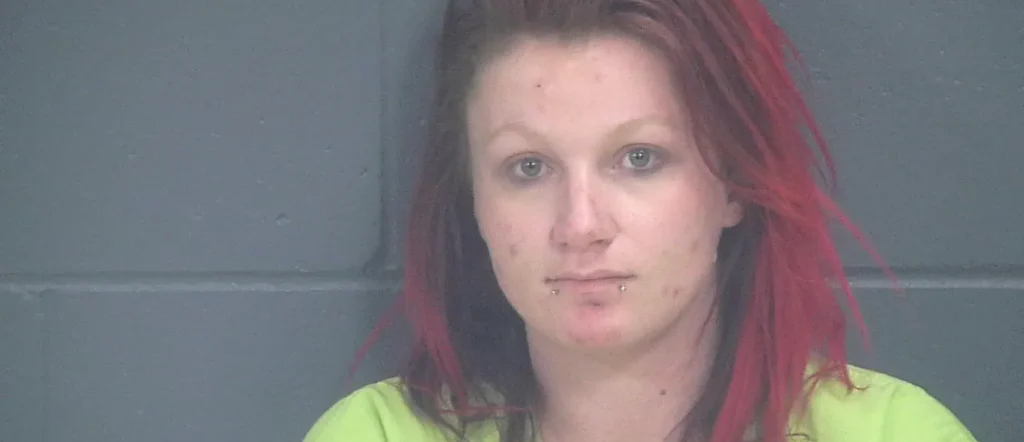
Chelsea Belle O'Donnell, comedian Rosie O'Donnell's eldest daughter, was arrested on charges of child neglect and drug possession. (Oconto County Sheriff's Office)
Details of Chelsea’s Arrests and Charges
Chelsea has been in custody at a Wisconsin jail since October 11. She was arrested twice within a few weeks, with the first incident occurring on September 10. The Marinette County Sheriff’s Office responded to a call from Chelsea's home, where they heard a dispute. Upon arrival, officers noted that Chelsea had "dilated" pupils. Although she initially claimed everything was fine, she later admitted to having a confrontation with her boyfriend, Jacob Nelund, who was present with their 11-month-old son. During the encounter, officers discovered a meth pipe containing residue in Chelsea's pocket.
Related: Rosie O'Donnell's Daughter Chelsea Arrested: A Troubled Family Saga of Addiction and Estrangement
Drug and Paraphernalia Found at Chelsea’s Residence
Later, officers discovered a black vial-like container and a clear plastic bag filled with white pills on her person. It was confirmed that the substance contained 18 grams of meth, while the pills were identified as Alprazolam. The police then entered the residence, where they came across Jacob, who also exhibited “dilated” pupils. A marijuana pipe was found at the scene. The police detailed the disturbing conditions inside the home in their report, including spoiled food, moldy dishes, dirty diapers, and used drug paraphernalia.
Second Arrest and Additional Charges
On October 11, Chelsea was stopped by police while driving. During questioning, the police reported that Chelsea attempted to throw a meth pipe into a river. The pipe reportedly struck a fence and rebounded. Subsequently, meth and pills, including oxycodone, morphine sulfate, and hydrocodone, were discovered on Chelsea. She was taken into custody and faced three felony charges for possession of meth, bail jumping, and possession of narcotics, along with other misdemeanor charges.
Family Response and Background
On October 19, Rosie, 62, addressed Chelsea’s arrest, acknowledging her daughter's ongoing struggle. “Unfortunately, this isn’t a new situation for our family – Chelsea has been battling drug addiction for ten years – we remain hopeful that she will overcome this devastating illness,” the O’Donnell family shared in a statement. Rosie and her former spouse Kelli Carpenter adopted Chelsea when she was a baby. Chelsea is a mother of four. She and her ex-partner Jacob Bourassa have three children: Skylar Rose, Riley, and Avery Lynn. Chelsea also welcomed a son named Atlas in October 2023 with her current boyfriend, Jacob Nelund.
You Might Like: The Menendez Brothers' Money
Finding and Using Social Media Content in US Civil Litigation
Litigators have long known that electronic-mail messages are a fertile source of discovery because people often send their unguarded and candid thoughts by email. But social media posts can be a litigator’s nirvana or hell, depending on the circumstances, because many people reveal even more intimate information on this medium, sometimes in much greater volume. Social media posts can make your client’s case, or destroy it, depending on who you represent.
Litigators can seek discovery of social media content in two ways: (1) by “self-help,” or (2) by using formal discovery procedures. Both present potential pitfalls.
Self-help
A lawyer should also be cautious about pressuring a social media “friend” of the opposing party to provide access to the opposing party’s restricted content.
A litigator can look at the publicly-available social media profile of an opposing party or witness on Facebook or other social media sites with no legal complications, even if the party or witness is represented by counsel. Ethical problems can arise, however, when litigators seek to use other methods to obtain information posted on social media sites that is subject to restricted access only by “friends” or others designated by the account holder.
If the opposing party is represented by counsel, a lawyer (or the lawyer’s agent) should not communicate directly with the opposing party to request access to restricted content on a social media site. If that party is not represented by counsel, a May 2017 ethical guidance from the New York State Bar (which surveyed ethics opinions elsewhere) states that the lawyer may request access to the restricted portions but, must (a) use the lawyer’s full name and an accurate profile that does not mask the lawyer’s identity, and (b) respond truthfully if the opposing party makes inquiries about the nature of the lawyer’s interest. (See www.nysba.org/FEDSocialMediaGuidelines). Some states’ bar authorities have issued ethics opinions that require greater disclosures when counsel initially requests access to restricted portions of social media content from an unrepresented person.
If such unauthorized access to a person’s restricted content is obtained, that person could assert a common-law claim for invasion of privacy or misrepresentation.
A lawyer should also be cautious about pressuring a social media “friend” of the opposing party to provide access to the opposing party’s restricted content. One court has ruled that such “coerced” access violates the federal Stored Communications Act.
Lawyers and their staff should also not seek to obtain unauthorized access to a person’s private social media content through other means, especially through any sort of trickery. If such unauthorized access to a person’s restricted content is obtained, that person could assert a common-law claim for invasion of privacy or misrepresentation. Courts have held that a person’s privacy interest is not extinguished because he or she chose to share information with a limited number of persons (such as “friends” on Facebook) in a restricted portion of a social media site. Statutory claims for unauthorized access might also be asserted under the federal Computer Fraud and Abuse Act, the Stored Communications Act or one of many state statues that prohibit the online impersonation of another person to obtain a benefit or defraud. Finally, attorneys should not ask non-lawyer staff to engage in conduct that would ethically be forbidden to the attorney.
Formal Discovery
Many individuals feel that their restricted social media content is entitled to strict privacy, and are surprised to learn that there is no legal “privacy” privilege for such content.
Many courts have ruled that the federal Stored Communications Act bars social media providers (like Facebook) from responding to civil subpoenas for social media content. Those providers will vigorously resist civil subpoenas seeking their participants’ social media content. One workaround that has succeeded in some courts is to seek a court order requiring the opposing party to “consent” to the social media provider’s disclosure of that party’s social media content, followed by a “consensual” request sent to the social media provider. Otherwise, social media content is discoverable in civil litigation only from the persons who posted or received the information (which could include “friends” of the person posting the information).
Many individuals feel that their restricted social media content is entitled to strict privacy, and are surprised to learn that there is no legal “privacy” privilege for such content. There have been cases where individuals delete or modify their social media content to thwart discovery of what they believe is “private,” and have faced sanctions for spoliation of evidence. Attorneys should counsel their clients not to destroy content. In one case, heavy sanctions were leveled where an attorney told a client to “clean up” his Facebook page, and 16 photographs were then deleted.
Courts are particularly cautious about allowing expansive discovery of anything posted on social media that may have affected a party’s emotional state.
While there is no privacy “privilege” for social media content, many courts are reluctant to permit broad “fishing expeditions” through all of a person’s social media content and will grant motions to limit or disallow broad discovery requests. Some courts have gone so far as to require a party seeking to discover social media content to make a threshold showing based on other information that there is social media content that undermines the responding party’s position in the litigation. However, this position was recently rejected by New York State’s highest court (Forman v. Henkin, 30 N.Y.3d 656 (2018)).
Discovery is generally permitted of any social media content that sheds light on events that are material to a lawsuit (with a protective order where appropriate to protect a legitimate privacy interest against public disclosure). For example, if a plaintiff claims that an automobile accident occurred because of the defendant’s negligence, virtually anything that the plaintiff posts on social media about the details of the accident should be discoverable.
Photographs posted on a social media website can provide powerful evidence, since a “picture is worth a thousand words.”
Courts are particularly cautious about allowing expansive discovery of anything posted on social media that may have affected a party’s emotional state. Such discovery can be relevant and permitted where, for example, a plaintiff seeks damages for his or her emotional distress, or where emotional distress is pertinent to liability (as in a hostile work-environment discrimination claim). But even then, some courts will not permit discovery of social media content where the emotional-distress claims involve only “garden-variety” distress – namely where a plaintiff claims only hurt feelings or a sense of humiliation – and not more serious distress, such as Depression or Post-Traumatic Stress Disorder.
Photographs posted on a social media website can provide powerful evidence, since a “picture is worth a thousand words.” Courts have permitted discovery of photographs posted on social media sites where the photographs reflect physical capabilities inconsistent with a plaintiff’s claimed injury, or if they reveal the party’s emotional or mental condition in a case where that is relevant.
Some courts have ordered a party’s attorney to screen the client’s social media content for relevance and privilege, because of concern that the client will withhold content that he or she feels is private and personal. Only in a rare case will a court itself initially conduct an in-camera review of social media content. However, courts may conduct such reviews once a motion to compel production is filed.
New problems and issues will undoubtedly arise as social media sites and usage evolve. Litigators thus must keep abreast of the latest developments and case-law.
Once litigators obtain social media content, they must ensure that it can be authenticated for use at trial or in other proceedings. As explained in a recent state court decision, authentication can be a challenge since social media accounts can be falsified, hacked or created by an imposter. (See Commonwealth v. Vogel, 181 A.3d 1154 (Pa. Super. 2018).) For these reasons, social media content is not self-authenticating, and some other evidence is needed for it to be admissible. However, authenticating evidence can be circumstantial, and courts have ruled that the proponent of the evidence need only submit enough evidence (such as distinctive format or language of the posted content) for a “reasonable jury” to find the content to be authentic. Accordingly, a good litigator will be sure to take necessary discovery to prove the authenticity of any social media content that is obtained by self-help or through discovery, especially for the “bombshell” content that litigators all hope to find.
New problems and issues will undoubtedly arise as social media sites and usage evolve. Litigators thus must keep abreast of the latest developments and case-law.
Daniel I. Prywes
Partner
Morris, Manning & Martin, LLP
Mr. Prywes is a Litigation Partner in the Washington, D.C. office of the law firm of Morris, Manning & Martin, LLP. He frequently writes and lectures on social media issues that arise in litigation. Mr. Prywes routinely litigates disputes in a variety of legal areas, including contract and employment, antitrust, securities, whistleblower defense, intellectual property, non-compete restrictions, partnerships, government contracts, insurance and banking.
Images and videos are some of the most compelling forms of evidence that can be presented in a courtroom. Yet it is important that the steps we take when preparing them stand up to scrutiny.
Within the field of forensic image and video analysis one of the biggest issues we face is the CSI effect: the phenomenon whereby representations of forensic science on popular TV shows gives a distorted perception of what is possible; from endless zooming from satellite imagery, to enhancing the reflection of a reflection of a reflection. We very often have to explain, even to “the experts”, what is science and what is fiction.
This is complicated also by the fact that sometimes we are able to extract information from images and videos where at a first glance there is absolutely nothing visible. However, very often we can’t do anything to improve images that to that average person don’t look that bad.
Recently, there has been a lot of noise about every possible application of deep learning, a subset of the field of artificial intelligence which normally exploits big data to train systems to behave more or less like the human brain.
These technologies have been used for image enhancement and there are a lot of popular studies and experiments which achieve miracle-effects, almost at the level of what you see in fiction. There’s just one big problem: these kinds of systems are not simply image enhancement or restoration tools. They are creating new images based on a best guess, which may look similar but could be challenged from a legal perspective as the result is different to the actual data originally captured. To put it in laymen terms, they are not enhancing pictures, but creating them, based on some hint from initial data.
The tenets of forensic science
Forensic science is the use of science for legal matters. To properly speak about a scientific examination, we have to follow the three pillars of the scientific method: accuracy, repeatability and reproducibility.
If we consider digital images and video, there are countless papers describing very interesting approaches to image enhancement but are not suitable for forensics. They can be very good to enhance creative photography, but cannot be applied to evidence without destroying its value. So, how can an algorithm fail to be acceptable for forensics for each of the points mentioned above?
Accuracy
We cannot use algorithms that introduce some bias, most often because they add new information which does not belong to the original image. This is in contrast with proper enhancement or restoration techniques. While often used in an interchangeable manner, there is an important difference between image enhancement and restoration.
In both cases, in general, the process does not add new data to the image, but relies only on what is already there, just processing according to some predefined algorithms. For this reason, we will never be able to obtain a readable license plate from three white pixels. We receive this request very often, this is what many expect, but we can only show better what’s already in the image or video, we cannot – and must not – add new data into the evidence.
Repeatability
Another category of algorithms which are not suitable for forensics are those which are not repeatable, like those based on generating a random sequence of values to try. However, some of these algorithms properly give very similar (even if different) results in normal situations. So, they may be used with a pseudo-random approach. In laymen’s terms, computers are not actually able to generate random numbers, but only pseudo-random sequences. If we keep the so-called “seed” fixed, we can always reproduce the same sequence and thus always get the same repeatable result.
Reproducibility
Finally, algorithms must be known and all of the involved parameters must be available. We must be able to describe the process with sufficient details to let a third-party person of relevant skills to reproduce the same results independently. So, a “super-secret-proprietary” algorithm is not suitable for forensic work.
Enhancing images for forensic use is not just about trying a few sliders and combining filters until you see something better. Are you confident the images you present within a legal investigation would stand up to scrutiny? And do you have the procedures in place to challenge digital evidence introduced by other parties?
By Martino Jerian, CEO and Founder, Amped Software
