
Understand Your Rights. Solve Your Legal Problems
Pulitzer Prize-winning cartoonist Darrin Bell has been taken into custody on allegations of possessing videos related to child sexual abuse, which reportedly include AI-generated content. The Sacramento County Sheriff's Office indicated that it received a notification from the National Center for Missing and Exploited Children regarding the upload of 18 files containing child sexual abuse videos.
Authorities discovered a total of 134 videos associated with the same account, which they assert is owned and managed by the 49-year-old Bell. On Wednesday, law enforcement executed a search warrant at Bell's residence in California, where they recovered evidence pertinent to the investigation, including computer-generated materials. He faces charges of uploading and possessing child sexual abuse material and is currently being held in custody with a bail set at $1 million. Bell made a court appearance on Friday.
The sheriff's office noted that he is the first individual to be charged in the county under a revised California law that criminalizes child sexual abuse material produced by artificial intelligence. As reported by NBC News, a woman identifying herself as Bell's wife requested prayers for herself and her children during a brief phone interview but refrained from providing further comments. Characterized by the sheriff's office as a "well-known cartoonist," Bell was awarded the Pulitzer Prize in editorial cartooning in 2019 as a freelancer, making him the first Black artist to receive this honor.
The Pulitzer Prize website highlights his "beautiful and daring editorial cartoons," which address "issues affecting disenfranchised communities, exposing lies, hypocrisy, and fraud amid the political upheaval of the Trump administration." In addition to his notable works, Bell is recognized for his series Candorville and Rudy Park, with his cartoons being syndicated in prominent national publications such as the Los Angeles Times, San Francisco Chronicle, and Washington Post.
Hino manipulated emissions testing data to secure authorization for the importation and sale of over 110,000 diesel engines in the United States, the majority of which were fitted in heavy-duty trucks manufactured by Hino, as reported by the US Environmental Protection Agency (EPA).
In accordance with the agreement, Hino will admit to participating in a criminal conspiracy aimed at deceiving regulators and consumers, thereby breaching environmental protection statutes and jeopardizing public health, as stated by US Attorney General Merrick Garland in an official announcement. US regulatory authorities, along with the state of California, which enforces stringent vehicle emission regulations, have negotiated criminal and civil settlements with Hino amounting to more than $1.6 billion.
Related: Shipping Giants Face Landmark Cartel Class Action Overcharging UK Motorists
"Hino's actions directly undermined EPA's program to protect the public from air pollution," acting EPA administrator Jane Nishida said in a release.
The suggested settlement is dependent on the approval of a district court judge in the state of Michigan."Corporate crimes such as these endanger the health and well-being of innocent Americans, as well as the environment in which we all live," said US attorney for the Eastern District of Michigan Dawn Ison.
The deal includes a five-year term of probation during which Hino will be barred from importing diesel engines it has manufactured into the United States and implement a comprehensive compliance and ethics program, according to the EPA.
Hino will also have to recall some trucks with engines violating emissions standards and spend some $155 million to replace marine and locomotive engines through the US to offset excess air emissions, according to the EPA.
Billionaire entrepreneur Elon Musk, 53, is using Tesla Cybertrucks and Starlink technology to provide free internet access to areas in California heavily impacted by wildfires. As the CEO of both Tesla and Starlink, Musk announced a brief delay in Cybertruck deliveries to prioritize these relief efforts.

Elon Musk
Elon Musk is using Tesla Cybertrucks and Starlink technology to assist California wildfire relief efforts by providing free internet to affected areas. Despite delays in Cybertruck deliveries, Musk has announced that the trucks will be used as mobile base stations to power Starlink terminals in regions with no connectivity.
This initiative follows Musk's previous promise to deliver free Starlink terminals to help those impacted by the fires, showcasing his commitment to leveraging technology for disaster relief.
Apologies to those expecting Cybertruck deliveries in California over the next few days.
We need to use those trucks as mobile base stations to provide power to Starlink Internet terminals in areas of LA without connectivity.
A new truck will be delivered end of week.
— Elon Musk (@elonmusk) January 12, 2025
"Apologies to those expecting Cybertruck deliveries in California over the next few days," Musk posted on X. "We need to use those trucks as mobile base stations to provide power to Starlink Internet terminals in areas of LA without connectivity. A new truck will be delivered end of week."
Musk’s plan involves arranging Cybertrucks equipped with Starlink terminals in grid formations in the hardest-hit areas, including Greater Los Angeles and Malibu. These trucks will also be staffed with security personnel, and refreshments and snacks will be available for those in need.
This initiative follows Musk’s recent promise to provide free Starlink terminals to affected regions in Los Angeles. Musk shared a video in which a reporter credited Starlink for providing the only communication in the area, where cell service had been disrupted by the fires.
Additionally, hedge fund manager Bill Ackman suggested using advanced technology like satellites, drones, and AI to prevent fires from escalating. Ackman proposed creating a company with Musk and Palmer Luckey, founder of Anduril Industries, to use this technology to combat wildfires before they spread.
California hates you and Trump.
— Bella (@stockbella) January 12, 2025
Musk responded to an X user who remarked, "California hates you and Trump," acknowledging, "That is true of some people in California, and the press will of course accuse me of grandstanding, but if this helps save even one house or maybe even someone’s life, we should still do it."
Musk also responded to another inquiry about donating his Cybertruck for relief efforts, saying, "Ride around in your truck in the devastated areas with a Starlink terminal on the roof and open WiFi."
xxx
These fires are easily avoidable, but nonsense regulations in California prevent action being taken, so year after year homes burn down and more people die https://t.co/GeqZ8vDkEn
— Elon Musk (@elonmusk) January 8, 2025
In his posts, Musk pointed to California’s regulatory environment as a key factor in the ongoing wildfires. "These fires are easily avoidable, but nonsense regulations in California prevent action being taken, so year after year homes burn down, and more people die," Musk stated.
Elon Musk's decision to use Tesla Cybertrucks and Starlink technology to support wildfire relief efforts in California highlights the potential of innovative technologies in disaster management. By repurposing Cybertrucks as mobile power stations for Starlink internet terminals, Musk is addressing the crucial issue of connectivity in areas where traditional communication infrastructure is often destroyed during wildfires.
The Cybertrucks, with their rugged design, provide both mobility and durability to deliver power in challenging environments, while Starlink ensures that those affected by the fires can remain connected to emergency services and loved ones.
Spencer Pratt is overjoyed by Heidi Montag's recent success, as her music has reached the top spot on iTunes following a devastating wildfire that destroyed their Los Angeles home. The couple, former stars of The Hills, has endured significant loss, but Pratt is encouraging fans to support Montag's music in the wake of their hardship.

Spencer Pratt and Heidi Montag (@heidimontag Instagram)
In a TikTok video shared on Friday, Pratt, 41, posted a slideshow in front of their charred house, wearing a T-shirt featuring Montag's 2009 hit "Body Language". Alongside the video, he urged fans, saying,"Please stream any of @heidimontag music on any platforms it will make a huge difference! Thank you," he wrote, soundtracked by Montag's 2010 single "Look How I'm Doin." The couple’s efforts paid off as Montag's 2009 hit and her 2010 album Superficial shot to the No. 1 spot on iTunes, more than a decade after their initial release.
Pratt later took to Instagram to celebrate the achievement, playfully poking fun at Bad Bunny, who held the No. 2 spot on iTunes with Debí Tirar Más Fotos. He cheekily declared, "Who needs a house? Who needs clothes, who needs anything but freaking this level of clout, pop superstardom?" he said. "I don't even care if it goes away in five minutes. Thank you everybody. No idea how much this means."
"I'm watching our house burn down on the security cameras," the "Hills" star, 41, told fans in a Snapchat video taken from inside a car. In a TikTok, Pratt posted the footage of the fire and wrote that his "nightmare came true."
Their home, located in Pacific Palisades, California, was engulfed in flames amid the wildfires sweeping through the area, which led to the evacuation of over 30,000 residents. Pratt and Montag, parents of two sons, Gunner and Ryker, have been open about their experience. Heidi Montag shared her heartbreak through emotional videos, while Pratt offered a more stoic approach. "I’m watching our house burn down on the security cameras," he told fans, as the fire approached their residence.
Heidi Montag's Superficial is her debut studio album, released on January 11, 2010. The album was released under the label Heidi Montag Music and features a pop and electronic dance music (EDM) style, with lyrics often focused on themes of fame, relationships, and self-image.
The album gained attention due to Heidi's fame as a reality television personality from The Hills. It was produced with the help of her then-husband Spencer Pratt, who played a significant role in the album’s creation and promotion.
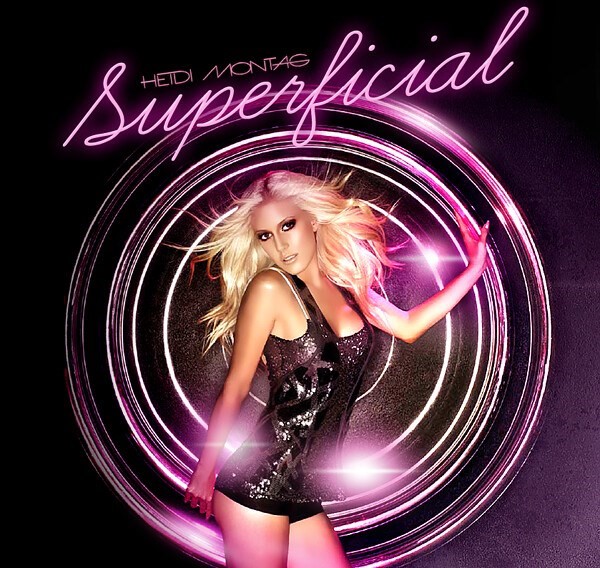
Heidi Montag – Superficial
The lead single from Superficial was "Body Language," which received mixed reviews but still garnered attention due to its catchy tune and Montag’s public persona. The song’s music video, which was heavily stylized, contributed to the song’s promotion. Another single from the album, "Look How I'm Doin'," also gained attention.
Despite the media hype surrounding the album, Superficial was met with critical disappointment, with many reviewers questioning the authenticity of Montag’s singing talent and the album's overall quality. Nevertheless, it became a noteworthy moment in the celebrity-driven music scene of the early 2010s.
Superficial did not perform well on the charts but remains a pop culture reference for fans of The Hills and reality TV enthusiasts.
Insurers are encountering considerable financial setbacks due to the devastating wildfires in Los Angeles, particularly because of the substantial worth of properties and enterprises within the impacted areas. Nevertheless, these losses are expected to be within manageable limits for both insurers and their reinsurers, with initial assessments indicating a range between $10 billion and $15 billion, as reported by S&P Global Ratings, referencing information from external sources.
“Significant wildfire losses in the first two weeks of 2025 could rapidly deplete the catastrophe budgets of U.S. primary insurers. This early strain may lead to earnings pressure later in the year, especially if 2025 proves to be above-average for catastrophes,” S&P said in its report, titled “Insurers Can Absorb Losses Amid Escalating Los Angeles Wildfires.”
“Although expected losses are steep, we believe many of our rated insurers have the capital resilience to absorb them, after strong results in the first nine months of 2024 (and likely for the year),” S&P continued. “Moreover, many major primary insurers in the admitted market, such as State Farm Mutual, Automobile Insurance Co., Allstate Corp., and Hartford Financial Services Group Inc., have either reduced exposure to or exited the California homeowners insurance market over the past two years.”
You Might Like: Ex-NFL player Kellen Winslow II's attempt to have his prison sentence shortened has been denied
In its analysis of the wildfires in Los Angeles, Moody’s Ratings indicated that following the significant wildfires of 2017-2018, numerous homeowners' insurance providers in California chose not to renew their policies. “particularly in wildland-urban interface (WUI) regions, while enhancing underwriting standards, conducting inspections, requiring homeowners to take steps to reduce wildfire risk and reducing geographic clustering.”
S&P does not expect the LA wildfires to trigger rating changes.
Hartford subsequently issued a comment about the S&P report: “California is and continues to be an important market to The Hartford. We stopped offering new homeowners’, renters’ and condo policies on Feb. 1, 2024, in consideration, and after analysis, of the unique challenges and dynamics at play in the state. We need to be able to price our homeowners,’ renters and condo insurance appropriately for the risks we are protecting against. Lastly, we continue to write all our other existing products in California, such as business insurance and personal auto, and will continue to renew existing homeowners’, renters’ and condo policies consistent with our underwriting guidelines.”
Related: Paris Hilton Tragically Loses Malibu Home to Wildfires in California
S&P indicated that the $3.6 billion recorded in California's excess and surplus (E&S) property market is relatively modest for the nonadmitted sector. The agency noted that these E&S specialty insurers are typically well-diversified and possess the ability to promptly increase premiums to recover from losses. Moody’s observed that it may take several weeks or even months to assess the full extent of the insured damages; however, the wildfires in Los Angeles are anticipated to rank among the most expensive in the state's history. J.P. Morgan has revised its estimate of insured losses to exceed $20 billion, while Wells Fargo shares a similar outlook, projecting that total economic costs could surpass $60 billion, according to reports from Reuters.
“Already the most destructive wildfire event in Los Angeles County history, certainly now in the top three deadliest fires in the state, and potentially the costliest in U.S. history, it is hard to keep up with the latest extent of the destruction from now six separate wildfires,” according to Firas Saleh, director-North American Wildfire Models, Moody’s.
Reinsurance Impact
At the same time, S&P said the impact on its rated global reinsurers will also be manageable “with no significant effect on earnings due to the event’s magnitude and timing.”
The wildfire marks the initial significant natural disaster loss for the sector this year, and it is anticipated that the losses will remain within the natural catastrophe budgets of reinsurers for the first quarter of 2025, according to S&P. “However, it is still unclear how aggregate reinsurance coverage could be affected, given this will depend on developments over the remainder of the year.”
Reinsurers are approaching 2025 with solid capitalization, bolstered by substantial earnings in 2023 and 2024, which, according to S&P, enabled the industry's returns to surpass its cost of capital.
“The reinsurance sector remains disciplined regarding its appetite for frequency losses, maintaining high attachment points for coverage,” the ratings agency said, noting that, despite selective price decreases during the January renewals, the sector remained committed to defending terms and conditions and those higher attachments.
There’s no question that this event will impact reinsurers – but at a manageable level, commented economist Robert Hartwig, a clinical associate professor of finance and insurance at the University of South Carolina, and head of the university’s Risk and Uncertainty Management Center, in an interview.
This wildfire event is highly concentrated, geographically, and is highly concentrated in terms of the timeframe, which is “precisely what reinsurance is designed for,” he said. “So it’s the type of event that’s likely to penetrate into reinsurance – even with higher retentions – although not as much as in the past when retentions were lower.”
Hartwig observed that an event of this scale will have a more significant impact on reinsurers than a cumulative series of severe convective storm events occurring over an entire summer, despite both scenarios resulting in equivalent financial losses. “And in each one of those cases, the impact on reinsurers would’ve been mitigated by the higher attachments.”
While the LA wildfires have caused significant insured losses, estimated between $10B-$15B, the financial impact on insurers and reinsurers is expected to be manageable. Strong capitalization and high attachment points will help the industry absorb the losses, though the full extent of damages will take weeks or months to assess.
Kellen Winslow II, the former tight end for the Cleveland Browns, has once again faced a setback in his efforts to reduce his 14-year prison sentence under new criminal justice reform measures. The California Court of Appeal has denied his habeas corpus petition, stating that Winslow's arguments are procedurally barred since he could have raised them during his direct appeal years ago but chose not to do so.
According to the court's order, “A defendant cannot raise claims via a habeas corpus writ petition that could have been raised on direct appeal.” At 41 years old, Winslow was sentenced to 14 years in March 2021 after being found guilty of multiple sex crimes against five women in San Diego County, including the rape of an unconscious woman in 2003 and the rape of a homeless woman in 2018. He accepted the sentence as part of a plea deal but has since sought to be resentenced under laws that were enacted after his sentencing.
In his petition, Winslow referenced AB 124, a state law designed to assist criminal defendants who have faced “psychological, physical, or childhood trauma.” This law mandates that courts impose a lesser sentence if the defendant has experienced such trauma, unless there are aggravating factors. Winslow pointed to brain injuries sustained from playing football and childhood sexual abuse as reasons for his request.
Latest: Jay-Z accused in a lawsuit of raping a 13-year-old girl
He is seeking a two-year reduction in his sentence “in line with the new laws that have come into effect since his incarceration,” as stated in his attorney's filing from November. The filing emphasized, “Petitioner (Winslow) is not trying to evade punishment, but rather is requesting a hearing to assess how his brain injuries may have influenced the decision-making that led to his offenses.” It also noted that the Legislature indicated individuals who have suffered trauma and abuse in childhood (such as sexual abuse) might be considered less culpable than those who have not faced such burdens.
In 2021, Winslow submitted an appeal regarding his sentence, requesting 233 days of custody credit for the time he spent under electronic monitoring.
This appeal was still pending when new state laws came into effect, but Winslow's attorney did not address these new issues at that time. The Court of Appeal indicated that these matters should have been raised earlier and dismissed the current attorney's claim that Winslow's previous counsel was ineffective for not doing so in 2021-22. The appeals court stated, “Even if we consider the claim of ineffective assistance of counsel, Winslow does not present any declaration from his prior counsel explaining why these claims were not raised on direct appeal.”
The court also mentioned that there could be a “conceivable reason” for Winslow's appellate counsel not to have brought up these claims during the direct appeal in 2021-22. The ruling highlighted that, as pointed out by the Attorney General, applying the new legislative changes to Winslow's sentence could potentially lead to the plea agreement being overturned, resulting in a longer prison term than he currently faces.
Winslow has described himself as a 'role model in prison.' Justices Martin Buchanan, Julia Kelety, and Jose Castillo reviewed Winslow’s petition and denied it on January 2. He is currently incarcerated in Norco, California, with a parole eligibility date set for September 2028, according to state records. Previously, he sought a sentence reduction for similar reasons but was turned down by a San Diego County judge in 2023. Subsequently, he engaged a new attorney to file the latest petition in September.
In a declaration accompanying that petition, Winslow expressed feeling "remorse for what I did to the victims in my case." His attorney, Patrick Morgan Ford, also mentioned in a November court filing that Winslow "has committed himself to self-improvement while in prison."
1983:
2001-2003:
2004:
2004-2007:
2009:
2013:
2014:
2018:
2019:
2021:
2023:
2028:
This timeline summarizes key moments in Kellen Winslow II's life, including his football career and legal troubles.
California workers have robust protections under employment laws, yet wrongful termination remains a distressing reality for many. If your job ended in a manner that feels unfair, you may wonder if the law has safeguards for your situation. It's natural to feel overwhelmed, but understanding the rights granted by California law can help you take informed steps toward resolving the issue.
You might ask yourself, "Was this termination illegal, or was it just unfair?" California follows an "at-will" employment principle, meaning employers or employees can end their working relationship without providing a reason. However, certain exceptions protect workers from illegal firings. If you suspect that discrimination, retaliation, or another unlawful reason led to your termination, speak with a lawyer from KJT Law Group in Los Angeles to evaluate your circumstances and determine the best course of action.
The term "wrongful termination" refers to being fired in violation of state or federal laws. While many terminations are lawful under California's at-will employment rules, employers cannot violate specific legal protections. For example, an employer cannot fire someone based on race, gender, religion, etc. Harassment or whistleblower retaliation are also grounds for claims.
In addition, contracts often play a significant role in determining wrongful termination. If you signed an employment agreement that guaranteed specific terms of work, dismissing you outside those parameters might constitute a breach of contract. Workers with collective bargaining agreements may have added protections that employers must follow.
California's Fair Employment and Housing Act is one of the strongest anti-discrimination laws in the country. Employers with five or more workers are prohibited from making employment decisions based on personal traits such as age, disability, marital status, etc. Civil Rights Act’s Title VII (federal law) also safeguard employees, although California's rules are often broader in scope.
Discrimination doesn't always happen in obvious ways. Sometimes, subtle actions, like consistently being overlooked for opportunities or being subjected to hostile behavior, can signal unfair treatment. If termination followed such patterns, it's worth investigating whether legal protections were violated.
Employees have the right to report workplace issues without fearing for their jobs. This includes reporting illegal activities, such as unsafe working conditions or harassment, or participating in investigations. Employers cannot terminate someone for exercising these rights, as such actions would qualify as retaliation under California law.
Retaliation isn't limited to firing. It could include demotions, pay cuts, or other adverse changes in employment status. Legal remedies may be available if you experienced such treatment leading up to your termination.
Not all employment in California is strictly at-will. Some jobs come with written or implied contracts that outline specific terms of employment. For instance, a contract might state that termination can only occur for cause, such as performance issues or misconduct. Violating these terms may open the door for a wrongful termination claim.
Implied contracts can be trickier to establish. However, promises made during hiring discussions or employee handbooks sometimes suggest certain conditions must be met for termination. If you believe your employer failed to honor such agreements, you might have legal grounds to challenge your firing.
Losing a job is a personal and financial blow, but you don't have to face it alone. Documenting every detail of your dismissal is critical. Keep records of communications, performance reviews, and other relevant documents that could support your case. Being proactive about this could strengthen your position when speaking to a legal professional.
Timing matters in legal cases, too. The limitations statute for filing a wrongful termination suit in California usually goes from one to three years, depending on the specific circumstances. Acting quickly ensures your claim stays valid and evidence remains fresh.
If you succeed in a wrongful termination claim, you could be entitled to several types of compensation. These include lost wages, benefits, emotional distress damages, and even punitive damages in some cases. Reinstatement to your former position may also be an option, although this is less common in practice.
Some settlements or court awards aim to deter future abuses by holding employers accountable for their actions. Knowing what you could be eligible for clarifies your pursuit of justice.
California's wrongful termination laws exist to protect workers from unfair treatment. While these rules don't guarantee job security in every situation, they provide valuable safeguards against illegal actions by employers. If you believe your firing violated these laws, you owe it to yourself to understand your options and seek guidance.
Losing a job under unfair circumstances is frustrating, but understanding your rights is the first step to taking control of the situation. California's laws are designed to shield workers from unlawful terminations, and the support of an experienced attorney can make all the difference. Take charge of your future by standing up for what's right—you deserve fair treatment in every workplace interaction.
Thomson Reuters is set to distribute a $27.5 million settlement to individuals whose personal information was compromised through its Clear AI product; however, the deadline to opt-in is approaching this week.
California residents may qualify for compensation from this settlement, but they must act before the end of next week to secure their eligibility. Thomson Reuters, a Canadian media and technology conglomerate, is widely recognized as the parent company of the British news organization, Reuters. In October, the company entered into a settlement agreement related to a class-action lawsuit that accused it of utilizing its AI program, Clear, to gather personal data from individuals without their consent and subsequently selling that information to various parties.
Although the allegations were made against the company across the United States, this particular lawsuit is limited to residents of California.
A survey conducted by the International Association of Privacy Professionals (IAPP) in its 2023 consumer trust report revealed considerable apprehension among global respondents regarding the implications of AI technology on their privacy. Approximately 57% of consumers surveyed expressed that "AI poses a significant threat to their privacy."
Additionally, a 2023 study by KPMG and the University of Queensland indicated that 53% of participants felt "AI will make it harder for people to keep their personal information private." If you suspect that you may qualify for the Thomson Reuters settlement, please continue reading for further information.
In 2020, Thomson Reuters faced a lawsuit initiated by California activist Cat Brooks and journalist Rasheed Shabazz. They alleged that the company utilized its Clear platform to collect a significant amount of photographs, personal information, and identifying data from American consumers, including those residing in California, without obtaining their consent.
Furthermore, the lawsuit claimed that this data was subsequently sold to various entities, including corporations, law enforcement agencies, and government bodies.
This settlement is available to any adult resident of California who lived in the state from December 3, 2016, to October 31, 2024. The estimated compensation for each eligible claimant ranges from $19 to $48. Individuals can participate in this settlement by completing the online form provided.
Eligible individuals must opt into the Thomson Reuters settlement by the close of business on Friday, December 27, 2024. This deadline was originally scheduled for December 6 but has since been extended.
You can file your claim here: https://clearprivacysettlement.com/submit-claim
Erik and Lyle Menendez, serving life sentences for the 1989 murder of their parents, are facing an uncertain future as their case is now under the jurisdiction of newly appointed Los Angeles District Attorney Nathan Hochman. Hochman, who recently defeated controversial former DA George Gascón, assumes office with the Menendez case looming large. Gascón, during his tenure, had supported efforts for the brothers’ release, despite their admissions of guilt, citing their good behavior in prison.
Hochman, a Beverly Hills native, has expressed a “hard middle approach” to crime, signaling a more cautious stance on the case. From day one in office, he gained access to extensive prison files, trial transcripts, and other relevant documents, pledging to carefully review the brothers' motions, appeals, and petitions for clemency.
One of the most significant recent developments in the case comes from the Peacock docuseries Menendez + Menudo: Boys Betrayed, which revealed new allegations of sexual abuse against the brothers’ father, Jose Menendez. This revelation adds weight to their legal team's request for a habeas corpus hearing, which could potentially lead to their release or a reduction of charges.
The case gained renewed attention with the Netflix series Monsters: The Lyle and Erik Menendez Story, prompting the brothers’ attorney, Mark Geragos, to push for clemency. While the brothers initially sought to have their charges reduced to manslaughter, Gascón opposed the move, pushing instead for clemency from the governor. However, on November 18, 2022, California Governor Gavin Newsom decided to defer the clemency request to Hochman, further delaying the Menendez brothers’ potential release. A status conference on their case has been set for January 30-31, 2023.
Legal experts believe the case is heavily influenced by politics, especially with the recent shift in leadership. John J. Perlstein, a veteran litigator, noted that if politics weren't a factor, the brothers might have already been resentenced with the possibility of parole. Hochman, however, may be hesitant to appear lenient given the current political climate, which played a role in Gascón’s removal from office.
Many consider it more politically advantageous for Hochman to uphold the original sentences rather than take a risk by showing leniency.
At the same time, family members of the Menendez victims are now voicing support for the brothers’ release, urging Hochman to consider mitigating factors. Hochman has said that despite the high-profile media coverage, the case will receive no special treatment and will be analyzed like any other. As Hochman carefully weighs the legal, political, and emotional dimensions of the case, the future of the Menendez brothers’ fate remains uncertain.
The case of Erik and Lyle Menendez continues to stir debate, particularly now under the new leadership of Los Angeles District Attorney Nathan Hochman. While the brothers’ crime—murdering their parents in 1989—is undeniable, the question of whether their prison sentences should be reconsidered is more complex. Under former DA George Gascón, their good behavior and the trauma they experienced were central to efforts for their release. Hochman’s more conservative stance could lead to the brothers remaining incarcerated.
Kessler Topaz Meltzer & Check, LLP has announced a securities class action lawsuit against Edwards Lifesciences Corporation (NYSE: EW) in the United States District Court for the Central District of California. This lawsuit is on behalf of investors who acquired Edwards securities between February 6, 2024, and July 24, 2024 (inclusive), also known as the “Class Period.” Investors affected by this case have until December 13, 2024, to seek appointment as lead plaintiff.
The lawsuit alleges that Edwards made misleading statements about the performance and expansion of its Transcatheter Aortic Valve Replacement (TAVR) product. Specifically, the complaint asserts that Edwards misrepresented the condition of its TAVR platform and overestimated its potential for success by relying on inaccurate assumptions about patient populations and healthcare facility willingness to adopt TAVR procedures over newer treatments.
Kessler Topaz Meltzer & Check, LLP is encouraging investors who have experienced significant losses during this Class Period to take action and reach out to the firm for more information. Investors have the option to join the lawsuit and represent the class as a lead plaintiff, or remain absent from the class while still being eligible for any potential recovery. A lead plaintiff represents the interests of the class, working with legal counsel to manage the litigation process.
For more information or to seek appointment as a lead plaintiff, Edwards investors can contact attorney Jonathan Naji, Esq. at (484) 270-1453 or email info@ktmc.com. If you have experienced losses with Edwards, you may CLICK HERE.
The deadline for lead plaintiff appointment is December 13, 2024. Those seeking to participate in the lawsuit should act before this date to ensure they meet the eligibility criteria.
Edwards Lifesciences Corporation is a global leader in heart valve disease and critical care monitoring. Founded in 1958 and headquartered in Irvine, California, the company focuses on innovative medical technologies to address cardiovascular diseases. Edwards is best known for its Transcatheter Aortic Valve Replacement (TAVR) system, a minimally invasive procedure used to treat aortic valve disease, which has become a cornerstone of the company's business.
The company also provides other products such as heart valve repair solutions, surgical heart valves, and hemodynamic monitoring equipment. Edwards Lifesciences operates in over 100 countries and works closely with healthcare professionals to advance patient care. It is publicly traded on the New York Stock Exchange under the symbol EW. The company's commitment to innovation and patient outcomes has positioned it as a key player in the medical device industry, particularly in the field of cardiovascular treatment.
Kessler Topaz Meltzer & Check, LLP is dedicated to prosecuting class actions in both state and federal courts across the United States and internationally. The firm has earned a global reputation for excellence, successfully recovering billions for victims of fraud and corporate misconduct. For more information please visit www.ktmc.com.
