Elk Grove Middle School Teacher Under Investigation for "N-word Bucks" Lesson.
ELK GROVE, CA – An investigation is underway after a middle school teacher in Elk Grove used controversial materials featuring "N-word bucks" as part of a history lesson. The materials, which included offensive imagery and racist language, were distributed to students at Katherine Albiani Middle School.
Controversial Materials Shared with Students
Images obtained by CBS13 show a page titled "History of the N-word," which included a dollar bill-like graphic featuring offensive stereotypes and phrases. The page also carried a warning: “Some of the content in this writing may be offensive to children.”
Parents and community members have expressed outrage after discovering the materials, which have been condemned by the Elk Grove Unified School District (EGUSD). In a statement to CBS13, the district said the materials “do not represent nor reflect the District's core values.”
District Responds, Investigation Ongoing
At a school board meeting on Tuesday evening, more than a dozen speakers voiced concerns about the lesson. Many expressed disbelief and anger, with some questioning how such materials could be used in an educational context.
One parent described the content as “crazy,” while another said, “There’s no possible way this can be framed as an educational endeavor.” District leaders did not discuss the ongoing investigation during the meeting but assured the public that it was being addressed.
A letter was sent to families on March 3, describing the materials as “inappropriate” and “containing racially offensive content.” However, some parents felt the district’s description was too vague.
“My first reaction is this can’t be real life,” said Lorreen Pryor, with the Black Youth Leadership Project (BYLP). “We’re really handing out this lesson to teach the use of the n-word? It makes no sense.”
Support and Resources for Affected Students
The district has promised to provide support to the students, families, and staff impacted by this incident. However, EGUSD did not confirm whether the teacher involved is currently on leave, and the teacher’s identity has not been released.
Pryor, whose work with the Black Youth Leadership Project includes the student-run podcast Black vs. the Board of Education, discussed the incident on Monday's episode.
What’s Next for Elk Grove Unified School District?
As the investigation continues, questions remain about the educational context of the materials and how they were approved for use in the classroom. The district’s response, including possible disciplinary action for the teacher involved, is still unclear.
The community is waiting for more clarity on what steps EGUSD will take to prevent similar incidents from occurring in the future. In the meantime, parents and educators are calling for greater sensitivity and care when addressing complex and historically charged topics like racism in the classroom.
Key Takeaways:
Investigation Underway: Elk Grove Unified School District is investigating a teacher who used offensive "N-word bucks" materials in a lesson.
Community Outrage: Parents and community members have expressed shock and anger at the racially offensive content.
EGUSD Response: The district has condemned the materials and promised support for impacted students and families.
Teacher's Identity: The teacher’s identity has not been released, and it is unclear if they are on leave during the investigation.
New Costco Warehouse Opening in Highland, Southern California.
Highland, California – A new Costco warehouse is set to open this weekend in San Bernardino County, about 65 miles east of Los Angeles. The grand opening on Saturday, March 8, 2025, marks the latest expansion for the popular wholesale retailer, which is opening eight new locations globally in March and April 2025.
The Highland Costco is one of the highly anticipated locations, alongside new stores opening in Brentwood, California, Texas, Florida, Michigan, Massachusetts, and even internationally in Australia and Japan.
What to Expect at the Highland Costco
🛒 Grand Opening Details
Ribbon-cutting ceremony: 7:30 a.m.
Store opens for members: 8:00 a.m.
Address: 28000 Greensport Road, Highland, CA
The Highland Costco will offer a variety of services for its customers, including:
Gas station
Food court
Tire service center
Pharmacy
Optical department
Hearing aids services
📅 Store Hours
Monday-Friday: 10:00 a.m. - 8:30 p.m.
Saturday: 9:30 a.m. - 7:00 p.m.
Sunday: 10:00 a.m. - 6:00 p.m.
Costco’s Global Expansion Plans
In addition to the Highland location, Costco is expanding rapidly with new stores opening in key markets across the globe. In March and April, the wholesale giant will also open stores in:
Brentwood, CA
Texas
Florida
Michigan
Massachusetts
Australia
Japan
Costco's decision to expand into these international locations reflects the brand's growing global appeal and its commitment to delivering high-quality products at competitive prices to diverse markets.
Costco’s Recent Financial Performance
While Costco has reported mixed second-quarter earnings for the fiscal year, its revenue has exceeded expectations. Despite missing earnings targets, CEO Ron Vachris shared insights into how Costco continues to thrive:
"In uncertain times, our members have historically placed even greater importance on the value of high-quality items at great prices, and our teams will continue to rise to this challenge by leveraging our global buying power, strong supplier relationships, and innovation."
Why Shoppers Love Costco
Costco’s membership-based warehouse clubs are known for their exceptional value, offering everything from bulk groceries to luxury goods like diamonds, gold bars, and even sports cars. The brand has earned a reputation for high-quality items at great prices, and it continues to expand to meet growing demand.
Get Ready to Shop
If you’re in or around Highland, California, the new Costco is now ready to serve you. Whether you’re in need of everyday essentials or something special, Costco has something for everyone.
Opening Day Tip: Arrive early for the ribbon cutting ceremony to get in on the excitement, and don’t forget your Costco membership card to shop!
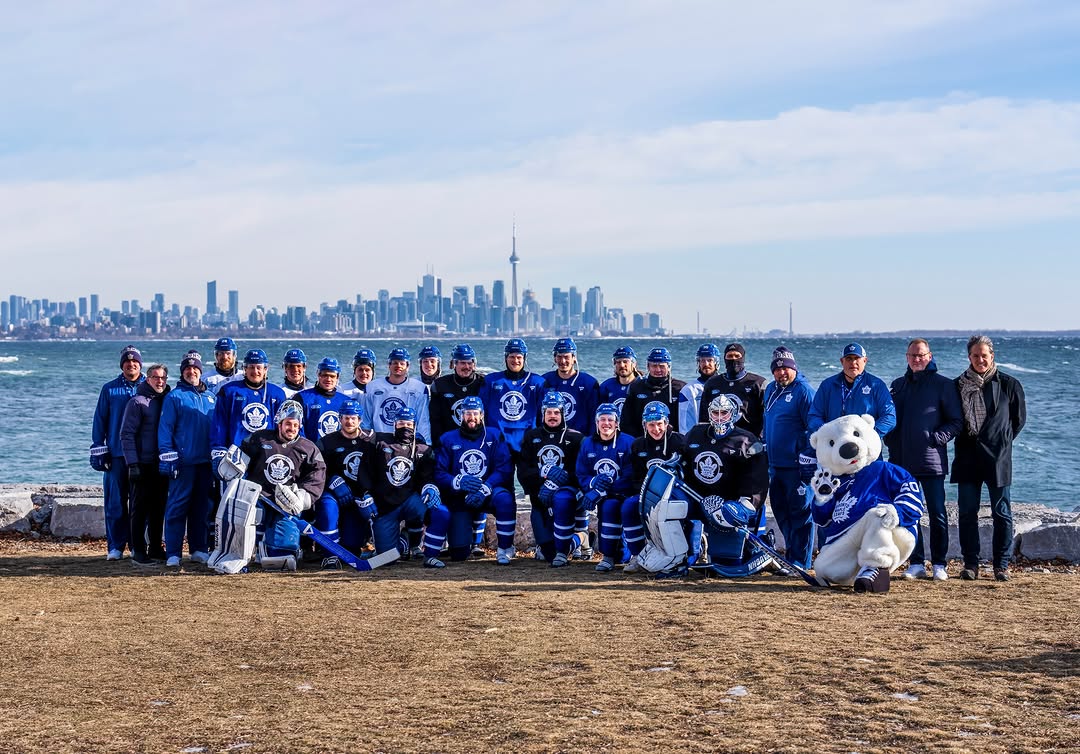
Toronto Maple Leafs: The Most Valuable NHL Team with Highest Paid Player in 2024
Toronto Maple Leafs have officially claimed the title of the most valuable NHL team, with an estimated worth of $3.8 billion as of December 2024. This marks a significant 36% increase from the previous year, solidifying the Leafs' financial dominance in the NHL.
Their success is attributed to multiple factors, including lucrative media and broadcasting deals, a passionate fan base, and a strategic approach to expanding their brand globally.
The Rise of the Toronto Maple Leafs
While the Leafs' historical performance has been mixed, their financial success is unparalleled in the modern NHL. Their significant market position outpaces the New York Rangers ($2.65 billion) and Montreal Canadiens ($2.3 billion), cementing Toronto's place as a global powerhouse in hockey. The valuation boost is attributed to the growing revenue from national and international media contracts, contributing to the team's status among the most valuable in professional sports worldwide.
Auston Matthews (@austonmatthews Instagram)
The Highest Paid NHL Player: Auston Matthews
Leading the roster for the Toronto Maple Leafs is none other than Auston Matthews, 27, the team's highest-paid player. Matthews, who signed a massive contract extension worth $13.25 million annually, has become the cornerstone of the team both on and off the ice. As one of the league's top goal scorers, Matthews' value is reflected not only in his on-ice performance but also in his marketability.
“Every time I step on the ice, I try to get better and help the team win,” said Matthews. “The contract doesn’t change my approach. I’m focused on doing my part to bring a championship to Toronto. That’s the ultimate goal for me and this team.”
Matthews’ dedication to winning and his focus on improvement has made him a fan favorite. His presence is central to the team’s strategy, both in terms of scoring and leadership. His impressive stats continue to bolster his reputation as one of the most dominant players in the league.
Auston Taylour Matthews was born in San Ramon, California, to his father Brian, a Californian, and his mother Ema, from Hermosillo, Mexico. When he was just two months old, his family moved to Scottsdale, Arizona, where he started attending Phoenix Coyotes games at the age of two.
Matthews expressed his pride in his Mexican heritage, saying, "I’m grateful to be a Mexican American. I’m proud of where I come from. I feel pretty fortunate to have her as my mom and my dad. Especially, when you get drafted and you do a lot of soul searching, you kind of look back on your childhood and how you got here. And it’s always a little bit emotional when you think of, just everything you had to go through. So, I think it’s great."
He is affectionately known as "Papi," explaining, "It’s our culture. I’m Mexican, this is Spanish culture to call our only boy, Papi. I follow the tradition."
Coach Sheldon Keefe’s Take on Matthews’ Impact
Sheldon Keefe, head coach of the Toronto Maple Leafs, has consistently praised Matthews for his leadership and determination.
“Auston is the complete player,” Keefe remarked. “He leads by example, and his focus is second to none. Not only is he a top goal scorer, but his leadership off the ice in the locker room is something special. He’s our guy.”
Keefe’s comments reflect the importance of Matthews to the team’s success, emphasizing the blend of skill, leadership, and professionalism that makes Matthews not just the highest-paid player, but also a key figure in Toronto’s quest for a Stanley Cup.
The Toronto Maple Leafs' valuation of $3.8 billion places them at the pinnacle of the NHL, with their star player, Auston Matthews, driving their success on and off the ice.
Matthews' significant contract and commitment to the team's success reflect the growing financial landscape of professional sports, where top athletes like him are not only key players but also major assets in the global sports economy.
Toronto Maple Leafs, one of the most iconic and historic teams in the National Hockey League (NHL), have a rich history of success, winning the prestigious Stanley Cup13 times. Their journey to these victories spans decades and includes a series of highs, lows, and unforgettable moments.
Early Triumphs (1918-1930s):
The Maple Leafs were originally founded in 1917 as the Toronto Arenas, before changing their name to the Toronto Maple Leafs in 1927. Their first Stanley Cup win came in 1918 when the team was still under the original Arenas name, defeating the Vancouver Millionaires. Their first true breakthrough under the Leafs banner came in 1932, when they triumphed over the New York Rangers to claim their second Cup.
Toronto Maple Leafs 1932 Stanely Cup Champions
Golden Age (1940s-1960s):
The 1940s and 1950s marked the beginning of an era of dominance for the Leafs. After a period of rebuilding post-World War II, the team established a powerful dynasty under coach Joe Primeau and star players like Syl Apps and Ted Kennedy. They won the Stanley Cup four times in a short span:
1942: A miraculous comeback, as they came from a 3-0 deficit to defeat the Detroit Red Wings in seven games.
1945: The Leafs once again defeated the Red Wings in a hard-fought series to win their fifth Stanley Cup.
1947: This victory was especially sweet as the Leafs defeated the Montreal Canadiens in a seven-game series to win the Stanley Cup.
1948: The Leafs claimed the Stanley Cup for the fourth time in seven years, showcasing their continued dominance.
1951: Toronto won the Stanley Cup for the sixth time after taking down the Montreal Canadiens.
In 1962, the Leafs added to their dominance by securing another victory, followed by another in 1963, and in 1964, which capped off an incredible run during the 1960s.
The Final Stanley Cups (1960s-1967):
The 1967 win remains a hallmark moment in Leafs history, as it was their 13th and final Stanley Cup win to date. The team defeated the Montreal Canadiens in a historic series, becoming the last team to win the Stanley Cup before the NHL expanded beyond the Original Six teams. Frank Mahovlich, Dave Keon, and Johnny Bower were instrumental in the team's success during this time.
The Long Wait (1970s-Present):
Unfortunately, after the 1967 victory, the Leafs fell into a period of mediocrity. Despite having strong teams, they were unable to replicate the same success in the decades that followed, with numerous playoff appearances but no Stanley Cup victories.
The Leafs entered a long drought, and despite making regular playoff appearances over the years, their inability to clinch another Cup has left fans eagerly awaiting their return to glory. Some of the closest near-misses came in 1993, when they made it to the Campbell Conference Finals, and in 2002, when they reached the Eastern Conference Finals.
Leafs have not won the Stanley Cup since 1967, and the fans continue to wait for another championship. With an exciting roster including stars like Auston Matthews and John Tavares, many believe that the team's time to return to the top is drawing nearer. The team continues to build a foundation of success and hopes to add another chapter to their storied history in the coming seasons.
Toronto Maple Leafs' 13 Stanley Cup wins stand as a testament to their historic legacy and passion, and while their recent years have been marked by disappointment, the team’s rich history ensures they are always a contender in the hearts and minds of their loyal fans.
Genesis Invitational Pays Tribute to Tiger Woods' Late Mother Kultida.
The Genesis Invitational is set to unfold at a new venue this year, marking a significant change for this prestigious golf tournament. While tournament host Tiger Woods, 49, will not be participating in the competition, his influence continues to shape the event. Woods, who had originally planned to compete, made the decision to withdraw, citing that he was "just not ready" to return to the game. The legendary golfer is still dealing with the loss of his mother, Kultida Woods, who passed away on February 4 at the age of 80.
Despite Woods' absence, the tournament remains true to his vision, with a 36-hole cut and a smaller field of competitors, as well as an increased prize pool, which are all elements that Woods has had a hand in shaping over the years. These changes were designed to elevate the tournament's prestige and enhance the competition.
To honor his late mother, the Genesis Invitational will feature a special tribute: a flag stick placed on the seventh green at Torrey Pines. This gesture holds deep significance, as both the number seven and the color white carry special meaning in Buddhism, a faith that Kultida Woods held dear. Woods' mother, originally from Thailand, was a devoted Buddhist, and this tribute serves as a poignant symbol of her influence on her son’s life.
In a tribute to @TigerWoods' late mother Tida, the 7th hole @TheGenesisInv will feature an all white flag.
A native of Thailand, Tida was a faithful Buddhist, and the No. 7 and color white are significant in Buddhism and will be displayed in her honor. pic.twitter.com/oj9Oh2rrcU
The Genesis Invitational is a professional golf tournament on the PGA Tour, traditionally held at Riviera Country Club in Pacific Palisades, California. The event has been a part of the PGA Tour since 1926 and is well-known for its historic significance and prestigious field of competitors. It is one of the few invitational tournaments, meaning only a select number of golfers are invited to participate, often resulting in a smaller, highly competitive field.
The tournament has seen various changes and improvements over the years. Since 2017, it has been sponsored by Genesis Motors, and the event has been officially known as the Genesis Invitational. The tournament has also been elevated in status within the PGA Tour, offering a larger prize pool and attracting top-tier talent.
Tiger Woods has been deeply connected to the Genesis Invitational. Since 2017, he has served as the tournament’s host, and his influence has helped shape the event into one of the most notable stops on the PGA Tour calendar. Woods has had a long history with the tournament and Riviera Country Club, and his participation in the event has added even more prestige. He has also made notable charitable contributions through the tournament, using the event to benefit the TGR Foundation, which works to support youth education and community development.
In 2025, however, Woods was unable to compete in the event due to ongoing recovery from injuries and the emotional toll of his mother's recent passing. Woods has had a complicated relationship with the tournament over the past years as he continues to recover from serious injuries sustained in a 2021 car accident. Despite not being able to participate, Tiger’s legacy and influence are deeply felt at the tournament, with his personal touch evident in aspects like the 36-hole cut, a higher prize pool, and a smaller field of competitors.
Even without Woods on the course, the Genesis Invitational will carry his legacy and bring together top-tier golfers for an event that continues to push the boundaries of excellence in the sport. The invitational status of the tournament also ensures that only the best of the best compete, maintaining its prestigious reputation. As Woods deals with personal loss, this year’s tournament will reflect both his contributions to golf and the enduring love and respect for his late mother.
Chris Mova's path to becoming one of California's most respected personal injury attorneys began with a life-changing accident. At age seven, a car crash in Northern Virginia left him with a traumatic brain injury and a severe stutter. His immigrant parents, who had fled Iran during the revolution, accepted a quick $2,000 settlement from the insurance company — a decision that would leave them struggling with years of speech therapy bills.
Early Career and Vision
After graduating with honors from George Mason University and earning his J.D. from Western State University College of Law, Mova started his career in project management at Unity Mechanical Systems. Under his leadership as Operations Manager, the company's revenue grew from $4 million in 2006 to $12 million in 2009.
His experience with insurance companies during his childhood accident stayed with him, and he transitioned to law, starting at a prestigious personal injury firm in Southern California. It was there where he noticed how firms were prioritizing volume over individual client care, rushing to settle cases without maximizing their value.
Founding Mova Law Group
This observation led him to establish his own law firm, Mova Law Group, which has a differentiated approach to the personal injury cases they focus on. Instead of taking the conventional approach and handling hundreds of cases simultaneously, the firm maintains a focused caseload of 70-80 cases. This strategy allows for deep engagement with each client's situation and consistently delivers superior results.
In the firm's early days, Mova took an unconventional and entrepreneurial approach to client outreach, setting up a booth at local swap meets to provide legal advice to community members who needed help but didn't know where to turn. This grassroots beginning reflected his commitment to making quality legal representation accessible to all.
Growth and Success
Today, Mova Law Group serves clients throughout Southern California, with offices in San Diego, Oceanside, Sacramento, and other locations. The firm focuses on wrongful death accidents, car accidents, trucking accidents, motorcycle accidents, spinal cord injuries, slip and fall accidents, dog bites, bicycle accidents, pedestrian accidents, negligent security, and construction site accidents.
Mova Law Group has built a reputation for taking on challenging cases that other firms have rejected. In one notable instance, Mova secured a $450,000 settlement for a client whose case had been deemed worthless by four other law firms.
Professional Leadership
Mova's influence extends beyond his own practice. He has become a respected authority in personal injury law, particularly in cases involving spinal and brain injuries. He regularly coaches other personal injury lawyers across the country on case preparation, negotiation strategies, and litigation techniques.
His professional affiliations include active membership in the San Diego County Bar Association, Los Angeles County Bar Association, San Bernardino County Bar Association, Consumer Attorneys of San Diego (CASD), and Consumer Attorneys Association of Los Angeles (CAALA).
Client-Centered Philosophy
The firm's success stems from Mova's personal understanding of the physical, emotional, and financial toll that injuries can take on individuals and families. The practice offers a no-win, no-fee guarantee, ensuring that the firm's interests align with those of its clients.
His approach to stress management includes regular meditation and physical exercise, which he credits as pillars of his success in managing high-stakes litigation. This balanced approach allows him to maintain the mental clarity needed to fight effectively for his clients' rights.
Through his work, Chris Mova has transformed his childhood trauma into a force for positive change in the legal community. His story demonstrates how personal setbacks can be turned into professional triumphs while making a meaningful difference in others' lives.
Petition Proposes Denmark Buy California in Hilarious 'Denmarkification' Campaign.
A humorous online petition has been making waves across the internet, gathering significant support from both Californians and Danes. The "Denmarkification" petition, which proposes that Denmark purchase the state of California, has quickly gained over 200,000 signatures as of Tuesday.
This playful initiative was sparked by President Trump's ongoing fascination with acquiring Greenland, a territory of Denmark. Earlier this year, the president even suggested military action to gain control of both Greenland and the Panama Canal. Greenland’s leader, Múte B. Egede, firmly rejected the idea, stating that the people of Greenland did not wish to become Americans.
With a tongue-in-cheek tone, the petition humorously suggests that President Trump might be willing to part with California, a state whose political leaders have had ongoing clashes with his administration. The petition humorously notes, "Let's be honest – Trump isn't exactly California's biggest fan. He's called it 'the most ruined state in the Union' and has feuded with its leaders for years. We're pretty sure he'd be willing to part with it for the right price."
The Denmarkification organizers have set an ambitious goal to raise $1 trillion through crowdfunding to purchase California. However, the primary focus of this campaign is currently centered around collecting signatures, not funds.
In a cheeky statement, the petition reads: “Have you ever looked at a map and thought, ‘You know what Denmark needs? More sunshine, palm trees, and roller skates.’ Well, we have a once-in-a-lifetime opportunity to make that dream a reality.”
So, why California? The petition outlines several key reasons:
Sunshine Galore: The petition humorously notes, "Let’s face it, Denmark’s weather is… well, let’s just say it’s cozy. California has 300 days of sunshine a year. Imagine swapping your rain boots for flip-flops!"
Tech Dominance: Adding an extra bunch of "Tech bros" to Denmark is considered a worthy upgrade by the campaign, which jokes that it’s "what every democracy needs."
Avocado Toast Forever: The petition reminds everyone that California is responsible for growing 90% of the U.S.'s avocados, ensuring that Denmark would never run out of "avocado toast."
To Protect the Free World: The petition emphasizes California’s role in "the best freedom," cheekily calling it "Colossal freedom."
Disneyland: The petition proposes renaming Disneyland to "Hans Christian Andersenland" with Mickey Mouse donning a Viking helmet.
As the petition continues to gain attention, it draws a humorous parallel to Greenland’s recent discussions on self-determination. Greenland's prime minister, in his New Year’s address, expressed that the island should free itself from "the shackles of colonialism," although he did not specifically reference the United States. Meanwhile, as climate change continues to affect the Arctic, the strategic significance of Greenland’s location is also becoming increasingly apparent.
The "Denmarkification" petition proposing that Denmark buy California is a humorous and clever commentary on current geopolitical events, particularly the ongoing tension surrounding President Trump's interest in acquiring Greenland. While the petition is clearly satirical, it plays on the absurdity of territorial acquisition and the way countries sometimes engage in quirky political proposals.
The petition's playful tone highlights the contrast between California’s sunny weather, thriving tech industry, and Denmark’s more temperate climate. It also adds a lighthearted twist by poking fun at Trump’s long-standing tensions with California, which has often clashed with his administration. The idea of renaming Disneyland to "Hans Christian Andersenland" and having Mickey Mouse wear a Viking helmet is pure comedic gold, underscoring how humor can be an effective tool for commentary on serious political issues. Ultimately, the petition reminds us that sometimes laughter can shine a light on complex international relations in an entertaining way.
Arthur J. Gallagher & Co. Data Security Incident Settlement: What You Need to Know
A proposed settlement has been reached in a class action lawsuit regarding a data security breach involving Arthur J. Gallagher & Co. (“AJG”) and Gallagher Bassett Services, Inc. (“GB”). The incident occurred between June 3, 2020, and September 26, 2020, when an unknown party accessed certain sections of the Defendants’ network during a criminal ransomware attack. This breach exposed sensitive personal identifying information (“PII”) and personal health information (“PHI”), including but not limited to names, Social Security numbers, financial details, health insurance information, and medical records.
Though the Defendants deny all allegations of wrongdoing, the settlement offers compensation and benefits to those affected by the breach.
What Does the Settlement Offer?
The proposed settlement includes a range of benefits for Settlement Class Members, which include those whose data was accessed during the 2020 Data Security Incident. These benefits are as follows:
Compensation for Unreimbursed Monetary Losses: All Settlement Class Members can file a claim for compensation for documented, unreimbursed monetary losses, with the potential to receive up to $6,000 each.
Additional Benefits: In addition to the monetary compensation, Settlement Class Members can choose one of the following two options:
Financial Account Monitoring: Enrol in three years of Financial Account Monitoring services.
Pro Rata Cash Payment: Alternatively, Settlement Class Members can opt for a pro-rata share of the settlement fund, which is distributed on a percentage basis.
California Statutory Payment: If you were a resident of California at any time from June 3, 2020 to the claims deadline, you can claim up to $100 for your statutory claims under the California Consumer Privacy Act.
Important Dates to Remember
Deadline to Submit a Claim Form: To receive any of the settlement benefits, you must submit your claim by February 10, 2025. You can complete the claim form online or download it from the settlement website and mail it to the settlement administrator.
Deadline to Exclude Yourself or Object: If you wish to exclude yourself from the settlement and retain the right to sue separately, you must do so by January 13, 2025. Alternatively, if you want to object to the settlement, you must also submit your objection by January 13, 2025.
Final Approval Hearing: The court will hold a hearing on February 27, 2025, at 9:00 AM (CT) to determine whether the settlement should be approved. You may attend this hearing or request permission to speak if you have an objection.
Your Rights and Options
If you are a Settlement Class Member, you have the following options:
Submit a Claim: To receive compensation or benefits, you must submit a valid claim form by the deadline.
Do Nothing: If you choose to do nothing, you will not receive any settlement benefits and will be barred from taking further legal action regarding this case.
Exclude Yourself: If you wish to opt out of the settlement, you can exclude yourself by the specified deadline, but you will not receive any benefits.
Object: If you are not satisfied with the settlement, you may submit an objection to the court by the deadline.
Additional Information
The settlement will not take effect until the court grants final approval, and any appeals are resolved. No payments will be made until after this approval.
For more details, visit the settlement website’s Documents section or call (833) 739-0738 for assistance.
Contact Information
For questions or to receive a claim form, you can reach the settlement administrator at:
Arthur J. Gallagher Data Breach Litigation
c/o Kroll Settlement Administration LLC
PO Box 5324
New York, NY 10150-5324
Phone: (833) 739-0738
This notice is authorised by the court and supervised by the parties' legal counsel.
Anthony Edwards' DNA Test Results Revealed in NBA Court Battle with Ex Ayesha Howard.
NBA star Anthony Edwards is embroiled in a legal dispute with his ex, Ayesha Howard, over the paternity of their newborn daughter. Ayesha, who gave birth in October 2024, has rushed to court to challenge the paternity lawsuit filed by Anthony in Georgia. The case has been complicated by an alleged DNA test result that confirmed Edwards as the father of the child.
According to court documents, Ayesha filed a motion to dismiss the lawsuit, arguing that the case should be heard in California, not Georgia. Ayesha stated that she moved to California in August 2023 and has no intention of returning to Georgia. She claimed that Anthony's decision to file the suit in Georgia was a “calculated” move aimed at securing a more favourable outcome under Georgia’s child support laws.
Ayesha further argued that neither she nor Anthony has significant ties to Georgia, and therefore, the case should be heard in California. She accused Anthony of "forum-shopping," attempting to manipulate the legal process to his advantage, and criticised his actions as being in "bad faith" and in disregard of jurisdiction and fairness principles.
theanthonyedwards - Instagram
The paternity suit was filed shortly after Ayesha gave birth to their daughter, with Anthony requesting a DNA test to confirm his paternity. In his initial petition, Anthony asked for a court order to establish paternity and determine the amount of child support he should pay if the test confirmed he was the father.
Ayesha, however, countered by claiming that genetic testing was done with both parties’ consent, and paternity was established around December 23, 2024. She added that her daughter has been living in California since birth, and she herself resides in Inglewood, further reinforcing her argument for California jurisdiction.
In response, Anthony pointed out that Ayesha’s business is registered in Georgia, and that she had fought two previous legal battles in Georgia courts in 2018 and 2020. He argued that Georgia was the proper venue for the case, and a judge has yet to rule on Ayesha’s motion to dismiss.
In addition to the paternity case, Anthony is in a relationship with Shannon Jackson, with whom he shares a daughter, Aislynn, born in 2024. Ayesha, meanwhile, has a son, Jason, with her ex, rapper Lil Baby. Edwards has also been linked to a son, Amir, from another relationship with a woman named "Ally."
Anthony, who signed a five-year, $260 million contract extension with the Minnesota Timberwolves in 2023, continues to be in the spotlight amid this ongoing legal drama. This case follows a similar paternity dispute between NBA star Tristan Thompson and Maralee Nichols in 2021, which also centred on a jurisdictional battle for the location of their case.
As of now, the paternity case between Anthony Edwards and Ayesha Howard remains unresolved, with the court yet to make a ruling on Ayesha’s motion to dismiss.
California Horse Deaths - Women Arrested Named: 'Jan Johnson'.
A woman has been arrested after 27 dead horses were discovered across multiple properties in California, the San Joaquin County Sheriff’s Office has confirmed.
On Wednesday, deputies and Animal Services officers carried out a search warrant in Clements, California, following an investigation into suspected animal neglect. During the operation, they found several malnourished horses with limited access to food and water, and approximately 27 dead horses across the properties.
“The investigation revealed the horses were in dire conditions, with several malnourished and approximately 27 deceased horses found,” the sheriff’s office stated.
Jan Johnson Arrested After 27 Dead Horses Found Across Multiple Properties in California (San Joaquin County Sheriff’s Office)
In addition to the grim discovery, animal services officers, assisted by veterinarians, began evaluating the condition of the surviving horses. After thorough assessments, 16 horses were rescued and taken into the care of Oakdale Equine Rescue, where they will receive the necessary nutrition, medical care, and rehabilitation.
“Unfortunately, 4 horses and 1 bull had to be euthanised due to severe neglect. Our teams, along with veterinarians, continue to assess the remaining animals due to the vast size of the property,” authorities reported.
Jan Johnson was arrested and charged with cruelty to animals, criminal threats, threatening a public official, and possession of a short-barrel shotgun. She was booked into San Joaquin County jail following her arrest.
Clements, located around 40 miles southeast of Sacramento, is the site of the ongoing investigation.
“We are committed to ensuring the welfare of all animals in our community and will continue to pursue this investigation,” the sheriff’s office added. “We want to thank our Deputies, Animal Services team, and the Oakdale Equine Rescue for their dedication and quick action in addressing this situation.”
Laci Peterson Was Pregnant When She Vanished — What Happened to Her Child?
It's been two decades since Scott Peterson was convicted of murdering his wife, Laci, and their unborn son, Conner, in a case that captivated and stunned the nation. As attorneys with the Los Angeles Innocence Project fought in court in July 2024 to have evidence reexamined, Peterson, from his cell at Mule Creek State Prison in California, continued to insist on his innocence. Now, twenty years on, Peterson is set to share his side of the story in the three-part docuseries Face to Face with Scott Peterson, streaming from August 20.
One of the most crucial and contentious issues during the trial was whether Conner, Laci's unborn son, was born alive or died in the womb. Peterson's defence team argued that Laci had been abducted by an unknown assailant who cut the baby out of her stomach, before dumping both bodies into San Francisco Bay in an attempt to frame him, according to SF Gate. So, what exactly happened to Laci Peterson and her son, Conner?
How Did Laci Peterson Die?
Scott Peterson told authorities that on the morning of December 24, 2002, he left their home in Modesto, California, to go fishing at Berkeley Marina, roughly 90 miles away. He claimed that when he returned hours later, Laci was gone. He reported her missing later that evening.
At the time, Laci was eight months pregnant with their son, Conner, and the couple had planned to raise their child in Modesto, as reported by NBC Bay Area.
For three months, police searched for Laci, but it wasn’t until March 2003 that the investigation shifted from a missing person’s case to a homicide. A month later, the bodies of Laci and Conner were discovered washed ashore in San Francisco Bay, about a mile apart — and just a few miles from where Scott Peterson claimed to have been fishing that fateful day. Due to the condition of Laci’s body, no official cause of death could be determined. When found, her remains were badly decomposed, with her head, arms, most of her legs, and all internal organs except for the uterus missing. A forensic anthropologist testified that her body had likely been submerged in the bay for three to six months. Prosecutors contended that Peterson had murdered Laci and dumped her body in the bay, using handmade concrete anchors to weigh her down.
How Did Laci Peterson's Unborn Son, Conner, Die?
Dr. Brian Peterson, a pathologist who testified at Scott Peterson’s trial, explained that Conner had been protected by the elements of the bay while still in his mother’s uterus. As SF Gate reported, Conner’s body was more intact than Laci’s when it washed ashore.
Dr. Michael Baden, a forensic pathologist, noted on Good Morning America that Laci’s body had likely protected the baby for months, with Conner being expelled from her body shortly before the remains were discovered. "It does tell us that the baby was in the womb for many months after Laci was in the water and Laci, in fact, protected the baby until the baby came out shortly before the bodies were found," Dr. Baden said.
Dr. Peterson testified that Conner’s umbilical cord appeared to be torn rather than cut or clamped, which would typically happen after birth. Additionally, the baby’s uterus had not contracted to its normal size, a sign that Conner had not been born yet. Meconium, the first stool passed by newborns, was also found in Conner’s bowels, suggesting he had been alive long enough for the body to produce it.
Dr. Peterson asserted that, despite whatever caused Laci’s death, it was her demise that led to the death of the baby. "Truly, I believe that for whatever reason Laci met her demise, it was her death that caused the death of [the baby]," he stated during the trial.
The key question remained: how did Conner become separated from his mother? Dr. Peterson testified that the baby was "expelled" from Laci’s body after her death. However, Peterson’s defence team speculated that Conner might have been strangled after birth, as twine was found around his neck. Dr. Peterson, however, refuted this theory, pointing out that there were no bruises or injuries to the baby’s neck, and theorised that the twine was simply debris from the water.
Forensic anthropologist Alison Galloway also provided testimony, estimating that Conner’s age at the time of death was between 33 and 38 weeks, based on the measurements of his bones. However, she admitted that this estimate was not precise due to the condition of the body. "I hate to say mushy, but that was sort of the way it was, and that doesn’t allow you to get an accurate measurement," Galloway said, according to News on 6.
The Verdict
On November 12, 2004, after several months of testimony, the jury found Scott Peterson guilty of first-degree murder in the death of Laci Peterson, and second-degree murder for the death of Conner. In March 2005, Peterson was sentenced to death. However, in December 2021, the California Supreme Court agreed with Peterson's appeal and moved him off death row.
As Scott Peterson’s legal team continues their fight for a new trial, the case remains a powerful reminder of how the deaths of Laci and Conner Peterson still raise questions — especially regarding the circumstances surrounding their deaths.
Dark Mode
About Lawyer Monthly
Legal Intelligence. Trusted Insight. Since 2009
Follow Lawyer Monthly
Manage your privacy
To provide the best experiences, we and our partners use technologies like cookies to store and/or access device information. Consenting to these technologies will allow us and our partners to process personal data such as browsing behavior or unique IDs on this site and show (non-) personalized ads. Not consenting or withdrawing consent, may adversely affect certain features and functions.
Click below to consent to the above or make granular choices. Your choices will be applied to this site only. You can change your settings at any time, including withdrawing your consent, by using the toggles on the Cookie Policy, or by clicking on the manage consent button at the bottom of the screen.
Functional
Always active
The technical storage or access is strictly necessary for the legitimate purpose of enabling the use of a specific service explicitly requested by the subscriber or user, or for the sole purpose of carrying out the transmission of a communication over an electronic communications network.
Preferences
The technical storage or access is necessary for the legitimate purpose of storing preferences that are not requested by the subscriber or user.
Statistics
The technical storage or access that is used exclusively for statistical purposes.The technical storage or access that is used exclusively for anonymous statistical purposes. Without a subpoena, voluntary compliance on the part of your Internet Service Provider, or additional records from a third party, information stored or retrieved for this purpose alone cannot usually be used to identify you.
Marketing
The technical storage or access is required to create user profiles to send advertising, or to track the user on a website or across several websites for similar marketing purposes.
To provide the best experiences, we use technologies like cookies to store and/or access device information. Consenting to these technologies will allow us to process data such as browsing behaviour or unique IDs on this site. Not consenting or withdrawing consent, may adversely affect certain features and functions.
Functional
Always active
The technical storage or access is strictly necessary for the legitimate purpose of enabling the use of a specific service explicitly requested by the subscriber or user, or for the sole purpose of carrying out the transmission of a communication over an electronic communications network.
Preferences
The technical storage or access is necessary for the legitimate purpose of storing preferences that are not requested by the subscriber or user.
Statistics
The technical storage or access that is used exclusively for statistical purposes.The technical storage or access that is used exclusively for anonymous statistical purposes. Without a subpoena, voluntary compliance on the part of your Internet Service Provider, or additional records from a third party, information stored or retrieved for this purpose alone cannot usually be used to identify you.
Marketing
The technical storage or access is required to create user profiles to send advertising, or to track the user on a website or across several websites for similar marketing purposes.