
Understand Your Rights. Solve Your Legal Problems
Insurance companies are the central players in most California personal injury claims. When someone is injured due to another person's negligence, the at-fault party's insurance company is typically responsible for paying for the victim's damages.
However, an insurance company's primary goal is to minimize its financial payout, which can create a fundamental conflict with the injured party's interests.
The insurance claim process is a detailed and often adversarial investigation where adjusters evaluate the claim based on the specifics of the accident and key principles of California law.
Insurance companies employ a range of strategies to protect their bottom line when handling claims. Being aware of these tactics is crucial for an injured person navigating the process.
California personal injury law is rooted in the concept of negligence, which is a key element of most injury claims. To succeed, a victim (the plaintiff) must prove four key things:
An insurance company's investigation will meticulously focus on these four elements to determine if their policyholder is liable and to what extent.
The duty of care is the legal obligation to act with a standard of reasonable care to avoid foreseeable harm to others. This duty is not a one-size-fits-all concept; its scope depends on the relationship between the parties and the circumstances.
For instance, a driver has a duty to operate their vehicle safely, while a doctor has a heightened professional duty to provide appropriate medical care.
A property owner has a duty to maintain a safe premises for visitors, but the specific duty owed can vary depending on whether the visitor is an invitee, a licensee, or a trespasser. Similarly, common carriers (like bus or train operators) owe their passengers the highest duty of care.
Unlike negligence, which requires proving fault, strict liability holds a defendant automatically responsible for an injury regardless of whether they were careless. This principle applies in two main areas in California:
In a California personal injury case, you can generally recover two main types of damages:
In rare cases, a court may also award punitive damages. These are not meant to compensate the victim but to punish a defendant for particularly egregious behavior and to deter others from similar conduct.
To be awarded, a plaintiff must prove with "clear and convincing evidence" that the defendant acted with "oppression, fraud, or malice," as defined in California Civil Code section 3294.
This is a very high legal standard to meet and goes beyond simple negligence. Punitive damages are not typically covered by standard liability insurance policies.
Examples where punitive damages might be considered include cases involving a drunk driver, an assault, or a company that knowingly sold a dangerous product.
A critical aspect of any personal injury claim is the statute of limitations, a strict deadline for filing a lawsuit. In California, the general statute of limitations for most personal injury claims is two years from the date of the injury.
For more information, you can refer to this official California Courts self-help guide on the statute of limitations.
If a lawsuit is not filed within this timeframe, the injured person will almost certainly lose their right to seek compensation. It's important to note that there are exceptions.
The "discovery rule" may extend the deadline if the injury or its cause was not immediately apparent. For example, if a patient is harmed by a medical device but doesn't discover the injury until years later, the two-year clock may not begin until the date of discovery.
Claims against a government entity have a much shorter deadline—as little as six months—and the deadline for minors typically doesn't begin until they turn 18.
California operates under a "pure comparative fault" system. This rule allows an injured person to still recover damages even if they were partially at fault for the accident.
The total compensation they receive is simply reduced by their percentage of fault. For example, if your total damages are $100,000 but you are found to be 20% at fault, the insurance company will only be responsible for paying you $80,000.
For a detailed legal explanation, you can search for the official California Civil Jury Instructions (CACI), specifically instruction 405 on comparative fault. Insurance adjusters will try to place as much blame as possible on the injured party to lower their financial payout.
Given the complexities of California's legal system and the adversarial nature of insurance companies, an attorney plays a vital role.
A personal injury lawyer handles all communications with the insurance company, builds the case by gathering evidence and medical records, and negotiates on the client's behalf.
If a fair settlement cannot be reached, they are prepared to file a lawsuit and represent the client in court, ensuring all legal deadlines and procedures are met.
When a case goes to trial, a jury is tasked with determining liability and damages. They follow specific instructions from the judge that explain the relevant laws, such as negligence, comparative fault, and damages.
You can find these instructions, known as California Civil Jury Instructions (CACI), on the official judicial branch website. Juries evaluate evidence, including witness testimony, medical records, and expert opinions, to decide if the defendant's negligence caused the injury.
The plaintiff must prove their case by a "preponderance of the evidence," meaning it is more likely than not that the defendant is responsible for the harm.
Recent legal reforms have significantly impacted personal injury claims in California. Senate Bill 1107, which went into effect on January 1, 2025, increased the state's minimum auto insurance liability limits, providing victims with more financial protection.
Minimum bodily injury coverage has increased from $15,000 to $30,000 per person and from $30,000 to $60,000 per accident. This means more funds are available from the at-fault driver's policy to cover a victim's damages.
Another change is Assembly Bill 35, which phased out the previous $250,000 cap on non-economic damages in medical malpractice cases, replacing it with a new cap of $500,000 that will increase annually. This change offers a greater chance for victims of medical negligence to be fairly compensated for their pain and suffering.
Q: What is the average settlement for a personal injury claim in California?
A: There is no "average" settlement, as the value of a claim depends entirely on the specific damages incurred. Factors include the severity of the injuries, the amount of medical bills, lost wages, and the extent of pain and suffering. Insurance companies evaluate each claim individually, and a case can range from a few thousand dollars to millions, depending on the circumstances.
Q: How does a personal injury lawyer get paid in California?
A: Most personal injury lawyers in California work on a contingency fee basis. This means they do not get paid an hourly rate or a flat fee upfront. Instead, their payment is a percentage of the final settlement or court award. If the lawyer does not win the case, they do not get paid. This arrangement allows injured individuals to pursue a claim without needing to pay legal fees out of pocket.
Q: Is California a no-fault state for car accidents?
A: No, California is a fault state. This means that the person who is at fault for the accident (or their insurance company) is responsible for paying for the damages of the injured party. In contrast, "no-fault" states require your own insurance company to pay for your medical expenses and other losses, regardless of who caused the crash.
In a massive week-long operation that spanned across Kern, Kings, and Tulare counties, California authorities just made a stunning discovery: over 105,000 illegal cannabis plants and more than 22,000 pounds of processed weed, all tied to unlicensed grows operating far outside the bounds of the state’s legal cannabis market.
The total street value? A staggering $123.5 million.
Governor Gavin Newsom announced the news himself in a post on X, calling it the biggest bust yet by California’s cannabis and wildlife departments.
In the Central Valley, @CAcannabisdept and @CaliforniaDFW conducted their largest operation to date, seizing 105,700 illicit cannabis plants and 22,057 pounds of processed cannabis worth $123.5 million. pic.twitter.com/CiKwSw3lbA
— Governor Gavin Newsom (@CAgovernor) May 20, 2025
California Is Stepping Up Its Crackdown on Illegal Grows
The raid was no small effort. Over 200 officers took part, representing 15 different agencies at the state, local, and federal levels. Over the course of the operation, teams executed 71 search warrants, made several arrests, and seized multiple firearms.
What they found on the ground was more than just marijuana. At several sites, investigators discovered dangerous pesticides, some of which are banned outright in the U.S.
These chemicals are known to contaminate soil and water, threatening local wildlife and the health of nearby communities.
That environmental risk, officials say, is one of the most serious concerns tied to California’s illegal cannabis industry.
“We Won’t Tolerate It,” Newsom Warns
Governor Newsom didn’t hold back in his reaction, issuing a sharp warning to those skirting state regulations. In a public statement following the raid, he doubled down:
“Let this be a reminder to all who grow cannabis illegally: we won’t tolerate the undermining of our legal industry and impacts to our environment.”
Since California legalized recreational cannabis in 2016, the state has struggled to rein in unlicensed operations.
Legal growers are required to follow strict environmental guidelines, pay high taxes, and obtain permits, while illegal farms often ignore those rules entirely, creating a black market that not only undercuts the legal economy but can do real damage to land, water, and air.
This week’s bust wasn’t an isolated incident. Since forming the Unified Cannabis Enforcement Taskforce in 2022, California has ramped up efforts to tackle illicit cultivation.
According to state data, the task force has now served over 500 warrants and seized more than $650 million worth of unlicensed cannabis.
It has also eradicated upwards of 800,000 illegal plants across the state.
While these operations vary in size, the message is consistent: California is serious about protecting the integrity of its legal cannabis system.
Nearly a decade after legalization, California is still grappling with an overwhelming underground cannabis market. Many blame high taxes, complex regulations, and red tape for driving both consumers and growers back into the shadows.
Concerned about an illegal grow in your area?
You can report it anonymously at cannabis.ca.gov or by contacting your local enforcement office.
Arnold & Porter Welcomes Cybercrime Leader Eun Young Choi as Partner
Trump Unveils $175B ‘Golden Dome’ Missile Shield to Counter Global Threats
California, along with 16 other states, has filed a federal lawsuit against the Trump administration in a major legal battle with wide-ranging implications for state authority, environmental law, and federal oversight.
The coalition challenges the Federal Highway Administration’s (FHWA) alleged unlawful withholding of $5 billion in funds allocated by Congress to expand the nation’s electric vehicle (EV) charging infrastructure.
The Heart of the Dispute
On his first day back in office, President Trump signed an executive order directing federal agencies to cease the disbursement of funds appropriated under the Infrastructure Investment and Jobs Act (IIJA), widely known as the Bipartisan Infrastructure Law.
Among the halted programs was the National Electric Vehicle Infrastructure (NEVI) Formula Program, designed to accelerate the construction of EV charging stations across the country.
California officials assert that this directive has already deprived the state of more than $300 million, jeopardizing thousands of jobs and stifling a burgeoning sector crucial to meeting both environmental and economic goals.
Governor Gavin Newsom described the Trump administration’s action as “another Trump gift to China,” contending that obstructing domestic clean energy initiatives cedes technological leadership and job growth opportunities to international competitors.
Attorney General Rob Bonta accused the administration of dismantling environmental protections to favor fossil fuel interests.
"The President continues to roll back environmental and climate change protections, this time illegally stripping away billions of dollars for electric vehicle charging infrastructure, all to line the pockets of his big oil friends.
The facts don’t lie: the demand for clean transportation continues to rise, and California will be at the forefront of this transition to a more sustainable, low-emissions future. California will not back down, not from Big Oil, and not from federal overreach.”
The lawsuit contends that the FHWA’s withholding of funds violates multiple constitutional provisions, ignores explicit Congressional appropriations, and undermines state efforts to combat climate change and foster economic growth in the clean energy sector.
If successful, the suit could reaffirm the limits of executive power in overriding legislative appropriations and set a critical precedent for state-federal relations concerning environmental policy and infrastructure development.
California has positioned itself as a national leader in zero-emission vehicles (ZEVs), with over 178,000 public and shared EV charging ports already installed and a comprehensive plan to expand this network significantly.
In addition to pursuing federal funds, the state has committed substantial resources of its own, including:
$640 million toward zero-emission truck and bus infrastructure.
$500 million to deploy 1,000 ZEV school buses.
$1.3 billion allocated to public transit projects supporting clean transportation.
Governor Newsom recently announced additional legal challenges to federal tariffs and launched initiatives to fortify international trade relationships and protect California’s economic interests.
The outcome of this litigation could significantly impact not only the availability of EV infrastructure funding but also the constitutional balance between federal directives and state rights in environmental policymaking.
The NEVI program was originally designed to help build 500,000 EV chargers across the United States by 2030, a critical goal that could now be delayed by the administration’s actions.
California also has a statewide plan to phase out sales of new gas-powered vehicles by 2035. According to the International Energy Agency, global EV sales are projected to reach 45 million annually by 2030, underscoring the urgency of accelerating EV infrastructure development.
Credit Suisse Resolves Tax Crimes Case with $510M Settlement
Pennsylvania Moves Toward Marijuana Legalization, Eyes $600M Revenue
S. Martinelli & Company announced a sweeping recall in April 2025, pulling more than 170,000 bottles of its popular apple juice from shelves nationwide.
The recall, initiated voluntarily, follows the discovery of potentially elevated levels of patulin — a toxic substance produced by molds that grow on apples.
According to the U.S. Food and Drug Administration (FDA), the recall is classified as Class II, meaning that while the risk of serious health problems is relatively low, consumption of the affected product could still cause temporary or medically reversible adverse effects.
Understanding Patulin: A Hidden Threat in Apple Products
Patulin is not a household name, but it’s a toxin that food safety experts take seriously. Produced by species of mold commonly found on apples and other fruits, patulin can survive the pasteurization process if contaminated fruit slips through quality control.
Exposure to high levels of patulin may cause symptoms such as nausea, vomiting, and gastrointestinal discomfort. In more severe cases, it has the potential to damage vital organs, including the liver, spleen, and kidneys.
So far, no illnesses linked to Martinelli’s recalled juice have been reported. Nevertheless, the company, based in Watsonville, California, moved swiftly to remove the affected batches from the market, a decision likely aimed at limiting both health risks and legal fallout.
Details of the Recall
The recall targets 7,234 cases of 10-ounce glass bottles sold in four-packs, easily identifiable by their white metal screw-top lids. The affected bottles bear the UPC code 0 41244 04102 2 and a best-by date of December 5, 2026.
These products were distributed across 28 states, including major markets like California, New York, Texas, and Florida, meaning the impact of the recall is likely to be significant both logistically and reputationally.
Consumers who purchased the recalled juice are advised not to drink it. Instead, they should either discard the bottles or return them to the store where they were purchased to receive a full refund.
Potential Legal Ramifications for Martinelli’s
While Martinelli’s response has so far been swift and transparent, that may not be enough to stave off potential legal challenges. Food recalls, even when managed responsibly, can open the door to a range of lawsuits, including:
Product liability claims, where plaintiffs argue the company failed to ensure the safety of its goods.
Consumer fraud or deceptive trade practices claims, especially if it’s alleged that Martinelli’s misrepresented the purity of its product.
Breach of contract disputes between Martinelli’s and its retail partners or suppliers.
Moreover, businesses that suffer losses from the recall, such as grocery chains or restaurants, might seek indemnification or damages, adding another layer of complexity to the company’s legal exposure.
Martinelli & Company has encountered legal challenges in recent years, primarily related to product safety concerns involving their apple juice.
Arsenic Contamination and Class Action Lawsuit (2024)
In 2024, Martinelli's faced a class action lawsuit alleging that the company failed to disclose the presence of inorganic arsenic in its apple juice products.
The lawsuit, filed in New York federal court, claimed that independent testing revealed arsenic levels exceeding the FDA's action level of 10 parts per billion.
Plaintiff Barbara Seaman argued that Martinelli's recall process was inadequate, requiring consumers to return the product for a refund, an impractical step for many who had already consumed or discarded the juice.
The suit accused the company of misleading consumers and violating New York's General Business Law.
Tax Dispute with Washington State Department of Revenue
Martinelli's was also involved in a legal dispute with the Washington State Department of Revenue concerning the tax classification of its products.
The case revolved around whether certain items should be taxed as food or as carbonated beverages, classifications that carry different tax implications under state law.
The outcome of this case had potential financial consequences for the company’s operations within Washington State and highlighted the ongoing complexities businesses face in navigating varying tax regulations across jurisdictions.
The rare hantavirus --that few had heard of before it killed Gene Hackman's wife - has killed more people. This time in California.
In Mammoth Lakes, three individuals have tragically lost their lives to hantavirus, the same virus that claimed the life of actor Gene's wife, Betsy Arakawa. This week, the Mono County Health and Human Services Public Health Division reported the third death linked to hantavirus pulmonary syndrome (HPS) in the town, located approximately 330 miles east of San Francisco. Dr. Tom Boo, the Mono County Public Health Officer, expressed that the recent case of hantavirus is both "tragic and alarming," and he is puzzled about how the deceased contracted the virus.
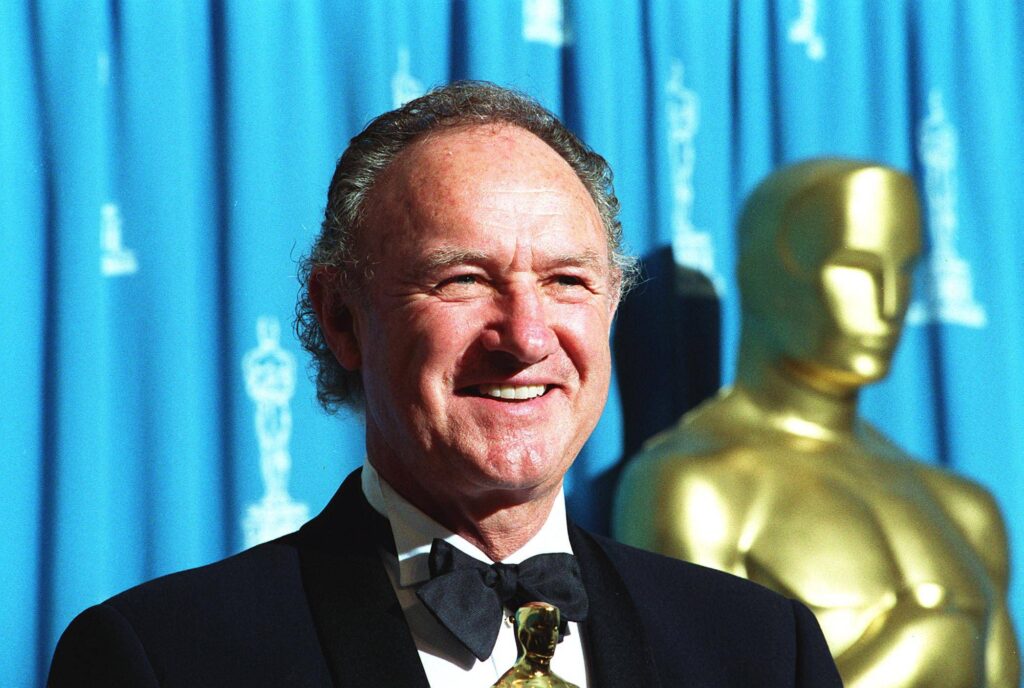
GENE HACKMAN American Actor At the 1993 Academy Awards
As a reminder, Gene and Betsy were discovered deceased in their New Mexico residence on February 26, with Betsy's death attributed to HPS. HPS is a condition caused by hantavirus.
"HPS - Hantavirus pulmonary syndrome is a rare infectious disease that begins with flu-like symptoms and progresses rapidly to more severe disease. It can lead to life-threatening lung and heart problems."
— Mayo Clinic Staff
Source: Mayo Clinic - Hantavirus Pulmonary Syndrome
Hantavirus is transmitted to humans through the droppings and urine of rodents, typically when individuals clean areas like attics or basements, and it has a mortality rate of one in three. Dr. Allison Bray, from San Diego County's Vector Control Program, advised that;
"Hantavirus is carried and transmitted by wild mice, especially the deer mouse. It's transmitted to people when we inhale the virus that's in the urine or feces of wild mice."
🛍️ JCPenney to Shutter Dozens of Stores in 2025
Discover which locations are closing and what it means for the future of retail.
📱 iPhone 17 Air Leak: Apple’s Lightest iPhone Ever Revealed
A first look at Apple’s ultra-slim flagship ahead of launch.
💻 Windows 10 End of Support: 240 Million Devices at Risk
Find out what you need to do before support officially ends.
👶 Eminem Becomes a Grandpa as Hailie Jade Welcomes Baby Boy
A new chapter begins for the rap icon and his family.
💔 Kevin Bacon Reflects on Madoff Loss and Finding Peace
How the actor and his wife rebuilt after financial betrayal.
⚖️ Russell Brand Faces Extradition Amid Assault Allegations
The latest on Brand’s legal battle and international fallout.
🔪 Shocking Details Ahead of Rex Heuermann Serial Killer Trial
What prosecutors plan to reveal in court.
When Heather Smith emailed her state representative about a workplace COVID-19 vaccine mandate, she wasn’t expecting her employer to find out—let alone fire her. But that’s exactly what happened.
Ms. Smith, a former employee of BlueCross BlueShield of Tennessee, reached out to lawmakers in 2021 asking for legislative protections against vaccine requirements. Her email was later read aloud during a special session at the Tennessee General Assembly.
Soon after, her employer let her go.
She sued. The case made its way through the courts. And in a recent decision, the Tennessee Supreme Court sided with the company, not the employee.
The ruling? Private employers are not bound by the First Amendment. In other words, you can be fired for expressing your political views outside of work—depending on where you live.
There’s a widespread belief that the Constitution protects people from being punished for speaking out. That’s true—but only when the government is the one doing the punishing.
Private employers? That’s a different story.
Some states, however, have stepped in to fill the gap. These states have passed laws that protect employees from being fired for what they say or do on their own time, especially when it comes to political activity.
If you're politically active—or just opinionated—here are a few states where you're less likely to lose your job over it:
Employees in California are protected from being disciplined for lawful, off-duty conduct. That includes political activity like protests, petitions, or campaign work—so long as it doesn’t interfere with job performance.
New York law bars employers from retaliating against workers for political views or affiliations expressed off the clock, away from the workplace.
Colorado protects any lawful off-duty activity, with limited exceptions. It’s one of the most employee-friendly states in this regard.
In Connecticut, employers can’t fire you for exercising free speech rights unless it clearly disrupts your work.
Other states have similar provisions, but many—like Tennessee—don’t offer those safeguards.
The case out of Tennessee has renewed interest in the tension between employee speech and employer control. Legal scholars have long debated whether private companies should have the power to discipline workers for what they say in their personal lives.
“State laws in roughly half the states do limit some such private restrictions on speech and political activity,” said Eugene Volokh, a professor at UCLA School of Law who specializes in free speech and constitutional law.
Meanwhile, the Harvard Law Review recently noted the complexity of these cases, writing that our legal system has yet to draw a clear line between speech protected by public policy and speech vulnerable to private control.
If you work in a state that hasn’t enacted laws protecting political expression, your job could be at risk—even if your speech is legal, respectful, and completely unrelated to your work duties.
That reality is catching some workers off guard.
Smith’s case may not have changed Tennessee law, but it’s becoming a cautionary tale for employees who assume their rights extend into the private workplace.
Read up on your state’s labor laws. Some are more protective than others.
Check your employment agreement. Social media and conduct clauses can be surprisingly broad.
Consult a labor attorney if you think you were disciplined unfairly.
And maybe think twice before hitting “send” on that fiery email—at least until you know where your state stands.
🔹 University of Sussex Fined £585,000 for Free Speech Violation
A landmark penalty over campus speech restrictions raises major questions about institutional accountability in UK universities.
🔹 Tennessee Man Convicted in $2 Million Ponzi Scheme
Federal prosecutors secured a conviction in a high-profile fraud case involving dozens of victims across multiple states.
🔹 BlackRock Agrees to New ESG Disclosure Rules in Tennessee Settlement
The finance giant faces stricter transparency requirements after settling with state regulators.
California is leading the charge in integrating advanced technology into vehicles to curb speeding. A new bill mandates that all cars sold from 2030 must include a system to warn drivers going more than 10 miles per hour over the speed limit. This initiative aims to reduce traffic-related fatalities, which have been alarmingly high, with more than 4,400 deaths reported in 2022.
High-performance cars are frequent offenders when it comes to speeding violations due to their powerful engines and advanced capabilities. The legal implications are severe, ranging from hefty fines to potential jail time for reckless driving. The state's move to implement intelligent speed limiters could alter the driving experience for owners of high-performance vehicles, emphasizing the importance of adhering to traffic regulations.
Critics argue that the legislation's rapid rollout overlooks practical concerns, but supporters believe it is a critical step toward safer roads. The debates around the bill highlight the balance lawmakers seek between leveraging technology for public safety and addressing the concerns of car enthusiasts and manufacturers. For further details, California legislators are discussing the potential impact of these changes on speeding drivers.
California has specific laws that regulate speed limits on its roads, which are crucial for ensuring road safety. These laws cover basic speed regulations and the consequences faced by violators, especially those driving high-performance vehicles.
California's Basic Speed Law under Vehicle Code 22350 mandates that drivers must not exceed safe speeds given the current conditions, regardless of posted limits. This means a driver can be cited for speeding even if they are driving below the posted limit if the conditions make the speed unsafe.
Prima facie speed limits are assumed legal speeds unless otherwise posted. These limits include:
Speeding beyond these limits can result in hefty fines and points on one’s driving record. High-performance car drivers often must be particularly cautious due to the vehicle's capabilities.
Penalties for violating speed limits in California can be severe, including fines, points added to the driver's license, and increased insurance premiums. For more severe cases, like excessive speeding or reckless driving, penalties can escalate to include legal ramifications such as license suspension or even imprisonment.
Drivers of high-performance cars, which often exceed standard speed limits, may find legal help from a car accident lawyer in Northridge beneficial. These legal professionals can provide guidance and representation to navigate the complications arising from speeding violations, potentially mitigating some of the harsh consequences.
High-performance cars, known for their speed and advanced engineering, pose unique legal challenges. These challenges can impact how these vehicles are defined and regulated by law.
High-performance cars are typically engineered for superior speed, handling, and acceleration. Characteristics include powerful engines often exceeding 300 horsepower, advanced suspension systems, and aerodynamic designs to minimize drag.
The vehicles are designed for speed and agility, often featuring lightweight materials like carbon fiber. These characteristics not only enhance performance but also necessitate specialized knowledge for effective legal regulation and compliance.
California law has particular regulations addressing high-performance cars. Vehicle modification laws restrict alterations that enhance speed or performance beyond factory specifications. Compliance with emissions standards, noise levels, and safety requirements must also be strictly adhered to.
Speeding violations in high-performance cars can incur severe penalties, including higher fines and potential license suspension. Importantly, street racing, often associated with high-performance vehicles, is illegal and carries heavy fines and possible jail time.
Understanding these regulations is critical for owners to avoid legal repercussions. For more detailed information on the legal implications and frameworks, visit Legal implications of driverless cars.
Speeding significantly increases the likelihood and severity of car accidents. High speeds reduce reaction times and amplify the force of collisions, making injuries more severe and legal consequences more complex.
Speeding is a leading factor in traffic accidents. According to the National Highway Traffic Safety Administration (NHTSA), speeding was a factor in 26% of all traffic fatalities in recent years. The risk of car accidents grows exponentially with speed, particularly for high-performance vehicles that can easily surpass speed limits.
In California, the correlation between speeding and fatal accidents is alarming. For instance, roughly 29% of all fatal accidents in the state involve speeding. This data underscores the need for stricter speed regulations and better enforcement. The consequences of speeding often result in severe penalties, including hefty fines and potential jail time, highlighting the importance of obtaining legal help from a car accident lawyer in Northridge.
High-performance vehicles, while engineered for speed, pose unique risks when driven aggressively. These cars boast powerful engines and advanced aerodynamics, making it easy to exceed safe speed limits. Drivers often underestimate the increased stopping distances and elevated crash forces associated with high speeds.
Additionally, while safety features like advanced braking systems and traction control are standard in these vehicles, they do not compensate for reckless driving habits. The data suggests that crashes involving high-performance cars result in more severe injuries and greater property damage. This has significant legal implications, making it crucial for drivers to understand the risks and seek the expertise of a Northridge car accident lawyer when involved in speed-related accidents.
Dealing with a speeding violation in a high-performance car on California roads can be complex due to the state's stringent traffic laws and unique legal landscape. Accessing appropriate legal representation can significantly affect case outcomes.
Speeding violations in California are addressed under the California Vehicle Code. A cited individual has the option to either pay the fine or contest the ticket in court. The court process often begins with an arraignment where the plea is entered.
If the individual pleads not guilty, a trial date is set. During the trial, both the accused and the issuing officer present their case. The judge then decides based on the evidence.
Various penalties can result from a speeding violation, such as fines, points on the driver's license, and possible increased insurance premiums.
Legal representation plays a crucial role in navigating the complexities of speeding cases. A car accident lawyer in Northridge familiar with local traffic laws can provide valuable assistance.
They can help by reviewing the ticket's validity, gathering evidence, and presenting a coherent defense strategy. Attorneys can also cross-examine the issuing officer and introduce expert testimonies to weaken the prosecution’s case.
Moreover, legal help can aid in negotiating reduced penalties or alternative sentencing options, such as traffic school. Effective representation can significantly influence the outcome, potentially reducing fines and preventing points on the driver’s record.
California's landmark decision to provide healthcare coverage to all income-eligible undocumented immigrants has faced a major financial hurdle. Last year, Governor Gavin Newsom proudly announced the expansion, making California the first state in the nation to offer healthcare to all eligible immigrants, regardless of immigration status.
The $9.5 billion price tag is significantly higher than the projected $6.4 billion, with the program already more than $3 billion over budget.
California's expanding healthcare program, known as Medi-Cal, is running into financial issues as the state grapples with a growing budget deficit. The state’s financial woes have led to calls from lawmakers, including Assemblymember Carl DeMaio (R-San Diego), who argues that the costs are unsustainable, especially during a budget crisis.
The debate surrounding this expansion has been further complicated by conservative criticism and the national political discourse surrounding immigration policies.
“We should not bear these costs. Period. But especially in a budget crisis,” DeMaio stated, signaling the pressure lawmakers are under to address the escalating costs.
A key factor in the growing budget deficit is the unexpected surge in enrollment for the Medi-Cal program. Originally estimated at $6.4 billion, the costs ballooned to $9.5 billion by February.
The California Department of Finance attributed this to higher-than-anticipated enrollment and rising pharmaceutical costs, which have placed a heavy strain on the state budget. The increase in healthcare expenses mirrors a nationwide trend of rising healthcare costs, but in California, it has led to significant budgetary challenges.
The healthcare expansion has also drawn national attention, with conservatives criticizing the program as a financial burden. Figures like Elon Musk have publicly opposed the policy, claiming that it incentivizes illegal immigration and burdens taxpayers.
"Healthcare is a mechanism by which the Democrats attract and retain illegal immigrants," Elon Musk said in an interview, fueling the debate over the broader implications of such policies.
While Democrats stand by their commitment to providing healthcare to undocumented immigrants, the pushback from Republicans has intensified, with critics pointing to the rising costs as an urgent reason to reconsider the state’s approach.
The challenge of balancing California’s healthcare budget comes at a time when federal funding is uncertain. With the potential for cuts to Medicaid at the federal level, the state’s ability to maintain healthcare services for both legal and undocumented residents is at risk. Medi-Cal, which provides health insurance for over 15 million Californians, is particularly vulnerable to these cuts.
The state’s reliance on federal funds for healthcare is critical, as it receives about one-third of its budget from federal sources.
As lawmakers weigh the possibility of cuts, they will likely explore options like reducing eligibility, implementing co-pays, or setting enrollment caps. However, healthcare advocates warn that these solutions could harm the very immigrants who depend on the program.
Carlos Alarcon, a health and public policy analyst, emphasized that reducing access to healthcare would hurt public health overall, especially as the state grapples with the economic uncertainty brought on by national policy changes.
California’s expansion of Medi-Cal has been a significant milestone for immigrant rights, but it is now at a crossroads due to escalating costs. The financial pressure is compounded by national political debates about immigration and healthcare, making it unclear how the state will proceed.
While many continue to support healthcare for all, including undocumented immigrants, difficult decisions loom as California navigates its budget challenges. As the state faces a potential shortfall, lawmakers will need to find a balance between maintaining coverage for vulnerable communities and ensuring financial stability.
With continued pressure from both federal and state levels, the future of California's healthcare expansion is uncertain. The state will need innovative solutions to address both rising healthcare costs and the commitment to providing comprehensive care to all its residents.
Actor-musician Frank Stallone, 74, reflects on California’s transformation from the sunny, vibrant state of the past to its current state, marred by rampant crime, homelessness, and urban decay. He cites the state’s decline as a result of poor leadership, particularly from Gov. Gavin Newsom and Los Angeles Mayor Karen Bass.
Frank Stallone, who moved to California in 1979, fondly remembers the days when the state embodied the spirit of the iconic song "California Dreamin'." In a recent interview, he recalled the state as a place of sunshine, low crime, and a general sense of optimism.
He claims that California’s current reality is far from that dream.
Describing his recent drive through downtown Los Angeles, he paints a grim picture:
“The filth, the graffiti and the homelessness is almost like that movie ‘Escape from New York.’ I mean, it’s that scary. I mean, I batten down the window, locks... You’re talking trash piled four feet high. Just filth.”
Stallone compares the scene to the dystopian world of Escape from New York, where Manhattan is transformed into a maximum-security prison. He is disheartened by the visible decline and compares it to a "war zone."
Stallone lays the blame for California’s decline squarely on Gov. Gavin Newsom and Mayor Karen Bass. He specifically critiques Newsom for his public persona, describing him as “phony” and accusing him of being an ineffective leader.
Stallone is particularly harsh on Newsom’s priorities, mentioning the governor’s recent announcement of his new podcast, "This Is Gavin Newsom."
“I think it’s like 'In Living Color.' I think this guy is so transparent. He’s so phony. He’s a terrible speaker. The hands and the hair and everything. He’s just set up to be made fun of.”
Stallone also criticizes Mayor Bass for her handling of the 2025 wildfires in Los Angeles. While Bass was abroad in Ghana during the crisis, Stallone questions her absence, saying:
"And I don’t know, why are you in Ghana? Hello? What’s that have to do with being the mayor of Los Angeles?”
Though Bass admitted her trip was a mistake, Stallone believes her actions, combined with the city’s failure to adequately prepare for the fires, point to poor governance.
One of Stallone’s strongest critiques is the homelessness crisis in Los Angeles. Describing the situation as a public health nightmare, he insists that the city needs to take immediate action to address the issue.

Frank Stallone (@frank.stallone Instagram)
“No more of these Winnebagos parked for months on the curb. You know, we got to move. No more pitching tents on sidewalks where people can’t walk. No more pitching tents in front of people’s houses.”
Stallone also expresses frustration with the sanitation issues surrounding homeless encampments. He describes the area around his gym as being so overcrowded with homeless people that it becomes nearly impossible to navigate the streets without encountering “human excrement” and unbearable stench.
Stallone also touches on California’s criminal justice system, criticizing the state’s Proposition 47, which allows theft of items valued under $950 to be classified as misdemeanors rather than felonies. He believes this has contributed to a rise in petty crime and has created an environment where criminal behavior goes largely unpunished.
“You know, $900 you can steal and nothing happens. But that, to me, is I’m lost on that one. You know, when I was a kid, you stole a candy bar, you get a kick in the butt.”
He laments that the state’s approach to crime has shifted dramatically, making it easier for criminals to operate with little fear of consequences.
Looking ahead, Stallone is concerned about California’s readiness to host the 2028 Summer Olympics in Los Angeles. He believes the city’s current state of affairs, from crime to homelessness, presents a poor image to the world.
“I don’t think it’s a great representation for the Olympics. It’s not a good look. It’s really terrible.”
Stallone also advocates for Rick Caruso, a Los Angeles real estate developer, to run for governor. Caruso, who previously ran for mayor of Los Angeles, has also been critical of Mayor Bass, particularly in relation to the wildfires. He has described the city’s response to the disaster as “absolute mismanagement.”
"There’s no water in the Palisades. There’s no water coming out of the fire hydrants. This is an absolute mismanagement by the city. Not the firefighters’ fault, but the city’s."
Despite his criticism, Stallone still believes in the beauty of California, calling it a state with mountains, snow, and the ocean. However, he argues that poor policies and lackluster leadership have marred the state’s former splendor.
Stallone’s call for change is clear: He wants to see a return to the California Dream, one where leadership is strong, crime is managed, and homelessness is addressed head-on.
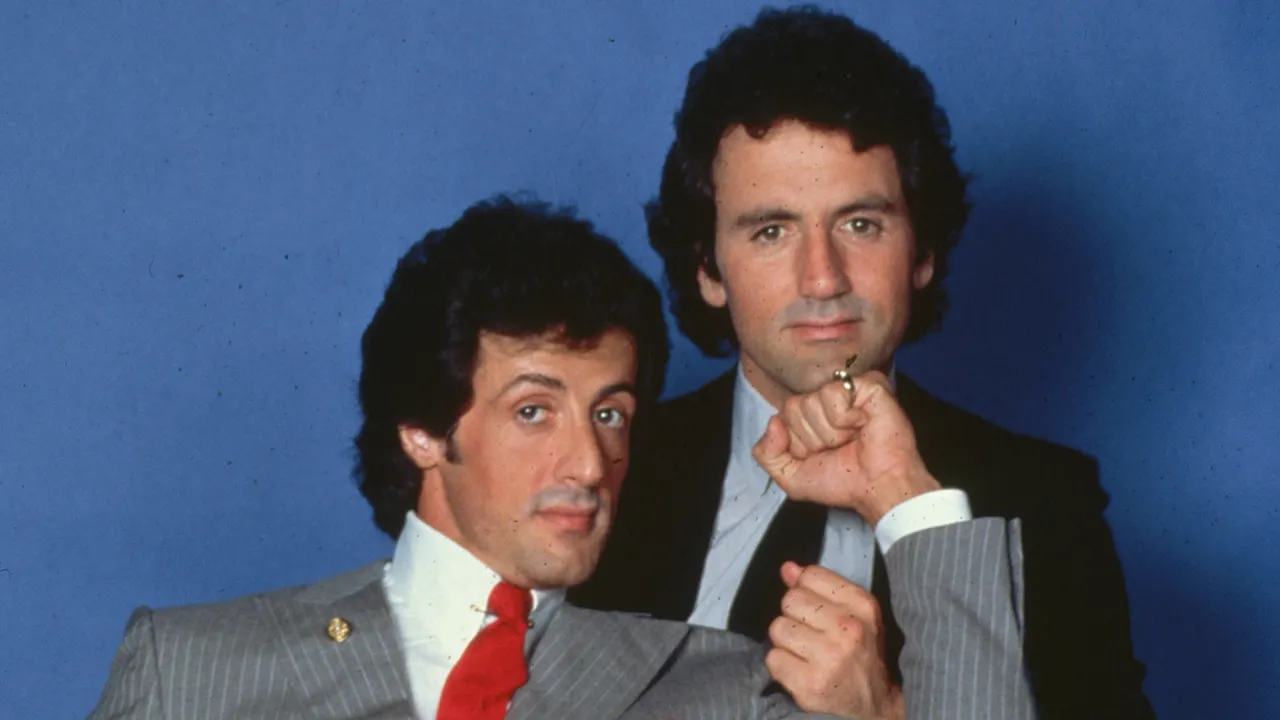
Silvester Stallone with Frank
Frank Stallone is a multi-talented musician, actor, and singer, best known as the younger brother of Hollywood legend Sylvester Stallone. Born with a passion for music, Frank carved his own path in the entertainment industry with his hit song "Far from Over" from the Staying Alive soundtrack, which earned a Golden Globe nomination.
Frank has appeared in several films, including a cameo in Rocky and roles in Rambo: First Blood. Despite being overshadowed by his famous brother, Frank has always worked hard to create a successful career based on his own talents, contributing to soundtracks and appearing in both film and television.
An Italian-American with deep family roots, Frank has often expressed the challenges and rewards of growing up in the shadow of Sylvester while striving for his own identity. He has also written a memoir, sharing personal stories about his career, family, and life in the spotlight.
Authorities have identified the two victims who tragically lost their lives in a midair collision between two small planes at Marana Regional Airport, located on the outskirts of Tucson, Arizona, on February 19, 2025.
The collision involved a single-engine Lancair 360 MK II, which was registered to Michael Reinath, 70, of Rio Vista, California, and his passenger, Linda Gifford, 76, also from Rio Vista. The crash occurred when the Lancair, with Reinath and Gifford aboard, hit the ground near a runway and burst into flames.
According to reports, each of the two planes involved in the collision had two people aboard. While the second plane was able to land safely, the Lancair crashed and caught fire. Dramatic video footage, provided by the Town of Marana, captured the moment of impact, showing the Lancair descending before bursting into flames.
Michael Reinath and Linda Gifford, both residents of Rio Vista, California, have been confirmed as the victims. The news of their deaths has left the local community shaken. Friends, family, and residents of Rio Vista are mourning the loss of the two individuals who were known in the area.
Reinath, an experienced pilot, was flying the Lancair when the crash occurred. Gifford, his passenger, was tragically killed in the incident as well. The cause of the crash is still under investigation by federal authorities.
This collision is part of a series of tragic aviation incidents that have raised concerns about air safety in the U.S. In the days leading up to this crash, another fatal accident occurred in Scottsdale, Arizona, involving a private jet owned by Mötley Crüe singer Vince Neil. One of the pilots was killed when the plane veered off the runway and collided with a business jet.
In late January 2025, the U.S. experienced its deadliest aviation disaster since 2001 when a midair collision in Washington, D.C. between an American Airlines passenger jet and a U.S. Army helicopter resulted in the deaths of 67 people. Just days later, on January 31, a medical transport jet crashed in Philadelphia, killing all six people aboard, including a child and her mother.
Rio Vista, located in Solano County, is a small town situated about 50 miles south of Sacramento, along the scenic Sacramento River Delta. Known for its tight-knit community and riverfront views, Rio Vista is now mourning the loss of two of its residents in this tragic aviation accident.
The Federal Aviation Administration (FAA) is currently investigating the cause of the midair collision. Preliminary reports suggest that the crash occurred in midair, but further details will be released as the investigation continues.
