
Understand Your Rights. Solve Your Legal Problems
A dramatic reversal unfolded in federal court last week when Summer Heather Worden admitted she lied to investigators about claims that her former spouse, NASA astronaut Anne McClain, accessed a bank account from orbit. The plea, entered in Texas, brings an abrupt end to an accusation that once drew global attention and triggered one of the most unusual federal reviews to ever intersect with a space mission.
:max_bytes(150000):strip_icc():focal(749x226:751x228):format(webp)/astronaut-anne-mcclain-111825-dbaad5ad7d904a37a543e84f7e46f3c7.jpg)
Anne McClain in March. The NASA astronaut works on scientific equipment aboard the International Space Station.
McClain, a respected astronaut and Army veteran, became the center of headlines after Worden alleged her account was accessed during McClain’s stay aboard the International Space Station. The idea of a possible crime committed in orbit immediately captured public imagination, raising questions about jurisdiction and oversight far beyond Earth.
Worden’s plea now confirms investigators’ findings that no improper access occurred.
Federal authorities reviewed account records, login history, and access logs tied to the disputed financial account. According to prosecutors, the evidence showed the account had been shared during the marriage and used by both spouses for years. Access changes later made by Worden appeared unrelated to any activity in orbit.
These findings undercut the core allegation, leading authorities to determine that the statements provided to investigators were false.
The claims surfaced during a contentious period in the couple’s breakup. Their separation included disputes over finances and the care of Worden’s young son. While the personal conflict was real, prosecutors concluded the criminal allegation itself did not hold up.
Worden has now acknowledged she provided incorrect information during the federal inquiry — a separate offense under U.S. law.
Under 18 U.S.C. § 1001, it is a federal crime to knowingly give false or misleading information to government investigators. The law focuses on the act of providing a false statement, not on whether the underlying event happened.
For the public, the key points are straightforward:
A person must knowingly make a false statement.
The statement must be material, meaning it could influence an investigation.
Penalties can include prison time, fines, or both, depending on the case.
A false-statement charge is independent of whether the original allegation had merit.
This law is one of the most frequently used tools in federal investigations.
Worden remains free pending sentencing, which is scheduled for early 2026. A federal judge will determine the final penalty after reviewing the facts, court filings, and sentencing guidelines. McClain has not faced any charges and continues her career following her most recent mission.
Air Force One descended into turbulence of a different kind on Friday as President Donald Trump lashed out at Bloomberg reporter Catherine Lucey, calling her “quiet, piggy” after she asked about the looming release of the Jeffrey Epstein files — a political storm that’s now threatening his own party.
The confrontation unfolded mid-flight when Lucey questioned Trump on bipartisan demands for the Department of Justice to release all remaining Epstein investigative documents. Trump reportedly waved a finger inches from her face before snapping:
“Quiet, quiet piggy!”
The moment was caught off-camera but heard clearly by surrounding press — and it wasn’t the last clash of the weekend.
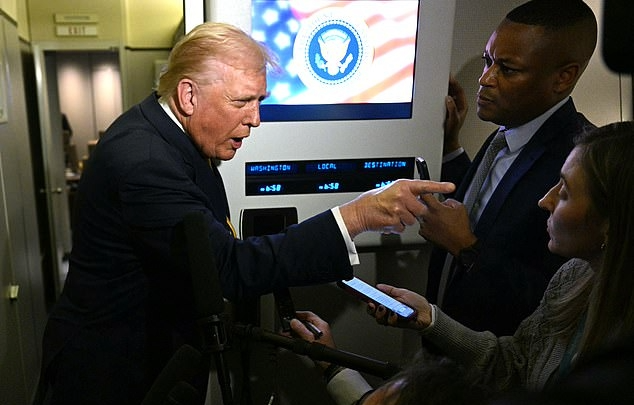
Donald Trump erupts at a reporter aboard Air Force One after being pressed on the Epstein files.
By Sunday, tensions were even higher. Speaking outside Air Force One, Trump began addressing Lucey’s question about Tucker Carlson’s interview with Nick Fuentes. When she attempted to clarify, Trump erupted again:
“Will you let me finish my statement? You are the worst! You’re with Bloomberg, right? You are the worst! I don’t know why they even have you.”
The outburst comes as Trump faces intense bipartisan pressure to support the release of all unclassified Epstein files — a political fight that has spiraled far beyond the press cabin.
For months, the White House has resisted Congressional efforts to force full declassification of Epstein documents. Trump has repeatedly claimed that Democrats are using the issue as a “distraction” and blasted fellow Republicans for supporting the push, saying:
“Only a very bad, or stupid, Republican would fall into that trap.”
Even his allies weren’t spared. Trump reportedly labeled Georgia Rep. Marjorie Taylor Greene a “traitor” over her pressure to release the files.
But as GOP votes began lining up with Democrats, Trump reversed course on Truth Social:
“We have nothing to hide… it’s time to move on from this Democrat Hoax.”
He has now vowed to sign any legislation requiring full file release — or issue an executive order himself.
A House vote is scheduled for Tuesday.
👉 Related: Epstein Files Bill Explained: How Congress Can Force the DOJ to Release Federal Records
Congress can force the release of unclassified Epstein-related documents from federal agencies. Classified material would require separate review or presidential action.
The President can, at any time, sign an executive order to declassify federal files connected to Epstein. That authority is broad but must still comply with federal privacy and national security laws.
Documents typically go to:
The House Oversight Committee
The Senate
Public online release through agency portals
Names of private individuals may be redacted if disclosure violates privacy or ongoing investigation standards.
Possibly — but most related criminal matters ended when Epstein died in 2019. Civil cases could still be influenced if new emails or communications reveal misconduct.
Last week, House Republicans released more than 23,000 subpoenaed records from Epstein’s estate, including emails sent in the months leading up to his 2019 death in a New York jail.
Trump now says he supports full government transparency:
“We’ll give them everything… Let anybody look at it.”
Still, he insisted the scandal belongs to Democrats:
“It’s really a Democrat problem… and it’s a hoax.”
With tempers flaring, cameras rolling, and votes approaching, the political fight over the Epstein files is only intensifying — and Friday’s “quiet, piggy” moment may be remembered as the spark that lit the weekend’s firestorm.
A devastating mass shooting in Newark, New Jersey, left a 10-year-old boy and a 21-year-old woman dead on Saturday evening, according to officials. Three other people — ranging in age from 11 to 60 — were also treated for injuries and are recovering in hospital.
The incident unfolded just after 7 p.m. on the 300 block of Chancellor Avenue, a residential area in the city’s South Ward. Responding officers found multiple victims at the scene before emergency crews transported them to University Hospital, where the two fatalities were later confirmed.
The Essex County Prosecutor’s Office is leading the investigation, supported by the Newark Police Department and the Essex County Sheriff’s Office. Detectives spent the night securing the area, gathering ballistic evidence, and reviewing footage from nearby homes and storefronts.
In major shooting cases, investigators typically begin by establishing a reliable timeline, confirming witness accounts, and determining whether multiple weapons were involved. Authorities have not released information about a motive or any potential suspects, which is common at this early stage.
The Sheriff’s Office has announced a $10,000 reward for information that helps identify or locate the person responsible.
The shooting disrupted an otherwise quiet stretch of Chancellor Avenue, where single-family homes line the surrounding blocks. Some residents told local reporters they were temporarily unable to return to their buildings while detectives completed their canvass.
One neighbor described hearing “a lot of screaming” and several gunshots in quick succession — a detail that mirrors community reports in similar high-intensity shooting incidents across the region.
Local leaders noted that the trauma extends beyond those directly injured. In communities affected by repeated gun violence, city officials often coordinate with crisis counselors, victim-support staff, and neighborhood organizations in the hours that follow. Newark authorities have not yet announced whether such resources will be deployed.
Newark Mayor Ras Baraka issued a public statement expressing condolences and urging cooperation with law enforcement.
“We will not rest until there is justice for the parents and family left behind in unspeakable pain and grief,” Baraka wrote, adding that city officials will work closely with county, state, and federal partners.
The mayor also appealed directly to the person responsible to surrender to authorities, noting that cooperation at this stage can help prevent further harm.
Cases involving multiple victims typically require extended evidence processing. Detectives may continue reviewing surveillance footage, awaiting lab analysis of shell casings, and conducting follow-up interviews with witnesses who were initially too distressed to speak.
Officials are expected to release additional information as the investigation progresses.
Lawyer Monthly will continue to track updates from the Essex County Prosecutor’s Office, the Sheriff’s Office, and Newark city officials.
LATEST: New York Jets Cornerback Kris Boyd in Critical Condition After Manhattan Shooting
A developing investigation is underway after Jets cornerback Kris Boyd was critically injured in an early-morning Manhattan shooting. Detectives are reviewing surveillance footage and interviewing witnesses as updates continue to emerge.
Has police released a motive?
No. Investigators have not disclosed any potential motive, which is standard procedure while they verify early evidence and statements.
Are any suspects in custody?
As of now, no arrests have been announced. Detectives typically avoid identifying suspects publicly until they have substantial corroboration.
What agencies are leading the case?
The Essex County Prosecutor’s Office is overseeing the investigation, with support from the Newark Police Department and the Essex County Sheriff’s Office.
Is the $10,000 reward active?
Yes. The Essex County Sheriff’s Office is offering a $10,000 reward for information leading to an arrest or identification of a suspect.
It should have been a career-defining day for Rod Wave. Instead, it ended in flashing lights, handcuffs, and headlines. Just hours after earning his first Grammy nomination, the 27-year-old rapper — real name Rodarius Green — was arrested in Atlanta on a string of serious charges, including felony gun and drug possession. This shocking collision of triumph and turmoil now casts a deep shadow over his biggest artistic milestone.
According to reports confirmed by TMZ and local authorities, Wave was booked on four counts, including possession of a firearm or knife during the commission of a crime, possession of a controlled substance, and reckless driving. The Milton Police Department said officers initially responded to what they believed was a “possible domestic disturbance,” only to uncover what officials later described as a “previously unreported burglary and the subsequent discharge of a firearm.”
Wave reportedly turned himself in voluntarily and was later released on bond. The investigation remains active, and further charges have not been ruled out.
The timing couldn’t have been more ironic — or tragic. On the very day the Recording Academy announced its 2026 Grammy nominations, Rod Wave received a nod for Best Song Written for Visual Media for “Sinners,” the haunting theme from the horror-action film of the same name.
For fans, it was a long-awaited acknowledgment of the rapper’s raw storytelling and deeply emotional sound. For Wave, who rose from Florida’s streets to chart-topping success, it was proof that pain could turn into poetry.
But that triumph quickly collided with another headline — one that may now define this chapter of his life as much as the Grammy nod itself.
Under Georgia law, the charges Rod Wave faces carry serious implications.
Possession of a firearm during the commission of a felony (O.C.G.A. § 16-11-106) is a felony offense that can result in a mandatory five-year prison term served consecutively with any other sentence.
Possession of a controlled substance (O.C.G.A. § 16-13-30) varies in severity depending on the substance and amount but can lead to fines and prison time.
Reckless driving (O.C.G.A. § 40-6-390), while often a misdemeanor, can compound other criminal charges if linked to endangerment or violence.
Wave’s attorneys have not yet issued a formal statement, but legal experts note that if convicted, the firearm charge alone could significantly affect his touring and recording future — especially given prior arrests in multiple states.
This isn’t Rod Wave’s first encounter with the justice system. Earlier this year, in May 2025, he was arrested in Fulton County, Georgia, on charges of aggravated assault and tampering with evidence — allegations his legal team swiftly denied.
And in April 2024, he was detained for alleged firearm possession by a convicted felon, a claim his lawyers refuted, insisting Wave has never been convicted of a felony.
While none of these cases resulted in major convictions, the repeated cycle of arrests and releases has shadowed Wave’s rapid rise to fame. For an artist known for his soul-bearing lyrics about struggle, loyalty, and redemption, the latest arrest adds another layer of painful irony to his story.
Fans flooded social media within hours of the news breaking — some defending the rapper’s humanity, others lamenting what they see as a pattern of self-destruction.
“Rod’s music helped me through the darkest times,” one fan wrote on X (formerly Twitter). “It hurts to see him caught up again just when the world was finally recognizing his art.”
It’s easy to forget that behind the fame, Rod Wave is still navigating the mental and emotional toll of stardom. In interviews, he’s spoken candidly about depression, trauma, and survivor’s guilt — themes that define much of his discography. His arrest on the very day of his Grammy recognition feels almost symbolic: a clash between redemption and relapse, hope and hardship.
Beyond celebrity drama, the Rod Wave case raises broader questions about mental health, fame, and the criminal justice system. Should successful artists be treated differently when their personal struggles spill into public view — or should they be held to even higher standards?
Legal analysts also note the case highlights the intersection of entertainment law and criminal liability, especially when firearm and substance charges overlap with public figure status. A high-profile defendant can face amplified scrutiny both in court and the court of public opinion.
While Wave’s legal saga unfolds, the 2026 Grammy nominations delivered their own drama.
Major stars like Kendrick Lamar, Lady Gaga, and Bad Bunny scored multiple nods, while Lorde — whose acclaimed album Virgin topped charts globally — was completely shut out.
The Weeknd, still at odds with the Recording Academy, once again found himself snubbed.
Meanwhile, Kylie Jenner’s boyfriend Timothée Chalamet shocked fans with a nomination, as did Supreme Court Justice Ketanji Brown Jackson, who contributed to a spoken word project — cementing this year’s Grammys as one of the most unpredictable in recent memory.
Rod Wave’s next court appearance is expected later this month, though no date has been officially confirmed. For now, he remains free on bond and has continued to promote his upcoming tour on social media — though his ability to travel could soon face legal limits depending on how the case progresses.
If the past is any indication, Wave will likely channel his pain into his music. Yet even for an artist whose catalog thrives on honesty, this latest twist may be the toughest to turn into a song.
Rod Wave’s arrest on the same day as his first Grammy nomination captures the collision between triumph and turmoil — a stark reminder that fame offers exposure, not immunity.
Was Rod Wave convicted of any previous charges?
No. His legal team maintains that while he has faced several arrests, none resulted in felony convictions.
What is Rod Wave nominated for at the 2026 Grammys?
He’s nominated for Best Song Written for Visual Media for “Sinners,” from the film of the same name.
Could this arrest affect his Grammy eligibility?
No. Grammy nominations remain valid unless the artist is formally disqualified by the Recording Academy, which is rare in cases involving pending legal matters.
The body of Marshawn Kneeland, 24, was discovered early Thursday, November 6, 2025, in Frisco, Texas, from what authorities described as a self-inflicted gunshot wound. Just hours earlier, the Dallas Cowboys defensive end had led police on a late-night chase through North Texas — fleeing into darkness after reportedly sending his family a haunting final message: “goodbye.”
According to the Texas Department of Public Safety, the pursuit ended in tragedy, but the question lingers: what pushed a young athlete, fresh off the biggest moment of his career, to the edge? Police dispatch recordings obtained by PEOPLE reveal that Kneeland’s girlfriend warned officers he was armed, distraught, and “may end it all.” Only days before, the Michigan-born player had celebrated his first NFL touchdown — a dream realized, now forever shadowed by its devastating aftermath.
At approximately 10:33 p.m. on November 5, Texas DPS troopers attempted to pull Kneeland over for a traffic violation in Addison, north of Dallas. Instead, he fled, prompting a pursuit that was later called off when troopers lost sight of his vehicle.
At 1:31 a.m. Thursday, his car was found crashed on the Dallas Parkway, just minutes from the Cowboys’ headquarters in Frisco. His body was discovered nearby, along with a firearm.
Dispatch audio later revealed the chilling timeline:
“They just received a text from him, a group text from him saying goodbye,” an officer said. “They’re concerned for his welfare.”
Within minutes, the NFL, Cowboys staff, and local police agencies were in communication, aware that one of their players was in crisis — but by the time they arrived, it was too late.
Kneeland’s story resonates far beyond football. It highlights the silent epidemic of mental health crises in professional sports, where players are celebrated for strength but often unsupported in vulnerability.
His teammates, including quarterback Dak Prescott, shared messages of grief and disbelief online. “I hurt for his family,” Prescott wrote, adding that the locker room felt “broken.”
For many readers, this moment lands personally. It reminds us that even visible success can conceal invisible suffering. Behind the highlight reels are human beings — sons, partners, teammates — whose struggles often go unseen until they become irreversible.
Born in Grand Rapids, Michigan, in 2001, Kneeland’s path from Western Michigan University to the Dallas Cowboys was the culmination of a childhood dream. His mother, Wendy Kneeland, had nurtured that dream until her sudden death in February 2024 — less than two years before his own.
“She helped me a lot in my younger years getting into football,” he told The Dallas Morning News last year. “I always told her, ‘I’m going to the NFL,’ and I made it.” After her passing, he wore her ashes in a necklace during every game.
The emotional weight of grief, fame, and pressure to perform now appears to have collided in his final days. The contrast is haunting: a national television touchdown on Monday Night Football, followed by a frantic police chase and a desperate text to his loved ones by Wednesday night.
Under U.S. employment law, a “duty of care” means organizations must take reasonable steps to prevent foreseeable harm. In sports, that now includes mental health support, not just physical safety.
Police follow state pursuit and wellness-check rules. In Texas, officers can end a chase if risks outweigh benefits or issue an emergency detention order when someone is suicidal or armed.
When mental health crises cross into law enforcement, the fallout can be deadly. Families can request wellness checks, but response quality varies — and employers risk negligence claims if they ignore warning signs.
Investigations by the Frisco Police Department and Texas DPS are ongoing. The Cowboys are expected to conduct an internal review, while the NFL faces renewed scrutiny over mental health programs for players under 30.
More broadly, Kneeland’s death underscores the urgent need for mental health literacy within high-pressure industries. It also raises questions about firearm access, confidentiality between agents and teams, and how crisis communication unfolds when fame magnifies the stakes.
In the end, Marshawn Kneeland’s life is not just a story of lost potential — it’s a legal and human mirror reflecting how fragile success can be.
His legacy, short as it was, might help shift how teams, police, and society respond to those silent cries for help that too often go unanswered.
Marshawn Kneeland (July 8, 2001 – November 5, 2025) was a Dallas Cowboys defensive end whose rapid rise in the NFL ended in heartbreaking tragedy.
Born in Grand Rapids, Michigan, he built his reputation at Western Michigan University, earning Second-Team All-MAC honors before being drafted 56th overall by the Cowboys in 2024. Teammates described him as focused, humble, and relentless — a player who turned quiet determination into impact on the field.
Kneeland’s first season was cut short by injury, but he fought back to become a breakout prospect in 2025. His defining moment came just two days before his death, when he recovered a blocked punt for his first NFL touchdown, celebrating a dream realized.
Behind that triumph, however, was the silent weight of loss and pressure. Following the death of his mother in 2024, he carried her ashes in a necklace during every game — a small act that spoke volumes about loyalty, faith, and grief.
Kneeland’s brief career spanned 18 games, but his story endures as a reminder that even the strongest athletes can struggle beneath the expectations of fame and the absence of support.
What legal responsibility do sports teams have for players’ mental health?
Under employment law, teams must provide reasonable support and safe working conditions, which now increasingly include access to mental health resources and counseling.
Can law enforcement stop a chase if the suspect is suicidal?
Yes. Most U.S. states, including Texas, allow officers to terminate pursuits if risks to life outweigh the objective. They can instead initiate a wellness check or emergency detention.
What rights do families have when someone is in a mental health crisis?
Families may request police wellness checks, emergency protective orders, or firearm removal under state mental health statutes.
Could the Cowboys or NFL face liability?
Unlikely unless evidence shows clear negligence. However, this case may prompt policy reviews and reforms across professional sports leagues.
The cause of death for congressional aide Regina Aviles has been officially confirmed.
According to the Bexar County Medical Examiner’s Office, the 35-year-old staffer died by suicide through self-immolation after dousing herself in gasoline and setting herself on fire in the backyard of her Uvalde, Texas, home on September 14, 2025.
Aviles — a married mother of one who had been separated from her husband — served as the regional district director for Congressman Tony Gonzales (R-TX). Authorities said there was no evidence of foul play, and that surveillance footage from home security cameras captured the incident.
Colleagues and friends have described Aviles as a compassionate, hardworking woman who carried the weight of the community she served. As part of Gonzales’s district team, she worked to connect veterans, families, and small business owners with federal resources — a job that often kept her up late at night.
“She always made time for people who felt unheard,” said one former coworker. “Even when she was struggling herself, Regina’s instinct was to help others.”
Those close to her say the months before her death were marked by emotional strain following her marital separation. She shared custody of her eight-year-old son, who, relatives say, was her reason for pushing through.

Congressman Tony Gonzales, who employed congressional aide Regina Aviles before her death, speaks during an interview at his office.
After her death, multiple reports surfaced alleging that Aviles had been romantically involved with Congressman Gonzales. The relationship, said to have begun in late 2021, reportedly caused tension within the office and her marriage.
When contacted by reporters, Congressman Gonzales did not deny the alleged affair. In a statement released by his office, he said:
“Regina Aviles was a kind soul who had a lasting impact on her community, which she continued to serve until her untimely death. To see political bottom-feeders distort the circumstances around her passing is truly sickening.”
Gonzales did not attend Aviles’s funeral on September 25, according to multiple sources familiar with the service.
Aviles’s mother, Nora Gonzales, insists her daughter’s death was a tragic accident, recalling Regina’s final words as, “I don’t want to die.”
Her obituary described her as “a devoted mother, loving daughter, and loyal friend whose kindness touched every life she encountered.”
Despite the medical examiner’s ruling, the City of Uvalde has sought to seal all records connected to the case — including 911 recordings, police reports, and video evidence. Officials have cited “privacy concerns” and requested that the Texas Attorney General’s Office allow the records to remain confidential.
That decision has now triggered a broader debate over government transparency and the public’s right to know the full story behind a tragedy that touched both political and personal worlds.
When a tragedy unfolds in public service, citizens often expect answers. But in Texas, those answers can disappear behind legal exceptions — even when the facts should belong to the public record.
The key question many Texans are now asking:
Can the public access the autopsy and investigation records in the Regina Aviles case?
Under the Texas Public Information Act (TPIA), government-held documents — including autopsy reports — are presumed public unless exempted by statute.
Similarly, Article 49.25 of the Texas Code of Criminal Procedure states that autopsy reports are public records, except for sensitive photos or medical imagery.
However, both the City of Uvalde and the Bexar County Medical Examiner’s Office have asked to withhold the full file, claiming privacy protections for the family and citing the “ongoing review process” — even though law enforcement has said no criminal charges will result.
According to Kelley Shannon, Executive Director of the Freedom of Information Foundation of Texas:
“Just because a record is technically public doesn’t mean you’ll get it. Counties often delay or redact using discretionary exceptions that weren’t meant for this purpose. That lack of transparency chips away at trust — especially when public figures are involved.”
Shannon adds that access to records isn’t just a media issue — it’s about ordinary citizens being able to confirm what their government is doing.
When agencies restrict access to basic information, public confidence in both law enforcement and elected officials suffers.
In Aviles’s case, sealed records mean unanswered questions for her family, her colleagues, and the broader community she served.
For everyday Texans, the takeaway is clear:
You have the right to request autopsy and investigation records through the TPIA.
If denied, agencies must cite the exact legal exemption they’re using.
You can appeal to the Texas Attorney General’s Open Records Division — a step most citizens never realize they can take.
Transparency, as Shannon notes, “isn’t about politics. It’s about closure, truth, and the public’s right to understand the institutions that serve them.”
The story of Regina Aviles is one of ambition, heartbreak, and unanswered questions.
Her death reveals not just the weight of personal despair, but the silence that sometimes follows when tragedy touches power.
For her family, the battle for transparency is about dignity.
For the public, it’s a reminder that truth in government should never depend on who’s involved — only on what’s right.
When a night out took a terrifying turn for a young woman in Jersey City Heights, it was Law & Order actor George Pogatsia who stepped into the real-life role of a hero.
What began as an ordinary Saturday dinner ended in a dramatic rescue that could have come straight from one of television’s most intense crime scenes.
According to reports first published by TMZ, Pogatsia and his wife were driving home around 10:30 PM when they spotted a man approaching a 19-year-old woman who appeared intoxicated and disoriented.
Witnesses said the woman rejected the man’s advances, insisting she didn’t know him. Moments later, things escalated.
When the woman tried to run, the man allegedly grabbed her and threw her over his shoulder.
That’s when Pogatsia stepped in. The actor shouted at the suspect to put her down. Startled, the man dropped the woman and fled the scene before police arrived.
“I just hope she’s okay,” Pogatsia told reporters afterward. “I’m glad I was there to stop it.”
Police confirmed Pogatsia stayed behind to give a full statement and waited with the victim until medical help arrived.
Fans of Law & Order might recognize Pogatsia from his role as court officer Mikey in the long-running NBC series, or from appearances in The Sopranos, Luke Cage, and Manhattan Night.
But off-camera, this was a moment of pure instinct — a stranger intervening when someone was in danger.
In an era when most bystanders reach for their phones, Pogatsia did the opposite. He acted.
This story exploded online for reasons that go beyond celebrity headlines:
It reflects real-world fears — how easily nightlife can turn dangerous.
It taps into collective anxiety about public safety and women walking alone.
It shows human decency still exists — and that acting fast can make all the difference.
As one viral commenter put it: “He didn’t just play a hero. He was one.”
Everyday heroism like Pogatsia’s raises an important question:
👉 If you step in to stop an assault or abduction — what are your legal rights? Could you be held liable if something goes wrong?
Here’s what the law actually says.
In most U.S. states, you’re legally allowed to intervene to protect another person from imminent harm.
This is known as the “defense of others” doctrine — part of self-defense law.
However, your actions must be reasonable and proportionate.
That means:
You must have a genuine belief the person is in danger.
You can only use the minimum force necessary to stop the threat.
If you tackle someone trying to drag a woman into a car, your actions are likely justified. But if you continue attacking them after the danger has passed, that protection weakens.
Some states extend Good Samaritan laws to people who intervene in emergencies — not just those providing medical aid.
These laws are meant to encourage bystanders to help without fear of being sued, so long as their actions are made in good faith and not recklessly harmful.
However, coverage varies widely. For example:
New York and New Jersey protect medical responders more than physical interveners.
California and Texas have broader laws covering emergency assistance and crime prevention.
If you use unnecessary force, misidentify the aggressor, or cause harm while intervening, you could face civil or even criminal liability.
For instance, if two people are arguing and you mistakenly attack one, thinking they’re the threat, you could be sued for assault — even if your intentions were noble.
Call 911 first — that’s your legal and safest move.
Make your presence known — sometimes shouting “Police are on the way!” is enough to deter an attacker.
Document what you see if it’s safe to do so.
Avoid escalation — act only if someone is clearly being assaulted or abducted.
Cooperate fully with law enforcement afterward.
The law recognizes that stepping in can save lives — but it also sets limits to prevent chaos.
If you act reasonably and in good faith, you’re likely protected.
But knowing where the legal line is could make the difference between being hailed as a hero and being questioned as a suspect.
George Pogatsia’s quick action highlights both the power and complexity of public heroism.
He didn’t hesitate, and because of that, a young woman is safe today.
Still, the story underscores a larger truth: when danger appears, the law expects courage tempered by caution.
Whether you’re a TV actor or an ordinary passerby, that balance — between instinct and legality — can change everything.
NEW YORK – In a trial that captivated headlines worldwide, Sean “Diddy” Combs has been found guilty on two federal counts of transportation to engage in prostitution, but cleared of the most serious charges of sex trafficking and racketeering conspiracy.
In a striking twist, Lawyer Monthly’s advanced AI model, which had previously predicted guilt across four felony counts, proved both prescient and fallible. The AI accurately forecast convictions on the two prostitution-related counts, but overestimated the prosecution's strength on the sex trafficking charges, which the jury ultimately rejected. The jury also confirmed what the AI had flagged as a high-likelihood outcome: a deadlock on Count 1, Racketeering Conspiracy, resulting in a hung jury on that charge.
Ahead of the jury’s announcement, our proprietary AI system—trained on thousands of federal cases and designed to evaluate trial dynamics in real time—had analyzed the evidence and projected a high likelihood of convictions on Counts 2, 3, 4, and 5. Here's how those predictions matched up with the actual outcomes:
| Charge | AI Prediction | Actual Verdict | Max Sentence |
|---|---|---|---|
| Count 1: Racketeering Conspiracy | Hung Jury Likely | Hung Jury | Life |
| Count 2: Sex Trafficking (Cassie Ventura) | Guilty | Not Guilty | 15 years to Life |
| Count 3: Transportation for Prostitution (Cassie & others) | Guilty | Guilty ✅ | Up to 10 years |
| Count 4: Sex Trafficking ("Jane") | Guilty | Not Guilty | 15 years to Life |
| Count 5: Transportation for Prostitution ("Jane" & others) | Guilty | Guilty ✅ | Up to 10 years |
So how did the AI do? 2 out of 5 predictions were correct, 1 was a partial match (hung jury), and 2 proved incorrect—highlighting both the promise and limitations of algorithmic prediction in high-stakes legal contexts.
Guilty: Count 3 — Transportation for prostitution (Cassie & others)
Guilty: Count 5 — Transportation for prostitution (Jane & others)
Not Guilty: Count 2 — Sex trafficking of Cassie Ventura
Not Guilty: Count 4 — Sex trafficking of “Jane”
Hung Jury: Count 1 — Racketeering conspiracy
Judge Arun Subramanian accepted the split outcome and adjourned proceedings to determine whether Combs would remain in custody until sentencing. Legal analysts now expect a sentence of 5 to 10 years, though some speculate it could be closer to two or three years if time served is credited and mitigating factors are acknowledged.
The AI's prediction engine correctly identified strong patterns in logistical facilitation of prostitution, which aligned with the jury's unanimous guilty verdicts on transportation charges. However, where it misjudged was in interpreting the strength of coercion and force-based evidence tied to the sex trafficking counts.
Despite emotionally powerful testimony from alleged victims like Cassie Ventura and "Jane," the jury found reasonable doubt remained on whether the conduct rose to the legal standard of sex trafficking under federal law.
Combs now awaits sentencing, where the focus will shift to whether his punishment will lean closer to the maximum 10 years or something substantially lower. Meanwhile, Count 1 (racketeering) remains undecided—though, as our AI correctly suggested, federal prosecutors may opt not to retry that count due to cost and strategic redundancy.
From a broader perspective, this trial marks a milestone moment in the intersection of artificial intelligence and legal journalism. While the AI didn’t deliver a perfect forecast, its early identification of legal vulnerabilities proved directionally accurate—and offers a powerful glimpse into how technology may shape future courtroom coverage.
Disclaimer: The AI assessments discussed in this article are probabilistic predictions and do not represent legal conclusions. All individuals are presumed innocent until proven guilty in a court of law.
This is a developing story. We will provide further details and analysis as more information becomes available.
Donald Trump is prepared to walk away from brokering a Russia-Ukraine peace agreement within days unless meaningful progress is achieved, a senior U.S. official warns. If the president doesn't detect momentum toward a deal, he will pull the plug, saying he has 'other priorities' to address, U.S. Secretary of State Marco Rubio said on Friday.
'We're not going to continue with this endeavor for weeks and months on end. So we need to determine very quickly now, and I'm talking about a matter of days whether or not this is doable in the next few weeks. 'If it is we're in. If it's not, then we have other priorities to focus on as well,' Rubio made the statement in Paris after urgent meetings with European and Ukrainian leaders.
Rubio indicated that Trump remains interested in reaching an agreement but is prepared to move on if there are no immediate indications of progress. During his election campaign, Trump pledged to conclude the war within his first 24 hours in office. Upon taking office, he tempered that assertion, proposing a potential deal by April or May as challenges continued to arise. Rubio's remarks highlight the growing frustrations regarding the lack of advancement in addressing an increasing array of geopolitical issues. This follows Trump's assertion that the war in Ukraine would not have occurred "if Zelensky was competent," as he promised to "stop the killing."
On Monday, Trump attributed the war to Ukrainian President Zelensky, Russian President Vladimir Putin, and his predecessor Joe Biden, suggesting that Putin would not have invaded if he had been in power in the United States. "If Biden were competent, and if Zelensky were competent, and I question whether he is... that war should never have been allowed to happen," he stated to reporters at the White House on Monday. He reiterated his belief that "everyone is to blame" for the conflict, emphasizing, "Biden could have prevented it, Zelensky could have prevented it, and Putin should never have initiated it."
'I'm not saying that anybody's an angel, but I went four years and it wasn't even a question. He would never - and I told him 'don't do it, you're not going to do it.' And it was the apple of his eye, but there was no way that he would've done it,' he added.
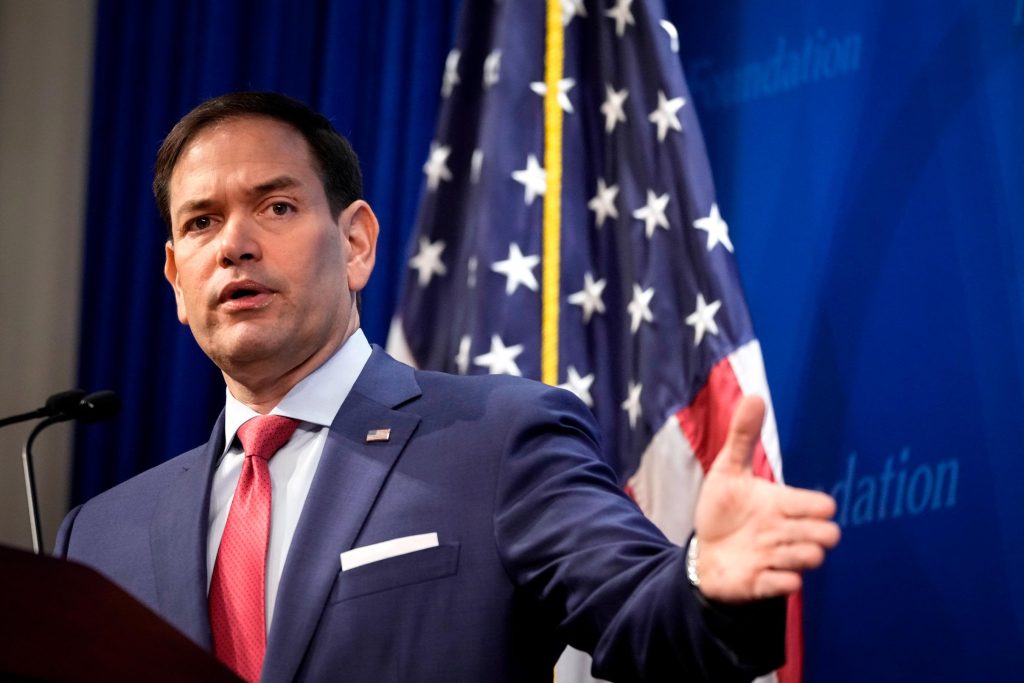
Secretary of State Marco Rubio
Donald Trump ramped up his criticism of the Ukraine war just as his special envoy, Steve Witkoff, revealed that Vladimir Putin could be open to a “permanent peace” deal.
Witkoff, who met with the Russian leader last week, said the U.S. and Russia “might be on the verge of something very, very important for the world at large.”
Trump also reignited controversy by blaming “millions of deaths” on just “three people,” referencing the war and his recent Oval Office clash with Ukrainian President Volodymyr Zelensky.
'Let's say Putin number one, but let's say Biden, who had no idea what the hell he was doing, number two, and Zelensky,' Trump said.
'He's always looking to purchase missiles,' he said dismissively of the Ukrainian leader's attempts to maintain his country's defense against the Russian invasion.
'When you start a war, you got to know that you can win the war,' Trump said.
'You don't start a war against somebody that's 20 times your size, and then hope that people give you some missiles.'
Zelensky has made efforts to mend relations, including dispatching a delegation to Washington last week to negotiate a mineral agreement proposed by Trump, which would grant the United States preferential access to Ukrainian natural resources. However, in recent days, Trump has intensified his rhetoric, asserting that a resolution to the Ukraine conflict is achievable, despite Ukrainian claims that Moscow is delaying progress.
'I want to stop the killing, and I think we're doing well in that regard. I think you'll have some very good proposals very soon,' Trump said.
Even if Trump manages to get Russia and Ukraine to the table—and even if both sides actually agree on something—there’s still one big question that could throw the whole thing off course: would it even be legal?
Presidents do have a lot of wiggle room when it comes to foreign policy. But once a deal crosses into things like lifting sanctions, sending weapons, or giving U.S. companies special access to Ukrainian resources, that’s when Congress tends to raise its hand and say, “Not so fast.”
The Constitution lays it out pretty clearly: formal treaties need Senate approval. Of course, that hasn’t stopped presidents from trying to go around that rule before. Barack Obama’s Iran nuclear deal and the Paris Climate Accord were both done without full Senate sign-off—and both sparked serious legal and political headaches.
If Trump tries something similar, legal experts say he might hit the same wall. Congress could push back, especially if they think the deal messes with military spending, sanctions policy, or long-standing commitments. And depending on how it's structured, the whole thing could end up challenged in court or torn up by the next administration.
In other words, even if there’s political will and diplomatic movement, the legal fight might just be getting started.
🔹 Jim Bob Duggar’s Secretive Walmart Land Deal Raises Eyebrows
Inside the controversial real estate maneuver making headlines in Arkansas.
🔹 Tragedy at Jet Set Nightclub: Rubby Perez Speaks Out After Deadly Collapse
What really happened the night the floor gave way—and who’s being held responsible?
🔹 Pastor Marvin Sapp Accused of Holding Congregation 'Hostage' Over $40K Offering
A wild scene unfolds in a Texas megachurch. Here’s what we know.
🔹 Blood Money? Karmelo Anthony’s Family Buys Home Security After Teen’s Death
A family in crisis, a tragic shooting—and a $430K question.
🔹 Justice for Sara: The Colombian Murder Case That’s Captivating the World
A young woman’s murder in Medellín sparks outrage, protests, and a global call for justice.
A devastating tornado outbreak tore through the Midwest and South, leaving at least 17 people dead and causing widespread destruction. The National Weather Service (NWS) issued urgent tornado warnings on Friday, March 14, as powerful storms swept across multiple states, from Wisconsin to Missouri.
Authorities have confirmed 11 fatalities in Missouri alone, with additional deaths reported in Arkansas and Texas. The Missouri State Highway Patrol (MSHP) stated in a post on X that the storms resulted in “multiple injuries” and “severe destruction.” Emergency responders continue to assess the damage as recovery efforts are underway.
Missouri bore the brunt of the destruction, with fatalities reported across several counties:
Survivors described harrowing scenes of destruction, with homes ripped from their foundations and debris scattered for miles. First responders worked through the night, searching for missing persons and providing aid to the injured. The Butler County Emergency Management Agency has yet to release an official statement.
The storm system didn’t spare Arkansas and Texas, where intense winds and multiple tornadoes left a path of destruction:
Authorities warn that more fatalities could be discovered as emergency teams continue damage assessments in the hardest-hit areas.
According to the NWS, the first tornado struck at 3:03 p.m. local time, carving a path of destruction spanning 9.4 miles. Just 19 minutes later, at 3:22 p.m., a second tornado touched down, causing further damage over a 13-mile stretch.
The third tornado hit 30 minutes later, leaving homes flattened and hundreds without power. Storm chasers reported winds exceeding 150 mph, flipping vehicles, uprooting trees, and tearing apart buildings.
Residents in the affected areas described the terrifying moments as the twisters tore through their towns. “It sounded like a freight train coming right at us. We barely made it into the storm shelter in time,” one survivor told local reporters.
The NWS has issued an ongoing severe weather warning, cautioning residents that the storms are not over yet. In a statement on Facebook, officials warned:
“Friday and into Saturday morning, an outbreak of severe weather is anticipated, including widespread damaging winds, several tornadoes (some strong), and large hail.”
The tornado threat is expected to continue through Saturday, March 15, with the most dangerous conditions forecasted for the central Gulf Coast, Deep South, and Ohio Valley. Experts warn that more destructive tornadoes could form, urging residents to stay alert and seek shelter if necessary.
As rescue crews search for survivors and assess the full scope of the damage, authorities are urging residents to follow emergency alerts and prepare for more storms in the coming days. The federal government is expected to provide disaster relief funding, and local shelters are offering emergency housing to displaced families.
This tornado outbreak is already being described as one of the deadliest of the year, with meteorologists warning that the severe weather season is just beginning. Stay tuned for more updates as the situation develops.
