Former Conservative councillor admits drugging and raping ex-wife over more than a decade
A former Conservative councillor has pleaded guilty to drugging and raping his former wife repeatedly over a period spanning more than a decade, admitting dozens of serious sexual offences.
Philip Young, 49, entered guilty pleas at Winchester Crown Court to 48 offences committed against Joanne Young between 2010 and 2024. The offences include 11 counts of rape, multiple sexual assaults, administering substances with intent to stupefy or overpower, voyeurism, and the publication of non-consensual intimate images.
Ms Young, who has waived her right to lifelong anonymity, was present in court and sat opposite her former husband during the hearing. The couple divorced following Young’s arrest in 2024.
Prosecutors said some of the offences involved other men, several of whom appeared in court alongside Young and deny allegations of sexual offences. One defendant has yet to enter pleas. Those co-accused were released ahead of a trial scheduled to begin in October and expected to last up to six weeks.
One voyeurism charge related to at least 200 occasions, while Young also admitted publishing intimate images and videos of his former wife on hundreds of occasions without her consent.
Young, who served as a Swindon borough councillor between 2007 and 2010, has been remanded in custody.
Following the hearing, the Crown Prosecution Service said Young had admitted “dozens of serious sexual offences” and paid tribute to Ms Young’s decision to come forward. Wiltshire Police also praised her “incredible bravery”, describing the guilty pleas as a significant moment in the case.
Sentencing will take place at a later date.
Manhunt launched for Ashton Anderson, 19, after Seaham petrol station death investigated as murder
Manhunt launched for Ashton Anderson after a man in his 20s was killed by a car on a petrol station forecourt in Seaham, police confirmed Friday.
Officers said they are actively searching for 19-year-old Ashton Anderson, who is believed to hold vital information about the fatal incident at the Esso garage on Stockton Road.
Seven people are now in police custody as part of a murder investigation into the Seaham petrol station death.
The incident happened at around 4.50pm on January 15, when a man in his 20s was struck by a vehicle on the forecourt. He was pronounced dead at the scene.
Police have arrested seven people in connection with the investigation. Three male teenagers and a man in his 50s were arrested on suspicion of murder. Three women — including one teenager and two in their 40s — were arrested on suspicion of assisting an offender. All seven remain in custody.
A police cordon remains in place at the petrol station, and Durham Constabulary said there will be an increased police presence in and around Seaham while enquiries continue.
Detective Chief Inspector Chris Woollett said officers have no information to suggest any wider risk to the public and thanked the local community for its support. He added that anyone found to be assisting or concealing suspects would face “robust action.”
Legal context: what happens now
Under UK law, arrests at this stage do not mean charges have been filed.
What legally changed today: Police formally confirmed an active manhunt for Ashton Anderson and confirmed all seven arrested suspects remain in custody.
What happens next: Investigators must decide whether there is sufficient evidence to seek charges, release suspects, or apply for further detention. Any charging decision must be authorised by the Crown Prosecution Service.
Legal standard: To bring a murder charge, prosecutors must assess whether the evidence shows an unlawful killing with intent or reckless disregard for life.
If charges are approved, suspects would first appear before a magistrates’ court before any case proceeds to the Crown Court.
Police continue to appeal for information as the investigation remains active, with officers maintaining a visible presence across County Durham while key legal decisions are pending and the victim’s family is supported.
Janice Dickinson letter of claim filed over I’m A Celebrity: South Africa accident
The Janice Dickinson letter of claim has been formally received by ITV Studios after reports that the former supermodel is seeking £700,000 in compensation over an on-set accident during I’m A Celebrity: South Africa in 2022.
Liftable sentence:ITV Studios confirmed it has received and reviewed Janice Dickinson’s letter of claim relating to an alleged fall during filming in 2022.
According to reports, Janice Dickinson alleges she suffered a late-night fall in the dark while filming the all-star series in South Africa, resulting in facial injuries she says are permanent. The claim reportedly states she had been given sleeping medication by an ITV medic before the incident.
Dickinson is said to be seeking £700,000 in damages. She withdrew from the series partway through filming following the accident. The accident occurred during filming in autumn 2022.
An ITV Studios spokesperson said the company does not recognise Dickinson’s account of events. ITV Studios said the production maintained high safety standards, covered medical costs at the time, arranged Dickinson’s return to Los Angeles, and remained in contact with her and her representatives after filming concluded.
The incident occurred during filming of I'm A Celebrity: South Africa, which aired as an all-star edition of the long-running franchise. Dickinson previously appeared on the show in 2007, finishing second.
What’s being alleged — and what ITV says
Dickinson alleges the fall happened at night after she was given sleeping medication and claims the injuries caused lasting facial deformity and nerve damage.
ITV Studios says it does not accept that version of events and maintains appropriate safety protocols were in place.
Legal context: what happens now
A letter of claim is the first formal step in a UK civil injury case and is required before court proceedings can begin.
What legally changed today ITV Studios’ acknowledgment means the matter has entered the pre-action phase, where the claim must be reviewed and formally answered.
What happens next ITV has a defined period to investigate and respond by either:
accepting liability,
denying the claim, or
requesting further medical or factual evidence.
What the legal standard is For a claim to succeed, Dickinson would need to show that ITV owed her a duty of care, breached that duty, and caused the injuries alleged, assessed on the balance of probabilities.
Important clarification A letter of claim is not a lawsuit. Court proceedings only begin if the dispute is not resolved and a formal claim is later issued.
Why it matters: The development comes as ITV prepares a new season of I’m A Celebrity: South Africa, placing renewed attention on safety obligations and liability processes for reality TV productions.
Melissa Gilbert Asks Judge to Protect Husband Timothy Busfield While He’s Jailed on Sex Abuse Charges
Melissa Gilbert wrote a letter to a judge asking that her husband, actor Timothy Busfield, be protected while he remains jailed on child sex abuse charges, as prosecutors seek to keep him in custody without bond.
The Little House on the Prairie actress submitted a handwritten letter to the court on January 16, asking that Busfield be kept safe while in custody. The filing comes as Busfield, 75, remains jailed in New Mexico following his arrest earlier this week and awaits a January 20 pretrial detention hearing.
Busfield faces two counts of criminal sexual contact of a minor and one count of child abuse. Prosecutors allege the conduct involved two 11-year-old boys. He surrendered to authorities on January 13 after a warrant was issued by the Albuquerque Police Department and made his first court appearance the following day.
Gilbert’s letter was included among 75 letters of support submitted with the defense’s formal opposition to the state’s motion to keep Busfield jailed pending trial.
What Melissa Gilbert Told the Judge
In her letter, Gilbert identified herself as Busfield’s wife and described him as her “love,” “rock,” and “partner in business and life.” She praised his character, professional reputation, and role within their family, writing that he has the strongest moral compass of anyone she knows.
“Please, please, take care of my sweet husband,” Gilbert wrote, adding that while Busfield has long been her protector, she is unable to protect him now while he is incarcerated.
She acknowledged the emotional difficulty of writing the letter, telling the court she was struggling to balance logic with the fear and heartbreak she feels while her husband remains in custody.
Why Timothy Busfield Is Being Held
Busfield is currently being held without bond as the court considers whether he should be released before trial. In filings submitted on January 14, prosecutors also referenced an additional allegation reported that same day involving conduct alleged to have occurred years earlier in California. That allegation is not part of the current criminal charges but was cited in support of the state’s detention request.
Busfield has denied all allegations. In a video recorded before surrendering, he maintained his innocence and said he intends to fight the charges.
Legal context: what happens now
At this stage, the court is not deciding guilt or innocence. The January 20 hearing focuses solely on whether Busfield should remain jailed while the case proceeds. Under New Mexico law, judges may deny pretrial release if prosecutors meet specific legal thresholds related to public safety and risk.
The judge will consider four core factors:
the seriousness of the charges and alleged conduct
whether Busfield poses a danger to the community
whether release conditions could reasonably manage that risk
whether detention is legally justified before trial
A ruling on detention does not determine the outcome of the criminal case, which will continue through the standard pretrial process regardless of the decision.
The broader impact beyond court
Even before trial, the case has already produced consequences that exist independently of any verdict. Busfield remains incarcerated, his professional standing is under scrutiny, and personal communications — including Gilbert’s letter — have become part of the public court record.
For Gilbert, the appeal reflects both a legal reality and a deeply personal moment unfolding in full public view.
What We Know About the Bondi Beach Shooters
Initial Report: Updated 12:26 GMT, December 14, 2025
Latest Update: 13:11 GMT, December 16, 2025
Bondi Beach terror attack leaves at least 16 dead during Hanukkah celebration in Sydney.
Australian authorities are urgently investigating the gunmen responsible for the mass shooting at Bondi Beach in Sydney, which has been declared a terrorist attack targeting Australia’s Jewish community.
As of Sunday morning, New South Wales Police have confirmed that at least 16 people were killed and 42 others injured, including two police officers, when gunfire erupted during a Hanukkah by the Sea celebration attended by more than 1,000 people.
The attack is the deadliest mass shooting in Australia in nearly 30 years and has prompted heightened security measures nationwide.
Australian authorities have confirmed additional details in the investigation into the Bondi Beach terror attack, including the identities and background of the two suspects believed to be responsible.
Police have identified the younger suspect as Naveed Akram, 24, from Bonnyrigg in Sydney’s southwest. He remains in hospital in critical condition under police guard. The second suspect, a 50-year-old man believed to be his father, was shot by police during the incident and died at the scene.
Officials have stressed that the investigation remains active and complex. Counter-terrorism units are continuing to examine the suspects’ backgrounds, any signs of radicalisation, and whether the attack was carried out entirely independently or involved outside influence.
Authorities have urged the public to avoid speculation as further verified information is released.
Suspect identified by UK media, police yet to formally confirm
NSW police commissioner Mal Lanyon has identified a father and son, aged 50 and 24, in connection with the terror attack that left a 10-year-old girl dead after she later died in hospital. Mal Lanyon said at a press conference on Monday: “As part of the investigation, we conducted two search warrants last night, one at Bonnyrigg and a second at Campsie. The 50-year-old male is a licensed firearms holder. He has six firearms licensed to him.”
One of the alleged shooters in the deadly attack at Bondi Beach in Sydney has been identified as Naveed Akram, 24, from Bonnyrigg in Sydney’s southwest, according to a senior law enforcement official cited by ABC News.
According to The Daily Mail, video and photographs taken by its photographer appear to show a gunman opening fire from an elevated bridge overlooking Bondi Beach. The publication reported that the suspect was shot by police and taken to hospital, where he remains under police guard while receiving medical treatment.
NSW Police confirmed that officers searching a property in Bonnyrigg linked to the suspects located suspicious items near the bridge, including an improvised explosive device. The items were described as basic in structure and had been secured and remain under forensic examination.
What Authorities Have Said About the Suspects’ Background
Australian security agencies have confirmed that one of the suspects had previous contact with intelligence authorities, though officials emphasized that he was not considered an imminent threat at the time of that assessment.
Police have also confirmed that the older suspect was a licensed firearms holder, with several weapons registered in his name. Investigators are examining how the firearms were used and whether existing licensing and storage requirements were breached.
Officials are reviewing the suspects’ recent movements and associations, including any overseas travel, while cautioning that no evidence has yet been presented indicating a wider terror cell or direct operational control by a foreign organisation.
The Australian Security Intelligence Organisation (ASIO) said it is cooperating fully with state and federal police as inquiries continue.
New Details Emerge on Suspects’ Travel and Alleged Ideological Motivation
Australian authorities are investigating overseas travel undertaken by the two suspects in the weeks before the Bondi Beach attack, amid growing scrutiny over potential ideological influences.
According to reporting from CNN, the father and son traveled together to the southern Philippines in November, visiting the island of Mindanao — a region long associated with Islamist insurgent activity. Philippine immigration officials confirmed that the pair entered the country on separate passports, with the father traveling on an Indian passport and the son on an Australian passport, before returning to Sydney late last month.
Prime Minister Anthony Albanese said authorities now believe the attack was motivated by Islamic State ideology, while emphasizing that the investigation remains ongoing and that conclusions are based on intelligence gathered after the attack.
Police Commissioner Mal Lanyon said no intelligence alerts were triggered at the time of the travel and rejected suggestions of a systemic intelligence failure, noting that investigators are piecing together information retrospectively.
Authorities also confirmed that items found in a vehicle linked to the suspects included homemade ISIS flags and improvised explosive devices, all of which remain under forensic examination.
Weapons recovered at the scene
While NSW Police have not yet publicly detailed the exact firearms used, investigators confirmed that the attackers were armed with long-gun style weapons.
Images and video footage from the scene showed what appeared to be a pump-action shotgun lying near a tree close to the beach. Several eyewitnesses also reported seeing rifle-style firearms, though police have cautioned that formal identification of the weapons is ongoing.
Specialist counter-terrorism officers continue to examine suspicious items recovered from the surrounding area, and an exclusion zone remains in place.
Attack declared a terrorist incident
At 9.36pm on Sunday, the NSW Police Commissioner formally declared the shooting a terrorist incident, citing evidence that the attack was deliberately designed to target Sydney’s Jewish community.
The gunfire erupted during a “Hanukkah by the Sea” gathering marking the first day of the Jewish festival of lights — an event attended by families, children, and community leaders.
Prime Minister Anthony Albanese said the shooting was “an act of evil, antisemitism and terrorism”, calling it a direct attack on Jewish Australians and on the nation’s values.
Motive still under investigation
Police and Australia’s counter-terrorism command are continuing to examine the suspects’ backgrounds and any potential ideological motivations.
As of Sunday afternoon, authorities have not confirmed whether the gunmen were known to security agencies prior to the attack, nor whether they had any formal links to extremist organisations.
Investigators are also assessing whether the attackers acted alone or received assistance, direction, or encouragement from others.
NSW Police have urged the public not to speculate as inquiries continue.
Bystander disarmed one gunman during the attack
Verified video footage from the scene shows a member of the public tackling and disarming one of the attackers during the shooting.
The bystander wrestled the weapon away and forced the gunman to retreat, an intervention police believe prevented further loss of life.
Prime Minister Albanese praised the individual as a “genuine hero”, saying his actions saved “countless lives” amid the chaos.
Instead of running for safety, he disarmed the active shooter at Bondi Beach in Sydney.
Give him an award—he’s a true hero.
The following social media post reflects public reaction and has not been independently verified by authorities.
The shooting has sent shockwaves across Australia and the international community, not only because of the high death toll, but because it occurred at one of the country’s most iconic public locations during a religious celebration.
Bondi Beach is typically crowded with locals and tourists, particularly on warm summer evenings. Authorities say the attack has triggered heightened security around Jewish community events nationwide as Australia confronts the growing threat of extremist violence.
Victims of the Bondi Beach Attack
As the investigation continues, authorities have begun confirming the identities of several victims killed during the Hanukkah celebration.
According to CNN and Australian media reports, those who died include children, elderly attendees, religious leaders, and bystanders who attempted to intervene during the attack. Among the victims were a 10-year-old girl attending the celebration with her family, a Holocaust survivor, and two rabbis associated with the Bondi Jewish community.
Officials have emphasized that formal identification and family notifications are ongoing, and have urged media outlets to treat victims’ families with care and respect.
Who Is Naveed Akram?
Naveed Akram, 24, from Bonnyrigg in Sydney’s southwest, has been named by multiple media outlets as the surviving suspect in the Bondi Beach attack. He remains in hospital under police guard after being critically injured during the incident.
Police say Akram was one of two armed men who allegedly opened fire near Bondi Beach shortly after 6.40pm on Sunday, December 14, 2025, during a Hanukkah celebration attended by families and children.
Officers responding to reports of gunfire confronted the suspects and exchanged fire. The older man was killed at the scene, while Akram was transported to hospital where he remains in critical condition.
Authorities have not yet confirmed whether Akram will face terrorism or other criminal charges, citing his medical condition and the ongoing nature of the investigation. Police have also not publicly disclosed whether he held a firearms licence or the extent of his involvement relative to the second suspect.
What we know so far
🕕 Time: About 6.40pm, Sunday 14 December 2025
📍 Location: Bondi Beach, Sydney’s east
🔫 Suspects: Two men, aged 50 and 24
⚰️ Fatalities: 16 people, including a 10-year-old girl
🏥 Injured: More than 40 people, including children
👮 Police injured: Two officers (serious but stable)
🚔 Status: One alleged shooter dead, one in hospital under guard
🧪 Evidence: Three firearms seized
🕵️ Investigation: Joint Counter Terrorism Team
Investigation ongoing in Sydney
NSW Police have maintained a heavy presence around Bondi Beach as forensic teams continue their work. Authorities have asked for calm and warned against retaliatory actions while investigations continue.
Security has been increased around Jewish schools, synagogues, and Hanukkah events across Australia.
“This is a time for unity, not fear,” police said, adding that there is no current threat to the wider public.
Bondi Beach shooting: key questions answered
Who were the Bondi Beach shooters? NSW Police have confirmed the attack involved two men. One suspect was shot dead at the scene, while the second remains in critical condition in hospital under police guard. ABC Australia reported late Sunday that the younger suspect is Naveed Akram, 24, from Bonnyrigg in Sydney’s southwest.
Was the Bondi Beach shooting a terrorist attack? Yes. NSW Police formally declared the incident a terrorist attack targeting the Jewish community.
How many people were killed at Bondi Beach? At least 16 people have been confirmed dead, with 42 others injured, including two police officers.
Is there still a threat to the public? Police say there is no ongoing threat, but investigations continue, including inquiries into a possible third offender.
What Remains Under Investigation
Despite significant developments, authorities say key questions remain unanswered, including:
Whether the suspects received any external encouragement or assistance
The full extent of any ideological motivation
Whether failures occurred in firearm licensing or monitoring systems
Whether any additional individuals had prior knowledge of the attack
Police and counter-terrorism officials have reiterated that no further threat to the public has been identified, but security remains heightened around Jewish community sites nationwide.
Political Response and Calls for Tougher Gun Laws
The Bondi Beach attack has reignited debate over firearms regulation in Australia.
New South Wales Premier Chris Minns said his government is determined to introduce what he described as “the toughest gun laws in Australia,” including potential limits on the number and type of firearms an individual can own.
Prime Minister Albanese echoed the call for reform, saying national gun laws are “only as strong as the weakest link,” and confirmed that proposed measures could include stricter licensing requirements, accelerated work on a national firearms register, and tighter controls on eligibility.
This is a developing story and will be updated as more information becomes available.
Washington reacted sharply on Monday after the Pentagon confirmed it is reviewing serious misconduct allegations involving Arizona Sen. Mark Kelly, a retired Navy captain and widely regarded Democratic authority on military ethics.
Officials disclosed the review just hours after internal complaints reportedly questioned comments Kelly made this fall about service members refusing unlawful orders—a stance that drew immediate fury from President Donald Trump and his allies.
The announcement signals a rare and high-risk clash between the military’s legal system and an active U.S. senator, especially given the Pentagon’s warning that the review could escalate to recalling Kelly to active duty for potential court-martial proceedings.
The Defense Department stressed the gravity of the matter, saying the allegations were credible enough to trigger a rapid internal assessment aimed at determining whether federal law or the Uniform Code of Military Justice (UCMJ) may apply.
The Legal and Political Context Surrounding the Mark Kelly Review
Sen. Mark Kelly’s long military and aerospace career shapes the intensity of this moment. As a former Navy combat pilot and NASA astronaut, he has often spoken about military ethics and constitutional limits.
His recent remarks about service members refusing unlawful presidential orders pushed him into the center of a national debate over command authority and the boundaries of lawful obedience.
The Pentagon has not said who filed the complaint or which comments are under scrutiny, but officials noted the allegations were serious enough to warrant an immediate review.
At issue is whether Kelly’s public statements could fall within strict federal rules meant to protect discipline in the armed forces.
Under military law, orders are generally presumed lawful, retirees can still fall under the UCMJ, and federal statutes—such as 18 U.S.C. § 2387—prohibit actions that may undermine loyalty or morale.
Defense officials emphasized that Kelly is entitled to due process. Even so, the firm tone of the Pentagon’s announcement shows how sensitive this area is, especially when political speech intersects with military standards.
The review now moves forward without a set timeline. Possible outcomes range from no further action to administrative steps. In rare cases, retirees may be recalled to active duty for court-martial proceedings, though that requires a high legal threshold.
Kelly’s office has not provided additional comment as the inquiry continues.
How Military Law Applies to Retired Officers
Many Americans don’t realize that military retirees never fully leave the military justice system.
Under the UCMJ, retired service members can be recalled to active duty if the military believes an offense may have occurred during service or if post-retirement conduct affects the integrity or discipline of the armed forces.
Retirees remain eligible for benefits and continue to hold their rank, which legally keeps them tied to the armed forces.
Because of that status, the Pentagon can still enforce rules governing conduct, loyalty, morale, and any actions that might encourage disobedience within the ranks.
For an inquiry to advance, investigators must find evidence that a retiree knowingly encouraged the disobedience of lawful orders or acted in a way that could interfere with military loyalty or discipline under federal law.
These standards are deliberately narrow and require a clear factual basis before any further action is considered.
If a review uncovers potential violations, the military can issue administrative measures or, in rare cases, recall the retiree to active duty for a court-martial. Any such decision must pass through several layers of oversight to prevent political influence.
Throughout the process, the Pentagon is required to follow established procedures, ensuring due process and compliance with military law.
A routine Sunday afternoon turned volatile when Jordon Hudson, the 24-year-old partner of University of North Carolina head coach Bill Belichick, announced she is suing sports podcaster Pablo Torre.
The declaration hit her Instagram feed without warning, an emotional caption that instantly threw fuel on a story already swirling with speculation about access, boundaries, and who gets to tell Belichick’s off-field narrative.
Hudson, who has become a high-visibility figure around UNC’s football program, dropped the claim shortly after posting a selfie from inside team facilities, flashing her all-access pass and a necklace reading “banned.”
The post jolted fans because Torre, a former ESPN host with a reputation for digging into behind-the-scenes sports stories, has spent months spotlighting Hudson’s role in Belichick’s life and presence around the program.
Almost immediately, Torre fired back publicly, lighthearted in tone but unmistakably pointed, adding to the sense that a private conflict had officially gone public.
What Sparked the Clash?
Hudson’s frustration appears rooted in Torre’s reporting about her status at UNC. Earlier this year, Torre suggested she had been barred from parts of the football facility, an assertion that gained traction across sports media.
UNC disputed that characterization at the time, releasing a statement clarifying that Hudson was not restricted and remains free to enter team spaces while continuing to manage Belichick’s off-field brand and personal commitments.
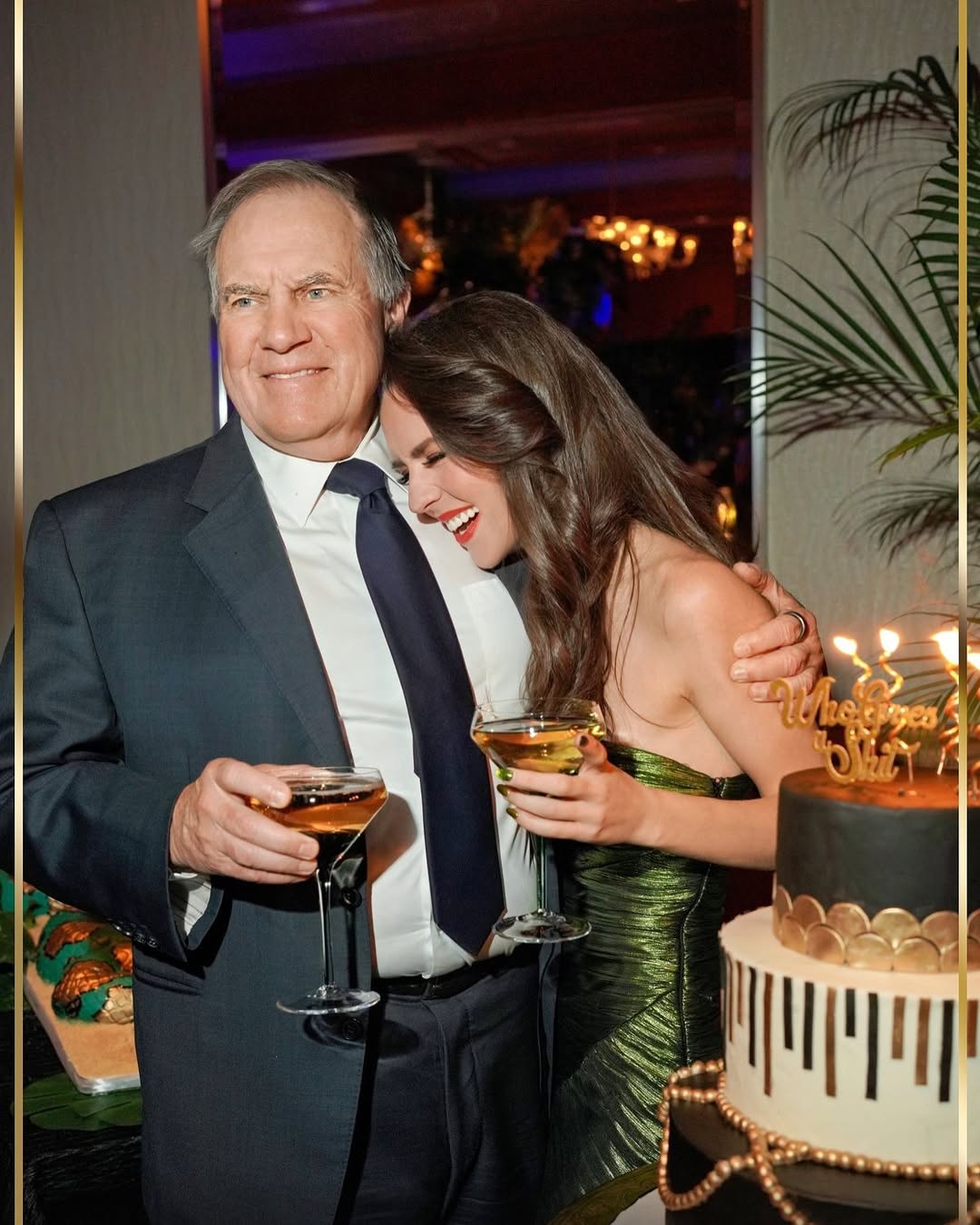
Jordon Hudson wished her boyfriend, Bill Belichick, a happy birthday back in April. (@jordon Instagram)
Still, the claim lingered online, fueling rumors that Hudson now suggests crossed a line.
Her brief but loaded message, tagging Torre directly signals that she believes the commentary has moved beyond routine sports journalism into something harmful enough to demand legal remedy.
Torre’s Public Response
Torre answered on X with a sarcastic invitation for Hudson to appear on his podcast, “Pablo Finds Out,” where the Belichick-Hudson dynamic has become a recurring storyline. His response suggested he was blindsided by the legal talk but not backing away from discussing the situation.
Public exchanges like this are rare in college football circles, where relationship dynamics around coaches typically unfold quietly.
The rapid back-and-forth instantly made the dispute a trending topic among sports fans, commentators, and UNC followers.
Where Hudson Stands With UNC
Despite past rumors, UNC has maintained that Hudson is not banned from its athletic spaces. Her Sunday selfie—shot inside the facility—seemed designed to underline that point.
Her growing visibility as Belichick’s partner and brand manager has also made her a subject of attention, and at times scrutiny, as the legendary coach transitions to a high-profile college role after decades in the NFL.
What Happens When Someone Announces They’re “Suing” Someone?
When someone posts “I’m suing you” online, it can sound final and dramatic, but legally, nothing has happened yet. A lawsuit only becomes real when a person files an official complaint in civil court.
Until that paperwork is submitted, the situation is still in the “intent” stage, no matter how bold the statement sounds on social media.
For Hudson, that means her announcement signals she plans to take legal action, but no case exists until a judge receives and records an official filing.
This distinction matters because online threats carry emotional weight, but the law requires a formal process before anything can move forward.
What She Would Need to Prove
If Hudson does move ahead with a defamation or reputation-based claim, the law focuses on a few core questions:
Were the statements about her factually false?
Were those statements presented as facts, not opinions or commentary?
Did the statements cause real reputational harm?
Did the speaker act with at least negligence — or “actual malice” if she’s treated as a public figure?
These elements aren’t optional; they’re the foundation of any defamation case in the United States.
Why These Cases Are Tricky in Sports Media
Disputes involving journalists, commentators, and public personalities often turn on whether the reporting was an opinion, a fair interpretation, or based on public information.
Courts generally give wide protection to commentary in sports and entertainment coverage as long as it’s not presented as an outright factual claim.
That’s why many high-profile defamation cases, especially those involving reporting or commentary, end quickly once the court decides whether the disputed statements were opinions or verifiable facts.
What Happens Next
If Hudson formally files a lawsuit, the case would move into the early legal stages where Torre could submit his response and both sides may exchange records or communications relevant to the claims.
Most public-figure disputes like this end before trial through withdrawals, clarifications, or negotiated settlements, depending on the evidence and the parties’ goals.
As of now, no court documents have appeared on the public record, and the situation remains in the “intent to sue” phase. The next move is entirely in Hudson’s hands, and the conflict will continue to draw attention until an official filing confirms whether the legal fight becomes real.
Australia’s Senate was thrown into turmoil on Monday morning when Pauline Hanson entered the chamber wearing a full black burka, igniting anger, walkouts, and accusations of racism in one of Parliament’s most chaotic scenes of 2025.
The One Nation leader staged the dramatic protest moments after being blocked from introducing a bill that would outlaw full-face coverings in public.
The clash erupted at roughly 11 a.m. in Canberra, with senators shouting across the chamber as proceedings were suspended.
Hanson refused to remove the garment, triggering immediate condemnation from political leaders and Muslim senators, who said she had crossed a line “every Australian should be ashamed of.”
The stunt has rapidly spiraled into a national flashpoint, sparking fierce debate online and inside Parliament about religious freedom, racial discrimination, and the limits of political theatre.
What Happened Inside the Senate
Witnesses described a stunned silence turning into a roar of anger as Hanson walked into the chamber fully veiled. Security did not intervene, but senators demanded proceedings stop until she removed the covering.
It was her second time attempting the same demonstration her first in 2017, yet today’s version occurred in a far more heated and politically divided environment.
Several senators accused her of using Muslim communities as a political prop. Others called it a deliberate attempt to stir public fear after her failed bill was rejected minutes earlier.
Why Hanson Says She Did It
Hanson later posted on social media that she intended to “show the reality” of what Parliament refused to ban, claiming full-face coverings compromise public safety and represent the mistreatment of women.
She insisted she was not targeting people of faith, saying she “respects all religions,” and framed the protest as a message to Australians about national security. Her critics dismissed that explanation as disingenuous.
Leaders From Both Sides Push Back
Condemnation came swiftly from across the political spectrum. Leaders from both major parties - Labor and the Coalition said the stunt disrespected Parliament and inflamed racial tensions at a time when multicultural communities already feel targeted.
A motion was introduced to suspend Hanson for refusing to comply with chamber rules, marking one of the most severe responses to a protest by a sitting senator in recent years.
Muslim senators, including those from New South Wales and Western Australia, said the incident left them “deeply unsettled” and accused Hanson of endangering community safety by legitimizing anti-Muslim hostility.
How Clothing Bans Actually Work in Australian Law
The uproar inside Parliament has sparked a wave of questions from everyday Australians: Can the government actually ban full-face coverings nationwide? The short answer is complicated, and the real rules are far more limited than many people assume.
Australia Has No Federal Ban on Religious Clothing
There is no national law prohibiting burkas, niqabs, or any other religious garment. Clothing restrictions in Australia only exist in specific, practical situations, usually when a person must be identifiable such as in airports, banks, secure buildings, or when dealing with police officers. Outside those narrow settings, people are free to dress according to their beliefs.
A National Ban Would Face Major Legal Hurdles
Even if lawmakers attempted a federal ban, they would need to clear a high constitutional bar. Parliament must show strong evidence that a full-face covering creates a real and measurable threat to public safety.
Political arguments or symbolic gestures are not enough. The High Court traditionally expects clear justification when a law affects religious expression.
Police Already Have Identification Powers
One point that often gets lost in the political debate is that law enforcement already has the tools they need. Police and security officers may legally ask someone to briefly uncover their face for identification, and people must comply.
These existing powers cover most of the scenarios used to argue for a broader ban.
A Full Ban Could Prompt High Court Scrutiny
If Parliament attempted to outlaw specific religious garments, the law could face High Court challenges under discrimination principles. Courts would likely examine whether the law unfairly targets a particular community or restricts religious practice without solid evidence of public harm.
The Bottom Line
Clothing bans in Australia are tightly limited for a reason: they must balance public safety with personal freedom and religious expression. Despite the heated debate around Hanson’s protest, the legal framework remains unchanged and any attempt to rewrite it would face a long, difficult road.
Where the Debate Goes From Here
Pauline Hanson’s protest has reignited one of Australia’s most sensitive national debates, and the fallout is unlikely to fade quickly.
The Senate now faces renewed pressure from both sides of the political divide those calling for stronger protections for religious communities and those demanding tougher rules around face coverings in public spaces.
With party leaders condemning the disruption and legal experts stressing the limits of what Parliament can actually ban, the next steps will hinge on whether lawmakers want to cool tensions or continue pushing the issue into the spotlight.
For now, the only certainty is that Hanson’s burka protest has left the country divided, energised, and bracing for the political battles still to come.
Nuneaton was jolted on Friday after 23-year-old Ahmad Mulakhil admitted raping a 12-year-old girl, abruptly reversing his earlier denials in a dramatic turn at Warwick Crown Court. The attack happened on 22 July, and the guilty plea now places the case on a fast track toward sentencing.
Mulakhil, who has no fixed address, had earlier pleaded not guilty to several other serious charges, including allegations of abduction and additional sexual offences involving the same child, during a hearing held in August.
His co-defendant, 23-year-old Mohammad Kabir, also originally from Afghanistan, maintained his not-guilty pleas to separate accusations linked to the same child. The case, already one of the most sensitive and emotionally charged in the region, has inflamed debate over community safety, immigration, and how the justice system handles offences involving very young victims. A protest outside Nuneaton Town Hall in August underscored just how tense the situation had become.
Kabir spoke only to confirm his name, while Mulakhil confirmed his name and entered his guilty plea when he was rearraigned on one count of rape.
Who is Child Rapist Ahmad Mulakhil
Mulakhil’s admission covers one count of raping a child under 13. Additional allegations previously listed against him—abduction and further sexual offences—were not addressed during the plea change.
Kabir continues to deny the offences he faces, which include:
Attempting to take a child
Aiding and abetting rape of a child under 13
Intentional strangulation
Both men used interpreters as they appeared before Judge Kristina Montgomery KC, confirming only their names and pleas during the hearing.
The Rapist's Fate: Where He Stands Now
Following a guilty plea in a serious child offence case, the court moves toward sentencing while preparing separately for the co-defendant’s trial. A sentencing date for Mulakhil is expected to be set shortly. Kabir’s case continues independently, and his charges will be assessed on their own evidence.
The child involved is legally protected from identification. Because of the guilty plea, she will not need to participate in cross-examination relating to Mulakhil’s sentencing.
The allegations ignited strong reactions across town, particularly after police confirmed both accused men are Afghan nationals. Demonstrators gathered outside Nuneaton Town Hall in early August carrying flags and chanting political slogans as frustration over national immigration policies collided with concern for local safety.
Community leaders have urged calm as the court process continues, but emotions remain high.
How Sentencing and the Next Legal Steps Will Work
Understanding What Happens After a Guilty Plea
Cases involving the rape of a child follow well-established procedures in England and Wales:
1. Pre-Sentence Reports Probation officers compile a detailed report on the offender’s background, risk factors, and circumstances relevant to sentencing.
2. Sentencing Guidelines Judges rely on national guidelines that consider:
The victim’s age
The level of harm
Use of any force or coercion
Any aggravating or mitigating factors
The timing of the guilty plea
Offences involving children under 13 sit in the most serious category.
3. Prison and Notification Requirements Conviction for child rape almost always leads to a lengthy prison term. Offenders are also placed on the Sex Offenders Register, typically for life.
4. Co-Defendant Trials Continue Separately Mulakhil’s plea does not affect Kabir’s case. A jury evaluating Kabir’s charges will consider only the evidence relevant to him.
Afghan UK Child Rapist Frequently Asked Questions
Will Mulakhil’s guilty plea end the entire case? No. His plea relates only to his own charge. Kabir’s case continues on a separate track.
How long could Mulakhil be imprisoned? Child rape carries a maximum penalty of life imprisonment, which means the offender is legally supervised for the rest of their life. The judge sets a minimum term—often between 10 and 25 years in the most serious cases—before the offender can even be considered for release. After that, the Parole Board decides if they are ever safe to release, and the person can be returned to prison at any time if they breach their licence conditions.
Will the child need to testify? Not for Mulakhil’s sentencing. Whether she is required in Kabir’s case depends on the prosecution’s evidence plan and any pre-recorded testimony already taken.
What happens next? The court will schedule a sentencing hearing for Mulakhil. Meanwhile, Kabir’s not-guilty pleas mean further hearings and a potential trial.
A Deadly Dive That Stopped the Dubai Air Show Cold
A dramatic demonstration flight at the Dubai Air Show turned fatal when an Indian HAL Tejas fighter jet plunged into the ground at Al Maktoum International Airport, killing the pilot and sending a column of smoke across the airfield.
The crash happened around 2:10 p.m. local time, moments after the aircraft had made several high-speed passes over thousands of spectators. The Indian Air Force confirmed the pilot’s death, calling it a tragic loss at one of the world’s most closely watched aviation showcases. The Tejas had been a centrepiece of India’s military display, heightening attention on the disaster and the questions it now raises about what went wrong in the seconds before impact.
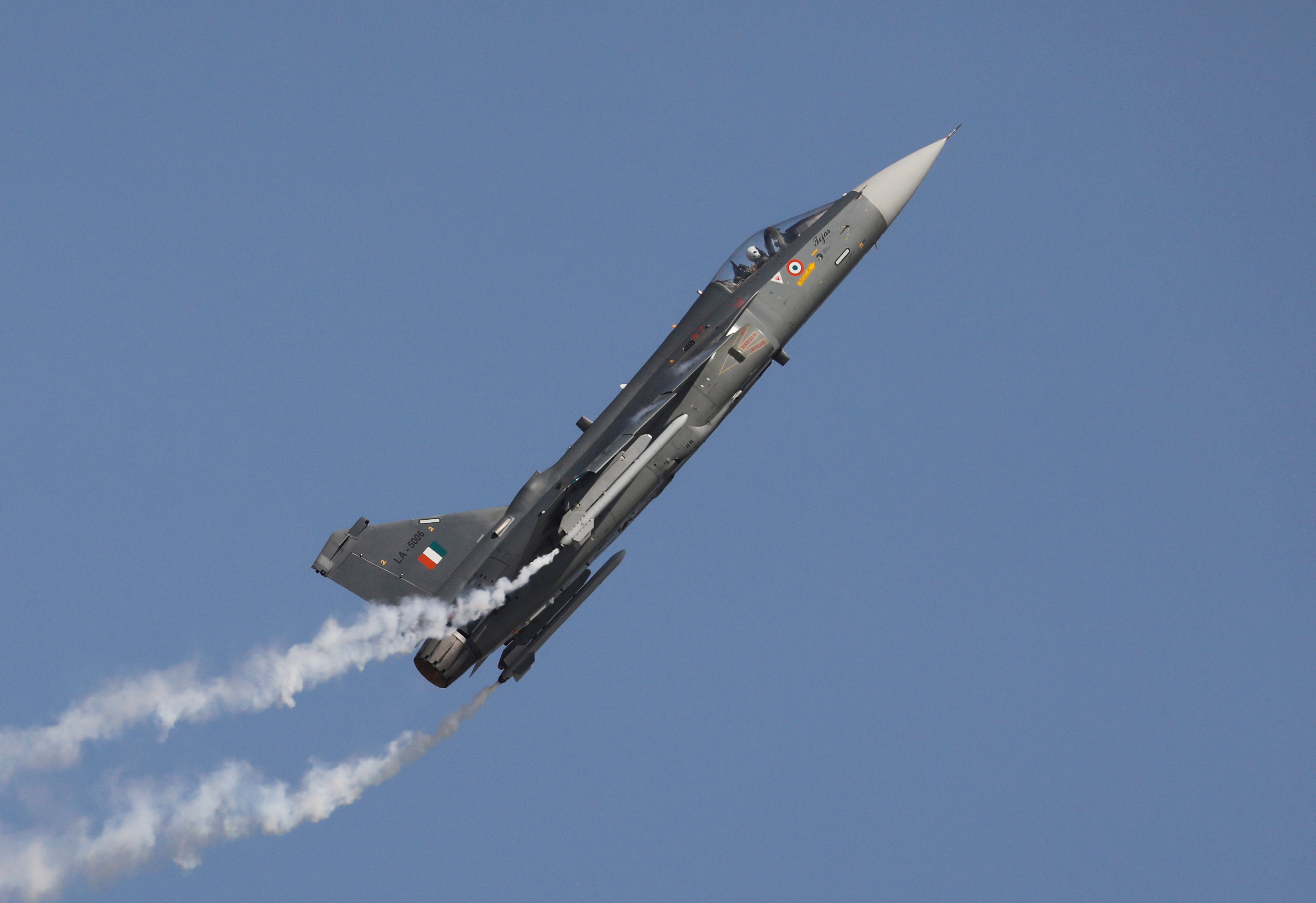
An Indian HAL Tejas fighter jet climbs sharply during an aerobatic demonstration, similar to the maneuvers performed at the Dubai Air Show before the fatal crash.
What Witnesses Saw in the Final Moments
People on the ground described an abrupt change in the jet’s movement just before it angled sharply downward. The aircraft struck the ground inside the air-show perimeter, prompting emergency crews to rush across the tarmac as black smoke drifted over the stands. The crash site was quickly sealed off while responders worked to secure debris and ensure spectators were safe.
"General Anil Chauhan, CDS and all ranks of Indian Armed Forces deeply regret the incident in which an IAF Tejas aircraft met with an accident during an aerial display at Dubai Air Show, today. The pilot sustained fatal injuries in the accident. We deeply regret the loss of life and stand firmly with the bereaved family in this time of grief," the Integrated Defence Staff said in a statement.
What the Footage Shows About the Jet’s Final Maneuver
Witness accounts and footage suggest the pilot may have encountered difficulty recovering after a negative-G maneuver — a move where the aircraft briefly experiences force in the opposite direction of gravity. The Tejas is designed to handle negative-G actions, but the jet appeared to enter a rapid descent with no visible glide before impact. Investigators will determine the exact sequence of events once they analyze flight data and video evidence.
Where the Crash Took Place
The accident occurred inside the Dubai Air Show’s flight zone at Al Maktoum International Airport, a major hub that hosts the biennial event. The air show is considered one of the world’s premier aviation and defence exhibitions, drawing global delegations and tight safety oversight. Serious incidents at the event are rare, which has added to the shock surrounding the crash.
Why This Tragedy Is Drawing Global Attention
The HAL Tejas is a domestically built light combat aircraft that represents one of India’s most significant military aviation projects. The jet’s presence in Dubai was intended to showcase India’s growing aerospace capabilities. The crash also follows recent social-media speculation about the aircraft, which Indian officials publicly dismissed as false the day before the incident. Authorities have not indicated whether any earlier concerns were linked to the aircraft involved.
How Aviation Crash Investigations Work
After a fatal crash at a public air show, investigators follow a strict, structured process used in aviation worldwide. A court of inquiry examines flight data, maintenance logs, debris patterns, pilot records, weather conditions, and available video evidence. The goal is not to assign blame quickly but to determine the cause using verifiable technical findings. Investigators secure the wreckage, collect physical components for analysis, and interview witnesses. These steps help determine whether mechanical failure, human factors, or other issues played a role.
What Happens Next for Authorities
The Indian Air Force has launched a formal inquiry, and aviation officials in the UAE will contribute their own findings from the crash site. Both sides will compare data, review recordings from the demonstration flight, and determine whether additional safety measures are needed before similar aircraft return to public air displays. More information is expected once investigators complete their initial assessment of the wreckage.
HAL Tejas Fact File
Aircraft Type: HAL Tejas Light Combat Aircraft (LCA)
Role: Multirole fighter – air-to-air and air-to-ground
Manufacturer: Hindustan Aeronautics Limited (HAL), India
Estimated Unit Cost: Around $30–40 million USD (varies by variant and configuration)
Engine: Single GE F404 turbofan
Top Speed: Up to Mach 1.6 (approx. 1,975 km/h)
Range: About 1,800+ km
Service Ceiling: Approx. 52,000 ft
Crew: Single-seat fighter (with a separate two-seat trainer version)
Armament Capacity: 8 hardpoints, up to ~3,500 kg of missiles, bombs and pods
Entered Service: Inducted into Indian Air Force from 2016 onwards
Frequently Asked Questions About the Dubai Air Show Crash
Was anyone other than the pilot injured?
Authorities have reported no additional injuries. The crash occurred away from spectator seating and emergency teams responded immediately.
Is the Dubai Air Show still running after the incident?
Air shows typically continue after a safety review, but organisers have not yet confirmed any schedule changes.
Has the Tejas jet experienced crashes before?
A Tejas fighter jet crashed in India last year, but the pilot survived. Fatal incidents involving this aircraft are rare.
What is the purpose of a court of inquiry in aviation accidents?
It is a formal process that collects evidence, reviews technical data, and determines the cause of the crash without offering legal judgments or blaming individuals prematurely.
To provide the best experiences, we and our partners use technologies like cookies to store and/or access device information. Consenting to these technologies will allow us and our partners to process personal data such as browsing behavior or unique IDs on this site and show (non-) personalized ads. Not consenting or withdrawing consent, may adversely affect certain features and functions.
Click below to consent to the above or make granular choices. Your choices will be applied to this site only. You can change your settings at any time, including withdrawing your consent, by using the toggles on the Cookie Policy, or by clicking on the manage consent button at the bottom of the screen.
Functional
Always active
The technical storage or access is strictly necessary for the legitimate purpose of enabling the use of a specific service explicitly requested by the subscriber or user, or for the sole purpose of carrying out the transmission of a communication over an electronic communications network.
Preferences
The technical storage or access is necessary for the legitimate purpose of storing preferences that are not requested by the subscriber or user.
Statistics
The technical storage or access that is used exclusively for statistical purposes.The technical storage or access that is used exclusively for anonymous statistical purposes. Without a subpoena, voluntary compliance on the part of your Internet Service Provider, or additional records from a third party, information stored or retrieved for this purpose alone cannot usually be used to identify you.
Marketing
The technical storage or access is required to create user profiles to send advertising, or to track the user on a website or across several websites for similar marketing purposes.
To provide the best experiences, we use technologies like cookies to store and/or access device information. Consenting to these technologies will allow us to process data such as browsing behaviour or unique IDs on this site. Not consenting or withdrawing consent, may adversely affect certain features and functions.
Functional
Always active
The technical storage or access is strictly necessary for the legitimate purpose of enabling the use of a specific service explicitly requested by the subscriber or user, or for the sole purpose of carrying out the transmission of a communication over an electronic communications network.
Preferences
The technical storage or access is necessary for the legitimate purpose of storing preferences that are not requested by the subscriber or user.
Statistics
The technical storage or access that is used exclusively for statistical purposes.The technical storage or access that is used exclusively for anonymous statistical purposes. Without a subpoena, voluntary compliance on the part of your Internet Service Provider, or additional records from a third party, information stored or retrieved for this purpose alone cannot usually be used to identify you.
Marketing
The technical storage or access is required to create user profiles to send advertising, or to track the user on a website or across several websites for similar marketing purposes.