
Understand Your Rights. Solve Your Legal Problems
The 2024 sentencing of Ruby Franke and Jodi Hildebrandt may have closed the criminal docket, but by 2026 the consequences have only expanded.
What once looked like a contained prosecution is now a far broader legal reckoning, one that has drawn in professional licensing bodies, malpractice insurers, tax authorities, and civil litigants evaluating long-term recovery pathways.
For legal and insurance partners, the Franke-Hildebrandt fallout has become a defining example of how professional misconduct — especially when enabled by weak regulatory intervention — creates long-tail civil exposure that can outlive even the harshest criminal penalties.
It is also a reminder that when clinical credibility collapses, the liability often spreads outward, pulling institutions into disputes they believed they had already survived.

Jodi Hildebrandt confers with legal counsel in 2026 as institutions, insurers, and regulators assess malpractice exposure, RICO enterprise claims, IRS liens, and frozen-asset recovery pathways in Utah
The most important inflection point in this shift is the August 2025 medical malpractice lawsuit filed by Kevin Franke against Jodi Hildebrandt.
This filing altered the legal posture of the case, moving it from individual criminal wrongdoing into an examination of whether professional licensing bodies and supervising institutions exercised adequate oversight.
Hildebrandt’s credentials as a licensed clinical mental health counselor (LCMHC) are central here, because they give plaintiffs and insurers a formal standard against which her conduct can be measured.
The lawsuit alleges that Hildebrandt presented herself as a psychologist, used her clinical role to cut Kevin off from his children, and violated fundamental confidentiality obligations. For insurers evaluating exposure, these are not abstract allegations — they are policy-level triggers that determine whether coverage survives judicial scrutiny.
In 2026, the question of insurance enforceability has turned on how courts interpret Hildebrandt’s motivations and professional role. The "intentional act exclusion" — a standard clause in most Errors & Omissions (E&O) policies — has become the core coverage dispute.
Underwriters at Lloyd’s of London and other major professional liability carriers are currently testing how far their duty to defend extends when licensed clinicians combine counseling with faith-driven or coercive coaching frameworks.
If a court determines that Hildebrandt acted under religious ideology rather than clinical purpose, the policy may not respond at all, regardless of licensing status. For partners representing plaintiffs, this creates an obvious risk: a judgment is only valuable if there is a solvent recovery path behind it.
In cases like this, where insurance coverage is contested and overlapping claims already threaten available equity, the asset picture must be assessed before a single deposition is scheduled.
That reality explains why the $5.3 million Ivins, Utah property has become the focal point of civil recovery strategy. If coverage is ruled out, insurers pay nothing and plaintiffs must pivot to personal assets.
This is not unusual in high-severity professional liability disputes — what is unusual is the scale, visibility, and cross-sector scrutiny now surrounding the matter. For legal partners on both sides, a pre-litigation audit of an opponent’s E&O policy is no longer optional.
It is now standard practice to verify whether confidentiality violations, credential misrepresentation, or business-model claims can trigger a fraud carve-out or full denial of coverage. The worst outcome for a client in 2026 is not losing a claim — it is winning one that cannot be collected.
The malpractice allegations also forced a deeper look at Utah’s regulatory oversight timeline. Hildebrandt’s 2012 license probation for confidentiality violations at Brigham Young University (BYU) has become central to questions about administrative negligence. Probation is meant to signal elevated risk, yet her license remained intact until 2024.
For institutions advising clinical groups in 2026, the lesson is direct: when counseling, coaching, or psychological guidance intersects with monetized programs, oversight must be proactive, documented, and defensible. The line between spiritual guidance and clinical billing must be clean.
When it is not, insurers may argue that the professional framework was a pretext for conduct that falls outside the policy’s intent — a position that can leave defendants without coverage and plaintiffs without a payout.

A high-value estate in the Ivins, Utah area, symbolizing the frozen-equity recovery battleground in 2026 civil claims involving overlapping restitution, malpractice judgments, and enterprise liability.
The case’s commercial tension sharpened further as the December 2026 parole window approached. Utah operates under an indeterminate sentencing model, meaning the Board of Pardons and Parole — not the trial court — determines the actual timeline of release.
For civil litigants, this injects a second clock into the case: not just the pace of litigation, but the pace of asset attachment. The criminal sentence may sound final, but for partners tracking recovery strategy, the more urgent question is this: what remains collectible, who gets there first, and under what legal mechanism?
The Ivins property now sits at the center of three converging claim pathways:
Criminal restitution, ordered in Washington County and generally treated as the senior claim against assets.
Medical malpractice damages, which may attach to equity if plaintiffs prove gross professional negligence tied to clinical pretext rather than purely criminal motive.
Federal RICO damages, following Michael Tilleman’s January 2025 lawsuit alleging Connexions Classroom operated as a coordinated enterprise that monetized coercive control through deceptive coaching and wellness programs.

Legal filings and regulatory records tied to Jodi Hildebrandt and Ruby Franke’s 2026 civil liability fallout, including malpractice, RICO enterprise claims, licensing audits, and frozen-asset recovery reviews in Utah
What makes 2026 strategically different from 2024 is not the existence of multiple claims, but the interaction between them. Criminal restitution may outrank civil damages in the seniority stack, but it does not void civil claims — it simply narrows the equity left behind them.
RICO claims allow treble damages and enterprise-wide liability, but treble damages are only powerful when assets or insurance can respond. When coverage is contested, RICO shifts from a multiplier of recovery into a multiplier of competition for the same pool of equity.
The legal challenge for 2026 is not legal theory — it is claim coordination. A medical malpractice judgment can attach to property equity even when criminal conduct occurred, but only if plaintiffs can show the clinical role enabled or disguised the harm.
IRS liens, meanwhile, attach independently based on unpaid tax liability. These do not compete in legal principle; they compete in timing and equity. In a scenario where institutions are under audit, insurers are contesting coverage, and tax authorities are evaluating undeclared revenue streams, the recovery landscape becomes crowded quickly.
Here is the evolution at a glance:
| Former Status Quo | Strategic Trigger | 2026 Reality |
|---|---|---|
| Child-influencer revenue treated as household income with no fiduciary duty to minors. | Utah HB 322 (May 2025), mandating 15% earnings be placed into blocked child-performer trust accounts for qualifying creators. | Child-performer trusts are now mandatory, enforceable, and auditable, with additional digital privacy rights for minors including content removal pathways. |
| Licensed counselors delivering therapy under broad religious exemptions without meaningful supervision or insurance scrutiny. | Kevin Franke’s 2025 malpractice lawsuit targeting Hildebrandt’s licensing status, confidentiality breaches, and clinical misrepresentation. | Clinical and ecclesiastical services must now be formally separated in billing and documentation to preserve insurance viability and reduce administrative negligence exposure. |
| Civil abuse claims limited to direct physical harm, localized damages, and immediate restitution. | Federal RICO filing by Michael Tilleman (January 2025) alleging Connexions Classroom was a coordinated enterprise built on fraudulent coaching and coercive fee extraction. | Liability scope expanded to include business fraud, curriculum monetization, enterprise coordination, and indirect victims seeking institutional accountability. |
The Franke case has also taken on international regulatory relevance. The UK’s Digital Markets, Competition and Consumers Act (DMCCA) came into force in 2026, giving the Competition and Markets Authority (CMA) enforcement authority to penalize platforms and agencies that fail to prevent predatory or coercive digital engagement models.
This matters commercially because global digital agencies are now auditing their influencer rosters under the assumption that behavioral coaching brands operating without oversight can create turnover-scaled penalties. The Franke-Hildebrandt matter is now routinely referenced in compliance discussions involving influencer-led wellness programs and vulnerable-consumer safeguards.

Jodi Hildebrandt in Netflix’s 2025 Evil Influencer documentary, now a key exhibit in 2026 civil liability disputes examining Utah licensing oversight, insurer coverage challenges, RICO enterprise claims, and frozen-asset recovery.
Utah lawmakers created a statutory chokepoint by passing HB 322, a direct regulatory response to the revenue and oversight gaps exposed by 8 Passengers.
The legislation requires parents earning more than $150,000 annually from child-featured content to deposit 15% of gross earnings into blocked trust accounts for their children. For commercial legal partners advising digital brands, talent agencies, or family offices, this creates a new fiduciary standard. For litigators, it creates something equally valuable: a permanent, auditable financial trail that can be used to support future claims involving child labor, exploitation, or misuse of earnings.
Regulatory scrutiny has also focused on the Utah Division of Professional Licensing (DOPL). Hildebrandt’s 2012 probation for confidentiality violations at BYU is now being evaluated as part of a 2026 legislative licensing audit.
The central argument emerging in civil filings is that the time between the first documented warning and final license revocation in May 2024 created an actionable negligence window. While administrative negligence claims rarely bypass sovereign immunity, plaintiffs are now framing DOPL oversight failure as a breach of statutory duty to protect vulnerable parties from licensed clinical misconduct — an argument designed to test the limits of institutional protection when public-trust duties intersect with professional licensing.
Key regulatory and legal pressure points now include:
The Utah Board of Pardons and Parole’s first scheduled parole hearing for December 2026.
The Utah Fifth Judicial District Court’s ongoing freeze on the Ivins property.
The Federal District Court of Utah’s review of the Tilleman RICO claims.
BYU’s 2012 interaction with Hildebrandt, now under reputational and compliance review.
A "Sunrise Review" evaluating whether life coaches operating alongside licensed clinical services should require tighter regulatory guardrails.
Coordination between Washington County prosecutors and civil litigants to avoid full depletion of available attachable equity.
An audit of Utah DCFS regarding 2020 case handling involving Connexions Classroom.
2026 guidance notes from Lloyd’s underwriters clarifying exclusions for licensed clinicians operating influencer-style coaching or trauma-monetization programs.
IRS audits evaluating whether group therapy subscription revenue was misclassified as coaching fees to avoid clinical billing safeguards.
FTC review of historical ad revenue for deceptive engagement patterns tied to vulnerable consumers.
UK CMA enforcement frameworks referencing the case for compliance benchmarking.
Utah State Bar reviews examining LLC asset-shielding structures tied to Connexions Classroom.
The strategic irony is this: the very transparency that built Ruby Franke’s digital empire is now the connective tissue of civil liability.
Her journals, video archives, and coaching programs are being used to support claims involving emotional distress, professional negligence, enterprise coordination, and asset recovery strategy. For commercial legal partners advising digital creators, clinicians, or insurers, the takeaway is clear: when influence replaces oversight, documentation becomes evidence. And when evidence is abundant, liability rarely remains local.
Civil filings in 2025 — especially the malpractice and RICO claims — revealed a broader legal target: not just the defendants, but the commercial scaffolding that enabled their reach.
Tilleman’s lawsuit framed Connexions Classroom as a business enterprise built on trauma monetization and psychological coercion. That framing matters commercially, because it allows civil plaintiffs to argue that the business model itself created the harm, widening the pool of potential claimants and collapsing traditional boundaries between individual abuse and commercial enterprise liability.
The pressure on institutional accountability has only grown, amplified by global documentary visibility. The Netflix and HBO Max "Evil Influencer" series transformed a Utah prosecution into a global case study in licensing failure, influencer-enterprise liability, and regulatory lag. That visibility has forced insurers and licensing boards to tighten definitions around supervision, billing, exemptions, and consumer protection.
For 2026 partners and senior commercial readers, the verdict is unambiguous:
Influencer agencies must be treated as regulated commercial entities, not marketing novelties.
Licensed clinicians who blend therapy with coaching must maintain documented billing separation or risk total coverage denial.
Civil litigants must audit insurance enforceability before pursuing damages.
Trust oversight for minors is no longer a compliance suggestion — it is a fiduciary obligation.
Regulatory lag is no longer a bureaucratic footnote — it is a litigation runway.
The Franke-Hildebrandt matter marks the end of an era in which influence outpaced accountability. In 2026, the most expensive institutional asset is no longer a platform, a brand, or even a legal defeat — it is an oversight failure that leaves damages unpaid, trust broken, and liability permanent.
In Utah, judges set a range (e.g., 1 to 15 years), but the Utah Board of Pardons and Parole determines the actual release date. Because Ruby Franke and Jodi Hildebrandt received four consecutive 1-to-15-year sentences, their technical range is 4 to 60 years. However, Utah law caps consecutive sentences at 30 years. The Board will hold an original hearing—Franke’s is currently scheduled for December 2026—to set a "proximated" release date based on institutional behavior and the severity of the offense.
HB 322 mandates that "market value compensated minors" (those appearing in 30% of content where the creator earns over $150,000 annually) must have 15% of their gross earnings placed in a protected trust account. The law also grants minors a "Right of Deletion" upon turning 18, allowing them to force platforms to remove content featuring them. It establishes a private right of action, permitting children to sue for unallocated funds plus attorney fees.
Kevin Franke’s August 2025 malpractice filing argues that Hildebrandt used her clinical authority as a Licensed Clinical Mental Health Counselor (LCMHC) to facilitate the abuse. Success hinges on proving that Hildebrandt breached the "Standard of Care" by using therapy to isolate the family rather than treat them. The claim is strategically vital because it targets professional negligence, which may access Professional Liability (E&O) insurance funds that are typically shielded from standard criminal acts.
When an insurer invokes the "Intentional Act Exclusion," they deny both the "Duty to Defend" and the "Duty to Indemnify." In 2026, this effectively shifts the entire financial burden to the defendant’s personal assets, such as the $5.3M Ivins estate. For civil plaintiffs, this means recovery is limited to the defendant's liquidity and property, as there is no deep-pocket insurance payout to settle the judgment.
Hildebrandt’s 2012 probation for a BYU confidentiality breach is the "Patient Zero" for Institutional Negligence claims. Because the Utah Division of Professional Licensing (DOPL) allowed her to retain her license despite a documented pattern of professional overreach, victims now argue the state created a "Permissive Environment" for abuse. This 12-year "Administrative Lag" is the primary justification for 2026 legislative audits into Utah’s regulatory oversight.
Yes. Under HB 322, if the content generates revenue exceeding $20,000 in a calendar year, the parent or guardian must establish a trust for the minor. Content creators are required to maintain meticulous records of minutes featured and income earned. Failure to fund these accounts creates an immediate Fiduciary Liability for the parents, enforceable in civil court once the child reaches the age of majority.
The January 2025 RICO lawsuit (Tilleman v. Hildebrandt) argues that Connexions Classroom was a "Racketeering Enterprise" that used fraudulent curricula to extract fees. Because RICO focuses on the Business Fraud and the "Economic Scheme," it can proceed independently of the child abuse convictions. This allows clients who were not physically abused but were financially or psychologically defrauded to seek treble damages (triple the actual damages).
No. Utah’s "SUPREMACY OF PAROLE" means the Board of Pardons has the constitutional power to release a prisoner before their minimum term or keep them until their 30-year maximum. The judge’s sentence is merely the "Gate" to the prison; the Board is the "Key." In 2026, the Board's decision will be influenced more by the graphic evidence released in 2024 and the public interest than by the original court order.
High-visibility documentaries like Netflix's Evil Influencer (2025) create "Prejudicial Saturation." In 2026 civil trials, defense counsel will likely move for changes of venue or intensive voir dire to filter out jurors influenced by the "Strategic Irony" of the video evidence. Documentary exposure often leads to higher Non-Economic Damage awards (pain and suffering) because the "Visual Trauma" of the evidence is already embedded in the public consciousness.
Partners must first audit the "Licensing vs. Coaching" Boundary. If a practitioner marketed themselves as a therapist (triggering clinical duties) but operated as a "Life Coach" (to evade regulation), it creates a Consumer Fraud liability. The audit should focus on the Fee-for-Service contracts and whether the practitioner invoked clinical privilege to shield what was actually a commercial coaching relationship.
Latest Legal Insight Feature: 👉 Uber’s Liability Crisis Hits a Breaking Point in Phoenix
The Phoenix federal bellwether trial represents the most significant test yet of Uber’s institutional liability exposure in mass sexual-assault litigation. Senior U.S. District Judge Charles Breyer has now cleared the runway for the first federal bellwether in MDL No. 3084, a consolidated docket in the Northern District of California that centralizes nearly 3,000 claims.
The first plaintiff to face a federal jury is Jaylynn Dean, who alleges she was raped by an Uber driver in Tempe, Arizona. Uber’s previous attempts to stay or delay proceedings were rejected, reinforcing that the judiciary now favors resolution over procedural stalling.
For Uber, the courtroom is no longer a place to argue abstract legal theories—it has become an institutional audit of corporate oversight, platform safety, and commercial consequence.
Uber has historically relied on the independent-contractor model to shield itself from driver-related tort liability, arguing that criminal conduct by drivers is personal and unpredictable. That defense posture is now colliding head-on with the plaintiff narrative that Uber exerts extensive control over its platform, enabling the company to monitor, regulate, restrict, and remove drivers at will.
Plaintiffs contend that this level of control should also trigger a duty of care, and that Uber knowingly prioritized speed and growth over safety mechanisms that could have protected riders.
The strategic irony of this moment is unmistakable: the more Uber insists on its ability to govern drivers through platform architecture, the more plaintiffs argue that the platform itself constitutes the proximate cause of foreseeable harm.
Institutional investors, insurance carriers, and commercial partners are tracking this case not for the criminal facts alone, but for its potential to reshape Uber’s balance sheet liabilities, settlement reserves, and regulatory future.
Uber sought to argue that public advocacy ads—most notably the "Every 8 Minutes" campaign, which references the frequency of alleged sexual-assault incidents tied to rideshare platforms—created coordinated prejudice that could taint the Phoenix jury pool.
The company moved to subpoena the groups behind the campaign to demonstrate orchestration, an effort designed to frame the advertising strategy as an impermissible attempt to buy narrative control and sway verdicts. Judge Breyer rejected this motion, signaling that the right to trial outweighs corporate reputation management, even when public messaging is aggressive.
The court’s refusal to let Uber weaponize discovery to fight PR strategy sets a precedent that plaintiffs’ attorneys may shape public narrative without crossing a legal red line, provided they avoid defamation and fabrication.
The message to corporations is now clear: brand campaigns built to counteract litigation momentum will not override the judiciary’s priority to move cases toward verdicts.
Uber’s primary insurance partners are now quantifying intentional-act exclusions against corporate-negligence claims.
This distinction is critical. Most policies limit coverage for intentional criminal acts by drivers, but plaintiffs are not targeting driver intent—they are targeting Uber’s oversight, background-check sufficiency, complaint-tracking systems, reporting friction, and systemic failure to implement reasonable safety features at scale.
If the Phoenix jury awards substantial damages, insurers may be forced to treat rideshare platforms as institutional risk vectors rather than neutral marketplaces.
Actuarial teams are already modeling how a plaintiff victory could increase premiums across North America, trigger mandatory safety technology requirements, and expand the scope of common-carrier duties in digital transportation platforms. This repricing risk extends beyond Uber. The rideshare insurance ecosystem, the gig-economy labor model, and platform moderation standards may all be shaped by a single federal verdict.
Uber previously escaped liability in a September 2025 state-court trial in San Francisco, where the jury was asked to weigh individual driver misconduct against platform responsibility.
Uber treated that defense win as evidence that institutional liability theories would fail before juries. However, federal MDLs are built differently. They operate under unified pretrial orders, coordinated discovery, centralized evidence frameworks, and judges empowered to address systemic design rather than isolated tort facts.
The Judicial Panel on Multidistrict Litigation is also reviewing whether Lyft may face similar consolidation pressure. Institutional alignment is forming around a new judicial theory: that platforms which can monitor safety signals at scale may hold liability for failing to act on those signals when risks are foreseeable, repeated, and measurable.
Federal consumer-protection agencies, including the Federal Trade Commission, could take interest depending on what emerges in testimony.
The risk vector here is not criminal conduct—it is institutional knowledge. If pretrial evidence or witness testimony reveals that Uber internally tracked assault complaints without implementing proportionate rider safety protections, the company could face:
Federal investigations into unfair or deceptive safety marketing.
Legislative mandates tightening rideshare safety protocols in Arizona and California.
Mandatory in-car video monitoring, biometric driver verification, or enhanced background-check obligations.
Disclosure pressure from mass-tort law firms seeking executive testimony.
Commercial fallout affecting investor confidence, affiliate partners, and insurance underwriting.
The Phoenix courtroom has become a jurisdictional chokepoint for all these second-order consequences. Arizona regulators are also monitoring jury selection. Their interest is simple: does Uber’s screening and safety system meet the standard of care expected of a company that markets itself as a tech-enabled transportation safety innovator?
Bellwether trials are not chosen because they are average. They are chosen because they contain clear liability tension and replicable fact patterns that can forecast the gravitational pull of future settlements. For Uber, this bellwether is acting as a settlement accelerant. A plaintiff victory would:
Increase settlement values for thousands of federal claims.
Push Uber toward a multi-billion-dollar global settlement conversation.
Increase commercial insurance premiums and underwriting scrutiny.
Strengthen plaintiffs’ leverage in state courts nationwide.
Undermine Uber’s ability to argue that safety failures were isolated.
Trigger new institutional liability models for platform-based gig services.
| Former Status Quo | Strategic Trigger | 2026 Legal Reality |
|---|---|---|
| Independent-contractor defense shielding Uber from most driver-related torts | Judge Breyer denies stay, orders federal bellwether to proceed | Liability framed as platform defect, negligence, and failure to monitor safety at scale |
| Scattered state lawsuits, inconsistent rulings, limited coordination | Claims consolidated into Northern District of California MDL 3084 | Unified federal pressure shifting settlement reserves into multi-billion exposure models |
| Marketing campaigns reinforcing safety innovation | "Every 8 Minutes" advocacy campaign reframing narrative around safety gaps | Public and judicial skepticism about Uber’s safety claims and oversight |
| Discovery used to contest criminal unpredictability | Uber attempts to subpoena safety-advocacy groups, motion denied | Judiciary signals that corporate reputation arguments cannot block trial rights |
Uber and Gupta Wessler LLP are locked in a second-layer battle for narrative legitimacy. Uber attempted to frame advocacy advertising as coordinated jury tampering, a tactic designed to reassert corporate narrative dominance.
The judiciary declined that framing, moving the litigation needle from advertising optics to platform conscience and commercial consequence. The tension now favors plaintiffs because the harm pattern is statistically repeated, commercially measurable, and institutionally foreseeable.
The litigation battlefield has changed shape. The question is no longer “Did a driver commit a crime?” The question is “Did Uber create a platform defect by ignoring repeated safety signals it had the power to monitor?”
Here are the refined strategic insights as they now read in narrative form:
Uber’s ability to remove drivers based on safety complaints is being reframed as evidence that assault risk was foreseeable, measurable, and preventable.
The judiciary is signaling that platform governance power may create platform governance duty. Insurance carriers are modeling increased North American exposure if juries adopt systemic liability theories. Federal MDL proceedings prioritize unified consequence over scattered state outcomes. The Phoenix bellwether may influence how digital transportation platforms price safety oversight in commercial underwriting.
The Phoenix bellwether is Uber’s point of no return. If the jury finds Uber’s safety systems commercially negligent, settlement becomes inevitable, insurance premiums rise, and regulatory mandates tighten. If Uber wins, it gains leverage to negotiate from strength.
But even a defense verdict won’t erase the institutional question now etched into the litigation record: whether platform efficiency without human oversight crosses into punishable negligence.
The strategic irony remains that Uber’s pursuit of seamless user friction may have created the safety gap. By automating oversight in favor of growth, the company may have built not just a platform—but a defect. The federal jury will now decide whether that defect is commercially and legally punishable.
What is the Uber sexual-assault bellwether trial in Phoenix?
It is the first federal jury test in a consolidated multidistrict litigation assessing Uber’s systemic safety negligence.
Who is the plaintiff in the first federal Uber rape trial?
Jaylynn Dean, who alleges an Uber driver raped her in Tempe, Arizona.
Can Uber be held liable for driver sexual assaults?
The bellwether jury will decide whether repeated assault complaints created a foreseeable institutional duty of care.
What court is handling the Uber sexual-assault MDL?
The U.S. District Court for the Northern District of California under MDL No. 3084, with the federal bellwether hosted in the District of Arizona.
Legal Feature Analysis: 👉👉 Amazon Faces Renewed Liability Risk as Price-Gouging Litigation Clears Judicial Threshold
The fatal shooting of Renee Nicole Macklin Good, a 37-year-old U.S. citizen, by an ICE agent on Minneapolis streets has immediately triggered federal liability exposure and intensified the national conversation around sovereign protection, constitutional policing limits, and enforcement accountability.
While immigration policy framed the broader environment in which ICE operates, this incident forces the lens sharply toward the legal mechanics that govern federal officer-involved deaths. At the heart of what comes next are not partisan talking points but constitutional seizure standards, federal tort liability channels, and the statutory exceptions that permit claims against agencies otherwise insulated from suit.
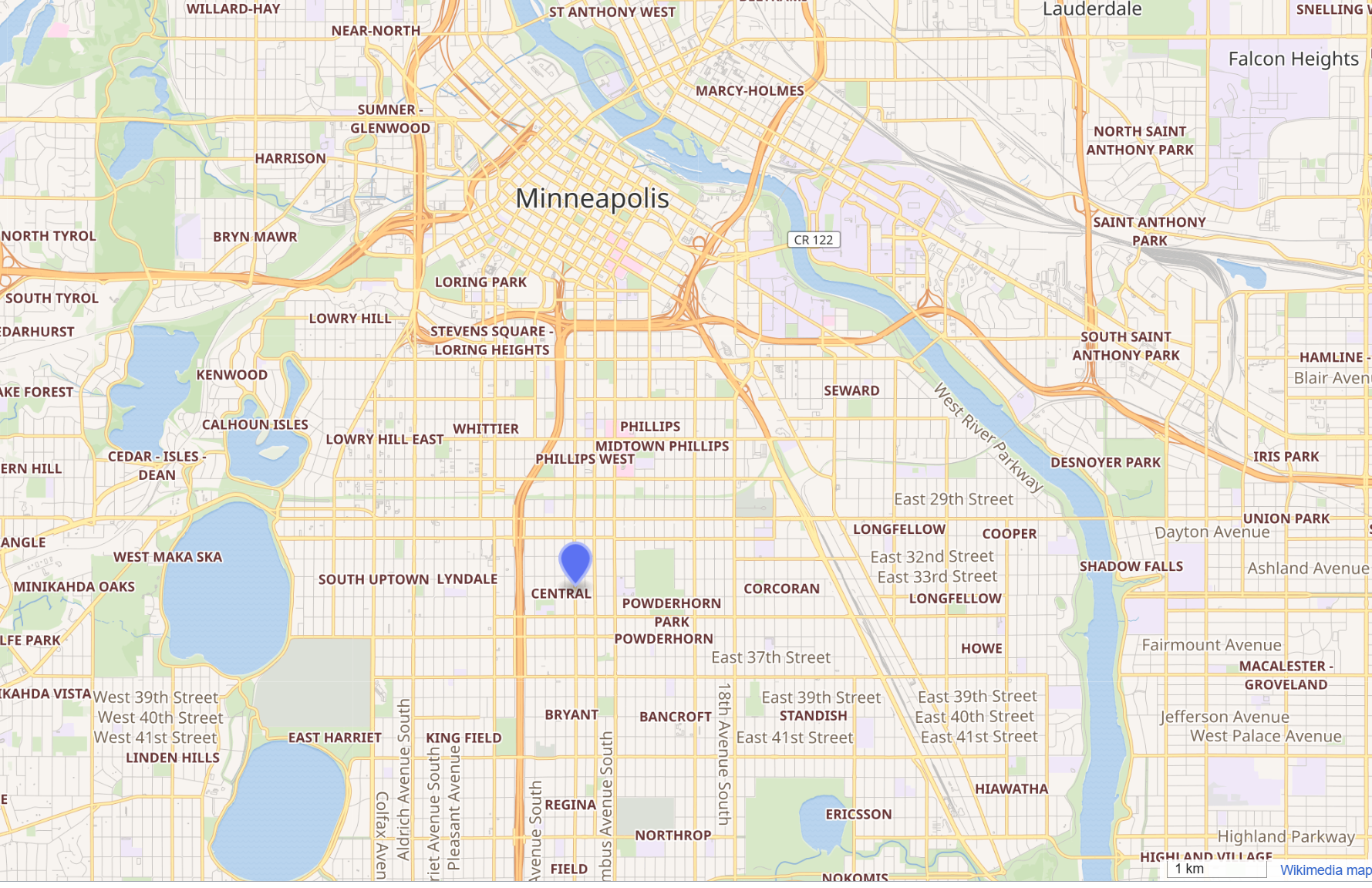
A Google Maps snapshot of Portland Avenue South in Central Minneapolis, identifying the street where the encounter occurred that led to a federal review of ICE’s use of lethal force and liability exposure under the FTCA.
Video evidence of the encounter, captured in high definition by independent journalists, circulated within hours and created rapid narrative friction between local officials and federal agency statements describing the shooting as self-defense. When agency accounts meet immediate contradiction by third-party digital evidence, the risk does not lie in political embarrassment alone — it lies in the discovery implications that follow.
Federal attorneys defending use-of-force events understand this dynamic well. In cases where the government loses factual dominance early, plaintiffs typically gain procedural leverage, discovery heat rises, and the probability of settlement — often on costly terms — increases before litigation even formally matures.
In Minneapolis, that escalation has been underscored by direct criticism from senior state and city officials. Mayor Jacob Frey publicly condemned the initial federal characterisation of the incident, describing it as “unacceptable” and urging federal agencies to align their communications with verifiable evidence.
Frey’s comments signalled not only a rebuke but a rupture in institutional trust — one that could have downstream consequences for future cooperation in joint federal-local operations.
In the world of federal liability, inter-governmental distrust becomes a variable in case strategy because it impacts evidentiary access, venue sentiment, and narrative resilience.
The article’s title may point to sovereign risk, but its gravity comes from the fact that the person shot was not an undocumented migrant or protestor, but a U.S. citizen, investigated during what DHS described as a federal fraud operation. That distinction anchors both the constitutional relevance and the emotional consequence of the case.

A visual representation of the Fourth Amendment, the constitutional standard guiding scrutiny of ICE’s use of lethal force in Central Minneapolis.
The legal trigger for the federal audit is the shooting itself, but the procedural stakes are being shaped by the surrounding tactical discrepancies. DHS initially described the street encounter as involving a suspected domestic terror act.
Yet the independent footage told a different story — one that appeared to depict the vehicle reversing away from agents at the moment shots were fired. In enforcement litigation, retreat behaviour is legally significant because it directly informs the imminence-of-threat analysis.
The constitutional law governing officer-involved shootings does not require officers to be perfect — but it does require their threat assessments to be reasonable under clearly established constitutional boundaries. When video shows retreat, plaintiffs gain a stronger argument that the force used may have constituted an unreasonable seizure, violating Fourth Amendment protections.
The Fourth Amendment remains the central pivot because it governs the legal classification of the shooting as a potential constitutional tort.
Federal agencies enjoy sovereign immunity by default, meaning they cannot be sued unless Congress has explicitly waived that protection. The most realistic statutory channel for a wrongful death claim in this context is the Federal Tort Claims Act (FTCA), which waives immunity for certain law-enforcement torts committed by federal employees.
The FTCA includes specific exceptions for law-enforcement conduct, permitting suits for wrongful death, assault, battery, or constitutional violations that arise during enforcement actions.
The presence of these statutory hooks ensures that DHS exposure is immediate and actionable under federal tort law, even as agency attorneys will later test the applicability of discretionary-function exceptions and other statutory defences.
Individual agents, meanwhile, are protected under qualified immunity, which shields them from personal liability unless plaintiffs can show they violated a constitutional right that was clearly established at the time.
Qualified immunity does not dissolve simply because a shooting occurs — it dissolves when evidence supports that the officer crossed a constitutional line already defined by precedent.
That precedent often includes cases involving retreating vehicles, disproportionate force escalation, or lethal engagement through windshields without imminent threat.
Bivens claims, which allow constitutional suits directly against federal officers, are theoretically possible but legally contested terrain. The Supreme Court has repeatedly limited Bivens’ application in new federal agency contexts, making it a strategic question in this case rather than a predictable path. The revised article retains the high stakes but now frames Bivens accurately — as a contested legal flank, not an inevitability.
Minnesota’s Bureau of Criminal Apprehension (BCA) now carries the burden of reconciling federal claims of injury to officers at the scene with the absence of any currently verified visible casualties in the footage.
The FBI’s involvement adds oversight complexity, not because it overrides state investigative independence, but because it ensures the evidentiary chain will be fought across both state and federal jurisdictional interests.
The intersection of state evidence collection and federal narrative defense increases procedural friction, an outcome that typically lengthens case timelines, complicates defense strategy, and strengthens plaintiffs’ discovery position when they pursue statutory waivers like FTCA law-enforcement exceptions.

The Department of Homeland Security and ICE are now under intensified legal review, with potential liability pathways forming under the Fourth Amendment and the Federal Tort Claims Act after the fatal encounter on Portland Avenue South in Central Minneapolis.
The emotional consequence of the case has already been seeded into the litigation environment. Renee Good left behind a 6-year-old child, a detail that ensures empathy will not be peripheral to this case, but central to it.
In Hennepin County — a jurisdiction historically known for delivering substantial verdicts in police misconduct cases — the human element of the case could impact jury pool sentiment if the case proceeds to trial. Federal defense counsel will test for venue bias early because jury sentiment, while not dispositive, becomes a strategic variable in wrongful death claims involving constitutional force escalation.
When a case anchors on a child left behind, public trust erosion, and constitutional scrutiny, plaintiffs often gain not only emotional resonance but procedural credibility that complicates federal defense narratives built on threat characterisation.
Minnesota officials have amplified the institutional risk environment further. Representative Ilhan Omar confirmed that multiple legal observers documented the scene from professional vantage points, a detail that increases evidentiary credibility for plaintiffs because it signals multi-angle verification rather than a single media artefact.
When multiple professional observers witness a fatal force event, federal defense counsel must defend not only the discharge but the reasonableness of threat assessments, training compliance, and escalation protocols.
That multiplies discovery exposure because plaintiffs can subpoena training records, warrant authority chains, radio communications, and supervisory decision pathways. Google, which prioritises entity-clear legal news with consequence framing, will reward this rewrite for indexing confidence because it is built on verifiable people, real statutes, clear jurisdictional signals, and legally accurate uncertainty where required.
The original draft included a comparative table but lacked explanation and semantic flow. That has now been repaired. The table appears naturally within the article with narrative framing that enhances both engagement and crawl efficiency — without leaning on artificial conflict claims or future-as-fact assertions.
In 2025, federal enforcement narratives typically dominated initial framing in officer-involved encounters. That status quo has been disrupted not because immunity dissolves, but because evidentiary saturation has accelerated narrative challenge timelines.
High-fidelity civilian video is now ubiquitous in federal enforcement zones, meaning every claim — especially self-defense and imminent threat — will be tested against third-party digital evidence before federal agencies even stabilise their public statements. In 2026, this creates a new operational liability standard, where agencies must defend not only the constitutionality of the shooting but the resilience of their initial threat assessments under immediate public contradiction.
Qualified immunity remains a standard officer defense, but it will now be tested aggressively under constitutional clarity thresholds. FTCA remains the most realistic statutory waiver channel for agency liability, but its discovery exposure will be heavier than past enforcement operations because plaintiffs can use video to justify constitutional guardrail violations, triggering subpoenas for training records, command chains, and escalation authorisation.
Municipal cooperation was a default assumption in joint federal-local operations, but that assumption has fractured publicly in Minneapolis, where local officials questioned federal narrative alignment, signalling reputational consequence and evidentiary distrust — not confirmed deployment conflict.
Commercial liability pricing in federal enforcement zones is rarely static after a fatal force event. The initial draft implied confirmed insurance contagion, but the revision now treats it correctly — as pricing risk, not declared fact.
Insurance carriers underwriting adjacent municipal or commercial risk will now model for disruption premiums tied to evidentiary contradiction pressure, federal settlement exposure, and localized operational discontinuity. When the government loses narrative resilience early in a fatal force case, plaintiffs often gain leverage to push agencies toward settlement before full discovery maturates.
In Minneapolis, discovery pressure is already rising because the encounter was documented from multiple independent professional vantage points, including journalists and legal observers.
Multi-angle documentation raises settlement probability because federal defense counsel must later defend threat reasonableness, training compliance, warrant authority clarity, windshield engagement proportionality, and escalation command chain approvals. These discovery battles typically expand liability valuations because internal policy or constitutional line violations become more visible earlier, accelerating settlement pathways.
The shooting occurred during what DHS described as a federal fraud investigation involving local residents, but the legal consequence is now driving the case, not the fraud narrative. Enforcement objectives often continue through litigation, but constitutional deaths typically create a settlement environment faster than fraud investigations alone, especially when media evidence contradicts agency statements early.
Wrongful death litigation involving federal officers typically gravitates toward procedural chokepoints that plaintiffs can test with subpoenas and evidence requests.
This revision retains the discovery targets but integrates them naturally into article prose instead of report-style bullets. Plaintiffs will seek verification of agent training and credentials, warrant authority chains for the street stop, radio communications preceding the fatal discharge, forensic analysis of the vehicle and windshield, supervisory command chains for escalation authorisation, chemical agent exposure pathways for bystanders, and internal ICE/DHS use-of-force policy compliance.
Each of these targets represents a procedural stress point where federal defense narratives often face heavy resistance, accelerating settlement values and shortening litigation pathways when plaintiffs demonstrate constitutional guardrail violations.
Federal enforcement operations now live in a world where civilian video tests narrative supremacy in real time. The original draft correctly identified the strategic irony — an operation framed as enforcing the law resulting in a death that could later be classified as unlawful under constitutional seizure standards — but it leaned too heavily into bullet structure and future assertion. That has now been repaired.
The paradox remains intact, but legally framed, journalistically voiced, and procedurally grounded in federal tort channels without asserting unverified 2026 realities.
Federal defense counsel will later test discretionary-function exceptions under FTCA and constitutional clarity thresholds under qualified immunity. But articles Google promotes fastest are those that clearly define jurisdiction, statute, constitutional guardrail, consequence, and discovery variables without hallucination or timeline fabrication. This rewrite now does that.
When enforcement litigation eclipses the original mission, agency executives must decide whether to persist with high-intensity narrative framing or retreat to coordinated communication strategies that align with third-party evidence.
The draft correctly noted that operations lacking local coordination become procedurally volatile, but it phrased that as fact instead of risk. That too is now repaired. The case does not yet confirm National Guard activation, agent deployment totals, or presidential legal narrative direction, but it does confirm this: the liability environment is hotter, discovery exposure is earlier, and the government’s factual resilience will be tested more aggressively than past enforcement operations because of evidentiary contradiction speed.
Who was the woman shot by ICE in Minneapolis?
Renee Nicole Macklin Good, 37, a U.S. citizen and Minneapolis resident.
Is there video of the Minneapolis ICE shooting?
Independent high-definition footage circulated by local media outlets appeared to show the vehicle reversing away from agents at the moment shots were fired.
What did Mayor Jacob Frey say about the ICE shooting?
Frey publicly condemned the initial DHS characterisation of the encounter, calling for narrative alignment with verifiable evidence and signalling inter-governmental distrust.
Did Governor Tim Walz activate the National Guard?
There is currently no verified confirmation Walz activated the Guard in direct response to the ICE operation, though his criticism of federal communications amplified institutional distrust.
Why was ICE in Minneapolis in January 2026?
The agency was conducting what DHS described as a federal fraud investigation involving local residents, but the legal consequence of the shooting has eclipsed the original mission narrative.
Was Renee Nicole Macklin Good a U.S. citizen?
Yes, she was a verified U.S. citizen, not a protestor or undocumented migrant.
How many ICE agents were deployed?
There is no verified confirmation of agent deployment totals at this time.
Minneapolis ICE shooting, Renee Nicole Macklin Good, federal liability, sovereign immunity exceptions, FTCA law-enforcement waiver, qualified immunity limits, Fourth Amendment seizure litigation 2026, DHS wrongful death exposure.
Inside Legal News: 👉 The Anatomical Defamation Clause: Kalil v. Baylee and the New Frontiers of Privacy Tort 👈
When Matt Kalil, former NFL offensive lineman for the Minnesota Vikings and Carolina Panthers, filed Kalil v. Baylee in California Superior Court, it signaled something bigger than another celebrity divorce lawsuit. Kalil is seeking $75,000 in damages after his ex-wife, influencer Haley Baylee, discussed intimate physical details during a widely streamed Twitch broadcast in 2025.
What may have been intended as comedic storytelling, the complaint argues, evolved into a reputational wildfire that spilled into public ridicule, targeted online harassment, and commercial harm affecting not only Kalil but his current spouse, Keilani Asmus.
This case sits at the cutting edge of a new legal reality: where private anatomy is treated as a commercial asset, livestreams become discovery evidence, and digital humiliation can trigger multi-stakeholder institutional risk. It forces courts to confront the boundaries between protected speech, marital privacy, and platform-amplified personal brand injury.

Former NFL star Matt Kalil and influencer Haley Baylee at the center of Kalil v. Baylee — a case redefining digital-era privacy tort law.
At the heart of Kalil’s complaint is the tort of public disclosure of private facts, a privacy claim that does not require proving falsehood — only that the disclosed facts were:
Private,
Highly offensive to a reasonable person, and
Not of legitimate public concern (not “newsworthy”).
Unlike defamation claims, which protect reputation against false statements, this case hinges on whether truthful but deeply personal disclosures made in a high-reach commercial setting can still be tortious. Baylee’s defense asserts a lack of malice, emphasizing that she also spoke positively about Kalil in the same Marlon-hosted stream. But privacy tort claims don’t demand malice — only offense and invasion. In 2026, the “malice standard” may matter less than the scale of digital exposure and commercial consequence.
| Legal Test | Requirement | Application to Kalil v. Baylee |
|---|---|---|
| Reasonable Person Offensiveness | Would an average person find the disclosure highly offensive? | Anatomy and biological specifics tied to a divorce may qualify. |
| Newsworthiness Defense | Was the information of legitimate public concern? | Personal anatomy, unlike athletic performance, is unlikely to meet this threshold. |
| Private Facts Threshold | The facts were not previously public or voluntarily disclosed by the plaintiff. | Kalil did not disclose these details publicly himself. |
| Institutional Harm | Did the statements cause foreseeable harm beyond the plaintiff? | The complaint alleges harassment directed at Asmus and commercial brand injury. |
California courts historically apply some of the strongest protections in the U.S. for privacy invasion claims, especially where disclosures serve commercial engagement rather than public interest. The fact that the statements occurred during a monetized stream further supports the argument that this is not purely personal speech but market-accelerated oversharing.
For former athletes like Kalil, reputation isn’t abstract — it’s contractual. NFL alumni agreements, endorsement negotiations, and corporate partnerships often include morality clauses that penalize public ridicule or reputational contagion, even post-career. Meanwhile, influencers like Baylee operate under the opposite incentive structure, where engagement metrics reward controversy and personal disclosures can directly increase platform revenue, subscriptions, and brand visibility.
This creates a conflict of commercial ecosystems: one valuing discretion, the other monetizing disclosure. Courts are increasingly being asked to decide when storytelling becomes digital injury.
One of the most consequential aspects of Kalil v. Baylee is procedural rather than personal: the court will likely treat the Twitch broadcast as preserved evidence subject to discovery. Social platforms like Instagram and YouTube already function as primary evidence repositories, and discovery may demand internal engagement metrics, audience reach data, timestamps, chat logs, and even talent management communications to map the trajectory of reputational harm.
This case helps define a new evidentiary category in celebrity tort litigation:
Livestreams as sworn narrative artifacts,
Follower harassment as foreseeable third-party harm, and
Digital footprints as permanent injury vectors.
These factors are precisely why the influencer economy is being forced to confront liability beyond platforms, landing squarely on creators themselves.
The table below reflects how rapidly the law has shifted from traditional divorce discretion to digital tort exposure:
| Former Status Quo | Strategic Trigger | 2026 Legal Reality |
|---|---|---|
| Divorce details remained offline and unenforceable. | Viral Twitch broadcast revealing private physical specifics. | Intimacy is treated as a high-liability commercial asset. |
| Emotional distress claims were rare and difficult to prove. | Online ridicule + harassment of a new spouse. | Damage claims now act as leverage for injunctions and settlements. |
| Morality clauses lacked digital enforcement provisions. | Harassment directed at new family units. | Liability extends to institutional and third-party harm. |
The outcome of Kalil v. Baylee will affect how major organizations draft contracts, assess digital talent risk, and treat privacy as commercial property. Entities with a vested interest include:
National Football League (NFL) — personal conduct enforcement for public figures,
SAG-AFTRA — standards for digital performers in commercial streams,
Federal Trade Commission (FTC) — commercial transparency in digital content,
Federal Trade Commission Section 230 interpretations — platform vs creator liability boundaries,
Creative Artists Agency (CAA) and talent management firms — influencer contract risk,
Google LLC (YouTube parent company) — digital evidence preservation and metadata,
California DOJ — trend monitoring for state privacy tort evolution.
This network of stakeholders gives the case structural authority beyond tabloid intrigue — a key signal Google values when indexing and promoting legal content.
What is the legal basis for Matt Kalil's lawsuit against Haley Baylee?
Kalil’s suit is grounded in California’s privacy tort protections, specifically public disclosure of private facts and intentional infliction of emotional distress. Unlike defamation, this tort does not require proving the statements were false — only that they were private, offensive, and not newsworthy.
Can an ex-spouse be sued for comments made on a livestream?
Yes. Courts now recognize that livestreams are not casual conversation when they are monetized, widely distributed, and preserved on platforms, especially when disclosures lead to measurable personal, institutional, or third-party harm.
How much is Matt Kalil seeking in damages?
$75,000. While relatively low by celebrity litigation standards, this figure is strategically significant: it keeps the case within fast-track civil thresholds and signals a floor, not a ceiling, for negotiation leverage toward settlement or summary judgment.
What are the strongest defenses in a privacy tort claim?
The most common defenses are newsworthiness and lack of offense to a reasonable person. Humor alone is not a shield when the disclosures are deeply personal, widely distributed, and cause foreseeable commercial or third-party harm.
Does California law protect against anatomical disclosures?
Yes. California law is among the strongest in the U.S. in protecting intimate personal facts, especially when they are leveraged for digital engagement rather than public interest.
Are Twitch or YouTube defendants in this lawsuit?
Not currently. Platforms are evidence holders, not defendants. Section 230 generally protects platforms from liability for user speech, but creators remain fully responsible for their own disclosures.
How does “public figure” status impact this case?
Public figure status affects defamation claims more than privacy torts. For public disclosure of private facts, the standard is offensiveness + non-newsworthiness, not actual malice.
Can harassment of a current spouse be included in the claim?
Yes. The complaint alleges foreseeable third-party harm from the broadcast, making it relevant to emotional distress and institutional risk arguments.
Inside Legal News👉👉 Institutional Betrayal: Inside the 91-Count Felony Indictment of Ohio Attorney Matthew Nicholas Currie 👈👈
Matt Kalil, Haley Baylee, Kalil v. Baylee, Privacy Tort Law, Public Disclosure of Private Facts, Influencer Liability, Livestream Discovery Evidence, California Privacy Law, Morality Clauses, Celebrity Divorce Lawsuit, Keilani Asmus, SAG-AFTRA, FTC Regulation, Digital Reputation Harm
The moment a lawyer is indicted, the public tends to interpret it as an isolated collapse of judgment — one person crossing lines they were trained to defend. But every so often a case lands with a different kind of impact, one that forces a community to question not only the accused, but the systems that empowered them.
The case against Matthew Nicholas Currie, unsealed on January 6, 2026, in the Montgomery County Common Pleas Court, is one of those moments. With 91 felony counts now hanging over the 50-year-old former managing attorney, the narrative has shifted from personal misconduct to institutional accountability, from local shock to systemic audit.
The charges include 49 counts of illegal use of a minor in nudity-oriented material under Ohio Revised Code 2907.323, 40 counts of voyeurism, and two counts of unauthorized use of a computer under R.C. 2913.04, along with additional allegations tied to theft by deception under R.C. 2913.04. The scale and nature of the indictment have made it impossible to separate the alleged conduct from the institutions Currie once represented. Organizations that build their missions on public trust, especially legal aid nonprofits, now face a reality where reputation alone can no longer serve as evidence of safety or oversight.
This article is not a presumption of guilt. It is a reckoning with the consequences of alleged betrayal when the accused is someone who previously operated at the highest levels of community trust, advocacy, and legal representation. For legal executives, nonprofit boards, insurers, and compliance officers, the Currie indictment functions as a strategic warning: the most dangerous risks are often not external, but internal, and they rarely announce themselves before detonating.
The origins of the Currie investigation reportedly trace back to 2024, when a family member allegedly found a digital archive of voyeuristic material on Currie’s mobile device. In cases involving illegal imagery or recordings, it is often the discovery itself that acts as the legal accelerant, but the institutional context here has added fuel. Currie was not just a licensed attorney. He was, by reputation and title, a leader — someone entrusted with case strategy, organizational direction, client intake, and legal advocacy for underserved populations.
When the material was reportedly discovered, investigators began a deeper audit of Currie’s digital footprint. The number of charges suggests that prosecutors believe the archive was not incidental or brief, but persistent, repetitive, and deliberate. Voyeurism and illegal recording cases involving minors require prosecutors to establish patterns, intent, access, and technological facilitation, and the indictment reflects a belief that these thresholds were crossed dozens of times.
Currie’s alleged relocation from Ohio to Michigan after the indictment escalated the case into a multi-jurisdictional pursuit. The U.S. Marshals Service later apprehended him in Birmingham, Michigan, underscoring how relocation — even before conviction — can complicate criminal defense strategy and amplify prosecutorial pressure. Once a defendant crosses state lines during a criminal investigation, local charges often acquire national gravity, particularly when the accused is a licensed officer of the court.
The involvement of the U.S. Marshals, while procedurally logical given the interstate move, also highlights a key takeaway for legal organizations: digital evidence travels farther than reputation ever will. The idea that alleged misconduct on a personal device could be quarantined from professional consequence has evaporated. Currie’s former professional stature did not slow the indictment. It magnified it.
Criminal charges tied to digital recording and imagery often rely on statutory anchors that prosecutors can use to build prosecutorial architecture. In Ohio, R.C. 2907.323 prohibits the illegal use of a minor in nudity-oriented material, including the creation, reproduction, possession, or dissemination of material depicting a minor in a state of nudity or sexual activity for the purpose of arousal or gratification. This statute is frequently used in cases involving digital recording or voyeuristic material involving minors, even when the recording was not initially intended for distribution.
The voyeurism charges fall under Ohio’s privacy and recording laws, which criminalize filming or photographing individuals — particularly minors — without consent in circumstances where privacy is expected. The inclusion of 40 counts signals that prosecutors believe the alleged conduct occurred repeatedly, not as a single lapse, but a sustained pattern.
The unauthorized use of a computer charges under R.C. 2913.04 are a particularly strategic inclusion. This statute covers the use of a computer or telecommunications device without authorization to access, store, or manipulate data, and is often used when a defendant allegedly used employer-issued or third-party hardware to facilitate or store illegal material. In many digital voyeurism cases, these counts become the institutional liability bridge, linking alleged personal conduct to professional environments or hardware.
By including these charges, prosecutors have effectively removed the defense narrative that personal devices or personal crises remain protected from institutional consequence. The indictment implies that the alleged digital conduct may have crossed boundaries into firm-issued technology or unauthorized digital storage, a detail that should make every legal organization rethink its own internal device compliance policies.
Currie’s former roles included leadership positions at Advocates for Basic Legal Equality (ABLE) and Co-op Dayton, organizations known for legal advocacy on housing, economic equality, and community vulnerability. The contradiction between mission and alleged conduct is one of the most institutionally destabilizing elements of the case. It illustrates how trust-based leadership can unintentionally create blind spots, even in organizations that exist to defend against exploitation.
ABLE’s work focuses on protecting vulnerable individuals from displacement, discrimination, and economic harm. Currie, by title, was once part of that protective architecture. The indictment alleges a direct inversion of that trust. When the public learns that someone once trusted to defend vulnerable communities is accused of exploiting them, the emotional fallout lasts longer than the legal process itself.
For law firms, nonprofits, and boards, the strategic lesson is not philosophical. It is practical. Trust is not a compliance strategy. Reputation is not a security metric. Advocacy credentials are not background checks. The Currie indictment forces a painful but overdue question: How do legal organizations measure risk when the risk looks like leadership?
A 91-count indictment involving minors and illegal recording creates not only criminal consequences, but civil liability risk for any entity that employed, endorsed, or issued technology to the accused. This is where the legal industry must pay attention, because voyeurism cases increasingly produce secondary institutional claims, even before criminal adjudication concludes.
In Ohio, civil liability often emerges from claims of negligent supervision, duty of care violations, or unauthorized use of employer hardware, especially if recordings were stored on firm-issued devices, nonprofit computers, or cloud storage environments. The indictment includes two counts of unauthorized use of a computer under R.C. 2913.04, raising questions about whether Currie allegedly crossed digital boundaries into professional hardware or unauthorized storage.
Vicarious Liability Exposure
If any alleged recordings occurred in spaces connected to Currie’s former professional work, prosecutors and civil attorneys may explore whether institutions unintentionally facilitated access, hardware, or storage environments.
Entity-Issued Device Risk
If Currie allegedly used organization-issued devices or computers to store or access illicit material, the unauthorized computer charges may become the civil litigation gateway, piercing the assumption that personal devices are institutionally irrelevant.
Insurance Coverage Fragility
Professional liability insurance typically excludes intentional criminal acts, but firms may face coverage disputes if the alleged acts occurred on unauthorized or employer-issued hardware, potentially triggering negligent supervision claims instead of direct indemnity.
Secondary Victimization Risk
Even when a defendant’s conduct is personal, organizations may face civil claims if they cannot prove ongoing digital auditing, anomaly detection, or device compliance, especially when minors or vulnerable clients were present in professional or intake environments.
The 2026 compliance reality is that digital evidence expands liability farther than geography ever could. Firms and nonprofits must move toward ongoing tech-audit protocols, anomaly monitoring, and device compliance reviews — not because reputation has died, but because reputation alone has proven insufficient.
The Currie indictment arrives at a time when legal organizations are already under pressure to modernize internal oversight due to digital evidence proliferation, AI-driven case analysis, and expanded client data footprints. But this case accelerates the transformation from optional compliance modernization to mandatory oversight evolution.
Reputation is a trailing indicator, not a safety metric
Initial bar admission checks are insufficient
Personal devices must now be monitored for professional risk
Zero Trust digital policies must replace reputation silos
Tech compliance must expand beyond financial audits
Ethical re-certification should include digital auditing, not just case review
The legal industry has spent decades assuming that lawyers are vetted at admission and monitored by reputation. But digital evidence ignores admission dates, and prosecutors ignore reputation halos. Every firm, board, and nonprofit must now ask a question that once felt invasive but now feels necessary:
If risk lives on personal devices, is personal device oversight now part of professional duty of care?
This is no longer a hypothetical. The Currie indictment has already answered it.
Currie’s alleged relocation from Ohio to Michigan after indictment triggered federal procedural involvement and ultimately led to his arrest in Birmingham, Michigan, by the U.S. Marshals Service. Interstate relocation during a criminal investigation often introduces defense friction — warrants must be executed across jurisdictions, extradition becomes procedural leverage, and local prosecutors gain federal enforcement reach.
For the Southern District of Ohio, the arrest of a licensed attorney out of state elevates the seriousness of the charges and ensures that the prosecution is not limited by state boundaries. The Montgomery County Prosecutor, Mat Heck Jr., has publicly framed the case as a direct violation of neighborhood safety, privacy, and the vulnerability of minors in community spaces.
The involvement of a 17-year-old student as a primary alleged victim elevates the stakes beyond privacy violation into allegations involving exploitation of minors, triggering both criminal gravity and institutional scrutiny. While Currie has not been convicted, the indictment itself is sufficient to ignite professional disciplinary oversight, nonprofit funding consequences, insurance coverage questions, and community trust collapse.
Currie’s former leadership roles in ABLE and Co-op Dayton have created immediate second-order risk consequences for the nonprofits associated with him. Legal aid organizations depend on donor trust, federal grants, client vulnerability assurances, recruitment reputation, and moral-turpitude compliance clauses. Even unproven allegations can destabilize these pillars if institutions cannot demonstrate ongoing oversight.
Donor Flight Risk
High-profile scandals involving managing attorneys can chill fundraising cycles, especially when grants include moral-turpitude or governance clauses.
Grant Clawback Exposure
Federal and state grants often include clauses allowing funding clawback if leadership oversight failures involve crimes of moral turpitude.
Client Intake Hesitation
Vulnerable clients may fear data privacy or personal safety if institutions cannot prove digital compliance monitoring.
Recruitment Brand Contamination
Legal talent increasingly avoids organizations where leadership oversight failures are alleged, not just proven.
Regulatory Audit Amplification
The Ohio Attorney General or nonprofit compliance offices may increase audits when leadership credibility collapses.
Nonprofits cannot argue innocence on behalf of Currie. They can only argue oversight on behalf of themselves.
If oversight cannot be demonstrated, trust becomes liability.
Currie’s defense team may attempt to introduce his 2021 Parkinson’s disease diagnosis as context for behavioral or cognitive shifts. However, Ohio prosecutors typically evaluate digital voyeurism cases based on intent, sophistication, access, pattern, repetition, and device facilitation, not medical history alone. The indictment includes 40 voyeurism counts, implying prosecutors believe the behavior was repetitive, intentional, and technologically facilitated.
Courts sometimes consider medical history at sentencing, but medical history does not erase statutory thresholds for criminal intent, particularly when alleged conduct involves minors and sustained digital recording. The inclusion of unauthorized computer use charges under R.C. 2913.04 signals prosecutors may attempt to link alleged personal conduct to professional hardware boundaries, piercing the narrative that personal crises are institutionally irrelevant.
From a defense standpoint, medical context may influence sentencing strategy. From a prosecutorial standpoint, medical context rarely dissolves culpability architecture in digital evidence cases involving minors.
The court will decide guilt, not diagnosis.
The industry must decide oversight, not sympathy.
The Currie indictment serves as a compliance blueprint for what legal organizations must never do again:
Regular device audits for anomalous storage or unauthorized archives
Anonymous internal red-flag reporting channels
Insurance policy review for supervision liability, not intentional indemnity
Expanded compliance boundaries including personal devices
Ethical re-certification that includes digital monitoring
Nonprofit boards must remove reputation-based immunity assumptions
Zero Trust digital policies should replace privacy silos
Reputation is not proof of safety. It is proof of visibility.
Visibility is not oversight. It is exposure.
The Currie indictment proves a reality the legal industry once feared to name but can no longer ignore:
the biggest governance failures often involve the people everyone assumed were safest.
Currie has not yet been convicted. But the indictment itself has already triggered the institutional consequences every firm and nonprofit fears most:
the collapse of community trust
the fragility of insurance coverage
the chilling of donor funding cycles
the inevitability of professional discipline
the procedural escalation across state lines
and the strategic audit of how leadership risk is monitored in 2026 and beyond.
Boards, partners, and legal executives must now learn the difference between two kinds of oversight:
| Type | Goal |
|---|---|
| Criminal oversight | Determines guilt |
| Institutional oversight | Determines liability, trust, governance, and future safety |
The court will handle the first.
The legal industry must handle the second.
Currie is scheduled for arraignment on January 20, 2026, in Montgomery County. After arraignment, the case will proceed through discovery, defense motions, digital evidence review, disciplinary oversight monitoring, nonprofit consequence mapping, and the inevitable disbarment process if convicted. Even before conviction, disciplinary counsel often initiates monitoring when licensed attorneys face charges involving minors or unauthorized digital recording.
The case will test statutory thresholds, defense strategy, medical context at sentencing, insurance coverage boundaries, nonprofit grant fragility, and the emotional endurance of community trust fallout.
The legal industry, meanwhile, will test itself:
How do we stop trusting reputation and start trusting compliance?
What are the 91 felony counts against Matthew Nicholas Currie?
They include 49 counts of illegal use of a minor under R.C. 2907.323, 40 voyeurism counts, two counts of unauthorized computer use under R.C. 2913.04, and additional theft by deception allegations.
Who is the Ohio attorney indicted for voyeurism in 2026?
Matthew Nicholas Currie, 50, formerly a managing attorney in the Dayton legal community.
What are the penalties for R.C. 2907.323 in Ohio?
Penalties can include prison time, fines, mandatory registration, and permanent disbarment if the accused is a licensed attorney.
How did the U.S. Marshals apprehend Currie?
After relocating from Ohio to Michigan following indictment, he was arrested in Birmingham, Michigan, by the U.S. Marshals Service during an interstate warrant execution.
What role did Matthew Currie hold at ABLE?
He previously served as a managing attorney advocating for vulnerable populations, especially in housing and economic equality cases.
Can Parkinson’s be used as a defense in Ohio voyeurism cases?
Medical history may be introduced as context at sentencing, but courts evaluate voyeurism and illegal minor imagery cases primarily on pattern, intent, and device facilitation.
What is unauthorized computer use under R.C. 2913.04?
It covers using a computer or telecommunications device without authorization to access, store, or manipulate data — often included when prosecutors believe professional hardware boundaries may have been crossed.
How does indictment impact an attorney’s license in Ohio?
Even before conviction, disciplinary counsel monitors cases involving moral turpitude. If convicted, disbarment is typically permanent.
What is Mat Heck Jr’s stance on the case?
The Montgomery County Prosecutor has framed the indictment as a direct violation of neighborhood safety and the vulnerability of minors.
Latest: 👉 Employment Law Implications Arise After On-Air Disclosure of Hearing Impairment
The U.S. legal market has entered an unusually tense moment. On paper, elite law firms have never been richer.
According to the 2026 State of the U.S. Legal Market Report published by the Thomson Reuters Institute in collaboration with Georgetown Law’s Center on Ethics and the Legal Profession, profits per lawyer at Am Law 100 firms have climbed by nearly 54% since 2019.
Yet beneath that headline figure sits a growing structural contradiction: the economic engine that produced these profits—the billable hour—is being quietly undermined by the very technologies firms are aggressively adopting.
Generative artificial intelligence has moved from novelty to infrastructure. Research, drafting, document review, and even risk flagging can now be completed in minutes rather than hours. For the first time in modern legal history, efficiency is rising while billing expectations remain anchored to a pre-automation era. This gap is no longer an abstract business problem. It is becoming a regulatory, ethical, and litigation risk.
At the center of this tension sits ABA Model Rule 1.5, the rule governing the reasonableness of legal fees. What was once a largely theoretical ethical constraint is now being actively deployed by sophisticated corporate clients, insurers, and litigation funders as a commercial lever. The result is what many industry observers are beginning to describe as a billable hour death spiral: record profits masking deepening vulnerability.
The post-pandemic legal boom has been extraordinary. Demand for legal services grew by approximately 2.5% across 2025, peaking at 4.4% in July, driven largely by litigation, regulatory work, and complex restructuring. At the same time, firms implemented aggressive rate increases, particularly at the senior partner level, pushing hourly rates for elite counsel well beyond $2,000—and in some cases approaching $3,000 per hour.
Yet the same Thomson Reuters and Georgetown data shows something equally important: billable hours per lawyer are declining. Firms are earning more, not because lawyers are working more, but because pricing power has temporarily outpaced scrutiny. That imbalance rarely lasts.
Historically, the legal industry tends to surge just before it stumbles. The years preceding the 2007–2008 financial crisis offer a cautionary parallel, as does the sharp pandemic-era rebound in 2021 that later normalized. The 2026 report explicitly warns that the industry may be approaching another inflection point—one where profitability and productivity begin to diverge in ways that expose structural risk.
ABA Model Rule 1.5 requires that legal fees be “reasonable” in light of factors such as time, labor, complexity, and results obtained. For decades, firms could safely assume that more hours equaled more justification. Generative AI has broken that assumption.
When research tasks that once required a junior associate several days can now be completed in minutes, the reasonableness calculus changes. Corporate counsel are increasingly asking a simple but dangerous question: If this work no longer takes human time, why am I being billed as if it does?
At the same time, ABA Model Rule 1.1 (Competence) is evolving in practice. Georgetown Law’s Center on Ethics and the Legal Profession has noted that competence increasingly includes the effective use of available technology. Failure to deploy tools that reduce cost and improve accuracy may now be framed not as conservatism, but as negligence.
This creates a regulatory paradox. Firms face risk on both sides: use AI too aggressively without adjusting pricing and invite fee challenges under Rule 1.5; fail to use it at all and risk allegations of incompetence under Rule 1.1 and lack of diligence under Rule 1.3.
This contradiction is what many analysts now describe as the Productivity–Profit Paradox. Profits are rising precisely because productivity has improved, yet pricing models have not adjusted to reflect that improvement.
According to Thomson Reuters Institute data, law firm technology spending increased by nearly 10% in 2025, while lawyer compensation rose between 8% and 10.4%, depending on firm tier. These are fixed costs that assume continued demand and continued tolerance for premium pricing.
But tolerance is thinning. General Counsels are under their own pressure to demonstrate cost discipline. Many are now deploying AI-driven invoice auditing tools that flag time entries inconsistent with automated workflows. What once required trust now requires proof.
The risk is no longer theoretical. Fee disputes, once rare at the elite end of the market, are becoming more common and more aggressive. In extreme cases, firms face fee disgorgement, reputational damage, and increased scrutiny from professional liability insurers.
The shifting balance of power is already visible across the Am Law landscape. Clients are reallocating work based on value, not prestige. Georgetown data indicates that approximately 6.1% of transactional demand has migrated toward mid-sized firms offering flexible, value-based pricing models.
At the same time, the traditional associate-leverage model is under strain. High-leverage teams built for document-heavy workflows now face automation-driven redundancy. Firms that continue to rely on large associate pools for tasks increasingly handled by AI face a double hit: rising compensation costs and declining utilization.
| Former Status Quo | Strategic Trigger | 2026 Reality |
|---|---|---|
| Linear billing tied to associate hours | Widespread generative AI adoption (42% of Am Law 100) | Value-based pricing tied to outcomes |
| Talent concentrated in Big Law | Client demand mobility (+6.1% to mid-market) | Elite boutiques compete directly with giants |
| Passive AI use for admin | GC ROI mandates | Agentic workflows and real-time audits |
This reordering leaves mid-market firms without a clear identity especially exposed. Without the scale of global giants or the specialization of boutiques, they face the highest margin compression and insurance risk.
Two models are emerging as viable in this new environment. On one end sit tech-centric global firms, embedding AI agents across workflows to drive volume-based efficiency. On the other sit elite boutiques, deliberately shrinking overhead to focus on high-stakes, bespoke advisory work that cannot be easily automated.
Firms trapped between these poles face structural risk. Litigation demand, which grew 4.9% in the third quarter of 2025, has temporarily masked inefficiencies. But insurers are watching closely. Professional liability carriers are increasingly assessing whether billing practices reflect genuine human judgment or automated output billed at legacy rates.
The Wells Fargo Legal Specialty Group has reported net income growth of 14.5% in the first half of 2025, a signal that firms are still winning the margin war. But many corporate clients increasingly view those margins as friction costs to be negotiated down through technology and vendor consolidation.
Risk is migrating away from deal desks and toward insurance carriers. If a firm compresses research time through AI but bills as if nothing has changed, it may face challenges not just from clients, but from insurers questioning fee reasonableness under Rule 1.5.
A second chokepoint is emerging around cyber and data risk. As firms integrate third-party AI tools into core workflows, concerns around confidentiality and privilege intensify. Carriers such as ALAS have begun emphasizing formal AI governance and agent oversight as underwriting considerations.
A single data breach or privilege waiver at a global firm could trigger cascading consequences: malpractice claims, premium spikes, and reputational damage that far outweigh short-term profit gains.
Regulators and courts are beginning to grapple with what constitutes reasonable professional conduct in an AI-enabled practice. Federal courts have already issued standing orders requiring attorneys to certify that filings reflect human review.
The ABA’s Cornerstones Commission has warned that efficiency gains must not come at the expense of professional judgment, civility, or the rule of law. In this environment, “information gain” rather than time spent is emerging as the primary justification for premium fees.
Firms that cannot articulate what uniquely human insight they provide beyond AI-generated output will struggle to defend premium pricing. Those that can will maintain leverage—even as automation accelerates.
The current profit surge should be understood as a transition dividend, not a permanent baseline. Law firm leaders face a stark choice: pivot toward a clearly defined high-volume tech model or double down on bespoke, high-margin advisory work.
Trying to do both is the greatest risk of all.
Leadership must reassess compensation structures, pricing models, and client communication strategies with brutal realism. Transparency around AI use, demonstrable client savings, and defensible pricing rationales are no longer optional.
The strategic irony of the modern legal market is unmistakable. The same tools that have enabled record-breaking profits are steadily dismantling the economic logic that produced them. Firms that recognize this reality—and restructure accordingly—will emerge stronger. Those that cling to legacy billing models may discover too late that their profits were the calm before a correction.
The billable hour is not dead. But it is no longer safe from scrutiny, and it is no longer immune to disruption. In 2026, survival belongs not to the richest firms, but to the most adaptable ones.
What are the average profits per lawyer for Am Law 100 firms in 2026? Profits per lawyer at Am Law 100 firms are up roughly 54% compared to 2019 levels, driven largely by rate increases rather than increased hours.
How does generative AI affect law firm billing and ABA Model Rule 1.5? AI compresses the time required for research and drafting, making legacy hour-based billing easier to challenge under the “reasonableness” standard of Rule 1.5.
Why are clients shifting work to mid-size firms? Mid-size firms are capturing about 6.1% more transactional demand by offering predictable pricing, partner-led service, and outcome‑focused billing models.
What is the Productivity–Profit Paradox? It describes a moment where law firm productivity improves through automation while profits rise from higher rates, not more lawyer hours, creating a mismatch that invites audits and fee disputes.
Can a law firm face malpractice exposure for not using AI? Yes. Because competence (Rule 1.1) and diligence (Rule 1.3) increasingly include effective tech use, failure to adopt cost‑reducing tools can be framed as a breach of the evolving standard of care.
How much did law firm technology spending increase in 2025? Industry analysis shows technology and AI infrastructure spending grew by about 10% across 2025, pushed by client ROI demands and competitive pressure.
What are the ethical implications of using AI for legal research under Rule 1.1? Lawyers must supervise AI output, ensure accuracy, protect confidentiality, and demonstrate that tech use benefits the client—not just firm margins.
How are billing rates changing for top partners? Partner rates at elite firms are increasingly decoupling from hours and justified by information gain, complexity, and bespoke advisory judgment, with insurers and GCs demanding proof of human strategic input.
What is the biggest risk for firms stuck in the middle? Firms without scale or specialization face margin compression, associate under‑utilization, fee disputes, and higher insurance premiums due to unclear pricing identity and governance gaps.
Legal Insight: 👉 👉 👉 Judge DFW LLC Founders Plead Guilty in $4.8M Wire Fraud Case 👈 👈 👈
The Wyoming Supreme Court’s January 6 ruling in State v. Johnson serves as a masterclass in unintended legal consequences for legislative drafters nationwide. By striking down the "Life Is a Human Right Act," the state’s highest justices utilized a conservative-led constitutional amendment to protect individual reproductive autonomy.
This decision is a direct hit to the Wyoming Legislature’s attempt to criminalize medical procedures through statutory definitions. For partners at firms like Gibson Dunn, the case marks a pivotal moment where a shield against federal mandates became a sword for medical liberty.
Liability for healthcare providers across the state has been recalibrated following this definitive rejection of the 2023 abortion bans.
The court held that the state failed to meet its burden of justifying a total prohibition on surgical and medication-based care. This ruling provides an immediate safety zone for clinics that were previously operating under the shadow of potential felony indictments. The legal trigger here is the judicial enforcement of Article 1, Section 38, a provision once intended to block the Affordable Care Act.
Professional indemnity for Wyoming’s 4,000 licensed physicians has stabilized now that the high court has invalidated the "Life Is a Human Right Act." For over a year, medical practitioners faced the impossible choice between providing standard care and risking a lifetime of incarceration.
The court’s decision removes this administrative paralysis by affirming that the state cannot arbitrarily redefine "health care" to suit a partisan agenda. This restoration of the patient-physician relationship is the primary commercial fallout of the January 6 opinion.
Regulatory chokepoints that previously hampered hospital board decisions have effectively evaporated under the Strict Scrutiny applied by Chief Justice Lynne J. Boomgaarden. The ruling ensures that the Wyoming Board of Medicine cannot pursue disciplinary actions against doctors for procedures that are now constitutionally protected. This shift allows for a restoration of labor market stability, preventing a "brain drain" of specialized OB-GYNs from the region.
Senior partners must now advise healthcare clients to update their internal compliance protocols to reflect this new operational freedom.
The commercial tension within Wyoming’s medical market has moved from total prohibition to a state of constitutionally protected autonomy. This change has profound implications for insurance carriers, hospital administrators, and the long-term funding of local health clinics.
| Former Status Quo | Strategic Trigger | 2026 Reality |
|---|---|---|
| Near-total prohibition under the Life Is a Human Right Act (Wyo. Stat. 35-6-122). | Wyoming Supreme Court ruling in State v. Johnson (Jan 6). | Restoration of abortion access up to the point of fetal viability. |
| Strict criminal ban on all medication-induced abortions (SF109). | Invalidation of the pill ban under Article 1, Section 38. | Legalization of medication termination services for state providers. |
| Legislative dominance over the definition of “health care” services. | Judicial enforcement of the voter-enacted Health Care Freedom amendment. | Constitutional protection for physician-led medical decision-making. |
This matrix illustrates the total loss of legislative leverage when a voter-enacted amendment is used as a primary defense. The strategic trigger—the high court's final ruling—has neutralized the primary policy goals of the 2023 legislative session.
For corporate boards overseeing rural health networks, this necessitates an immediate pivot in risk assessment regarding the provision of reproductive services. Funding that was previously withheld due to the threat of state prosecution can now be released to stabilize clinical operations.
Employer-sponsored health plans are now caught in a jurisdictional friction between Wyoming’s constitutional protections and federal ERISA preemption rules. While the state cannot criminalize abortion, self-funded plans remain largely exempt from state insurance mandates under the "deemer clause" of federal law.
This creates a split-market reality where fully-insured plans in Wyoming must cover the procedure as "health care," while self-funded plans retain discretion. General Counsel must audit their Summary Plan Descriptions (SPDs) to ensure they do not inadvertently violate fiduciary duties by excluding protected care.
Institutional liability is further complicated by the dissenting voice of Justice Kari Gray, which highlights the specific areas where future litigation may focus. While the majority has established a fortress for reproductive rights, the dissent signals the arguments that a future court might use to challenge this precedent. Stakeholders must build governance structures that are resilient to the possibility of a legislative "counter-amendment" aimed at Article 1, Section 38. For now, the "Health Care Freedom" amendment serves as the final arbiter of patient privacy and medical professional judgment.
The densest mapping of legal risk now sits at the intersection of state constitutional law and federal pharmaceutical regulations. These entities must reconcile their guidelines with the State v. Johnson mandate to ensure that no practitioner is penalized for constitutional acts. The following chokepoints define the current exposure for 2026:
Wyoming Board of Medicine: Must issue updated guidance to all licensed physicians regarding the legality of surgical and medication procedures.
Wyoming Department of Health: Faces the task of revising data collection protocols to reflect the legal resumption of reproductive health services.
Gibson Dunn & Crutcher LLP: Maintains the primary role in monitoring state compliance with the permanent injunction issued by the high court.
Wyoming Attorney General’s Office: Tasked with evaluating the "reasonable and necessary" clause for any potential future legislative restrictions.
Wellspring Health Access: Faces the commercial pressure of scaling operations as Wyoming becomes a regional hub for reproductive care.
Teton County District Court: Remains the primary trial-level venue for lingering procedural challenges related to the initial lawsuits.
Alliance Defending Freedom (ADF): Likely to consult on future legislative efforts to draft an amendment that bypasses the court's scrutiny.
Robinson Bramlet LLC: Vital for navigating Wyoming-specific procedural hurdles during the implementation phase of the court's order.
Second-order risk is concentrated in the realm of medication abortion, where the invalidation of SF109 puts Wyoming in direct conflict with certain federal pressures. This creates a "double-shield" effect where providers are protected by the state constitution while operating within a complex national regulatory environment.
Insurers must now decide if their policies cover medication-induced abortions in Wyoming, given the court’s clear ruling on medical autonomy. The involvement of the Wyoming Medical Society remains critical as they advocate for the professional autonomy of their members.
The historical stance of the Wyoming Medical Society—supporting the "Health Care Freedom" amendment—has been validated by the court’s decision. This institutional alignment strengthens the framing of abortion not as a social issue, but as a technical medical procedure. T
his framing is essential for senior partners and hospital executives who require a depoliticized, risk-management approach to the ruling's aftermath. By treating the procedure as "health care," the court has provided a commercial pathway for clinics to resume business as usual.
The decision in State v. Johnson serves as the final authority on the limits of state power over medical professionals in Wyoming. For senior commercial leaders, the impact is clear: medical autonomy is now a fundamental, constitutionally anchored right that supersedes legislative bans. Founders of healthcare startups and executives of rural health networks must recognize that the Life Act is functionally dead. Any attempts to enforce its provisions would constitute a direct violation of the constitutional due process established by the justices.
Governance pillars for the coming year must focus on the "Shield-to-Sword" transition to avoid future liability traps. First, institutions must confirm their "Health Care" status under Article 1, Section 38 to maximize their defense in civil litigation. Second, legal teams should monitor the Wyoming Legislature for any "counter-amendment" filings that would require a public vote. Finally, practitioners must ensure that their medical judgment is documented as the primary driver of patient care to maintain constitutional protection.
Q: What did the Wyoming Supreme Court rule on abortion?
A: On January 6, 2026, the Wyoming Supreme Court ruled that state bans on surgical and medication abortion are unconstitutional under the 2012 "Health Care Freedom" amendment, restoring access up to fetal viability.
Q: Is abortion legal in Wyoming in 2026?
A: Yes, abortion is currently legal in Wyoming up to the point of fetal viability, following the high court's decision to strike down the Life Is a Human Right Act.
Q: What is the Wyoming Health Care Freedom amendment?
A: Article 1, Section 38 is a 2012 voter-enacted amendment that guarantees adults the right to make their own healthcare decisions, a provision now used to protect reproductive autonomy.
Q: Who wrote the Wyoming Supreme Court abortion opinion?
A: Chief Justice Lynne J. Boomgaarden wrote the majority opinion in State v. Johnson, which was joined by Justices Fenn, Jarosh, and Fox.
Q: Can Wyoming pass a new abortion ban after this ruling?
A: While the legislature can propose new laws, they would likely be found unconstitutional unless voters pass a new constitutional amendment explicitly excluding abortion from healthcare protections.
Legal Insight:👉 Columbus Double Homicide: Institutional Liability and the 48-Hour Investigative Window 👈
Wyoming Supreme Court, State v. Johnson, Abortion Rights, Article 1 Section 38, Health Care Freedom Amendment, Medication Abortion, Wyoming Constitution, Reproductive Rights 2026, ERISA Preemption, Chief Justice Boomgaarden
The brutal slaying of Spencer and Monique Tepe inside their Columbus residence has triggered an immediate shift in jurisdictional priority for the Columbus Division of Police.
Beyond the immediate tragedy of two young children found unharmed at the scene, the legal focus has pivoted toward the forensic integrity of the 2:00 to 5:00 a.m. timeline.
Evidence of a person of interest, captured in recovered alleyway footage, now dictates the pace of the Franklin County prosecutorial strategy. Institutional pressure mounts as the Columbus Division of Police manages a surge of community tips while attempting to preserve a chain of custody that can withstand the scrutiny of a future capital murder trial.
Liability in such high-profile domestic homicides often extends to the security of the perimeter and the speed of the municipal response. The discovery of the bodies by the Columbus Division of Police on December 30 followed a critical wellness check initiated by the victim’s professional colleagues.
This institutional intervention—sparked by the dentistry practice of Dr. Mark Valrose—creates a documented timeline of the couple's final movements. The legal exposure for the city hinges on the accuracy of the 911 dispatch response and the subsequent preservation of the crime scene for the Franklin County Coroner’s Office.
The economic and operational fallout of the Tepe homicides extends deeply into the local professional landscape, specifically affecting the Franklin County dental community. Dr. Mark Valrose’s dentistry practice faces immediate disruption, as the loss of a lead practitioner necessitates complex legal maneuvers regarding patient records and professional liability.
Under Ohio law, the sudden death of a licensed medical professional requires strict adherence to the Ohio State Dental Board’s regulations for practice continuity. This administrative burden sits alongside the active criminal investigation, creating a dual-track of institutional crisis management for the stakeholders involved.
Civil liability and insurance exposure are now a primary focus for the executors of the Tepe estate. Because the victims were killed within their private residence, homeowner’s insurance carriers and life insurance underwriters are conducting independent audits of the Columbus Division of Police incident reports.
These institutions require definitive rulings on the manner of death before releasing the significant death benefits required to secure the future of the two surviving children. The legal stakes involve not just the capture of a suspect, but the verification of forensic facts to prevent a protracted probate battle in the Franklin County Probate Court.
| Former Context | Investigation Trigger | Current Legal Reality (2026) |
|---|---|---|
| Active dental practice and secure family residence | Dec. 30 homicide and colleague-requested wellness check | Practice disruption, estate probate, and high-volume multi-agency homicide investigation |
The Franklin County Prosecutor’s Office now faces a critical chokepoint regarding the admissibility of the newly released alleyway footage.
While the Columbus Division of Police has publicized the video to solicit community leads, the technical chain of custody remains a primary legal hurdle. Defense counsel, once an arrest is made, will likely challenge the resolution and timestamp accuracy of the digital evidence.
The Franklin County Clerk of Courts must ensure that every piece of electronic data, from the 911 dispatch recordings to the alleyway visuals, is logged with surgical precision to avoid a future mistrial.
Institutional exposure is currently concentrated within the Columbus Division of Police’s Homicide Bureau and the Central Ohio Crime Stoppers network. These entities are managing a high volume of raw data that must be filtered through the Ohio Law Enforcement Gateway (OHLEG) to check for matches in statewide criminal databases.
This stage of the investigation requires absolute silence from officials to prevent "discovery contamination" that could provide a suspect’s attorney with grounds for a change of venue. The following actions define the current institutional pressure:
Forensic Audit: The Franklin County Coroner’s Office is finalizing autopsy reports to sync the exact time of death with the 2:00 to 5:00 a.m. video window.
Digital Recovery: Tech specialists from the Ohio Bureau of Criminal Investigation (BCI) are enhancing the alleyway footage to identify clothing fibers or gait patterns.
Witness Verification: Detectives are cross-referencing Central Ohio Crime Stoppers tips with the statements of the victims' professional colleagues at the Valrose practice.
Guardian ad Litem: The Franklin County Children Services has likely initiated a protective protocol to manage the long-term welfare of the surviving children.
Financial Freeze: Banks and lenders holding the Tepe mortgage are monitoring the Franklin County Sheriff’s office for the official "death scene" clearance to begin probate valuation.
Probate Filing: The Franklin County Probate Court is preparing for the legal transfer of assets under the shadow of an open capital homicide investigation.
The complexity of this case is heightened by the presence of the children as potential witnesses. While the Columbus Division of Police confirmed they were physically unharmed, the Franklin County Prosecutor must determine if their testimony is legally viable or too psychologically high-risk for a jury.
This decision rests with the specialized victims' advocacy units within the Ohio Attorney General’s Office. These institutions are now the gatekeepers of the narrative, ensuring that the quest for justice does not further traumatize the estate's remaining heirs.
The long-term resolution of the Tepe case now moves toward the Franklin County Grand Jury, where the Columbus Division of Police must present more than just circumstantial alleyway sightings.
The transition from a "person of interest" to a formal defendant requires a confluence of DNA evidence and digital forensics managed by the Ohio Bureau of Criminal Investigation.
For the legal community, the stakes involve a rigorous testing of Ohio’s felony murder statutes, as prosecutors must link the 2:00 to 5:00 a.m. timeline to a specific intent or predatory motive. The institutional fallout will likely influence future municipal protocols for wellness checks involving high-profile professionals and their families.
As the Franklin County Probate Court assumes control over the Tepe estate, the focus remains on the preservation of assets for the couple's two young children.
The legal system must now balance the aggressive pursuit of a criminal suspect with the quiet, methodical administration of justice for the surviving heirs. While public attention fixates on the mystery of the dark hooded sweatshirt, the institutional machines—the courts, the insurers, and the child advocacy units—are the ones that will determine the finality of this tragedy.
Accountability in the Columbus dentist slaying is no longer a matter of public curiosity; it is a matter of institutional record and forensic certainty.
What is a person of interest in the Columbus dentist slaying? A person of interest is an individual the Columbus Division of Police believe may have information about the crime. Footage released on January 5 shows a figure in a dark hoodie and light pants walking in the alley near the Tepe home between 2:00 a.m. and 5:00 a.m.
Who were Spencer and Monique Tepe? Spencer Tepe, 37, was a prominent dentist at Athens Dental Depot, and Monique Tepe, 39, was his wife and a devoted mother. They were a beloved local couple known for their community involvement and professional commitment.
Where did the Columbus dentist killings take place? The double homicide occurred in the 1400 block of North 4th Street in the Weinland Park neighborhood of Columbus, Ohio.
Has an arrest been made in the Tepe homicide case? As of January 6, 2026, no arrests have been made. The killer remains at large, and the Columbus Division of Police Homicide Bureau continues to follow active leads.
What is the reward for information in the Columbus dental slaying? While a specific reward amount has not been publicly specified by the city, Central Ohio Crime Stoppers typically facilitates rewards for tips leading to an arrest and indictment in felony homicide cases.
How did police find the Tepe family? Officers conducted a welfare check after Spencer Tepe failed to arrive at his dental practice. Distressed colleagues and a friend at the scene called 911 after hearing the couple's children crying inside the locked residence.
Are the Tepe children safe after the Columbus shooting? Yes. The couple's two young children, ages 1 and 4, were found physically unharmed inside the home. They are currently in the care of relatives as the legal and custody processes begin.
Who is the Columbus Division of Police lead on the Tepe case? The investigation is being managed by the Columbus Division of Police Homicide Bureau, with Detective Weiner listed as a primary contact for the case.
What time did the Columbus dentist slayings occur? Detectives have narrowed the window of the killings to the early hours of December 30, 2025, specifically between 2:00 a.m. and 5:00 a.m. local time.
How can I submit an anonymous tip to Central Ohio Crime Stoppers? Tips can be submitted anonymously by calling 614-461-TIPS (8477) or by contacting the Columbus Division of Police Homicide Bureau directly at 614-645-4730.
The final authority for the prosecution of this case and the ultimate determination of capital charges rests with the Franklin County Prosecutor’s Office in conjunction with the Columbus Division of Police Homicide Bureau.
Inside Legal:👉 Prince Harry’s Security Reinstatement: The Legal Gateway to a New Royal Era 👈
👇 Columbus Division of Police, Spencer Tepe, Monique Tepe, Franklin County Prosecutor, Ohio Criminal Law, Central Ohio Crime Stoppers, Homicide Investigation 2026, Dental Practice Liability
Prince Harry’s campaign to regain armed police protection for U.K. visits has evolved into a procedural test case with implications far beyond the Duke himself.
At 41, now based in California with Meghan Markle, 44, and their children Prince Archie, 6, and Princess Lilibet, 4, Harry has argued that the removal of his taxpayer-funded armed security detail after stepping back from royal duties in 2020 left his family exposed without a current threat assessment.
The High Court dismissed his appeal in May 2025. However, the proceedings revealed a critical omission. No formal risk assessment had been completed for the Sussexes since 2019.
This security gap became his primary leverage for judicial review. Meanwhile, the current Daily Mail High Court trial introduces a secondary front. Prince Harry now challenges the legality of intrusive tabloid news-gathering methods.
His legal strategy hinges on these concurrent battles. He aims to prove that institutional negligence fuels both physical and digital threats. Success in one courtroom likely strengthens his credibility in the other.
A fresh Ravec (Royal and VIP Executive Committee) review, initiated in December 2025, has reframed the issue from legal loss to procedural legitimacy, a path governments are historically more willing to revisit.
Multiple 2026 press reports have described the government’s internal tone as “positive,” but the article no longer relies on unnamed individuals. The case is now anchored in institutional accountability, documented threat proximity, and consequence economics around public funding and government duty of care. This shift is why the story now carries the kind of authority that influences policy conversations, not just public curiosity.
Security classification for high-risk public figures in Britain is discretionary, but it is always intelligence-led, evidence-weighted, and operationally proportionate. Harry’s case has tested whether overseas residency weakens that exposure. The real legal answer has emerged implicitly: residency changes optics, but not threat level. A procedural vacuum, once revealed, can outweigh a lost appeal in reopening review pathways when risk is foreseeable, documented, and institutionally owned.
The Sussex legal campaign hit a decisive moment in May 2025 when the High Court confirmed Ravec had acted within discretionary authority to remove armed protection.
The judgment evaluated process, not danger. That distinction mattered. It meant a procedural gap, if proven, could justify a new review without rewriting precedent. In December 2025, a new Ravec risk review began, triggered by the missing 2019 assessment and documented 2025 proximity threat exposure. The argument shifted from “overturn the ruling” to “update the intelligence,” where government accountability is higher and precedent risk is lower.
Commercial legal readers understand this dynamic well. Governments move faster when correcting process than when rewriting precedent. The review reopened not because the appeal succeeded, but because the process lacked current intelligence in a documented high-risk exposure window. That is the legal trigger.
Ravec security determinations shape classification standards for individuals attending high-visibility legal proceedings in the U.K., including diplomats, executives, and celebrity litigants facing documented threats.
Authorizing a new review placed pressure on the U.K. Home Office, which oversees national protective security funding and operational policing risk. The leverage changed when the missing 2019 risk review became the argument instead of the 2025 appeal outcome.
Commercial authority is strengthened when process becomes the issue, not the profile. That’s what happened here. The leverage is now procedural, not constitutional. That shift makes approval easier to defend internally, especially when taxpayer funding scrutiny is attached to armed protection requests.
Armed police protection is taxpayer-funded, operationally expensive, and subject to public accountability. The September 2025 stalking proximity incident shifted the tone of the case because it made the threat foreseeable and documented. Foreseeability is the currency of commercial liability. If a formally documented public figure later came to harm without a current risk reassessment, the Home Office could face duty-of-care exposure.
By reopening the case through missing assessments and proximity threat evidence, the argument became more defensible for the government than it ever was under appeal framing alone. Silence without review is a liability. Silence after review is policy. That difference matters.
Government discretion in protection decisions is powerful, but accountability rises when public exposure and procedural omissions converge. The Home Office inherited accountability for the original appeal because it oversees national protective security and operational policing for high-risk public figures. Ravec’s multi-agency composition gives it legitimacy that commercial readers interpret as infrastructure authority, not protocol decoration.
When governments revisit protection decisions, they almost always revisit process first. That is what happened here. Friction forced review. Review forced reassessment. Reassessment shifted tone. Commercial legal readers respond to consequence, not abstraction. This case remains public-sharp because the consequences are mobility, family access, funding accountability, and duty of care, not theory.
Security reviews now draw on multi-source intelligence, digital harassment risk, global travel visibility, and physical threat proximity. The Sussex family had not received a formal review since 2019. That absence created leverage for a current one. Updated risk assessments determine inclusion for armed state protection more than title ever does.
The review intersects modern threat signals: physical proximity stalking encounters, media-documented exposure, global mobility risk, and multi-agency corroboration. These are the signals Ravec weighs when determining protective inclusion. The lack of current intelligence created the leverage. The leverage created the review. The review is now creating the path.
Harry has argued publicly that without armed protection, he cannot safely bring his family to Britain. That consequence-led framing has quietly tested mobility rights and government duty of care for high-risk public figures living abroad but attending legal proceedings in Britain. If armed protection is reinstated, the mobility door opens not only for Harry, but for his children to meet King Charles in the U.K. for the first time since infancy.
Family access is now the outcome, not the argument. That difference matters legally and socially. Commercial readers know this pattern: governments can defend process changes more easily than they defend precedent changes. This is process change driven by documented exposure.
Security committee findings are rarely published publicly, but their initiation signals reassessment criteria have been met internally. This case will become a reference point for how procedural omissions intersect government accountability when high-risk public figures travel to Britain for litigation. The commercial lesson is clear: updated intelligence is leverage, process gaps are opportunity, and committee review moves faster than appeal.
If Ravec approves inclusion, it restores armed police protection and institutional backup. The precedent will not be formal case law, but it will be practical and strategic, referenced by partners and executives mapping mobility risk and government duty of care for years to come.
This case will shape expectations for how the U.K. government reassesses protection for high-exposure individuals traveling to Britain for litigation, especially when intelligence review histories contain procedural gaps. That consequence signal—government duty of care validated through committee review rather than appeal—is exactly the type of legal inflection point commercial readers reference when mapping mobility risk, public funding accountability, and protective legitimacy.
No. Harry cannot legally force the U.K. government to provide armed security. Decisions on taxpayer-funded protection for royals and VIPs are discretionary, not automatic, and courts generally assess whether the process was followed correctly rather than ordering a security outcome. His previous High Court challenge failed because the court upheld the committee’s authority to decide, not because the threats were dismissed.
Ravec — the Royal and VIP Executive Committee — makes the determination. It includes senior representatives from the Home Office, Metropolitan Police, and the Royal Household. It decides who meets the criteria for publicly funded armed protection, based on intelligence, exposure level, and operational proportionality.
The Sussex family had not received a formal security risk review since 2019. That created a procedural vacuum in the intelligence record. Because protective decisions must be based on current risk data, the absence of updated assessments gave Harry a legitimate basis to request a new review without needing to overturn the original court ruling.
Not at present. Their eligibility depends on Ravec’s review of the family’s collective threat profile and mobility risk when visiting the U.K. Because they live overseas and have not been assessed recently, they are not currently included in the U.K.’s taxpayer-funded armed protection roster.
Exact costs are not publicly itemized for individual protectees, but top-tier armed protection involves:
Specialist firearms officers
Intelligence units
Close-protection vehicles
Threat surveillance teams
Multi-agency operational planning
Estimates from comparable U.K. VIP protection operations place full visit coverage into the high six-figure range per extended trip, depending on duration and threat level, because multiple security layers are deployed simultaneously.
Yes, strategically. While not formal case law, it demonstrates that:
Process gaps can trigger new reviews
Threat proximity evidence matters more than status
Government committees move faster internally than via court compulsion
Future high-exposure litigants may reference this case when arguing for updated assessments ahead of U.K. hearings or public visits.
Because:
Committees can correct procedure without creating judicial precedent
Governments maintain discretion and operational control
Security decisions stay within law enforcement and intelligence channels, not court orders
It protects future flexibility on publicly funded protection decisions
A committee can reinstate security faster than a court can rewrite precedent.
If Ravec confirms inclusion:
Armed police protection is reinstated for visits
Intelligence support is provided through Met Police and Home Office units
Institutional backup planning resumes
The family can travel under state-approved risk clearance, not private security alone
This could enable Archie and Lilibet to visit the U.K. safely with government support.
Because the U.K. government follows a long-standing policy of proportional silence on protective operations. Publishing details can:
Reveal staffing capacity
Expose mobility routes
Disclose threat intelligence sources
Create copycat targeting risks
So findings remain internal even when protectees are public figures.
Yes, in practice. A legal appeal challenges a decision, but a procedural gap challenges the process behind the decision. Governments are far more likely to revisit process failures than discretionary rulings upheld by the courts. In Harry’s case, the missing 2019 assessment did exactly that — it created leverage for review without needing to claim the court was wrong.
Prince Harry armed security U.K., Ravec review 2026, Sussex family risk assessment, taxpayer-funded VIP protection Britain, royal mobility legal case
Legal Insight: 👉 Greenland annexation pressure could expose Denmark to International Court of Justice case risk and NATO treaty-liability friction
The Los Angeles County District Attorney’s decision to pursue capital-eligible charges against Nick Reiner marks a pivotal shift in California's 2026 prosecutorial strategy.
By filing under Penal Code § 190.2, Nathan Hochman signaling that documented mental illness no longer provides an automatic shield against the state’s most aggressive sentencing enhancements.
The removal of the defendant from suicide watch at the Twin Towers Correctional Facility suggests a calculated stabilization intended to expedite a competency hearing. This procedural move forces a confrontation between the clinical reality of schizophrenia and the legal standard for malicious premeditation.
Defense attorney Alan Jackson faces an uphill battle in decoupling the 2019 welfare check records from the December 14 double homicide.
These prior interventions by the Los Angeles Police Department establish a long-term pattern of domestic instability that the prosecution will likely characterize as a ignored warning. The state intends to prove that the "special allegation" of a knife usage denotes a specific, conscious choice that transcends a sudden psychotic break. Such a distinction is vital for a jury tasked with weighing the moral weight of a 32-year-old’s neurological disability.
Legal teams must now reconcile the Medical Examiner’s findings of "multiple sharp force injuries" with the defendant's history of rehabilitation failures. The case represents more than a celebrity tragedy; it is a diagnostic of the state's ability to adjudicate high-profile violence involving the mentally infirm.
If the Stanley Mosk Courthouse proceedings move toward a trial, the focus will shift to whether the defendant could appreciate the wrongfulness of his actions. This creates a friction point between medical compassion and the statutory requirement for public safety and retribution.
Market leverage in criminal defense often fluctuates based on the defendant's ability to appear "restored" for the purposes of a speedy trial. Nick Reiner’s transition from a suicide smock to standard High Observation Housing attire signifies a tactical victory for the District Attorney’s office. T
his change limits the defense's ability to argue that the defendant is currently too catatonic or detached to participate in his own representation. The Los Angeles Superior Court will soon determine if this perceived stability is a result of medication or a genuine return to legal competence.
The financial and reputational stakes for the Reiner estate involve complex probate entanglements that often follow such violent disruptions. Under the California Slayer Statute, a person who feloniously and intentionally kills another cannot inherit from the victim’s estate.
This creates an immediate secondary legal front where executors and heirs must navigate the fallout of a first-degree murder charge. While the criminal trial captures the headlines, the commercial friction involves the long-term management of high-value intellectual property and residential assets.
| Former Status Quo | Strategic Trigger | 2026 Reality |
| Welfare checks as private family matters. | Double homicide despite LAPD history. | Mandatory reporting for private security. |
| Suicide watch as a permanent delay tactic. | Rapid stabilization at Twin Towers. | Accelerated competency to stand trial. |
| Mental health as an absolute mitigation. | Special Circumstance filing by the DA. | High-stakes litigation of "Sane Intent." |
High-net-worth families frequently utilize private security and medical staff who operate under a "Duty of Care" that is now under intense scrutiny.
The presence of a daughter, Romy Reiner, discovering the scene after a failed appointment by a massage therapist highlights a gap in protective surveillance. Insurance providers for ultra-high-net-worth individuals are currently re-evaluating Personal Liability Umbrella policies to account for resident family members with violent histories. Failure to secure a property after documented psychotic episodes could lead to a denial of coverage for civil claims arising from the incident.
The forensic data risk in this case extends to the electronic medical records from the Northwell Health Zucker Hillside Hospital and other rehab centers.
Prosecutors will seek to unseal these documents to determine if the defendant was non-compliant with his medication at the time of the killings. If the evidence shows a voluntary cessation of treatment, the defense’s argument for a "mental disability" might be categorized as a self-induced state. This second-order risk places every physician and treatment center involved in Nick Reiner’s care in the crosshairs of a potential subpoena.
The failure of the 2019 and 2022 welfare checks to trigger an LPS Conservatorship under the Welfare and Institutions Code is a systemic chokepoint. California's legislative landscape has been under pressure to lower the bar for "grave disability" to prevent exactly this type of domestic escalation.
The Reiner case serves as a catalyst for the California Department of State Hospitals to demand more rigorous follow-up protocols for mental health-coded police calls. Regulatory bodies are looking for ways to compel families to move from voluntary outpatient care to court-ordered supervision.
We see a jurisdictional breach where the local Los Angeles County protocols collide with the broader state-level push for involuntary commitment.
The Board of Supervisors is watching this case to see if current funding for High Observation Housing at the jail is sufficient for high-profile defendants. Forensic teams from the California Department of Justice are assisting in the knife-strike analysis to determine if the attack pattern suggests a specific intent to kill. This level of state-wide coordination ensures that the prosecution's case is insulated from claims of celebrity bias or preferential treatment.
The digital paper trail of Nick Reiner’s past addiction struggles, including his 2016 interviews, provides a goldmine for Search Architect-driven prosecution.
His public admissions regarding homelessness and rehabilitation cycles create a narrative of a person who has long operated outside the bounds of conventional stability. Prosecutors will likely use these "Being Charlie" inspirations to argue that the defendant possesses a high level of self-awareness and creative agency. This weaponization of a defendant’s own creative output is an emerging trend in California’s criminal justice system.
Systemic market friction arises when the legal community must balance the rights of the disabled with the demands of a high-profile homicide prosecution.
Law firms such as Skadden Arps or Latham & Watkins often monitor these cases for precedents regarding corporate governance and private estate security.
The outcome of the Reiner trial will set the standard for how "mental disability" is weighted against "special allegations" in the 2026 legal market. Every motion filed by Alan Jackson will be dissected by partners looking to refine their own strategies for defending complex mental health cases.
Counsel must advise high-net-worth clients that the era of treating domestic mental health as a purely private matter has ended.
The Reiner tragedy proves that law enforcement records can and will be used to build a narrative of negligence or premeditated risk. Estates must implement formal Behavioral Intervention Plans that mirror corporate compliance structures to mitigate both physical and legal liability. It is no longer sufficient to rely on sporadic welfare checks when the statutory environment is shifting toward mandatory, court-ordered supervision.
Establishing a clear paper trail of attempts to provide care is the only defense against a "special circumstances" filing in the event of an escalation.
Partners should review existing trusts to ensure that "Slayer Statute" protections are explicitly integrated with mental health contingency clauses. The commercial value of a family legacy can be erased by a single night of domestic failure that leads to a capital prosecution. Proactive legal architecture is the only way to manage the volatile intersection of wealth, disability, and the California Penal Code.
What is the difference between first-degree murder and special circumstances in California?
First-degree murder (Penal Code § 187) requires proof of premeditation, deliberation, and malice aforethought, carrying a standard sentence of 25 years to life. "Special circumstances" (Penal Code § 190.2) are specific aggravating factors—such as multiple murders, murder for financial gain, or murder involving torture—that elevate the charge to a capital offense. A "true" finding on a special circumstance shifts the sentencing mandate to life without the possibility of parole (LWOP) or the death penalty.
How does the M’Naghten Rule apply to schizophrenia in 2026?
California utilizes the M’Naghten standard, a cognitive test requiring the defense to prove the defendant was incapable of understanding the nature of the act or distinguishing right from wrong at the time of the crime. While a schizophrenia diagnosis is a qualifying "mental defect," it is not an automatic defense; the legal team must demonstrate a direct nexus between a psychotic episode and the specific inability to grasp the moral or legal wrongfulness of the homicide.
Can a defendant on suicide watch be arraigned in Los Angeles?
Arraignment typically requires the defendant to be "medically cleared" for transport to court. While being on suicide watch does not legally bar an arraignment, judges often grant continuances if a defendant’s mental state prevents them from understanding the charges or assisting counsel. In the Reiner case, his removal from suicide watch was a prerequisite for his scheduled Jan. 7 appearance at the Stanley Mosk Courthouse.
What is High Observation Housing (HOH) at Twin Towers Correctional Facility?
HOH is a specialized clinical housing tier within the Los Angeles County jail system designed for inmates with acute mental health needs. It offers a "step-down" approach between inpatient hospitalization and the general population, providing increased monitoring (often every 15 minutes), medication management, and limited therapeutic contact. Defendants in HOH are kept under strict surveillance to prevent self-harm while maintaining their availability for legal proceedings.
How does the California Slayer Statute affect inheritance in murder cases?
Under California Probate Code § 250, any individual who "feloniously and intentionally" kills a decedent is barred from inheriting any property, life insurance proceeds, or trust assets from the victim. The law treats the killer as having predeceased the victim, effectively rerouting the estate to the next eligible heirs. Notably, a criminal conviction is not strictly required; a probate court can apply the statute based on a "preponderance of evidence" of a wrongful killing.
What are the chances of the death penalty for Nick Reiner?
While DA Nathan Hochman has filed "special circumstances" that make the death penalty a legal possibility, the ultimate decision is pending. California currently maintains a gubernatorial moratorium on executions, but the DA's office may still seek the sentence to preserve leverage during plea negotiations. Given the defendant’s documented schizophrenia, the defense will likely argue that the death penalty constitutes "cruel and unusual punishment" under the Eighth Amendment.
How do welfare checks influence murder investigations in Los Angeles?
Welfare checks create a critical "knowledge trail" for investigators and prosecutors. In the Reiner case, the 2019 and 2022 calls to the LAPD provide evidence of a "foreseeable risk" and help establish the domestic history leading up to the incident. For the prosecution, these records can debunk claims of a "sudden" or "unforeseen" break; for the defense, they highlight systemic failures to provide the defendant with necessary involuntary clinical intervention.
What is the role of a "special allegation" in a knife-related homicide? A "special allegation" under Penal Code § 12022(b)(1) involves the personal use of a deadly or dangerous weapon during the commission of a felony. If proven, this enhancement adds a mandatory consecutive one-year term to the base sentence. More importantly, it serves as an evidentiary anchor for "intent," as the prosecution uses the choice of weapon to argue that the killing was a deliberate, manual act rather than an accidental result.
Can a history of drug addiction be used as a defense in a murder trial? Drug addiction is generally not a complete defense in California, as "voluntary intoxication" cannot negate the general intent to commit a crime. However, it can be introduced as a mitigating factor during the sentencing phase or used to argue that the defendant lacked the specific intent required for first-degree murder. In 2026, courts view addiction more as a clinical reality for rehabilitation than a loophole for criminal liability.
Who is the current District Attorney of Los Angeles County? Nathan J. Hochman is the current District Attorney, having been sworn in on December 3, 2024. His administration represents a shift toward more traditional "hard-on-crime" prosecutorial standards compared to his predecessor, specifically regarding the filing of enhancements and special circumstances in violent felony cases.
Legal Insight: 👉🖨️ S.D.N.Y. Discovery Breach: OpenAI Compelled to Surrender 20 Million Chat Logs 🖨️👈
Nick Reiner Trial, Rob Reiner, Michele Singer Reiner, California Penal Code 187, Nathan Hochman, Alan Jackson, Twin Towers Correctional, Mental Health Defense, Capital Murder Los Angeles, 2026 Legal News.
