
Understand Your Rights. Solve Your Legal Problems
The body-camera footage is grainy and clinical, the kind of video never meant for public consumption. A police officer stands close by. A doctor speaks carefully, choosing words designed not to shatter a man already on the brink. Then comes the sentence that splits Brendan Banfield’s life in two: Your wife has died.
In the courtroom, nearly three years later, Banfield bows his head. His shoulders tremble. He wipes his eyes as jurors watch him watch himself — a man receiving the worst news imaginable. It is the kind of moment true crime audiences are trained to read as raw truth. Grief, unscripted. Devastation, undeniable.
But prosecutors say the scene is not what it appears. They argue the tears are part of a longer performance — one that began months earlier, online, in private messages, and in a suburban Virginia bedroom remodeled not for comfort, but for silence.
On February 24, 2023, Fairfax County police responded to a call at a tidy home in a leafy Washington, D.C. suburb. Inside, they found two victims: Christine Banfield, a 37-year-old mother of one, and Joseph Ryan, a man with no prior connection to the family.
Christine had been stabbed in the neck. Ryan had been shot.
Banfield, then 40, an IRS special agent trained in forensic awareness and financial investigations, was still alive. He told police an intruder had attacked his wife and that he had acted in self-defense. At first glance, it sounded like a home invasion gone horribly wrong.
But almost immediately, the story began to strain.
Ryan, investigators learned, had not forced his way inside. He had been invited.

Brendan Banfield is led by investigators outside a Fairfax County facility following his arrest in connection with the 2023 killings of his wife, Christine Banfield, and Joseph Ryan.
The prosecution’s theory is as disturbing as it is intricate. They allege Banfield orchestrated his wife’s murder so he could begin a new life with the family’s Brazilian au pair, Juliana Peres Magalhães, then 25.
According to court testimony, Banfield and Magalhães created a fake online profile for Christine on a fetish website — one advertising a rape fantasy. Ryan responded. He believed he was entering a consensual role-play scenario.
Instead, prosecutors say, he walked into a trap.
The plan, they allege, was to lure Ryan into the home, kill him, and stage the scene so it would appear he had murdered Christine during a sexual assault gone wrong. Banfield, the grieving husband, would emerge as the lone survivor.
Magalhães has already pleaded guilty to manslaughter. She testified that the plot was Banfield’s idea.
Banfield has pleaded not guilty to all charges.
In court this week, Banfield’s defense team played the body-camera footage not to dispute the facts of Christine’s death, but to humanize the man accused of causing it.
The doctor’s voice in the video is steady, compassionate. He explains catastrophic blood loss. He tells Banfield there was nothing more to be done.
Banfield sobs. Loudly.
“I was trying to apply pressure,” he says in the recording, interrupting the doctor, as if to insist — to someone, to anyone — that he tried.
The moment is powerful. It is also, prosecutors argue, misleading.
They say Banfield’s knowledge of the crime far exceeded what he let on. They point to forensic timelines, ballistic evidence, and digital communications that place him at the center of the planning — not the periphery of the tragedy.
True crime thrives on these moments: the tearful confession, the trembling hands, the cracked voice. But courts are trained to ask a colder question — not how does it look, but what does it prove?
Unlike crimes of earlier decades, this case does not hinge on a single eyewitness or a disputed confession. It hinges on data.
Messages between Banfield and Magalhães chart an emotional and sexual escalation. Selfies show them posing together while Christine was still alive. In one image shown to jurors, Magalhães gushes about being “incredibly in love.”
Investigators say that after Christine’s death, Magalhães moved her lingerie into the master bedroom. Family photos disappeared. New ones replaced them.
These are not crimes in themselves. But prosecutors argue they reveal motive — a desire to erase one life and install another.
The internet, had it discovered these details first, might have framed them as obvious proof. In court, they are presented more carefully: not as certainty, but as pattern.
One of the strangest details of the case involves renovations.
Prosecutors allege Banfield installed triple-glazed windows in the home shortly before the murders — windows designed to block sound. They argue the upgrades were not about energy efficiency or comfort, but concealment.
The defense disputes this interpretation, noting that soundproofing alone does not equal intent.
Still, the detail lingers. True crime stories are built on such specifics — the object that seems too deliberate, too symbolic to be coincidence. Whether a jury sees foresight or projection remains an open question.
Magalhães is central to the prosecution’s case — and its biggest vulnerability.
She admitted her role. She accepted a plea deal. And she now testifies against the man she once planned a future with.
Defense attorneys portray her as self-serving, unreliable, and motivated by survival. Prosecutors counter that her testimony is corroborated by physical evidence and timelines independent of her words.
In true crime lore, accomplices who testify are often treated as either heroes or villains. In reality, they are something murkier: compromised narrators whose truth must be weighed, not embraced.

Banfield allegedly murdered his wife, Christine, the mother of their 4-year-old daughter.
Almost absent from courtroom discussion, but impossible to ignore, is the Banfields’ young daughter.
She lost her mother. Her father now faces the possibility of life in prison.
True crime rarely lingers on children, because they resist neat narrative framing. There is no moral lesson that makes sense of their loss. No plot twist that redeems it.
When Banfield cried in court, cameras captured it. Headlines followed. Social media dissected it.
Was it real? Was it rehearsed? Did it matter?
The modern true crime ecosystem is built around these questions. We are conditioned to believe that emotion equals truth — or that its absence signals guilt. But courts, unlike audiences, are not meant to be persuaded by tears.
They are meant to be persuaded by evidence.
That tension — between how a moment feels and what it means — is the engine driving this case.
As of January 2026, Banfield’s trial is ongoing. The jury has seen the footage. They have heard Magalhães testify. They have reviewed the messages, the photos, the forensic reports.
What they have not been given is a simple story.
There is no masked intruder to fear. No clear monster. Just a suburban home, a dead mother, a dead stranger, and a man whose grief may be genuine — or may be part of something far darker.
In true crime, ambiguity is often framed as mystery. In real courtrooms, it is something else entirely.
It is reasonable doubt.
Forensic linguistics treats word choice as a biological marker. Every person possesses an "idiolect"—a unique pattern of vocabulary, grammar, and punctuation that is difficult to mask.
In cases where a digital profile is created in a victim's name, investigators analyze the "linguistic fingerprint" of the posts to see if they align with the victim's known writing style or that of the accused.
Experts scrutinize minute details that a casual observer would miss. This includes the frequency of "function words" like the, and, or but, as well as specific habits in capitalization and emoji usage.
If Christine Banfield never used Oxford commas in ten years of emails, but her "fetish profile" used them consistently, it suggests an outside author. Conversely, if the profile shared the same idiosyncratic spelling errors found in Brendan Banfield’s private texts, the digital trail becomes a direct link to the plotter.
This analysis extends to the rhythm of the sentences. Investigators use computational tools to measure "mean word length" and "syntactic complexity."
By comparing the suspicious messages against thousands of verified samples from both the husband and the wife, linguists can provide a statistical probability of authorship. In a trial built on performance, these cold, mathematical comparisons of grammar often prove more resilient than the most convincing display of courtroom emotion.
In the Banfield case, forensic linguistics centers on the digital "catfish" profile used to lure Joseph Ryan. Prosecutors argue this profile was a fabrication—a script written not by a woman seeking a fantasy, but by a husband seeking a victim.
The power of this science has been proven in several landmark cases where language evidence led to a conviction:
The Unabomber (Ted Kaczynski): This remains the most famous application. The FBI’s James Fitzgerald identified specific, archaic phrases in Kaczynski’s 35,000-word manifesto—such as "chicks" and "broads"—and "Theodorisms" like "analyse" (British spelling). These matched letters Kaczynski had sent to his family.
The Chris Coleman Case: In 2009, Coleman claimed his family was murdered by an intruder who left spray-painted threats on the walls. Forensic linguists noticed the graffiti used "U" instead of "YOU." By analyzing Coleman’s private emails, they found he consistently used that same shorthand, while his wife used the full word.
The Derek Bentley Case: Decades after Bentley was hanged, an analysis of his "confession" revealed it used "the gun" instead of "a gun." This subtle shift proved the police had likely prompted the answer, as a person speaking naturally would not use a definite article for an object they didn't know existed.
In the Banfield trial, the defense has challenged this "catfishing" theory, arguing that it remains unsubstantiated by direct forensic links. However, the prosecution continues to rely on the pattern of digital communication—the "lusty selfies" and private messages—to argue that the man sobbing in the body-cam footage was the same man meticulously typing out a death trap.
Nigel Farage has once again demonstrated how flexible the rules can become when power, money, and celebrity collide. While millions of households grapple with rising bills, stagnant wages, and relentless scrutiny from the state, the Reform UK leader “accidentally” failed to declare £384,000 in additional income — not once, but seventeen separate times.
The Parliamentary Commissioner for Standards examined the breaches and decided against sanctions. Farage’s explanation? He is an “oddball” who “doesn’t do computers,” and the failures were the result of administrative confusion during a period of rapid change.
The outcome sends a familiar message: some people operate by different rules.
The Parliamentary Commissioner for Standards, Daniel Greenberg, described the decision as “finely balanced.” In plain English, that means the system hesitated — and then blinked.
Farage missed 17 registration deadlines, some by as much as 120 days. The rules are not ambiguous. MPs are required to register any change in financial interests within 28 days. That obligation exists to ensure transparency and prevent conflicts of interest.
For most people, missing a financial deadline by four months is not treated as a harmless oversight. HMRC does not offer indulgent language about “growing pains” or confusion. Penalties arrive swiftly. Investigations follow. Excuses are rarely entertained.
Yet in this case, nearly £400,000 went undeclared, including £91,200 from a gold dealer and substantial payments from GB News, without consequence.
Supporters argue this was merely an administrative error — the by-product of a new political operation scaling too fast, with overstretched staff and imperfect systems.
But that explanation raises an obvious question:
How many missed deadlines does it take before “accidental” becomes “intentional”?
Seventeen is not a clerical slip. It is a pattern.
And it invites another, more uncomfortable question:
Would HMRC accept this explanation from you?
For ordinary taxpayers, ignorance is not a defence. Being busy is not a defence. Delegating responsibility to staff is not a defence. The standard applied here appears to be one reserved for a very narrow class of people.
This episode does not exist in isolation. Farage’s political career is littered with similar explanations — mistakes, misunderstandings, oversights, someone else’s fault.
In 2018, the European Parliament docked half his salary to recover €40,000 in misused funds after it emerged that an assistant paid with public money was working on party business. Farage said it was a misunderstanding.
In 2019, he faced a “serious breach” investigation over £450,000 in gifts from Arron Banks. Once again, the defence centred on technicalities rather than responsibility.
Each time, the language is familiar. Each time, the consequences are limited or nonexistent.
Compare this outcome with how Parliament has treated others:
Keith Vaz (Labour) was suspended for six months over a conflict of interest.
Owen Paterson (Conservative) resigned after a 30-day suspension for illegal lobbying.
Scott Benton (Independent) was forced out after suggesting he was “for sale” to reporters.
In Farage’s case, 17 breaches involving sums larger than most people earn in a decade resulted in zero sanctions.
The explanation rests on “severe growing pains” and failures by a “senior member of staff.” Most people would call that a system failing at its most basic task. Farage calls it a reason to escape accountability.
While Nigel Farage continues to accumulate vast personal income streams, his parliamentary record raises uncomfortable questions about priorities.
Since his election, Farage has repeatedly voted against budget measures and infrastructure planning initiatives that would directly affect working-class communities — the very people he claims to champion. Housing investment, regional development, long-term public spending: these are not areas where his voting record shows urgency or consistency.
Instead, much of his time is spent outside Parliament, flying to the United States for lucrative speaking engagements and media appearances. These engagements reportedly pay more for a single appearance than many workers earn in a year.
Farage insists he claims “zero personal expenses.” But when you are reportedly earning around £97,000 a month from GB News alone, the concept of expenses becomes almost irrelevant. The safety net most MPs rely on is unnecessary when media contracts and overseas speeches are doing the heavy lifting.
This is where the hypocrisy bites. The rhetoric is anti-elite, anti-establishment, anti-privilege. The reality looks increasingly like a pipeline where political outrage is converted into personal profit — while the constituencies he represents see little measurable return.
And it leaves voters with a question that no expense form can answer:
If the money is flowing this freely, who is the job really working for?
This is not just about one politician or one set of forms. It is about how accountability bends when influence enters the room.
Farage presents himself as an outsider, a tribune of the people, a scourge of elites. Yet when the rules apply to him, he is treated not as an insurgent, but as an exception. The protections of the establishment close ranks around him just as they do for those he claims to oppose.
He may insist his focus is on representing Clacton. Critics argue the evidence points elsewhere — toward monetising political relevance, expanding a personal brand, and operating in a space where consequences rarely land.
What is no longer in doubt is this:
the system that polices everyone else chose not to police him.
And that is precisely why people are angry.
Kaiser Permanente has agreed to a $46 million proposed class action settlement to resolve claims that it improperly shared sensitive patient data through third-party tracking tools used on its websites and mobile apps. The settlement, which received preliminary court approval in December 2025, could result in cash payments for up to 13 million current and former members.
The case centers on allegations that, between November 2017 and May 2024, certain online tools transmitted personal and health-related data to outside technology companies without proper patient consent. Kaiser Permanente denies any wrongdoing, but agreed to settle to avoid the cost and uncertainty of continued litigation.
If you were a Kaiser Permanente member during the covered period, you may be eligible for a payment — but you must file a claim to get paid.
Settlement amount: $46 million (with a possible increase up to $47.5 million)
Who’s affected: Up to 13 million current and former Kaiser Permanente members
Estimated payout: Approximately $20–$40 per eligible person
Claim deadline: March 12, 2026
Court status: Preliminary approval granted in December 2025; final approval hearing scheduled for May 7, 2026
The lawsuit alleges that Kaiser Permanente used third-party web tracking technologies on its websites and mobile applications that shared sensitive user data with outside platforms, including Google, Microsoft, Meta, and X (formerly Twitter).
According to the complaint, the data allegedly transmitted included:
IP addresses
Medical search terms
Browsing activity on authenticated Kaiser pages
Other personal identifiers
Plaintiffs claimed this sharing occurred without proper consent, potentially violating state privacy and consumer protection laws. Kaiser Permanente disputes these claims but agreed to the settlement to resolve the consolidated litigation.
You may qualify if:
You were a Kaiser Permanente member (current or former), and
You accessed authenticated pages on Kaiser Permanente websites or mobile apps, and
Your access occurred between November 2017 and May 2024, and
You lived in one of the following locations:
California
Colorado
Georgia
Hawaii
Maryland
Oregon
Virginia
Washington
Washington, D.C.
Eligible members are automatically included in the settlement class, but filing a claim is required to receive money.
Payments will be made on a pro rata basis, meaning:
The amount you receive depends on how many people file valid claims, and
How much money remains after court-approved attorneys’ fees, costs, and administrative expenses are deducted.
Based on current estimates, individual payouts are expected to range between $20 and $40, though the final amount could be higher or lower.
To receive a payment, you must submit a valid claim form by March 12, 2026.
Steps to file:
Check your email: Look for a notice from the settlement administrator containing your Settlement Class Member ID.
Visit the official settlement website: Complete the online claim form using your unique ID.
Choose your payment method: Options include direct deposit, Venmo, or a paper check.
Submit before the deadline: Claims must be filed by March 12, 2026.
In most cases, no additional documentation is required beyond your Settlement Class Member ID. The administrator will verify eligibility based on Kaiser Permanente’s records.
If you did not receive an email notice, you can request your unique ID through the settlement website.
Claim submission deadline: March 12, 2026
Opt-out deadline: March 12, 2026
Objection deadline: March 12, 2026
Final fairness hearing: May 7, 2026 (subject to change)
If you take no action:
You will remain part of the settlement class
You will not receive any payment
You will give up the right to sue Kaiser Permanente separately over the same issues
To get paid, filing a claim is required.
No. Kaiser Permanente denies all allegations and states the settlement is not an admission of wrongdoing. The company agreed to settle to avoid the burden, expense, and uncertainty of further litigation.
The settlement received preliminary approval from the United States District Court for the Northern District of California in December 2025.
A final fairness hearing is scheduled for May 7, 2026. If the court grants final approval, payments will be distributed to eligible claimants after processing is complete.
Official settlement website: Kaiser Privacy Breach Settlement
Settlement administrator: Strategic Claims Services, Inc.
Phone: 1-855-783-3816
Mail: Kaiser Privacy Breach Settlement, c/o Strategic Claims Services, Inc., P.O. Box 230, Media, PA 19063
Is this settlement legitimate?
Yes. It was authorized by a federal court and administered by an independent claims administrator.
Is the payout taxable?
Tax treatment can vary. Consider consulting a tax professional.
Can I still sue Kaiser separately?
Not if you remain in the settlement class and do not opt out by the deadline.
When will payments be sent?
Payments are expected after final court approval and claims processing, though an exact date has not yet been announced.
Ministers are launching a consultation on banning under-16s from social media, marking a significant shift in government policy after weeks of intense pressure from MPs, campaigners, and bereaved families.
After initially resisting a blanket ban, the government has softened its position and will now examine whether to introduce an Australia-style restriction preventing children from accessing major social media platforms. The move reflects growing concern that existing safeguards are failing to protect young people during critical stages of development.
The consultation will explore improving age-assurance technology, reassessing whether the UK’s digital age of consent is set too low, and limiting platform features linked to addictive behaviour—such as infinite scrolling, algorithmic feeds, and “streaks”.
Alongside this, the Department for Education is issuing strengthened guidance on mobile phone use in schools in England, making it clearer that schools should operate as phone-free environments from the summer term, though stopping short of legislating for a total ban.
The announcement comes amid growing political pressure within Westminster.
Although Prime Minister Keir Starmer was initially opposed to banning under-16s from social media, his position became increasingly difficult to sustain following a proposed amendment to the Children’s Wellbeing and Schools Bill in the House of Lords.
The amendment, tabled by former Conservative schools minister Lord Nash, would require social media companies to deploy “highly effective” age-verification measures to prevent under-16s accessing their platforms.
One Labour MP told political reporter Faye Brown there was “no way” the Parliamentary Labour Party could be whipped against the amendment without risking a serious rebellion—prompting ministers to move first with a consultation.
Lord Nash criticised the government’s approach as insufficient, arguing that delay risks further harm to children already struggling online.
Bereaved parents, including Esther Ghey, have also urged ministers to act decisively, saying a clear age limit would send an “unambiguous message” that social media is not suitable for children under 16.
Behind the political debate sits a growing body of evidence suggesting that the risks of social media are not evenly distributed across childhood.
A landmark 2022 study led by researchers at the Oxford Internet Institute and the University of Cambridge, published in Nature Communications, identified distinct “windows of sensitivity” during adolescence when social media use is linked to lower life satisfaction.
Using longitudinal UK data tracking more than 17,000 young people aged 10 to 21, researchers found that:
Girls showed a negative link between social media use and life satisfaction between ages 11 and 13
Boys showed the same negative link later, between ages 14 and 15
For both sexes, higher social media use at age 19 was again associated with lower life satisfaction
The researchers suggested these patterns may be linked to puberty and brain development—which tends to occur earlier in girls than boys—as well as social transitions in late adolescence, such as leaving home or starting work.
The study also found that teenagers with lower life satisfaction tend to increase their social media use over time, raising concerns about a feedback loop in which vulnerability and screen time reinforce each other.
Dr Amy Orben, who led the research, stressed that the relationship between social media and wellbeing is complex and varies widely between individuals.
Professor Andrew Przybylski, director of research at the Oxford Internet Institute, described young people’s online lives as a “black box” to scientists and parents alike—calling for better data sharing from technology companies.
The findings complicate the policy debate: if harm peaks at different ages for boys and girls, is a single age-based ban too blunt—or long overdue?
Fueling momentum behind tougher regulation is a broader cultural shift—one driven as much by public intellectuals as politicians.
At its centre is Jonathan Haidt, whose 2024 bestseller The Anxious Generation has become a focal point in the global argument over children, phones, and mental health.
Haidt argues that the rapid transition from a “play-based childhood” to a “phone-based childhood” has coincided with a sharp rise in anxiety, depression, and self-harm among young people—and that incremental safety measures have failed to reverse the trend.
His work has been cited by lawmakers in multiple countries and has helped galvanise support for phone bans in schools and stricter age limits on social media platforms.
Critics, particularly within academia and the technology sector, argue that correlation does not prove causation and warn against oversimplifying a complex mental-health landscape shaped by economic pressure, academic stress, and post-pandemic disruption.
Haidt acknowledges the limits of the data but argues that policymakers cannot wait for perfect evidence when children are exposed to potential harm during key developmental years. That framing—precaution over proof—is increasingly echoed in government rhetoric.
Beyond legislation lies a deeper, unresolved question: what replaces social media in children’s lives once access is removed?
For many teenagers, platforms are not just entertainment but infrastructure—where friendships are maintained, identities explored, and humour shared. Critics of bans warn that removing social media without alternatives may simply push young people into private messaging apps, gaming platforms, or less regulated corners of the internet.
Supporters argue the opposite: that bans could force a long-overdue cultural reset, nudging children back toward in-person friendships, extracurricular activities, and offline creativity.
Australia’s early experience suggests young people adapt quickly—but not always in ways lawmakers expect. Social behaviour doesn’t disappear; it reroutes.
That raises a further policy challenge: whether governments are prepared to reinvest in youth clubs, sports, arts, and safe communal spaces—or whether bans risk creating a vacuum rather than a solution.
More immediately, ministers are strengthening guidance on mobile phone use in schools.
Education Secretary Bridget Phillipson said schools would be fully supported in enforcing phone bans, with Attendance and Behaviour Hubs offering help where implementation proves difficult.
Ofsted chief Martyn Oliver said inspectors would now consider how effectively phone policies are enforced when judging pupil behaviour.
Department for Education data shows that while almost all schools have phone policies, 65% of pupils aged 14 to 16 report phones being used without permission during lessons.
Technology Secretary Liz Kendall said the consultation reflects recognition that the Online Safety Act was never intended to be the final word on children’s digital safety.
Children’s charity NSPCC welcomed the move, warning that platform design must be addressed directly rather than leaving responsibility with families alone.
What is increasingly clear is that this is no longer just a debate about screens or apps—but about how society protects children during the most psychologically sensitive stages of growing up.
The consultation may decide whether under-16s are banned from social media. The harder question—how childhood adapts without it—is only just beginning.
A recent filing in a Maryland federal court highlights a problem that is becoming familiar to judges, litigators, and boards alike. After a law firm reported that roughly $4 million in client-owned cryptocurrency had been siphoned from its escrow wallets through a phishing attack, it asked the court for emergency injunctive relief aimed at stopping further movement of the assets and freezing funds that had already been traced to known wallet addresses.
The theft itself has been widely covered. What deserves closer attention is what followed: the legal mechanics of trying to secure fast, court-ordered control over digital assets that can move across jurisdictions in minutes. The case, now before U.S. District Judge Rebecca Rubin, offers a useful window into what emergency crypto injunctions can realistically achieve—and where their limits remain.
For lawyers and business leaders, the issue is not whether courts will entertain these applications. They increasingly do. The harder question is whether the relief granted can still matter by the time it arrives.
Any organisation that holds digital assets on behalf of clients, counterparties, or investors should be paying attention. That includes law firms acting as escrow agents, fintech companies, exchanges, family offices, and corporates using crypto in treasury or settlement arrangements.
Emergency injunctions are often seen as the legal equivalent of pulling a fire alarm. In theory, they stop further harm while the dispute is sorted out. In crypto cases, they are also one of the few tools available before criminal enforcement or cross-border cooperation comes into play.
For boards and in-house teams, this raises a practical question: if something goes wrong, is injunctive relief a meaningful safeguard—or mostly a procedural necessity that looks reassuring but delivers limited control?
In a conventional fraud case, an injunction freezing bank accounts can be highly effective. Banks are regulated, centralised, and responsive to court orders within their jurisdiction. Crypto operates differently.
In practice, emergency relief tends to work in layers. Courts can restrain known defendants, prohibit dealings with identified wallet addresses, and direct third parties—such as exchanges—to preserve assets under their control. Where stolen funds have already been traced to an exchange account, an order can be decisive if the exchange cooperates and falls within a reachable regulatory framework.
The difficulty arises when assets are still moving. Hackers often split funds rapidly across dozens of intermediary wallets, some controlled by software rather than people, and some hosted in jurisdictions with no practical enforcement pathway. An injunction cannot reverse completed blockchain transactions. At best, it can slow or stop the next step.
What this shows is that timing, not legal theory, usually determines effectiveness. The earlier tracing and court involvement begin, the narrower the window for dissipation.
The instinct in these cases is to focus on the hackers. In reality, the leverage often sits elsewhere.
One pressure point is any regulated intermediary that touches the assets after the theft. If funds land at a major exchange or custodian, courts can exert real influence, even before liability is determined. Another is reputational and contractual exposure for firms that hold client crypto. The mere need to seek emergency relief can trigger uncomfortable questions from clients, insurers, and regulators about custody practices and internal controls.
There is also litigation risk in how the relief is framed. Overly broad injunctions can be challenged as unenforceable or disproportionate, particularly when they purport to bind unknown parties. Too narrow, and they may be obsolete by the time they are served.
Organisations tend to underestimate how quickly a court will scrutinise whether the applicant itself exercised reasonable safeguards before the loss occurred. Emergency does not suspend that inquiry; it merely postpones it.
Despite frequent claims that crypto sits outside the reach of courts, judges have shown little hesitation in applying traditional equitable principles to digital assets. Conversion, unjust enrichment, conspiracy, and restitution claims are familiar tools, even when the subject matter is new.
Procedurally, courts rely on the same standards for temporary restraining orders and preliminary injunctions: likelihood of success, irreparable harm, balance of equities, and public interest. What changes is the evidence. Blockchain forensics now plays a role similar to bank records in earlier eras, allowing plaintiffs to show traceability even without knowing the identity of the wrongdoer.
At the same time, courts remain cautious. Injunctions do not confer ownership, do not guarantee recovery, and do not override jurisdictional limits. They are holding measures, not solutions.
Emergency injunctions in crypto theft cases are neither symbolic gestures nor silver bullets. They are tools whose value depends on speed, precision, and the presence of cooperative intermediaries.
For lawyers advising clients that custody or transact in digital assets, the real lesson is preparatory rather than reactive. Once funds are moving, the law can slow the damage but rarely undo it. The organisations that fare best are those that understand, in advance, what an injunction can realistically achieve—and what it cannot—before they ever need to ask a judge for one.
Can a U.S. court actually freeze cryptocurrency held outside the United States?
A U.S. court can issue orders restraining parties subject to its jurisdiction, including directing exchanges or custodians to preserve assets they control. The practical effect depends on whether the intermediary recognises and complies with the order. Courts cannot directly compel foreign actors with no U.S. nexus, which is why timing and asset location matter.
Does obtaining an emergency injunction mean the stolen crypto will be recovered?
No. An injunction is a holding measure, not a recovery mechanism. It can prevent further movement of assets that are still reachable, but it cannot reverse completed blockchain transactions or guarantee restitution. Recovery typically depends on whether assets are intercepted at a compliant exchange or custodian.
Are organisations that hold client cryptocurrency treated like financial custodians in court?
Courts have not created a separate crypto-specific custody standard, but they assess conduct through existing fiduciary, negligence, and reasonableness frameworks. Organisations holding client assets are likely to face scrutiny over security controls, access management, and incident response—particularly when seeking equitable relief.
What happens when an exchange receives allegedly stolen crypto?
Exchanges are not automatic enforcers, but many will act once presented with credible tracing evidence and a court order. Responses range from temporary account restrictions to asset preservation pending further proceedings. The outcome often turns on the exchange’s regulatory exposure and jurisdictional ties, not on the merits alone.
Newly released police audio in the Timothy Busfield case highlights a recurring legal issue: how courts treat early denials by children in abuse investigations.
Under established criminal process standards, an initial denial does not automatically negate later allegations, and the legal consequences of conflicting statements extend well beyond this single hearing.
Newly disclosed police interview audio in the criminal case involving Timothy Busfield has shifted public attention toward a critical but often misunderstood aspect of child abuse investigations: the legal meaning of early denials by minors.
The recordings, submitted to a New Mexico court ahead of a scheduled bail hearing, capture underage twins initially telling investigators that Busfield did not touch them inappropriately. Defense counsel has characterized those responses as unequivocal denials, while prosecutors argue the statements reflect a failure to disclose rather than a contradiction of later allegations reported through therapy.
What legally changed with the release of this audio is not the charge itself, but the evidentiary landscape surrounding pretrial decisions. Under state pretrial release standards, courts are permitted to weigh early child statements without treating them as determinative. This moment matters because it illustrates how child testimony is evaluated procedurally — and why early denials rarely end a case at the investigative or pretrial stage.
According to media reports, police interviewed the 11-year-old twins in November 2024 as part of an investigation into alleged sexual misconduct. In those recorded interviews, both children denied that Busfield touched their private parts.
The audio was later submitted by the defense in advance of a hearing that will determine whether Busfield remains in custody or is released on bail pending trial. Prosecutors, as described in defense filings and reporting, contend that the interviews show non-disclosure rather than affirmative refutation of abuse.
Separately, a criminal complaint references a disclosure made by one child to a therapist, as relayed by the child’s mother, alleging inappropriate touching. No verdict has been reached, and the case remains in the pretrial phase.
At the heart of this stage of the case is how early denials by children are treated under criminal investigative and pretrial standards.
In child abuse investigations, courts and prosecutors operate under the understanding that minors may respond differently depending on context, questioning method, and perceived authority. Under applicable evidentiary principles, an early denial does not function as conclusive proof that abuse did not occur, nor does it automatically discredit later statements.
Instead, such interviews are assessed as one piece of a broader evidentiary record. At bail or detention hearings, judges are not tasked with resolving credibility disputes but with evaluating whether probable cause exists and whether statutory release factors are satisfied.
Not by itself. Courts recognize that children may initially deny abuse due to fear, confusion, loyalty to adults, or discomfort with law-enforcement settings. A denial is evaluated alongside later disclosures rather than treated as dispositive.
Yes. In legal terms, a failure to disclose refers to the absence of an allegation at a given moment, not an affirmative falsehood. Prosecutors often argue that silence or limited answers are not equivalent to recantation.
Because evidentiary rules allow multiple statements to be assessed collectively. Statements made in therapeutic settings, forensic interviews, or subsequent disclosures may all be subject to admissibility rulings depending on how they were obtained.
It can influence arguments at a bail hearing, but it does not resolve the underlying charges. Judges assess whether conditions of release are appropriate, not whether the allegations are ultimately true.
This case underscores a broader legal principle that applies far beyond high-profile defendants: early statements by children are not treated as final answers in abuse investigations. Parents, caregivers, and jurors are often surprised to learn that the justice system anticipates delayed or inconsistent disclosures from minors and builds procedures around that reality.
The process is designed to avoid prematurely closing cases based on initial interviews alone, while still protecting defendants’ rights through evidentiary review and judicial oversight.
From this point, the case may proceed through several standard routes. The court will first rule on pretrial release under state detention standards. Evidence, including interview recordings and therapeutic disclosures, will later be subject to admissibility determinations.
Depending on those rulings, the matter could advance toward trial, be resolved through pretrial motions, or change posture if charges are modified or dismissed. Each step follows established procedural thresholds rather than media interpretation of individual statements.
The release of early interview audio in the Timothy Busfield case highlights a central feature of child abuse law: initial denials by minors do not legally end an investigation. What matters now is how courts apply pretrial standards and evidentiary rules as the case moves forward.
Regardless of outcome, the case serves as a lasting example of why early child statements are treated cautiously — and why the legal process remains focused on procedure, not premature conclusions.
Recent reporting has highlighted a striking figure: millions of UK taxpayers paid more tax than they needed to last year because their tax codes were wrong.
Data obtained via a Freedom of Information request by UHY Hacker Young suggests the total overpaid during the 2023–24 tax year ran into the billions. With January tax deadlines freshly in mind for many households, the story has raised an obvious question: could this apply to you?
For most people, tax happens quietly in the background through PAYE. That is precisely why problems with tax codes so often go unnoticed. Small monthly overpayments rarely trigger alarm bells, but over the course of a year they can quietly add up to hundreds of pounds.
What has been less clearly explained is how ordinary workers can check whether this affects them — and what actually happens if their tax code turns out to be wrong.
Your tax code tells your employer how much income tax to deduct before you are paid. If the code is wrong, you are not just paying the wrong amount this month — you may have been doing so all year.
Many people assume their employer or HMRC will automatically spot and fix any errors. In reality, tax codes are often based on estimates. When your circumstances change and those estimates are not updated, the system can drift off course.
You are more likely to be affected if you changed jobs, took on a second role, stopped or started receiving benefits, or gave up a company perk such as a car or private medical insurance. In those situations, it is common for people to carry on paying tax without realising their code no longer reflects their situation.
In practice, an incorrect tax code usually leads to one of two outcomes: you pay too much tax each month, or you pay too little and face an adjustment later.
If your code assumes income or benefits you no longer receive, your tax-free allowance may be reduced unnecessarily. That means less take-home pay than you are entitled to. Spread across a year, the difference can be substantial even if each payslip only looks slightly off.
The opposite can also happen. If your code does not account for additional income, HMRC may later identify an underpayment. Rather than arriving as a dramatic demand, this is often recovered quietly through a revised tax code the following year — something many people only notice when their net pay suddenly drops.
Checking your tax code is straightforward and usually takes only a few minutes.
Start with your payslip.
Your tax code appears alongside your PAYE details. For most people with one job and no complications, it will look like 1257L. Codes with additional letters or unusually low numbers are often worth checking.
Log into your online HMRC account.
If you already complete Self Assessment, you will have an account. If not, one can usually be set up in a few minutes using your National Insurance number. Once logged in, you can see not just your tax code but the income and benefits HMRC has used to calculate it.
Compare it with your real situation.
If your code still reflects income, benefits or employment you no longer have, that mismatch is often the cause of overpayment.
Update HMRC if needed.
Changes can be reported online or by contacting HMRC directly. Where an overpayment is identified, refunds are often issued automatically, either as a direct payment or through adjustments to future take-home pay.
The PAYE system is designed to collect the right amount of tax automatically, but UK law places ultimate responsibility on the individual taxpayer to ensure their affairs are correct. Employers operate payroll deductions based on the tax code they are given; they are not expected to question whether it accurately reflects your circumstances.
HMRC’s role is administrative rather than advisory. Tax codes are issued using the information held at the time, which is why errors can persist if circumstances change and are not updated promptly.
Where an overpayment is identified, taxpayers are generally entitled to a refund, often going back several years depending on the situation. If there has been an underpayment, HMRC will usually seek to recover it gradually through future tax codes rather than demanding immediate payment, provided the amount is not excessive.
There is no penalty for checking or querying a tax code. Doing so is treated as routine housekeeping, not a challenge or complaint.
Most tax code errors are not caused by mistakes or misconduct. They are a side effect of a system that relies on estimates and assumptions unless it is told otherwise. The risk is that those assumptions quietly stop matching real life.
Spending a few minutes checking your tax code is not about disputing your tax position or raising red flags. It is simply a way of making sure the system reflects your current circumstances — not an outdated version of them. For many UK workers, that small check can mean the difference between accepting lower take-home pay and reclaiming money that should never have left their account in the first place.
Yes. If your tax code was incorrect and you paid more tax than you should have, you are generally entitled to a refund. In many cases, HMRC will calculate this automatically once the error is corrected. Refunds may be paid directly to your bank account or reflected through an adjustment to your future tax deductions.
Refund times vary depending on how the overpayment is identified. Where HMRC corrects the issue automatically, refunds are often processed within a few weeks. If the overpayment is identified after a tax year ends, repayment may follow the issue of a tax calculation (P800) or be made through your PAYE code. Delays can occur if HMRC needs additional information.
No. Checking or querying your tax code does not trigger a penalty, fine, or investigation. HMRC treats this as routine account maintenance. Reviewing your tax code is a normal and sensible step, particularly if your employment or income circumstances have changed.
HMRC can usually refund overpaid tax going back up to four tax years, depending on the circumstances. The exact period can vary, particularly for PAYE versus Self Assessment cases, but taxpayers are not limited to reclaiming overpayments from the current year alone.
The argument over China’s proposed new embassy at Royal Mint Court is often described in technical terms: a planning decision, a diplomatic calculation, a potential legal challenge. That framing explains the mechanics, but it misses the reason the story has taken hold of public attention and refused to let go.
What is driving the anger is not architecture or procedure. It is the growing sense that decisions of consequence are being taken at a distance from the people most affected by them, and that once those decisions reach the centre of government, the public’s role is reduced to coping with the fallout.
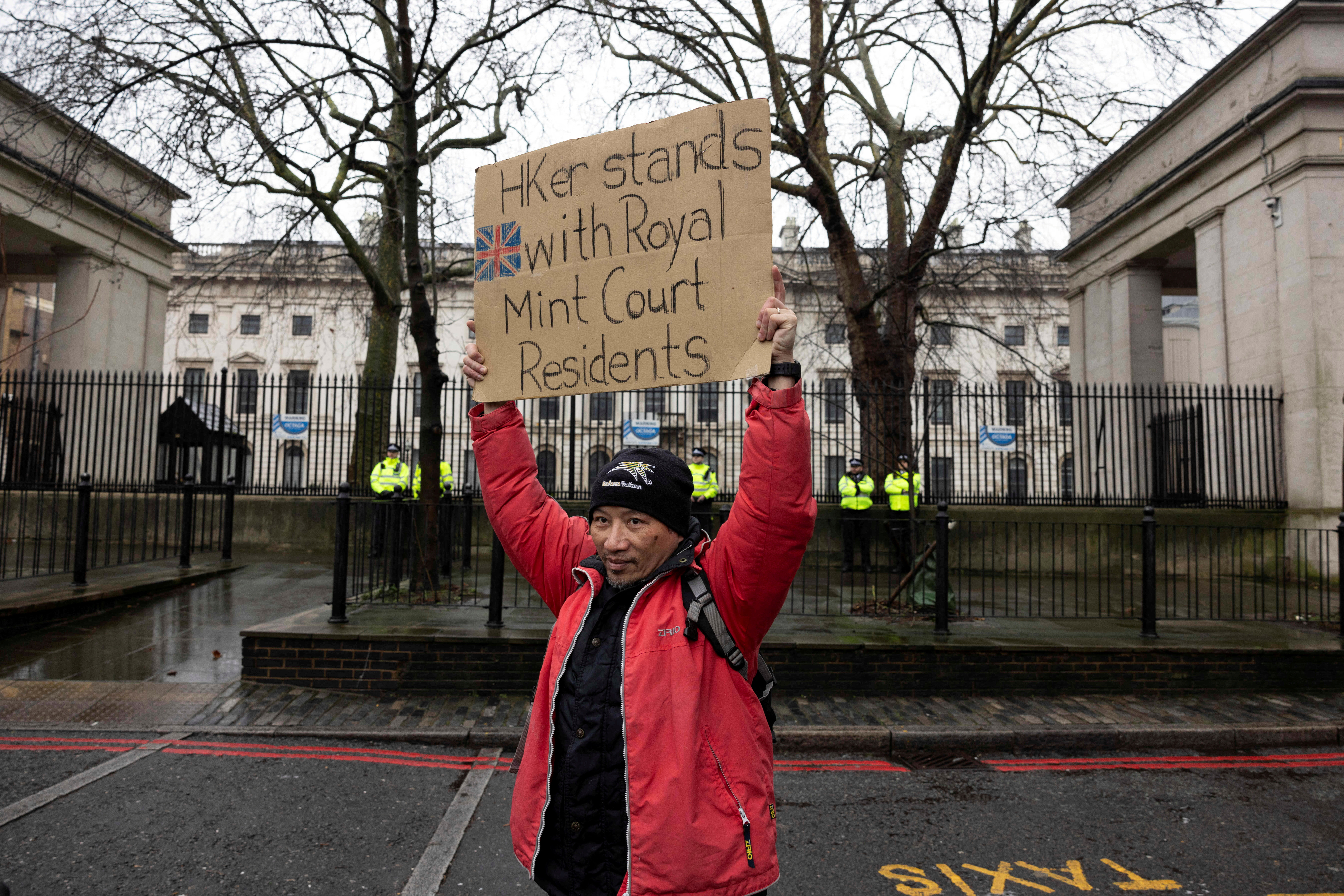
For residents living alongside the Royal Mint Court site, the embassy proposal is not an abstract exercise in foreign relations. It is something that would sit immediately next to their homes, reshaping the environment they live in day after day.
Concerns about privacy, disruption and long-term security have been raised repeatedly over several years. Residents say they engaged in meetings, submitted objections and attempted to find compromises, only to come away with the impression that the outcome mattered more than the process.
That experience is familiar to anyone who has lived near a major infrastructure or security-sensitive development. The frustration lies less in disagreement than in the belief that opposition was never capable of altering the course of events.
It is this sense of being overruled rather than out-argued that has turned a planning row into a flashpoint.
What has broadened the dispute beyond east London is the expectation that approval would not end the argument but entrench it. Residents have already signaled that they are prepared to pursue legal action, setting the stage for a prolonged court battle that could stretch on for years.
The government has set a hard deadline of January 20, 2026, to finalize its decision. While campaigners rely on crowdfunding to mount a judicial review, the government’s defense would be funded by the taxpayer. Legal proceedings of this scale consume time, money and administrative resources, regardless of the eventual outcome. Even a successful defense leaves behind a bill that cannot be reclaimed and years of uncertainty that affect everyone involved.
At a time when public services remain under pressure and households are repeatedly told that finances are tight, the idea of a drawn-out legal fight over a deeply contested project has proved inflammatory. It reinforces the perception that public money is being used to defend decisions rather than resolve disputes.
The strength of feeling surrounding the embassy also reflects a more instinctive discomfort. The prospect of a large, heavily secured foreign state complex embedded in a dense residential area has unsettled many people who are otherwise indifferent to planning politics.
Recent reports of 208 subterranean rooms and a "hidden chamber" have amplified these fears. Critics point to the site’s proximity to fiber-optic cables that carry sensitive data for the City of London and Canary Wharf. That unease has been voiced particularly forcefully by members of diaspora communities who argue that they came to the UK to escape the kind of state monitoring they now fear could be concentrated at the heart of London.
Whether or not every concern proves justified, the failure to reassure has allowed anxiety to harden into opposition.
For the government, the danger lies less in the legal details of the case than in what the episode communicates about power. Approval is widely expected this week, timed just before the Prime Minister’s anticipated diplomatic visit to Beijing. A project that appears to advance despite local opposition and visible protest risks reinforcing the idea that once a decision reaches ministerial level, accountability becomes largely symbolic.
That perception does lasting damage. It suggests a system in which the public absorbs disruption, uncertainty and cost, while meaningful authority remains distant and insulated. Even supporters of the government have begun to question whether this is compatible with promises of transparency and renewal.
The embassy dispute has endured because it brings together several frustrations the public already feels keenly: decisions that seem imposed rather than earned, legal conflicts that drag on without resolution, and public money spent managing controversy instead of preventing it.
For many readers, the site at Royal Mint Court has become a proxy for a wider unease about how power is exercised and whose voices matter when the stakes are high. That is why the reaction has been emotional rather than procedural, and why the story continues to provoke anger rather than indifference.
It is no longer just a question of what is built on a historic site in London. It is a test of whether the public believes it still has a meaningful place in decisions that shape the country it lives in.
The decision due by January 20 is not a technicality; it is a choice of legacy. If the government green-lights the project just days before a trade mission to Beijing, it confirms the public’s darkest suspicion: that their security and their voices are merely bargaining chips in a larger game. The court battle that follows will not just be about a building, but about whether the center of power still hears the people it claims to represent.
By Lawyer Monthly | Week of Jan 19, 2026
From royal litigation in London to multibillion-dollar liability questions before the US Supreme Court, the legal profession enters the week facing a convergence of risk, power and accountability. For law firm leaders, general counsel and risk teams, these are the developments shaping what comes next.
In Washington, the Supreme Court of the United States, under Chief Justice John Roberts, is preparing to issue or hear decisions that could materially reshape executive authority, trade powers and mass-tort exposure.
One of the most closely watched matters involves Monsanto and ongoing Roundup litigation. The company has already paid more than $10 billion in settlements and verdicts, with tens of thousands of claims historically in play. Any shift in liability standards would reverberate across pharmaceuticals, chemicals, insurers and litigation funders.
In the UK, the Supreme Court of the United Kingdom is entering a transitional phase following confirmation that its president, Robert Reed, will step down in 2027 — a change expected to influence the court’s long-term constitutional tone.
Elite firms continue to post extraordinary numbers. US leaders including Kirkland & Ellis, which exceeded $6 billion in annual revenue, remain locked in a competitive spiral of lateral hiring, partner pay and client concentration.
At the same time, regulators and policymakers are paying closer attention to how the profession generates profit. In the UK, discussions around redirecting interest earned on pooled client accounts — potentially worth hundreds of millions of pounds annually — toward funding the justice system have unsettled managing partners, particularly at volume-driven firms.
The direction of travel is clear: profitability remains high, but tolerance for opacity is shrinking.
Media and privacy law continue to dominate headlines as Prince Harry advances litigation against Associated Newspapers, publisher of the Daily Mail.
Beyond the personalities, the case is being watched for what it may signal about evidence-gathering, litigation tactics and the future boundary between public-interest journalism and unlawful intrusion. Legal costs and potential damages are widely expected to reach tens of millions of pounds, with consequences extending well beyond Fleet Street.
Courts are increasingly confronting the consequences of artificial intelligence inside legal practice.
The California Supreme Court has ordered a review of potential sanctions in a case involving alleged reliance on AI-generated material containing factual inaccuracies. The development has sharpened judicial expectations around competence, verification and disclosure.
For firms rolling out generative AI at scale, the message is becoming unavoidable: efficiency gains now come with regulatory and reputational exposure.
Cyber risk is no longer hypothetical — and not always the result of external hackers.
In Maryland, a recent criminal case involving a former attorney exposed how losses exceeding $4 million, including transactions involving cryptocurrency held in escrow, can create regulatory, insurance and reputational fallout even without a traditional cyber breach.
For senior lawyers, the episode has focused attention on whether existing professional indemnity cover, cyber insurance and internal controls are sufficient for matters involving digital assets. Insurers are already reassessing premiums, exclusions and reporting requirements across the sector.
US federal courts continue to scrutinise law-enforcement conduct during protests, including limits on arrests and the use of force in cases involving immigration enforcement.
These rulings suggest a judiciary increasingly willing to intervene in civil-liberties disputes — a trend with implications for public authorities, government litigators and insurers alike.
Finally, the profession itself remains in flux. Moves by parts of the American Bar Association to assert greater autonomy have reopened debates about who controls accreditation, regulation and professional standards.
While technical on the surface, these governance struggles may shape legal education, entry pathways and regulatory oversight for years to come.
In the weeks ahead, senior lawyers should expect:
Supreme Court decisions reshaping mass-tort and trade exposure
Growing judicial intolerance for ungoverned AI use
Rising insurance pressure around cyber and escrow risk
Continued scrutiny of Big Law economics and transparency
The risks are becoming clearer — and harder to ignore.
By Lawyer Monthly | Jan 19 2026
From elite law firms under scrutiny to Prince Harry’s looming High Court battle with the Daily Mail, the legal week opens with a mix of heavyweight litigation, human drama and courtroom curiosity.
The Independent reports that top law firms continue to thrive financially despite growing allegations of misconduct — reigniting debate around accountability at the highest levels of the profession.
Meanwhile, the Financial Times says Prince Harry is preparing for a High Court showdown with the publisher of the Daily Mail, a case already shaping up as one of the most closely watched media-law battles of the year. The Telegraph goes further, examining the tabloid-style tactics allegedly deployed by Harry’s legal team — and what that means for strategy in high-profile litigation.
Away from celebrity cases, The Guardian delivers a stark account of the brutal realities of custody disputes, with one parent recalling being warned their children would be “ripped in half” during divorce proceedings — a sobering reminder of the human cost behind family law.
There is lighter fare too. BBC News reports on Father Christmas being taken to court over a parking error, while another BBC profile follows a Kenilworth barrister who took up pole dancing in her 50s, challenging assumptions about life at the Bar.
Looking back, The Times revisits a 100-year-old ruling by the Earl of Birkenhead against the notorious “Hanging Judge,” while also publishing an obituary for Sir John Blofeld — a judge whose life crossed paths with both the Rolling Stones and James Bond.
Internationally, stories include a British-born Trump-aligned lawyer training Jewish activists (The Telegraph), a Brussels barrister who refuses to defend sex offenders on principle (The Brussels Times), and a profile of Neville Sarony — a Hong Kong barrister who also writes, acts and sings (South China Morning Post).
A sharp reminder that legal news can be as dramatic, personal and unexpected as any other beat.
