
Understand Your Rights. Solve Your Legal Problems
Jack Schlossberg — the grandson of former President John F. Kennedy and the only surviving male heir of the Kennedy political dynasty — has announced his campaign for the U.S. House of Representatives in New York’s 12th Congressional District, shaking up Manhattan’s Democratic establishment ahead of the 2026 midterms.
In a campaign video that spread quickly across social media, the 32-year-old Harvard Law graduate and former speechwriter declared that America is facing “a crisis at every level” — from affordability to accountability.
“It’s not enough to talk about change; we need to make it real,” Schlossberg said. “This isn’t about nostalgia or family history. It’s about fighting for the future.”
His message — grounded in populist frustration over cost-of-living pressures and political corruption — marks a sharp generational contrast with older Democratic figures who have dominated New York politics for decades.
Schlossberg is seeking to succeed longtime congressman Jerry Nadler, who announced his retirement earlier this year after representing the district for more than three decades. The 12th District stretches from Union Square through Midtown Manhattan and up to the Upper East and West Sides — one of the country’s most politically engaged urban centers.
Born and raised in the area, Schlossberg said he “rode the crosstown bus to school every day” while attending Manhattan’s Collegiate School, a detail his team highlights to reinforce his local roots in a city skeptical of celebrity outsiders.
Schlossberg’s campaign platform emphasizes economic fairness, education, and political integrity. He’s pledged to tackle the housing affordability crisis, push for expanded access to childcare and healthcare, and introduce measures to strengthen ethics and transparency in Washington.
He’s also promised to modernize congressional communication by using digital media and open online town halls — an approach that could resonate with younger, first-time voters in Manhattan.
“We can’t fix the system with the same tools that broke it,” he told supporters in an early event streamed online.
Schlossberg has leaned on his legal training to make accountability a campaign theme — without diving into complex legal jargon. He argues that Congress has failed to enforce its own standards and that “no one should be above the law, especially those who write it.”
His campaign team says he will advocate for stronger disclosure laws, independent ethics oversight, and protections for whistleblowers in both public service and corporate settings.
Political analysts note that this subtle legal emphasis distinguishes Schlossberg from the largely policy-focused field — signaling a reform-minded approach grounded in legal principle rather than partisanship.
The Manhattan race is already one of the most competitive Democratic primaries in the nation. Among the contenders are:
Micah Lasher, state assemblyman and a close Nadler ally;
Liam Elkind, founder of a volunteer relief network launched during the pandemic;
Erik Bottcher, New York City council member;
and several young progressive candidates hoping to capture the post-COVID activist base.
While Schlossberg enjoys unmatched name recognition, rivals argue that “famous last names don’t guarantee fresh leadership.” Still, early polling suggests voters are curious — if not yet convinced — by the idea of a modern Kennedy in Congress.
Unlike previous Kennedy campaigns steeped in traditional messaging, Schlossberg’s operation is fully digital. He frequently posts short, unscripted clips from his apartment or walks through Manhattan, tackling issues like rent, climate policy, and student debt in a conversational tone.
Supporters see him as an antidote to “stale politics.” Critics call him untested. Either way, his media fluency gives him an advantage in reaching voters who rarely engage with conventional campaigns.
Schlossberg hasn’t shied away from distancing himself from Robert F. Kennedy Jr., his uncle and the controversial Health and Human Services Secretary in the Trump administration. In September, he publicly blasted RFK Jr. on social media, calling him “a threat to science and public health.”
The move highlighted not only the family’s political rift but also Jack’s determination to define himself outside the shadow of Camelot. “He’s doing what many Democrats have wanted a Kennedy to do for years — take the legacy forward, not backward,” said one strategist close to the campaign.
Democrats are betting that Schlossberg’s candidacy could energize younger voters and donors as the party seeks to regain control of the House in 2026. Though the 12th is a solidly blue district, the outcome could serve as a litmus test for generational politics — whether voters want experienced leadership or a fresh face tied to history but speaking a new language.
The contest will also test whether the Kennedy brand, once synonymous with hope and public service, still holds sway in an era defined by skepticism toward political dynasties.
Official campaign launch: Expected this week with a public rally in Midtown.
Fundraising push: Digital donations are being tracked closely by national Democrats.
Debate watch: Early spring debates will likely spotlight experience versus energy.
Voter outreach: The campaign plans to use interactive video forums to connect with residents from Union Square to the Upper East Side.
Jack Schlossberg’s run for Congress is both symbolic and strategic — a generational re-entry of the Kennedy name into national politics, wrapped in the language of affordability, reform, and civic renewal.
Whether his mix of legacy, law, and digital strategy can translate into votes will determine not just his future, but whether the Kennedy mystique still carries power in 21st-century America.
By George Daniel,| 12 November 2025
Thousands of Britain’s largest jobless families could receive five-figure payouts after Labour confirmed it will abolish the two-child benefit cap, one of the most divisive welfare limits of the past decade.
Prime Minister Keir Starmer is expected to outline the reform in the November 26 Budget, overturning a Conservative-era measure and sparking fresh clashes over fairness, welfare dependency, and fiscal discipline.
Treasury officials admit the decision will cost around £3.5 billion per year, giving some of the biggest households an extra £10,000 annually in benefits. Supporters of the change call it a moral correction; critics say it rewards unemployment and will fall on the shoulders of working taxpayers.
Shadow welfare secretary Helen Whately said the move was “deeply unfair.”
“It’s wrong to make hard-up households pay higher taxes so others can have bigger families on benefits,” she said. “Starmer should stand up to his backbenchers instead of raiding the pockets of working people.”
The Treasury had considered tapering payments to avoid extreme cases but dropped the idea after pressure from Labour’s left.
The two-child rule, introduced in 2017, restricts child tax credit and universal credit to the first two children. The Institute for Fiscal Studies (IFS) estimates that families subject to it lose around £4,300 per year, while supporters say the policy keeps welfare sustainable and encourages employment.
Chancellor Rachel Reeves initially opposed lifting the cap on cost grounds but agreed after intense lobbying from MPs and campaign groups. Former work and pensions secretary Esther McVey called the reversal “financially reckless.”
“You don’t solve poverty by expanding dependency,” she said. “We should be creating jobs, not expanding benefits.”
The change has exposed tension inside Labour, pitting cautious centrists against MPs who want a return to large-scale welfare expansion.
According to Department for Work and Pensions (DWP) data, about 470,000 families are affected:
297,000 with three children
117,000 with four
37,000 with five
18,000-plus with six or more.
Separate HMRC records show 16,000 families claim child benefit for six children, 5,000 for seven, and 15 families for 13 or more.
Removing the limit could see households with five children receive £10,000 extra per year, beyond the existing welfare ceiling of £25,320 in London or £22,020 elsewhere. Labour MPs are also discussing a review of the overall benefits cap.
Starmer defended the policy during a morning interview, saying:
“I’m determined to drive child poverty down. That’s what the last Labour government did and something we were proud of.”
Seven MPs were suspended last year for rebelling on the issue, while former Labour member Rosie Duffield—who resigned over the policy—accused Starmer of acting out of “poll panic rather than conviction.”
Election-law specialists have questioned whether Labour’s manifesto costings were fully transparent before the 2024 vote.
Under the Political Parties, Elections and Referendums Act, campaign material must not be “knowingly misleading.” Some analysts argue that pledging tight fiscal control while planning multi-billion-pound reversals such as this may prompt Electoral Commission scrutiny.
Constitutional lawyer Professor Steven Barrett has previously noted that while misleading voters is not a criminal offence, Parliament can investigate if costings or commitments are shown to be inaccurate.
The Institute for Government has urged independent audits of all party costings to rebuild trust in election-period spending promises.
Economists warn the policy could stretch public finances and raise borrowing. The IFS projects annual costs of £3.5 billion, and analysts expect the Office for Budget Responsibility to revise the deficit forecast upward.
One investment strategist said:
“You can’t promise prudence and open the spending taps in the same breath. Markets will test that claim quickly.”
Treasury officials concede extra funding will come through borrowing or modest tax rises, though Reeves insists every pound is “fully costed.”
Conservative front-bencher Kemi Badenoch vowed to reinstate the cap if her party returns to power.
“Taxpayers shouldn’t fund limitless welfare,” she said. “It’s about responsibility, not entitlement.”
Reform UK leader Nigel Farage has long argued that welfare should reward those in work, and allies suggest he would back maintaining the two-child cap except for working families.
A Survation survey found 61 percent of voters oppose removing the cap, including 43 percent of Labour supporters. Opposition is strongest among lower-middle-income households anxious about higher taxes.
Online forums reflected frustration:
“I work two jobs and can’t get help—why should others get thousands for doing nothing?” wrote one reader from Birmingham.
Anti-poverty groups applauded the move as “a moral necessity,” claiming it could lift 250,000 children out of poverty, though fiscal analysts question the reliability of that estimate.
The dispute over the two-child benefit cap is now a defining test of Keir Starmer’s leadership. To supporters, it shows moral conviction; to critics, it signals a retreat from discipline into unchecked spending.
Balancing compassion with economic realism will determine whether Labour’s welfare reforms strengthen or unravel its reputation for competence.
“He’s trying to walk both roads,” said one senior civil-service source. “The danger is he ends up lost in the middle.”
The Chancellor’s Budget statement later this month is expected to confirm the policy and outline how it will be funded. If borrowing rises, economists predict pressure on gilt yields and the pound.
The coming weeks will show whether the government can sell this reform as social justice—or whether it becomes the first major test of Labour’s credibility with the markets and the public.
Beyond Westminster, the decision to lift the two-child cap has ignited fierce debate among working families who feel squeezed by stagnant wages, higher taxes, and rising living costs.
For many middle-income households, the reform raises a blunt question — who pays? The Institute for Fiscal Studies (IFS) estimates that if fully implemented, the £3.5 billion annual cost will need to be offset either through higher borrowing or a tax adjustment equivalent to around £120 per working household per year.
Charity groups such as the Joseph Rowntree Foundation argue the spending could prevent long-term social costs by reducing child poverty, while critics counter that it risks creating perverse incentives and discouraging work.
Financial analysts also warn that the reform could place added strain on local services, particularly in areas with higher unemployment and large families already reliant on housing support.
As one policy researcher put it:
“The biggest challenge isn’t just the cost — it’s explaining to taxpayers why this money helps them too.”
This tug-of-war between moral fairness and fiscal reality may ultimately shape how voters perceive Labour’s first major social reform.
LOS ANGELES — Nov. 11, 2025 — Kim Kardashian has sworn off psychics after failing her latest California bar exam, accusing self-proclaimed clairvoyants of giving her false hope and promising she would pass.
The 45-year-old billionaire entrepreneur and Kardashians star vented on TikTok, calling the psychics she met “pathological liars.”
“All the f*ing psychics we’ve met are full of st,” Kardashian said, surrounded by her family. “Every one of them told me I’d pass the bar. Don’t believe anything they say.”
Her clip sparked a viral debate over faith versus accountability, with many fans applauding her honesty while others questioned why celebrity culture keeps turning to psychics for validation.

Kim Kardashian studying for the bar exam in a bikini.
Just hours after the rant, Kardashian shared a photo of herself studying in a tiny bikini, a thick law textbook open across her lap. The caption read: “Back at it.”
Her followers praised her determination, noting that she has spent nearly six years chasing a legal career inspired by her late father, attorney Robert Kardashian Sr. She passed the “baby bar” on her fourth try in 2021 but has yet to conquer the full California exam — widely considered the toughest in the United States.
Kardashian’s frustration has reignited public discussion about psychic accountability and what the law actually says about clairvoyant claims.
In the U.S., most psychic readings are legally classified as entertainment, but making promises tied to money, health, or legal results can breach consumer-fraud statutes.
“Guaranteeing success in exchange for payment is a deceptive business practice,” said a Los Angeles consumer-protection lawyer.
The best-known example remains Miss Cleo, the 1990s TV psychic whose hotline collapsed after the Federal Trade Commission accused operators of misleading customers; more than $500 million in debt was later forgiven.
Today, many states require clear disclaimers that psychic services are “for entertainment purposes only.” Californians who feel defrauded can file complaints with the FTC or local prosecutors — though few do, fearing ridicule.
Instead of enrolling at a traditional university, Kardashian studies through California’s Law Office Study Program (LOSP) — a little-known path that lets students train under a licensed attorney or judge while studying remotely.
Participants must complete four years of supervised work, pass the First-Year Law Students’ Exam (“baby bar”), and then the California Bar Exam itself.
Only a handful of states — California, Virginia, Vermont, and Washington — allow this apprenticeship model, sometimes called “reading the law.” Students record hours, submit reports, and meet curriculum standards identical to in-person law schools.
For those outside these states, ABA-approved online law schools such as Purdue Global, Concord Law School, and St. Francis School of Law offer accredited distance programs that culminate in the same licensing exam.
Legal educators warn, however, that flexibility doesn’t mean ease. “There are no shortcuts,” said one professor. “Whether you’re studying from home or at Harvard, you have to master the same law.”
Kardashian’s determination has already spiked searches for “how to get a law degree from home” and “California law apprenticeship program.”
Kardashian’s outburst arrived as her Disney+ legal drama All’s Fair faced brutal reviews, debuting with just 4 percent on Rotten Tomatoes.
Industry insiders told Entertainment Newswire that the criticism may have ironically boosted engagement. “Once the memes hit, episode views doubled overnight,” said one production source.
The series — starring Kardashian as a glamorous divorce attorney — also features Naomi Watts, Niecy Nash, Sarah Paulson, and Glenn Close. Producers describe it as “campy fun,” insisting it was never meant to be taken seriously.
Beyond TV cameras, Kardashian’s studies connect directly to her ongoing justice-reform work. She has helped secure clemency for several non-violent offenders through partnerships with attorneys and advocacy groups like #Cut50.
By combining her celebrity platform with legal training, she hopes to influence policy around sentencing and prison reform — the same motivation that first drew her to law in 2019.
Search interest for “Kim Kardashian prison reform cases” has spiked alongside her renewed bar-exam focus, reflecting how closely fans now link her fame with social impact.
Despite disappointment, Kardashian plans to retake the bar in 2026. Passing would allow her to represent clients in California and expand her criminal-justice reform work helping prisoners earn early release.
“Hard work is the only thing that counts,” she posted later. “Not magic. Not predictions. Just effort.”
1. Can you really become a lawyer without going to law school?
Yes — in some U.S. states like California, Virginia, Vermont, and Washington, aspiring lawyers can take the Law Office Study or Reading the Law route. This means you train under a practicing attorney or judge instead of attending traditional law school. Kim Kardashian is following this path in California.
2. How long does it take to earn a law degree from home?
Most law apprenticeships take about four years of supervised study before you can sit for the state bar exam. Online or hybrid law schools, meanwhile, typically require three years for full-time students or four to five years part-time.
3. Is an online law degree recognized for the bar exam?
It depends on where you live. California is currently the only state that allows graduates of fully online law schools to sit for the bar. Other states may require attendance at an ABA-accredited institution or in-person coursework. Always check your state bar’s rules before enrolling.
4. How much does it cost to get a law degree from home?
Costs vary widely. A traditional U.S. law degree can exceed $150,000, while apprenticeship or online programs may cost between $15,000 and $50,000 total. Apprenticeships can be far cheaper but demand strict time commitments and self-discipline.
Breaking: Thousands of travelers were kicked out mid-vacation after Marriott’s partner Sonder abruptly filed for Chapter 7 bankruptcy, sparking global outrage and confusion from New York to Dubai.
Guests woke up to eviction notices this week as Sonder Holdings, the once-$1 billion short-term rental brand licensed under “Sonder by Marriott Bonvoy,” collapsed into bankruptcy.
The closure hit without warning. Lobbies locked, staff dismissed, and personal items left in hallways as the company’s global network of boutique hotels and apartments shut its doors.
“We are devastated to reach a point where liquidation is the only viable path forward,” said interim CEO Janice Sears.
The fallout stunned the travel industry — and blindsided Marriott’s loyalty members who booked Sonder stays directly through Marriott.com, expecting the same standards as traditional Marriott hotels.
“I received a message from Sonder giving me less than 24 hours to vacate because its partnership with Marriott was terminated,” traveler Katelyn Caralle posted on X.
Retired tech executive Steve McGraw, who holds Marriott Bonvoy Elite status, said his New York stay was abruptly canceled halfway through a 17-day booking.
“We ended up spending thousands more to find a new place. It was very disruptive,” McGraw said.
In Boston, Paul Strack found his belongings piled in plastic bags in the hallway. “They packed up my clothes, toiletries, computers — everything. It was impersonal and shocking.”
Even Sonder employees were caught off guard. Harvard student Alec Arritola said the hotel manager “was in tears” after learning she’d lost her job the same morning guests were told to leave.
Sonder had operated in more than 40 global cities, promising design-forward stays at lower prices than hotels. But sources say integration with Marriott’s booking systems failed, and revenue plunged through 2025.
The hospitality tech firm, already burdened by debt and high vacancy rates, couldn’t recover. When Marriott terminated its license, Sonder had no cash to operate — triggering immediate Chapter 7 liquidation instead of restructuring.
Marriott said in a statement it was “deeply disappointed” and that Sonder “operated independently under license.” The brand promised to “support impacted travelers where possible.”
Consumer lawyers say stranded guests have legal protections — even when a hotel partner goes under:
1. Credit Card Chargebacks: If you prepaid and didn’t receive your full stay, contact your card issuer immediately. The Fair Credit Billing Act allows chargebacks for undelivered services.
2. Marriott and Booking Portals: Travelers who booked through Marriott.com or partner sites may qualify for reimbursement under platform guarantees or bundled travel insurance.
3. State and Federal Protections: Many states require refunds for canceled lodging. File complaints with your state attorney general or the FTC if the company doesn’t respond.
4. Travel Insurance: Look for “supplier default” coverage, which often includes hotel bankruptcies.
5. Document Everything: Save receipts, emails, and photos of belongings or damage — crucial evidence if you pursue reimbursement or insurance claims.
Consumer rights experts advise: “If your hotel shuts down mid-stay, stay calm and document everything. You have the right to retrieve your belongings and request a refund for any unused nights.”
Analysts say the Marriott–Sonder meltdown exposes the fragile trust between global hotel chains and tech upstarts.
“People didn’t book Sonder — they booked Marriott,” said McGraw. “That logo meant security, and now that trust is gone.”
Industry analysts say the collapse is a wake-up call for franchised and licensed hotel models. Many travelers assume they’re staying in a Marriott-managed property, when in fact the brand often licenses its name to third-party operators.
The collapse leaves hundreds of employees jobless and thousands of guests seeking refunds — and could push regulators to tighten rules around brand licensing in hospitality.
Sonder’s demise is one of the largest hospitality bankruptcies since 2020, signaling wider stress in the travel-tech sector as inflation and over-expansion take their toll.
It’s also a reputational challenge for Marriott, which must reassure customers that Bonvoy points, bookings, and loyalty trust remain safe despite the partner fallout.
With investigations underway in both the U.S. and EU into Sonder’s financial practices, this story is far from over.
By George Daniel
Published: 06:32, 12 November 2025
Merseyside Police are re-examining evidence from the Southport killings inquiry amid growing calls for Axel Rudakubana’s parents to be held criminally responsible for their role in the tragedy that left three young girls dead.
The force confirmed it will obtain full inquiry transcripts from last week’s hearings, during which Alphonse Rudakubana and Laetitia Muzayire spent two days answering questions about what they knew before their son’s knife attack at a Taylor Swift-themed dance class in July 2024.
Police said they are assessing whether new evidence emerged at the inquiry that was not available during the original criminal investigation. The review could lead to a fresh case file being considered for referral to the Crown Prosecution Service.
A solicitor representing the families of Elsie Dot Stancombe, 7, Bebe King, 6, and Alice da Silva Aguiar, 9, said they are “confident new criminal charges will follow” after the inquiry shed light on the couple’s inaction.

Alice da Silva Aguiar, nine, Bebe King, six, and Elsie Dot Stancombe, seven, were murdered in the Southport attack by Axel Rudakubana, who was jailed for life with a minimum term of 52 years.
In testimony given under oath, Mr Rudakubana said he and his wife were aware that their son had collected weapons and was planning to attack his former school. He admitted he regretted not contacting police, saying, “If I had told them, what happened on 29 July would not have happened.”
The couple, who survived the Rwandan genocide before resettling in the UK, said fear and confusion stopped them from alerting authorities. They told the inquiry they were “ashamed” and “naïve” about the risks posed by their son.
Axel Rudakubana, a former stage-school student once featured in a BBC appeal, was convicted at Liverpool Crown Court in January 2025 and jailed for life with a minimum term of 52 years.
Merseyside Police said they are reviewing whether the parents’ testimony alters their assessment of potential offences under the Serious Crime Act 2007 or common-law offences such as perverting the course of justice.
A spokesperson confirmed: “We will obtain full transcripts from the inquiry and assess whether any new information was provided that wasn’t previously known.”
The force noted that, when the original investigation concluded, “the evidence available at that time did not meet the threshold for a realistic prospect of conviction.”
The renewed scrutiny has prompted calls for transparency from local representatives and campaigners, who say the Southport killings inquiry marks “a critical test of safeguarding systems across the country.”
Parents’ groups and child-protection charities said the case raises wider questions about parental accountability in violent-crime prevention. On social media, calls surged for legislation introducing a legal duty to report imminent threats, similar to the mandatory-reporting laws used in some European jurisdictions.
Legal commentators have suggested that a reopened investigation could test the boundaries of parental liability under UK criminal law, particularly where families knowingly conceal violent behaviour.
Under British law, criminal responsibility for failing to act generally arises only when a person has a specific duty of care and knows a serious crime is imminent. Prosecutors can consider several offences:
Encouraging or assisting a crime under the Serious Crime Act 2007
Perverting the course of justice by concealing evidence or preventing arrest
Failure to disclose information about terrorism or violent offences, covered by the Terrorism Act 2000
Legal experts note that while there is no general duty to inform police, courts may interpret deliberate silence in the face of clear danger as “criminally reckless.”
The Southport killings inquiry, chaired by Sir Adrian Fulford, will now move to its reporting stage. Its final findings are expected in early 2026 and will likely address how schools, local authorities and the Rudakubana family interacted before the attack.
Officials have not ruled out that its conclusions could trigger further disciplinary or criminal investigations.
Related coverage: Latest Crime and Court News
The Sun just sent a shot across Earth’s bow.
NASA and NOAA have confirmed that two colossal coronal mass ejections (CMEs) are racing toward our planet — a merged “cannibal CME” packing enough charged plasma to rattle satellites, disrupt phone networks, and bend power grids to their knees.
Officials have issued a G4 geomagnetic storm alert — the second-highest warning possible. In plain English: by Wednesday, the planet’s magnetic shield will be tested by one of the most powerful solar assaults in modern history.
This isn’t sci-fi. It’s happening right now. And the first signs could reach Earth by dawn.
If the NOAA forecast holds, Earth will take a direct hit.
When it does, mobile phones may go dark. GPS could freeze mid-route. Power grids may trip without warning.
Northern skies may ignite with auroras tonight — beautiful, yes, but also a visual sign of chaos above the clouds.
For everyone else, the effects could feel like sudden silence. The hum of Wi-Fi, the steady GPS lock, the tap of contactless payments — all at risk of glitching in unison.
This storm isn’t an isolated flare. It’s the culmination of Solar Cycle 25’s most violent week.
Sunspot AR4274 — a roiling black scar on the solar surface — has been firing eruptions like cannon fire. On Tuesday morning, it unleashed the largest flare of 2025, knocking out radio over Europe and Africa for nearly an hour.
And now, two CMEs from that same region have fused in deep space — the dreaded “cannibal” effect — forming a plasma monster tens of millions of miles wide.
Scientists expect geomagnetically induced currents (GICs) to surge through high-latitude grids by Wednesday night, with the strongest impacts across Canada, Alaska, Scandinavia, and northern Europe.
But don’t think you’re safe if you live farther south.
The 1989 Quebec blackout proved one truth: when the Sun lashes Earth, borders mean nothing.
Dropped calls, sluggish data, or complete mobile blackouts
GPS errors — your location dot wandering miles off
Voltage flickers — lights dimming for seconds, transformers heating abnormally
Satellite drift — navigation, weather, and military systems may lose orientation
Airline reroutes — especially on polar routes to avoid radiation exposure
It starts small. Then, like dominoes, digital systems fail in waves.
And yet — the storm’s first sign could be beauty itself: curtains of neon-green light across skies from Edinburgh to Minnesota.
In the calm before impact, governments and corporations are quietly bracing for the next question:
If the lights go out — who’s legally responsible?
Under the UK’s Network and Information Systems Regulations 2018, energy and communications operators must safeguard essential services against foreseeable risks. Space weather is now officially on that list.
Across the Atlantic, the Federal Energy Regulatory Commission (FERC) has issued similar guidance after past storms triggered nationwide warnings.
It’s a shifting frontier. As forecasting improves, foreseeability increases — and so does accountability.
What this means for you:
Outages lasting hours? Providers may not owe compensation.
Outages lasting days due to ignored warnings? That’s another story.
Insurance policies increasingly exclude “space-weather” — check yours now.
The takeaway: when cosmic weather hits Earth, the legal storm follows close behind.
| ☀️ NASA Solar Storm Fact File (Updated November 2025) | |
|---|---|
| Definition | A solar storm is a sudden burst of charged particles, energy, and magnetic fields released from the Sun that can impact Earth's magnetic field and technology. |
| Main Causes | Solar storms begin when twisted magnetic fields on the Sun snap and reconnect — a process called magnetic reconnection — unleashing massive energy and plasma. |
| Types of Solar Events |
|
| Earth Impacts |
|
| Protection Factors | Earth’s magnetic field and atmosphere block most harmful radiation, shielding humans on the surface. |
| NASA Missions Monitoring the Sun | SOHO, SDO, Parker Solar Probe, STEREO, MMS, THEMIS, GOLD, and AWE — each studying the Sun’s activity, magnetic field, and impact on Earth's atmosphere. |
| Solar Cycle | Solar activity follows an 11-year cycle. Storms intensify during solar maximum, marked by more sunspots and magnetic eruptions. |
| Key NASA Note | Due to the lapse in federal government funding, NASA is not currently updating some web pages, but core solar monitoring remains active. |
| Source | NASA / ESA / Solar Dynamics Observatory / SOHO (Updated June 24, 2025) |
This is bigger than dropped calls.
It’s a wake-up call for a civilization tethered to invisible threads of electricity and signal.
The Sun has always ruled our climate and crops — but in 2025, it rules our technology. A single flare can now freeze ATMs, delay surgeries, or stop trains. The same light that sustains us can dismantle our digital heartbeat.
If this G4 storm lands as forecast, it could cost billions. But if it inspires overdue investment in space-weather protection, it might save trillions.
Stay updated via NOAA SWPC alerts.
Keep devices charged and store emergency powerbanks.
Download offline maps — GPS could vanish for hours.
Air travelers: expect reroutes on long-haul or polar flights.
Critical operators: test backup systems before the CME arrives.
Q: How rare is a G4 geomagnetic storm?
A: Extremely. NOAA has recorded only a few per solar cycle. The last major one hit in April 2025.
Q: Could this cause a global blackout?
A: A full blackout is unlikely, but regional grid failures are possible — especially in northern regions.
Q: Can I see the Northern Lights tonight?
A: Almost certainly if you live north of 45° latitude. Check aurora forecasts — they may reach as far south as the Midlands or New York.
Q: Who pays for damage if satellites fail?
A: Liability depends on contracts, insurance, and whether operators took “reasonable preventive action.” In extreme cases, governments may invoke emergency protections.
Some storms hit cities. Others hit systems.
This one hits the soul of modern civilization — our belief that technology makes us untouchable.
In the next 24 hours, the Sun will remind us how fragile that illusion is.
And when your phone freezes, your signal dies, or the sky burns green over your house — remember: you’re witnessing the heartbeat of the universe, roaring through the wires we built to contain it.
Stay alert. Stay human.
And look up — because the storm is coming.
At the Fox Nation Patriot Awards, Erika Kirk’s embrace with country star Jason Aldean was meant as gratitude — but it became fuel for a viral storm. What does this moment reveal about public grief, gendered judgment, and the fine line between free speech and defamation online?
On November 6, 2025, at the Fox Nation Patriot Awards in Brookville, New York, Erika Kirk, 36, accepted the first Charlie Kirk Legacy Award — a tribute to her late husband, Charlie Kirk, who was tragically shot while speaking at Utah Valley University on September 10.
Moments later, she stepped toward Jason Aldean, the 48-year-old country music star, and shared a long, emotional hug. Cameras flashed. The audience applauded.
By morning, the video was everywhere — on TikTok, Instagram, Reddit, and X. Commenters called it “extremely inappropriate” and “disrespectful” to Aldean’s wife, Brittany. Others defended the moment as “human compassion in raw form.”
In less than 12 hours, “Erika Kirk hug Jason Aldean” became one of the most searched phrases in U.S. celebrity news.

Erika Kirk Faces Backlash Over Emotional Hug With Jason Aldean: 'Extremely Inappropriate'
For Erika Kirk, this wasn’t a calculated media move — it was emotion breaking through composure. She’s a widow of just eight weeks, suddenly tasked with preserving a husband’s political legacy while facing microscopic scrutiny.
Yet social media rarely pauses for empathy. The same platforms that once offered condolences now dissect her every movement — tone, gestures, hugs — for meaning.
“If she didn’t hug anyone, they’d call her cold. If she does, they call her inappropriate,” one X user wrote.
The post gained 40,000 likes — because it felt true.
What’s happening to Erika Kirk fits a wider pattern: viral outrage culture, where public grief becomes content and moral policing replaces compassion.
The formula is simple: celebrity + emotion + ambiguity = algorithmic gold.
A hug lasting three seconds becomes an ethical debate once slowed down, zoomed in, and captioned with insinuation. Social-media researchers call this “context collapse” — when a private moment is ripped from its emotional frame and repackaged for mass judgment.
The video of Erika Kirk’s hug hit every algorithmic trigger: celebrity crossover, a hint of taboo, visible emotion, and a ready audience primed for moral outrage.
That’s why it spread. But beneath the clicks lies something darker — the way women, especially widows, are held to impossible standards of decorum. Men in mourning are “strong.” Women in mourning are “suspect.”
While no lawsuit has been filed, Erika Kirk’s viral moment touches real defamation and online-harassment law questions — issues that affect anyone living under digital scrutiny.
Under U.S. law, defamation occurs when false statements of fact — not opinion — are published and cause reputational harm. For public figures, courts apply the actual malice standard from New York Times Co. v. Sullivan (1964): proof the speaker knew a claim was false or acted with reckless disregard for the truth.
Beyond defamation, many states now recognize cyber-harassment as a civil offense. In Florida and California, victims can seek damages if posts are designed to “maliciously inflict emotional distress.”
According to Laura R. Handman, a media attorney and partner at Davis Wright Tremaine LLP, online outrage often blurs the line between protected free speech and targeted cruelty — a dynamic she and other experts say the law is still evolving to address.
Free speech protects criticism, not false factual insinuation. If you publicly claim wrongdoing based on speculation, you may cross a legal line — especially when millions amplify it.
Public shaming carries a measurable emotional cost. Psychologists describe “digital trauma” — the anxiety and insomnia that follow a social-media dogpile. For someone already grieving, it’s like mourning twice: once in private, once in public.
Friends close to Kirk say she’s focusing on rebuilding Turning Point USA and protecting her late husband’s legacy. But the internet’s noise makes healing harder.
For a moment of empathy to become a “trial by trending topic” says less about Erika Kirk and more about us — the audience.
Latest: Turning Point USA in Turmoil: Candace Owens’ Leaked Texts Leave Erika Kirk Fighting for Control
The Erika Kirk hug controversy isn’t only a celebrity headline. It’s a case study in how 21st-century grief collides with viral judgment.
When algorithms reward outrage, compassion becomes countercultural. And yet, this is where readers hold power: choosing whether to amplify judgment or restore empathy.
Because if the internet can turn a widow’s hug into scandal, what chance does ordinary humanity have?
Why is Erika Kirk trending?
Because of a viral video showing her hugging Jason Aldean at the Fox Nation Patriot Awards, which sparked debate over whether the gesture was “inappropriate.”
Did Erika Kirk break any law?
No. The incident has no legal standing; the discussion centers on social perception and online commentary.
Can online criticism be defamation?
Yes — if it includes false statements of fact that harm reputation. Opinion and satire are protected, but misleading factual claims can cross legal lines.
Why are people divided over Erika Kirk?
Her visibility as a grieving widow and conservative leader has made her a polarizing figure, illustrating how gender, politics, and grief intertwine in digital culture.
Erika Kirk stood on a stage meant to honor love and loss. The internet turned it into a spectacle.
Her story reminds us that compassion doesn’t always trend — but it should. And for anyone tempted to judge from behind a screen, it’s worth remembering: context is everything, and empathy costs nothing.
Sean “Diddy” Combs, once a symbol of wealth and control, is now just another inmate waiting in line for a razor.
The 56-year-old hip-hop mogul began his four-year federal sentence on October 30 at FCI Fort Dix, New Jersey, following his conviction on two counts of transporting individuals for prostitution and is now potentially facing a loss of phone privileges for allegedly making an unauthorized three-person call shortly after being transferred to Fort Dix.
Two weeks in, sources say the man who once arrived at parties in private jets now walks the prison corridors with a shaven head, tired eyes, and the faint smell of bleach instead of designer cologne.
According to a November 10 CBS News report, Combs has been assigned to the chapel library as a chaplain’s assistant — considered a “desirable” position among inmates. His publicist calls it “warm and respectful,” but others describe it differently: humbling.

A typical cell at FCI Fort Dix offers basic furnishings — a bunk bed, metal desk, and limited privacy — reflecting the regimented daily life faced by inmates inside the low-security federal prison.
Behind bars, image control disappears. Fellow inmates reportedly tease Combs about his uneven hairline, faded tattoos, and the way prison uniforms swallow his once-tailored frame. One insider joked, “He used to pay people to wash his sneakers — now he’s scrubbing floors for free.”
Social media has turned the humiliation into spectacle. Memes comparing his Met Gala looks to grainy prison sketches have racked up millions of views. One viral tweet read: “From Cîroc to commissary — karma served cold.”
For many, the mockery feels like justice. For others, it feels like America’s favorite ritual: watching the mighty fall.

Diddy’s legal downfall began with sex — and that shadow still follows him. Once notorious for lavish parties and whispered scandals, he now lives in an environment that strips sexual autonomy to the core.
According to the Bureau of Justice Statistics, approximately 1.2 substantiated sexual assault incidents per 1,000 inmates occur annually in U.S. adult prisons (BJS, 2020). Inmate-on-inmate assaults remain a persistent concern despite the Prison Rape Elimination Act (PREA) standards introduced in 2003.
Inside prison walls, sex isn’t permitted — but that doesn’t mean it doesn’t happen.
Under federal prison law (28 CFR § 541.3), any sexual activity between inmates is classified as a high-severity prohibited act, even if both claim it was consensual. The logic is simple: power, fear, and dependency make genuine consent nearly impossible.
Inmates caught engaging in sexual behavior can face solitary confinement, loss of privileges, or even new criminal charges under state law. Sex between staff and inmates is treated even more harshly — it’s a felony offense under 18 U.S.C. § 2243(b), carrying penalties of up to 15 years in prison.
Still, reality tells a different story. The Bureau of Justice Statistics estimates that roughly 1.2 sexual assaults per 1,000 inmates are confirmed each year in U.S. correctional facilities — and advocacy groups believe the real number is far higher. Most incidents involve staff misconduct, not inmate-on-inmate contact.
For Diddy, whose past is tangled with sexual controversy, the irony is striking: he’s now in a system where sexual expression is criminalized, controlled, and surveilled. The man once accused of excess now lives under total deprivation — where even the faintest whisper of sexual contact could trigger punishment, scandal, or danger.
At Fort Dix, Diddy’s days are ruled by structure. Wake-up calls at 5 a.m. Meals at 6. Half the day in chapel duty, the other half in the Residential Drug Abuse Program (RDAP) — an intensive cognitive-behavioral therapy course designed to treat addiction and reduce recidivism.
He’s not the first celebrity to join RDAP — or to see it as both survival and strategy. Completion can shave up to a year off a sentence, but the process is grueling: therapy circles, written reflections, accountability exercises.
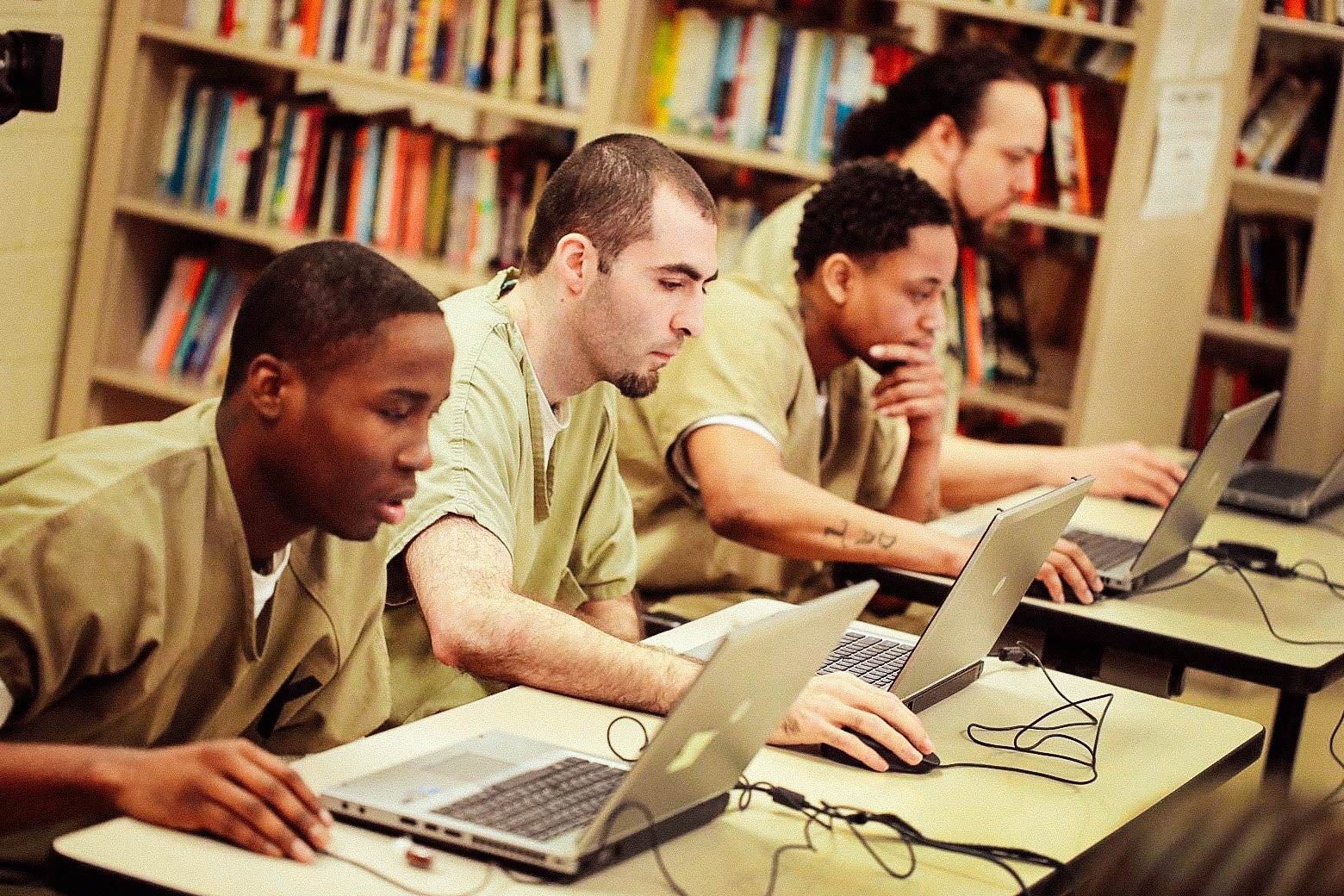
Inmates at federal facilities are increasingly enrolling in computer literacy and coding programs — part of a growing push to equip prisoners with digital skills for life after release.
Psychologists call it status collapse — the abrupt loss of social dominance. For Combs, humiliation may be more punishing than prison itself.
Even basic hygiene becomes symbolic. The once-manicured mogul must share showers, wear ill-fitting clothes, and ration commissary soap. What used to be image maintenance is now survival routine.
In early November, Diddy reportedly violated a Bureau of Prisons rule by joining a three-person phone call.
Under 28 CFR § 540.102, inmates may communicate with attorneys through unmonitored calls only if verified; conference calls are prohibited. CBS News, citing prison documents, reported that Combs is potentially facing a loss of phone privileges for allegedly making an unauthorized three-person call shortly after being transferred to Fort Dix.
Combs' spokesperson, Juda Engelmayer, says the call had been initiated by an attorney and also revealed where the Bad Boy Records founder is working behind bars
“He is in the drug treatment program and he is working in the chapel library," Engelmayer says. "The phone call he was on was initiated by an attorney and it was attorney client privilege and appropriate.”
Prison documents recommend a 90-day suspension of phone and commissary privileges — a disciplinary action that, while minor, carries heavy optics.
For those entering federal custody — especially public figures — the rule is simple: compliance equals survival.
Q: Can a celebrity inmate like Diddy get special treatment?
A: Not officially. But visibility often triggers stricter enforcement, not leniency.
Q: What is RDAP and how can it shorten a sentence?
A: RDAP is a nine-month cognitive therapy program. Successful completion can reduce sentences by up to one year under 18 U.S.C. § 3621(e).
Q: Are sexual assaults common in federal prisons?
A: The Bureau of Justice Statistics reports roughly 1.2 substantiated incidents per 1,000 inmates annually — but experts say many cases go unreported.
Q: What happens if Diddy breaks another rule?
A: Disciplinary infractions can delay early-release eligibility, revoke RDAP benefits, or affect parole review outcomes.
For Sean Combs, the walls of Fort Dix hold more than punishment — they hold exposure. The world that once fed on his power now feeds on his downfall.
But humiliation can be both a weapon and a mirror. If prison strips away what’s performative, maybe what’s left is real accountability — or just another reinvention waiting for release.
Either way, the man who once ruled pop culture by excess now embodies the one thing fame could never give him: forced humility.
The case of Linda Sun, a once-rising political aide in New York state, has exploded into one of the most shocking foreign-influence scandals in recent memory.
According to federal prosecutors, Sun — who served under both Governor Kathy Hochul and former Governor Andrew Cuomo — lived a life far beyond her $145,000 public salary. At the center of their allegations: that she secretly acted as an unregistered agent of the Chinese Communist Party, channeling influence and cash through a network of business fronts tied to her husband, Chris Hu.
Prosecutors allege that millions of dollars flowed from China into U.S. accounts linked to the couple — money later spent on luxury properties, designer travel, and even a $243,000 Ferrari Roma.
The indictment, unsealed in Brooklyn federal court, paints a portrait of quiet power, hidden loyalties, and a state government blindsided by international intrigue.

Prosecutors allege that millions of dollars flowed from China into U.S. accounts linked to Linda Sun and her husband — money later spent on luxury properties, international travel, and a 2024 Ferrari Roma valued at more than $243,000.
For years, Linda Sun appeared to be a model public servant.
Born in China and raised in Queens, she built a reputation for bridging New York’s Asian-American communities with Albany’s political establishment. She joined Cuomo’s staff in 2012, later becoming Chief Diversity Officer and, under Hochul, Deputy Chief of Staff.
Behind the scenes, prosecutors claim, her connections ran much deeper. Court filings allege Sun cultivated personal relationships with Chinese consular officials, attended CCP anniversary celebrations in Beijing, and privately advanced messaging favorable to the Chinese government — all while holding high-level U.S. state office.
Her husband, Chris Hu, allegedly acted as the financial conduit.
Together, they reportedly purchased a $3.6 million mansion in Manhasset, a $1.9 million condo in Honolulu, and luxury vehicles, all through shell accounts and wire transfers traced back to China. During the COVID-19 pandemic, the couple allegedly reaped $2.3 million in PPE kickbacks — profits prosecutors say were disguised as consulting fees.

The investigation began quietly.
In late 2022, after internal auditors flagged irregularities in Sun’s travel reimbursements and unexplained financial disclosures, the New York Department of Labor forwarded evidence to federal authorities. Hochul’s office soon confirmed Sun had been terminated for “misconduct,” though the details were withheld pending the probe.
By 2024, federal agents had uncovered what they described as “systematic influence operations” — attempts by Sun to shape New York’s economic and cultural policies in ways that benefitted Beijing.
She allegedly blocked Taiwanese diplomats from official access, provided a Chinese official with a private conference call link to state COVID briefings, and accepted gifts including performances, dinners, and “business assistance” for her husband’s China-based ventures.
Sun has pleaded not guilty to all charges, including violating the Foreign Agents Registration Act (FARA), bank fraud, visa fraud, and money laundering.
Her defense insists her outreach work “aligned with U.S. interests” and that prosecutors are “politicizing diplomacy.”

As jury selection opened this week in Brooklyn federal court, Judge Brian Cogan — who famously presided over the trial of drug lord Joaquín “El Chapo” Guzmán — reminded jurors that “foreign agent” cases often hinge not on espionage, but on intent and concealment.
Potential jurors were asked whether they held “strong opinions” about China or Taiwan — a sign of just how politically charged this trial has become.
Sun sat stone-faced beside her husband, her lawyers emphasizing she had “no formal direction” from any foreign government.
Yet prosecutors have produced dozens of photos, travel records, and email exchanges showing Sun’s proximity to Chinese diplomats, including one image of her being honored at a Chinese consulate event — evidence they say reveals her “dual allegiance.”
“When public officials conceal ties to a foreign state, it undermines the very transparency our democracy relies on,”
said U.S. Attorney Breon Peace in a statement announcing the indictment.
To many observers, the Sun case is not an isolated scandal but part of a broader pattern of foreign influence creeping into state and local government.
Over the past five years, U.S. intelligence officials have warned that China has shifted its strategy from traditional espionage toward cultivating relationships with mid-level bureaucrats, business associations, and community liaisons — people like Linda Sun, who can open doors quietly without triggering alarms.
An internal FBI counterintelligence memo from 2024 described such relationships as “soft power infiltration” — less spy thriller, more bureaucratic manipulation.
Sun’s alleged conduct, prosecutors say, demonstrates how vulnerable the U.S. political system can be when local access meets global ambition.
Enacted in 1938, FARA requires anyone acting “at the order, request, or under the direction or control of a foreign principal” — and engaging in political or public influence — to register with the U.S. Department of Justice.
It’s not illegal to represent a foreign government, but it is a crime to hide it.
Legal experts say the Sun prosecution could reshape how FARA is enforced at the state level.
“Historically, FARA focused on federal lobbying and national campaigns,” explains David Laufman, former Chief of the DOJ’s Counterintelligence Section, in a 2024 Reuters interview. “What we’re seeing now is a recognition that foreign governments are targeting state and municipal systems, where oversight has been weaker.”
In 2020, the DOJ charged Thomas Barrack, an adviser to Donald Trump, under FARA for allegedly acting on behalf of the UAE — he was later acquitted.
Legal observers say the Sun case, unlike Barrack’s, features direct financial ties and official influence within state government, making it a potential landmark precedent.
For anyone working in public service or contracting with government: if your work benefits or coordinates with a foreign entity, you must disclose it under federal law.
Failing to do so isn’t a paperwork error — it’s a felony.
As Attorney General Merrick Garland said in a 2025 policy speech:
“Transparency in foreign influence is not optional. It’s the line that separates diplomacy from deception.”
(Source: DOJ.gov)
The scandal has rocked Albany. Inside the capitol, aides describe an atmosphere of suspicion and disbelief.
“How could someone so embedded in diversity and inclusion initiatives be working for another government?” one state staffer told Lawyer Monthly on condition of anonymity.
The emotional fallout is profound. Sun was once celebrated as a symbol of representation — an immigrant who rose through the ranks to help shape state policy.
Now she’s emblematic of how influence, ambition, and power can intertwine in ways that test the boundaries of loyalty.
For Governor Hochul’s administration, the trial is an unwelcome reminder of the fragility of public confidence.
State ethics watchdogs are reportedly reviewing vetting procedures for senior hires and expanding disclosure forms to include foreign business relationships and cultural affiliations.
To understand why the Sun case resonates so deeply, it helps to look back.
The Foreign Agents Registration Act was originally drafted to combat Nazi propaganda before World War II.
Over time, it evolved to target covert lobbying, often linked to Russia, China, and Middle Eastern governments. Yet for decades, enforcement was sporadic.
Between 1966 and 2016, only seven criminal FARA cases were filed. That number has surged to more than 40 indictments since 2018, reflecting Washington’s growing unease with global influence.
Sun’s prosecution may mark the first major state-level FARA trial tied to Chinese influence networks — and a turning point in how the U.S. interprets “foreign agency” in domestic politics.
If convicted, Linda Sun faces up to 20 years in prison for money laundering and five years for each FARA and bank fraud charge.
Her husband, Chris Hu, faces similar penalties. Both maintain their innocence and accuse the DOJ of “overreach and misinterpretation.”
Legal analysts expect the trial to run through early 2026, with witnesses from New York’s economic development office, Chinese consulates, and the FBI’s counterintelligence division.
Should prosecutors secure a conviction, the case could embolden further crackdowns on undeclared influence networks, especially those operating through trade or cultural programs.
For policymakers and attorneys, the implications are stark:
foreign influence is no longer a Washington problem — it’s a 50-state issue, capable of touching every level of government.
Q: What is the Foreign Agents Registration Act (FARA) and why is it suddenly being enforced more?
A: FARA requires disclosure of activities conducted for foreign governments. Enforcement has intensified since 2020 as global influence operations have targeted local and state officials.
Q: Could a state employee really face federal charges under FARA?
A: Yes. FARA applies to anyone in the U.S. acting at the direction of a foreign principal, regardless of their level of government. The Sun case is expected to clarify that reach.
Q: How can public employees protect themselves from violations?
A: Avoid undisclosed foreign contacts, report all gifts and business links, and consult legal counsel before coordinating with international entities. Transparency is the best protection.
The Linda Sun case sits at the crossroads of law, politics, and national security, a reminder that corruption doesn’t always look like bribes in briefcases — sometimes it wears a government badge and smiles at press conferences.
For readers, the lesson is sobering: in an era of globalization and hybrid diplomacy, vigilance must reach beyond Washington.
For lawyers, it’s a signal that compliance and disclosure rules once viewed as bureaucratic are now central to defending democracy itself.
And for America, it’s a warning — that loyalty, when bought or borrowed by another power, can erode the very institutions built to protect it.
The divorce between Beverly Hills, 90210 actress Tori Spelling, 52, and Canadian actor Dean McDermott, 58, was officially finalized in late October — three years after the pair separated. What stunned Hollywood wasn’t the split itself, but how quietly it ended. “This was one of the easiest divorces in Hollywood,” Spelling said on her podcast misSPELLING on November 10. “Dean and I came out of this divorce with a clean slate. We didn’t ask each other for anything.”
In a town famous for bitter custody battles and million-dollar legal wars, the couple’s low-drama ending defied every expectation. Yet behind the calm press statements lies a deeper story about maturity, media fatigue, and how divorce law in California is evolving to meet a new kind of family reality.
:max_bytes(150000):strip_icc():focal(749x0:751x2)/tori-spelling-dean-mcdermott-8e3925732b0348fbbfa0f5ed00d8b413.jpg)
Tori Spelling and Dean McDermott pose together at a FOX Television Critics Association event before finalizing their divorce.
Spelling and McDermott’s love story began in 2005 on a film set — both married at the time. A year later, they wed in Fiji and became a tabloid staple, raising five children in front of cameras: Liam, Stella, Hattie, Finn, and Beau. Their marriage was equal parts romance and reality TV experiment.
But by 2023, after public struggles over finances, infidelity rumors, and Dean’s admitted sobriety challenges, the relationship had run its course. McDermott publicly announced their separation that June, calling it “painful but necessary.”
What makes the story remarkable isn’t the breakup — it’s how both sides handled it. Instead of lawyering up for a public showdown, they opted for private mediation. According to court filings obtained by People, the pair settled all major issues — property, custody, and support — outside court. In doing so, they spared their children the emotional toll of another media circus.
For fans who’ve followed Spelling since her 90210 days, this felt like the most grown-up chapter yet. “We have no drama,” she said on the podcast. “It’s so amicable.”
That word — amicable — may sound mundane, but it’s rare in Hollywood family law. A-list splits are often amplified by PR teams, competitive filings, and public shaming. Think of Johnny Depp vs. Amber Heard or Angelina Jolie and Brad Pitt’s years-long custody war.
Spelling and McDermott, by contrast, appear to have rewritten the playbook. Rather than dragging one another through TMZ headlines, they shared joint statements about unity, even showing up together for their children’s school and charity events. “He’ll always be one of my life partners,” Spelling said. “Our kids seeing that takes the stigma out of divorce.”
It’s a message that resonates beyond celebrity culture — especially among parents trying to navigate separation without destroying their families in the process.
California is a no-fault divorce state, meaning neither party has to prove wrongdoing. The only requirement is “irreconcilable differences.” But what makes Spelling’s case notable is her choice to go through mediation — a process where couples negotiate terms privately with a neutral facilitator.
“High-profile couples increasingly use mediation to keep financial and personal details out of public records,” explains Stephen L. Cawelti, a Los Angeles family law attorney. “It’s faster, cheaper, and lets parents control the narrative instead of the court.” (Source: Cawelti Law, 2025)
Privacy advantage: Mediation records are confidential, unlike courtroom filings.
Faster resolution: Most cases close in months instead of years.
Lower costs: Legal fees are drastically reduced.
Co-parenting focus: Agreements tend to prioritize child stability over blame.
Under California Family Code §2550, community property is generally split equally — unless both sides agree otherwise, as Spelling and McDermott reportedly did. Their case exemplifies how celebrity divorces are shifting from spectacle to strategy, with mediation now the preferred route for preserving reputations and relationships alike.
For readers facing similar crossroads, mediation can be an empowering alternative — but only if both sides are committed to honesty and compromise.
Once upon a time, Hollywood divorces were bloodsport — from Liz Taylor’s courtroom showdowns to the legal wars of the Kardashian era. Now, a subtle cultural shift is underway. The combination of brand management, social media transparency, and burnout from public scrutiny has forced stars to prioritize emotional sustainability over revenge.
In Spelling’s case, it’s also about financial realism. Her well-documented money troubles — from reported tax liens to property struggles — made a drawn-out court battle unthinkable. Instead, she and McDermott prioritized rebuilding their lives separately while remaining family in spirit.
The result? A rare example of post-marriage partnership. McDermott has since moved on with new girlfriend Lily Cao, while Spelling focuses on her podcast, parenting, and personal growth. The narrative is no longer “who won” — it’s “how they healed.”
For ordinary couples, the Spelling-McDermott divorce offers a surprisingly practical roadmap:
Mediation over litigation reduces stress and preserves dignity.
Child-centered agreements can redefine “family” after separation.
Emotional closure before legal closure (as Spelling put it, “I grieved the relationship during it”) makes the transition smoother.
In essence, they modeled a humane version of divorce — one rooted in communication and restraint rather than ego. For Lawyer Monthly readers, that’s the real headline: emotional intelligence is becoming a legal asset.
Q: How long were Tori Spelling and Dean McDermott married?
They were together for 20 years and married for 18, before officially separating in 2023 and finalizing their divorce in late 2025.
Q: Why did Tori Spelling and Dean McDermott divorce?
Court documents cite “irreconcilable differences.” In interviews, Spelling hinted at emotional distance and years of strain rather than a single incident.
Q: How does divorce mediation work in California?
Mediation allows couples to reach agreements privately with a neutral third party. It’s confidential, usually cheaper, and avoids court proceedings.
Q: What happens next for Tori Spelling?
Spelling says she’s focusing on her five children, her podcast, and redefining life “without drama.” McDermott has said the two “get along fabulously.”
In the noise of celebrity culture, Tori Spelling’s divorce stands out for its silence. No public feuds. No social media mudslinging. Just two people who found peace in letting go.
It’s proof that in 2025, even in Hollywood, not every ending needs fireworks — sometimes, the quiet ones change the rules the most.
