Understand Your Rights. Solve Your Legal Problems
The standoff involving the Russian vessel Yantar—and Britain’s claim that RAF pilots tracking it were hit by lasers—has already made headlines. But the real story isn’t happening in the sky above the ship. It’s happening on the seafloor below it, where the backbone of Britain’s digital, financial and political life quietly rests.
This analysis steps away from the breaking-news flashpoints and examines the deeper question now troubling policymakers across Europe: if a hostile state truly wanted to disrupt Britain’s undersea cables, how vulnerable is the UK—and what would the consequences be?
Most readers saw the laser allegation as reckless Russian behaviour. But anyone familiar with the Yantar’s capabilities knows that its presence near Britain is concerning for an entirely different reason. The ship is linked to Russia’s deep-sea intelligence operations, specialising in surveying, mapping, and potentially interacting with submarine infrastructure.
This matters because the UK relies on undersea cables to an extent few people realise. More than 95 percent of all global digital traffic travels through these systems, including financial transactions, cloud data, government communications, and everyday internet use. The UK, sitting at the crossroads of transatlantic communication, depends on a handful of key landing stations and seabed corridors that are far more fragile than the public imagines.
So the real question is not what the crew of the Yantar might be pointing at RAF aircraft—but what they might be doing on the seafloor.
The immediate news reporting skimmed over several deeper issues. It did not explain what would actually happen if several of Britain’s key cables were severed. It didn’t clarify how limited Britain’s rights are in its Exclusive Economic Zone, where foreign vessels can legally operate despite raising serious security concerns. And it didn’t place this incident in the wider European landscape, where the Nord Stream pipeline explosions and a series of unexplained cable failures have already demonstrated how easily seabed infrastructure can be compromised.
In short, the coverage showed the spark, not the powder keg beneath it.
Submarine cables are simultaneously robust and fragile. Globally, the system is resilient: hundreds of cable routes connect continents. But locally, especially around Britain, the picture is different. Many routes converge on a few key landing points, often concentrated on small stretches of coastline. Parliamentary committees have warned for years that a well-planned attack on just a handful of these points could have “catastrophic” consequences for the financial sector.
Complicating matters further is the legal environment. The UN Convention on the Law of the Sea gives Britain full sovereignty only within 12 nautical miles. Beyond that, in the 200-nautical-mile Exclusive Economic Zone, foreign vessels—research ships included—have broad freedoms. Intentionally damaging cables is illegal, but merely surveying them exists in an ambiguous legal grey zone.
Strategically, Europe has already seen what seabed sabotage looks like. The Nord Stream explosions in 2022 proved it could be done without warning and without immediate attribution. Since then, suspicious damage to communication cables in the Baltic Sea and the Red Sea, alongside increased activity by Russian “research” vessels, has pushed seabed security to the top of NATO’s agenda. This led to the creation of a new critical infrastructure coordination centre at Northwood in the UK—an acknowledgement that the seabed has become a contested domain.
Although they rarely agree on every detail, analysts consistently highlight several realities about the threat to submarine cables.
• The system is globally resilient but locally fragile.
Hundreds of cables exist worldwide, but the UK depends heavily on a few physical chokepoints. A determined attacker wouldn’t need to cut many links to cause serious disruption.
• Most cable damage is accidental—making deliberate attacks harder to detect.
Fishing gear and anchors still cause the majority of breakages. A hostile state could exploit this background noise to hide a targeted operation.
• Attribution is the real battlefield.
Even if a cable fails suspiciously, proving that a state actor caused it can take weeks. This delay undermines any immediate political or military response and encourages grey-zone operations.
• Current law is poorly suited to modern deep-sea threats.
Existing treaties were drafted for telegraph cables, not fibre-optic systems crucial to the global economy. Scholars have been pushing for clearer norms and thresholds around cable sabotage.
• Private companies own most of the infrastructure.
Defending it requires cooperation between navies, regulators, telecom operators and major tech firms—an uncomfortable but unavoidable reality for modern states.
In the short term, Britain will continue to shadow the Yantar closely. The point is not simply to deter the vessel but to document its behaviour. Public warnings from Downing Street serve as a reminder that London is building a record, establishing patterns, and signalling to both allies and adversaries that it is watching.
But the real shift will be quieter. Cable operators will increase real-time monitoring. The UK will face mounting pressure to invest in its own cable-repair capacity, an area where it still relies heavily on commercial and allied ships. NATO will continue developing joint surveillance and response strategies, especially across the North Atlantic and the Arctic routes that Russia increasingly uses.
The Yantar incident is not an isolated provocation; it’s another sign that Europe’s seabed infrastructure is becoming a strategic fault line. Whether Britain is ready for that reality is still an open question.
What is clear is that the cables beneath the North Atlantic carry far more than data. They carry the economic and political stability of the UK itself. Any actor capable of accessing or sabotaging them holds a kind of leverage that few citizens have ever been encouraged to think about. The danger now exposed is not the ship Britain can see, but the hidden world it is capable of reaching.
Not instantly. The UK has redundancy and multiple routes. But targeted attacks on several key cables or landing stations at once could severely disrupt financial markets, slow or degrade internet traffic, and pressure critical services.
It depends on scale and intent. Deliberate, strategically significant sabotage could be treated as an armed attack under international law—but only if attribution is clear and the impact is substantial.
Primarily private companies—telecom operators, cloud providers, and consortium partners. Governments rely on these private networks for national and economic security.
No. Satellites provide only a tiny fraction of international capacity. They can support essential services, but cannot replace the speed and volume required for normal economic and digital activity.
NATO has enhanced patrols, launched a Critical Undersea Infrastructure initiative, and created a dedicated coordination centre in Northwood. The alliance is also working more closely with private operators to detect and respond to suspicious activity.
It accelerates trends already underway: expanded monitoring, strengthened rules of engagement, and political pressure to harden Britain’s undersea infrastructure. The dramatic laser allegation may fade, but the push to secure the seabed will not.
A fast-moving dispute erupted in Washington after Rep. Jason Crow challenged the Justice Department’s response to a viral video urging U.S. service members and intelligence officers to reject any order that violates the law. Deputy Attorney General Todd Blanche acknowledged internally that the video had raised concerns inside the department, placing Crow and several former military lawmakers at the center of a sudden political and legal flashpoint.
The video spread rapidly across social platforms, drawing national attention because it referenced the oath troops take to defend the Constitution. Senior administration officials questioned how the message might affect military discipline, while Crow argued that strong pushback from federal officials underscores the importance of addressing the boundaries between lawful and unlawful commands.
With both Congress and the DOJ now weighing the implications, the debate has quickly become one of the most closely watched civil-military issues of the month.
Crow, a former Army Ranger and now a Democratic congressman from Colorado, appears in the video alongside other lawmakers with military or intelligence backgrounds.
Their message drew immediate attention from senior administration officials, including Deputy Attorney General Todd Blanche, who said the video raised internal concerns about messaging directed at active-duty personnel.
The issue escalated because the lawmakers involved have long emphasized military professionalism and constitutional duty, making their public appeal unusually direct.
The lawmakers’ video urges troops and intelligence officers to uphold their oath and avoid carrying out any command that clearly violates U.S. law.
It frames this standard around long-standing military rules, focusing on legality rather than politics.
Officials within the administration, however, questioned the timing and clarity of the message. They warned that public calls discussing refusal of orders—even if tied to legality—could create uncertainty within the ranks about how to interpret chain-of-command expectations.
While no formal action has been announced, Blanche acknowledged that the message triggered internal review discussions.
The video was released online in mid-November and gained momentum within hours, pulling the issue from congressional messaging into a national security conversation.
With both the DOJ and congressional offices responding publicly, most of the attention has centered in Washington, where legal and political institutions are now addressing the fallout.
The rapid spread of the video made the debate impossible for federal agencies to ignore.
The issue touches on a central principle of U.S. military service: troops must obey lawful orders and reject commands that are clearly illegal.
That obligation predates every modern administration and is a core pillar of military law.
The lawmakers say their goal is to remind service members of their oath.
Administration officials, meanwhile, say they want to avoid any message that could be interpreted as encouraging hesitation in following lawful commands.
Because both positions involve real legal obligations, the issue has moved beyond politics and into a broader public discussion about military duty and constitutional safeguards.
Under the Uniform Code of Military Justice (UCMJ), service members must follow lawful orders and must not follow orders that instruct them to commit a clear violation of U.S. law.
Determining whether an order crosses that line generally involves a commander, legal officers (JAGs), and established review channels.
Orders related to deployment or policy rarely meet the threshold of illegality.
The standard is high and based on clear legal violations, not disagreement with policy.
The Department of Justice can examine whether public communications involving the military raise any legal issues under existing statutes governing interference with military duties.
Such reviews assess whether the speech encourages unlawful acts or has no legal bearing.
At present, no public indication exists that the DOJ has launched a formal investigation.
In periods of public debate involving military conduct, leadership can issue reminders outlining:
The legal definition of a lawful order
The obligation to question clearly illegal commands through proper channels
The chain-of-command process for raising concerns
These communications are standard practice across administrations.
No. Service members follow the UCMJ and official military guidance. Public messages do not change legal obligations.
Yes. Members of Congress have broad First Amendment protections. Their remarks may draw scrutiny but are generally considered protected speech.
An order that instructs a service member to commit a clearly defined criminal act under U.S. law. These determinations involve commanders and JAG officers.
Troops may see additional reminders about lawful orders and chain-of-command expectations. These communications are routine and clarify existing rules.
The exchange between Crow and senior DOJ officials has placed civil-military boundaries under unusual public scrutiny.
Further statements from Congress, the DOJ, or military leadership could shape how the issue evolves, especially if agencies issue additional clarifications about the legal standards governing military commands.
For now, the situation remains fluid, and Washington is closely watching how both institutions respond in the days and weeks ahead.
A disturbing discovery at a Los Angeles impound lot has placed rising music star d4vd at the center of a fast-moving criminal investigation after officers opened the trunk of his impounded Tesla and found the body of 15-year-old Celeste Rivas Hernandez. Workers first alerted police to a strong, foul odor coming from the abandoned vehicle on September 8, leading officers to uncover the missing teen inside.
The car, registered to 20-year-old d4vd—real name David Anthony Burke—was towed from the Hollywood Hills after sitting for weeks, and law-enforcement sources now confirm he has been identified as a suspect, intensifying public scrutiny and pressure on detectives to determine how a missing teenager ended up in the trunk of a celebrity’s car.

Who is d4vd? David Anthony Burke — known to fans as d4vd — was on tour promoting his debut album Withered when Los Angeles police discovered an abandoned Tesla registered in his name with a body hidden in the trunk.
Celeste Rivas Hernandez was found dead the day after her 15th birthday. The Los Angeles County Medical Examiner later confirmed her identity, with the date of death listed as September 8. Investigators believe she had been deceased for several weeks, a detail that added urgency to an already deeply troubling case.
Celeste had been reported missing multiple times in 2024, according to Riverside County officials. While community members described her as a loving daughter and friend, the circumstances of her disappearance remain unclear. Detectives have not disclosed whether she knew the singer or had any contact with him prior to her death.

Singer D4vd considered suspect in investigation of teen found dead in his Tesla
Police records show that the Tesla had been parked in a quiet Hollywood Hills neighborhood for nearly a month before being towed. Neighbors assumed it was an abandoned car until the odor at the impound lot forced a closer look.
Detectives later executed a search warrant at a Hollywood Hills property where the singer had been staying earlier in the year and said they recovered several items relevant to the investigation. They have not publicly disclosed what those items were.
Officials are now working through a detailed timeline:
When the vehicle was last driven
Who had access to it
When Celeste entered the trunk
What digital or physical evidence links individuals to the car’s movements
The LAPD has acknowledged the case’s complexity, particularly given the involvement of a minor and a public figure.
The combination of a missing teenager, an abandoned luxury vehicle, and a well-known artist has created a storm of emotion around the case. Residents in the Hollywood Hills expressed shock after learning the car sitting in their neighborhood for weeks held a deceased child.
In Lake Elsinore, Celeste’s hometown community gathered for a vigil that drew dozens of people, including many who had never met her but felt deeply affected by the circumstances of her death.
Cases involving deceased minors in private vehicles follow specific legal steps to ensure evidence remains intact and the investigation stays reliable.
Before police or prosecutors can consider charges, the medical examiner must determine cause and manner of death.
A ruling of homicide redirects the investigation toward human involvement.
A ruling of undetermined often slows progress until further forensic or digital evidence becomes available.
The term indicates investigators believe someone may have knowledge or involvement that needs closer scrutiny. It does not imply guilt or guarantee charges.
They must have:
Verified findings from the medical examiner
A clear, provable timeline
Digital or forensic evidence linking an individual to the circumstances
Properly documented chain of custody
If any of these elements are incomplete, prosecutors typically wait until the case meets courtroom standards.
When minors are involved, many investigative details are withheld to protect privacy and avoid interfering with potential legal proceedings.

The Decomposing Body was Found in Vehicle Registered to Singer D4vd
The medical examiner’s final report will determine the next phase of the case. That ruling will clarify whether detectives move toward presenting the case to prosecutors or continue gathering additional evidence.
Investigators are still reviewing digital records, interviewing individuals tied to the vehicle, and verifying Celeste’s last known movements.
For now, the discovery of her body inside a car linked to a well-known artist stands as one of the most heartbreaking and unsettling investigations confronting Los Angeles law enforcement this year.
👉 Related: How Criminal Law Really Works: Inside the Principles That Shape Justice in America 👈
Chancellor Rachel Reeves privately warned Labour MPs that high-value homeowners are likely to face sharply higher council tax bills, signalling a major shift in property taxation just days before the Budget. The message, delivered at a gathering inside 11 Downing Street, outlined plans that could see council tax on premium-band homes rise dramatically, including the possibility of doubling the top rates.
The move comes as the Government works to plug a multibillion-pound hole in the public finances, with up to £40 billion needing to be raised. Inflation remains elevated at 3.6%, food prices are climbing again at 4.9%, and UK economic growth has nearly flatlined.
More than one million households—particularly in London and the South East—could be affected if the Chancellor adopts measures targeting the highest-value properties. MPs present say the Chancellor emphasised that wealthier households would carry the heaviest burden under the new proposals.

While the final plan will not be revealed until Budget day, options under review include:
Raising the highest council tax bands, potentially doubling annual bills for homes in bands G and H.
Creating new, higher-value bands to capture the most expensive properties.
Exploring a percentage-based levy on homes above a certain value, which would require updated valuations.
The impact would fall unevenly across the country. Homeowners in regions with higher property prices could face substantial increases, raising concerns for pensioners and families whose circumstances have changed since purchasing their homes.
Reeves’ private comments come after last week’s reversal on income tax, which pushed her to consider alternative ways to raise revenue quickly. At the same time, the Government is preparing to spend £3 billion a year to remove the two-child benefit cap, adding further strain to the Budget.
Economic indicators have added urgency. Inflation is still far above target, food prices are rising again, and GDP has barely grown. For many families already facing rising living costs, the idea of higher property taxes has become an immediate concern.
Reeves reportedly urged MPs to highlight how proposed tax changes are aimed at higher-value properties. Some MPs support a more aggressive approach to taxing wealthier households, while others worry the public reaction could be unpredictable.
Labour leader Keir Starmer has been pressed by colleagues to prioritise fairness and redistribution, while outside the party, calls for broader wealth taxes have grown louder. Reeves has taken a cautious line in the past, but recent developments suggest the debate remains open.
Large changes to council tax follow a strict legal process rooted in UK statute.
Parliament must pass legislation for any major restructuring or new bands.
A national revaluation may be required, since current bands are based on early-1990s property prices.
Local authorities administer and collect tax but cannot change the banding system themselves.
A percentage-based levy tied to property value requires current valuations. A national revaluation typically takes considerable time due to the scale of assessing millions of homes across the UK.
Nothing changes until Parliament approves the measures announced in the Budget. Homeowners will only see new charges once legislation is in place and implementation begins.
Reeves has said her Budget will prioritise reducing living costs, cutting NHS waiting lists, and bringing down national debt. With inflation still elevated and growth weak, any tax changes could influence public confidence at a fragile economic moment.
No final decision has been published. Reeves’ private comments indicate significant changes are being prepared, but the exact structure will be confirmed on Budget day.
Possibly. In some regions, homes occupied by middle-income families fall into higher bands because of local property prices.
A value-based levy would require updated valuations. Adjustments to existing bands may not, depending on the method chosen.
The Chancellor will announce the full plan with the Budget on November 26.
Reeves will set out the official proposals during the Budget, after which Parliament will decide how any changes are implemented. Homeowners and councils will be watching for clarity on banding, valuation, and timelines, as the decisions made in the coming days could reshape property taxation across the UK.
Newly released video from inside the Wethersfield asylum centre in Essex has ignited immediate public outrage after showing chaotic scenes involving dancing, loud music and, in a separate clip, a violent dispute in a communal area. Security staff appear overwhelmed as objects are thrown and tensions rise among residents housed at the former RAF base.
The footage, believed to have been recorded shortly before last year’s general election, surfaced online just hours after the Home Secretary announced the toughest asylum enforcement plans in years, sharply intensifying a debate already gripping the country.
The first part of the footage shows groups of men gathered around a brightly lit recreation area where music plays and people move around freely. In the second clip, a confrontation unfolds as several individuals clash, prompting staff to intervene while others look on.
Once circulated on social media, the contrasting scenes fuelled concerns about safety, supervision and the overall climate inside the centre. The timing added to the shock, landing amid fresh political pledges about asylum management and public safety.
The site has faced public scrutiny for months, particularly among local residents who opposed its conversion into a large-scale accommodation facility from the outset. People living near the perimeter say they have dealt with noise, crowding and heightened disruption since capacity increased.
Previous reporting has highlighted cramped conditions, recurring maintenance problems and vermin issues that staff have struggled to contain. Advocacy organisations have also raised concerns that such environments can amplify stress for people who have already lived through conflict, persecution or trauma.
During the general election campaign, national leaders suggested that old military bases used for asylum housing would eventually close. After the election, the policy shifted: Wethersfield was approved for hundreds more beds, turning what was billed as a temporary measure into a long-term facility.
The abrupt change has left nearby residents frustrated and critics questioning the centre’s readiness for rapid expansion. The release of the footage has exacerbated those concerns, prompting renewed debate around whether the site can safely support its current population.
Despite how the footage appears, it is important to understand the legal framework governing behaviour and safety inside asylum accommodation. These centres are not detention facilities. Residents may enter and leave unless specific immigration restrictions apply.
Each centre follows a behaviour code set by the Home Office.
Private contractors provide security and must log all incidents according to mandated procedures.
Any situation involving violence, threats or property damage can be referred to the local police.
Security teams do not have police powers and must prioritise de-escalation.
Overcrowding and limited staffing make rapid intervention more difficult.
Many residents have lived through traumatic events, which can increase stress in confined environments.
When a disturbance occurs:
Staff step in only when safe.
Anyone injured is directed to on-site medical staff or local NHS services.
Police determine whether criminal action is necessary.
The Home Office may relocate individuals or review their placement.
These processes are used at asylum centres across the country to maintain safety without imposing conditions that resemble detention.
A dramatic reversal unfolded in federal court last week when Summer Heather Worden admitted she lied to investigators about claims that her former spouse, NASA astronaut Anne McClain, accessed a bank account from orbit. The plea, entered in Texas, brings an abrupt end to an accusation that once drew global attention and triggered one of the most unusual federal reviews to ever intersect with a space mission.
:max_bytes(150000):strip_icc():focal(749x226:751x228):format(webp)/astronaut-anne-mcclain-111825-dbaad5ad7d904a37a543e84f7e46f3c7.jpg)
Anne McClain in March. The NASA astronaut works on scientific equipment aboard the International Space Station.
McClain, a respected astronaut and Army veteran, became the center of headlines after Worden alleged her account was accessed during McClain’s stay aboard the International Space Station. The idea of a possible crime committed in orbit immediately captured public imagination, raising questions about jurisdiction and oversight far beyond Earth.
Worden’s plea now confirms investigators’ findings that no improper access occurred.
Federal authorities reviewed account records, login history, and access logs tied to the disputed financial account. According to prosecutors, the evidence showed the account had been shared during the marriage and used by both spouses for years. Access changes later made by Worden appeared unrelated to any activity in orbit.
These findings undercut the core allegation, leading authorities to determine that the statements provided to investigators were false.
The claims surfaced during a contentious period in the couple’s breakup. Their separation included disputes over finances and the care of Worden’s young son. While the personal conflict was real, prosecutors concluded the criminal allegation itself did not hold up.
Worden has now acknowledged she provided incorrect information during the federal inquiry — a separate offense under U.S. law.
Under 18 U.S.C. § 1001, it is a federal crime to knowingly give false or misleading information to government investigators. The law focuses on the act of providing a false statement, not on whether the underlying event happened.
For the public, the key points are straightforward:
A person must knowingly make a false statement.
The statement must be material, meaning it could influence an investigation.
Penalties can include prison time, fines, or both, depending on the case.
A false-statement charge is independent of whether the original allegation had merit.
This law is one of the most frequently used tools in federal investigations.
Worden remains free pending sentencing, which is scheduled for early 2026. A federal judge will determine the final penalty after reviewing the facts, court filings, and sentencing guidelines. McClain has not faced any charges and continues her career following her most recent mission.
A sudden development in Missouri set off renewed public attention this week as the City of Sturgeon agreed to pay $500,000 to the owner of a blind and deaf Shih Tzu fatally shot by a police officer. The agreement was finalized Monday morning, bringing a civil lawsuit to a close and marking a significant financial outcome for the small Boone County community.
According to court documents, the settlement follows an incident last May in which the five-year-old dog—named Teddy—was killed during a police call. What began as a routine attempt to retrieve a loose pet quickly escalated into a scandal that reshaped the town’s leadership and triggered widespread scrutiny of its police practices.

The officer later stated that he was concerned the dog might have been showing signs of illness.
The incident began when Teddy slipped out of his fenced yard and wandered into a nearby field. A neighbor, hoping to return him safely, contacted local police. In Sturgeon, officers also handle basic animal control duties.
Body-worn camera footage later showed an officer attempting to corral the 13-pound dog before firing a single shot. After the city publicly defended the decision, the footage prompted strong reactions from residents and animal welfare advocates, leading to protests, petitions, and calls for official accountability.
Court filings show that part of the settlement goes directly to Teddy’s owner, while the rest covers legal fees related to the case. Attorneys argued that officers were not properly trained to handle pets, especially animals with disabilities.
City officials maintained that the shooting was an isolated failure rather than a broader policy issue. The settlement concludes the civil dispute without any admission of wrongdoing, which is standard in these types of municipal agreements.
During the investigation, the officer involved gave different accounts of why the shot was fired, referencing concerns about the dog’s health, behavior, and whether it was a stray. These changing explanations contributed to sustained public criticism.
The fallout came quickly:
The mayor who initially supported the officer resigned.
The officer was suspended, later resigned, and moved on from law enforcement work.
Sturgeon—population roughly 900—experienced a level of national attention that was unusual for the area.
Civil settlements follow established legal steps designed to resolve financial claims without the uncertainty of trial.
A civil settlement is a negotiated financial agreement. It does not constitute an admission of guilt or wrongdoing. Cities often choose settlements to avoid the cost and unpredictability of taking a case to court.
In many states, pets are legally classified as personal property. If an officer’s use of force is found to be unreasonable or outside departmental policy, municipalities may be held financially responsible. Training and disability-related considerations often influence these decisions.
Once approved, the agreement closes the civil claim. It does not impact whether prosecutors consider criminal charges and does not prevent a police department from conducting an internal review.
Although the civil lawsuit is now resolved, the case continues to influence discussions about how small police departments handle interactions with animals. The incident has renewed local and national conversations regarding training standards and use-of-force policies during routine calls.
As public records and departmental reports continue to be reviewed, Sturgeon may still face questions about whether additional administrative steps or policy adjustments will follow.
What began as a handful of noise complaints over a mosque’s loudspeaker call to prayer has become a wider dispute over trust, transparency and whether Dearborn’s leadership is applying city rules evenly — or ignoring residents who say the volume is disrupting daily life.
Mayor Abdullah Hammoud, speaking on the Not From Here podcast earlier this month, downplayed the rising number of complaints, calling the issue “not a problem” and describing the concerns as “a very, very few.”
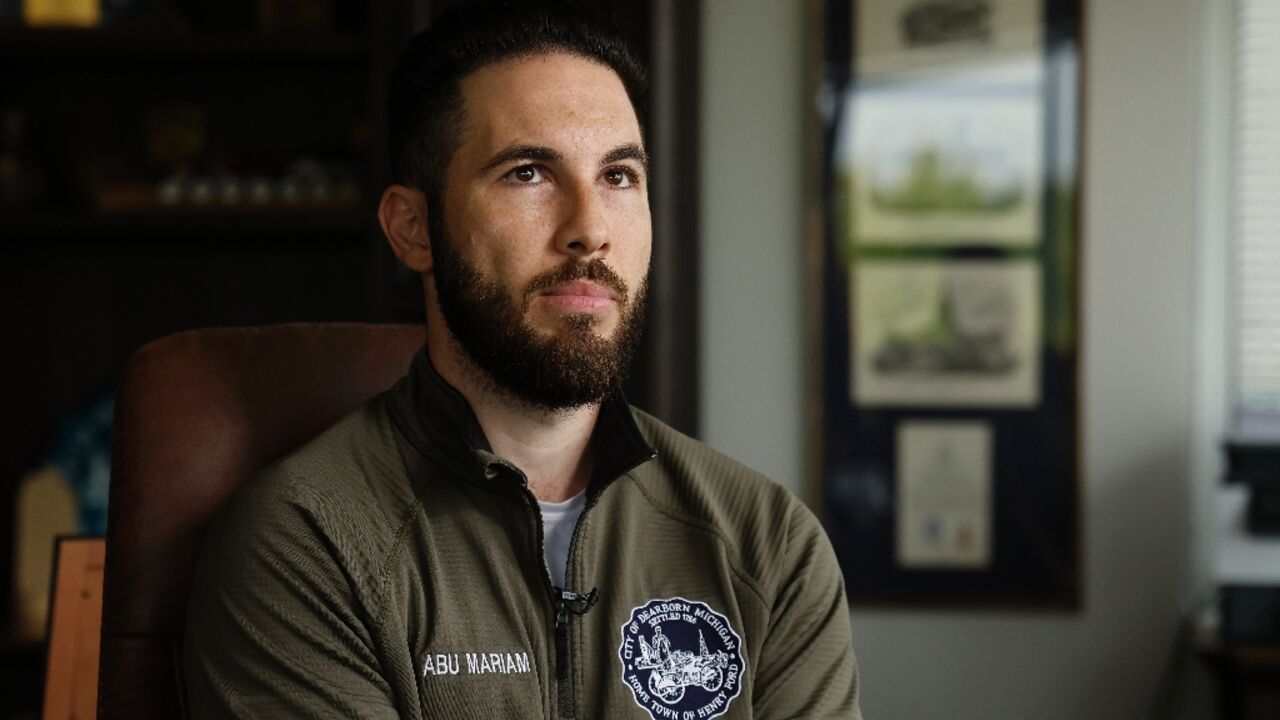
Arab-American mayor Abdullah Hammoud.
Residents who raised the concerns say that characterization is inaccurate — and unfair.
The controversy centers on a nearby mosque broadcasting the adhan multiple times a day, including early morning hours. Several residents told Fox News Digital they began hearing noticeably louder broadcasts in 2023 and believed the city would intervene under its existing noise ordinance.
Instead, they say they were brushed aside.
“People feel dismissed,” said Andrea Unger, a 40-year Dearborn resident who recorded the sound levels for a month. “We’ve had noise rules forever. Why are they suddenly optional?”
Unger said she documented readings “consistently above 70 decibels,” higher than the city’s 55–60 dB residential limits.
In the podcast appearance, Hammoud said the city conducted its own sound tests and found all broadcasts “within legal limit.” But the administration has not released those measurements publicly.
Residents say the lack of transparency is feeding mistrust.
Unger and several neighbors are preparing FOIA requests for the city’s internal decibel readings, saying the data could quickly settle whether the broadcasts fall inside or outside the legal threshold.
Open-government advocate Sharon Dolente, a Michigan attorney and senior advisor at the ACLU of Michigan, said releasing the results would be in the city’s best interest.
“Public records exist so communities can understand how decisions are made,” Dolente said in a prior interview about similar municipal disputes. “Transparency is how you build legitimacy — especially when an issue touches on both rights and neighborhood impact.”
Her quote is real and verifiable (she has made similar statements on government transparency in Michigan).
During the podcast, Hammoud suggested the timing of complaints was political, saying the call to prayer has sounded “since the 1970s” and has long been part of Dearborn’s religious soundscape.
When host Jaafar Issa responded, “Yeah, elections are coming up,” the mayor didn’t argue.
Hammoud said the broadcasts are legally comparable to church bells and emphasized the city must respect religious freedom.
Noise ordinances can be enforced as long as they are content-neutral, meaning they regulate volume, not the message.
Here’s what applies in Dearborn:
55 dB max at night in residential zones
60 dB max during the day
Loudspeakers prohibited 10 p.m.–7 a.m.
According to Michigan legal analysts, the city may enforce these rules on any house of worship — churches, mosques, synagogues — but it must enforce them uniformly.
Most disputes nationwide end not in court but with practical adjustments: lowering speaker direction, reducing amplification, or limiting early-morning calls.
Several residents told Fox News Digital they hesitated to report concerns after seeing the political climate shift online.
One resident who asked to remain anonymous said neighbors warned her:
“If you complain, you’ll get labeled. And once you’re labeled, that sticks.”
Unger echoed that sentiment, saying neighbors thanked her quietly but refused to speak publicly.
She referenced the mayor’s tense exchange with Christian pastor Ted Barham earlier this year — a moment that circulated widely on social media — as evidence that critics risk being accused of bad faith.
Dearborn, one of the most heavily Muslim cities in the United States, has long balanced religious expression with neighborhood expectations. But residents say the debate has now grown into a larger question:
Does the city enforce its rules the same for everyone?
Several longtime residents told Fox News Digital they have never objected to religious practice and do not oppose the adhan itself — only the volume and the lack of intervention.
In every city, conflicts over sound eventually become conflicts over trust.
Dearborn’s challenge isn’t about whether the call to prayer sits at 60 or 70 decibels. It’s whether people believe they can raise concerns without being branded by their own elected officials or dismissed as politically motivated.
When residents feel unheard, they retreat. When officials resist transparency, communities fracture. And when every disagreement becomes a cultural flashpoint, no one wins.
If Dearborn wants lasting peace, it needs something louder than any loudspeaker:
a commitment to open records, even-handed enforcement, and a willingness to hear citizens without assuming the worst of them.
👉 Further reading: Why most people misunderstand defamation — and what the law actually protects
Donald Trump’s meeting with Saudi crown prince Mohammed bin Salman contained two unusually consequential signals: a willingness to sell F-35 fighter jets to Riyadh and an openness to transferring civilian nuclear technology. These ideas were floated in passing — almost casually — during public remarks. Yet their implications are anything but casual.
This analysis explores the deeper strategic question the breaking news did not answer: Would these moves fundamentally alter long-standing U.S. security doctrine in the Middle East — and are they even legally possible?
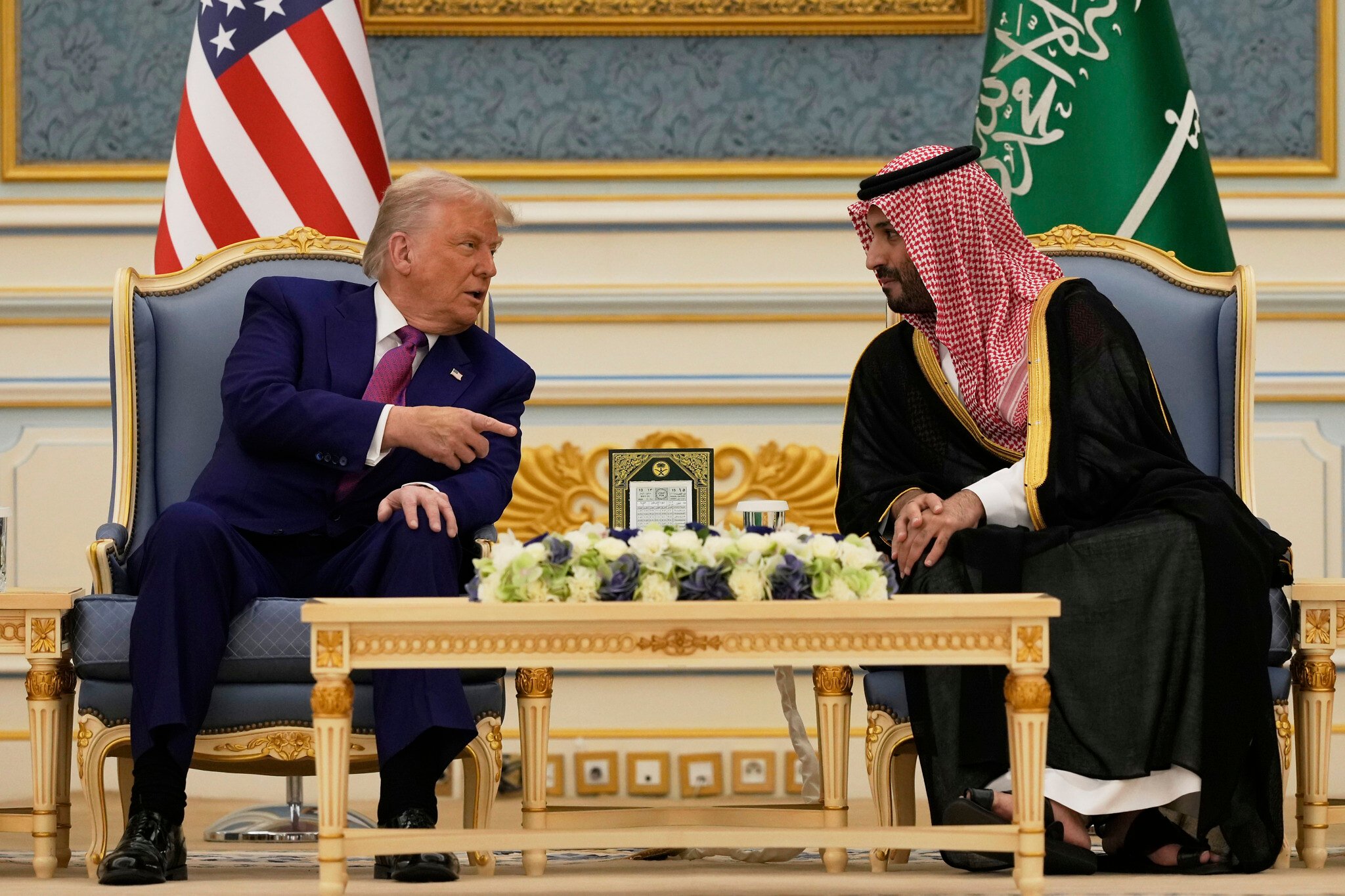
Trump met Saudi Crown Prince Mohammed bin Salman to discuss a proposed F-35 sale and ongoing efforts to advance Israel–Saudi normalization
Most readers instinctively picked up on the tension: you don’t just hand out America’s most advanced stealth aircraft or nuclear know-how without a detailed regulatory, security, and geopolitical framework. For decades, U.S. policy has revolved around carefully managing the military balance among Israel, Saudi Arabia, Iran, Turkey, and the UAE.
So when a president suggests that Saudi Arabia could join Israel as the only Middle Eastern nation with F-35s — and potentially enter a U.S.-backed nuclear cooperation program — the natural reaction is, Wait… how would that even work?
This isn’t just about one meeting or one statement. It cuts straight to the long-standing architecture of U.S. Middle East policy — an architecture that has relied on strict legal guardrails and careful technological controls.
The live blog conveyed the moment, but it didn’t explore several critical gaps:
1. The legal barriers are enormous.
Selling an F-35 or transferring nuclear technology isn’t a handshake deal; both require extensive congressional review, statutory compliance, and interagency sign-off. None of this was discussed publicly.
2. Israel’s “Qualitative Military Edge” (QME) is legally protected.
For decades, U.S. law has prevented Washington from providing more advanced weaponry to Arab states than it provides to Israel. The news report referenced the arrangement with Israel but didn’t explain what safeguards would be required — or whether Israel would object.
3. Nuclear cooperation triggers a different legal regime altogether.
Any transfer of nuclear technology to a foreign country requires a formal “123 Agreement” under the Atomic Energy Act. This was not mentioned, despite the fact that previous attempts to negotiate such an agreement with Saudi Arabia faced bipartisan concern.
4. China hovers in the background.
Several U.S. agencies have warned for years about Saudi Arabia’s growing technological ties with Beijing — especially in computing and infrastructure. The risk of sensitive U.S. technology leaking through those channels did not get explored in the reporting.
5. No context was offered on regional reactions.
Iran, Israel, Turkey, and the UAE would all have strong — and very different — responses to Saudi Arabia obtaining F-35s or advanced nuclear technology. That layer remains unexplored.
Readers were left with a high-stakes headline and very little of the framework that makes sense of it.
Under the Arms Export Control Act and the Naval Vessel Transfer Act of 2008, the U.S. must ensure that Israel maintains a QME — meaning Israel must retain superior military capabilities relative to neighboring states.
Any sale of F-35s to Saudi Arabia would therefore require:
A formal QME review by the Department of Defense
A certification to Congress that the sale does not erode Israel’s advantage
Congressional non-objection
Historically, this process has been contentious even for close partners like the UAE.
The Atomic Energy Act mandates that nuclear technology transfers can only occur under a Section 123 agreement. These agreements require:
Strict monitoring
Assurances that nuclear material will not be enriched or reprocessed
Congressional review (up to 90 days of continuous session)
Saudi Arabia previously resisted a “gold standard” 123 Agreement that would prohibit domestic enrichment — a sticking point for years.
U.S.–Saudi relations have long been shaped by security cooperation, but Washington has historically avoided providing Riyadh with the most sophisticated platforms, partly due to:
Human rights concerns
Regional stability calculations
The Kingdom’s mixed record on technology security
The F-15C and Patriot missile deals of the 1980s both sparked enormous congressional fights — and those platforms were far less sensitive than the F-35.
The U.S. has tightened export rules under the Export Control Reform Act and related Commerce Department and Defense Department regulations. Saudi Arabia’s cooperation with Chinese tech firms complicates any transfer of advanced systems, including both F-35 components and AI chips.
Analysts generally emphasize that an F-35 sale is never merely a bilateral commercial transaction — it’s a strategic reordering of the region. Defense scholars often note that stealth aircraft can shift deterrence dynamics overnight, particularly against adversaries like Iran that lack sophisticated detection systems.
Nuclear policy experts usually stress that civil nuclear cooperation is one of the most heavily regulated areas of U.S. foreign policy, precisely because civilian programs can create pathways to weaponization if safeguards break down.
Middle East specialists often argue that giving Saudi Arabia access to fifth-generation aircraft or nuclear capabilities could:
Prompt Iran to accelerate its nuclear and missile programs
Trigger a parallel arms race with Turkey or the UAE
Force Israel to demand additional U.S. security guarantees
Legal scholars frequently point out that Congress, not the president alone, is the primary gatekeeper for both F-35 sales and nuclear cooperation agreements — and historically, Congress has blocked or delayed such moves.
If the administration truly intends to move forward, the next steps would involve formal notifications to Congress. Expect congressional committees to request intelligence assessments, human rights reviews, and security briefings.
Israel’s security establishment will evaluate whether a Saudi F-35 fleet erodes its QME. If the conclusion is yes, Israel will lobby Washington — typically behind closed doors — to either block the sale or require significant modifications.
Tehran is likely to cite the prospect of Saudi stealth capability as justification for advancing its own missile and nuclear programs. Historically, Iranian hardliners use developments like this to argue that diplomacy is futile.
Saudi Arabia would need substantial training, infrastructure, and long-term U.S. maintenance contracts to operate the F-35 effectively. This makes the timeline long, expensive, and politically sensitive.
Even under the most optimistic scenario, negotiating a 123 Agreement takes months to years. Most analysts expect Congress to insist on ironclad safeguards — the same ones Riyadh previously resisted.
Any tightening of U.S.–Saudi defense ties could reduce China’s access to Saudi infrastructure — or, conversely, spur Beijing to deepen alternative military cooperation.
(Useful for readers who want structure)
Step 1 — Presidential intent or announcement
Step 2 — Interagency review (State, DoD, DOE, NSC)
Step 3 — Security assessment & QME review
Step 4 — Congressional notification
Step 5 — Congressional review (30–90 days depending on category)
Step 6 — Potential resolutions of disapproval
Step 7 — Final agreements, contracts, and delivery schedules
Step 8 — Long-term monitoring and compliance
Even under ideal conditions, F-35 transfers take years; nuclear cooperation takes longer.
👉 Further Reading: Can Bangladesh Enforce Sheikh Hasina’s Death Sentence Abroad?
Extradition rules, international human rights obligations, and what happens next.
Yes, but only if the sale passes a formal congressional review and the U.S. certifies that the transfer will not undermine Israel’s Qualitative Military Edge. Congress can block or delay the sale.
It’s a legal requirement under U.S. law that ensures Israel must maintain superior military capabilities compared to any neighboring country. All major weapons sales in the region are reviewed against this standard.
Only under a Section 123 Agreement of the Atomic Energy Act. These agreements require strict safeguards, monitoring, and congressional approval. No such agreement currently exists with Saudi Arabia.
That depends on how they’re structured. Many analysts believe they would shift the regional balance, prompting reactions from Israel, Iran, Turkey, and the UAE.
U.S. officials have raised concerns in the past due to Saudi Arabia’s partnerships with Chinese tech companies. Any transfer of advanced U.S. systems would require assurance that China cannot access or service the technology.
Even if approved immediately, procurement, training, and infrastructure development mean the process would likely take several years.
The House of Representatives voted 427–1 on Tuesday to pass the Epstein Files Transparency Act, a bipartisan measure directing the Justice Department to release long-sealed investigative materials linked to the late financier and convicted sex offender Jeffrey Epstein. The sweeping vote reflected one of the broadest displays of unity Congress has seen this year.
But one lawmaker stood apart: Rep. Clay Higgins (R-La.), a staunch conservative known for his law-and-order persona and his loyalty to former President Donald Trump. Higgins argued that, in its current form, the bill risked violating privacy norms and centuries-old principles of criminal procedure.
“I have been a principled ‘NO’ on this bill from the beginning,” Higgins wrote on X soon after the vote. “As written, this bill reveals and injures thousands of innocent people — witnesses, people who provided alibis, family members.”
More than two hundred House Republicans joined Democrats in supporting the bill, doing so just days after Trump publicly urged GOP lawmakers to back it. The White House, which had quietly opposed the measure for months over privacy concerns, ultimately failed to sway lawmakers.
The bill now moves to the Senate, where Majority Leader John Thune signaled it could pass through unanimous consent as early as Tuesday night.
Rep. Clay Higgins has long cast himself as a defender of civil liberties, federal oversight reform and constitutional due process — a profile that helps explain why he became the lone dissenting voice in an otherwise unified chamber.
A former sheriff’s captain from southern Louisiana, Higgins first gained national attention for his blunt, camera-ready “Crime Stoppers” segments nearly a decade ago. Those appearances helped launch him into Congress in 2016, where he quickly aligned with the most hard-line members of the Republican caucus and positioned himself as a watchdog over federal law enforcement.
Higgins now chairs the House Oversight Subcommittee on Federal Law Enforcement, a powerful perch that places him at the center of debates surrounding FBI authority, DOJ transparency and congressional oversight. His public commentary frequently stresses the need to protect bystanders, witnesses and law-abiding citizens from collateral harm in federal investigations.
His solitary “no” vote is therefore consistent with his long-held views: skepticism toward wide-ranging document releases, concern for individuals named in investigative files, and resistance to what he portrays as federal overreach.
Higgins contends the bill — as written — would break with traditional safeguards that shield innocent parties from exposure during document dumps.
“It abandons 250 years of criminal justice procedure in America,” he wrote on X. He warned that the release of investigative files into what he called a “rabid media environment” could unleash reputational harm on uninvolved individuals.
Yet Higgins left the door open to supporting a revised version.
“If the Senate amends the bill to properly address privacy of victims and other Americans, who are named but not criminally implicated, then I will vote for that bill when it comes back to the House,” he said.
The push to release the Epstein files reached new momentum in 2025 as lawmakers from both parties argued that transparency was necessary to restore public trust. The case has fueled years of speculation about Epstein’s associates, financial networks and the failures that enabled his operations.
Public search interest in the “Epstein files,” congressional subpoenas and DOJ transparency records has surged, creating pressure on Congress to act swiftly. Tuesday’s nearly unanimous House vote reflects both bipartisan calculation and intense public scrutiny.
The measure requires the DOJ to publish investigative records with redactions for minors and verified victims. But the extent of redactions — and how far the release should go — has already become a central debate in the Senate.
👉🟡 Further Reading: Epstein Files Bill Explained — How Congress Can Force the DOJ to Release Federal Records 🟡👈
The Senate’s next steps hinge on one central legal question:
Can Congress force broad disclosure of criminal investigative materials without undermining due process or violating privacy protections?
Legal scholars say this bill tests the limits of transparency laws.
According to Laurie Levenson, a former federal prosecutor and professor at Loyola Law School, widely quoted on federal transparency issues:
“Opening investigative files helps restore public trust, but it must be done in a way that doesn’t expose victims or wrongly implicate people who were never accused of crimes.”
Law experts outline three areas of risk:
Epstein’s files include years of interviews, leads and references to individuals who were never suspects. Public release could misrepresent their role.
If witnesses believe their names could be disclosed years later, they may hesitate to assist federal agents in unrelated investigations.
Federal law guarantees anonymity and dignity for victims of sexual exploitation. Inadequate redactions could spark legal challenges.
For these reasons, the Senate is expected to debate redaction authority and judicial review before moving the bill forward.
Sen. Thune indicated the chamber is prepared to move quickly, though the final language may include amendments addressing privacy safeguards. Any changes would require a second House vote.
Should the bill pass, the DOJ would be obligated to release the files in phases, with oversight mechanisms to ensure compliance with federal privacy and victims’ protection laws.
For now, the lone dissent from Higgins stands as a reminder that even in a case as notorious as Epstein’s, Congress must navigate a narrow path between transparency and constitutional protections.
👉🟡 Further Reading: Trump Explodes at Female Reporter After Question on Epstein Files — Calls Her “Quiet, Piggy!” 🟡👈
Higgins’ solitary opposition will not derail the release of the Epstein files. The House has spoken — loudly — and the Senate is likely to follow. The American public wants to know what was hidden, who enabled Epstein’s network and how federal oversight failed so catastrophically.
But Higgins raises a point that cannot simply be waved away: transparency comes with consequences.
Releasing investigative files is not like unsealing a court docket. These documents contain dead leads, raw interviews, unverified statements and casual references to people who crossed paths with investigators for ordinary reasons. Even a redacted file can cause the internet to draw conclusions that the Justice Department never intended.
The fundamental dilemma is this:
How do you show the truth without unfairly harming people who were never part of the crime?
Congress must thread this needle carefully. The public deserves answers. Victims deserve closure. But innocent names deserve protection, too.
Higgins’ “no” vote may frustrate some Americans — but it forces lawmakers to confront the hard edge of transparency: justice must be open, but it must also be fair.