Actor and musician Billy Bob Thornton recently opened up in a heartfelt interview with rock icon Ann Wilson on her new podcast, After Dinner Thinks.
Their conversation covered a lot of ground, touching on his Hollywood experiences with ex-wife Angelina Jolie, as well as his struggles with OCD, dyslexia, and being on the autism spectrum. They even shared some nostalgic stories about their past adventures with hallucinogens, including a memorable tale from Wilson about watching Rosemary’s Baby on a date while under the influence of acid.
This candid discussion with Wilson coincides with the launch of the second season of Thornton's series, Landman, produced by Taylor Sheridan, which is now streaming on Paramount+. The Nashville interview marks the ninth episode of Wilson’s podcast, where she showcases her rock performances, including a lively rendition of the classic 1963 Lesley Gore hit, “You Don’t Own Me.”
“I Never Really Joined In”: Leaving Hollywood Culture Behind
Thornton told Wilson that even at the height of his fame, he felt out of place in the Hollywood scene.
“You won’t catch me in People magazine or on the red carpet; I just don’t get involved in that,” he said.
“People ask me, ‘What’s the secret to your longevity?’ Honestly, I never really joined in. Even when Angelina and I were together, we were always in the spotlight, but I mostly avoided the parties and didn’t mingle with agents and executives.”
Thornton and Jolie were married from 2000 to 2003. He has been married to his current wife, Connie Angland, since 2014.
Living With OCD, Dyslexia, Anxiety — and Autism
Thornton spoke openly about his lifelong struggles with obsessive-compulsive disorder, anxiety, and dyslexia — conditions he now views as part of what shaped his career as a writer and performer.
“I deal with severe obsessive-compulsive disorder and an anxiety disorder. I grew up with dyslexia. All these challenges have shaped me, and I think they’ve actually helped me read in chunks. I don’t read from left to right slowly like most people do.”
He also revealed that he is on the autism spectrum and that one of his daughters shares some of his traits.
“My daughter is attending Cal Poly. She just turned 21. She’s inherited some of my traits — I’m on the spectrum, I stutter, and I have all these quirks. The only thing she didn’t get is dyslexia.”
Thornton said these conversations are part of their everyday life.
“We talk about how society often views these things as weaknesses. But in reality, they can be strengths, especially in the arts. You can’t convince me Van Gogh and those artists weren’t on the spectrum. But hey, I haven’t cut off any body parts yet!”
Revisiting the Past: Psychedelics, Creativity, and Quitting in Time
The conversation eventually turned to psychedelics — specifically acid — and how the drug shaped both Thornton and Wilson’s early lives. Thornton admitted that although he didn’t always enjoy the experience, psychedelics influenced his creative development.
“I really think it opened my mind and made me a better artist,” he said. “Psychedelics played a big role in my growth as a writer and overall artist. I’m thankful I quit when I did. I was this skinny, long-haired hippie roadie, and one night I looked in the mirror of an Airstream trailer and thought, ‘You’re going to die if you don’t stop.’”
Wilson shared her own story, recalling a date during which she took acid and watched Rosemary’s Baby at a drive-in theater.
“Everything about that movie was off,” she said. “That was the worst trip I’ve ever had. I got home to my parents’ house — where I was still living — and spent the whole night tossing and turning, completely freaked out.”
A Career Still Evolving
Though best known for Sling Blade — which earned him an Oscar for Best Adapted Screenplay and two additional acting nominations — Thornton has maintained a dual career in acting and music. He has released four solo albums as well as 19 records with his band, The Boxmasters, formed in the mid-1990s with Grammy-winning engineer J.D. Andrew.
He has also collaborated with the Coen Brothers (The Man Who Wasn’t There, Intolerable Cruelty), directed several films (All the Pretty Horses, Jayne Mansfield’s Car), and became an unlikely holiday icon with Bad Santa.
On Wilson’s podcast, Thornton described his decades-long Hollywood journey as something that “just kind of happened,” crediting his unique quirks and challenges with giving him the creative perspective that fuels his work today — including his newest series, Landman, now streaming.
The Legal Angle: When Personal Confessions Stay Legally Safe
Thornton’s candid talk about OCD, dyslexia, anxiety, autism, and past psychedelic use raises little legal concern because he’s speaking only about himself. Privacy laws protect medical information from third-party disclosure, not from individuals choosing to share their own stories publicly.
Podcasts also enjoy strong First Amendment protection, meaning guests can discuss past drug use or personal struggles without legal fallout—as long as they don’t falsely accuse others or describe current illegal conduct. In this case, Thornton’s reflections are voluntary, personal, and well within legally safe territory for both him and the show.
👉 Trending: Kim Kardashian Reveals She Secretly Bought Her Father’s Bible From the O.J. Simpson Estate 👈
Rumer Willis opened up to her followers this week, sharing an emotional moment as she shed tears while discussing the challenges of raising her 2-year-old daughter, Louetta, all on her own. The 37-year-old actress, who co-parents her little one with ex Derek Richard Thomas, shared a heartfelt Instagram Story on Wednesday. In the video, she can be seen wiping away tears while taking a solitary walk through the woods.
“Just had a good cry in the woods… some days being a single mom is hard,” she captioned the clip.

On Wednesday, the actress who shares the 2-year-old with ex Derek Richard Thomas, took to her Instagram Stories to share a video of herself wiping her tears away while taking a stroll in the woods.
Willis made it clear that her daughter is never the cause of her struggles. “She’s not difficult (ever), but some days, handling everything on my own can be,” she shared. The “House Bunny” star even had a laugh at her own expense, admitting she had food stuck in her teeth during that emotional moment. “Really winning today,” she quipped.
A Look Back at Rumer’s Journey Into Motherhood
Rumer welcomed Louetta at home in April 2023, calling her baby girl “pure magic” in an emotional Instagram post announcing the birth.
“Born at home on Tuesday April 18th. You are more than we ever dreamed of,” she wrote at the time.
More than a year later, in August 2024, Willis confirmed she and Thomas had ended their relationship. During an Instagram AMA, a fan asked whether they were still together, and she didn’t hesitate: “Nope — I am single momming it and co-parenting.”
Despite the breakup, Willis said she remains deeply grateful for the relationship that brought her daughter into the world.
“She is the best thing in my life,” Willis told a fan. “I am forever grateful I had the time in that relationship for her to come into my life.”

Rumer Willis broke down in tears as she detailed how “hard” it is to be a single mom to her daughter, Louetta. On Wednesday, the actress, who shares the 2-year-old with ex Derek Richard Thomas, took to her Instagram Stories to share a video of herself wiping her tears away while taking a stroll in the woods. (Instagram/rumerwillis)
Post-Breakup Life and a New Romance?
Just weeks after confirming the split, Rumer was spotted kissing a mystery man outside a Los Angeles fire station — her first public romantic moment since the breakup.
A Family Navigating Public and Private Pain
Willis’ emotional post also comes as her family continues to navigate her father Bruce Willis’ widely publicized battle with dementia. Rumer and her sisters have shared multiple heartfelt updates over the past year, including a “deep ache” she described on Father’s Day.
Her latest vulnerable moment struck a chord with fans who praised her honesty about single motherhood, especially under the weight of caring for a young child while managing intense family challenges.
The Legal Angle: Co-Parenting, Custody, and Sharing Struggles Online
Rumer Willis’ emotional post touches on a reality many single parents face — but legally, her situation is straightforward. Because she and ex-partner Derek Richard Thomas share joint custody, Willis is fully within her rights to speak openly about the challenges of solo day-to-day parenting, as long as she doesn’t violate any court-ordered privacy terms (and there’s no indication such terms exist).
Family courts generally encourage parents to communicate respectfully online, but personal expressions about stress, exhaustion, or emotional moments do not jeopardize custody unless they involve disparaging the other parent or exposing a child to harm. Willis’ posts do neither — she makes clear her daughter is never the source of her struggle, which aligns with what courts look for in cooperative co-parenting.
Her public vulnerability is legally safe territory: she’s sharing her own experience, not making allegations, and not revealing protected information about her child or ex.
👉 Latest: Kim Kardashian Reveals She Secretly Bought Her Father’s Bible From the O.J. Simpson Estate 👈
Kim Kardashian has revealed that she was the anonymous bidder who bought her late father Robert Kardashian’s bible from the O.J. Simpson estate.
In the latest episode of The Kardashians, the 45-year-old SKIMS founder is shown opening a package with her youngest daughter, 7-year-old Chicago. “You won’t believe what this is — and you might not care now, but one day you’ll understand,” Kim tells her. “This is really important to me because it belonged to my dad.”

Kim Kardashian has revealed she was the anonymous bidder who purchased her father Robert Kardashian’s bible from the O.J. Simpson estate.
Inside the package was the bible, which Goldin Auctions described as the “Robert Kardashian Signed, Inscribed, Personally Owned ‘The Living Bible’ Given to O.J. Simpson.” “When someone goes to heaven, their spirit stays with us,” Kim explains to Chicago as she shows her the inscription from her late father.
A producer then asks when she got it. “I just received it. I haven't opened it yet,” she replies. “So if anyone was wondering who won that O.J. Simpson auction — you can bet it was me.” In a confessional, Kim elaborates on how she got the Good Book. “My dad’s bible that he had given to O.J. was up for auction, and I reached out to O.J.’s estate attorney to see if I could buy it directly — skipping the auction,” she says.

The reality star then revealed the Good Book, listed by Goldin Auctions as the “Robert Kardashian Signed, Inscribed, Personally Owned ‘The Living Bible’ given to O.J. Simpson.”
“Those emails supposedly leaked to TMZ.” According to Kim, the leaked emails caused the price to rise. “I know how this works, but I don’t want to be taken advantage of,” she adds. “So we used a fake name to bid so my name wouldn’t be linked to it.” As she carefully looks at the bible, Kim sees her father’s name engraved on the cover. “I thought it was a bible my dad bought for O.J. and wrote in,” she admits. “It turns out it was actually my dad’s bible, with his name on it. I had no idea.” “So my dad gave this book to his best friend to inspire him with some motivation from Jesus,” she tells Chicago.

“I thought it was a bible my dad had bought for O.J. and written in,” the mother of four said. “It turns out it was actually my dad’s own bible, with his name inscribed on it. I had no idea.”
Kim is excited to finally have the item and plans to gift the bible to her sister, Khloé Kardashian, who was the one to inform her about the auction. “I’m so excited to give this to Khloé,” Kim shares. “She was the one who first pointed out this auction to me, so I think she truly deserves to have this bible.”
👉 Latest: Kim Kardashian’s Skims Hits $5 Billion Valuation After Major Funding Round 👈
In March, Simpson’s estate turned down Kim’s initial offer of $15,000. Malcolm LaVergne, the manager in charge of selling Simpson’s possessions, explained to People at that time: “Why would I spend $15,000 of estate funds — incur $15,000 in attorney’s fees — to sell it to Kim for $15,000? That’s a zero-sum game.
If Kim had offered $150,000 for it, we would have been in court getting this approved outside of the auction.” Later that month, the bible was sold for $80,276 — a figure that has now been revealed to be Kim’s anonymous bid.
Legal Context: Why the Bible Could Be Auctioned
The legal situation surrounding the Bible's potential auction stems from Nevada probate law, which mandates that estates liquidate valuable personal property when there are significant debts or court judgments that remain unpaid. In this case, O.J. Simpson owed tens of millions to the Goldman family due to a civil wrongful-death verdict from 1997, creating a legal requirement for the estate to convert certain assets into cash.
As a result, items like the Kardashian Bible became eligible for auction as part of the creditor-settlement process overseen by the probate court.
This means that even items with sentimental value, such as religious texts, personal letters, and memorabilia, can be sold legally if they possess financial worth. Robert Kardashian, who passed away in September 2003 at the age of 59 from esophageal cancer, originally gifted the Bible to Simpson in June 1994, shortly after the notorious Ford Bronco chase. Robert was also a member of Simpson’s defense team during the highly publicized murder trial. Simpson was acquitted of the murders of Nicole Brown Simpson and Ron Goldman in 1994. O.J. Simpson passed away in April 2024 at the age of 76 after battling prostate cancer.
👉 Related: Ariana Biermann on Kim Zolciak: “Money Can Be Repaid—Moms Can’t” 👈
Felipe Massa’s £64m 2008 F1 Title Lawsuit Cleared for High Court Trial in Major Legal Twist
Felipe Massa’s fight over the 2008 Formula One world championship took a dramatic step forward today as a High Court judge in London cleared his £64 million lawsuit to go to trial.
The former Ferrari driver is suing Formula One Management, the FIA and ex-F1 supremo Bernie Ecclestone, claiming the way the sport handled the infamous Singapore Grand Prix crash cost him a title he lost by just a single point to Lewis Hamilton. The ruling confirms that Massa can pursue a civil claim based on alleged “unlawful means conspiracy,” putting some of the sport’s most powerful institutions under renewed legal scrutiny.
The judge stopped short of questioning the official championship result and made clear that courts cannot rewrite race standings. But by allowing the core of Massa’s financial claim to proceed, the decision opens the door to a full examination of who knew what, and when, about Nelson Piquet Jr.’s deliberate crash and the fallout that followed.
High Court Ruling: What the Judge Has Allowed Felipe Massa to Do
The defendants had asked the court to throw the case out at an early stage. Their position was that the lawsuit had been brought too late and that Massa’s loss in Singapore came down to race circumstances, not any coordinated wrongdoing.
The judge rejected that attempt to shut the case down, finding that Massa has a real prospect of proving the key elements of an unlawful means conspiracy at trial. That means his central claim is strong enough, in legal terms, to justify a full hearing with evidence and witnesses.
However, the court did strike out part of the claim that asked for declarations effectively saying Massa should have been world champion in 2008. The judge stressed that an English court does not have the power to force the FIA to alter past race results or championship standings, keeping a clear line between sporting governance and legal remedies.
Why the 2008 Singapore Crash Is Still So Explosive
The case turns on one of the most controversial races in modern Formula One history. During the 2008 Singapore Grand Prix, Nelson Piquet Jr. crashed his car and triggered a safety car period that completely changed the race. Felipe Massa, who had been leading comfortably for Ferrari, was caught out in the chaos of the pit lane and slipped down the order, scoring no points.
The following season, Piquet revealed that the crash had been deliberate and carried out on team orders. That revelation shook the sport and led to sanctions against those involved at Renault.
Massa argues that if the incident had been fully and properly dealt with at the time, the race result could have been treated differently—potentially altering the outcome of the championship. His claim focuses on the financial impact of missing out on the title, rather than seeking to have the trophy reassigned.
The dispute has taken on renewed significance as part of a wider trend of delayed accountability in high-profile institutions, echoing other long-running legal battles where alleged wrongdoing is examined years later—such as Prince Harry’s privacy lawsuit in London’s High Court against the Daily Mail, set to begin on Monday, January 19, 2026.
Who Felipe Massa Is Suing – and Why It Matters
Three major pillars of Formula One now sit on the other side of Massa’s claim:
-
Bernie Ecclestone, who ran the commercial side of F1 for decades
-
The FIA, which regulates and governs world motorsport
-
Formula One Management (FOM), which holds the sport’s commercial rights
All three deny the allegations. Their legal teams argued in court that Massa’s lawsuit is based on flawed assumptions, overlooks his own errors during the race and was brought outside the strict legal time limits that normally apply to civil claims.
The trial will not look at every decision made during the 2008 season. Instead, it will focus on whether any coordinated actions or failures to act around the Singapore crash and its handling caused Massa to suffer measurable financial loss.
What “Unlawful Means Conspiracy” Means in Massa’s Case
For many fans, the phrase “unlawful means conspiracy” sounds technical, but it can be broken down into simple steps.
How the Claim Works
Under English civil law, a claim like this generally requires Massa to show that:
-
Two or more parties acted together,
-
used unlawful or improper means, and
-
caused him financial loss as a result.
In this case, the alleged loss relates to the earnings, sponsorship value and commercial opportunities Massa says he missed out on by not being recognised as world champion.
What Courts Can – and Cannot – Do
There are important limits on what the High Court can decide:
-
The court can decide whether any actions or failures by the defendants caused financial harm and, if so, what compensation might be appropriate.
-
The court cannot change the official 2008 drivers’ standings, reallocate points or force the FIA to declare a different world champion.
Today’s ruling does not mean Massa has proved his case. It simply means the judge has decided that the legal test for letting the claim go to trial has been met.
What Happens Next in Felipe Massa’s High Court Case
With the early challenge dismissed, the case now moves into a more detailed phase. The parties will prepare for trial by exchanging documents, requesting disclosure of relevant materials and finalising witness evidence.
A trial date has not yet been set, but when it does reach court the hearing will give a rare public look at how legal responsibility is assessed when major sports controversies end up before a judge. Whatever the final outcome on damages, the judgment will help define the boundary between decisions left to sporting authorities and disputes that can be tested in a courtroom.
FAQs: Felipe Massa’s £64m F1 Lawsuit
Does this ruling change who won the 2008 F1 championship?
No. The judgment does not change the official result. The court has confirmed it cannot alter past race outcomes or championship standings.
Is Lewis Hamilton involved in this legal case?
No. The claim does not accuse Hamilton of any wrongdoing and he is not a defendant in the lawsuit.
Why is Felipe Massa claiming £64 million?
Massa says missing out on the 2008 title cost him financially through lost prize money, sponsorship value and long-term commercial opportunities linked to being world champion.
What is the next key step in the case?
The next major step is the preparation for a full trial, which includes disclosure of documents and witness evidence. The court will then set a date for the hearing, where a judge will decide whether Massa has proved his claim.
👉 In Focus: How Vulnerable Are Britain’s Undersea Cables to Russian Attack? The Real Risk Behind the Yantar Incident 👈
The UK government’s decision to abolish Police and Crime Commissioners (PCCs) by 2028 marks one of the biggest governance shifts in modern policing. The news explained what is happening and when, but it left a far more important question unresolved: who actually takes over the power to run policing once PCCs disappear?
This analysis breaks down the unanswered core issue — the transfer of power — and explains how police oversight, budget control, and chief constable appointments will work under the new system.
Why This Is the Big Unanswered Question
For most people, PCCs existed quietly in the background. Many voters didn’t fully understand what commissioners did — and that limited awareness is precisely why their abolition raises confusion now. Once PCCs are gone, who becomes legally responsible for hiring chief constables? Who approves budget decisions? Who sets policing priorities?
The news reports mention mayors and new “policing boards,” but leave the mechanics vague. These responsibilities are not symbolic. They determine how policing is funded, governed, and held accountable. That makes the “who’s in charge now?” question the single most important point the public needs answered.
The Critical Governance Questions Left Unanswered
The announcement explained the headline change but didn’t offer clarity on several critical governance gaps:
-
The exact legal mechanism that transfers PCC powers
-
The difference between areas with mayors and those without
-
How chief constable appointments will work
-
What happens in regions where boundaries don’t align
-
How oversight panels will change
-
What model Wales might adopt
-
How budgeting authority is reassigned
These gaps matter because PCC powers are not ceremonial. They involve statutory responsibilities created under the Police Reform and Social Responsibility Act 2011, and transferring them is not automatic — it requires legislation, defined structures, and clear chains of accountability.
This analysis addresses those gaps.
The Deeper Context Behind the Power Transfer
1. The Legal Foundation
The abolition requires reassigning the statutory duties set out in the 2011 Act. Those duties include:
-
Appointing and dismissing chief constables
-
Setting police budgets and council tax precepts
-
Defining local policing priorities
-
Managing victims’ services
-
Overseeing community safety partnerships
The government’s vehicle for this transition is the English Devolution and Community Empowerment Bill (2025), which sets the conditions under which regional mayors inherit PCC functions.
2. Mayors vs. Local Boards
If a mayor’s boundary matches the police force boundary, the mayor becomes the new policing authority by law.
If the boundaries do not align, a policing and crime board chaired by local leaders takes responsibility.
This means England will end up with two parallel governance models, depending on local geography — a feature that was not fully explained in the initial reports.
3. Wales as a Special Case
Policing is not devolved in Wales, but fire and rescue services are, creating a constitutional mismatch.
Because of this, the UK and Welsh governments must jointly design a bespoke oversight model — almost certainly different from England’s.
4. Shift Toward Integrated Governance
PCCs were removed partly because police governance had drifted away from other public services influencing crime, such as housing, health, and social care.
Mayoral systems are designed to re-link policing with those wider services.
This is a policy pivot back toward integrated local governance, reversing the more isolated oversight structure created in 2012.
What Independent Experts Typically Say About Governance Transitions Like This
While experts have not yet opined specifically on the abolition itself, analysts generally note several consistent themes when major public oversight structures are replaced:
-
Consolidation often increases clarity
When the public elects a single, high-profile figure — such as a mayor — accountability is easier to trace.
-
Shifts in appointment powers can reshape policing culture
Legal scholars often point out that whoever appoints the chief constable wields the most meaningful influence over the force’s direction.
-
Transparent budgeting becomes more important
Financial analysts typically highlight that transferring budget authority requires safeguards to prevent political distortion or service gaps during transition.
-
Interim periods can be messy without clear statutory guidance
Administrative transitions often create ambiguity unless legislation spells out precise responsibilities, timelines and reporting structures.
-
Local differences create uneven outcomes
When governance varies by region — as England/Wales arrangements now will — experts usually warn that accountability structures can become inconsistent across the country.
These themes help explain why many observers immediately asked what the new system will actually look like — because experiences from previous governance transitions show these details matter more than the headline reform.
What Happens Next
A Transition From 2025 to 2028
Between now and 2028:
-
PCCs remain in office until their term ends.
-
Legislation must be finalized to legally transfer powers.
-
Local areas must decide whether their geography qualifies for mayoral oversight.
-
New scrutiny panels must be designed to replace PCC panels.
-
Wales must create its own accountability model.
Chief Constable Appointments
Once PCCs are abolished:
-
Mayors will gain appointment powers where boundaries align.
-
Policing and crime boards will take those powers elsewhere.
-
Chief constables will remain operationally independent, as required by law.
Budgets and Police Funding
Budget-setting authority also transfers, including:
-
Allocation of annual funding
-
Setting police precepts through council tax
-
Managing Home Office grants
Public Impact
Residents will not notice immediate operational changes, but governance will feel different:
-
Accountability becomes more visible (mayors) in some areas
-
More committee-led in others (boards)
-
Wales will adopt a unique model
-
Fire and rescue oversight will merge with policing where applicable
The transition is administrative rather than operational — but its implications for leadership, budgeting, and local priorities are significant.
👉 Related: Edi Rama Confronts Brussels Over Crime Claims as Albania’s EU Bid Reaches Critical Moment 👈
Frequently Asked Questions
Who will control policing once PCCs are abolished?
In areas with elected mayors whose boundaries match the police force area, the mayor assumes control. Everywhere else will shift to a local policing and crime board.
Who will appoint chief constables after 2028?
Mayors will appoint chief constables in aligned regions, while local boards will do so in non-mayoral areas. Operational independence remains a legal requirement.
Will the public vote for policing leaders again?
Only in mayoral areas. Where boards replace PCCs, police oversight will be managed by local leaders rather than direct public election.
What happens to police budgets during the transition?
Budget authority shifts to mayors or local boards. Council tax precepts and central government grants continue but will be approved under the new structures.
Will policing in Wales follow the same model?
No. Wales requires a separate arrangement because of its devolved fire and rescue structure. The UK and Welsh governments will develop this together.
Does this change how frontline policing works?
No. Operational duties stay with police forces. The reform affects governance, not everyday policing.
Albanian Prime Minister Edi Rama ignited fresh political tensions in Brussels today after forcefully defending his country’s push to join the European Union and rejecting criticism that crime and corruption threaten Albania’s membership prospects. Speaking during a high-profile enlargement forum attended by senior European officials, Rama insisted Albania has delivered a decade of tough reforms and argued that organised crime “is not an Albania-only problem,” pointing toward concerns inside EU capitals themselves.
The exchange comes as Brussels reassesses whether Albania has made enough progress to stay on track for a potential 2030 entry date. With EU leaders weighing the geopolitical risks of slowing down Western Balkan integration — especially after Russia’s invasion of Ukraine — today’s confrontation lifted Albania’s accession talks into renewed urgency. Officials monitoring the process will now decide whether the country’s latest reforms, combined with strong political backing from Italy, are enough to keep the bid moving forward.
What Sparked Today’s Tense Brussels Clash
Rama’s comments landed during a major EU enlargement gathering in the Belgian capital. The event was designed to review progress across Western Balkan candidates but quickly shifted focus after renewed questions surfaced about Albania’s record on corruption, money-laundering prevention, and judicial independence.
European officials have repeatedly flagged these areas in progress reports, and today’s session was no exception. What changed was Rama’s tone: he dismissed the idea that Albania uniquely struggles with organised crime and reframed the issue as one facing many European cities, not just Tirana. His stance injected unexpected tension into a meeting that had been expected to remain technical — not political.
Why Albania Says Its EU Moment Should Not Be Delayed
Support for Albania’s membership has grown in recent years, partly due to the sweeping institutional reforms that reshaped its justice system and policing structures. Government officials point out that Albania’s small population — around 2.3 million — means it can be absorbed into the EU far more easily than larger candidate states.
The geopolitical climate is equally influential. Russia’s invasion of Ukraine pushed the EU to strengthen relationships with pro-European neighbours, accelerating several Western Balkan files. In that environment, Albania has been repeatedly labelled a frontrunner. Rama’s message today was blunt: delaying enlargement risks weakening Europe’s unity at a time when stability matters most.
How Italy Became Albania’s Most Powerful EU Ally
A major factor behind Albania’s accelerated trajectory is its unusually close relationship with Italy. The two nations signed a controversial migration agreement in 2023 allowing Italy to operate processing centres on Albanian soil. The deal drew international attention but also showcased a strategic partnership stronger than most bilateral relationships in the region.
For Albania’s EU ambitions, Italy’s support is essential. Any new member must be approved unanimously by all 27 member states, and Italy has positioned itself as one of Albania’s most vocal backers. Rama reiterated today that the migration agreement was a response to Italy’s request for assistance — a decision that reinforced political goodwill at a key moment in the accession process.
The Legal Process: How EU Accession Decisions Are Really Made
EU membership follows a structured, rule-based pathway that applies to every candidate country. The key steps include:
Screening and Negotiation Chapters
The EU divides its laws into thematic chapters. Albania must demonstrate that its legislation, institutions, and enforcement systems meet the standards for each chapter before they can be closed.
Reform Monitoring and Enforcement
Progress on judicial reforms, anti-corruption measures, and crime prevention is tracked through regular EU assessments. The focus is on measurable, functional improvements — not perfection.
Unanimous Member-State Approval
Even after all negotiation chapters close, every EU country must vote in favour of admitting the candidate. This final stage is political and requires strong diplomatic relationships.
These mechanisms explain why Albania cannot be guaranteed a fixed date, even as it advances toward the end of negotiations.
What Happens Next for Albania’s EU Future
The outcome of today’s Brussels exchange will shape discussions across multiple EU capitals in the months ahead. Officials are evaluating whether Albania remains on schedule with its stated accession goals and whether reforms show consistent, credible progress.
The next stage hinges on demonstrating continued judicial improvements, reinforcing anti-crime systems, and maintaining close diplomatic ties — especially with Italy — before the decisive unanimous vote. As the EU reviews its future enlargement path, Albania’s position will depend on both its technical progress and the political dynamics shaping Europe’s broader security concerns.
FAQ's — Key Questions About Albania’s EU Accession
Is Albania currently a member of the European Union?
No. Albania is an official candidate country and remains in advanced negotiations.
What prevents Albania from joining the EU right now?
The EU requires sustained reforms in justice, corruption prevention, and crime-fighting systems before granting approval.
Is there an official date for Albania’s EU entry?
No confirmed date exists. Albanian leaders have floated 2030 as a target, but the final decision depends on reform benchmarks and unanimous approval from all EU member states.
Does the Italy migration agreement affect Albania’s EU bid?
The deal strengthened Albania’s political ties with Italy, one of its strongest EU supporters, though it also sparked debate among other member states.
👉 Latest: Donald Trump Orders Epstein Files Released: DOJ Given 30 Days as Survivors and MAGA World Collide 👈
A Violent Transit Attack That Shook Chicago’s Loop
Chicago’s evening commute turned into a scene of terror on Monday when a 26-year-old woman was set on fire aboard a CTA Blue Line train near the busy Clark and Lake station. Federal prosecutors say 50-year-old Lawrence Reed poured a flammable liquid over the passenger before igniting it, leaving her hospitalized in critical condition and prompting an immediate federal terrorism charge tied to Chicago’s transit system.
The attack happened just before 9:30 p.m., sending panicked riders rushing toward the exits as flames spread through the train car. The U.S. Attorney’s Office confirmed Reed was arrested shortly afterward and charged with committing a terrorist attack against a mass transportation system, a federal offense that carries a potential life sentence. Investigators say the victim managed to escape the burning train but suffered severe injuries.
How the Attack Unfolded, According to Investigators
Federal officials say the victim was seated when Reed approached from behind and emptied a flammable liquid onto her head and clothing. As she tried to run, he allegedly ignited the substance, setting her on fire inside the moving train. Riders scrambled to get away as the woman ran toward the door engulfed in flames.
Emergency responders met the train at the next station, where the victim was rushed to a trauma center. Police say there is no indication an argument occurred beforehand, and investigators have not identified a motive as reported in the criminal complaint and statement.
What Authorities Are Revealing About the Suspect
Reed, a Chicago resident, was taken into custody shortly after the attack. He appeared Wednesday before a federal magistrate judge for his initial hearing. Because the incident occurred on public transit infrastructure, the investigation falls under federal jurisdiction rather than state court.
The case is being handled jointly by federal prosecutors, ATF investigators, and the Chicago Police Department. Officials say additional evidence, including surveillance video from multiple train cars and station platforms, is now being reviewed.
Why This Charge Qualifies as Terrorism Under Federal Law
Federal law treats certain violent acts on buses, subways, and trains as terrorism when they endanger passengers or threaten critical infrastructure. Setting a person on fire inside a crowded, enclosed transit space meets the threshold for an attack designed to cause serious harm.
This type of federal charge is uncommon but recognized in cases involving fire, explosives, or dangerous substances on public transit. The classification allows investigators wider access to federal resources, evidence processing, and surveillance review.
Legal Breakdown: How a Transit Terrorism Case Moves Forward
Under federal statutes, prosecutors must prove two elements in a transit-based terrorism case:
1. The act targeted a mass transportation system.
The CTA Blue Line qualifies as part of Chicago’s essential public infrastructure.
2. The act was intended to cause death, serious injury, or major danger.
Using a flammable substance in an enclosed public space can meet this requirement when supported by evidence of deliberate action.
How Investigators Build These Cases
These cases often rely on surveillance footage, chemical analysis of accelerants, witness accounts, and fire-pattern reconstruction. This helps prosecutors establish intent, danger, and the sequence of events.
This explanation is informational only.
What Happens Next in the Case
The victim remains in critical condition. Prosecutors will continue gathering evidence before determining whether to present the case to a federal grand jury. Chicago police have temporarily increased patrols at downtown stations, though officials say they have no information suggesting a broader threat to the CTA system.
👉 Related: What Is Criminal Law? USA Justice System Explained 👈
How Curaçao Just Became the Smallest Nation Ever to Reach a Men’s World Cup
Curaçao stunned the football world on Wednesday night, becoming the smallest nation ever to qualify for a men’s World Cup after a tense, goalless draw away to Jamaica sealed their ticket to the 2026 finals. The Caribbean island, with a population of around 156,000 people, held its nerve in a high-pressure decider to finish top of its qualifying group and book a place on the biggest stage in football.
The result means a country smaller than many European towns will now stand alongside giants such as Brazil, Argentina and Germany at the World Cup in North America. For Curaçao’s players, staff and fans, it is the end of years of struggle and the beginning of an entirely new chapter. For the rest of the world, it is a reminder that in modern football, money and size don’t always decide who gets to dream.
Streets in Willemstad exploded with colour, noise and flags as the final whistle blew in Kingston. On an island where football is woven into everyday life, the moment immediately became the biggest sporting achievement in its history.
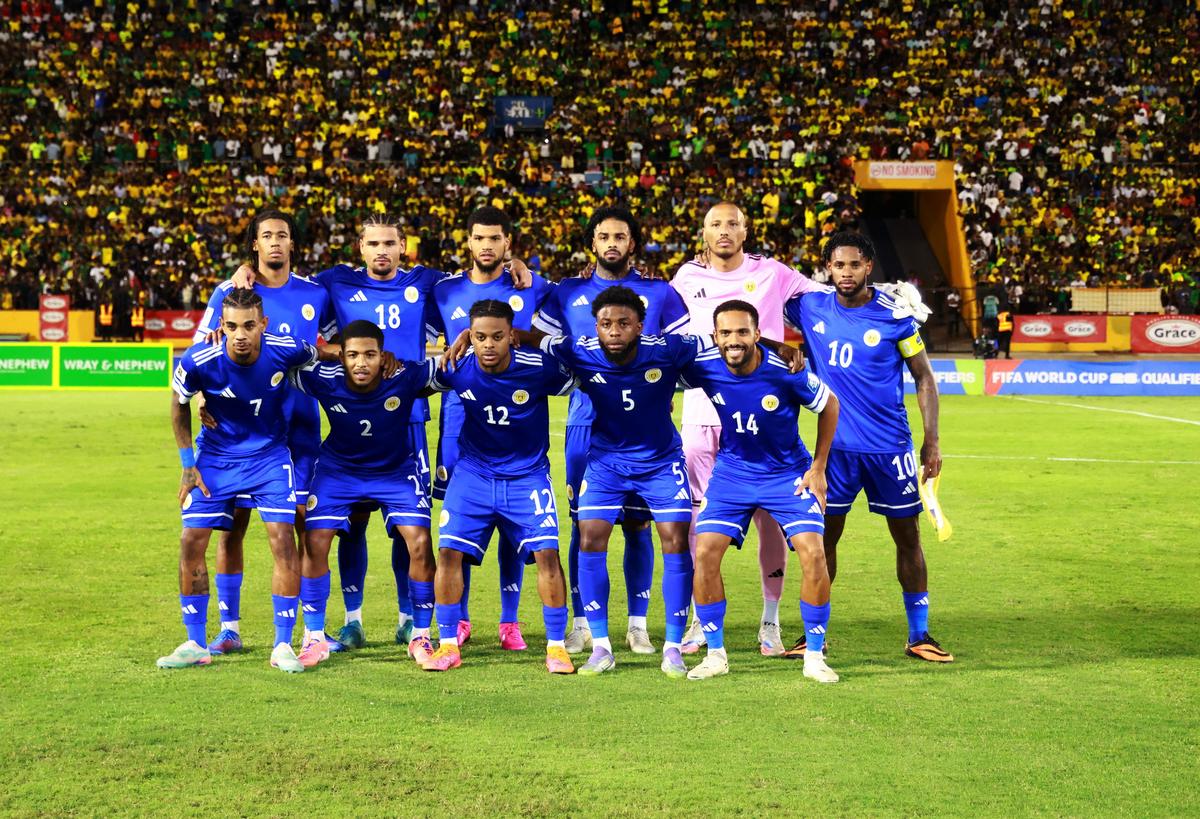
Curaçao makes history as smallest nation by population to qualify for FIFA World Cup
The Coach, the Diaspora and the Turning Point Behind the Miracle
Curaçao’s rise didn’t happen by accident. The country’s federation took a bold step by bringing in one of Europe’s most experienced managers, a coach who has spent decades in international football and knows what it takes to navigate tournament qualification campaigns.
When he arrived, the first task was simple but brutal: professionalise everything. Training camps became stricter. Preparation for opponents got more detailed. Fitness standards were raised. Players were told that if they wanted to go from “nearly there” to “World Cup ready”, nothing could be left to chance.
A key part of the plan was tapping into the Curaçaoan diaspora. Many of the national team’s stars were born or raised in the Netherlands and other European countries, coming through elite academies and youth national teams before choosing to represent Curaçao at senior level. That mix of top-level experience and emotional connection to the island turned a small nation into a serious contender.
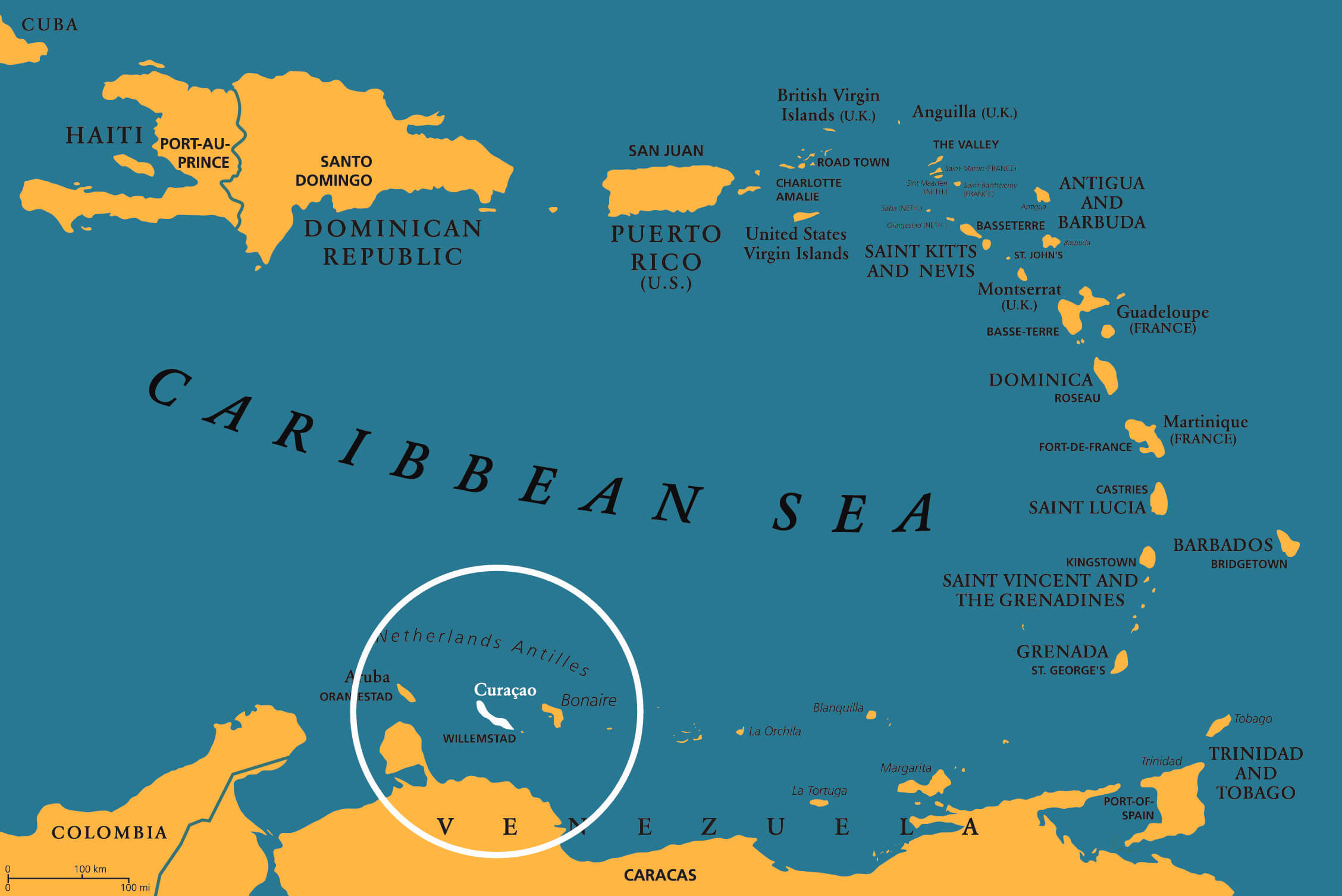
Curaçao sits just 40 miles off the coast of Venezuela in the southern Caribbean — making it the smallest nation by population ever to qualify for a men’s World Cup.
Inside the Night in Jamaica: Tension, VAR Drama and History Made
The decisive match in Jamaica felt less like a normal qualifier and more like a cup final. Curaçao knew a draw would be enough, but that knowledge brought its own pressure. Every misplaced pass, every corner conceded, every long ball into the box felt like a potential disaster.
As the second half wore on and legs tired, Jamaica pushed harder. The home crowd sensed panic and turned up the volume. When a late penalty was awarded to the hosts, it looked as if Curaçao’s dream had collapsed in an instant.
Then came the twist. The referee headed to the pitch-side monitor for a VAR review. Seconds dragged into what felt like minutes. Finally, the decision was overturned. No penalty. The Curaçao players roared, the bench erupted, and the final few minutes became a desperate fight to clear every ball and block every shot.
When the whistle finally went, some players dropped to their knees in relief. Others sprinted toward the away fans. Back home, celebrations started instantly and showed no sign of stopping.
The Rules Behind the Dream: How FIFA Eligibility Opened the Door
One of the most interesting parts of Curaçao’s story sits in the background: how these players are even allowed to represent the island in the first place. The answer comes down to FIFA’s eligibility rules, which are clear and consistent across all member nations.
In simple terms:
-
A player can represent a country if they hold that nationality, usually through birth, a parent, or sometimes a grandparent.
-
Many Curaçao players were born in the Netherlands or elsewhere in Europe but have Curaçaoan roots through family.
-
As long as they have not played a competitive senior match for another national team, they can choose Curaçao at senior level.
-
Once they appear in an official senior competition, their choice is locked in and they cannot switch again.
Curaçao’s federation has used these rules smartly but legitimately, convincing players with ties to the island to commit their international futures. It’s the same basic mechanism used by many other nations with large diasporas, from Algeria and Morocco to Ireland and Senegal.
What Happens Next: Draw Date, Opponents and the Road to 2026
Qualifying is only the beginning. Curaçao now waits for the 2026 World Cup draw on 5 December, which will decide both their region (east, central or west) and their group opponents. They could end up facing a host nation such as the USA, Mexico or Canada, or be thrown into a group with one of the traditional heavyweights.
Off the pitch, there are clear next steps governed by tournament rules and regulations. The federation must finalise its preliminary squad list, handle player registrations, and comply with FIFA deadlines on everything from medical records to training-base selection. Every eligible player who wants to be part of the story must stay fit, perform for their club and maintain their status under the same eligibility rules that allowed them to join in the first place.
For fans, attention turns to logistics: flights to North America, match tickets, accommodation and visas or travel authorisations for the USA, Mexico or Canada, depending on where Curaçao’s games are scheduled. For players, the focus is simpler: prepare for the toughest opponents of their lives while carrying the hopes of the smallest nation ever to reach a men’s World Cup.
And for the rest of the football world, Curaçao’s qualification poses one big question: if an island of 156,000 people can fight its way to the World Cup, who really gets to say what’s impossible anymore?
Which teams are in the FIFA World Cup 2026, and who can still qualify?
Africa: Algeria, Cape Verde, Egypt, Ghana, Ivory Coast, Morocco, Senegal, South Africa, Tunisia
Asia: Australia, Iran, Japan, Jordan, Qatar, Saudi Arabia, South Korea, Uzbekistan
Europe: Austria, Belgium, Croatia, England, France, Germany, Netherlands, Norway, Portugal, Scotland, Spain, Switzerland
Oceania: New Zealand
Americas: Argentina, Brazil, Colombia, Ecuador, Paraguay, Uruguay, Curacao, Panama, Haiti
When Will All 48 World Cup 2026 Teams Be Confirmed?
Fans will have to wait until March 31, 2026 to know the full list of nations heading to the 2026 World Cup. Europe’s final qualifiers run through March, and the intercontinental playoff — which decides the last two spots — also finishes that month. It means the final tournament lineup won’t be complete until less than three months before kickoff.
Which Teams Are Still Fighting for a Place at the 2026 World Cup?
European Playoff Teams (Competing for 4 Spots)
Sixteen teams will enter the UEFA playoffs in March, all chasing the final four European tickets:
Albania, Bosnia and Herzegovina, Czechia, Denmark, Italy, Kosovo, Poland, Republic of Ireland, Slovakia, Türkiye, Ukraine, Wales, Romania, Sweden, Northern Ireland, North Macedonia
Intercontinental Playoff Teams (Competing for 2 Spots)
Six nations from around the world will battle for the last two World Cup berths:
Bolivia, DR Congo, Iraq, Jamaica, New Caledonia, Suriname
How Do the European Playoffs Work?
Europe’s final qualifying round is a short, high-pressure sprint:
-
16 teams take part:
– 12 runners-up from the main qualifying groups
– 4 Nations League group winners
-
They are split into four playoff paths, each containing:
– 2 single-leg semifinals
– 1 single-leg final
-
Only the winner of each path qualifies, giving Europe its last four World Cup teams.
Key Dates
Winners of the four finals join the 12 group winners already qualified from Europe.
FAQs: Curaçao’s World Cup Qualification Explained
How small is Curaçao compared to other World Cup teams?
Curaçao has a population of around 156,000 people, making it the smallest men’s World Cup nation in history. Previous “minnows” like Iceland had more than double that population when they reached the finals.
How did Curaçao secure qualification for the 2026 World Cup?
They topped their final qualifying group, collecting enough points earlier in the campaign and then earning a crucial away draw in Jamaica to finish ahead of their rivals.
When will Curaçao find out who they play at the World Cup?
Curaçao will learn their group and match locations at the official World Cup draw on 5 December, when FIFA assigns all qualified teams to groups in the east, central and west regions of the tournament.
Can Curaçao’s players still change national teams before the World Cup?
In most cases, no. Once a player has played a competitive senior match for Curaçao, FIFA’s rules prevent them from switching to another national side. That means the core of this history-making squad is locked in and eligible to represent the island at the 2026 World Cup.
👉 Review: Claire Danes in The Beast in Me: Netflix’s Killer-Neighbour Thriller You Can’t Look Away From 👈
In a dramatic early-morning move from Washington, President Donald Trump has signed a bill forcing the US Justice Department to release its long-guarded files on Jeffrey Epstein within 30 days. The law compels disclosure of investigative records, prosecution and custody files, flight logs, internal DOJ communications, and documentation surrounding Epstein’s detention and death.
The decision caps days of feverish political pressure, near-unanimous votes in Congress, and growing unrest inside Trump’s own Make America Great Again movement. Survivors of Epstein’s abuse and their families are hailing the signing as a breakthrough moment, while attorneys and former officials are already bracing for a wave of questions about who is named in the documents and how much will be blacked out.
At the center of it all: Trump, the Justice Department, and a countdown clock now ticking toward a disclosure battle unlike anything seen in the Epstein saga so far.
Why Trump Signed the Epstein Files Bill After Calling It a ‘Hoax’
For months, Trump publicly dismissed demands to open the Epstein archive as a partisan stunt aimed at damaging him and other Republicans. That stance clashed with promises he made on the campaign trail to “release the Epstein files in full,” and created visible tension within his base.
Over the past week, that pressure exploded into the open. The House of Representatives voted 427–1 to force disclosure, a rare show of unity that drew applause on the floor. The Senate quickly followed, sending the bill to Trump’s desk with overwhelming bipartisan support.
Trump then flipped his position and announced online that he had signed the measure, using the moment to argue that Democrats, not Republicans, would be most exposed by a full release. His allies have leaned heavily on Epstein’s past connections to prominent Democratic figures, even as Trump’s own relationship with Epstein remains a focus of public scrutiny.
What the Law Forces the Justice Department to Release
The new law is unusually sweeping in what it demands from the Justice Department. Within 30 days, officials must begin releasing:
-
Investigative and prosecution files tied to Epstein’s criminal cases
-
Custody and detention records, including material related to his death in jail
-
All files referencing Ghislaine Maxwell
-
Flight logs and travel records for aircraft, vessels, or vehicles owned, operated, or used by Epstein or related entities
-
Documents naming individuals or entities linked to Epstein’s criminal activities, civil settlements, immunity or plea agreements, or investigations
-
Records of immunity deals, non-prosecution agreements, plea bargains, and sealed settlements involving Epstein or his associates
-
Internal DOJ communications about decisions to charge, not charge, investigate, or decline to investigate Epstein or his circle
-
Communications about missing, destroyed, altered, or concealed Epstein records
-
Documentation surrounding Epstein’s detention and death, including witness interviews and autopsy materials
This goes far beyond a simple document dump. It reaches inside the Justice Department’s decision-making process over many years, putting prosecutorial choices and internal debates under the microscope in a way that is rarely seen in public.
How Redactions and Releases Really Work in a Case Like This
As the 30-day deadline approaches, one legal question dominates: how much of this will the American public actually be allowed to read?
Under US law, agencies can release records while still redacting limited categories of information. In practical terms, that usually means:
Protecting Ongoing Investigations
If a document would expose active investigative steps or reveal tactics that could compromise a live case, specific passages can be withheld. This is one reason prosecutors almost never release full, live case files while investigations are still open.
Shielding Certain Private Individuals
Courts may permit redactions to protect the privacy of people who are not accused of crimes, even if their names appear in investigative files. This is especially sensitive in a case like Epstein’s, where documents may mention dozens of people who never faced charges.
Limiting Sensitive Security and Medical Details
Material such as detailed autopsy photographs, security camera locations, or internal prison protocols can be redacted to protect safety and institutional security, while still releasing the broader narrative and timelines.
Public Record, Even with Black Bars
Once released, even partially redacted documents generally remain part of the public record. Future legal challenges can sometimes force additional details to be unsealed, but that process can take months or years.
The core tension now is simple: the law demands maximum disclosure, but existing rules still allow targeted redactions. That collision between transparency and privacy is exactly where the next legal fights are likely to erupt.
Survivors, Political Fallout, and Global Names in the Spotlight
Epstein survivors and their families reacted with emotion and relief, framing the bill’s passage as a long-overdue step towards real accountability. The family of Virginia Giuffre, one of Epstein’s most prominent accusers, praised the signing as a historic moment and urged that “every name” tied to his operation be revealed, regardless of wealth or political power.
The political landscape around the scandal is deeply fractured. Within the MAGA movement, there has been open anger over any delay or hesitation in releasing the files. Republican congresswoman Marjorie Taylor Greene, a longtime Trump supporter who has recently clashed with him, appeared with survivors on the steps of the Capitol, praising their persistence and insisting their voices be heard.
Meanwhile, documents already released by a House committee have referenced Trump, former President Bill Clinton, the UK’s former US ambassador Lord Mandelson, and Andrew Mountbatten-Windsor, the former Prince Andrew. None of those figures have been charged with crimes in relation to the Epstein case, and all have denied wrongdoing while expressing regret over their association with Epstein.
👉 Latest: Andrew Mountbatten-Windsor Faces Congress Deadline Over Epstein Ties Amid New UK Pressure 👈
Former US treasury secretary Larry Summers, whose name also appeared in released materials, announced he would withdraw from public life and said he was deeply ashamed of his past connection to Epstein.
What Happens Next Legally: The 30-Day Deadline and Potential Court Battles
The key legal clock now running is the 30-day window given to the Justice Department. During that period, officials must review, organize, and release large volumes of Epstein-related material in a way that complies with the new law and existing privacy and criminal procedure rules.
In previous high-profile document releases involving government records, disputes over what can be redacted have sometimes ended up in court. Judges may be asked to decide whether certain blacked-out sections are truly justified or whether more detail must be made public. That kind of legal fight is entirely possible here, given the intense public interest and the number of powerful people whose names appear in the files.
For now, the immediate focus is on how quickly the DOJ moves, how heavily the documents are redacted, and whether Congress or outside groups challenge any decisions to keep material hidden. Whatever happens next, the department’s handling of the Epstein archive is already under a spotlight that will only grow brighter as the deadline approaches.
👉 Related: The Real Question Behind Trump’s Epstein Files Order: What Will Actually Be Released — and What Can Still Stay Hidden? 👈
FAQs: What People Are Asking About the Epstein Files Release
When will the Epstein documents be released?
The Justice Department has 30 days from the moment President Trump signed the bill to release the Epstein files. That timeline is written directly into the law, putting firm pressure on the DOJ to move quickly.
Will all of the Epstein files be fully public?
No. The law requires broad disclosure, but existing rules still allow limited redactions to protect ongoing investigations, certain privacy interests, and sensitive security or medical information. The public should expect to see some blacked-out sections in the first wave of documents.
Can the DOJ refuse to release specific records?
The Justice Department must follow the law and release the categories of documents listed in the bill. It can withhold or redact only where other legal protections apply, such as active investigations or court orders. Any decision to withhold information could be challenged and reviewed by a court.
Could the release of these files lead to new legal action?
Releasing records does not automatically create new criminal charges. Prosecutors can only bring cases if the evidence meets legal standards for proving crimes in court. Whether further action is taken will depend entirely on what the documents show and how investigators and courts interpret that evidence.
Gunmen Attack Kwara Church During Evening Service
Gunmen stormed a Christ Apostolic Church in Eruku, Kwara State, during an evening worship service on Tuesday, shooting congregants and kidnapping the pastor along with several worshippers. The attack, which struck shortly after 6 p.m. local time, left at least two people dead and others injured, according to early police findings.
The church, located in a rural border community between Kwara and Kogi states in central Nigeria, was holding a regular service when the armed men forced their way in. The assault comes less than 48 hours after 25 schoolgirls were abducted from a government boarding school in Kebbi State and at a time when U.S. President Donald Trump has publicly warned Nigeria over repeated attacks on Christian communities. The incident has sharpened questions about how the government is handling bandit violence and what protection ordinary worshippers can expect.

Map showing Kwara State in central Nigeria and the border town of Eruku, where gunmen attacked a church during an evening service.
Witness Accounts: How the Kwara Church Attack Unfolded
Worshippers had been mid-service when the sound of distant gunfire began to filter into the building. Moments later, the shots grew louder and panic spread, with people rushing for doors and diving for cover as several armed men forced their way inside.
Video from a church livestream, shared locally after the attack, shows the sudden disruption of the service as gunshots ring out and the camera shakes before cutting off. Residents say the attackers were heavily armed and moved quickly through the church, seizing bags, phones, and other belongings.
Police later confirmed that at least two victims were found fatally shot—one inside the church and another in nearby bushland—while several others, including a local vigilante, were taken to hospital with gunshot wounds. The pastor and an unconfirmed number of congregants were forced from the building and marched into the surrounding bush, with families still waiting for news of their whereabouts.
Eruku, Kwara: Border Community Living Under Threat
Eruku sits on a key rural route near the Kwara–Kogi border, an area where residents say bandit activity has intensified in recent weeks. Local leaders report that attempted kidnappings, roadside ambushes, and raids on small settlements have increased, leaving many people afraid to travel after dark or attend evening events.
Community figures have repeatedly appealed for more security patrols, arguing that the town’s position near a state border makes it vulnerable to gangs that can slip across jurisdictions. Tuesday’s church attack has deepened those fears, with residents pointing to the Kebbi schoolgirl abduction and other recent incidents as signs of a wider pattern of insecurity stretching across northern and central Nigeria.
On the international stage, the Eruku assault lands at a sensitive moment. Trump’s recent comments on the treatment of Christians in Nigeria have drawn global attention back to the country’s security record, adding diplomatic pressure to the domestic outrage already building over repeated attacks on schools, villages, and places of worship.
How Nigerian Law Handles Deadly Church Attacks
When an armed group attacks a church, kills worshippers, and kidnaps congregants, several serious offences are typically involved under Nigerian criminal law. These can include kidnapping, armed robbery, unlawful possession of firearms, and culpable homicide. The exact charges depend on the evidence gathered, the number of victims, and whether links to organised criminal or terrorist groups are established.
The process usually begins with a formal investigation by the state police command. Officers collect physical evidence from the scene, record statements from survivors and witnesses, and work to establish how the attackers arrived, how they escaped, and who may have supported them. If the incident crosses state lines or is linked to recognised terrorist organisations, federal agencies can become involved.
Evidence is central. Items such as recovered shell casings, the church livestream footage, medical reports, and any communications or ransom demands may later be presented in court. Maintaining a clear chain of custody—how each piece of evidence is collected, stored, and logged—is crucial so that it can be used in a prosecution if suspects are arrested.
This is a general explanation of how the system works in cases like this. Individual investigations can differ depending on the facts and the agencies involved.
FAQs: Kwara Church Attack and Kidnappings
How many people were killed in the Kwara church attack?
Police have confirmed at least two fatalities so far, with investigations continuing to establish the full number of victims and injuries.
How many worshippers were kidnapped from the church?
The exact figure has not yet been made public. Authorities have confirmed that the pastor and several congregants were taken into the bush, and efforts are ongoing to compile a complete list.
Is this attack linked to the Kebbi schoolgirl abduction?
There is no official confirmation of a direct link between the two incidents. However, they occurred within a short time frame and have contributed to growing concern about the spread of bandit attacks across multiple states.
Why is the United States commenting on attacks like this?
Trump has recently criticised Nigeria’s handling of violence against Christian communities, putting additional international attention on how the government responds to church attacks, mass kidnappings, and other religiously sensitive incidents.
What Happens Next in the Kwara Church Kidnapping Case?
In the coming days, investigators are expected to focus on three main tracks: locating the hostages, identifying the gunmen, and securing evidence strong enough to support future prosecutions. Search operations in the bush around Eruku are likely to continue, with police and local vigilante groups trying to trace the kidnappers’ routes and possible hideouts.
If suspects are arrested, they can face a combination of kidnapping and homicide charges, alongside other offences such as armed robbery or unlawful possession of weapons. Any future court case will depend on whether investigators can connect individuals to the attack through witness testimony, forensic evidence, digital records, or ransom communications.
For residents of Eruku and other rural communities, the key question now is whether this case leads to tangible change—stronger security on the ground, better protection for churches and schools, and visible progress in holding armed groups to account. The way authorities handle the investigation and any eventual trials will shape public trust in the justice system long after the gunfire has faded.
👉 Latest: The Real Question Behind Trump’s Epstein Files Order: What Will Actually Be Released — and What Can Still Stay Hidden? 👈

