
Understand Your Rights. Solve Your Legal Problems
Indian multinational pharmaceutical company Sun Pharma has reached an agreement with US pharmaceutical company Celgene Corporation (Celgene), resolving the patent litigation regarding submission of new drug ANDA for generic versions of oral cancer drug Revlimid in the US.
In accordance with the terms of the settlement, Celgene will permit Sun Pharma a license to its patents needed to manufacture and distribute certain quantities of generic lenalidomide capsules (Revlimid) in the US. Sun Pharma will be permitted the license from a confidential date, which is confirmed to be some time after March 2022, subject to USFDA approval. From January 2026, the license will also give Sun Pharma the authorisation to manufacture and distribute an unlimited quantity of generic lenalidomide capsules in the US.
As of the result of the settlement, Sun Pharma has stated that all Hatch-Waxman litigation between the two companies, regarding Revlimid patents, will be disregarded.
Niall Hearty of financial crime specialists Rahman Ravelli considers the increasing appeal to the authorities of account freezing orders and account forfeiture orders.
The force issued account freezing orders and account forfeiture orders against assets with a total value of £36 million in 2020 – a figure that dwarfs the 2019 total of just under £1 million. But while a 3,600% rise is spectacular, it is arguably unsurprising. Account forfeiture orders and account freezing orders give the police – and other authorities – an opportunity to seize money that is suspected of having been gained through wrongdoing, without any need for a prosecution. Yet as they have only been available to the authorities since the start of 2018, thanks to the Criminal Finances Act, they are still a relatively new concept. Part of the increase in their use by the capital’s police can, therefore, be put down to the force becoming more familiar with them and more aware of their usefulness.
Before 2018, police and other authorities did not have many options when it came to seizing money without a person having been charged with an offence. But now they have these orders, it would be surprising if current levels of use are not maintained or even increased further. And this is due to circumstances that go beyond their “user-friendly’’ appeal to the authorities.
At a time when the COVID-19 pandemic has seen various government initiatives put into operation in an attempt to keep the economy buoyant, there are arguably more opportunities available to those looking to commit fraud than there ever have been. The furlough scheme, the Self Employment Income Support Scheme (SEISS), and the Bounce Back and Coronavirus Business Interruption loan schemes have all been cited as potential magnets for fraudsters, prompting the government to create a HM Revenue and Customs (HMRC) task force to tackle the problem. The £100 million HMRC Taxpayer Protection Taskforce will see more than 1,250 HMRC staff attempting to identify those who have tried to make fraudulent gains from the government schemes. It would be a major surprise if such identification were not followed by more account freezing orders and account forfeiture orders being initiated.
While the Proceeds of Crime Act 2002, which came into force on 24th March 2003, gave authorities the powers to confiscate the proceeds of crime so that a person convicted of a criminal offence could not benefit from their wrongdoing, the introduction of account freezing orders and account forfeiture orders has considerably strengthened their hand. The fact that they can be obtained without the need for a conviction or even a prosecution makes them the “go-to’’ option for authorities looking for the swiftest, most direct route to deprive someone suspected of wrongdoing of their ill-gotten gains.
While a 3,600% increase in the value of such orders appears to be a startling statistic, the reasons behind the figure mean it is far from shocking. Arguably, it would have been a shock if there had not been such an increase in the use of the orders. It is hard to believe that it is only the City of London Police that has recognised the value of these powers and started using them more and more. Many other authorities are sure to be employing them with increasing enthusiasm.
On Friday, The US Court of Appeals ruled against Chinese tech company Huawei’s plea to override the FCC's ruling. Under the ruling, the FFC classified Huawei as a national security risk. Federal government subsidy recipients were banned from utilising funds to purchase products or services from companies classified as a “national security risk”.
Huawei’s challenge to the competence of the commission was only met by the court upholding the FCC’s ruling. The court stated the FCC was within its rights to classify Huawei as a national security risk. Huawei argued that the ruling would be unjustified under the APA and that the ruling would violate covered companies’ due process rights. However, these claims were rejected by the court.
Hannah Sharp, Partner at Rosling King LLP, relays their victory in an international fraud case that saw the freezing of fraudulent assets in Ukraine. The case has many implications for the British courts and demonstrates the unyielding international influence of UK courts in spite of Brexit.
An attempt by a Ukrainian national to challenge the jurisdiction of the court in London failed and Rosling King argued successfully for the continuation of a £65 million worldwide freezing order against the individual concerned and his ex-wife. The couple are alleged to have committed extensive fraud on a Ukrainian bank. The case serves as a reminder of the authority of the English courts in an international context.
In September last year, a worldwide freezing order (“WFO”) in the amount of £65 million was obtained in the court by the claimant, WWRT Limited, against the defendants, Mr and Mrs Tyshchenko. Mrs Justice Bacon heard the claimant’s applications for continuation of the WFO and for an order for permission to cross-examine the defendants on their assets and sources of funding. She also heard an application by Mr Tyshchenko challenging the jurisdiction of the English court. Mrs Tyshchenko, who lives in England, did not contest jurisdiction. In her judgment, Bacon J found in favour of the claimant on all key issues.
Mr Tyshchenko argued that, although he had been personally served in England in September 2020, he was not resident in England meaning that the claim should stay on forum non-conveniens grounds. He also contended that the proceedings must be stayed to allow the claims against him to be adjudicated by the Ukrainian court in the context of existing Ukrainian bankruptcy proceedings against him, relying on the principle of modified universalism. He further argued that a stay should be granted in light of pending English bankruptcy proceedings and a pending application for recognition in England of the Ukrainian bankruptcy proceedings.
In deciding the question of residence, Bacon J took the view that a person will be resident in England if England is for them a “settled or usual place of abode, which connotes some degree of permanence or continuity” and that it is possible for a person to reside in more than one jurisdiction at the same time.
Based on the evidence of Mr Tyshchenko’s regular visits to England to stay with Mrs Tyshchenko and their five children at the family home, as well as factors such as registration on the UK electoral roll, Bacon J found that Mr Tyshchenko had a settled pattern of residence in England, and this was not undermined by the fact that Mr Tyshchenko also spent substantial time in Ukraine and elsewhere. Mr Tyshchenko was therefore resident, and domiciled, in England at the time of service of the proceedings for the purposes of Article 4 of the Recast Brussels Regulation.
In considering whether the Court should stay the claim following the principle of modified universalism, Bacon J, applying Owusu v Jackson [2005] QB 801, noted that the Recast Brussels Regulation specifically excludes bankruptcy proceedings from its scope on the basis that the “peculiarities” of bankruptcy require special rules on jurisdiction. This, she said, indicates that, where proceedings fall within the Recast Brussels Regulation, the provisions of Article 4 are mandatory and cannot be avoided by a stay on grounds of modified universalism. She also found that, even if a stay could in principle have been granted on the basis of modified universalism, the Court would only exercise its discretion to grant such a stay where there were “exceptional circumstances” or “exceptionally strong grounds” to do so, which there were not in this case. 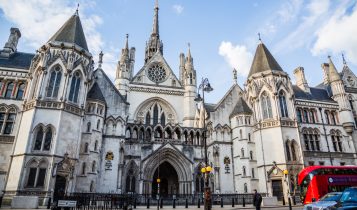
As to the English bankruptcy proceedings, it was common ground that, if successful, they would empower the Court to stay these proceedings pursuant to section 285 of the Insolvency Act 1986. Counsel for Mr Tyshchenko argued that this meant that no useful purpose would be served by allowing the claim to continue. Bacon J disagreed, finding that the existence of the “specific statutory mechanisms under which a stay can be sought” led to the conclusion that those mechanisms may be used in due course, but should not be pre-empted through the order of a stay in these proceedings in the meantime.
Bacon J also rejected an argument made on behalf of Mr Tyshchenko that, by analogy with Article 34 of the Recast Brussels Regulation, a stay should be granted to avoid the risk of irreconcilable judgments. This was not a proper extension of Article 34 since it would amount to applying the article to a situation that had been deliberately excluded from the Recast Brussels Regulation.
Finally, although the issue of forum non-conveniens did not arise in light of Bacon J’s findings on Article 4 of the Recast Brussels Regulation, she nonetheless confirmed that she would not have been minded to grant a stay on that basis in any event. Whilst the central issues in the case turned on Ukrainian law, it did not mean Ukraine is “clearly or distinctly” the more appropriate forum, given that the claimant is an English company, expert evidence on Ukrainian law can be obtained and significant resource had already been spent pursuing the proceedings in England, including the translation of numerous documents. Whilst the presence of the second defendant in England is not a “trump card”, it remains a “relevant and important” factor.
Mr and Mrs Tyshchenko opposed the continuation of the WFO on various grounds, including in reliance on an assertion that the duty of full and frank disclosure had been breached at the without notice stage. In dismissing the defendants’ arguments on full and frank disclosure, Bacon J noted that the applicant must draw the court’s attention to “significant factual, legal and procedural aspects of the case” (Tugushev v Orlov [2019] EWHC 2013 (Comm)) and that “the requirement is to identify arguments which it is reasonably anticipated that the absent party might wish to make, rather than to attempt an exhaustive trawl through every possible legal objection that might be taken”.
In considering the claimant’s application for an order for permission to cross-examine the defendants on their assets and sources of funding, Bacon J noted that cross-examination will be ordered only in “exceptional cases”, usually where it will further the purpose of the order. A general suspicion that disclosure is inadequate is unlikely to be sufficient to meet that test.
Bacon J found that the disappearance of the defendants’ considerable wealth in recent years had not been explained.
A previous judgment in JSC BTA Bank v Ablyazov [2014] EWHC 2019 (Comm), [2015] 1 WLR 1547 recorded Mr Tyshchenko’s own evidence that he owned “a hundred companies”, and yet no proper explanation had been provided as to what had happened to those assets. There was also no proper explanation as to the source of funds supporting the defendants’ lifestyle, nor the funding of the costs of lawyers and expert witnesses in this litigation and numerous separate but related proceedings initiated in Ukraine. The inference that assets were being held on behalf of the defendants by third-party nominees was a reasonable inference beyond a “general suspicion” of defects in asset disclosure, particularly given the evidence of companies and properties connected to the defendants said to be held by the defendants’ family members.
The earlier judgement in JSC BTA Bank v Ablyazov, which held that Mr Tyshchenko’s evidence on assets was “completely incredible” and that he had “not engaged in good faith in the disclosure process”, whilst not decisive, showed a “track record of lying about assets, which lends weight to WWRT’s belief that the information provided by him so far is not credible”.
Bacon J considered that there was no alternative, less intrusive means available to obtain the information sought, particularly given that the claimant had been pressing for further information for some time, and accordingly made an order for cross-examination, together with related disclosure.
Prosecutors in Manhattan have urged a federal judge to hand Avenatti a hefty punishment for his attempts to extort millions of dollars from Nike. Although the government is calling for a tough sentence, it agrees with the probation office’s assertion that a below-guidelines sentence would be substantial enough. While the guidelines could put Avenatti away from 11 years minimum, the probation office is recommending an eight-year sentence.
Avenatti was found guilty on all counts in the Nike extortion trial in February 2020. Nike reported that the celebrity attorney had threatened to go public with condemning information about the company unless $1.5 million was handed over to him. He also demanded that Nike should hire him and co-counsel Mark Geragos to conduct an internal investigation, setting the retainer fee between $15 million and $25 million.
Avenatti requested a six-month sentence alongside a yearlong house arrest. He argues that this proposal is just as the offense is his first and no money was lost. However, prosecutors have firmly disagreed with the proposal, arguing that such a short sentence would send out the wrong message to the public and would fail to acknowledge the severity of the situation.
Every country is facing a mental health crisis. Across the globe, it is estimated that 264 million people are affected by depression, whilst 45 million are affected by bipolar disorder. It remains unclear as to whether mental health issues are genuinely on the rise or whether the gradual destigmatization of ill mental health has resulted in more people opening up about their struggles.
Although ill mental health affects society widely and diversely, there are nonetheless particular professions where the impacts of ill mental health have greater prevalence. For the legal sector, mental health is a rapidly growing issue. Long hours, high pressure, and high financial targets often define the day-to-day routine of legal practitioners, understandably contributing to, or causing, a decline in mental well-being over time.
LawCare, an independent charity offering support to the UK legal community, found that people most frequently called their helpline due to stress (26%), with anxiety being the second most common reason (11%) for reaching out. Furthermore, in a study by Protectivity, those in the legal sector were found to be the second most stressed professionals after those working in Human Resources.
Poor mental health within the legal sector is by no means a new revelation. Many firms have already been working towards improving the well-being of their staff. However, the issue is far from being solved. Whilst the stigma surrounding mental health has eased over the past decade, it is undoubtedly more difficult to express concerns for your mental health in a professional setting than it is in your personal life. 66% of lawyers say they would feel worried about reporting feelings of stress to their employer. In a sector dominated by highly driven, determined people, it is understandable that many still fear that opening up about their mental health might leave employers deeming them weak and incapable. However, in 2021, we know that even the strongest and most accomplished individuals can struggle with their mental health. If professionals are still feeling the stigma, then more needs to be done.
The argument that stress is an inevitable and unavoidable part of being a solicitor is not only dangerous to individual professionals, but also to the legal profession as a whole. Whilst some degree of stress is to be expected in any profession, when it becomes excessive and ongoing the damage can come back to hit firms hard. Widespread ill mental health in law firms can lead to increased sick leave across the company and a general lack of morale, with the result being decreased organisation and productivity, increased employee turnover, and decreased long-term profits. If employees are expected to navigate the choppy waters of ill mental health alone, then their potential for brilliance will be swamped out, if not drowned altogether.

It isn’t possible to pinpoint the one cause and one consequence of lawyers’ mental affliction, because there isn’t one. Mental health is a complex issue with no single solution. The problems that a corporate lawyer faces are likely going to be different from the problems faced by a barrister, or law centre and legal aid solicitor. Furthermore, lawyers are people first, and legal professionals second. Factors such as race, gender, sexuality, religion, and class background play a huge role in mental well-being across society, and this is undoubtedly reflected in people’s professional lives.
Although there are good intentions behind each recommendation of yoga, journaling, a better diet, and an early night, these slices of self-help advice often aren’t enough to have any real impact on an individual's long-term well-being. Instead, every law firm should play its part in supporting staff members through schemes such as the Mental Health First Aider (MHFA) initiative. The initiative helps to create a more supportive and open workspace for employees by encouraging everyday conversation on mental health. Various aspects of mental illness, from depression, personality disorders, psychosis, and addiction, are covered by the MHFA training course. It provides legal first aiders with the skills and knowledge to immediately assist any colleague who is struggling mentally, and to direct them to further, professional support if necessary.
Many law firms have already benefited significantly from the MHFA initiative, as it works to break down remaining stigmas surrounding mental health. However, despite the MHFA initiative’s success across many law firms, it’s nonetheless still important that it, or any other mental health provision, isn't viewed as a catch-all safety net. As more conversations surrounding mental health occur in the workplace, more systems of support can be established. The more we talk about mental health, both in wider society and within the professional settings, the easier life becomes for everyone.
If you’ve been injured in a car accident in California, you’re entitled to collect compensation from the responsible parties. When you’re hit in the rear, or the accident was caused by a drunk driver, their insurance company might even be offering you money days after your crash. It’s extremely important to remember that you should never sign any agreement without first consulting an attorney because these early settlements are usually pennies to the dollar and it’s not possible to know how your injuries will heal so soon after the accident. That’s why it’s important to hire the right California car accident lawyer that can explain your rights and help you collect the full amount of compensation you’re entitled to.
In order to find the right lawyer for your case, you’ve got to ask the right questions. The first thing to ask is whether the attorney specialises in car accident cases. You wouldn’t hire a dermatologist to perform your brain surgery and you don’t want to hire a matrimonial attorney to handle your car accident case. There are also some specialties within car accident law that you might want to seek out for certain types of cases. Collecting the largest amount of compensation for car accident victims requires an understanding of the medical conditions that the injuries have caused. For catastrophic injuries such as spinal cord injuries (SCIs) and traumatic brain injuries (TBIs), it is best to choose a California car accident attorney with expertise in these areas. It’s important to know who your contact person will be at the firm — will it be an associate attorney, a paralegal, or will you only be able to leave messages with a receptionist? Lawyers are busy and cannot take phone calls when they’re in court, so firms that have well-trained paralegals and associates to answer client questions promptly. Questions like “when is my next court appearance” or “when should I expect to get the check for my property damage” don’t require legal analysis, and you shouldn’t have to wait weeks to get a response.

You shouldn’t accept unsolicited referrals for car accident lawyers or therapy offices. Unscrupulous attorneys and doctors hire people to listen to police radio broadcasts and arrive at the scene of an accident posing as a good Samaritan offering “helpful” advice about where to get legal assistance and medical treatment. You’re not going to find the right California car accident lawyer through these scams. The best way to find an excellent car accident lawyer is to start with asking your friends and family for referrals and follow up by looking at the attorney’s website and online reviews. You can also post a request on a local social media group you belong to, asking for recommendations. If many people in the area choose a certain attorney, it’s likely that they are worth interviewing.
It’s best to stay away from attorneys that make broad promises that sound too good to be true. For example, in most cases, it’s not possible to collect more money than the insurance's policy limits. It’s also not possible to know right away how well your injuries will heal. Sometimes very serious injuries heal completely with very little impact on your life, which means that you’ll receive less compensation than if the outcome had been poor. So, if you're told that your case is worth millions the day after your car accident, look for another attorney. There’s no free lunch and the best California car accident attorneys don’t get clients to sign on the dotted line with promises that are not based on law and fact. You’ll know that you’ve found the right California car accident lawyer when they’ve explained everything fully and your expectations are realistic.
The best way to find the right California car accident lawyer is to follow the same best practices that you would use to find any other type of professional. It’s important to be vigilant about avoiding scams and only consult with reputable law firms. At your consultation, listen carefully to what you’re told and make sure that it doesn’t break the no-free lunch rule. If you’re feeling bullied or talked down to, have the confidence to get up and leave. You deserve an attorney that takes you seriously and treats you with respect. You’ll know you’ve found the attorney when you feel informed about what to expect for your case and supported by your representation.
Gateley is based in Birmingham, with offices in Manchester, Leeds, Nottingham, Leicester, and Dubai. In a statement to the London Stock Exchange, the law firm said it was dealing with a cyber security incident after having discovered an intrusion into its IT systems. Gateley’s IT team were quick to identify and act on the attack.
It was confirmed that approximately 0.2% of client data was stolen in the attack. However, Gateley says the data has already been traced and deleted from any new locations. The attack has not affected the firm’s financial performance, but the market reaction was rapid. Close to 8% of the share value was wiped off within just an hour.
Investigations into the attack will continue over the coming days, but there is currently no evidence suggesting that the information stolen has been circulated further. Gateley has said it will notify those affected as the investigation progresses. The attack has already been reported to the relevant regulators, law enforcement agencies, and the Information Commissioner’s Office has also been notified.
The UK has announced – and has already used – new powers to tackle corruption. Syed Rahman of financial crime specialists Rahman Ravelli wonders just how much of a force for good the UK is set to become.
Announcing a strengthening of sanctioning powers, Foreign Secretary Dominic Raab spoke on how the UK has become a honey pot for foreign individuals looking to launder corrupt funds. According to him, the new sanctions will prevent those who are involved in serious corruption from entering the UK – and bringing the proceeds of wrongdoing with them. As if to prove that actions speak louder than words, the Foreign Secretary’s statement was timed to coincide with the announcement that the UK had – for the first time - imposed asset freezes and travel bans on 22 people from across Russia, South Africa, Saudi Arabia, and Latin America under its new Global Anti-Corruption sanctions regime.
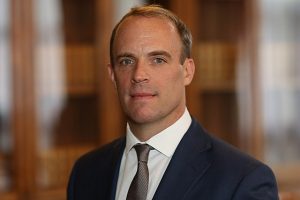
Image by UK Government - https://www.gov.uk/government/speeches/hong-kong-and-china-foreign-secretarys-statement-in-parliament, OGL 3, https://commons.wikimedia.org/w/index.php?curid=99338088
This new regime gives the UK more power than ever before to prevent corrupt funds from entering into the UK economy. For now, at least, the government appears keen to utilise it. Those with the dubious honour of being the first to be targeted include 14 Russians who are believed to have diverted $230 million in Russian state property through a fraudulent tax refund scheme, four individuals with alleged links to corruption in South Africa, a Sudanese businessman accused of misappropriating state assets and a Honduran politician who is as the centre of bribery allegations.
What now needs to happen, however, is sustained and effective use of these powers. An impressive, headline-grabbing and soundbite-friendly start is all well and good, but if this is followed by little else then it will count for nothing. The rate of prosecution of economic crime is hardly inspiring and it will take time to gauge whether the new measures are effective – or, to be precise, whether they are being used effectively.
Nobody doubts that the effect of corruption is felt worldwide on a large scale. Some estimates state that more than 2% of global gross domestic product is lost annually to it. If the new powers can help tackle this problem they will certainly be worthwhile, for both the UK and those nations where wealth is syphoned off illegally and inequalities are deepened.
The principal legislation supporting anti-corruption sanctions is the Sanctions and Money Laundering Act 2018, although the UK has clearly been looking to be more active in tackling corruption since Brexit became a reality. The new regime builds on the success of the Global Human Rights sanctions regime that was established in July 2020 and has led to the UK imposing sanctions on 78 individuals and entities involved in serious human rights violations. Significantly, these new measures enable the UK government to look beyond the jurisdictional scope of the Bribery Act 2010. They also allow for sanctions to be imposed on specific individuals without the need to target a specific country, which removes the risk of damaging what could be fragile relations with other states.
On paper, therefore, this looks like the dawn of a constructive new era in the targeting of those who are known – or at least strongly suspected to be – involved in corruption on a large scale. The key question, however, is whether this impressive new tool will be fully utilised or not. The UK clearly wants to fight corruption. It now has new measures in place to do this. And yet any glance at its recent track record gives little grounds to feel encouraged. There is little doubt that the Office of Financial Sanctions Implementation (OFSI) has been making all the right noises and diligently producing guidance and statements that earnestly convey its dedication to tackling corruption. But OFSI’s track record when it comes to enforcement action is, to put it politely, limited.
The UK appears to be at a crossroads when it comes to corruption. Nobody doubts that it is an issue that has to be tackled, and everybody is aware of the scale of it. It now seems to be the case that the UK has the means to tackle it. But it remains to be seen just how hard the UK is prepared to fight with the weapons it has at its disposal.
On Tuesday, a French court ordered Swedish furniture giant, IKEA, to pay a €1 million fine for spying on hundreds of its employees and some customers. The court found that, between 2009 and 2012, IKEA’s French subsidiary used illegal surveillance means to monitor employees’ behaviour and to profile customers who were in dispute with the company. Despite denying any wrongdoing during the trial, IKEA France’s former CEO, Jean-Louis Baillot, was fined €50,000 and given a two-year suspended prison sentence.
In one instance, the judgement details how IKEA France hired private investigators to procure private information on both current and prospective employees. Court documents also disclose that demands for an investigation into a model staff member, who allegedly became very difficult overnight.
On another occasion, an internal audit allegedly recommended a subtle yet deep investigation of a staff member to find any activity in his personal life that could allow him to be removed from the company on legal grounds.
Following the verdict, IKEA France strongly condemned the findings and has apologised for the situation, which it says undermines its values and ethical standards.
