
Understand Your Rights. Solve Your Legal Problems
A workplace accident can turn your life upside down in seconds. Beyond the pain and stress of the injury itself, many workers worry about medical bills. Hospital visits, doctor appointments, medications, therapy, and follow-up care can add up fast. It is normal to ask, who pays medical bills after a workplace accident injury?
The answer depends on several factors, including workers' compensation laws, the details of the accident, and your employment status.
This article explains the process in clear, simple terms so you can understand your rights and responsibilities.
A workplace accident injury is any injury that happens while you are doing your job or performing work-related tasks. These injuries can occur in many ways, such as slips, falls, equipment accidents, or repetitive strain. Common examples include:
If the injury happens during the course of your job, it is usually considered work-related. That is an important detail when determining who pays for medical care.
Workers' compensation is an insurance system designed to protect both employees and employers. Most employers are required by law to carry workers' compensation insurance. This system:
In most cases, workers' compensation is the first and main source that pays medical bills after a workplace injury.
Workers' compensation typically covers all reasonable and necessary medical care related to your injury. This can include:
As long as the treatment is approved and connected to your work injury, you usually should not pay out of pocket.

In many cases, injured workers do not have to pay medical bills upfront. Medical providers often bill the workers' compensation insurance company directly. However, problems can happen if:
If you receive a bill, do not panic. It does not always mean you are responsible for paying it. It may simply need to be redirected to the insurance carrier.
One of the most important steps after a workplace injury is reporting it right away. Most states have strict deadlines for notifying your employer. Reporting quickly helps:
Delays in reporting can lead to denied claims, which may leave you temporarily responsible for medical costs.
Rules about choosing a doctor vary by state. Some states allow employers or insurance companies to select the treating physician. Others allow workers to choose their own doctor.
It is important to follow the rules in your state because seeing an unauthorized provider may result in unpaid medical bills. Always confirm which doctors are approved under workers' compensation.
Sometimes workers' compensation claims are denied. Common reasons include:
If your claim is denied, medical bills may not be paid right away. You may need to appeal the decision. During this time, your health insurance may temporarily cover care, but reimbursement rules can be complicated.

If workers' compensation is delayed or denied, your personal health insurance may step in. However, this is usually temporary.
Health insurers often require repayment once workers' compensation accepts the claim. This process is called subrogation. It helps ensure that the correct party ultimately pays for the medical care.
At some point in your recovery, your doctor may say you have reached Maximum Medical Improvement, often called MMI. This means your condition has improved as much as it reasonably can with treatment.
Understanding what does MMI mean in practice is important because it can affect ongoing medical benefits and disability payments. Once MMI is reached, workers' compensation may change how benefits are handled, especially for long-term care or permanent injuries.
If your injury requires ongoing treatment, workers' compensation may continue to pay for future medical care. This depends on:
In some settlements, future medical care remains open. In others, medical benefits are closed in exchange for a lump sum payment.
Not all workplace injuries are caused by employers or coworkers. Sometimes a third party is responsible, such as:
In these cases, workers' compensation still pays medical bills first. You may also be able to file a separate personal injury claim against the third party to recover additional damages.
Medical benefits under workers' compensation do not usually stop just because you leave your job or are terminated. If the injury happened at work, the employer's insurance at the time of injury remains responsible.
This means: Workers' compensation can still pay medical bills even if you are no longer employed there.
There is no simple time limit. Payments continue as long as treatment is medically necessary and related to the work injury. Some workers need care for months, while others may need treatment for years. Each case is unique and depends on the medical evidence and applicable state laws.
After a workplace accident injury, medical bills should not add to your stress. In most cases, workers' compensation covers the cost of necessary medical treatment from the start of care through recovery. Problems can happen, but understanding the process helps you respond quickly and confidently.
If you are injured at work, report the injury, follow medical rules, and keep records. If questions or disputes arise, seek guidance to make sure your medical care is covered and your rights are protected.
Find solutions tailored to your needs-start exploring more articles today!
Applying for disability benefits can feel confusing and stressful, especially when paperwork is involved. Many claims are delayed or denied simply because important documents are missing or unclear. Knowing what papers you need ahead of time can make the process smoother and less overwhelming.
What documents truly matter, and how can you keep them organized? When you understand what is required and prepare early, you improve your chances of approval. A well-documented claim tells a clear story and helps decision-makers understand your situation.
Medical records are the foundation of a successful disability claim. These records show that your condition exists and how serious it is. They include doctor visit notes, test results, scans, treatment plans, and hospital records.
Reviewers rely heavily on this information to understand your health. Your records should come from licensed doctors or medical facilities. Regular treatment history is important because it shows your condition is ongoing.
Large gaps in care may raise concerns unless they are explained clearly. Always try to keep treatment consistent when possible. It also helps to understand how to get medical records for disability in an organized way. Many clinics offer online requests or written forms.
Ask for complete copies and review them for errors. Keeping accurate and updated medical records can greatly improve your approval chances.
Doctor statements provide clear medical opinions about how your condition limits your ability to work. These statements go beyond test results and explain your daily struggles. They help connect your diagnosis to real-life limits.
Claims with strong doctor opinions are often easier to approve. A good medical opinion explains what tasks you cannot do and why. It should describe limits on standing, lifting, focusing, or using your hands.
Simple language is best because it avoids confusion. Doctors who have treated you over time usually provide the strongest statements. Make sure the statement is recent and signed.
Older opinions may not reflect your current condition. Keep copies with your main medical records. A clear and detailed doctor's statement can strongly support your claim.
Your work history shows how your disability affects your ability to earn a living. These records explain what kind of jobs you had and what tasks you performed. Reviewers use this information to see if you can still do similar work.
Honest and clear work records are very important. Useful documents include job descriptions, pay stubs, and tax forms. If you stopped working or reduced hours due to your condition, include proof.
Employer letters can also help explain changes or accommodations. These details show that your condition affected your work directly. Organize your work history in order by date.
Make sure job duties match the limits described by your doctor. When your work records and medical records support each other, your claim becomes stronger and clearer.
Personal statements allow you to explain your disability in your own words. They describe how your condition affects daily tasks like cooking, cleaning, or sleeping. These details help reviewers understand your life beyond medical charts.
Clear examples make your statement more believable. Daily activity reports are often required during the claim process. They ask about routines, hobbies, and personal care.
Always answer honestly and consistently. Do not exaggerate, but do not minimize your struggles either.
Keep copies of all personal statements you submit. If you are asked similar questions later, consistency matters. Personal statements help complete your story and support the medical evidence.
Financial documents help determine eligibility for disability benefits. These records show your income, savings, and financial situation. Missing or unclear financial details can delay your claim.
Keeping these documents organized saves time. Common financial records include tax returns, bank statements, and benefit letters. Application forms and consent papers must be filled out carefully.
Small mistakes or missing signatures can cause delays. Always double-check forms before submitting them. Create a separate folder for financial documents and forms.
Label files clearly and keep copies of everything. Being organized helps you respond quickly if more information is requested.

Statements from family members or caregivers provide valuable personal insight. These people often see your struggles daily. Their observations help confirm how your disability affects your life and these statements support, but do not replace, medical records.
A strong statement describes what they see regularly. This may include pain, fatigue, memory problems, or mood changes. Simple and honest language works best.
Specific examples are more helpful than general comments. Ask them to focus on changes over time.
Place these statements with your personal records. When combined with medical and work documents, they help create a complete and convincing claim.
Staying organized is just as important as having the right documents. A disability claim can involve many papers, dates, and deadlines. Without a clear system, it is easy to lose track of important records.
Good organization helps you respond quickly and avoid mistakes. Start by creating folders for each document type. Use separate sections for medical records, work history, financial papers, and personal statements.
Label everything clearly with dates and sources. This makes it easier to find what you need when asked. Tracking communication is also important.
Write down phone calls, letters, and emails related to your claim. Organization shows responsibility and helps your claim move forward smoothly. A clear system can reduce stress and improve your approval chances.
A successful disability claim depends on having the right documents and keeping them well organized. Medical records, doctor opinions, work history, personal statements, financial papers, family statements, and strong organization systems all work together to support your case. Each document helps tell your story clearly and honestly.
Taking time to prepare and stay organized can prevent delays and reduce stress. When your paperwork is complete and consistent, reviewers can better understand your situation. Preparation, patience, and organization are key to improving your chances of approval.
For more helpful guides and articles on many topics, be sure to explore other posts available on our blog.
Motorcycle accidents frequently result in physical harm; these crashes often introduce legal questions about fault, insurance coverage, and available compensation.
Many injured riders want to know how a motorcycle injury attorney in Indiana reviews evidence to determine fault. Learning about these options can help you see what losses you might recover and what to expect during the claims process.
To get compensation, Indiana law says you must show that someone else caused the accident by not being careful. This usually means looking at traffic laws, right-of-way rules, and how drivers behaved during the crash. Police reports, witness statements, and crash scene records are important for this reason.
Who is found at fault will determine what types of compensation you can receive and if you can recover damages under Indiana law.
Medical expenses are often the largest part of a motorcycle accident claim. In Indiana, you can seek compensation for emergency care, hospital stays, surgery, rehab, medication, and any future medical treatment related to your injury.
You will need medical records and bills that show your treatment was caused by the crash. For future care, doctors’ assessments are often needed to explain why ongoing treatment is necessary.
If your injuries keep you from working, Indiana law lets you claim lost wages. This covers income you miss while recovering and time away from work for medical visits or because of physical limits.
If you have a lasting injury, you may also get compensation for reduced earning ability. Employment records and job assessments can show how your injury affects your future income.
Indiana also allows compensation for pain and the ways your injuries limit your daily life. This includes discomfort, trouble moving, and problems with everyday activities.
There is no set amount for these non-economic losses, but courts look at medical records and personal accounts of how your injuries affect your life. Keeping up with treatment helps support your claim.
If you get into a motorcycle accident, your bike and gear can be badly damaged. You may be able to get compensation for repairs or replacements for your motorcycle, helmet, protective clothing, and other personal items damaged in the crash.
Property damage claims are usually handled early on by insurance companies. Repair estimates and photos can help show how much you lost.
Indiana uses a modified comparative fault system. If you are more than 50 percent at fault for the crash, you cannot recover damages. If you are 50 percent or less at fault, your compensation is reduced by your share of fault.
Because of this rule, figuring out who was at fault is very important. Evidence like driver mistakes, road hazards, or traffic violations can affect how much fault is assigned to each person.
You may get compensation from different insurance sources, such as the at-fault driver’s liability insurance. If the other driver does not have enough insurance, your own underinsured or uninsured motorist coverage might help.
Some motorcycle insurance policies have extra coverages that can affect your recovery. Insurance limits play a big role in how much compensation you can get for your injuries.
In Indiana, you have two years from the date of your motorcycle accident to file an injury claim. If you do not meet this deadline, you could lose your chance to ask for compensation.
Certain exceptions apply, such as cases involving minors.It is important to know these deadlines because missing them means the court will not review your case, no matter how serious your injuries are.
If you cannot settle your claim through insurance, you may need to file a lawsuit. This process includes filing legal documents, sharing evidence, and possibly discussing a settlement before going to trial.
Many cases are settled during the lawsuit process and do not go to court. Being prepared can help you negotiate better and improve your chances of a good outcome.
After a motorcycle accident in Indiana, you may be able to recover medical costs, lost income, property damage, and compensation for physical limitations. The amount you can get depends on your evidence, who was at fault, and your insurance. Understanding these options can help you see what recovery is possible under Indiana law.
A bumper can look fine while the body is not. Modern cars manage force in ways that protect the cabin but can stress the neck and back. People feel okay at the scene and wake up in pain the next day. Adjusters often push quick offers at this stage. A Columbus car accident lawyer urges patience so the full picture can emerge before signing away rights.
Neck and back strains can limit motion, cause headaches, and steal sleep. Pain can move and flare with daily tasks. Care often includes rest, physical therapy, and medication, with time away from work. Copays, mileage, and missed hours add up. A “fast” check may not cover these basics, let alone pain and suffering.
A concussion can happen without a head strike or blackout. Symptoms include brain fog, mood changes, slow thinking, light sensitivity, and fatigue. These symptoms affect parenting, work, and school. They deserve care and compensation. Settling before these issues appear or are documented can leave the injured person paying out of pocket later.
Anxiety in traffic, panic at intersections, and nightmares are common after a crash. Counseling helps. Therapy time and costs should be part of the claim. A fair settlement reflects both physical and emotional harm. Most people don’t pay attention to mental health part of the injury.
There are factors to consider when you are going for a fair settlement. Here is a list of all the factors that you will need to consider for that.
Keep everything:

Wait until treatment plateaus. Ask providers about lasting limits and flare-up risks. Will therapy continue? Are job tasks now harder or slower? These answers shape the demand. A car accident lawyer in Columbus GA times the claim, so it includes both current and likely future costs, increasing the chance of a fair result.
Be polite and firm. Share facts, not estimates or guesses. Avoid recorded statements and broad medical authorizations. Keep communications short and written when possible. A lawyer can handle calls and protect the case from traps that reduce value.
Early offers peace for the insurer, not the injured person. They come with a release that closes the case forever. Symptoms may worsen. Costs may grow. Once signed, there is no going back. A short legal review now can prevent long regret later. This is why you shouldn’t think about going for an immediate settlement.
“Minor” crashes are often not minor for the person hurt. With steady care, clean records, and patient strategy, it is possible to reach a fair settlement that fits today’s needs and tomorrow’s risks. For guidance rooted in Columbus roads and insurer practices, speak with a Columbus car accident lawyer and build a plan before agreeing to anything.
In the city of Chicago, traffic is at an all-time high. With more vehicles on the road than ever before, the risk of auto accidents has increased as well. Busy streets, congested highways, and fast-paced driving conditions mean drivers are more likely to encounter collisions here than in many other cities. While some residents may go years without an accident, the reality is that crashes remain a common part of urban driving.
Unfortunately, many people are unsure what to do if they are involved in an accident on public streets or highways. In these situations, seeking guidance from a Chicago Car Accident Attorney can be critical. An experienced attorney can help you understand your rights, deal with insurance companies, and navigate the legal process following a collision.
This article provides helpful information on how to respond after a car accident. Knowing the proper steps to take after a collision can protect your health, your finances, and your legal interests. Read on to learn why being prepared after an accident can make a significant difference in the outcome of your case.
Whether you're involved in a car accident with another driver or pedestrian, you should take the following steps:
In Chicago, you're going to be coming across a lot of different weather conditions. Snowfall on the roads can cause slippery conditions, especially in winter. Other weather-related situations include road construction and rain. After an accident, you must stay safe and aware of your surroundings.
Be sure to drive defensively, as police officers may pull you over after an accident if they aren't already there. So, what should you do when it starts raining or snowing? If you live in Chicago and know it's raining or snowing, slow down so that you don't skid out and hit another car.
In general, the best thing you should do is to slow down your vehicle to a safe speed for the condition of the road. If it's dry outside but raining inside your car, try turning on your windshield wipers so that you have visibility while driving. When roads are wet or snowy, and visibility is low, use caution and keep your distance from other cars on the road.

The first important step you should take after an auto accident is to call the Police. If the other driver is at fault and you have proof, you must inform them about what occurred. But if one of the drivers was at fault, they must tell the Police what happened. It's also a good idea to contact your insurance company right away because they can help with your claim and provide support in any needed areas.
Moreover, if you live in Chicago, there are ways to ensure you get through this difficult situation without having a huge headache. Uber can assist with all your needs if you have an Uber account. In addition, Uber provides free car rides back home and medical care if needed in an emergency.
One important thing you can do after a car injury accident is to get medical care for your injury. Many different types of injuries can happen in an accident, and it's important to know all of them so that you take the right steps to handle them.
Besides, if you're unsure what type of injury you have, contact the Police, who can help you figure out if you need to go to a hospital. But, most importantly, don't delay in getting medical care.
After getting into a car accident, taking pictures of the scene is important to establish your case with law enforcement and other parties involved. In addition, taking pictures of the damage caused by accident will help your insurance company and law firm determine your eligible compensation.
Additionally, taking pictures of your vehicle will help you document any damages sustained. Finally, it will make it easier for you to prove that your vehicle was in pristine condition before the accident occurred.
So be sure to get those cell phones out and snap some shots while they still remember what might have happened in case you need evidence down the line. Take advice from a Chicago Car Accident Attorney about the more important evidence.
To legally handle a car crash in Chicago, it's important to have a receipt of the accident. You can also call the Police to help you with the accident investigation. If the other driver doesn't have insurance and doesn't want to involve their insurance company, you should contact your insurance broker.
Moreover, if the other driver has insurance and is willing to pay for damages, you can file an official report with your insurance company. If one of you were at fault in the collision, they would get required by law to give you a claim number or submit their claim form on the spot. It means that both drivers must keep all documentation on hand because they will soon be required to send copies of any documents they submit regarding this accident.
However, suppose neither driver was at fault in the accident. In that case, both drivers must exchange contact information so that each party knows how to reach out for more information about what's happening with this incident.
From there, it's important for both parties involved in a car crash to take steps to prevent future accidents from occurring again. To do so, both drivers should agree on whether or not one person needs medical attention after being involved in a collision where no one was at fault.
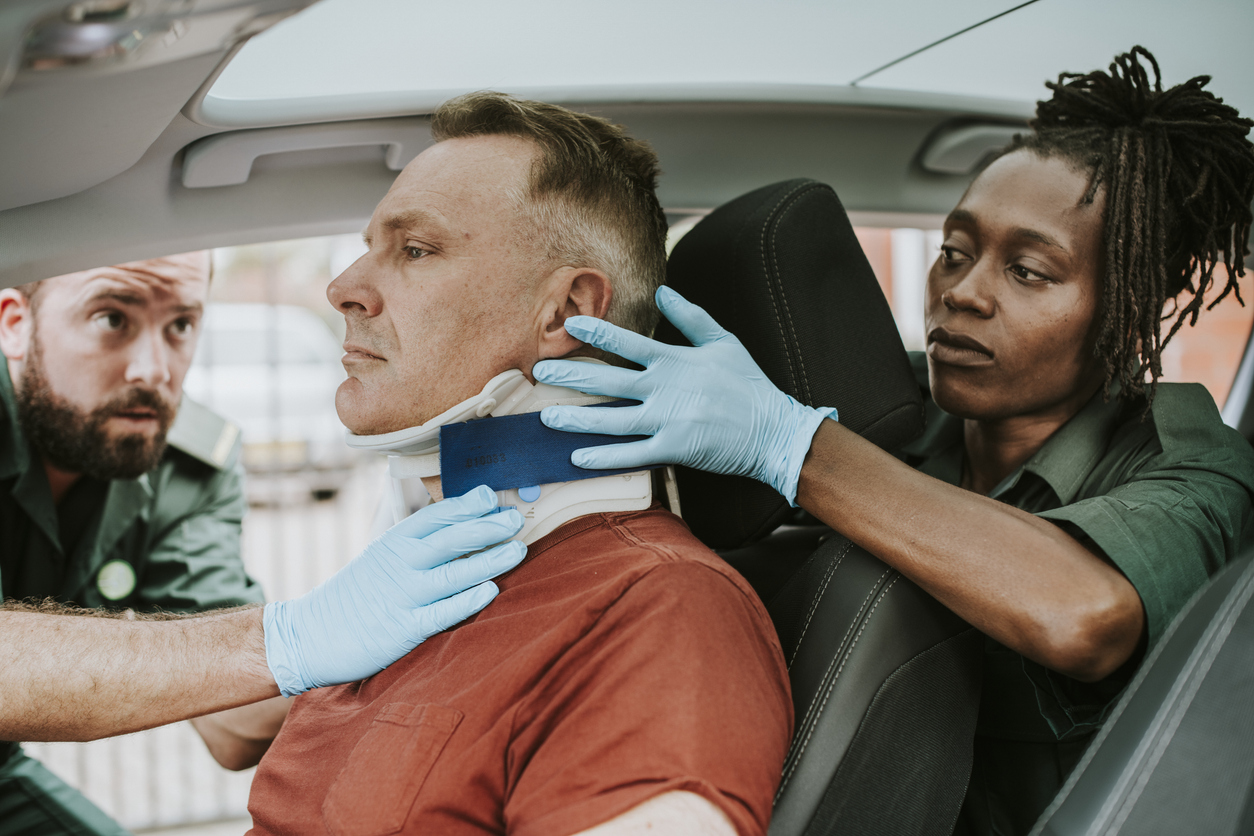
Do not try to flee the scene when you hit someone with your car. If the other driver is still on the scene, call the Police to file a report. If you or a loved one get involved in a car accident in Chicago, it is important to seek legal aid as soon as possible. An experienced attorney can help you navigate the complex legal process and protect your rights.
Moreover, if you get injured in an auto vehicle accident, you may be entitled to claim compensation for your medical bills, lost wages, and pain and suffering. Contact a qualified Chicago Car Accident Attorney at (888) 970-5660 to learn more about your legal options.
Most people assume property sales are slow because of paperwork but in reality, all of the legal admin is rarely the only problem, or even the main one. Delays usually come from people, processes and uncertainty rather than the legal form-filling itself.
From a legal perspective, residential sales in England and Wales follow a fairly standard structure. When things drag on, it is usually because something unexpected enters the picture - cold feet following a survey maybe, or a hold up due to illness - not because the process itself is unusually complex.
Understanding what genuinely causes delay is vital - it's what will help to guide you through the process and make the best decision - so if timing matters to you, and you want the facts, this article is just what you need.
Yes, you guessed it, the dreaded property chain is the single most common source of disruption for buyers and sellers alike. Every additional buyer or seller involved adds yet another link in the delicate chain, yet another set of circumstances that can change without warning. A mortgage offer expiring, a buyer pulling out - it only takes one incident further up the chain to halt progress for everyone else. It's a massive juggling act trying to keep everyone in play simultaneously.
Finance is another frequent bottleneck. Buyers relying on mortgages are exposed to valuation issues, lender delays or changes in affordability, and for sellers this is a real tightrope as it can sometimes mean weeks of progress followed by sudden renegotiation.
At the other end of the scale, it's surprising how sellers can get hung up on factors that actually make little difference. Minor cosmetic issues, for example, are unlikely to delay completion once contracts are agreed. Likewise, legal documentation is usually straightforward where title is clean and information is provided early.
For sellers who need predictability, reducing the number of moving parts is often much more effective than trying to speed up every single stage of a traditional sale. This is why some homeowners explore alternatives to the open market, alternatives like a quick house sale with specialist companies that guarantee a cash offer for your home.
Unlike a traditional estate agent, these companies purchase properties directly, eliminating the risk associated with chains and buyer finance and allowing sellers to agree a realistic completion date from the outset.
From a legal perspective, fewer variables generally mean fewer delays. While speed is often a factor, certainty is usually the real benefit, particularly where sellers are working to external deadlines such as relocation, probate administration, or court-related matters.
It is important to note that alternative sale routes do not bypass legal safeguards. Identity and source-of-funds checks, as well as anti-money laundering requirements, always apply, regardless of how a transaction is structured. Professional standards remainconsistent, as set out in the property conveyancing guidance published by the Law Society.
Likewise, the land registration process overseen by HM Land Registry applies equally to fast and traditional transactions, with accuracy remaining essential to avoid post-completion issues.
In practice, a sale that removes uncertainty can be easier to manage legally, so for sellers who understand their priorities, choosing the right structure can make all the difference.
No-fault insurance was introduced with a clear promise: take conflict out of car accidents. Instead of arguing over blame, injured drivers would rely on their own insurance. Medical bills would be paid. Lost wages covered. Lawsuits reduced to a minimum.
That idea still exists in theory. In practice, especially when injuries are serious, the experience rarely matches the promise.
Claims involving permanent injuries or long recovery periods now move through a system that feels rigid and unpredictable. What was supposed to remove friction often creates it. Instead of clarity, injured people encounter delays, disputes, and limits that only become visible once the claim is already underway. This is often the point at which injured drivers turn to experienced legal counsel, including firms such as The Clark Law Office in Lansing.
When no-fault laws were written, serious crash injuries looked very different. Diagnostic tools were basic. Treatment plans were shorter. Long-term rehabilitation was the exception, not the rule.
That context no longer applies. Today, serious accident cases often involve:
According to data from national insurance and health reporting sources, medical costs tied to serious auto injuries have increased by more than 50% over the past two decades, far outpacing adjustments to many no-fault coverage limits.
Insurance policies, however, still reflect older assumptions about how injuries unfold and how long recovery should take. Even in states that expanded coverage options, limits are often reached once treatment stops being linear.
As a result, people with clearly serious injuries tend to discover the gap late — not at the moment of the crash, but weeks or months into recovery, when no-fault benefits no longer keep pace with what treatment actually requires.
One of the most persistent misconceptions about no-fault states is that fault no longer plays a role. That idea breaks down quickly in serious cases.
While no-fault benefits may cover initial treatment and wage loss, compensation for pain and suffering or future care usually depends on crossing specific legal thresholds. Those thresholds are intentionally narrow and heavily contested.
Insurers regularly argue over:
Fault-based disputes have not disappeared. They have simply been pushed into a smaller, more technical corner of the process, where outcomes often depend on documentation rather than common sense.
In many serious accident cases, the final result has less to do with who caused the crash and more to do with how much insurance is available.
Drivers carrying minimum coverage are common. When injuries are severe, those limits are often exhausted quickly. At that point, the conversation shifts away from responsibility and toward damage control.
This leads to situations where:
Uninsured and underinsured motorist coverage has become critical, yet many drivers do not understand its importance until it is too late.
Medical records now sit at the center of nearly every serious claim. The problem is that modern treatment generates a volume of documentation that is difficult to manage and easy to attack.
Care is often spread across hospitals, specialists, imaging centers, and therapists. Each provider documents differently. Gaps appear. Language varies. Timelines blur.
Insurers focus on these details. Common arguments involve:
Even legitimate injuries can be questioned if records are fragmented. In no-fault systems, those weaknesses are used aggressively.
Despite claims of efficiency, serious no-fault cases rarely move quickly. Recovery takes time. Insurers request records slowly. Independent medical examinations add months.
While the process drags on:
Delays quietly shift leverage. The longer a case sits unresolved, the more likely financial strain shapes decision-making.
To step outside no-fault limitations, injured people must usually meet strict legal standards. These thresholds are intentionally high and narrowly defined.
Meeting them often requires:
At this stage, cases become less about the crash itself and more about how well injuries can be translated into legal language. Outcomes hinge on framing as much as facts.

The Clark Law Office in Lansing sees how these challenges play out in real cases, where people are often caught off guard by how unforgiving no-fault rules can be once injuries become serious.
Small missteps early on — a delay in treatment, an offhand statement to an adjuster, a misunderstanding about coverage — tend to surface later with outsized consequences. What looks manageable at first becomes difficult to unwind.
This pattern is not unique to one office or one region. It reflects how no-fault systems function when real injuries collide with real insurance limits.
Insurance companies now approach serious injury claims with refined playbooks. Adjusters are trained to identify weaknesses early and shape the file accordingly.
Common tactics include:
These strategies do not always violate the law, but they increase complexity for people already dealing with recovery.
No-fault systems work best for predictable injuries with clear recovery paths. Serious injuries rarely follow that pattern.
Brain injuries, spinal damage, chronic pain, and mobility limitations evolve. Symptoms fluctuate. Treatment plans change. Prognoses shift.
Trying to force these realities into rigid insurance categories creates conflict at every stage of a claim.
Many drivers assume their insurance is sufficient until a serious crash proves otherwise. Optional coverage decisions made years earlier suddenly become decisive.
Common gaps include:
Once those gaps are exposed, there is no way to fix them retroactively.
There is little indication that serious car accident claims in no-fault states will become simpler. Medical costs continue to rise. Insurance policies grow more layered. Legal standards evolve through court decisions rather than clear reform.
As a result, the system increasingly rewards preparation and familiarity, while punishing those encountering it for the first time under pressure.
No-fault insurance was meant to reduce conflict and speed recovery. In minor cases, it often still does. In serious injury cases, the experience is very different.
Today, outcomes are shaped by coverage limits, documentation quality, legal thresholds, and insurer strategy. Understanding those forces is no longer optional for anyone dealing with a serious crash in a no-fault state.
The complexity is not accidental. It is the result of an old framework colliding with modern medicine, modern insurance, and modern risk.
Niall Hearty of Rahman Ravelli considers HM Revenue and Customs’ big problem with small businesses
When it comes to tax evasion, the media focuses on the big numbers and the biggest names. Cases involving the largest companies, allegations of colossal amounts not being paid and the most sizeable penalties are the ones that, understandably, make the news.
Such cases can be great PR for HM Revenue and Customs (HMRC). It is seen to be clawing back large amounts and holding the big boys to account. Away from the news pages, however, it is equally important that HMRC is equally diligent when it comes to bringing action against the less high-profile companies, where less spectacular amounts are involved.
Such action is unlikely to generate headlines – but it remains a necessary HMRC function. HMRC’s approach to this more “bread and butter’’ side of its work, however, has now led to news coverage – and not the kind it would have wished for.
The National Audit Office (NAO) reported that HMRC has failed to prevent small businesses evading the payment of taxes totalling over £4.4 billion. This, says the NAO, is due to HMRC lacking a focused strategy for combating the various tax evasion schemes being used. It argues that HMRC’s general strategy for tackling evasion involving particular types of taxes and groups of taxpayers is not effective in all circumstances, which is why the non-payment statistics for small businesses are so high.
The solution, according to the NAO, is for HMRC to work more systematically across government. It cites the rapid increase in online businesses – and weaknesses in ensuring they are properly registered – as one area where a tighter approach is needed to reduce tax evasion. The NAO added that the fact that 42% of all companies incorporated last year were retailers suggests the retail sector may now pose the highest risk of tax fraud in need of urgent action.
The picture that the NAO paints is not one that makes pleasant viewing for HMRC. The tax authority could, in its defence, point to the tougher requirements introduced earlier this year that should make it more difficult to abuse the Companies House registration scheme for businesses. It could also emphasise the figures that show that tax evasion in general has stabilised in recent years; although last year’s figure of £5.5 billion lost to tax evasion is not something to be proud of.
With evasion still rising in the small business sector and the NAO pinpointing problems, the HMRC has issues that it must address. HMRC must, according to the NAO, tackle the problem of businesses that go into insolvency to shirk their tax debts only to reappear as new companies. Such so-called phoenix companies are responsible for more than £500 million a year in tax losses - and possibly more, according to the NAO. Yet of the 6,274 company directors disqualified in the past five years, only seven were struck off for this practice.
The challenge facing HMRC is how it addresses what appear to be blind spots in the way it works. Identifying tax evasion in smaller businesses – whether or not they are in the retail sector – may not produce individual cases that generate the headline-grabbing big numbers. But the NAO report shows that these cases add up to large amounts.
HMRC has the tools to resolve such cases. It now needs to decide how best to apply those tools. The small business sector is clearly an area where tax collection is far from perfect. The
HMRC may argue, with justification, that staffing and resources make it difficult for it to pursue each and every business in that sector. And it is clearly more cost effective for HMRC to target large businesses. But clearly something needs to change.
Due to restrictions in government funding generally across the board, HMRC could - as the NAO suggested - possibly benefit from working more closely with other government departments. Companies House, to take just one example, has invested in new initiatives such as developing software for ID verification to combat fraud under the Economic Crime and Corporate Transparency Act 2023. Greater collaboration with it may provide HMRC with the data or other means to tackle the ways small businesses sidestep their tax obligations, particularly when it comes to issues such as phoenix companies. There may even be the potential for HMRC to itself adopt a more digital approach to holding tax evaders to account.
At this stage, however, there does not appear to be a clear blueprint that HMRC can use immediately for tackling its small business problem. But in the UK, the difference between the expected amount of tax to be collected and what is actually collected – known as the tax gap – was £39.8 billion in 2022-23, according to HMRC. Some believe the actual figure is much larger. If small business tax evasion is accounting for more than a tenth of that figure, HMRC has to be seen to be addressing this sooner rather than later.
The Zodiac Killer, an unidentified serial murderer, terrorized Northern California in the late 1960s and early 1970s, claiming at least five confirmed victims. As of 2025, the decades-old case remains open, with law enforcement actively using forensic genetic genealogy and advanced DNA technology to analyze evidence from his taunting letters and cryptic ciphers, including the recently decoded Z340. This persistent investigation aims to unmask the killer who has evaded capture for over five decades.
The notorious Zodiac Killer terrorized Northern California in the late 1960s and early 1970s, establishing a chilling legacy as perhaps the most infamous unsolved case in American history. Decades later, with a fresh wave of public fascination fueled by streaming documentaries and remarkable DNA technology, the hunt for the man behind the infamous crosshair symbol is raging on with renewed intensity.
The combination of his taunting letters, cryptic ciphers, and confirmed brutality has ensured the Zodiac remains a perpetual, menacing shadow on the landscape of true crime. In 2025, every small movement in the investigation—from re-examining old evidence to the naming of new suspects—becomes major news, keeping the hope alive that this half-century-old mystery may finally be cracked.
While the initial flurry of attacks occurred over a shocking 10-month period, the case has never truly been closed by the multiple agencies involved.
Today, the core of the investigation hinges on applying twenty-first-century forensic tools to the faded remnants of the 1960s. Advances in forensic genetic genealogy, the same technique used to identify the Golden State Killer, have raised hopes that DNA collected from the infamous letters or crime scenes could finally yield a definitive match. Law enforcement is carefully navigating this complex landscape of old evidence and new science.
Despite constant claims from independent groups and amateur sleuths, the official stance remains cautious but determined. In the face of intense media speculation, including recent claims identifying a man who died in 2018 as the killer, authorities have been quick to manage expectations. "The Zodiac Killer case is an active, open case with the FBI, the Vallejo Police Department, and multiple county agencies," confirmed a representative for one of the involved task forces.
"We are utilizing every available technological advancement in forensics to find the truth, but until a full DNA or fingerprint match is irrefutably confirmed, the investigation remains ongoing." According to analysis reviewed by Lawyer Monthly, this careful statement reflects the delicate legal requirements needed to ensure that any potential future arrest and prosecution would withstand the scrutiny of a modern court.
The Zodiac Killer was unique not only for his brutality but for his calculated use of media to instill terror, sending a stream of letters to San Francisco Bay Area newspapers. These communications, often containing threats of mass murder, established a bizarre, direct relationship between the killer and the public. His letters were typically signed with the crosshair symbol (⨁) and frequently included elaborately constructed, multi-part ciphers.
For decades, many of these codes were considered unbreakable, standing as symbols of the killer's intellectual superiority over his pursuers. However, in a stunning international breakthrough in 2020, a team of civilian code-breakers finally solved the infamous 340 Cipher (Z340), revealing a chilling, self-aggrandizing message. Yet, not all the puzzles are solved. Several other ciphers, including the short Z13 cipher, continue to challenge cryptographers, meaning the secrets—perhaps even the killer's name—are still buried in the past. This constant, evolving challenge is a significant reason why the case continues to generate massive public interest and draw high click-through rates on any new development.
Official investigations link the Zodiac to five murders and two attempted murders across four different locations, primarily targeting young couples and a lone taxi driver. This timeline focuses on the key confirmed attacks and communications that defined his reign of terror:
| Date | Event | Location | Confirmed Victims (Killed/Injured) | Significance |
| Dec. 20, 1968 | First Known Attack | Lake Herman Road, Benicia | David Faraday (K), Betty Lou Jensen (K) | The first confirmed double murder, establishing the Zodiac's preferred target: couples in secluded "lover's lanes." |
| Jul. 4/5, 1969 | Second Attack & First Taunt | Blue Rock Springs Park, Vallejo | Darlene Ferrin (K), Mike Mageau (I) | The killer calls police shortly after the attack to claim responsibility for this and the 1968 murders, officially starting his public taunting. |
| Aug. 1, 1969 | The Z408 Cipher | Sent to three Bay Area newspapers. | N/A | The killer sends his first letters and the Z408 cipher, where he first uses the name "Zodiac." The cipher is quickly solved. |
| Sept. 27, 1969 | Lake Berryessa Stabbing | Lake Berryessa, Napa County | Cecelia Shepard (K), Bryan Hartnell (I) | The Zodiac wears a distinctive hooded costume and uses a knife. He carves a message and date on the car door, underscoring his calculated nature. |
| Oct. 11, 1969 | Paul Stine Murder | Presidio Heights, San Francisco | Paul Stine (K) | The last confirmed murder, a lone taxi driver. Eyewitnesses see the killer, providing the famous police composite sketch. |
| Oct. 14, 1969 | Stine Proof | Sent to The Chronicle. | N/A | The Zodiac sends a swatch of Paul Stine’s bloodied shirt to prove he committed the murder, escalating his macabre communication. |
| Mar. 22, 1970 | Kathleen Johns Abduction | Highway 132, near Modesto | Kathleen Johns (Escapee) | An attempted kidnapping (never officially confirmed as Zodiac by police, but the killer later claimed credit), providing a key survival story and sketch confirmation. |
| Nov. 8, 1969 | The Z340 Cipher | Sent to The Chronicle. | N/A | The second, more complex cipher is sent. It remained unbroken for over 50 years until solved in 2020. |
| Jan. 29, 1974 | Last Confirmed Communication | Sent to The Chronicle. | N/A | The killer's last definitively authenticated letter, in which he chillingly claimed his total victim count was "37," marking a profound moment of silence in the case. |
The enduring mystery of the Zodiac Killer continues to generate massive public fascination, exemplified by recent, high-profile documentary series that introduce the horror of the late 60s to a new generation of true crime enthusiasts.
This renewed media focus ensures that the pressure on law enforcement to solve the case remains extraordinarily high. Every piece of new evidence, from advancements in DNA technology to the successful cracking of a 51-year-old cipher, provides a fresh wave of hope and drives unprecedented traffic to articles detailing the pursuit of America’s most elusive serial killer. The key question haunting investigators, victims’ families, and the public is not if the killer can be unmasked, but when.
The following video discusses theories regarding the Zodiac Killer case, which remains one of the most compelling and enduring mysteries in criminal history.
Debunking Zodiac Killer theories: Chronicle reporter responds to Reddit questions
No. The identity of the Zodiac Killer remains one of the most famous unsolved mysteries in American criminal history. While numerous suspects have been investigated over the decades—most notably Arthur Leigh Allen—no individual has ever been arrested or conclusively identified as the killer by official law enforcement agencies like the FBI or the local police departments in California. The case remains active and open to this day.
Law enforcement officially attributes five murders and two attempted murders to the Zodiac Killer. These seven victims were targeted in four confirmed attacks between December 1968 and October 1969. However, the killer himself claimed in his letters to have killed as many as 37 people, a claim authorities have never substantiated.
Not all of them. The Zodiac sent four main coded messages (ciphers) to the press. The first cipher, known as the Z408, was quickly solved by a civilian couple in 1969. The most complex, the Z340 cipher, remained unsolved for 51 years until a team of civilian code-breakers cracked it in 2020. However, two shorter ciphers, the Z13 and Z32, are still considered officially unsolved and may hold the killer's name or other critical details.
