
Understand Your Rights. Solve Your Legal Problems
Kahn Swick & Foti, LLC (“KSF”), together with KSF partner and former Louisiana Attorney General Charles C. Foti, Jr., has issued a reminder to investors of the upcoming September 23, 2025 deadline to petition the Court for appointment as lead plaintiff in the securities class action lawsuit filed against Flywire Corporation (NasdaqGS: FLYW).
The following day, Flywire’s stock price declined sharply, falling $6.59 per share, or 37.36%, to close at $11.05 on February 26, 2025.
The complaint alleges that Flywire and certain of its executives failed to disclose material information to investors in violation of federal securities laws.
On February 25, 2025, the company announced its fourth quarter and full year 2024 financial results, reporting a loss per share of $0.12 missing analyst expectations by the same amount and revenue of $117.6 million, which also fell short of consensus estimates.
Flywire attributed the results to “a complex macro environment with significant headwinds” and disclosed that it would undertake a strategic business review, implement efficiency measures, and restructure operations steps that included reducing its workforce by approximately 10%.
The litigation, pending before the United States District Court for the Eastern District of New York, concerns purchases of Flywire securities made between February 28, 2024 and February 25, 2025 (the “Class Period”).
Investors who purchased shares during the Class Period and wish to discuss their rights or potential recovery may contact KSF Managing Partner Lewis Kahn toll-free at 1-877-515-1850, via email at lewis.kahn@ksfcounsel.com, or by visiting Kahn Swick & Foti, LLC website.
Serving as lead plaintiff is not required to share in any potential recovery, but investors must move the Court no later than September 23, 2025 to be considered for appointment.
Flywire Corporation (NasdaqGS: FLYW) is a global payments enablement and software company headquartered in Boston, Massachusetts. Founded in 2009, Flywire provides digital payment solutions across sectors including education, healthcare, travel, and business-to-business transactions. With clients in more than 30 countries, the company helps organizations securely collect and process cross-border and domestic payments while improving efficiency and reducing costs.
Kahn Swick & Foti, LLC (KSF) is a leading U.S. law firm focusing on securities litigation, shareholder rights, and corporate governance. Based in New Orleans, KSF represents institutional and individual investors nationwide, pursuing cases that hold corporations accountable for securities fraud and breaches of fiduciary duty. The firm is led by Managing Partner Lewis Kahn and includes former Louisiana Attorney General Charles C. Foti, Jr., bringing decades of legal and regulatory experience to complex class action matters.
The assassination of conservative activist Charlie Kirk has shaken the United States, igniting urgent conversations about political violence and democratic stability.
Among the most prominent voices to respond is former California Governor Arnold Schwarzenegger, who framed the tragedy not as an isolated act, but as a stark warning sign.
In his view, Kirk’s killing reflects a deeper and more dangerous reality: a nation edging toward a democratic crisis.
Charlie Kirk, the 30-year-old founder of Turning Point USA, was gunned down on September 10 while speaking at Utah Valley University.
It was the sort of moment Americans have long feared but hoped would never come, a political figure murdered in front of an audience for the simple act of expressing his views.
For Schwarzenegger, the news landed hard. At a University of Southern California event just days later, he spoke not like the action hero audiences know, but like an immigrant who has spent decades watching the American experiment with equal measures of admiration and worry.
Schwarzenegger said: "I was very, very upset that someone's life was taken because they have a different opinion. It's just unbelievable!"
"This was a great communicator, a great advocate for the right, for Republican causes — and he had such a great way of communicating with the students."
"A human life is gone. He was a great father, a great husband. And I was thinking about his children, they will only be reading about him now instead of him reading to them bedtime stories.”
The most striking moment of Schwarzenegger’s remarks came when he turned to metaphor.
“We are getting closer and closer to the cliff,” he said. “And when you fall down that cliff, you don’t have democracy anymore.”
It was a chilling image. Not the fire-and-brimstone “end of days” of Hollywood scripts, but something more subtle and more frightening.
Unlike many political figures, Schwarzenegger did not single out a single party or ideology. His criticism was wide-ranging.
Social media companies that profit from outrage.
Mainstream media that reward conflict over clarity.
Political leaders on both sides who find it easier to inflame than to unite.
“It’s not just one person,” he said. “It’s a system that profits from tearing us apart.”
If Schwarzenegger sounded grim, he also left space for hope. He urged students in the audience and by extension, young people across the country, to use their “people power” to resist the forces of division.
“Don’t wait for Washington to fix this,” he said. “You are the future. Lead the way.”
It was a reminder that, for all his pessimism about the system, Schwarzenegger still believes in individual responsibility and grassroots change.
Political violence in America is not new, but it feels newly immediate. In the last decade alone, we’ve seen the shooting of Congressman Steve Scalise, the storming of the Capitol, and now the murder of a young conservative activist on a university stage.
Each incident chips away at the assumption that America is somehow immune to the fate of other democracies. Schwarzenegger, who grew up in postwar Austria, has often reminded audiences that freedom is fragile, that once lost, it is far harder to rebuild than to defend.
Was Schwarzenegger being alarmist when he spoke of cliffs and collapse? Maybe.
America has survived darker chapters: civil war, assassinations, riots and yet endured. But maybe that’s exactly why his warning resonates.
Because history also shows that democracies rarely fall in a single dramatic moment. More often, they weaken step by step, until one day the ground gives way beneath them.
Why did Schwarzenegger comment on Charlie Kirk’s assassination?
He saw it as a tragic turning point — a sign that political violence in America is reaching a dangerous new level.
What does he mean by “democracy cliff”?
It’s his metaphor for the point where division and violence overwhelm institutions, and democracy collapses.
Has Schwarzenegger made similar warnings before?
Yes. After January 6, he released a widely viewed video warning about extremism and drawing comparisons to his Austrian upbringing in the shadow of Nazism.
Why is Kirk’s death seen as so significant?
Because it wasn’t just violence — it was an attack on political speech itself, at a university event where debate and dialogue should be protected.
In most personal injury cases, a victim must prove negligence, that someone acted carelessly and caused their harm. This requires demonstrating that the at-fault party’s conduct fell below a reasonable standard of care. California law, however, has a stricter standard known as strict liability.
Under this doctrine, a defendant can be held automatically responsible for injuries, regardless of their intent or care. The legal philosophy behind this is rooted in principles of public policy and risk distribution.
It posits that certain activities or products are so inherently dangerous that the party who benefits from them should bear the cost of any harm they cause, irrespective of their fault.
This prevents the cost of injuries from falling unfairly on innocent victims and incentivizes businesses to proactively ensure the safety of their products and activities.
This principle is most often applied to three key areas: defective products, dog bites, and ultra-hazardous activities. For example, a defective child's toy that injures a child, a dog bite from a neighbor's pet, or damage from a nearby commercial demolition are all classic scenarios where strict liability may apply.
In each instance, the law recognizes that the party who created the risk, the manufacturer, the dog owner, or the construction company is in the best position to prevent the harm and is best suited to absorb the financial burden.
If you’re bitten by a dog in Los Angeles or injured by a faulty airbag in San Diego, strict liability may allow you to recover compensation without proving negligence, fundamentally changing the burden of proof and making the path to justice more direct for injured plaintiffs.
To see how this rule works in practice, it helps to understand how it fits into California’s broader personal injury system.
California personal injury law focuses on three primary goals: protecting victims, deterring unsafe conduct, and fairly allocating responsibility.
By 2025, courts have reinforced consumer protections and expanded liability for corporations and manufacturers. The legal system has increasingly recognized that modern life involves complex products and technologies where it is unrealistic to expect a consumer to understand every potential risk or to prove a manufacturer’s internal carelessness.
Strict liability is the legal tool that addresses this imbalance. It holds that the financial consequences of an injury should be a cost of doing business, rather than a cost borne by an unsuspecting consumer.
The philosophy is simple: businesses and individuals who create risks should bear the costs of resulting injuries. Whether the claim is based on negligence, strict liability, or intentional harm, the ultimate goal is to restore victims through compensation for their losses.
In a strict liability case, a company cannot defend itself by claiming it had a robust quality control program; if the product was defective and caused harm, liability is established.
This powerful incentive encourages companies to design safer products from the outset, rather than simply reacting to consumer complaints after the fact.
Most personal injury lawsuits hinge on negligence. To win, a plaintiff must show:
Strict liability is the exception. Plaintiffs need only prove the product, animal, or activity caused their injury, not that the defendant acted unreasonably. This removes the two most challenging elements of a negligence claim duty and breach, from the equation, providing a much more direct and efficient path to compensation.
The duty of care changes depending on the situation. Drivers must obey traffic laws, property owners must maintain safe premises, and manufacturers must ensure product safety.
The scope of this duty is often a key point of contention in a negligence lawsuit, with the defense arguing that its duty was limited or that it met the required standard.
Strict liability changes the equation entirely. Even a cautious dog owner who keeps their pet on a leash and behind a fence can still be held liable if the dog bites someone.
Similarly, a manufacturer that invested heavily in safety testing and quality control can still be liable if a single, defective product makes it to market and causes harm. The law removes the “reasonableness” defense, focusing instead on whether the defendant’s product or activity caused the injury.
This means a defendant cannot argue, "I did everything right," because in a strict liability case, that defense is legally irrelevant. The fundamental question is not what the defendant did, but what the product or activity did.
California follows a pure comparative negligence system. This means that an injured person's compensation is reduced by their percentage of fault. Even if you are 90% at fault, you can still recover 10% of your damages.
This system is seen as more equitable than contributory negligence, which would bar a plaintiff from any recovery if they were even 1% at fault. This landmark change was established by the California Supreme Court in the 1975 case of Li v. Yellow Cab Co., which moved the state's tort law toward a more fair apportionment of responsibility.
This rule applies in strict liability cases too. For instance, if you were injured by a defective power tool but a jury finds that you misused the tool in a way that contributed 30% to the accident, your total damages award will be reduced by 30%. Strict liability ensures the defendant is liable, but comparative fault determines how much compensation you ultimately receive.
A defendant in a strict liability case can, and often will, argue that the plaintiff’s own conduct was the primary cause of the injury, thereby minimizing their financial obligation. This is a critical factor for victims to consider, as it can significantly impact the final payout.
In most personal injury cases, you have two years from the date of injury to file suit. Special rules apply for government claims (usually six months) and delayed discovery cases, such as hidden product defects that may not cause symptoms for years.
This "discovery rule" is a crucial exception, allowing the two-year clock to start only when the plaintiff knew, or reasonably should have known, that they were injured and that the injury was caused by the defendant’s conduct or product.
Missing the deadline almost always bars recovery, even in strong strict liability cases. That makes early legal action essential.
A knowledgeable attorney can help determine the correct filing deadline and ensure all paperwork is filed in a timely manner, protecting the victim's right to compensation.
The complexity of these deadlines underscores the importance of seeking legal counsel as soon as an injury occurs.
Compensatory damages cover medical bills, lost wages, and pain and suffering. Punitive damages go further, punishing defendants for extreme misconduct. Unlike compensatory damages, which are meant to restore the victim, punitive damages are intended to punish and deter.
Though rare, punitive damages can arise in strict liability cases if a company knowingly markets a dangerous product or conceals safety defects. California courts require clear evidence of malicious or reckless behavior before awarding them.
For instance, if a plaintiff discovers an internal company memo showing that a manufacturer knew a product had a serious defect and chose to ignore it to save money on a recall, a jury could very well award punitive damages.
This serves a dual purpose: it punishes the corporation for its egregious behavior and sends a powerful message to other companies that prioritizing profits over consumer safety will not be tolerated.
Insurance plays a central role in how compensation is paid. Dog bite claims are often covered by homeowners’ policies, while product liability claims fall under corporate insurance.
Insurers, as for-profit entities, typically aim to minimize payouts. They may try to settle quickly for a low amount, argue the victim contributed to their own injury, or deny the claim altogether.
Without legal representation, victims risk accepting settlements far below the value of their claims. Experienced attorneys understand insurer tactics and can push for full compensation, whether through negotiation or litigation.
A lawyer can gather all necessary evidence, from medical records to expert testimony, to build a compelling case that proves the full extent of the victim's damages.
Having an attorney as an advocate ensures that insurers don’t undervalue the claim and that the victim has an equal footing at the negotiating table.
In negligence cases, jurors decide whether the defendant acted as a “reasonable person.” This involves a judgment about what a prudent person would have done under the same circumstances.
The jury relies on CACI No. 400 — Negligence: Essential Factual Elements, which outlines the duty of care, breach, causation, and damages. They may also consider industry standards, safety protocols, and the defendant’s state of mind.
In strict liability cases, the question is simpler: Did the product, animal, or activity cause the injury?
For dog bite claims, the jury applies Civil Code § 3342, which states that “the owner of any dog is liable for the damages suffered by any person who is bitten by the dog...” (as quoted in a trial court ruling by the Placer County Superior Court).
Jurors are further guided by CACI No. 463 — Dog Bite Statute. which requires proof that the defendant owned the dog, that the plaintiff was lawfully present, that a bite occurred, and that the bite was a substantial factor in causing harm.
This streamlined approach benefits plaintiffs by sparing them from proving intent or carelessness. Once causation is shown, liability is automatic, though damages may still be reduced under California’s comparative fault rules.
California has updated its laws to address modern risks. In 2025, digital products and AI technologies fall under expanded strict liability rules.
Courts are also addressing liability for autonomous vehicles, smart home devices, and AI-driven medical tools. The law is evolving to meet the challenges of technologies that operate without human intervention. For example, if a self-driving car causes a collision, who is at fault? Is it the car's owner, the software developer, the car's manufacturer, or the sensor company?
These reforms recognize that consumers cannot reasonably guard against defects in technologies they cannot control, and place responsibility on manufacturers and developers instead.
The legal system is grappling with the fundamental question of how to apply a legal doctrine designed for tangible products to complex, interconnected software and algorithms.
Strict liability provides a clear answer: if the technology you put on the market causes harm, you are responsible.
Damages in California fall into three main categories:
Even in strict liability cases, plaintiffs can pursue all three, provided they can document their injuries and losses. An attorney can help a plaintiff gather the necessary evidence, such as medical expert opinions, to build a strong case for both economic and non-economic damages.
Strict liability is one of California’s most plaintiff-friendly doctrines. By removing the need to prove negligence, it gives injured people a clearer path to recovery.
It is a powerful tool for justice that recognizes the inherent risks of certain activities and products, placing the responsibility on those who can best manage and absorb those risks.
Still, strict liability works within a broader system of duties, deadlines, comparative fault, and evolving reforms. It is not an automatic "win" button, but it is a legal standard that prioritizes victim compensation over a defendant's lack of fault.
For anyone injured in California, knowing how strict liability interacts with these principles can mean the difference between a dismissed claim and fair compensation. Navigating these legal complexities requires a comprehensive understanding of the law and a strategic approach.
What is strict liability in California personal injury law?
It’s a rule that holds defendants responsible without proving negligence, often in dog bite, defective product, and hazardous activity cases. The doctrine is based on the principle that the party who profits from a dangerous activity should bear the cost of any injuries it causes.
Does strict liability mean I always win my case? No. You still must prove that the product, animal, or activity was the cause of your injury and that you suffered damages. Additionally, compensation can be reduced if you share fault for the accident under California's comparative negligence rules.
How long do I have to file a strict liability claim in California? Most claims must be filed within two years of the date of the injury. However, the "discovery rule" may extend this deadline if the injury was not immediately apparent.
Can I get punitive damages in a strict liability case? Yes, but only if the defendant’s behavior was exceptionally reckless or intentional, such as knowingly selling a dangerous product to the public. The standard of proof for punitive damages is very high.
How do juries handle strict liability cases in California? Juries focus on whether the product, animal, or activity was the cause of the harm, not whether the defendant acted reasonably. This makes the jury's task more objective, as they are not asked to determine fault or carelessness.
When an injury occurs in California, whether from a freeway collision, a fall in a store, or a workplace accident. one question often proves decisive: Did another party owe a duty of care, and was that duty breached?
Duty of care lies at the core of California’s personal injury framework. It is the standard on which liability rests, shaping how courts, insurers, and juries determine accountability and compensation.
In 2025, with new reforms refining evidentiary rules and consumer protections, understanding this principle has become essential for injury victims, attorneys, and legal professionals alike. This article examines duty of care in depth and its role within California’s evolving personal injury law.
Personal injury law in California rests on three core principles:
California Civil Code § 1714 codifies this foundation:
“Every one is responsible, not only for the result of his willful acts, but also for an injury occasioned to another by his want of ordinary care or skill in the management of his property or person, except so far as the latter has, willfully or by want of ordinary care, brought the injury upon himself.”
Recent updates in 2025, such as stricter rules for medical billing transparency under Assembly Bill 123 and broader acceptance of digital evidence following key appellate rulings, reflect California’s ongoing effort to refine how these principles are applied.
For a more detailed analysis of these principles, see our feature: Core Principles of California Personal Injury Law in 2025
In plain terms, duty of care means a person or entity must act reasonably to prevent foreseeable harm to others. The level of duty depends on the situation:
The Judicial Council of California explains it clearly in its Civil Jury Instructions (CACI No. 401):
“Negligence is the failure to use reasonable care to prevent harm to oneself or to others. A person can be negligent by acting or by failing to act. A person is negligent if they do something that a reasonably careful person would not do in the same situation, or fail to do something that a reasonably careful person would do in the same situation.”
This “reasonable person standard” is what juries use to decide whether a duty of care was breached.
Failure in any of these duties, texting while driving, ignoring a broken stair, failing to train employees, or misdiagnosing an illness, can open the door to liability.
While the existence of a duty is clear in many common scenarios like driving or owning a business, it can be more complex in others. California courts use a multi-factor test to determine if a duty of care exists where one isn't automatically presumed. Key factors include:
In Brown v. USA Taekwondo (2021), the California Supreme Court reaffirmed this approach:
“…the foreseeability of harm to the plaintiff, the degree of certainty that the plaintiff suffered injury, the closeness of the connection between the defendant’s conduct and the injury suffered, the moral blame attached to the defendant’s conduct, the policy of preventing future harm, the extent of the burden to the defendant and consequences to the community of imposing a duty to exercise care with resulting liability for breach, and the availability, cost, and prevalence of insurance for the risk involved.”
This nuanced legal analysis ensures that duty of care is not applied arbitrarily but is grounded in fairness and sound public policy, especially in novel or unusual cases.
To succeed in a negligence claim, an injury victim in California must prove four elements:
Take this example: A store owner fails to clean up a spill for hours. A customer slips, breaks a wrist, and faces thousands in medical bills. Here, duty (keeping floors safe), breach (ignoring the spill), causation (the fall caused the injury), and damages (medical bills and pain) all line up, making it a strong negligence case.
California’s pure comparative fault rule adds nuance to duty of care. Even if the injured person shares responsibility, they can still recover damages.
For instance, imagine a pedestrian who jaywalks but is hit by a speeding driver. A jury might find the pedestrian 40% responsible and the driver 60% responsible.
If damages total $100,000, the pedestrian could still recover $60,000. This rule highlights how duty of care is rarely one-sided, multiple parties can bear legal responsibility.
Some California cases bypass the need to prove a breach of duty. Under strict liability, a defendant can be held responsible simply because harm occurred under specific circumstances:
Strict liability reflects the idea that certain risks are so significant that the law imposes automatic responsibility, reinforcing the protective nature of California’s personal injury system.
While most damages in personal injury cases are compensatory, California law permits punitive damages in limited circumstances.
These awards are reserved for conduct that is especially egregious, marked by malice, oppression, or fraud and serve a purpose distinct from compensation.
For example, a carrier that knowingly dispatches trucks with defective brakes, or a corporation that conceals evidence of toxic contamination, may be exposed to punitive damages. The objective is not to reimburse the plaintiff but to punish wrongful conduct and deter similar behavior in the future.
Victims in California can seek three main categories of damages:
The scope of damages ties back to duty of care, the more severe the breach, the more expansive the compensation may be.
In most cases, insurance companies are the gatekeepers of compensation. Auto insurers, homeowners’ insurers, and commercial liability carriers often control settlement negotiations.
But insurers are not neutral. Their duty is to their shareholders, not the victim. That’s why victims must be cautious when providing statements or accepting early settlement offers.
California’s 2025 reforms tightened bad faith insurance laws, giving victims stronger grounds to challenge unfair delays or denials. Still, proving duty of care often becomes the leverage point in negotiations.
When cases go to trial, California juries play a decisive role. Jurors evaluate:
Jurors also apply comparative fault, sometimes splitting percentages of blame across multiple parties. Because of this, jury trials are unpredictable, making strong evidence of duty and breach critical.
Victims can’t wait indefinitely to bring a claim. California generally imposes a two-year statute of limitations from the date of injury.
Exceptions apply, for example, medical malpractice or claims against government agencies have different deadlines. Failing to file within the legal time limit typically bars recovery, even when a breach of duty is clear.
Each example shows how the law adapts duty of care standards to different contexts, always focusing on whether harm was reasonably preventable.
Lawmakers in Sacramento have introduced several reforms reshaping how duty of care and personal injury cases are litigated:
These reforms reflect California’s broader push to level the playing field between individuals and powerful corporations or insurers.
In a state as large and diverse as California, millions of residents interact daily in ways that can lead to accidents—on freeways, in offices, at medical clinics, or even at home through defective consumer goods.
Duty of care serves as the legal thread tying all these situations together. Without it, victims would face uphill battles for compensation. With it, they have a framework to demand accountability.
Duty of care remains the defining standard in California personal injury law. It governs liability across settings, whether in traffic collisions, premises accidents, or professional negligence and provides the framework by which courts, insurers, and juries allocate responsibility.
With the 2025 reforms strengthening evidentiary rules and consumer protections, this principle has only grown in importance.
For practitioners and claimants alike, a clear understanding of duty of care is essential to protecting rights, ensuring accountability, and achieving just outcomes in California’s evolving legal landscape.
What is duty of care in California personal injury law?
Duty of care means individuals and businesses must act reasonably to avoid causing harm to others. In California, proving a personal injury case requires showing that the defendant owed you this duty, breached it, and caused your injuries. The specific duty varies depending on the situation—for example, drivers must obey traffic laws, property owners must maintain safe premises, and doctors must follow professional standards of care.
How do I know if I have a valid personal injury case in California?
To determine if you have a case, you must be able to prove that the four elements of a negligence claim are met: (1) the defendant owed you a duty of care, (2) they breached that duty, (3) the breach caused your injuries, and (4) you suffered measurable damages. A legal professional can help you evaluate the facts of your situation to see if these elements can be proven with evidence.
How long does a personal injury case take to settle?
The timeline for a personal injury case varies significantly. Simple claims, like minor fender-benders, might settle in a few months. More complex cases involving serious injuries, disputes over fault, or large corporations can take a year or more, especially if a lawsuit needs to be filed. The goal is to ensure a fair settlement, which sometimes requires patience.
What should I do after a car accident in California?
First, check for injuries and call 911 if necessary. If you are able, document the scene by taking photos and videos of the vehicles, the road, and any hazards. Exchange information with the other driver and get contact details for any witnesses. Do not admit fault or apologize, and seek immediate medical attention, even if you don't feel hurt.
How much is a personal injury case worth?
There is no average value for a personal injury case. Your potential compensation depends entirely on the specific damages you suffered. This includes quantifiable costs (economic damages) like medical bills and lost wages, as well as subjective losses (non-economic damages) such as pain and suffering. The final amount is heavily influenced by the severity of your injuries and the strength of the evidence.
When a personal injury case proceeds to trial in California, the jury becomes the central decision-making body, tasked with weighing evidence and applying legal principles to the facts of the case.
Their verdict decides not only who is legally responsible but also how much financial compensation the injured party will receive.
The process is deliberate and structured. Jurors are guided by statutes, written jury instructions, and the testimony presented by both sides. Still, human judgment plays a huge role, and no two juries ever deliberate in quite the same way.
The backbone of most personal injury trials in California is the legal concept of negligence. To succeed, the plaintiff’s attorney must prove four key elements by a preponderance of the evidence , meaning the jury believes it’s more likely than not that the defendant’s actions caused the harm.
Those elements are:
Duty of Care – A legal obligation to act with reasonable care.
Breach of Duty – A failure to meet that obligation.
Causation – Proof that the breach substantially caused the injury.
Damages – Evidence that the plaintiff suffered real, measurable harm.
For jurors, this is the foundation. Imagine a car accident case: they must decide whether speeding, texting, or reckless driving was a breach of duty, and if so, whether that breach directly caused the plaintiff’s injuries.
The first element, duty of care, is often the biggest hurdle a plaintiff’s case must clear. It establishes a fundamental legal responsibility that a defendant owed to the plaintiff.
In California, this duty is rooted in Civil Code §1714(a), which broadly states that everyone is responsible for injuries caused by their “want of ordinary care or skill in the management of his or her property or person.”
To apply this principle, jurors rely on a standard known as the “reasonable person” test. As explained in the official California Civil Jury Instructions (CACI No. 401), a person is negligent if they do something a reasonably careful person would not do in the same situation or fail to do something a reasonably careful person would have done.
Jurors don’t ask what the defendant personally thought was safe. Instead, they must objectively consider: Would a reasonably careful person in the same situation have acted differently?
This distinction is critical. The jury’s focus is not on a defendant’s state of mind but on their actions compared to an objective community standard.
To make this standard tangible, courts often use real-world examples:
A store owner who ignores a puddle may be negligent because a reasonable owner would have cleaned it or posted a warning.
A landlord who fails to fix a broken stair could be liable, since a careful landlord would have made repairs.
A driver who texts and causes an accident breaches their duty, because a reasonable driver would have been focused on the road.
The standard can also adapt to context. A doctor, for example, isn’t judged by what any layperson would do, but by what a reasonably careful medical professional with similar training would have done.
Ultimately, it is the jury’s role to weigh all the evidence and decide whether the defendant’s conduct met or fell short of the community’s expected standards of care
Not all cases hinge on negligence. In California, strict liability allows jurors to hold a defendant responsible even without proof of carelessness. This typically arises in two areas:
Defective Products – If a product has a design flaw, manufacturing defect, or inadequate warnings, the manufacturer or seller can be held liable when it causes injury. Jurors don’t weigh intent; they only determine whether the product was defective and caused harm.
Dog Bites – Under Civil Code §3342, dog owners are automatically liable for bites that happen in public or on private property where the victim is lawfully present. Unlike the “one-bite rule” in other states, California juries don’t consider prior behavior — one bite is enough.
Jurors also encounter cases that meet strict timing rules. In California, the general statute of limitations for personal injury lawsuits is two years from the date of injury.
But there are exceptions:
Discovery Rule – The clock starts when the injury is discovered or should have been discovered.
Claims Against Government Entities – As of 2025, plaintiffs have one year to file, an extension from the old six-month deadline.
By the time a case reaches trial, the statute issue has usually been resolved, but jurors may still hear evidence about when the injury was discovered or reported.
One of the most distinctive features of California law is pure comparative fault. Jurors can assign percentages of blame to both plaintiff and defendant.
Here’s how it works:
If total damages are $100,000…
And the jury finds the plaintiff 30% at fault…
The plaintiff still recovers $70,000.
Unlike states with modified rules, California lets plaintiffs recover even if they’re 90% responsible. For jurors, this means carefully dividing fault in percentages, sometimes a contentious part of deliberations.
After liability is decided, jurors must place a dollar figure on the harm suffered. Damages fall into categories:
Economic Damages – Concrete costs like hospital bills, lost income, property repairs, and future medical care.
Non-Economic Damages – Intangible losses such as pain, emotional suffering, and loss of enjoyment of life. Jurors rely on judgment here; there’s no set formula.
Punitive Damages – Rare, but awarded when a defendant acted with fraud, oppression, or malice. These are meant to punish and deter, not just compensate.
California generally has no cap on non-economic damages, except in medical malpractice, where recent reforms have been gradually raising the long-standing $250,000 cap.
Punitive damages require a higher standard of proof, clear and convincing evidence of egregious conduct.
Jurors consider:
The severity of the defendant’s behavior.
The relationship between punitive and compensatory damages.
The defendant’s financial status.
While there’s no set cap, the U.S. Supreme Court has emphasized that awards must be proportionate to the actual harm. Juries must balance punishment with fairness.
Most personal injury disputes in California end with insurance settlements rather than jury trials. Adjusters investigate accidents, review records, and make offers, but their job is to limit payouts, often proposing amounts that cover immediate bills but overlook future costs or emotional harm.
If negotiations fail, the case heads to court. Jurors aren’t told that an insurance company is behind the defense, since that knowledge could sway their decision. Instead, they’re asked to weigh the evidence and assign damages based purely on the facts.
This shift from private bargaining to public judgment, makes jury trials unpredictable. It’s also why insurers usually prefer settlement: a jury has the power to award far more than any adjuster would voluntarily offer.
Several new laws affect how jurors evaluate cases today:
Increased Auto Insurance Minimums – As of January 2025, higher liability coverage means more resources for victims when juries award damages.
Medical Malpractice Cap Adjustments – Assembly Bill 35 continues to raise the non-economic damages cap for malpractice claims, giving jurors more leeway.
Stricter Distracted Driving Laws – Tougher penalties and clearer statutes make it easier for jurors to presume negligence when drivers are caught using devices.
California juries are more than fact-checkers. They’re the ones who decide whose story carries weight, how the law applies, and what “fair” compensation looks like in real terms.
From negligence to strict liability, from comparative fault to damages, their deliberations shape lives and set community standards. While most disputes settle outside the courtroom, the cases that reach a jury remind us just how much power twelve citizens hold in California’s justice system.
How many jurors are required for a personal injury case in California?
In California civil cases, including personal injury trials, a verdict can be reached if at least 9 out of 12 jurors agree. Unlike criminal trials, unanimity is not required.
Do California juries know about insurance coverage in personal injury trials?
No. Jurors are generally not told that an insurance company is paying for the defense or potential damages, because that knowledge could bias their decision.
How do jurors calculate damages in California personal injury cases?
Jurors review medical bills, expert testimony, lost income, and personal impact to assign economic and non-economic damages. There’s no exact formula, they rely on judgment and the evidence presented.
What happens if both parties share fault in a California accident?
California follows pure comparative fault. Jurors assign percentages of blame, and the plaintiff’s award is reduced by their share of responsibility.
Are punitive damages common in California personal injury cases?
Punitive damages are rare and only awarded when a defendant’s conduct is especially reckless, malicious, or fraudulent. Jurors must find clear and convincing evidence before granting them.
Baker McKenzie announces the appointment of Sam Trowbridge to its London-based Tax Partner roster, effective 29 September.
Sam Trowbridge joins from Kirkland & Ellis, where he specialised in the tax structuring of cross-border private equity and M&A transactions.
His expertise spans a diverse array of sponsor strategies, buyouts, infrastructure, credit, and real estate, as well as work on capital markets and debt finance, management tax planning, restructuring, tax litigation, and fund structuring matters.
Ed Poulton, London Managing Partner, remarked:
“Sam’s experience, working closely with an impressive portfolio of clients across an international network, make him an ideal fit for our own world-class team operating seamlessly across borders.”
Jessica Eden, Head of Tax in London, added:
“I’m very excited to be welcoming Sam to our brilliant team. His market experience will add real strength to our existing bench in Tax, while his work on M&A transactions are the perfect complement to recent hires into our Transactional team in London.”
Baker McKenzie is a leading global law firm founded in 1949, with a presence in over 40 countries. With a team of 13,000 professionals, the firm advises corporations, governments, and institutions on complex legal matters across corporate law, litigation, tax, and more. Renowned for its cross-border capabilities and innovative approach, Baker McKenzie has handled over USD 600 billion in M&A transactions in the past five years, more than 65% of which span multiple jurisdictions. The firm is also recognized for its commitment to diversity, inclusion, and sustainable business practices.
DLA Piper’s HKEX IPO Raises HK$160B in Record Deal – Lawyer Monthly
Cooley Rehires SEC Leader Tejal Shah as Litigation Partner – Lawyer Monthly
The Role of Insurance in California Injury Claims – Lawyer Monthly
Treasury Sanctions Asian Cyber Scam Trafficking Hubs – Lawyer Monthly
Grok Imagine: The Future of Speech Access and Legal Tech – Lawyer Monthly
DLA Piper has served as legal counsel to the sponsors and underwriters of 160 Health International Limited in its successful listing on the Hong Kong Stock Exchange’s Main Board, which raised about HKD 400 million.
Shenwan Hongyuan Capital (H.K.) Ltd. and Zero2IPO Capital Ltd. acted as Joint Sponsors of the offering.
DLA Piper transaction team was led by George Wu, Partner and Co-Head of Equity Capital Markets (EMEA & Asia Pacific), supported locally by Jack Li (Senior Associate), registered foreign lawyers Jessica Sun and Yu Sun, associate Marcus Ng, legal officer Ivy Chung, and legal assistants Nicholas Chan, Lily Choi, and trainee solicitor Bernie Wong. Additional legal support came from Charlotte Wang and Sophia Sun (Shanghai Kaiman Law Firm).
Reflecting on the accomplishment, George Wu commented: “160 Health’s IPO underscores the company’s robust fundamentals and the dynamic expansion of China’s digital healthcare market. We’re pleased to have contributed to this key landmark and to reaffirm Hong Kong’s appeal as a global IPO venue.”
Earlier in the year, Wu also led the firm’s advisory role on the HKEX listing of Chifeng Jilong Gold Mining Company, reinforcing DLA Piper’s strong capability in managing complex, cross-border IPOs.
160 Health is a standout in China’s healthcare sector, blending pharmaceutical and healthcare product distribution with industry-leading digital and wellness services. Its Healthcare 160 platform, recognised as the largest in China’s digital healthcare and wellness space — connects an extensive user base, including medical institutions, corporate clients, professionals, individuals, and merchants, and plays a pivotal role in digitalising the healthcare value chain.
DLA Piper is a global law firm with a strong reputation for providing legal services across a broad spectrum of industries and sectors. With offices in more than 40 countries, the firm offers comprehensive legal solutions in areas such as corporate law, litigation, intellectual property, real estate, and regulatory matters. DLA Piper serves a diverse range of clients, including multinational corporations, governments, and individuals, delivering innovative and strategic advice. The firm is known for its collaborative approach, providing tailored legal expertise to address complex, cross-border issues while maintaining a commitment to exceptional client service.
Robert Redford’s story was one of beauty, courage, and quiet conviction. To audiences, he was the golden face of a generation—his smile lighting up some of cinema’s most beloved classics.
To filmmakers, he was a mentor who opened doors through Sundance. And to those closest to him, he was simply a man of integrity, shaped by love, loss, and a deep respect for the natural world.
From the beaches of Santa Monica to the mountains of Utah, from his Slovak and Irish family roots to the heights of Hollywood, Redford carried with him a rare mix of star power and sincerity.
His passing at the age of 89 is not just the end of a career, but the closing of a life that touched millions and changed the way stories are told.
Charles Robert Redford Jr. was born in Santa Monica, California, on August 18, 1936. His father was a milkman of Irish descent, his mother the daughter of Slovak immigrants from the Carpathian village of Lomnička. The quiet determination of those roots lived in him, even if he rarely spoke of it publicly.
As a boy, Redford was restless, drawn to art and sport, never entirely comfortable within the lines.
He studied briefly at the University of Colorado before drifting to Europe, sketchbook in hand, searching for something bigger than himself. What he found was a calling for storytelling—first on the stage, then on screen.
Redford’s rise came fast. On Broadway, he charmed audiences in Barefoot in the Park. In Hollywood, he exploded into stardom with Butch Cassidy and the Sundance Kid (1969), a film that captured not just his easy charisma but the restless energy of an America on the edge of change.
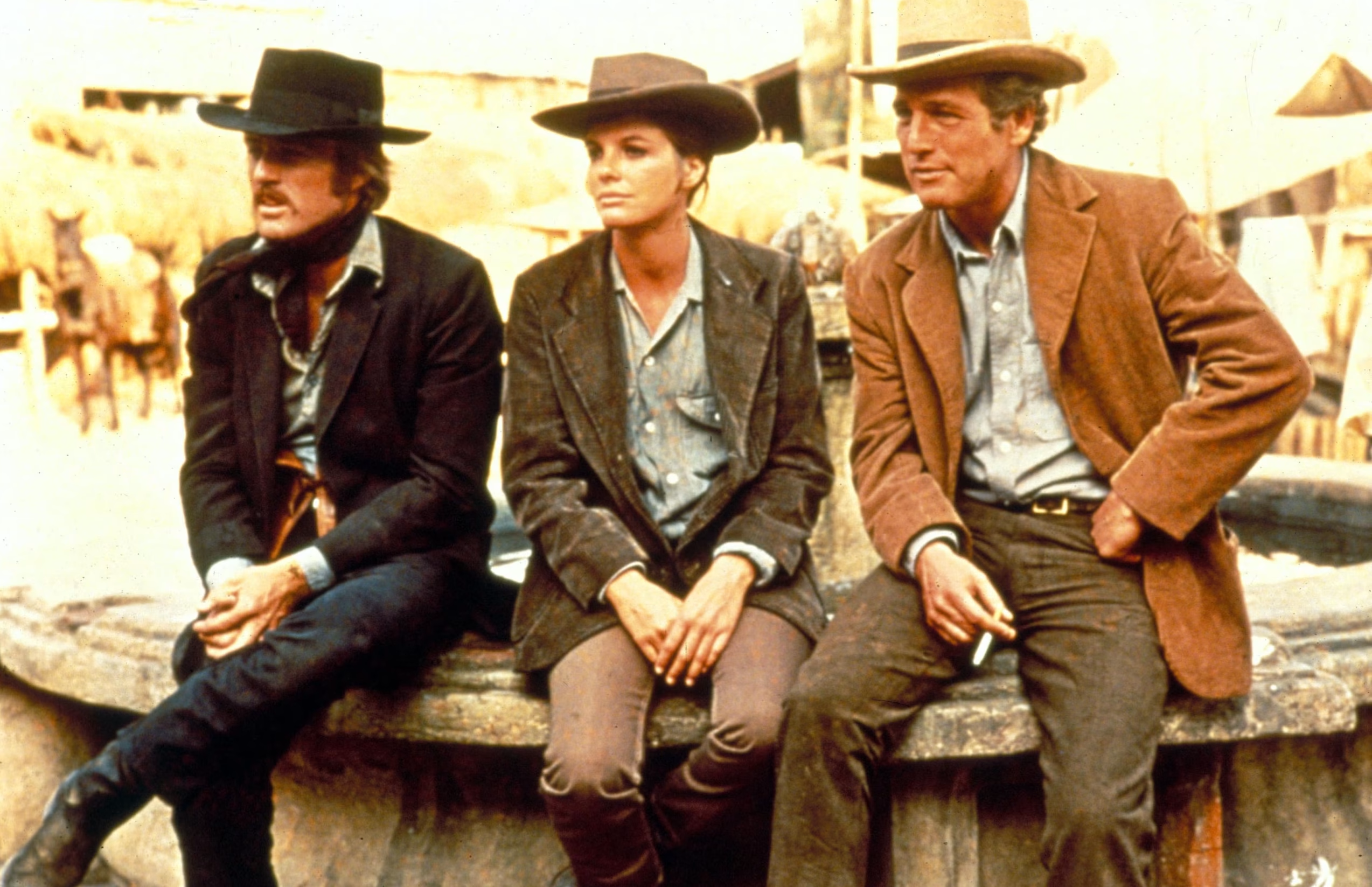
Young Robert Redford in Butch Cassidy and the Sundance Kid (1969)
The 1970s made him one of the most bankable stars alive. In The Sting, he was a grifter with a grin; in The Way We Were, a romantic idealist torn by politics and passion; in All the President’s Men, a journalist chasing truth in an era of lies. He wasn’t just handsome—he was thoughtful, willing to take on roles that mirrored the complexities of his country.
By the time he turned to directing, Redford had little left to prove as an actor. Yet his first film, Ordinary People (1980), stunned Hollywood. The quiet story of grief and alienation earned him the Academy Award for Best Director and Best Picture.
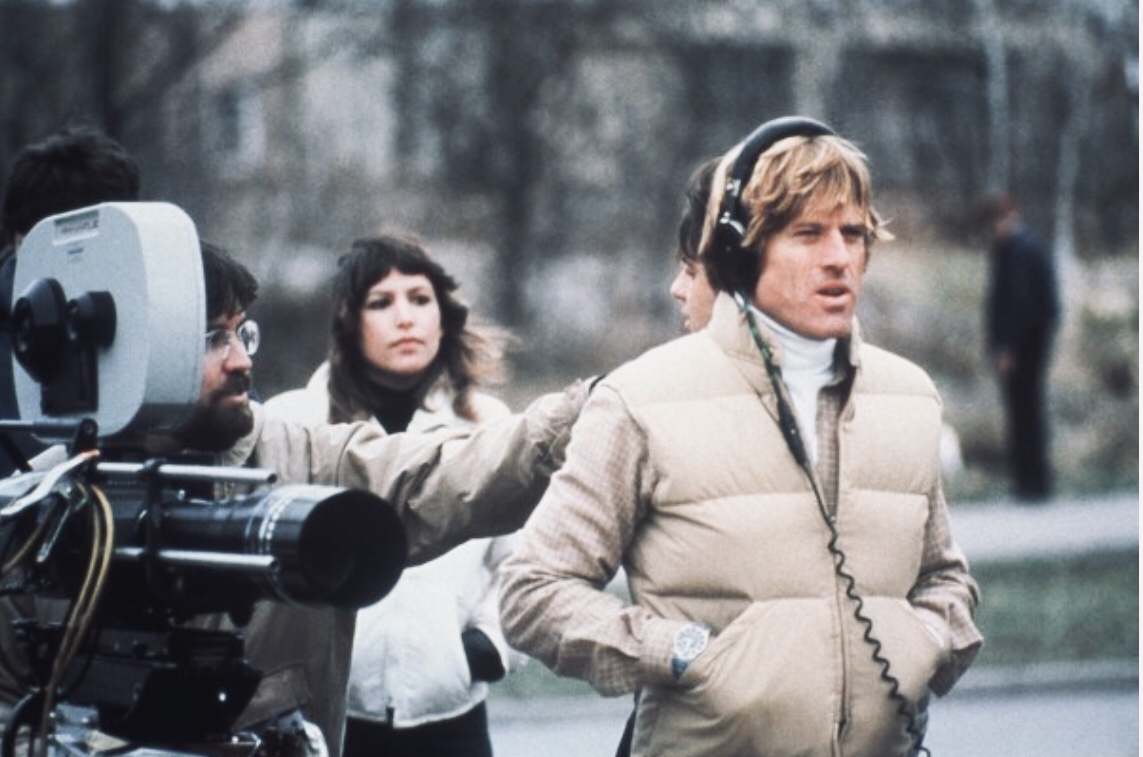
Redford directed Ordinary People (1980)
He would return again and again to themes of family, memory, and identity in films like A River Runs Through It, Quiz Show, and The Horse Whisperer. His direction was never flashy. Instead, it carried a patience and intimacy that allowed characters to breathe. He knew when to let silence say everything.
If acting made him famous and directing gave him respect, it was Sundance that secured his place in history. In the 1970s, Redford purchased a ski area in Utah and gave it a new name—Sundance.
Out of that came the Sundance Institute and eventually the Sundance Film Festival, which would transform into the beating heart of independent cinema.

Robert Redford at the Sundance Film Festival
Under Redford’s guidance, Sundance became the launchpad for voices who would redefine filmmaking—Quentin Tarantino, Steven Soderbergh, Ava DuVernay, and so many more. He saw Sundance not as an industry event, but as a refuge: a place where artists could take risks, break rules, and be heard.
Redford’s love of landscape was not just aesthetic—it was spiritual. He was a founding trustee of the Natural Resources Defense Council and spent decades defending public lands, speaking about climate change long before it was fashionable.
In 2005, he co-founded the Redford Center, which uses film to tell stories of environmental justice.
For him, the fight for the planet was never separate from the fight for art. Both were about survival. Both were about leaving something behind that mattered.
Away from the screen, Redford’s life was marked by both joy and sorrow. He married historian Lola Van Wagenen in 1958, and together they had four children.
Tragedy struck early with the death of their infant son, and later their son Scott, losses that left deep scars. In 2009, he married German painter Sibylle Szaggars, who shared his devotion to art and the environment.

Robert Redford and his wife Sibylle Szaggars
Despite his fame, he craved privacy. He was not drawn to the spectacle of Hollywood parties or red carpets, preferring the quiet of the Utah mountains, where he painted, skied, and worked in the company of his family.
Redford stepped away from acting after The Old Man & the Gun (2018), a fitting farewell that showcased the charm and wit that had made him a star fifty years earlier.
Yet even in retirement, he remained a presence—appearing in documentaries, supporting Sundance, and lending his voice to causes he believed in.
He passed away on September 16, 2025, at his Sundance home, reportedly in his sleep. He was 89 years old. His family asked for privacy, but tributes poured in from around the world: actors, directors, activists, and even political leaders who saw in him a rare combination of artistry and integrity.
Robert Redford’s life cannot be measured by box office numbers or awards alone. He was the Sundance Kid and Jay Gatsby, the director of Ordinary People, the founder of a festival that gave countless others their start.
He was an activist who defended the environment long before the world listened, and a man who never lost sight of his roots—Irish and Slovak—nor the lessons of humility they carried.
His story is one of light and shadow, of glamour and grit, of a man who never let fame define him. In his films, his activism, and his festival, Robert Redford left behind more than a career. He left behind a vision of art as truth, of storytelling as survival, and of life as something to be lived with courage.
What was Robert Redford’s net worth at the time of his death?
Robert Redford’s net worth was estimated at around $200 million, earned through his acting career, directing, producing, and his Sundance ventures.
Did Robert Redford have Slovak roots?
Yes. Redford’s mother’s parents came from Lomnička, Slovakia, giving him Slovak heritage alongside his Irish background.
What films is Robert Redford best known for?
He starred in classics such as Butch Cassidy and the Sundance Kid (1969), The Sting (1973), All the President’s Men (1976), and Out of Africa (1985).
Why did Robert Redford create the Sundance Film Festival?
Redford founded Sundance to give independent filmmakers a platform to showcase bold, original stories outside the Hollywood system.
Was Robert Redford involved in activism?
Yes. He was a lifelong environmental activist, supporting climate action, public lands protection, and co-founding the Redford Center.
Insurance companies are the central players in most California personal injury claims. When someone is injured due to another person's negligence, the at-fault party's insurance company is typically responsible for paying for the victim's damages.
However, an insurance company's primary goal is to minimize its financial payout, which can create a fundamental conflict with the injured party's interests.
The insurance claim process is a detailed and often adversarial investigation where adjusters evaluate the claim based on the specifics of the accident and key principles of California law.
Insurance companies employ a range of strategies to protect their bottom line when handling claims. Being aware of these tactics is crucial for an injured person navigating the process.
California personal injury law is rooted in the concept of negligence, which is a key element of most injury claims. To succeed, a victim (the plaintiff) must prove four key things:
An insurance company's investigation will meticulously focus on these four elements to determine if their policyholder is liable and to what extent.
The duty of care is the legal obligation to act with a standard of reasonable care to avoid foreseeable harm to others. This duty is not a one-size-fits-all concept; its scope depends on the relationship between the parties and the circumstances.
For instance, a driver has a duty to operate their vehicle safely, while a doctor has a heightened professional duty to provide appropriate medical care.
A property owner has a duty to maintain a safe premises for visitors, but the specific duty owed can vary depending on whether the visitor is an invitee, a licensee, or a trespasser. Similarly, common carriers (like bus or train operators) owe their passengers the highest duty of care.
Unlike negligence, which requires proving fault, strict liability holds a defendant automatically responsible for an injury regardless of whether they were careless. This principle applies in two main areas in California:
In a California personal injury case, you can generally recover two main types of damages:
In rare cases, a court may also award punitive damages. These are not meant to compensate the victim but to punish a defendant for particularly egregious behavior and to deter others from similar conduct.
To be awarded, a plaintiff must prove with "clear and convincing evidence" that the defendant acted with "oppression, fraud, or malice," as defined in California Civil Code section 3294.
This is a very high legal standard to meet and goes beyond simple negligence. Punitive damages are not typically covered by standard liability insurance policies.
Examples where punitive damages might be considered include cases involving a drunk driver, an assault, or a company that knowingly sold a dangerous product.
A critical aspect of any personal injury claim is the statute of limitations, a strict deadline for filing a lawsuit. In California, the general statute of limitations for most personal injury claims is two years from the date of the injury.
For more information, you can refer to this official California Courts self-help guide on the statute of limitations.
If a lawsuit is not filed within this timeframe, the injured person will almost certainly lose their right to seek compensation. It's important to note that there are exceptions.
The "discovery rule" may extend the deadline if the injury or its cause was not immediately apparent. For example, if a patient is harmed by a medical device but doesn't discover the injury until years later, the two-year clock may not begin until the date of discovery.
Claims against a government entity have a much shorter deadline—as little as six months—and the deadline for minors typically doesn't begin until they turn 18.
California operates under a "pure comparative fault" system. This rule allows an injured person to still recover damages even if they were partially at fault for the accident.
The total compensation they receive is simply reduced by their percentage of fault. For example, if your total damages are $100,000 but you are found to be 20% at fault, the insurance company will only be responsible for paying you $80,000.
For a detailed legal explanation, you can search for the official California Civil Jury Instructions (CACI), specifically instruction 405 on comparative fault. Insurance adjusters will try to place as much blame as possible on the injured party to lower their financial payout.
Given the complexities of California's legal system and the adversarial nature of insurance companies, an attorney plays a vital role.
A personal injury lawyer handles all communications with the insurance company, builds the case by gathering evidence and medical records, and negotiates on the client's behalf.
If a fair settlement cannot be reached, they are prepared to file a lawsuit and represent the client in court, ensuring all legal deadlines and procedures are met.
When a case goes to trial, a jury is tasked with determining liability and damages. They follow specific instructions from the judge that explain the relevant laws, such as negligence, comparative fault, and damages.
You can find these instructions, known as California Civil Jury Instructions (CACI), on the official judicial branch website. Juries evaluate evidence, including witness testimony, medical records, and expert opinions, to decide if the defendant's negligence caused the injury.
The plaintiff must prove their case by a "preponderance of the evidence," meaning it is more likely than not that the defendant is responsible for the harm.
Recent legal reforms have significantly impacted personal injury claims in California. Senate Bill 1107, which went into effect on January 1, 2025, increased the state's minimum auto insurance liability limits, providing victims with more financial protection.
Minimum bodily injury coverage has increased from $15,000 to $30,000 per person and from $30,000 to $60,000 per accident. This means more funds are available from the at-fault driver's policy to cover a victim's damages.
Another change is Assembly Bill 35, which phased out the previous $250,000 cap on non-economic damages in medical malpractice cases, replacing it with a new cap of $500,000 that will increase annually. This change offers a greater chance for victims of medical negligence to be fairly compensated for their pain and suffering.
Q: What is the average settlement for a personal injury claim in California?
A: There is no "average" settlement, as the value of a claim depends entirely on the specific damages incurred. Factors include the severity of the injuries, the amount of medical bills, lost wages, and the extent of pain and suffering. Insurance companies evaluate each claim individually, and a case can range from a few thousand dollars to millions, depending on the circumstances.
Q: How does a personal injury lawyer get paid in California?
A: Most personal injury lawyers in California work on a contingency fee basis. This means they do not get paid an hourly rate or a flat fee upfront. Instead, their payment is a percentage of the final settlement or court award. If the lawyer does not win the case, they do not get paid. This arrangement allows injured individuals to pursue a claim without needing to pay legal fees out of pocket.
Q: Is California a no-fault state for car accidents?
A: No, California is a fault state. This means that the person who is at fault for the accident (or their insurance company) is responsible for paying for the damages of the injured party. In contrast, "no-fault" states require your own insurance company to pay for your medical expenses and other losses, regardless of who caused the crash.
Cooley LLP has brought back a familiar face: Tejal Shah, who rejoins the firm as a partner in its global litigation department after nearly 12 years at the Securities and Exchange Commission (SEC).
Most recently serving as an Associate Director in the SEC’s New York office, she will now play a central role in Cooley’s expanding SEC enforcement practice
Tejal Shah worked at Cooley’s New York office from 2006 to 2014 before joining the SEC, where she rose to Associate Director, overseeing 150 staff and leading probes into insider trading, market manipulation, accounting fraud, and compliance failures.
Her return strengthens Cooley’s market-leading securities litigation and enforcement group.
“We could not be more excited to welcome Tejal home.” said Ian Shapiro, chair of Cooley’s global litigation department.
Patrick Gibbs, head of securities litigation + enforcement, added that her SEC background gives clients “rare insight into high-stakes investigations.”
Shah said the move back to Cooley felt natural:
“I’m thrilled to have the opportunity to reunite with my talented and collaborative former Cooley colleagues. I cannot imagine a better place to return to private practice and am looking forward to tackling the most complex challenges facing Cooley’s uniquely innovative clients.”
Cooley LLP is a global law firm with nearly 1,400 lawyers across 19 offices in the United States, Asia, and Europe, and a total workforce of over 3,000 people. The firm is renowned for its work with technology, life sciences, venture capital, regulatory enforcement, and litigation, representing leading-edge companies, investors, and private funds.
