LegalZoom vs Incfile for Business Formation: Which Gives More Value?
You’ve got a business idea that won’t leave you alone. Maybe it started as a late-night Google search or a conversation over coffee. Now you’re finally ready to take the leap, but before launching your product, hiring a team, or even choosing a logo, there’s one big hurdle: business formation.
That’s where online legal services come in. Two of the biggest players, LegalZoom and Incfile, both promise to make forming your business simple and stress-free. But which one truly gives you the best value, not just in cost, but in support, speed, and peace of mind?
Curious whether you can draft your own legal documents online in 2025? Our guide, Can I Make My Own Legal Documents Online in 2025?, breaks down when the DIY route makes sense and when expert help could be worth the cost.
Forming an LLC or corporation does more than legitimize your business. It protects your personal assets from business liabilities, sets up a structure for taxes, and gives you access to things like a business bank account or investor capital. The problem? The process can be confusing, full of legal jargon, and wildly inconsistent across states.
That’s why so many first-time entrepreneurs turn to platforms like LegalZoom and Incfile, they streamline the process so you don’t need to be fluent in legalese to start your company the right way.
LegalZoom: Comprehensive, Trusted, and Built for Longevity
Founded in 2001, LegalZoom is one of the most recognizable names in online legal help. It doesn’t just offer business formation, it offers a legal ecosystem. You can draft a will, register a trademark, or consult with an attorney, all under one roof.
What makes LegalZoom stand out is its ability to grow with your business. Need ongoing compliance reminders? It’s built in. Want access to an attorney? LegalZoom has legal subscription plans that offer real consultations.
For entrepreneurs managing multiple responsibilities, whether overseeing a side business, handling real estate ventures, or planning their estate, this integrated legal support can be a significant advantage.
Incfile takes a different approach. Rather than offering a wide range of services, it focuses on doing one thing very well: getting your business legally established, fast and often for free.
Forming an LLC with Incfile won’t cost you a dime beyond your state’s filing fee. And unlike LegalZoom, it includes a free registered agent service for the first year, helping you maintain compliance without additional upfront charges.
Its clean dashboard, quick turnaround times, and beginner-friendly interface make it a top choice for solo founders, gig workers, and side hustlers. Many first-time entrepreneurs appreciate how intuitive the platform is Why Incfile Is Popular for First-Time Entrepreneurs breaks down exactly why it appeals to lean startups and side hustles.
If you’re freelancing or juggling multiple income streams, Incfile’s simplicity makes it a reliable starting point.
Comparing LegalZoom and Incfile: A Founder’s Perspective
Let’s say you're just getting started and you want to form your LLC in the fastest, cheapest way possible. Incfile’s next-business-day turnaround and free formation service is likely your best bet.
But if you’re already thinking about future legal needs, like contracts, estate planning, or hiring LegalZoom might give you more long-term value with its broader legal ecosystem.
While LegalZoom charges extra for services like registered agent support, it offers added value through access to licensed attorneys, ongoing compliance tools, and contract review, ideal if you're navigating things like lease agreements or planning long-term growth.
One common concern is whether documents created through these platforms are actually enforceable. It’s a fair question and the good news is, yes, they usually are. If you want to understand how and why, check out Are Online Legal Documents Recognized in Court?.
It explains what gives these documents legal weight and how to make sure your contracts, NDAs, or formation papers hold up when it matters most.
Incfile, on the other hand, sticks to what it does best: formation and compliance. It’s lean, fast, and straightforward, which makes it perfect for founders who want simplicity and speed without unnecessary extras.
If you’re forming your first LLC, running a solo consulting business, or launching an Etsy shop, Incfile may give you exactly what you need, no frills, no fluff, just a smooth legal start.
For founders who expect more legal complexity over time, LegalZoom offers a more comprehensive solution. Whether you're planning to register a trademark, draft recurring contracts, or protect your family assets while building your business, it’s worth considering.
Starting your business is just the beginning. Whether you're a landlord drafting a lease, a freelancer juggling client contracts, or a nonprofit leader managing bylaws, the right legal tools can make all the difference.
Nonprofits, meanwhile, often face unique documentation and compliance needs. If you're trying to stay lean without sacrificing legitimacy, Affordable Legal Document Options for Nonprofits outlines services that can help without stretching your budget.
These will help you figure out if Rocket Lawyer is a better match for your legal to-do list.
Final Verdict: Cost vs Coverage
If your top priority is getting your business registered quickly, cheaply, and with minimal friction, Incfile offers unbeatable value. But if you want the reassurance of ongoing legal support, the ability to call a lawyer when needed, and additional services beyond business formation, LegalZoom is likely the better long-term partner.
There’s no one-size-fits-all answer, but there is a right answer for you, based on your needs today and where you see your business going.
People Also Ask
Is Incfile really free?
Yes. You only pay the state filing fee, and Incfile includes a free registered agent for the first year.
Is LegalZoom worth the cost?
LegalZoom’s pricing reflects the depth of its services, including attorney consultations, contracts, and legal plans. If you need more than just business formation, it’s a solid value.
Can freelancers or nonprofits use these platforms?
Let me know if you'd like this formatted for WordPress, exported to HTML or DOCX, or if you’d like me to start writing the companion articles linked above.
Legal Documents Every Startup Founder Needs in Year One.
Starting a business from scratch isn’t just a checklist of to-dos, it’s a leap of faith. Imagine two founders huddled around a kitchen table, hashing out product features between bites of takeout, dreaming big while their personal savings dwindle. That scrappy, hopeful energy defines Year One.
You're not just building a company; you're laying the foundation of your future.
And yet, in the rush to launch and scale, it’s easy to overlook the less glamorous side of things: legal protection.
But here's the hard truth, without the right legal documents, even the best startup ideas can collapse under pressure. One poorly worded contract, one missing NDA, and you’re suddenly vulnerable.
It’s tempting to grab a free template online, but shortcuts like that can backfire fast. See Free vs Paid Legal Forms: What You Risk by Going Cheap for a breakdown of where free forms fall short and what it could cost your company.
Not sure how much of the legal work you can realistically handle yourself? Can I Make My Own Legal Documents Online in 2025? breaks down what you can confidently do without a lawyer—and what’s best left to the pros.
So let’s slow down for a second. This guide is for those brave enough to build something from the ground up and smart enough to protect it. Here are the legal documents every startup founder should have in place during Year One.
Foundational Legal Documents
1. Founders' Agreement
This is your startup prenup. Before you bring on customers, investors, or even employees, a founders' agreement ensures clarity.
It outlines:
Equity ownership and vesting
Decision-making authority
Responsibilities and roles
What happens if someone leaves
It’s the document that helps prevent misunderstandings from becoming major legal disputes. Don’t skip it, even if your co-founder is family.
2. Operating Agreement or Bylaws
If you’re forming an LLC, you’ll need an Operating Agreement. If you're going the C-corp route, that means Corporate Bylaws. These internal documents govern how your company operates, how votes are cast, how profits are distributed, and how disputes are handled.
3. Articles of Incorporation / Certificate of Formation
This document is the legal birth certificate for your startup. Filing it with your state officially forms your company and limits your personal liability. It’s a key step in establishing your credibility with banks, investors, and customers.
Employee & Contractor Agreements
4. Employment Agreements
Hiring your first employee is a big milestone, but it also comes with legal responsibility. An employment agreement isn’t just a formality; it’s a critical tool to define roles, manage expectations, and avoid disputes.
The agreement should detail job duties, salary, performance benchmarks, working hours, and termination clauses. It also typically includes non-compete and confidentiality clauses that protect your startup’s intellectual property and business secrets.
Without one, even a well-meaning employee can unintentionally create costly problems, such as leaking product details or claiming unpaid benefits. Taking the time to document the working relationship from day one signals professionalism and protects both parties.
5. Independent Contractor Agreements
Startups often rely on freelancers, consultants, or agencies to get things off the ground without committing to full-time hires. That’s where a solid independent contractor agreement comes in. This document defines what’s being delivered, when it’s due, how much it costs, and most importantly, who owns the work once it’s completed.
The distinction between contractors and employees isn’t just semantic. Misclassifying a worker can result in tax penalties, labor law violations, and lawsuits.
A written contractor agreement helps draw that legal line clearly and shows the IRS (and your accountant) that you understand the rules. If you're deciding between paying per contract or subscribing for ongoing legal support, see Monthly Legal Plan vs Pay-Per-Document: Which Is Better for You to weigh the pros and cons for your startup.
If you’re relying on freelance help or gig workers, make sure they’re protected and so are you. These resources can help:
As a founder, you’ll eventually need to open up about your product or strategy to someone outside the company. That’s where an NDA or non-disclosure agreement comes in. It’s a legally binding document that says, “What we talk about stays between us.”
NDAs are especially crucial in early-stage startups where proprietary ideas, algorithms, or even marketing strategies are still being refined. A good NDA outlines what’s confidential, how long confidentiality lasts, and the penalties for disclosure. Without it, a casual conversation could turn into a competitor’s advantage.
Whether it’s a logo, app, or product design, anything created for your company should legally belong to the company, not the individual who made it. An IP assignment agreement makes this explicit.
It’s especially crucial when working with external contractors or remote developers.
8. Trademark Registration
Protecting your brand starts early. Your name, logo, or tagline can be trademarked to prevent others from copying or misusing them. This can become a costly problem if neglected, especially if you scale quickly and someone else files first.
Most founders now turn to online platforms to handle this step, but are those services actually legitimate? Before you file, read our legal breakdown: Are Online Legal Services Legit? What the Law Says in 2025 to make sure you’re trusting a provider that will actually hold up in court.
Contracts That Keep Revenue (and Reputation) Safe
9. Terms of Service and Privacy Policy
If your startup collects user data through an app or website, you’re required by law to have a Privacy Policy. A Terms of Service outlines user expectations, liability limitations, and rules of engagement.
But you might still be wondering—will these online agreements actually stand up if something goes wrong?
The short answer is yes, if they’re properly structured and legally sound. For a deeper explanation on what makes an online contract legally enforceable, check out Are Online Legal Documents Recognized in Court?. It’s essential reading for any founder relying on digital tools to handle serious legal matters.
10. Sales or Service Agreements
Signed your first customer? Great. Now protect the relationship with a clear service agreement. Define project scope, deliverables, payment schedule, intellectual property rights, and dispute resolution.
A cap table lays out who owns what in your company. When raising money, it must be accurate and transparent. Pair it with Stock Purchase Agreements, and use SAFE Notes or Convertible Notes to manage equity investments cleanly.
These are essential for due diligence and long-term investor trust.
Final Thoughts: Protect What You’re Building
Startups are about resilience. About staying up until 2 a.m. chasing a bug, or reworking your pitch deck for the fifth time before sunrise. It’s high risk, high reward and you’re doing it.
But legal issues? They shouldn’t be the thing that takes you down. Whether you’re bootstrapping or gearing up for a Series A, the right legal docs aren’t just protection, they’re peace of mind.
So take a breath. Grab a checklist. Consult an expert if you need to. But don’t skip this step. The dream you’re building is worth safeguarding.
What are the most important legal documents for startups?
Founders should prioritize a founders' agreement, operating agreement or bylaws, NDAs, IP assignment agreements, and contracts like terms of service and client agreements. These form the foundation of legal protection in Year One.
Do I need a lawyer to draft these documents?
While some templates are available online, it’s often worth consulting a startup-savvy attorney to ensure your documents are enforceable and tailored to your business model and jurisdiction. For more options, see:
How can I protect my startup's intellectual property?
Use NDAs and IP assignment agreements with anyone who touches your product. Also consider filing trademarks and, if applicable, patents early in the process.
Are online legal services like LegalZoom or Rocket Lawyer good enough?
They can be a helpful starting point, especially for incorporation and basic agreements. For deeper insight, read:
When should I register a trademark for my startup?
As soon as your brand identity is public and tied to a product or service. Early registration prevents others from claiming or copying your brand. Learn more:
Still have questions or need guidance tailored to your business?
Whether you're just getting started or scaling fast, it’s crucial to have the right legal tools in place. If you’re looking for more tailored support or exploring broader legal needs beyond startup basics, you may also want to explore the following guides:
These articles provide practical insights and trusted recommendations to help you make confident legal decisions in 2025 and beyond.
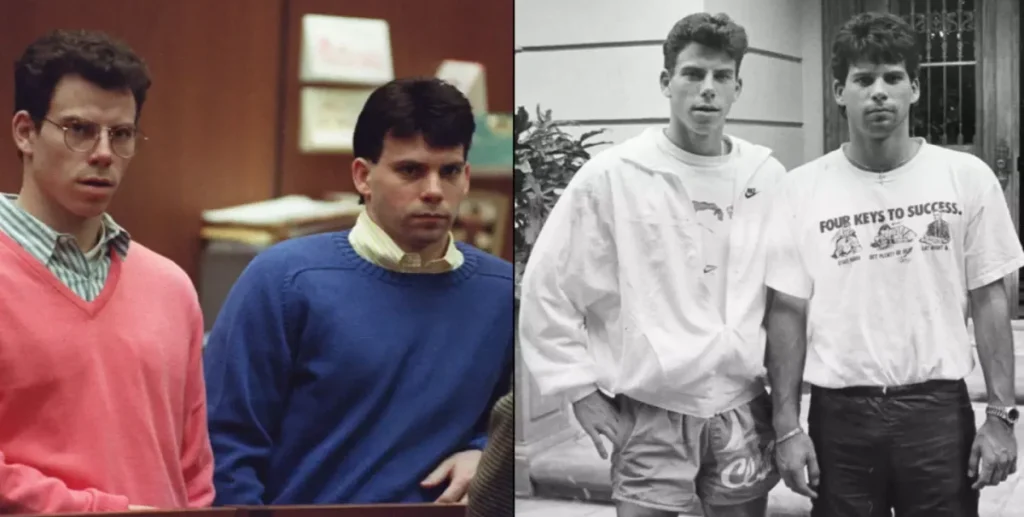
The Menendez Brothers' Money: What Ever Happened to the Menendez Money - Who Got the Brothers' Money?
Interest in the case of the Menéndez brothers increased significantly with the debut of the new season of Monsters.
Like other high-profile crimes that reshaped public understanding of violence and accountability — including the Elizabeth Smart kidnapping by Brian David Mitchell — the Menendez case continues to raise questions about motive, control, and how warning signs are missed.
Although their convictions for first-degree murder and subsequent life sentences without the possibility of parole are widely recognized, the details surrounding the inheritance they initially pursued are less commonly discussed. Following the tragic murders, Lyle and Erik swiftly came into possession of a share of their parents' wealth.
The Menendez family estate is frequently estimated to have been valued at around $14 million at the time of Jose and Kitty's demise, according to reports by outlets like The WealthAdvisor and the Mirror.
When adjusted for inflation, this amount would correspond to approximately $36.8 million as of the current date. They embarked on an extravagant spending spree that ultimately influenced their public visibility.
The primary assets of the estate consisted of a house situated on fourteen acres in Calabasas, which Jose and Kitty had acquired but never occupied, along with a mansion in Beverly Hills. After accounting for the loans associated with both properties, the total value of Jose's real estate amounted to $5.7 million.
At the time of his passing, Jose held 330,000 shares of LIVE Entertainment, which were trading at approximately $20 per share. Additionally, the estate included personal belongings and vehicles owned by Jose and Kitty.
The overall valuation of the estate was estimated at $14 million, resulting in Lyle and Erik each receiving around $2 million after the deduction of loans and taxes.
722 north elm drive
Menendez Brothers Spending Spree
Four days after the murders, the brothers began a spending spree. The brothers' shopping sprees were funded by Jose's $650,000 personal life insurance policy, as widely reported in media accounts of the case, including Yahoo News.
In the aftermath of their parents' deaths, the Menéndez brothers indulged in a lavish lifestyle funded by their newfound wealth.
Lyle acquired a Porsche, three Rolex watches (purchased from Beverly Hills jeweler Fred Hayman, according to trial testimony from saleswoman Mary Ellen Mahar), and a restaurant while Erik focused his expenditures on tennis lessons ($60,000 a year) and travel as well as racking up thousands in gambling losses and investing $40,000 in a rock concert at the Palladium in Los Angeles that never happened.
Within a mere six months, their total spending approached $700,000. This ostentatious spending attracted scrutiny and raised suspicions, which ultimately assisted law enforcement in uncovering the true motives behind the homicides.
By April 1994, Erik and Lyle had already incurred $1,495,000 in criminal defense fees before their final trial.
Upon their conviction, the $14.5 million estate they had inherited was swiftly diminished due to taxes, legal expenses, and unwise financial choices. Probate records, as extensively detailed in a 1994 Los Angeles Times article titled 'Court Records Show Menendez Estate Is Now A Pittance,' indicate that nearly $10.8 million was expended...with a significant portion allocated to the brothers' legal defense, inflated property valuations, and losses in the stock market.
When the records were eventually made public, the remnants of their once opulent fortune included a house in Calabasas, a condominium in New Jersey, some jewelry and furniture, and $651,948 in cash—an amount insufficient to address their growing debts.
Even had Lyle and Erik been acquitted, they would have received nothing from the estate. Given their conviction and life sentences, the California Slayer Statute further eliminated any possibility of financial gain.
This statute bars anyone who intentionally kills another individual from inheriting from the victim's estate or receiving benefits from life insurance policies.
Beyond Greed: The Psychology Behind the Spree
While prosecutors largely attributed the Menéndez brothers' motive to pure greed, their extravagant spending spree also offers a window into a deeper psychological dynamic.
Their seemingly hedonistic behavior wasn't merely about luxury; it likely served as a complex coping mechanism or a desperate attempt to construct a new reality in the wake of their horrific crime.
This spree could be viewed as a frantic effort to create an illusion of normalcy, convincing themselves and others they were simply privileged young men enjoying their inheritance, not parricides.
Such indulgence might have also been a form of impulsive self-medication, a way to numb profound emotional pain or to fill a sudden void. Additionally, having eliminated their controlling father, the unfettered spending may have been an exaggerated assertion of newfound power and autonomy they previously lacked.
Ultimately, their poor financial decisions and grand, yet failed, ventures also revealed a deep lack of emotional maturity and financial literacy.
Both brothers, in later accounts, suggested their "good times" were an "absurd" facade, masking immense pain and distress. This suggests their spending was a desperate, and ultimately futile, attempt to outrun the harrowing psychological consequences of their actions.
How Much Money Did the Menendez Brothers Inherit?
Contrary to popular belief, Lyle and Eric did not inherit anything from their father's will.
The financial inheritance of the Menendez brothers was forfeited following their conviction for the murder of their parents. According to California's "Slayer Statute," an individual who commits a felony resulting in the death of another is prohibited from benefiting from the victim's estate, irrespective of their familial ties.
The Menendez family residence was sold in 1991 for $3.6 million, incurring a loss of approximately $1.2 million, which was allocated to settle the mortgage, closing expenses, and obligations to the Internal Revenue Service. Furthermore, a property in Calabasas, which their parents had been renovating and was appraised at $2.65 million, was sold in 1994 for a significantly lower amount of $1.94 million.
$15 Million Insurance Policy
Approximately one week following the murders, Lyle and Erik convened with executives from LIVE Entertainment to explore potential assets that the brothers could obtain from the company.
They were taken aback to discover that the $15 million "key man" life insurance policy acquired by LIVE for Jose was rendered invalid due to Jose's failure to undergo the necessary physical examination mandated by the insurance provider.
Conversely, the $15 million "key man" policy that LIVE maintained in the event of Jose's demise was active and poised to yield the company its most lucrative quarter since its establishment.
According to a registration statement filed with the Securities and Exchange Commission (SEC) by LIVE Entertainment earlier that year, Jose was covered by a $15-million 'key man' insurance policy with LIVE Entertainment as the beneficiary whose employment contract with Live extended to Dec. 31, 1991. The so-called key man policy, normally written on the lives of top corporate executives, was issued by American General Life Insurance Co. of Houston.
Beverly Hills mansion
The brothers concluded that remaining in the Beverly Hills mansion was not a viable option. They informed their friends that they had been moving from one hotel to another due to their concerns that the same mobsters responsible for their parents' murders might target them as well.
Following the tragic events, LIVE settled an $8,800 bill at the Bel Air Hotel incurred by the brothers, which included $2,000 for room service during their five-day stay. Additionally, LIVE covered the costs for limousine services and bodyguards for the siblings.
After a period of residing in various upscale hotels in Beverly Hills, the brothers opted to lease adjacent apartments in the Marina City Towers located in Marina del Rey.
Lyle's apartment was rented for $2,150 per month, while Erik's was leased for $2,450 per month. They expressed interest in a penthouse within one of the towers priced at $990,000 and made a down payment; however, the financing ultimately fell through, preventing them from completing the purchase. In the weeks following the murders, Lyle employed bodyguards to accompany him.
These bodyguards were often taken aback by Lyle's tendency to leap from the limousine before it had fully stopped to engage in shopping sprees.
On one occasion, they observed him spending $24,000 on stereo equipment. On September 4, Lyle informed the bodyguards that he no longer required their protection, as his uncle had reached out to someone in the mob to arrange a deal.
Lyle did not elaborate on how his uncle, a middle-aged businessman from a New Jersey suburb, managed to contact the mob or how he succeeded in alleviating the death threat hanging over his nephews.
American Express Card
By October 1989, Lyle had incurred charges exceeding $90,000 on Jose's American Express card. He frequently traveled between New Jersey and California aboard the MGM Grand, an airline that catered to business professionals with expense accounts, while he endeavored to establish Menendez Investment Enterprises.
Lyle assembled a group of his friends from Princeton and appointed them as officers of Menendez Investment Enterprises.
He leased an office space for $3,000 per month in a shopping mall in Princeton and equipped it with high-end furnishings.
However, Menendez Investment Enterprises never occupied the office, which remained vacant, symbolizing Lyle's capacity to create an impressive facade. The friends Lyle invited to join him were athletes from Princeton, some of whom, like Lyle, had faced issues with campus authorities.
It was evident why Menendez Investment Enterprises failed to launch; all members were young, lacked business experience, and had known Lyle for only a few months.
None possessed any business acumen. It appeared that Lyle was merely pretending to run a business; he dressed and behaved accordingly, yet there was little substance behind his actions.
Restaurant Acquisition
Lyle had long harbored the ambition of owning a restaurant. He attempted to purchase Teresa's Pizza, a takeout establishment situated across from the entrance of Princeton, but his approach offended the co-owner, resulting in the sale not proceeding.
Consequently, Lyle opted to acquire Chuck's Spring Street Café, a snack shop in Princeton renowned for its spicy chicken wings. He invested $550,000 in Chuck's, a price that the co-owner of Teresa's Pizza deemed "absurd," as the establishment was valued at approximately "$200,000."
Many observers believed Lyle was taking on more than he could handle; however, his uncles sanctioned the purchase and secured a loan against their estate to facilitate the transaction.
They hoped that the restaurant would provide Lyle with some much-needed direction in his tumultuous life. Lyle promptly set to work on Chuck's, extending the home delivery hours from 12:00 p.m. to 1:00 a.m. and rebranding the restaurant as Mr. Buffalo's.
Local merchants in Princeton considered this decision unwise, given that Chuck's had established significant name recognition over the years.
Following the acquisition of Chuck's, Lyle expressed his intention to open a second location in a nearby mall in Princeton. He also contemplated establishing outlets near UCLA and another in New Brunswick, New Jersey, close to Rutgers University.
Ultimately, he envisioned launching a new Mr. Buffalo's every two months. However, Lyle was overly ambitious, as Chuck's/Mr. Buffalo's was operating at a loss due to Lyle permitting his friends to take advantage of his generosity.
2025 Net Worth
Any funds the brothers have are likely to be minimal. Occasional media projects such as (Netflix Monsters) and interviews may have generated minimal income for the brothers.
Do the Menendez brothers get royalties?
The straightforward answer is no. There’s no evidence to suggest that a financial transaction occurred between Netflix and the Menendez brothers.
Typically, the individuals depicted in a biopic or bio-series only receive payment if they are involved as a producer or if their estate must be legally compensated for the portrayal on screen.
Menendez Brothers Latest News and Legal Developments
The legal landscape surrounding Lyle and Erik Menendez has just undergone dramatic and very recent shifts, bringing them closer to the possibility of parole after decades behind bars.
A significant ruling on May 13, 2025, saw a Los Angeles judge resentence both brothers, converting their original life sentences without parole to a new term of 50 years to life in prison. This crucial decision immediately made them eligible for parole under California's youthful offender law, which considers their age at the time they committed their crimes.
While this doesn't spell immediate freedom, it undeniably opens a clear path for them to appear before a state parole board.
Their initial parole suitability hearing, which had been set for June 13, 2025, has since been postponed to August 21 and 22, 2025.
This rescheduling reportedly occurred after objections arose, particularly from victims' next of kin, regarding the conversion of a previously scheduled clemency hearing to a formal parole consideration without adequate prior notice.
The brothers' potential release remains contingent on the parole board's assessment.
Despite Los Angeles County District Attorney Nathan Hochman's continued opposition, stemming from his belief that they haven't fully accepted responsibility, the board will carefully weigh various factors.
These include their notably long record as model inmates and their participation in prison rehabilitation programs, as they decide whether Lyle and Erik Menendez are truly suitable for release.
Is The Monsters on Netflix accurate?
The accuracy of Monsters: The Lyle and Erik Menendez Story on Netflix has been a subject of discussion. While it dramatizes the events, it's advisable to consult dedicated fact-checking resources for a detailed comparison of the series with the actual historical and legal facts of the case. (The original article itself mentions a "Fact-Checking ‘Monsters: The Lyle and Erik Menendez Story’: Fact v Fiction.
Menendez Brothers Frequently Asked Questions
How long are The Menendez Brothers in jail? Lyle and Erik Menendez were sentenced to life in prison without the possibility of parole in 1996. They remain incarcerated to this day—each serving time at the RJ Donovan Correctional Facility in California.
How old were The Menendez Brothers when they killed their parents? At the time of the murders in August 1989, Lyle Menendez was 21 years old and Erik Menendez was 18. Their youth and alleged history of abuse became central to their controversial defense.
What was the crime of The Menendez Brothers? The Menendez brothers were convicted of murdering their parents, José and Kitty Menendez, in their Beverly Hills home. Prosecutors argued the motive was financial gain, while the defense cited years of emotional and sexual abuse.
Is Netflix’s Monsters: The Lyle and Erik Menendez Story accurate? Netflix's dramatized series blends fact with creative storytelling. While it incorporates real trial transcripts and interviews, certain scenes are fictionalized for dramatic effect. For full accuracy, it's best to compare the show with court records and verified documentaries.
Related: Fact-Checking ‘Monsters: The Lyle and Erik Menendez Story’: Fact v Fiction VIEW HERE
Curious About Net Worth? Finance Monthly Has You Covered!
From billionaires and business leaders to your favorite actors, athletes, and entrepreneurs like Paris Jackson, Sting and Ozzy Osbourne, we meticulously track the numbers behind the names. We explore not just the figures, but also how fortunes are built, managed, and impacted by unique life journeys.
Explore our full collection of net worth profiles to stay up to date on who’s rising, who’s spending, and how wealth is made and managed in 2025.
She Found Herself: The Astonishing True Story of Carlina White’s Kidnapping.
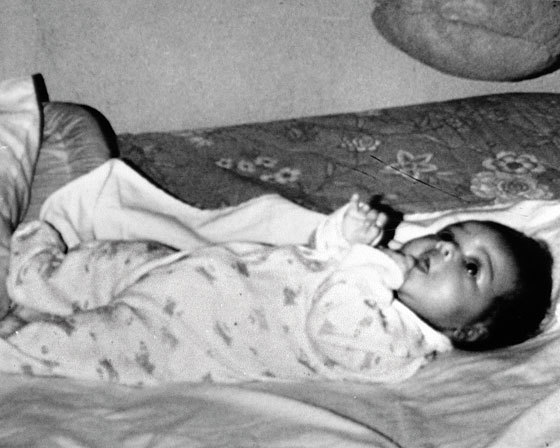
One moment, 19-day-old Carlina White was resting in her Harlem Hospital crib. The next – gone. No sound. No alert. No witness. Just an empty bassinet and 23 years of agonizing questions for her mother, Joy White. This wasn't just a kidnapping; it became one of the most quietly devastating child abduction cases in modern American history.
And in a twist no one expected, Carlina White solved it herself.
A Fever, A Crib, and a Disappearance
It was August 1987. Joy White, just 16 years old at the time, rushed her newborn daughter, Carlina, to Harlem Hospital. The baby had a high fever, and doctors decided to keep her overnight. A sympathetic woman in a crisp nurse’s uniform comforted Joy, saying she could go home and rest — that her baby would be safe.
But the woman wasn’t a nurse. She wasn’t staff at all.
Sometime in the early hours of the morning, while security cameras were reportedly offline, the woman removed Carlina from her IV, wrapped her in a blanket, and walked out of the building. Just like that.
Joy White stands next to the empty crib meant for her newborn daughter.
Who Was the Woman?
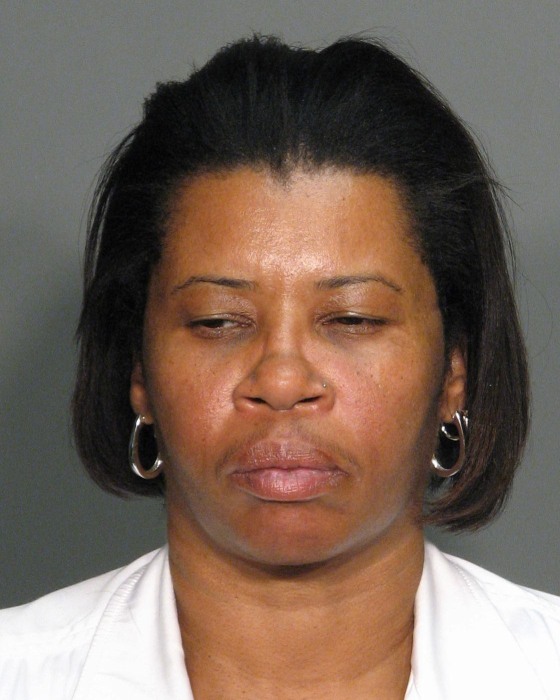
Her name was Ann Pettway, and she was going through a storm of her own. Multiple miscarriages, pressure from her partner, and a desperate need to prove something — all of it had apparently built up to that moment. Her decision wasn’t rational, but it was chillingly calculated.
Pettway took the baby home to Bridgeport, Connecticut, renamed her Nejdra Nance, and raised her as her own.
To Carlina, Ann was “Mom.” For a while, that was enough.
Ann Pettway
Childhood with a Secret
Carlina grew up surrounded by quiet questions. She didn’t look like her siblings. Her paperwork was missing — no birth certificate, no Social Security number. Whenever she asked, she got vague answers. And those answers never really satisfied her.
Still, she had a life. She went to school. She smiled in pictures. She laughed with friends. But deep inside, a persistent, quiet unease never really receded.
The Moment It All Unraveled
It wasn’t until Carlina got pregnant herself, in her late teens, that the truth began to emerge. She needed health insurance. She needed documentation. And Ann Pettway couldn’t provide any.
Finally, Carlina confronted her. The truth came out. She had been stolen from a hospital crib when she was just 19 days old.
Carlina didn’t panic — she investigated. She searched missing child listings online and came across a digitally aged photo on the National Center for Missing and Exploited Children website. The resemblance? Chilling. Even the birthmark on the image matched her own.
"I just felt different my whole life. Something didn’t feel right — and then everything made sense."
— Carlina White, NBC News, 2011
A Test That Changed Everything
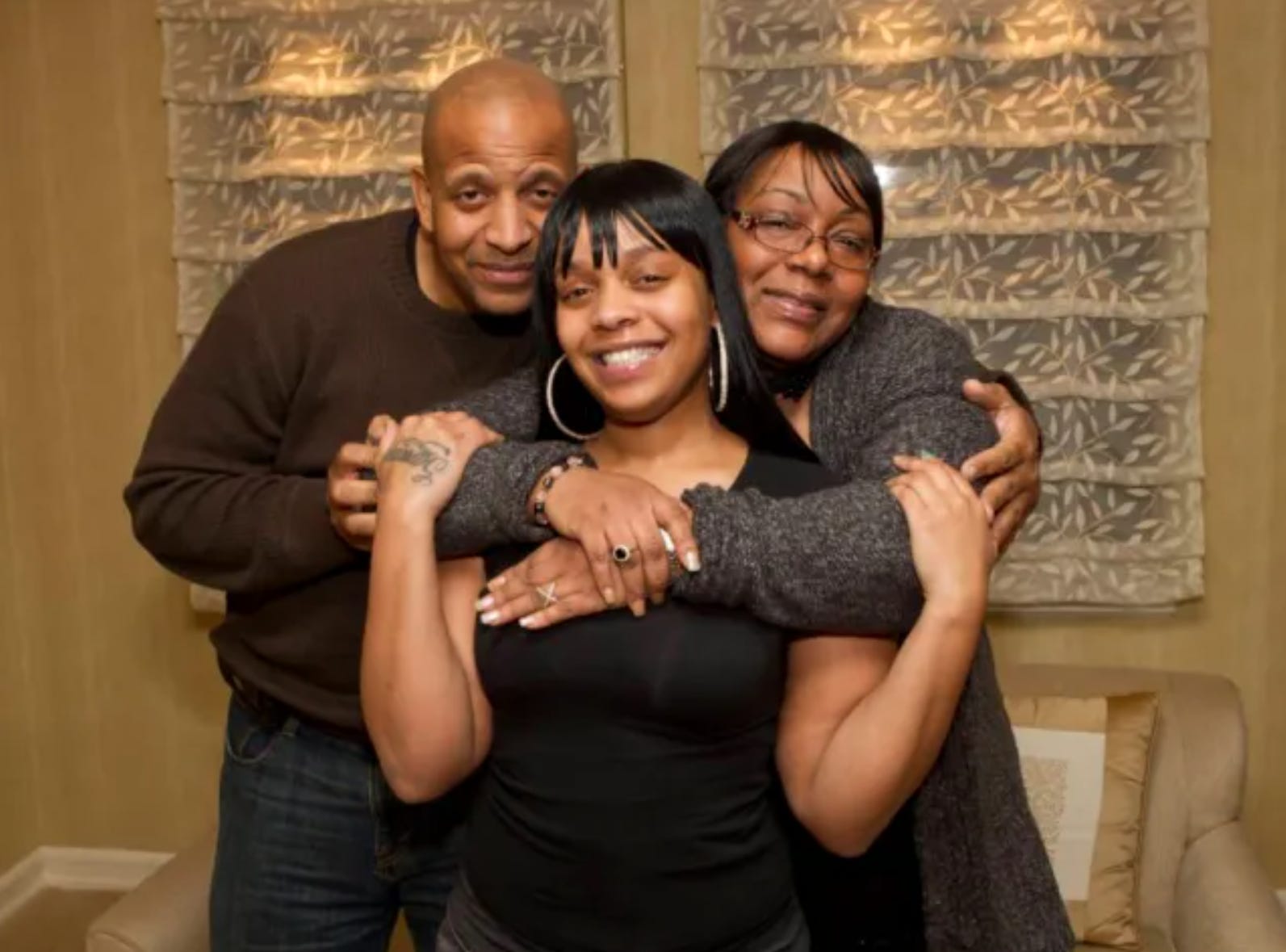
DNA confirmed it. She was Carlina White — the infant who had vanished in 1987 without a trace. The daughter Joy White and Carl Tyson had mourned for decades. Her biological father, Carl Tyson, spoke of finally having his "whole puzzle" complete after years of anguish.
The reunion was instant, but not simple. While her birth parents were overwhelmed with relief, Carlina remained cautious. "They wanted their baby back," she later reflected, "but I wasn't a baby anymore." She had grown up believing one version of the world; now, she was being asked to live in another.
The Legal Reckoning
Ann Pettway turned herself in in 2011. Though New York’s statute of limitations had expired, federal charges were still on the table. She pleaded guilty to kidnapping and was sentenced to 12 years in prison. Carl Tyson believed the sentence was too lenient, wishing Pettway had received the same number of years she had stolen from his family: 23. She served roughly 10 before her release.
"She wasn’t abusive. But she wasn’t soft either. I felt like I didn’t fully belong, but I loved her anyway."
— Carlina White, Today Show, 2012
Carlina didn’t call for vengeance. But she didn’t call it love, either.
Strange But True: The “Nurse” Never Existed
Here’s something that still haunts the case: The woman who posed as a nurse — who comforted Joy White and walked out with Carlina — was never identified by hospital staff. She wasn’t on any shift list. She wore no name tag. She wasn’t even questioned at the time.
And that night? The security cameras weren’t working.
Whether coincidence or institutional failure, no footage ever surfaced. No paper trail. Nothing but an empty crib. The unresolved questions surrounding the hospital's security have continued to fuel public discussion and scrutiny online, with many questioning the lack of accountability.
Reddit Reacts
The story has resurfaced again on Reddit this year, drawing huge attention on r/TrueCrimeDiscussion.
“She solved her own case. That’s what gets me every time,” wrote one commenter.
“She lived a life she didn’t choose and still came out with grace,” said another.
Carlina’s story isn’t just a crime tale. It’s about love, confusion, truth, and the painful process of becoming.
Carlina Today
These days, Carlina — or “Netty,” as she still sometimes goes by — lives more privately. She’s given interviews, appeared in a Lifetime film about her life, and spoken about healing. She’s not a public figure. But she’s a survivor.
Her story asks big questions about identity, love, and how we define family. And it answers them… just barely.
What the Case Left Behind
After Carlina’s case went public, hospitals across the U.S. updated their security protocols: ID bands, ankle monitors, improved visitor policies. A life stolen in 1987 quietly changed how the system protects babies in 2025.
But the emotional legacy may run deeper than the policy one.
Final Thoughts
Most missing person stories either end in heartbreak or mystery. Carlina White’s ended in both — and something else. Rebirth.
She didn’t just discover who her parents were. She uncovered herself — not just in a DNA result, but in the long, lonely process of confronting a life built on a lie.
She found herself. And in a story that began with such profound loss, that act of self-discovery may be the most remarkable part of Carlina White's astonishing journey.
People Also Ask
What happened to Carlina White? Carlina White was abducted from Harlem Hospital in 1987 by a woman impersonating a nurse. She later discovered her true identity in 2011 through online research and a DNA test.
Who kidnapped Carlina White? Ann Pettway took Carlina at 19 days old and raised her under a false name. Pettway was later sentenced to 12 years in federal prison for kidnapping.
How did Carlina White solve her own case? Carlina discovered she had no birth certificate while applying for health coverage. Suspicious, she searched online, found her own missing child poster, and took a DNA test to confirm her identity.
Where is Carlina White now? Carlina lives privately and has spoken occasionally about her story. She sometimes goes by her childhood name, Netty, and continues to process her dual life.
Was Harlem Hospital held responsible? No. Though heavily criticized for lax security and failed cameras, no formal charges were brought against the hospital. The incident led to industry-wide security reforms.
The Retrial Advantage: Why the Karen Read Case Had a Second Chance (and What Changed).
By Joseph Finder.
In the intricate, often unforgiving landscape of the American justice system, a criminal trial rarely affords a complete do-over. Yet, the high-profile Karen Read murder case presented precisely that: a high-stakes retrial following an initial hung jury. This rare occurrence offers a profound opportunity to dissect legal strategy, analyze the relentless pursuit of truth, and comprehend the immense, prolonged impact a protracted legal battle inflicts upon every individual caught in its wake.
A mistrial, frequently perceived as a crippling setback, often paradoxically confers a distinctive "retrial advantage," enabling both prosecution and defense to rigorously learn from past missteps, meticulously refine their arguments, and confront the subsequent legal battle with dramatically sharpened tactics.
The Hung Jury: A Defining Impasse
A "hung jury," often referred to as a deadlocked jury, materializes when jurors, despite exhaustive deliberation, prove fundamentally unable to achieve the unanimous verdict (guilty or not guilty) mandated in the vast majority of U.S. criminal proceedings. When this occurs, the presiding judge must declare a mistrial.
The first Karen Read trial, concluding in July 2024, culminated in such a mistrial after jurors formally signaled their irreducible impasse. Subsequent reports from some of these jurors hinted at an agreement to acquit Read on certain charges, yet an intractable deadlock persisted on others, leading to judicial confusion around delivering a partial verdict.
The defense, acutely aware of the stakes, vigorously pursued appeals all the way to the Supreme Court, arguing that double jeopardy principles should preclude a retrial on any charges where the initial jury had reportedly agreed on a "not guilty" outcome. Despite these fervent efforts, the appeals proved unsuccessful, clearing the path for the unprecedented second trial.
Crucially, a mistrial represents neither an acquittal nor a conviction. It serves to effectively wipe the evidentiary slate clean, empowering the prosecution to determine whether to initiate a retrial.
This pivotal decision typically pivots on factors such as the inherent gravity of the charges, the perceived strength of the available evidence, and the overarching public interest. Given the sheer seriousness of the murder charge in John O'Keefe's case, a retrial was, from a legal standpoint, almost an inevitability.
The "Retrial Advantage": Iteration and Adaptation
The period stretching between a declared mistrial and a subsequent retrial bestows a truly unique opportunity upon both legal adversaries to fundamentally re-evaluate their prior approaches. This "retrial advantage" manifests itself in several critical ways:
Prosecution's Strategic Refinement: Prosecutors gain an invaluable opportunity to scrutinize precisely which arguments or pieces of evidence failed to persuade the initial jury. They can then meticulously adjust their witness order, decisively streamline their presentation, strategically emphasize different evidentiary components, or even introduce new expert testimony if compelling avenues emerge. In Karen Read's retrial, the prosecution, now spearheaded by a special prosecutor (Hank Brennan), consciously called fewer witnesses than in the first trial, seemingly opting for a more intense, laser-focused presentation on specific physical evidence and Read's own alleged incriminating statements. This indicated a deliberate streamlining.
Defense's Sharpened Focus: The defense, having witnessed the prosecution's entire case meticulously laid out, acquires unparalleled insight into its strengths, its vulnerabilities, and its potential pitfalls. They can rigorously refine their cross-examination techniques, anticipate potential rebuttal arguments with greater precision, bolster their own expert testimony with enhanced clarity, and meticulously fine-tune their overarching narrative. Read's defense, undeterred, continued its vigorous pursuit of their "frame-up" and "cover-up" theories, now armed with clearer insights into where the first jury might have harbored lingering ambiguities. Legal analysts frequently highlighted this "dress rehearsal" advantage, allowing the defense to proactively address any perceived "weak points" in their initial presentation.
Pivotal Shifts and Strategic Nuances in the Karen Read Retrial
While the core allegations underpinning the case remained fundamentally unchanged, subtle yet profoundly significant strategic adjustments demonstrably influenced the dynamics of the retrial:
Witness Presentation & Selection: Both legal teams meticulously evaluated the efficacy (or ineffectiveness) of specific witnesses from the first trial. The prosecution, in particular, appeared to streamline its witness list or strategically alter the order of testimony to forge a more cohesive and compelling narrative. Notably, the lead investigator, Trooper Michael Proctor, whose conduct became a major focal point of the defense's attack, was conspicuously not called by the prosecution in the second trial—a significant deviation from the first.
Emphasis on Specific Evidence: Each side would have meticulously re-evaluated precisely which pieces of evidence resonated most powerfully, or conversely, created the most confusion for the previous jury. For the prosecution, this likely translated into a clearer, more direct presentation of the critical physical evidence and Read's alleged admissions. The defense, conversely, likely doubled down on their powerful arguments concerning alleged evidence tampering and the precise timeline of events, relentlessly aiming to cultivate "reasonable doubt" through their persuasive "cover-up" theory.
Refined Jury Selection (Voir Dire): Both legal teams undoubtedly refined their jury selection process for the retrial. They sought to identify and select potential jurors who might exhibit greater receptiveness to their core arguments or prove less susceptible to the opposing side's persuasive tactics, leveraging the insights gleaned from the first jury's deliberations.
Narrative Precision: Following a mistrial, a paramount objective for both sides typically involves presenting a markedly clearer, more concise, and undeniably more impactful narrative. They meticulously refine their opening and closing statements, striving to eliminate any lingering ambiguities or overly complex arguments that might have bewildered or confused the initial jury.
The Ultimate Outcome and Enduring Implications
After another grueling trial and extensive deliberations, the jury in Karen Read's second trial delivered a complex verdict:
Not Guilty of second-degree murder.
Not Guilty of manslaughter while operating under the influence.
Not Guilty of leaving the scene of a collision causing injury or death.
Guilty of operating a vehicle under the influence of alcohol (OUI).
For the OUI conviction, she received a sentence of one year of probation.
The verdict in this highly anticipated retrial powerfully underscores that, despite the prosecution's second concerted attempt, they ultimately failed to convince the jury beyond a reasonable doubt on the most serious charges directly related to John O'Keefe's tragic death.
The defense's unwavering and persistently articulated "frame-up" narrative, synergized with perceived weaknesses and controversies surrounding the initial investigation, and crucially, the inherent benefit of refining their entire approach, likely played an indispensable role in cultivating enough "reasonable doubt" for the jury to reach acquittals on the most impactful charges.
The Karen Read retrial stands as a compelling testament to the often-unpredictable resilience of the legal process. It vividly demonstrates how a "second chance" can, in fact, fundamentally alter the entire trajectory of a high-profile case, compelling both legal adversaries to dramatically refine their strategies and, in this instance, ultimately leading to a profoundly different, albeit complex, outcome.
People Also Ask
Why did Karen Read have a retrial? Karen Read faced a retrial because her initial trial, held in July 2024, concluded in a mistrial due to a "hung jury." This meant the jurors could not achieve the unanimous verdict required for a conviction or full acquittal on all charges.
What is a "retrial advantage" in legal terms? A "retrial advantage" refers to the strategic benefits accrued by both the prosecution and defense after an initial trial culminates in a mistrial. Both parties gain a crucial opportunity to meticulously analyze what arguments or evidence resonated (or failed to) with the first jury, allowing them to refine their evidence presentation, adjust their witness strategies, and articulate their arguments with enhanced clarity for the subsequent trial.
How did the prosecution's strategy evolve in Karen Read's retrial? In Karen Read's retrial, the prosecution, led by a special prosecutor, notably opted to call fewer witnesses than in the first trial. This strategic shift likely aimed for a more streamlined, focused, and impactful presentation of their core evidence, particularly emphasizing physical evidence and Read's alleged admissions, hoping to avoid overwhelming or confusing the jury.
How did the defense's strategy evolve in Karen Read's retrial? The defense in Karen Read's retrial relentlessly continued to pursue their "frame-up" and "cover-up" theories. Having gained critical insight into the prosecution's full case and the initial jury's potential receptiveness from the first trial, they likely refined their cross-examinations, honed their expert testimony, and more forcefully highlighted inconsistencies or procedural missteps in the investigation, aiming to maximize reasonable doubt.
Further Reading & Dive Deeper
The Karen Read trial has unveiled complex layers within our justice system, from the meticulous process of jury deliberation to the pervasive influence of public narratives. To gain a deeper understanding of these critical aspects and the broader implications for justice in the digital age, explore our related analyses:
The Impact of High-Profile Trials on Victims' Families: The O'Keefe Family's Ordeal.
by Joseph Finder
A sudden, violent loss shatters a family's world, plunging them into private grief. But when such a tragedy becomes the centerpiece of a high-profile criminal trial, that intimate sorrow explodes onto a relentlessly public stage.
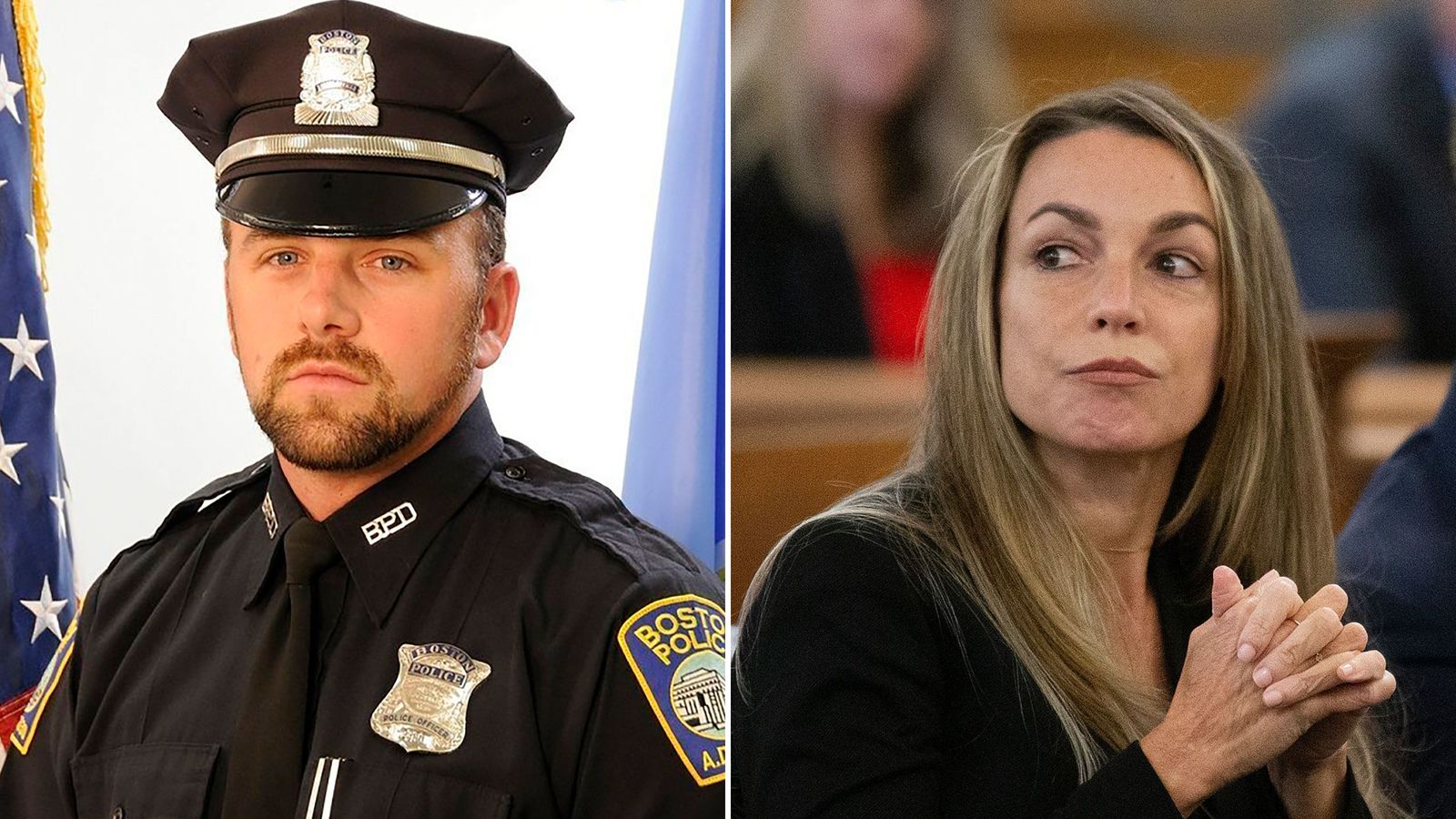
For the family of John O'Keefe, the Boston police officer whose death lay at the heart of the Karen Read murder trial, the justice system transformed into a relentless public arena.
Their private grief became a spectacle, subjecting them to an ordeal stretching far beyond conventional courtroom confines. Their protracted journey offers a stark, poignant illustration of the unique pressures and immense psychological toll exacted on families thrust into the vortex of a globally watched case.
Private Grief in a Public Arena: The Unrelenting Scrutiny
For most, navigating the profound sorrow of losing a loved one to violence is a deeply personal and intimate process. However, families caught in the glare of a high-profile trial find privacy a luxury simply unattainable. The O'Keefe family experienced this harsh reality firsthand:
Media Saturation: From local bulletins to national headlines and the ubiquitous world of social media, every facet of the case – and, by extension, elements of their lives – was meticulously dissected. Their every reaction in court, their past connections to the defendant, even their most private public statements faced intense scrutiny, analysis, and often, sensationalization. This constant, piercing media glare inevitably stunts the natural grieving process.
The "Armchair Detective" Phenomenon: Beyond traditional media, the explosion of online "armchair detectives" (a phenomenon we explored in a previous article) injected an unprecedented layer of public intrusion. The O'Keefe family frequently found themselves and their beloved John at the very epicenter of rampant speculation, convoluted conspiracy theories, and incessant online discussions, often fueled by unverified and malicious claims.
Online Harassment and Disinformation: Witnesses closely associated with John O'Keefe, including his family members and those considered friends, reportedly endured relentless online harassment, doxxing, and vicious personal attacks. These attacks originated from segments of the public who had fervently embraced the defense's "frame-up" theory. This hostile digital environment intensifies the initial trauma, making any hope of healing and recovery a daunting challenge.
Defense Strategy and Personal Attacks: The very nature of the defense's strategy, which posited a "cover-up" and directly implicated various individuals known to the O'Keefe family, meant their private connections and even John O'Keefe's character were relentlessly challenged and publicly assailed. This felt akin to a cruel, secondary victimization, forcing the family to defend their loved one's reputation while simultaneously striving for justice.
The Psychological and Emotional Toll: A Prolonged Nightmare
The relentless public scrutiny and the inherently adversarial nature of a protracted trial invariably inflict a severe psychological and emotional toll:
Traumatic Grief: Unlike the grief stemming from natural causes, the death of a loved one through alleged violence, particularly under such public scrutiny, very often leads to traumatic grief. This complex grief is further compounded by the agonizing necessity of reliving the horrific details of the death repeatedly during courtroom testimony.
Re-victimization by the System: While the justice system theoretically aims to provide closure, the lengthy, arduous process—encompassing indictments, pre-trial motions, jury selection, and a prolonged trial (with the looming possibility of appeals)—can feel like a continuous re-traumatization. Families frequently report feeling re-victimized by the very system designed to deliver justice.
Loss of Control: Families grapple with a profound sense of powerlessness, as the narrative of their loved one's death is aggressively shaped by legal strategies, sensational media portrayals, and the fickle winds of public opinion.
Exhaustion and Frustration: The sheer duration and intense emotional demands of high-profile trials inevitably lead to immense exhaustion. The O'Keefe family had to endure months of testimony, often hearing agonizing details of John's last hours and the subsequent investigation, day after agonizing day. The emotional strain of merely sitting through such proceedings, coupled with the constant pressure of public observation, becomes almost unbearable.
Following the jury's verdict on June 18, 2025, which found Karen Read not guilty of second-degree murder and manslaughter charges, her defense attorneys expressed a mix of relief and continued concern regarding the broader investigation.
Attorney David Yannetti stated, "In one sense, this case brought justice in that they charged the wrong person, and they went after an innocent woman for 3-and-a-half years, and they failed because they charged the wrong person, but somebody's still out there. It's a shame that this investigation was not done in the proper way, so they could have gotten to the truth." He also acknowledged the immense relief that there was not another hung jury, stating, "Our biggest fear was a mistrial, and thank God that didn't happen."
Attorney Robert Alessi specifically praised the jury, saying, "God bless those 12 people on the jury. Members of your community had courage and sat there day after day, weighed the evidence, and did their job. They're the ones who are the heroes." He also added that "people knew what the truth was, and people motivated us to keep working hard."
Karen Read herself, speaking alongside her legal team and father outside the courthouse, reiterated her stance throughout the trial, saying, "No one has fought harder for justice for John O'Keefe than I have. Than I have, and my team."
The Role of Victim Support and the Justice System's Responsibility
In light of these monumental challenges, the role of comprehensive victim support services grows exponentially in its criticality. These invaluable services typically provide:
Emotional and Psychological Support: They offer tailored counseling, grief support, and crucial coping strategies designed to address the unique trauma of violent crime and relentless public scrutiny.
Practical Assistance: These services help families navigate the bewildering complexities of the legal system, clarify intricate court procedures, and inform them of their fundamental rights.
Advocacy and Protection: Crucially, they aid in shielding families from undue harassment and actively advocate for their needs within the often-overwhelming legal process.
The justice system itself undeniably bears a solemn responsibility to fully acknowledge and actively mitigate the extraordinary burdens placed upon victims' families in high-profile cases. This necessitates implementing proactive measures, which could include:
Expediting Trials Where Possible: While the pursuit of thoroughness remains paramount, unnecessary or prolonged delays can profoundly exacerbate suffering.
Protecting Privacy and Dignity: Implementing robust measures to shield families and witnesses from undue harassment, simultaneously ensuring their inherent dignity is meticulously respected within the courtroom.
Educating the Public: A vital role involves proactively helping the broader public differentiate between factual evidence rigorously presented in court and the often-malicious, speculative online narratives.
Proactive Victim Services: Ensuring that families are not only aware of but also have immediate and comprehensive access to extensive support services right from the very outset of their ordeal.
The O'Keefe family's prolonged ordeal in the Karen Read trial serves as a powerful and poignant reminder that behind every sensational headline in a high-profile case reside real people experiencing unimaginable pain.
Their experience powerfully underscores the urgent need for a more empathetic, proactive, and protective approach within the justice system to truly support those who, through no fault of their own, find their deepest sorrows playing out on the world's most unforgiving stage.
People Also Ask
How did John O'Keefe's family react to the Karen Read verdict? Members of John O'Keefe's family and close friends expressed profound heartbreak and immense disappointment with the verdict, stating their "hearts are with John and the entire O'Keefe family." They also lamented the "cruel reality that this prosecution was infected by lies and conspiracy theories" spread by the defense and some media, ultimately calling the outcome a "devastating miscarriage of justice."
What challenges do victims' families face in high-profile trials? Victims' families in high-profile trials confront intense media scrutiny, rampant public speculation, often severe online harassment (including doxxing), the profound psychological toll of re-living the trauma through repeated testimony, and the sheer emotional exhaustion of prolonged legal proceedings. Their private grief regrettably becomes a relentless public spectacle.
Is there support available for families of crime victims? Yes, various vital victim support services exist to help families of crime victims cope and begin to recover. These services frequently provide crucial emotional and psychological support (e.g., counseling, grief support), practical assistance (such as navigating the complex legal system and understanding court procedures), and essential advocacy. Organizations like Victim Support (in the UK) and numerous similar groups globally offer critical assistance.
Further Reading & Dive Deeper
The Karen Read trial has unveiled complex layers within our justice system, from the meticulous process of jury deliberation to the pervasive influence of public narratives. To gain a deeper understanding of these critical aspects and the broader implications for justice in the digital age, explore our related analyses:
Police Conduct and Public Trust: Allegations of Misconduct in the Karen Read Investigation.
When the very foundation of justice – public trust in its enforcers – begins to crack, the reverberations can dismantle a case. In the Karen Read murder trial, allegations of police misconduct have become a crucible for testing this trust. Historically, public confidence in law enforcement underpins the very concept of "policing by consent," ensuring investigations are perceived as fair, impartial, and credible.
Yet, the Read trial became a stark example of how this can be challenged, as the defense launched a full-frontal assault on the integrity of the police investigation. Claims of misconduct, evidence mishandling, and even a "cover-up" became central to Read's defense, casting a long shadow over the proceedings and sparking widespread public debate about police accountability.
The Core Allegations: A Challenge to Investigative Integrity
Karen Read's defense systematically built a narrative of police misconduct, focusing intently on specific individuals and contentious actions:
Trooper Michael Proctor's Conduct: As the lead investigator, Trooper Michael Proctor found himself squarely in the defense's crosshairs. Allegations against him included:
Derogatory Text Messages: Crucially, Proctor admitted to sending highly unprofessional and vulgar text messages about Karen Read to friends and family. These messages, using disparaging language and openly expressing a desire for her conviction, were seized upon by the defense as irrefutable proof of a deep-seated bias that, they argued, tainted his entire investigation.
Handling of Evidence: Significant concerns arose regarding Proctor's management of critical evidence. Questions were vigorously posed about the extended period he reportedly held Read's phone and suggestions were made that certain items were mishandled or not properly logged. His testimony regarding the precise timing and discovery of the taillight fragments at the scene also faced intense and persistent scrutiny.
Alleged Evidence Mishandling and Planting: Beyond Proctor, the defense leveled broader accusations about the integrity of key evidence. They forcefully suggested that taillight fragments were not, in fact, found immediately at the scene, but only surfaced after Read's vehicle was already in police custody, implying the potential planting of evidence. Similarly, the collection of crucial biological evidence from the scene prompted serious doubts and challenges.
Failure to Investigate Others: A cornerstone of the defense's "frame-up" theory was the assertion that law enforcement deliberately failed to adequately investigate other individuals present at the house party where John O'Keefe was last seen alive. They vehemently highlighted familial and professional connections between some witnesses and law enforcement, portraying this as a glaring conflict of interest that led to a narrow, tunnel-vision investigation focused solely on Read.
Missing or Manipulated Digital Records: Further allegations emerged concerning surveillance video from the Canton Police Department's sallyport (garage area). Claims were made that significant portions of the video were either missing entirely or intentionally inverted to conceal actions related to Read's vehicle. The precise timing of certain cell phone searches conducted by witnesses also fueled heated debate, with the defense alleging improper handling or reporting of critical digital evidence.
Impact on Public Trust and the Trial's Outcome
These serious allegations unleashed a profound and multifaceted impact:
Erosion of Public Confidence: The relentless drumbeat of "cover-up" accusations, powerfully amplified by online "armchair detectives" and a highly vocal public campaign, fundamentally eroded public confidence. Many citizens began to question the impartiality of the investigation and, by extension, the broader integrity of law enforcement.
Fueling Reasonable Doubt: For the defense, the alleged police misconduct proved to be an incredibly potent tool for establishing reasonable doubt. By consistently casting shadows of suspicion over the integrity of the investigation, they effectively weakened the prosecution's evidence, suggesting that if the very collection and handling of evidence were compromised, its reliability could not possibly be trusted. The jury's eventual verdict, acquitting Read of the murder and manslaughter charges, strongly suggests that this strategic approach was, at least in part, successful.
Challenges for the Prosecution: Prosecutors found themselves in the unenviable position of defending not just their core case against Karen Read, but also the contentious conduct of their key investigators. This added a significant layer of complexity and often served as a major distraction during their presentation of evidence.
Increased Scrutiny on Law Enforcement: The high-profile nature of these allegations has inevitably led to heightened public and internal scrutiny of police practices. Particular attention is now being paid to evidence handling protocols, witness interview techniques, and the overall ethical conduct of officers, especially in sensitive investigations. Trooper Proctor's subsequent disciplinary action and dismissal underscored the gravity with which some of his actions were ultimately viewed.
Broader Implications for Police Accountability
Regardless of the verdict, the Karen Read case stands as a pivotal case study for how the justice system must contend with the complexities of the digital age. It sharply highlights several pressing areas of concern:
Transparency in Investigations: There's an ever-growing demand for transparency, particularly in cases involving police officers or their associates. The ability of both the public and defense teams to access raw data, unedited video footage, and internal communications is becoming absolutely crucial for maintaining trust.
Ethical Conduct and Bias: The revelations of Trooper Proctor's text messages serve as a stark reminder of the paramount importance of professional conduct, even in private communications, when an officer is actively involved in an investigation. Perceived bias, whether genuinely present or merely inferred, can fundamentally undermine the credibility of an entire case.
Internal Oversight and Discipline: The public closely observes how law enforcement agencies respond to allegations of misconduct. Swift, transparent, and decisive action, where warranted, is absolutely essential for rebuilding and maintaining shattered public trust.
The "Blue Wall of Silence": The defense in the Karen Read trial explicitly invoked the concept of the "blue wall of silence," suggesting an unofficial code among officers to protect one another. While often a controversial claim, cases like Read's can regrettably fuel public perception that true accountability within law enforcement is difficult to achieve, especially when fellow officers are implicated.
The Karen Read trial has undeniably left an indelible mark on discussions surrounding justice. It has sharply exposed the delicate and often precarious balance between robust law enforcement efforts and the unwavering imperative of maintaining profound public trust.
The pervasive allegations of police misconduct will, without question, continue to fuel crucial conversations about systemic reform and accountability in criminal investigations for many years to come.
People Also Ask
What were the main allegations of police misconduct in the Karen Read trial?Main allegations included Trooper Michael Proctor's derogatory text messages about Read, alleged mishandling and potential planting of evidence (like taillight fragments), failure to fully investigate other individuals at the house party, and concerns about missing or manipulated surveillance video from the police station.
How did Trooper Michael Proctor's actions impact the Karen Read trial?Trooper Proctor's conduct, particularly his unprofessional text messages, was used by the defense to argue bias and taint the entire investigation. This contributed significantly to the defense's "reasonable doubt" strategy, challenging the credibility of the evidence he collected. He was later fired by the Massachusetts State Police.
Did the Karen Read defense claim a police "cover-up"?Yes, a central tenet of Karen Read's defense was the claim of an elaborate "cover-up" orchestrated by law enforcement to frame her and protect other individuals present at the house party. This theory gained significant traction among her supporters and in online communities.
Further Reading & Dive Deeper
The Karen Read trial has unveiled complex layers within our justice system, from the meticulous process of jury deliberation to the pervasive influence of public narratives. To gain a deeper understanding of these critical aspects and the broader implications for justice in the digital age, explore our related analyses:
Beyond the News Cycle: How "Armchair Detectives" Shaped the Karen Read Narrative.
by Joseph Finder
In the age of viral content and instant information, the courtroom is no longer the sole stage for high-profile criminal trials. Increasingly, an impassioned, self-appointed jury of "armchair detectives" operates concurrently online, meticulously dissecting evidence, scrutinizing witnesses, and actively shaping public narratives.
The Karen Read trial stands as a stark and compelling example of this phenomenon, where online forums, social media platforms, and independent bloggers didn't just comment on the case – they became an integral, and often disruptive, force in its unfolding story, fundamentally altering how the public perceived justice.
The Rise of the Digital Sleuth: A New Breed of True Crime Enthusiasts
The fascination with true crime has found fertile ground in the digital era. Platforms like TikTok, X (formerly Twitter), YouTube, and dedicated Reddit forums have transformed passive consumers into active participants."Armchair detectives" are individuals, often with no legal or investigative training, who:
Scrutinize Public Records: They pore over court documents, police reports (if publicly available), and witness testimonies shared online.
Analyze Media Coverage: They cross-reference news reports, identify perceived inconsistencies, and create their own timelines and theories.
Engage in Collaborative Investigations: Through online communities, they share findings, debate theories, and often crowd-source information, forming powerful echo chambers around particular viewpoints.
Amplify Narratives: Their content can go viral, reaching millions and solidifying specific narratives, sometimes long before official legal proceedings conclude.
The Karen Read case became a magnet for this online scrutiny, particularly as the defense's "frame-up" theory gained traction.
The Karen Read Case: A Microcosm of Digital Influence
The "Canton Cover-Up" narrative, heavily amplified by bloggers and online communities, became almost as prominent as the official prosecution. Here's how "armchair detectives" significantly shaped the Karen Read story:
The "Canton Cover-Up" Theory: Spearheaded by a local blogger, this theory alleged a widespread conspiracy among law enforcement and friends to frame Karen Read for John O'Keefe's death. This narrative gained immense traction, leading to fervent online discussions and real-world protests outside the courthouse.
Witness Scrutiny & Harassment: Individuals connected to the case, particularly those who were at the house party, found themselves subjected to intense online scrutiny, harassment, and even doxxing by "armchair detectives" who believed them to be complicit in a cover-up.
Information Dissemination (and Misinformation): Online platforms became a primary source of information for many following the trial, often outpacing traditional news outlets in speed. However, this also meant that unverified claims, speculative theories, and outright misinformation spread rapidly, becoming difficult to distinguish from credible facts.
Jury Pool Impact: The pervasive nature of the online narrative posed an unprecedented challenge to jury selection. Despite judicial instructions, it became exceedingly difficult to find jurors who hadn't been exposed to, and potentially influenced by, the "armchair detective" theories circulating online. The court had to summon hundreds of extra jurors in an attempt to find an impartial panel.
The Double-Edged Sword: Benefits and Detriments
While "armchair detectives" can sometimes bring positive attention to overlooked aspects of a case or keep public pressure on investigations, the Karen Read trial highlighted their significant downsides:
Potential Benefits:
Increased Scrutiny: Can hold law enforcement and the justice system accountable by shining a light on perceived inconsistencies or misconduct.
Public Awareness: Keeps cases in the public eye, potentially leading to new tips or witnesses coming forward.
Significant Detriments:
Spread of Misinformation: Without journalistic standards or verification, speculative theories can quickly become perceived as fact, leading to public confusion and biased perceptions.
Harassment and Doxing: The line between investigation and vigilantism is often crossed, leading to the harassment, intimidation, and privacy invasion of individuals connected to the case, including witnesses, family members, and even legal personnel.
Prejudice to Trials: Pre-trial publicity, amplified by "armchair detectives," can significantly complicate jury selection and the ability to seat an impartial jury, risking the fairness of a trial.
Undermining Public Trust: While sometimes aiming to expose flaws, pervasive conspiracy theories can, paradoxically, erode overall public trust in the legitimate legal process itself.
Navigating the Digital Wild West: Lessons for Justice
The Karen Read trial serves as a powerful case study for the justice system grappling with the digital age. It underscores the urgent need for:
Public Legal Education: Empowering the public to critically evaluate information and understand the formal legal process versus online speculation.
Judicial Adaptability: Developing new strategies for jury selection and management in an era of pervasive online information.
Ethical Boundaries: Encouraging greater responsibility from social media platforms and independent content creators regarding the dissemination of unverified information and the protection of individuals' privacy.
Ultimately, the phenomenon of "armchair detectives" has undeniably reshaped the landscape of high-profile criminal trials. While their passion can be formidable, the Karen Read narrative serves as a potent reminder of the fine line between citizen engagement and the potential for digital vigilantism to compromise the integrity of justice itself.
People Also Ask
What happened with Karen Read?Karen Read was charged with the 2022 murder of her boyfriend, Boston Police Officer John O'Keefe, who was found dead in a snowbank. The prosecution alleged she hit him with her SUV and left him to die. The defense claimed she was framed, asserting O'Keefe was injured inside a house party and his body was moved.After two trials, Read was acquitted of second-degree murder and manslaughter charges, but convicted of operating under the influence.
What is the documentary about Karen Read?There is a docuseries titled "A Body in the Snow: The Trial of Karen Read" which provides a behind-the-scenes look at the controversial trial. It covers the death sequence, testimonies, Read's defense, and the alleged police cover-up. It's available on platforms like Apple TV, Max, and Discovery+.
What is the civil suit against Karen Read?Despite her criminal acquittal on the murder and manslaughter charges, Karen Read still faces a wrongful death civil lawsuit filed by John O'Keefe's family in Plymouth County. The lawsuit also names two Canton bars where Read and O'Keefe were drinking, alleging they are liable for serving Read alcohol despite signs of intoxication. The civil suit was stayed during the criminal trial but is expected to proceed.
Further Reading & Dive Deeper
The Karen Read trial has unveiled complex layers within our justice system, from the meticulous process of jury deliberation to the pervasive influence of public narratives. To gain a deeper understanding of these critical aspects and the broader implications for justice in the digital age, explore our related analyses:
The Role of Forensic Evidence: Decoding Expert Testimony in the Karen Read Case.
In any major criminal trial, forensic evidence often steps forward as the silent witness, offering objective data that can powerfully corroborate or contradict narratives. Yet, as the Karen Read trial vividly demonstrated, the act of decoding this evidence, particularly when filtered through the lens of expert testimony, is anything but straightforward.
Both the prosecution and defense presented a veritable battle of the experts, each side offering highly technical analyses designed to sway the jury towards their starkly opposing versions of events. Grasping the pivotal role of forensic science and the inherent challenges in translating expert testimony for a lay jury is crucial to understanding the nuanced complexities of this captivating case.
Karen Read Trial Reveals About Justice in the Digital Age
The Karen Read trial saw a direct and often dramatic conflict in the interpretation of several critical pieces of forensic evidence:
Vehicle Damage & Debris Analysis:
Prosecution: Focused heavily on pieces of Read's broken Lexus SUV taillight found near John O'Keefe's body, arguing this was irrefutable proof he was struck by her vehicle. They presented DNA evidence from the taillight consistent with O'Keefe. Analysis of the vehicle's damage aimed to show impact with a pedestrian.
Defense: Countered by rigorously questioning the chain of custody and the precise timing of the taillight's discovery, strongly implying it could have been planted. Their experts argued the damage to Read's SUV was inconsistent with striking a human body and suggested it could have resulted from hitting O'Keefe's own vehicle. A key point of contention was the alleged absence of O'Keefe's blood or tissue on the exterior vehicle damage.
Autopsy Findings & Injury Interpretation:
Prosecution: The medical examiner testified that John O'Keefe's cause of death was blunt impact injuries to the head and hypothermia, with the blunt force trauma being the primary factor. They outlined injuries consistent with being struck by a vehicle and subsequently left exposed in the cold.
Defense: Introduced their own medical and biomechanical experts who presented a starkly different interpretation. They argued O'Keefe's specific injuries—including multiple head wounds, severe eye injuries, and the alleged "dog bite" marks—were inconsistent with a vehicle strike. Instead, they contended these injuries were more indicative of a brutal physical altercation inside the Canton home, potentially followed by a fall onto a hard surface, with hypothermia then contributing after he was left outside. The highly contentious alleged dog bite marks were presented as further evidence supporting an internal struggle.
Digital Forensics: Cell Phone & Search Data:
Prosecution: Leaned on cell phone data and vehicle black box data (E.D.R.) to establish Karen Read's movements and actions, particularly certain rapid acceleration and reverse events, as consistent with hitting O'Keefe.
Defense: Mounted a significant challenge to the precise timing of the infamous "hos long to die in cold" Google search found on Jennifer McCabe's phone. Using their own digital forensic expert, they argued that the timestamp, when properly interpreted, indicated a search much earlier than the prosecution claimed – hours before O'Keefe's body was discovered. This became a cornerstone of their conspiracy theory, suggesting foreknowledge among others present at the party.
Navigating Forensic Evidence: Common Courtroom Challenges
The Karen Read trial perfectly illustrated several inherent challenges surrounding forensic evidence and expert testimony in high-profile cases:
Conflicting Expert Opinions: It's common for both sides to hire their own experts, leading to seemingly contradictory conclusions from the same underlying data. This isn't always about one expert being "wrong"; often, even highly qualified experts can draw different conclusions due to varying methodologies, emphasis on different data points, or even the natural human tendency to seek evidence supporting the side that retained them. This dynamic leaves the jury with the incredibly difficult task of deciding which expert, and which scientific interpretation, is more credible and persuasive. How does a layperson truly differentiate between such highly technical, opposing scientific explanations?
Admissibility & Scientific Standards: Courts serve as gatekeepers, rigorously deciding what forensic evidence is admissible and whether the methodologies used meet accepted scientific standards (e.g., the Daubert standard in federal courts). Even seemingly objective science can be challenged on its application, the reliability of the tools used, or the qualifications of the expert.
The "CSI Effect" on Jurors: Jurors, often exposed to simplified and dramatized portrayals of forensic science on television, may enter the courtroom with unrealistic expectations about the speed, certainty, and abundance of forensic evidence. When definitive "smoking gun" evidence isn't presented, or when experts openly disagree, it can create confusion, skepticism, or even lead to undue speculation.
Chain of Custody & Contamination Concerns: The defense frequently attacked the integrity of the evidence collection and handling, particularly regarding the taillight fragments and concerns about potential cross-contamination at the crime scene. Maintaining an impeccable chain of custody—a documented path of evidence from collection to courtroom—is paramount, as any perceived lapse can cast significant doubt on the evidence's ultimate reliability.
Expert Credibility and Perceived Bias: The highly scrutinized testimony of lead investigator Trooper Michael Proctor, whose integrity was questioned due to unprofessional text messages and alleged bias, inadvertently impacted the jury's perception of the forensic evidence he collected or oversaw. This highlights how an expert's perceived neutrality is often as vital to their testimony's weight as their scientific credentials themselves.
Beyond the Lab: The Jury's Crucial Role in Decoding Science
Ultimately, the jury in the Karen Read trial faced an unenviable, yet vital, task: to translate complex scientific data and conflicting expert opinions into a coherent understanding that could inform their verdict. The acquittal on the more serious charges suggests that, at least for some jurors, the defense's ability to sow reasonable doubt around the prosecution's forensic interpretations was successful.
The Karen Read case serves as a powerful reminder that while forensic science is a cornerstone of modern criminal justice, its presentation and interpretation in the adversarial courtroom remain profoundly human endeavors. It underscores the critical need for absolute clarity, unquestionable integrity in evidence collection, and rigorous scrutiny of expert testimony to ensure justice is not just sought, but truly served in our increasingly data-driven world. The challenge to effectively present and decode complex scientific truths for the jury will only grow more pronounced, demanding constant innovation from the legal system.
People Also Ask
What happened with Karen Read? Karen Read was charged with the 2022 murder of her boyfriend, Boston Police Officer John O'Keefe, who was found dead in a snowbank. The prosecution alleged she hit him with her SUV and left him to die. The defense claimed she was framed, asserting O'Keefe was injured inside a house party and his body was moved. After two trials, Read was acquitted of second-degree murder and manslaughter charges, but convicted of operating under the influence.
What is the documentary about Karen Read? There is a docuseries titled "A Body in the Snow: The Trial of Karen Read" which provides a behind-the-scenes look at the controversial trial. It covers the death sequence, testimonies, Read's defense, and the alleged police cover-up. It's available on platforms like Apple TV, Max, and Discovery+.
What is the civil suit against Karen Read? Despite her criminal acquittal on the murder and manslaughter charges, Karen Read still faces a wrongful death civil lawsuit filed by John O'Keefe's family in Plymouth County. The lawsuit also names two Canton bars where Read and O'Keefe were drinking, alleging they are liable for serving Read alcohol despite signs of intoxication. The civil suit was stayed during the criminal trial but is expected to proceed.
Further Reading & Dive Deeper
The Karen Read trial has unveiled complex layers within our justice system, from the meticulous process of jury deliberation to the pervasive influence of public narratives. To gain a deeper understanding of these critical aspects and the broader implications for justice in the digital age, explore our related analyses:
Jury Deliberation Under Scrutiny: Lessons from the Karen Read Verdict.
by Joseph Finder.
In an era where every major trial quickly becomes a social media phenomenon, how do we ensure justice is truly delivered by an impartial jury? The Karen Read verdict, while decisive for the defendant, casts a sharp spotlight on the unseen, immense pressures faced by jurors in the digital age.
This high-profile case, marked by fervent public opinion and relentless online narratives, offers invaluable lessons on the modern challenges of jury duty and the enduring, yet complex, concept of reasonable doubt.
The Unseen Battle: Inside the Jury Room
After weeks of testimony, hundreds of pieces of evidence, and passionate closing arguments, the fate of Karen Read rested entirely with the 12 members of the jury.
Their task was daunting: to meticulously sift through often conflicting expert testimony, assess witness credibility, and apply complex legal instructions to a highly charged factual scenario.
In Massachusetts, like most U.S. jurisdictions, jurors are strictly instructed to base their decision only on the evidence presented in court and the law as explained by the judge.
They are explicitly told to avoid external information, social media, and discussions about the case outside the deliberation room. Yet, in an age of constant connectivity and viral content, achieving true intellectual and emotional isolation is a monumental, if not impossible, feat.
Navigating the Digital Storm: Pre-Trial Publicity and Social Media Influence
The Karen Read trial wasn't just a legal proceeding; it was a social media phenomenon. Online communities, particularly on platforms like TikTok and X (formerly Twitter), ardently championed the "frame-up" theory, disseminating information (and unfortunately, misinformation) widely. This created an unprecedented challenge for jury selection and the preservation of impartiality:
Voir Dire Challenges: Despite rigorous voir dire (jury selection), where attorneys questioned potential jurors to uncover biases, it's incredibly difficult to ascertain subconscious influences. Many prospective jurors likely had at least some exposure to the intense public discourse surrounding the case, even if they claimed impartiality.
The "Court of Public Opinion": The loud and often polarized "court of public opinion" that formed around the case, with hashtags like #JusticeForKarenRead trending, highlights the tension between judicial ideals and societal realities. Jurors, as members of society, are not immune to these pervasive narratives, even with strict instructions. While studies on mock juries suggest group discussion can help mitigate initial biases, the sheer volume of external noise remains a significant concern for fair trials.
The Power of "Reasonable Doubt"
The Karen Read jury's split verdict, acquitting her of second-degree murder and manslaughter while convicting her of operating under the influence, underscores the pivotal role of "reasonable doubt" in the American justice system. To convict on serious charges, the prosecution must prove guilt beyond a reasonable doubt.
This is a deliberately high bar, meaning jurors must be firmly convinced of the defendant's guilt, to the point where there is no logical, fair, or actual doubt based on reason and common sense. It does not require absolute certainty, but it demands deep conviction.
The defense, particularly with its "frame-up" theory, aimed not necessarily to prove Read's innocence, but rather to create enough plausible alternative explanations and sufficient doubt about the prosecution's narrative. The acquittal on the serious charges suggests they succeeded in raising that bar of doubt for at least some jurors.
Questions from the Jury: A Glimpse into Deliberation's Core
During their deliberations, which lasted over three intense days, the Karen Read jury sent multiple crucial questions to Judge Beverly Cannone. These questions, common in complex trials, provide a rare and fascinating glimpse into the jury's internal discussions and the specific points of law or evidence they were grappling with.
For instance, jurors inquired about the precise timeframe for the operating under the influence (OUI) charge – whether it related to 12:45 AM or 5 AM – indicating a granular focus on the sequence of events.
They also asked if video clips of Read's interviews, presented in a documentary that became public, constituted evidence (the judge confirmed they did). Perhaps most tellingly, a significant question pertained to the scenario of finding Read "not guilty" on two charges but being unable to agree on a third, effectively asking if this would result in a "hung jury" on all charges.
This particular query, reminiscent of the first trial's outcome, hinted at the internal divisions and the painstaking effort to navigate the complex verdict slip and reach a consensus. These questions truly revealed the jury's commitment to understanding the law and evidence, even when facing significant internal dissent.
Enduring Lessons for the Justice System
The Karen Read verdict and the intense public scrutiny of its jury's process offer critical lessons for legal professionals and the broader justice system:
Elevating Jury Education: There's a continuous, evolving need to refine how juries are educated on their responsibilities, the precise meaning of "reasonable doubt," and the strictures against external information in our increasingly connected world.
Innovative Jury Management: Courts face ongoing challenges in managing pre-trial publicity and its potential to taint the jury pool. While sequestration is an option, it's rare and burdensome. More innovative approaches to voir dire, continuous juror support, and transparent communication are vital.
Transparency vs. Protection: Balancing the public's right to information (especially in high-profile cases) with the need to protect jury integrity and the privacy of jurors remains a delicate act. The decision to impound juror names post-verdict, as in this case, reflects this ongoing tension.
Upholding the Human Element: Ultimately, juries are composed of ordinary citizens bringing their unique life experiences to a solemn duty. Their ability to set aside biases and focus purely on evidence, especially when bombarded by compelling outside narratives, is a cornerstone of justice. The Karen Read trial serves as a powerful reminder that while the digital landscape shifts, the commitment to an impartial jury remains paramount, demanding constant vigilance, robust support, and adaptive strategies from the entire legal community.
People Also Ask
What happened with Karen Read? Karen Read was charged with the 2022 murder of her boyfriend, Boston Police Officer John O'Keefe, who was found dead in a snowbank. The prosecution alleged she hit him with her SUV and left him to die. The defense claimed she was framed, asserting O'Keefe was injured inside a house party and his body was moved. After two trials, Read was acquitted of second-degree murder and manslaughter charges, but convicted of operating under the influence.
What is the documentary about Karen Read? There is a docuseries titled "A Body in the Snow: The Trial of Karen Read" which provides a behind-the-scenes look at the controversial trial. It covers the death sequence, testimonies, Read's defense, and the alleged police cover-up. It's available on platforms like Apple TV, Max, and Discovery+.
What is the civil suit against Karen Read? Despite her criminal acquittal on the murder and manslaughter charges, Karen Read still faces a wrongful death civil lawsuit filed by John O'Keefe's family in Plymouth County. The lawsuit also names two Canton bars where Read and O'Keefe were drinking, alleging they are liable for serving Read alcohol despite signs of intoxication. The civil suit was stayed during the criminal trial but is expected to proceed.
Further Reading & Dive Deeper
The Karen Read trial offers a complex lens through which to view the challenges and transformations within our modern justice system. To gain a more granular understanding of specific aspects debated during the proceedings, and to explore broader implications, delve into our related analyses:
To provide the best experiences, we and our partners use technologies like cookies to store and/or access device information. Consenting to these technologies will allow us and our partners to process personal data such as browsing behavior or unique IDs on this site and show (non-) personalized ads. Not consenting or withdrawing consent, may adversely affect certain features and functions.
Click below to consent to the above or make granular choices. Your choices will be applied to this site only. You can change your settings at any time, including withdrawing your consent, by using the toggles on the Cookie Policy, or by clicking on the manage consent button at the bottom of the screen.
Functional
Always active
The technical storage or access is strictly necessary for the legitimate purpose of enabling the use of a specific service explicitly requested by the subscriber or user, or for the sole purpose of carrying out the transmission of a communication over an electronic communications network.
Preferences
The technical storage or access is necessary for the legitimate purpose of storing preferences that are not requested by the subscriber or user.
Statistics
The technical storage or access that is used exclusively for statistical purposes.The technical storage or access that is used exclusively for anonymous statistical purposes. Without a subpoena, voluntary compliance on the part of your Internet Service Provider, or additional records from a third party, information stored or retrieved for this purpose alone cannot usually be used to identify you.
Marketing
The technical storage or access is required to create user profiles to send advertising, or to track the user on a website or across several websites for similar marketing purposes.
To provide the best experiences, we use technologies like cookies to store and/or access device information. Consenting to these technologies will allow us to process data such as browsing behaviour or unique IDs on this site. Not consenting or withdrawing consent, may adversely affect certain features and functions.
Functional
Always active
The technical storage or access is strictly necessary for the legitimate purpose of enabling the use of a specific service explicitly requested by the subscriber or user, or for the sole purpose of carrying out the transmission of a communication over an electronic communications network.
Preferences
The technical storage or access is necessary for the legitimate purpose of storing preferences that are not requested by the subscriber or user.
Statistics
The technical storage or access that is used exclusively for statistical purposes.The technical storage or access that is used exclusively for anonymous statistical purposes. Without a subpoena, voluntary compliance on the part of your Internet Service Provider, or additional records from a third party, information stored or retrieved for this purpose alone cannot usually be used to identify you.
Marketing
The technical storage or access is required to create user profiles to send advertising, or to track the user on a website or across several websites for similar marketing purposes.