
Understand Your Rights. Solve Your Legal Problems
Baker McKenzie is advising Bain Capital on its entry into exclusive negotiations to integrate Signaturit with the Namirial Group, further advancing Bain’s strategic expansion in the European Digital Transaction Management (DTM) sector.
The transaction remains subject to customary regulatory approvals and employee representative consultations.
Namirial, a leading provider of digital trust software, is currently being acquired by Bain Capital from Ambienta, with closing expected later this month. Signaturit is a prominent cloud-based DTM provider in Southern Europe, offering solutions in digital identity, e-signatures, KYC, fraud prevention, and eID wallet technology.
The combination will establish a pan-European DTM platform with a strong presence across Italy, Spain, France, and Germany. The merged group will employ approximately 1,400 people and serve over 240,000 clients worldwide.
Max Pellegrini, CEO of Namirial Group, commented: “Businesses are operating in an increasingly digital environment, where stringent security and compliance standards are the norm. Digital Transaction Management software solutions have become essential for meeting these requirements. We are extremely pleased to welcome Pierre and the whole Signaturit team to Namirial and look forward to partnering with them and our shareholders to drive growth in the next years.”
Pierre Feligioni, CEO of Signaturit, stated: “Together, we have a significant opportunity to drive innovation, expand into key international geographies, and deliver even greater value to our customers. We’re confident that our combined strengths will shape the future of Digital Transaction Management across Europe and beyond. I am pleased to join the ambitious project of the Group and partner with Max and the whole team to develop the business into the leading DTM platform in the next years.”
Baker McKenzie’s cross-border team advising Bain Capital is led by Private Equity Partners Alex Lewis and David Allen (London), with support from Partners Michael Doumet (Paris) and Juanjo Corral (Madrid), Senior Associates Grace Blackburn and Oliver Feslier-Holmes (London), and Associates Kirstie Trup and Patrick Sharkey (London).
Signaturit is a leading European provider of Digital Transaction Management solutions, offering e-signatures, digital identity, and KYC tools. Headquartered in Barcelona, it serves over 250,000 customers across 40+ countries and is a certified Qualified Trust Service Provider under eIDAS.
Baker McKenzie is a leading global law firm founded in 1949, with a presence in over 40 countries. With a team of 13,000 professionals, the firm advises corporations, governments, and institutions on complex legal matters across corporate law, litigation, tax, and more. Renowned for its cross-border capabilities and innovative approach, Baker McKenzie has handled over USD 600 billion in M&A transactions in the past five years, more than 65% of which span multiple jurisdictions. The firm is also recognized for its commitment to diversity, inclusion, and sustainable business practices.
LegalZoom vs Incfile: Which Business Formation Service Wins?
Florida’s “Alligator Alcatraz”: Legal and Human Rights Challenges
If you or someone you love has just been arrested in Pennsylvania, you're probably feeling overwhelmed, scared, and unsure about what comes next. That’s completely normal.
The criminal justice system can feel like a maze, especially if it’s your first time navigating it. This guide is here to help you understand your rights, your options, and what steps you can take right now to protect your future.
We’ll break down the most common charges, explain what happens after an arrest, and walk you through everything from public defenders to expungement, all in plain English.
In Pennsylvania, some charges appear more often than others. Here are the most common ones:
Each charge carries different penalties and long-term consequences, so knowing where your situation fits is key.
In Pennsylvania, crimes are classified as either misdemeanors or felonies, depending on the seriousness of the offense.
These are less serious crimes, but they can still carry jail time and a criminal record.
These are more serious and come with harsher penalties.
The consequences of a felony go beyond jail time, they can affect your ability to find work, vote, or own a firearm.
Here’s what typically happens after someone is arrested in Pennsylvania:
Timeframes vary depending on the case and court backlog, but having a lawyer early can make a big difference.
Absolutely and here’s why. A skilled defense attorney doesn’t just show up in court. They investigate your case, negotiate plea deals, challenge faulty evidence, and fight for reduced charges or dismissal. Without one, you're navigating a high-stakes system alone.
💡 Not sure where to start? Compare top-rated criminal defense lawyers in Pennsylvania
If you can't afford a lawyer, you may qualify for a public defender. These are court-appointed attorneys provided at no cost. They’re often experienced, but extremely busy and may not have time to dig deeply into every case.
To qualify, you'll need to prove financial hardship - typically through an income affidavit at your arraignment. If approved, a public defender will represent you throughout your case.
Here’s a rough overview of sentencing guidelines in Pennsylvania:
| Crime Level | Max Jail/Prison Time | Max Fine |
|---|---|---|
| Summary Offense | 90 days | $300 |
| 3rd-Degree Misdemeanor | 1 year | $2,500 |
| 2nd-Degree Misdemeanor | 2 years | $5,000 |
| 1st-Degree Misdemeanor | 5 years | $10,000 |
| 3rd-Degree Felony | 7 years | $15,000 |
| 2nd-Degree Felony | 10 years | $25,000 |
| 1st-Degree Felony | 20 years | $25,000 |
Keep in mind, these are maximums. Your actual sentence could be lighter, especially with a strong legal defense.
In some cases, yes but it depends on the type of charge, how the case ended, and what’s happened since. Pennsylvania’s laws around expungement (which removes a record completely) and record sealing (which hides it from public view) are complex, but they offer hope for many people, especially first-time offenders or those with older, non-violent records.
Expungement means your criminal record is fully erased, in most cases, even law enforcement won’t be able to access it. You may be eligible for expungement if:
There are also niche situations, like if no case disposition has been recorded after 18 months, where you might qualify for expungement through a court certification process.
If full expungement isn’t an option, record sealing might be. Under Pennsylvania’s Clean Slate law, many records are automatically or petition-based sealed.
Sealed records aren’t erased but are hidden from public view, including from most employers and landlords.
Here’s how it works:
However, some offenses are excluded, including:
Learn more about expungement eligibility from the Pennsylvania State Government
Even if you think your record is too old or too serious, it’s worth checking. There may be more doors open than you expect and clearing your name can be life-changing.
Yes, especially if you have no prior record. Pennsylvania offers diversion programs like ARD, where charges can be dropped after completing probation, community service, or treatment. This is common for first-time DUI, drug, or non-violent offenses.
Some counties also offer deferred sentencing or probation without a verdict, which can keep your record clean if you meet the terms. Ask your attorney about these options early in the process.
Legal fees vary depending on the seriousness of your case:
Many attorneys offer free consultations and payment plans, so don’t let cost stop you from getting help.
You don’t have to face this alone. Whether you’re overwhelmed, scared, or just need answers, there’s help available today.
Click here to get your free case review in Pennsylvania
A local defense attorney can review your situation, explain your options, and help protect your rights, often at no upfront cost.
What happens if I get arrested in Pennsylvania for the first time?
You’ll go through booking, arraignment, and possibly be offered a diversion program like ARD if you’re a first-time offender.
Can a DUI ruin my life in Pennsylvania?
A DUI can lead to license suspension, jail time, and a criminal record, but first-time DUIs may be eligible for ARD or reduced penalties.
How long does a misdemeanor stay on your record in Pennsylvania?
Indefinitely, unless it’s expunged or sealed under the Clean Slate Law.
Can you go to jail for a summary offense in PA?
Yes up to 90 days in jail, though fines or probation are more common.
Looking for legal guidance in other states? We’ve got you covered. Whether you’re helping a loved one or trying to understand your own rights, these state-specific guides can walk you through what to expect:
An arrest in New York, whether involving yourself or a loved one, marks an immediate and often disorienting shift in one's life. The transition from daily routine to facing a criminal charge can be profoundly unsettling, generating significant anxiety and uncertainty.
The complexities of the legal system can, at this initial stage, appear overwhelmingly formidable.
This guide aims to demystify the critical first steps following an arrest. Designed to be accessible and free of legal jargon, it provides essential factual information and clear, pragmatic advice.
Our objective is to empower you to understand your legal options, effectively safeguard your rights, and navigate the path toward a resolution.
New York law covers a long list of potential charges, but a handful tend to come up more often than others. If you're reading this, chances are you or someone you care about is dealing with one of these:
DWI (Driving While Intoxicated) – Whether it’s alcohol, drugs, or a combination, driving under the influence is taken seriously in New York, even on a first offense.
Assault – Charges can range from a simple altercation to serious felony assault, depending on what happened and whether anyone was hurt.
Drug Possession – Marijuana may be legal in some situations, but other drugs, even small amounts, can lead to criminal charges.
Petit and Grand Larceny – This is theft, plain and simple. Under $1,000? It’s usually petit larceny. Over that? Grand larceny, and things get serious fast.
Criminal Mischief – That includes damaging someone else's property, think broken windows, graffiti, or vandalism.
Domestic Violence – These cases often come with protective orders, even before a trial happens.
You’ll hear these words tossed around a lot - misdemeanor and felony, but what do they really mean?
A violation isn’t technically a crime (things like loitering or disorderly conduct). You might get fined, maybe spend a day or two in jail.
A misdemeanor is a criminal offense, but it’s on the lower end of the spectrum.
Class A Misdemeanors (like a first-time DWI or petty theft) can carry up to 1 year in jail.
Class B Misdemeanors (like harassment) might land you in jail for up to 3 months.
Felonies are where things get heavy:
Class E Felony: Up to 4 years
Class D Felony: Up to 7 years
Class C Felony: Up to 15 years
Class B Felony: Up to 25 years
Class A Felony: Life in prison
A good lawyer can sometimes help reduce a felony to a misdemeanor, more on that soon.
Getting arrested is jarring, and if it’s your first time, the process feels like a blur. Here’s what usually happens:
Arrest & Booking – Police take you into custody. You’ll be fingerprinted, photographed, and entered into the system.
Arraignment – Typically within 24 hours. You go before a judge who reads the charges. They may set bail or let you go.
Bail – If bail is set and you can pay it, you go home. If not, you stay in custody while your case moves forward.
Hearings – Your attorney might file motions, challenge evidence, or negotiate with the prosecutor.
Trial or Plea Deal – Some cases go to trial, but many are resolved with plea agreements.
Sentencing – If convicted, a judge decides what happens next: jail time, probation, fines, or sometimes, alternative sentencing.
Yes. Even if the charge seems minor. Here’s why:
A defense lawyer knows the system. They can spot weaknesses in the prosecution’s case, negotiate for lesser charges, and help you avoid jail time. And when your future’s on the line, that matters.
Compare top-rated criminal defense lawyers in New York to find someone who’s been through this before and knows how to help.
If you can't afford a private attorney, New York has public defenders who can represent you. They're licensed, experienced, and free, but they’re also often juggling dozens of cases at once.
To qualify, you’ll need to fill out a financial disclosure form at your arraignment. If approved, a public defender will be assigned to your case.
They care about your outcome, but be prepared to advocate for yourself and ask questions. Time with them may be limited.
Penalties depend on what you’re charged with and whether it’s your first time in trouble. Here's a quick overview:
| Charge Type | Classification | Maximum Sentence |
|---|---|---|
| Petit Larceny | Class A Misdemeanor | 1 year jail + $1,000 fine |
| Assault 3rd Degree | Class A Misdemeanor | 1 year jail |
| Grand Larceny (>$1,000) | Class E Felony | 4 years prison |
| Burglary | Class C Felony | 15 years prison |
| Drug Sale | Class B Felony | 25 years prison |
| Murder | Class A Felony | Life in prison |
Here’s the truth: New York doesn’t allow full expungement like some other states. But there’s still hope. You might qualify for record sealing, which limits who can see your record, like employers or landlords.
To be eligible, you generally need to have a clean record for 10 years, and the offense must be non-violent.
Learn more about expungement eligibility from the New York State Unified Court System
Yes, absolutely. If this is your first time in trouble with the law, take a deep breath. New York does offer second chances, especially if the charge is non-violent and you don’t have a prior criminal record.
Judges and prosecutors know that people make mistakes. Sometimes it’s a bad decision in a high-stress moment. Sometimes it’s just being in the wrong place at the wrong time.
Whatever the reason, the system in New York has a few ways to help first-time offenders avoid the harshest penalties.
Here are some of the options that might be available:
This is often used for minor offenses, things like shoplifting, low-level drug possession, or a bar fight that didn’t involve serious injuries. The court agrees to “pause” your case for six months (sometimes a year).
During that time, you just need to stay out of trouble. No arrests, no new charges. If all goes well, the case is dismissed and sealed. It’s like it never happened. For many people, this is a huge relief and a real chance to move on.
If your case involves drug use, mental health challenges, or if you’re a veteran, New York offers programs that focus on treatment instead of jail. These include:
Drug Court – where you agree to things like counseling, drug testing, and rehab. Finish the program, and your charges might be dropped.
Mental Health Court – for people whose actions were tied to untreated conditions. Judges here focus more on healing than punishment.
Veterans Court – built for those who’ve served and now face legal trouble tied to trauma or transition challenges.
These programs take work, they can last months, sometimes longer, but they’re designed to help, not punish. And in the end, many participants walk away without a conviction on their record.
If you're between 16 and 18, your lawyer can ask the court to treat you as a “Youthful Offender.” What does that mean? Even if you're found guilty, it won’t go on your permanent criminal record. You won’t have to check a box saying “yes” when future employers or schools ask if you’ve ever been convicted of a crime.
It's a chance to reset the clock before you turn 19. If this is your first time facing a criminal charge, you're probably scared and that's okay.
The good news is, New York doesn’t want to throw the book at people who made one mistake and are willing to make it right.
Talk to your lawyer about these options. They can help you understand what’s possible in your situation and whether you're eligible. It might just be the second chance you didn’t know you had.
If you’re facing charges in New York, it’s completely normal to worry about how much a lawyer will cost. Legal fees can feel intimidating, especially when you're already under pressure, but getting solid representation doesn’t always mean draining your savings.
The cost of a criminal defense attorney in New York depends on a few things: the seriousness of the charge, how complex the case is, and the lawyer’s experience level. Here's a general breakdown:
Misdemeanor cases usually range from $1,000 to $3,500. These might include things like shoplifting, trespassing, or a first-time DWI. The process is typically quicker and more straightforward, so fees are more manageable.
Felony cases, which are more serious and time-intensive, can cost anywhere from $5,000 to $15,000 or more. If your case might go to trial or involves more serious charges like drug offenses or burglary, the higher end is more likely.
Many criminal defense lawyers offer free consultations, which gives you a chance to understand your options without any commitment. It’s also worth asking if they offer payment plans, a lot of attorneys do, especially for clients who are proactive and communicate honestly about their situation.
You don’t have to come up with everything at once. The important thing is to speak with someone early, even if you're still figuring out finances. Having a lawyer on your side from the beginning can make a huge difference, not just in the outcome of your case, but in how you feel facing it.
You don’t have to figure this out on your own. Whether you’re dealing with a first-time offense or something more serious, the right lawyer can make all the difference.
Click here to get your free case review in New York
LegalMatch - Find a Criminal Defense Lawyer in New York
Free case reviews
Matches users with local attorneys
Affiliate-friendly and reputable
What should I do immediately after being arrested in New York?
Say as little as possible. Ask for a lawyer, and don’t try to explain your side to the police. That can wait.
Can a first offense land you in jail in New York?
It depends, but not always. Judges often prefer probation or treatment programs for first-timers — especially in non-violent cases.
Is it possible to reduce a felony to a misdemeanor in New York?
Yes, through plea negotiations or in court. It depends on the case and your attorney’s strategy.
How long does it take for a criminal case to get resolved in New York?
It can take anywhere from a few weeks to over a year. Misdemeanors often resolve faster than felony cases.
Looking for legal guidance in other states? We’ve got you covered. Whether you’re trying to understand your own rights or helping a loved one through a difficult time, these state-specific criminal defense guides explain what to expect - step by step:
In the summer of 1999, inside a college dorm room in Boston, a shy teenager named Shawn Fanning typed the final lines of code that would ignite one of the most explosive legal battles in tech history. Alongside his ambitious friend Sean Parker, Fanning launched Napster, a free peer-to-peer (P2P) file-sharing service that made it easy for millions to trade MP3s—and just as easy to break copyright law.
To users, Napster was revolutionary. To the music industry, it was war.
In just two years, Napster upended an entire business model, sparked lawsuits from music legends, and forced U.S. courts to redefine copyright law in the digital age. Here's the story of what happened to Napster—and what became of the two teenage rebels who built it.
Napster was born in June 1999 out of a simple idea: let people share music files directly with one another. Unlike previous file-sharing methods, Napster had a sleek interface, a centralized index of MP3s, and lightning-fast download speeds—especially for the time.
The service was co-founded by:
Shawn Fanning, a 19-year-old Northeastern University student and coding prodigy.
Sean Parker, a brash young entrepreneur who helped guide Napster’s explosive growth and secured its early funding.
Within months, Napster had gone viral—spreading across college campuses, dorm networks, and eventually the world. By early 2000, the platform boasted over 80 million users.
For a generation raised on overpriced CDs, Napster felt like a cultural rebellion. Music wasn’t just digital—it was free.
As quickly as Napster rose, the lawsuits started rolling in.
April 2000: Metallica sues Napster after discovering their unreleased track “I Disappear” had leaked via the platform.
May 2000: Dr. Dre follows suit.
December 1999–2000: The Recording Industry Association of America (RIAA) files a federal lawsuit representing major labels.
The legal case against Napster was built on two key arguments:
Napster provided the tools, search functions, and central servers that made copyright infringement not just possible, but inevitable.
Napster had the ability to prevent or reduce illegal activity but chose not to—and benefited from the resulting user growth and VC investment.
Napster argued it was a neutral platform, similar to an internet service provider, and claimed it could qualify under fair use. But the courts weren’t convinced.
In July 2000, U.S. District Judge Marilyn Hall Patel issued a preliminary injunction against Napster, ordering the company to block copyrighted material. Though Napster tried to comply by adding filters, the technology wasn’t enough—and neither were settlement offers.
By July 2001, Napster was forced offline. The following year, it filed for bankruptcy.
Its assets were purchased by Roxio, which rebranded Napster as a legal subscription-based music service. But the Napster name—once synonymous with rebellion—had lost its edge.
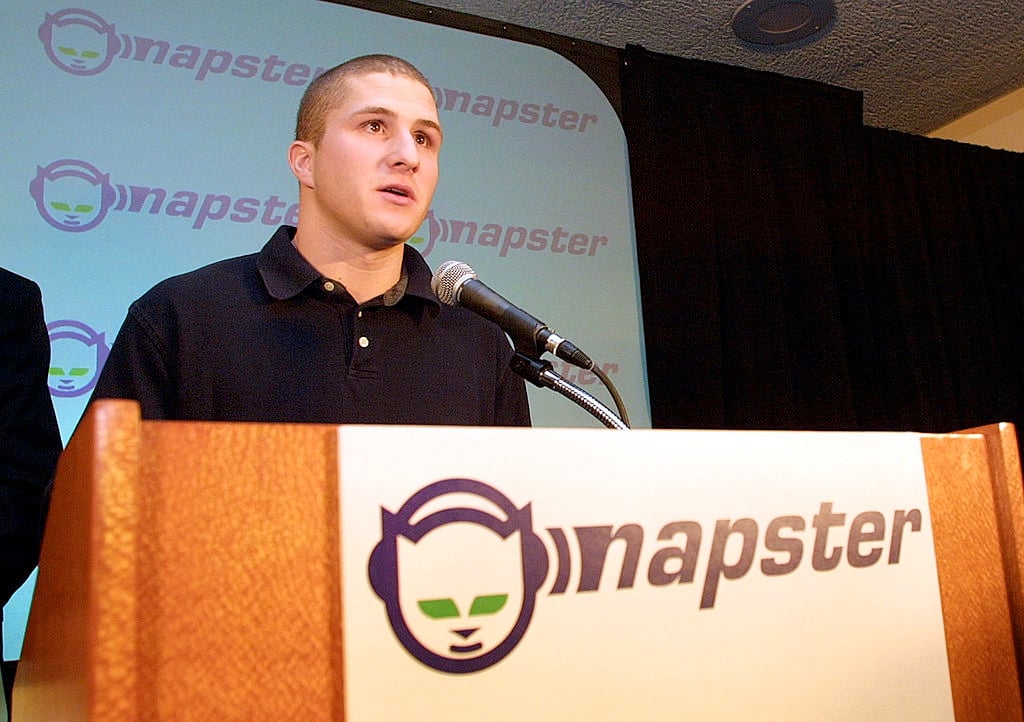
Shawn Fanning
Fanning, the quiet mastermind behind Napster’s architecture, remained active in tech but avoided the spotlight.
Snocap (2002–2008): A legal digital music platform that failed to gain traction.
Rupture (2007): A social platform for gamers, acquired by Electronic Arts.
Airtime (2011): A live video chat startup co-founded with Parker that fizzled after launch.
Helium Systems (2013–present): A decentralized wireless network for IoT. Fanning is still involved and respected in tech circles.
Shawn Fanning Net Worth: $70 Million (2025) Today, Fanning lives in San Francisco and works as a startup advisor and angel investor—a far cry from his days as the face of digital piracy.

Sean Parker
Parker, ever the strategist, parlayed his Napster notoriety into Silicon Valley dominance.
Plaxo: An early online contact manager.
Facebook (2004–2005): Became the company’s first president, secured Peter Thiel’s investment, and helped shape its early roadmap.
Spotify (2009–2017): Invested and brokered key label deals for its U.S. launch.
The Parker Foundation (2015–present): With a $600M endowment, it supports civic tech, health innovation, and public policy.
Parker Institute for Cancer Immunotherapy: Launched with a $250M donation.
Sean Parker Net Worth: $3 billion (2025)
He now lives in Los Angeles with his wife and children, serving on boards like the Obama Foundation and Economic Innovation Group.
The Napster lawsuits marked a turning point in digital IP enforcement.
Platforms facilitating infringement—even passively—can be legally liable.
“Fair use” does not apply to mass-scale, unlicensed file sharing.
The Digital Millennium Copyright Act (DMCA) gained renewed power, and “safe harbor” protections became more narrowly interpreted.
The decision also paved the way for future lawsuits against LimeWire, Grokster, and Kazaa—eventually ending the era of free, unregulated music sharing.
After changing hands several times (including ownership by Best Buy), Napster is now part of a blockchain-based music platform owned by Hivemind and Algorand. Its mission today? Ironically, to ensure artists get paid fairly through decentralized streaming and smart contracts.
In 2025, Napster is a fully legal, Web3-native music service—far from its outlaw roots.
| Year | Milestone |
|---|---|
| 1999 | Napster is launched by Fanning and Parker |
| 2000 | Metallica and RIAA file lawsuits |
| 2001 | Napster is shut down |
| 2002 | Files for bankruptcy |
| 2004 | Parker joins Facebook |
| 2015–2025 | Parker donates $600M+ to global health |
| 2025 | Napster relaunches as blockchain platform |
Napster didn’t just disrupt the music industry—it forced it to evolve. What began as a dorm-room experiment became a cultural flashpoint that tested the limits of innovation and law.
Fanning and Parker weren’t villains. They were visionaries—just a few steps ahead of the rules. And while Napster’s original form is long gone, its spirit lives on in every Spotify playlist and Apple Music stream.
In the end, Napster lost the battle—but changed the war.
Was Napster illegal?
Yes. Courts ruled that Napster facilitated mass copyright infringement and was liable for contributory and vicarious infringement.
Who sued Napster and why?
Metallica, Dr. Dre, and the RIAA sued Napster for allowing users to share copyrighted music without permission.
Where is Shawn Fanning now?
He is the CEO and co-founder of Helium Systems, working on decentralized wireless networks, and lives in San Francisco.
What is Sean Parker doing now?
Parker is a billionaire philanthropist and investor, running the Parker Foundation and serving on several public policy boards.
Is Napster still around?
Yes. Napster now operates as a legal blockchain-based streaming service under new ownership as of 2025.
🎧 The Napster story isn’t the only time money, music, and the law collided. For a gripping look at how wealth, violence, and media obsession intersected in another famous case, check out:
Florida has quietly opened a sprawling immigration detention center in the heart of the Everglades and it’s already facing serious legal trouble. Critics have nicknamed it “Alligator Alcatraz,” and not without reason.
The place is remote, surrounded by swamp, and entirely cut off from the outside world. The only way in is a lonely two-lane road. The only way out, for many, is a flight straight out of the country.
Now, lawyers, tribal leaders, and environmental activists are pushing back hard.
The detention site sits on what was once the Dade-Collier Training and Transition Airport, a failed Cold War-era project abandoned decades ago. Florida officials, led by Governor Ron DeSantis and Attorney General James Uthmeier, saw an opportunity: a cleared airstrip in the middle of nowhere, ripe for repurposing.
Alligator Alcatraz: the one-stop shop to carry out President Trump’s mass deportation agenda. pic.twitter.com/96um2IXE7U
— Attorney General James Uthmeier (@AGJamesUthmeier) June 19, 2025
With tents and trailers hauled in, and a runway ready to handle ICE-chartered planes, the site was reborn in record time. Governor DeSantis called it efficient. President Donald Trump, who showed up for the ribbon-cutting in June, called it brilliant. But others are calling it something else entirely.
There’s no cell signal. No legal offices. No public transportation. And, crucially, no oversight.
In late June, the legal advocacy group Earthjustice filed a federal lawsuit on behalf of Friends of the Everglades and the Center for Biological Diversity.
They allege that the state and federal government rushed the project without conducting an environmental review, violating the National Environmental Policy Act (NEPA) and the Endangered Species Act (ESA).
“You don’t undertake a massive project like this without conducting an environmental review,” said Tania Galloni, a lead attorney at Earthjustice.
The plaintiffs are seeking an emergency injunction that would freeze all operations at the site until a full environmental impact study is completed. Whether the court will grant that pause remains to be seen, but the legal clock is ticking.
In response, Florida's legal team insists the facility is lawful. Their argument is straightforward: the site isn’t new, and since it's using trailers and tents rather than permanent buildings, the usual environmental review process doesn’t apply.
Officials also argue that immigration surges give them the authority to act fast and that FEMA, DHS, and ICE are already on board.
Attorney General Uthmeier dismissed the lawsuit outright, calling it political grandstanding. He even joked, during a press conference, that “nobody’s escaping through alligator country.”
That line didn’t sit well with many.
The Miccosukee Tribe, whose ancestral lands include parts of the Everglades, says they were never consulted. Tribal leaders have condemned the facility’s location, calling it a desecration of sacred territory.
Meanwhile, conservationists are sounding the alarm over the potential damage to endangered wildlife. The Florida panther, already near extinction, roams these wetlands. So do wood storks, snail kites, and a long list of fragile species that don’t fare well when construction crews show up with floodlights and concrete.
The state insists the impact is minimal. Scientists disagree.
Civil rights advocates, including the Southern Poverty Law Center, say the real problem isn’t just environmental, it’s constitutional. The camp is so isolated that lawyers struggle to reach their clients.
There's no easy way for detainees to make phone calls, access documents, or meet with legal counsel.
One advocate described the site as “a legal black hole.” Another warned that it could become a model for future facilities designed not just to detain, but to disappear people from public view.
As this legal fight unfolds, the implications are growing. If Florida succeeds in arguing that temporary structures on old federal land don’t require oversight, other states could follow suit. What starts in a swamp could ripple out across the country.
There’s also the question of executive power. How far can a state go in the name of an immigration emergency? Can environmental and constitutional protections really be bypassed by calling something temporary, even when thousands of people may be held there for weeks or months?
These aren’t abstract questions. They’re now before a federal judge.
A hearing is expected in early July. The court could grant a temporary injunction, blocking further activity until an environmental review is done. Or it could allow operations to continue, effectively giving Florida a green light to keep expanding the camp.
Meanwhile, protests are growing louder. Environmental groups are organizing in Miami and Tallahassee. Tribal leaders are calling for federal intervention.
And lawyers, many of whom had no idea this camp was even being built, are scrambling to make sure their clients’ rights aren’t buried under bureaucracy and swamp water.
Whether “Alligator Alcatraz” becomes a one-off experiment or the first of many will depend on what happens in court. But one thing is clear: this story is far from over.
Where is the “Alligator Alcatraz” detention center located?
It’s based at the Dade-Collier Training and Transition Airport in Big Cypress National Preserve, deep in Florida’s Everglades.
Who is suing over the facility?
Earthjustice filed the lawsuit on behalf of Friends of the Everglades and the Center for Biological Diversity, citing violations of NEPA and the Endangered Species Act.
Is the site legally permitted?
That’s now in dispute. Florida argues it qualifies as a repurposed site under emergency powers, but a federal court will decide whether proper procedures were followed.
Why is it controversial?
Beyond its location in protected wetlands, critics say the facility denies detainees access to legal counsel and may violate constitutional due process protections.
Latham & Watkins has advised the Republic of Kazakhstan in connection with its successful issuance of US$2.5 billion in sovereign bonds across two tranches. The offering included US$1.35 billion of 5.00% notes due 2032 and US$1.15 billion of 5.50% notes due 2037.
Both tranches were issued under Regulation S and Rule 144A of the US Securities Act and are listed on the London Stock Exchange (LSE), the Astana International Exchange (AIX), and the Kazakhstan Stock Exchange (KASE).
The move underscores Kazakhstan’s continued ability to access global capital, with strong interest from international investors. Proceeds from the transaction are expected to help support government spending and long-term financial planning.
On the banking side, Citigroup, J.P. Morgan, and Société Générale acted as joint lead managers. Locally, Halyk Finance and Teniz Capital provided additional support as managers on the ground in Kazakhstan.
The transaction reflects Kazakhstan’s broader strategy of keeping international investors engaged while maintaining a diverse debt profile. The bonds drew interest across a range of regions, suggesting ongoing confidence in the country’s economic outlook.
Latham & Watkins served as legal counsel to the Republic, working closely with the Ministry of Finance. The legal team was led out of London by partners Manoj Tulsiani, Mikhail Turetsky, and Ryan Benedict, with associate Alexander Kartyshev also playing a key role. U.S. tax matters were handled by Chicago partner Enrique Rene de Vera.
Latham & Watkins LLP is a leading global law firm known for its expertise in corporate, litigation, and transactional law. With over 2,000 attorneys in 14 countries, the firm advises clients across a wide range of industries, including technology, healthcare, finance, and energy. Founded in 1934, Latham & Watkins is renowned for its work with emerging companies, offering legal solutions for startups and growth-stage businesses. The firm’s Emerging Companies & Growth team helps navigate complex legal matters related to business formation, financing, and scaling, making it a trusted partner for innovative companies worldwide.
The law firm Pomerantz LLP has opened a class action investigation on behalf of investors in The Boeing Company (NYSE: BA), after a tragic crash involving a Boeing 787 Dreamliner raised serious concerns about potential corporate misconduct and securities violations.
On June 12, 2025, a Boeing 787 Dreamliner operated by Air India crashed shortly after takeoff from Ahmedabad, India. In the aftermath, Boeing’s stock dropped $13.68 per share, or 6.4%, closing at $200.32 on June 13.
The sharp decline has prompted concerns that Boeing may have failed to disclose known safety risks related to the Dreamliner. Pomerantz LLP is investigating whether the company and its executives misled investors or withheld critical information, potentially violating federal securities laws.
If you invested in Boeing and experienced financial losses tied to this incident, you may be eligible to join the case. Filing early can help protect your rights and ensure you're included if the court certifies a class.
Investors who believe they’ve suffered losses are encouraged to contact Danielle Peyton at newaction@pomlaw.com or call 646-581-9980, ext. 7980 for a free and confidential consultation. For full details on the investigation and how to participate, click here to learn more about joining the class action.
Pomerantz LLP is a leading securities litigation firm founded in 1936 and known for representing defrauded investors worldwide. With offices in New York, Chicago, Los Angeles, London, Paris, and Tel Aviv, the firm has recovered billions for shareholders, including a $3 billion Petrobras settlement. Recognized globally for its work in class actions and corporate fraud cases, Pomerantz continues to set legal precedents in investor protection.
Last Updated: July 1, 2025
Ever found yourself glued to a courtroom drama, nodding along, thinking, "Yep, that's exactly how it works!"? Well, chances are, Hollywood's probably got a few things wrong. The U.S. criminal justice system? It's a seriously tangled web of complex laws, and common myths – the kind fueled by binge-watching or just plain misunderstanding – can actually get you into deep trouble.
Look, you don't get a pass for not knowing the law. And honestly, believing these widespread misconceptions could genuinely mess with your rights, your freedom, or even your whole future. Understanding what's actually going on, the real ins and outs of the legal process, isn't just for lawyers; it's absolutely crucial for anyone who might bump into the system.
So, here we go. We're not just busting 10 common legal myths about the U.S. criminal justice system; we're going to dive into why these ideas stick around and why getting the straight truth, directly from folks who know the law inside and out, is so incredibly vital.
In today's world, seriously, anything you post, share, or even say in a private message online – those social media comments, the photos, the DMs – can absolutely be used as evidence against you in a criminal or civil case. Always, always, be super mindful of your digital footprint; it's almost never as private as you think it is.
Read: The Impact of Social Media on Personal Injury Cases
The U.S. criminal justice system is a much more intricate, nuanced, and frankly, demanding beast than what you typically see splashed across screens. Leaning on those widespread myths? That's a recipe for making huge, potentially life-altering errors that could jeopardize your freedom, your money, and your whole future. But here's the good news: when you're armed with accurate information, you're not just better prepared to understand legal proceedings; you're truly empowered to protect your fundamental rights.
Don't let a myth throw your future off track. If you're facing legal challenges, having real legal expertise by your side isn't just a good idea – it's absolutely non-negotiable.
Navigating the criminal justice system is complex and high-stakes. It's not the time for guesswork. If you or someone you care about is facing criminal charges, an experienced criminal defense attorney isn't just a lawyer; they're your strongest advocate. They can offer clarity, shield your rights, and guide you through every single step.
Last Updated: July 1, 2025
Let's face it: car accidents are never on anyone's to-do list. They're jarring, stressful, and often leave you feeling completely disoriented. But here in California, with our busy roads and often tricky traffic laws, knowing exactly what steps to take right after a collision can genuinely protect your health, your rights, and any potential legal claim you might have.
This guide is your clear, step-by-step roadmap for navigating the immediate aftermath of a car accident in California. Our aim? To help you cut through the confusion and understand your crucial legal options when you need them most.
Table of Contents:
Your absolute top priority is staying safe and grabbing some key info. Don't rush this part.
This step is absolutely vital for insurance and any legal stuff that might follow. Keep your cool and just focus on gathering facts.
Modern tech is your best friend for gathering proof. Don't just rely on what the police might write down.
The immediate chaos is one thing, but what you do in the days and weeks after matters just as much for your health and your legal standing.
This is a big one to get your head around in California:
Let's be real: trying to sort out a car accident claim in California can be a total headache, especially with injuries, arguments over who's at fault, or insurance companies playing hardball. Knowing the legal ins and outs and when to grab some professional help is absolutely vital.
While you might be able to handle a super minor fender bender with no injuries by yourself, it's a really smart move to chat with an experienced California car accident lawyer if:
A skilled personal injury lawyer can dive into the accident, gather crucial evidence, figure out who's truly liable, accurately tally up your damages, fiercely negotiate with insurance companies, and if needed, stand by you in court. Their goal? To make sure your rights are protected and you get every bit of fair compensation you're owed.
California has some firm deadlines for filing a lawsuit after a car accident:
If you decide to pursue a personal injury claim, your lawyer will usually walk you through these steps:
Getting into a car accident in California can be a truly draining experience – physically, emotionally, and financially. But by calmly following these step-by-step guidelines, you can really protect yourself and build a strong foundation for both your recovery and your legal claim. Always remember: knowing your rights and understanding California's specific laws is absolutely paramount when dealing with a collision's aftermath.
Explore more expert insights on car accidents, personal injury law, and criminal charges in California:
Q: Do I really have to report a minor accident in California? A: Yep. If anyone got hurt (even a tiny scratch) or died, or if property damage to anyone's stuff went over $1,000, you must report it to the California DMV within 10 days using Form SR-1. Calling the police is also a must if injury or significant damage happened.
Q: What if the other driver didn't have insurance in California? A: If the driver who caused the crash was uninsured, you'll probably need to rely on your own Uninsured Motorist (UM) coverage, if you have it. If not, your options are pretty limited, maybe forcing you to sue the uninsured driver directly.
Q: Can I still get money if I was partly to blame for a California car accident? A: Absolutely! Thanks to California's pure comparative negligence rule, you can still get compensation even if you played a part in the accident. Just know that your payout will be reduced by your percentage of fault.
Q: How long do I actually have to file a lawsuit after a car accident in California? A: Generally, you've got two (2) years from the accident date to file a personal injury lawsuit. For just property damage, it's usually three (3) years. It's super important to talk to an attorney quickly to make sure you don't miss any deadlines.
Q: What sorts of damages can I claim after a car accident in California? A: You can typically go after "economic damages" – that's the clear, quantifiable stuff like medical bills, lost wages, car repair costs, and other out-of-pocket expenses. Then there are "non-economic damages" – the less tangible stuff like pain and suffering, emotional distress, or losing the ability to enjoy life like you used to.
Introduction
Getting arrested or facing criminal charges in Idaho can feel like the ground just dropped out from under you. Maybe it happened suddenly. Maybe you didn’t even see it coming. Whether it’s you or someone you care about, it’s normal to feel overwhelmed, scared, even frozen.
What’s going to happen next? Will this follow you forever? Take a breath. You’re not expected to have it all figured out right now.
This guide is here to give you a starting point. We’ll walk through the most common charges in Idaho, what the legal process looks like, what penalties you might face, and most importantly what options you still have. You're not alone in this, and there is help available.
Not all criminal charges are the same and not everyone who gets arrested is a bad person. Some cases are misunderstandings. Others stem from addiction, bad luck, or just being in the wrong place at the wrong time.
Here are some of the more common charges people face in Idaho:
DUI (Driving Under the Influence) – This is a big one. Even a first offense can lead to jail, license suspension, and fines.
Drug Possession – Meth, fentanyl, cocaine, unauthorized prescription pills: any of these can trigger serious charges, sometimes even felonies.
Theft & Burglary – This could range from shoplifting to breaking into someone’s home or car. The value of what was taken plays a role in how severe the charge is.
Assault or Battery – Even threatening someone can count. Charges go up if there was a weapon or serious injury involved.
Domestic Violence – Idaho courts take domestic cases seriously, especially if there’s a history or protective order involved.
In plain English: misdemeanors are less serious crimes. Think minor theft, a first-time DUI, or disorderly conduct. If convicted, you’re looking at up to a year in jail and possibly a $1,000 fine.
Felonies are the serious ones, like aggravated assault, burglary, or drug trafficking. A felony conviction can land you in state prison for anywhere from 1 year to life, depending on the details.
Some crimes can be bumped up from misdemeanor to felony based on things like past offenses, weapons, or whether a child was involved.
If you’ve never been through this before, the process can feel confusing, fast one minute, painfully slow the next. Here’s the usual order of events:
Booking – This is where you’re taken to jail, fingerprinted, photographed, and officially charged.
Bail Hearing – A judge will decide if you can go home while your case moves forward, and what conditions might apply.
Arraignment – You’ll appear in court and hear the formal charges. This is also when you enter a plea.
Pretrial Process – Your lawyer (or public defender) may negotiate with the prosecutor, file motions, or prepare for trial.
Trial or Plea Deal – You can fight the charges in court or reach an agreement for a lesser sentence.
Sentencing – If convicted or if you take a deal, the judge decides your sentence.
Short answer? Yes. A good defense lawyer can challenge weak evidence, negotiate a better deal, or even get charges reduced or dropped. You don’t want to gamble with your future by trying to do this alone.
Compare top-rated criminal defense lawyers in Idaho to find someone who knows the local system and has your back.
If hiring a private lawyer isn’t something you can afford right now, you might qualify for a public defender, an attorney the court assigns to represent you for free or at a very low cost. These are real, licensed lawyers who handle criminal cases every day and know the Idaho court system inside and out.
A lot of public defenders work incredibly hard and truly care about helping people who are in tough situations. But here’s the honest part: they’re often stretched thin.
Because they’re handling so many cases at once, they may not always have the time to explain every detail or meet as often as you’d like. Still, having a public defender is much better than going it alone and they can absolutely make a difference in how your case turns out.
You’ll usually find out if you qualify at your first court hearing. The judge will ask a few questions about your income and financial situation to determine if you’re eligible. Don’t be afraid to ask, getting help is a smart move.
Every case is different, but here’s a general sense of what Idaho courts can hand down:
| Charge Type | Jail or Prison Time | Possible Fines |
|---|---|---|
| Misdemeanor Theft | Up to 1 year in jail | Up to $1,000 |
| DUI (1st Offense) | Up to 6 months in jail | $1,000 + license suspension |
| Felony Theft | 1–14 years in prison | Up to $5,000 |
| Aggravated Assault | Up to 15 years | Up to $50,000 |
| Drug Trafficking | 3 years to life | $10,000 to $25,000+ |
This is where things get complicated and hopeful.
Idaho has strict rules about erasing criminal records. Generally, adult expungement is only possible if:
You were arrested but never formally charged, or
You were acquitted at trial.
That’s it. If you were convicted even of a misdemeanor, it probably can’t be fully expunged.
Download the expungement application form from the Idaho State Police
Here’s the good news. In 2024, Idaho passed something called the Clean Slate Act. It doesn’t erase your record entirely, but it can "shield" it from most public background checks, like for jobs or housing.
If it’s been 5 years since you finished your full sentence (including probation, fines, and restitution), and your crime qualifies, you might be eligible.
Learn more about the Clean Slate Act from the Idaho Supreme Court
Idaho courts sometimes give first-timers a break with something called a withheld judgment. If you stay out of trouble and finish probation, your case gets dismissed. That doesn’t erase it from your record, but it does show you were not convicted.
Just know this: BCI still holds onto the record, and they won’t expunge it later.
If the offense happened when you were under 18, the rules are much more forgiving. Most juvenile records can be wiped clean, especially if you’ve stayed out of trouble since.
Visit Idaho Legal Aid’s juvenile expungement guide for forms and details
Yes, there absolutely can be. Idaho offers several options that might help you avoid jail and even keep a conviction off your record, including:
Diversion programs (complete requirements and avoid prosecution)
Drug or mental health court
Deferred sentencing
Community service or counseling instead of jail
Every case is different, but if this is your first run-in with the law, your lawyer may be able to push for one of these alternatives.
It depends on the charges, the lawyer, and how complex your case is. Here’s a general breakdown:
Misdemeanor cases: $1,000 to $3,500
Felonies: $3,000 to $10,000+
Serious felonies: $10,000 and up
Most lawyers offer a free consultation, and many allow payment plans. It’s worth asking. Don’t assume legal help is out of reach.
If you’re feeling lost or unsure of where to turn next, you’re not alone and you don’t have to figure this out by yourself.
Browse experienced criminal defense attorneys in Idaho
This resource connects you with licensed Idaho lawyers who understand the local courts, know how prosecutors operate, and can start helping you right away. Whether it’s a misdemeanor or something more serious, talking to the right attorney can make a real difference.
Can I get my criminal record sealed in Idaho?
Possibly. Idaho’s Clean Slate Act allows certain records to be shielded from public view after 5 years with no new offenses.
Does a dismissed charge show up on my record in Idaho?
Yes, unless you qualify for shielding or juvenile expungement, dismissed charges can still appear in background checks.
What is a withheld judgment in Idaho?
It’s a legal break for first-time offenders. If you complete probation successfully, your case is dismissed—even though it still shows up on record.
How do I apply for expungement in Idaho?
Check with the Idaho State Police’s BCI office, or work with a local attorney. Expungement is very limited but possible in specific cases.
Looking for legal guidance in other states? We’ve got you covered. Whether you’re helping a loved one or trying to understand your own rights, these state-specific guides can walk you through what to expect:
Every state has different laws and procedures. Make sure you’re getting the right information for where your case is being handled.
