
Understand Your Rights. Solve Your Legal Problems
Robbins LLP has filed a securities class action on behalf of investors who purchased shares of Sarepta Therapeutics, Inc. (NASDAQ: SRPT) between June 22, 2023 and June 24, 2025.
The lawsuit centers on alleged misrepresentations related to the safety of ELEVIDYS, Sarepta’s gene therapy for Duchenne muscular dystrophy.
According to the complaint, Sarepta failed to disclose serious risks associated with ELEVIDYS, including:
Reports of life-threatening side effects during clinical trials;
Inadequate monitoring protocols that failed to catch early warning signs;
The potential for regulatory delays and trial suspensions resulting from adverse events.
Sarepta’s stock dropped sharply after a series of safety disclosures related to ELEVIDYS. On March 18, 2025, the company announced a patient had died following treatment, sending shares down over 27% to close at $73.54.
Less than three months later, on June 15, a second death, this time due to acute liver failure, prompted Sarepta to pause shipments and dosing in certain trials.
The stock plunged again, closing at $20.91 after a 42% drop. Then, on June 24, the FDA confirmed it was investigating liver failure risks tied to ELEVIDYS, and the stock fell further to $17.46 the next day.
Investors who incurred losses during this period may be eligible to join the lawsuit. The deadline to apply for lead plaintiff is August 25, 2025, though participation is not required to benefit from any potential recovery.
To learn more or discuss your legal options:
Call (800) 350-6003
Email attorney Aaron Dumas, Jr.
Or submit a form at RobbinsLLP.com
All cases are handled on a contingency fee basis, clients pay no legal fees unless a recovery is obtained.
Sarepta Therapeutics, Inc. is a biotechnology company headquartered in Cambridge, Massachusetts, focused on developing genetic medicines for rare neuromuscular diseases. Best known for its work in Duchenne muscular dystrophy (DMD), Sarepta leverages RNA technology, gene therapy, and gene editing platforms to advance treatments from research through commercialization. The company operates globally and is led by President and CEO Doug Ingram.
Robbins LLP is a nationally recognized law firm focused on shareholder and consumer rights. The firm represents investors in securities fraud, corporate misconduct, and fiduciary duty cases, helping to recover losses and improve corporate governance. With a proven track record and commitment to accountability, Robbins LLP continues to be a trusted advocate for investor protection.
Florida Criminal Charges: A Legal Guide to Arrest and Defense
Florida’s “Alligator Alcatraz”: Legal and Human Rights Challenges
Kirkland & Ellis has advised software-focused private equity firm Thoma Bravo on its upcoming acquisition of Olo Inc. (NYSE: OLO), the restaurant tech company behind the digital ordering tools used by hundreds of major food brands. The all-cash deal values Olo at around $2 billion, with shareholders set to receive $10.25 per share in cash.
The agreement has already been unanimously approved by Olo’s board of directors. If everything moves forward as planned, the deal is expected to close by the end of 2025, pending shareholder and regulatory approvals.
Founded more than 20 years ago, Olo has become a crucial technology partner for more than 750 restaurant brands, helping them streamline online ordering, manage payments, and personalize guest experiences through data.
Noah Glass, Olo’s Founder and CEO said, “Over the last twenty years, we’ve built Olo into the market leader in digital ordering for restaurants, while also expanding into payments and guest engagement to help restaurant brands aggregate and activate guest data to drive profitable traffic. By partnering with Thoma Bravo, we believe we can build on our success to date and accelerate our vision of helping our customers create a world where every restaurant guest feels like a regular.”
Peter Hernandez, Senior Vice President at Thoma Bravo commented: "Noah is a visionary who helped create the digital ordering category for restaurants, and Olo’s platform has earned the trust of many of the world’s most iconic restaurant brands. We see tremendous potential ahead and are incredibly excited to work with Noah and his team on strategic and operational initiatives to help Olo accelerate growth and strengthen their position as an essential partner to restaurants everywhere.”
Kirkland & Ellis is representing Thoma Bravo with a multi-disciplinary team led by corporate lawyers Bradley Reed, Corey Fox, Jeremy Mandell, George Boden, and Will Pretto. The deal also draws on the firm’s debt finance expertise, with Brian Ford and Fred Lim advising, alongside capital markets counsel Michael Keeley.
On the other side of the transaction, Goldman Sachs is serving as the exclusive financial advisor to Olo, while Goodwin Procter LLP is acting as the company’s legal counsel.
Thoma Bravo is a leading private equity firm focused on software and technology investments, with over $184 billion in assets under management. Backed by more than 40 years of experience, the firm has invested in over 500 companies and helped drive over $275 billion in value. Thoma Bravo operates across multiple fund strategies, including flagship, mid-market, growth, and credit and maintains offices in San Francisco, Chicago, Miami, New York, Dallas, and London.
Kirkland & Ellis is a leading global law firm known for its excellence in M&A, corporate law, litigation, intellectual property, and private equity. With offices in key financial centers worldwide, the firm advises clients across a broad range of industries. Recognized for its work on high-stakes transactions and disputes, Kirkland delivers innovative legal strategies backed by deep industry knowledge. Its focus on complex deals and cutting-edge solutions positions it as a trusted advisor in the global legal market.
Inside Florida’s “Alligator Alcatraz”: Legal and Human Rights Concerns
Hogan Lovells Hires Former Jets GC Jill Kelley in Major Sports Law Move
If you or someone you love has been arrested in Washington, it’s completely normal to feel overwhelmed, scared, or even ashamed. You might not know what’s going to happen next or who to turn to.
This article is here to walk you through the most important things to understand clearly, calmly, and without complicated legal speak. Whether you're facing a DUI or something more serious, knowing your rights and what to expect can make a world of difference.
Washington state sees a wide range of criminal charges, but some are more common than others. Here’s a quick look at what people are most often arrested for:
DUI (Driving Under the Influence): This is one of the most frequent charges. Washington law prohibits operating a vehicle with a blood alcohol concentration (BAC) of 0.08% or higher.
Assault: This covers everything from bar fights (assault in the fourth degree) to more serious offenses involving weapons or serious injuries.
Theft and Shoplifting: Charges range from misdemeanors for petty theft (under $750) to felonies for larger amounts.
Drug Possession: While simple possession of marijuana is legal in small amounts for adults, other drugs like cocaine, meth, or unauthorized prescription meds, can lead to serious charges.
Domestic Violence: Often paired with assault or harassment charges, these are taken very seriously in Washington courts.
In Washington, criminal charges are divided into misdemeanors, gross misdemeanors, and felonies:
Misdemeanor: The least serious. Includes minor theft or trespassing. Punishable by up to 90 days in jail and a $1,000 fine.
Gross Misdemeanor: A step up. Includes DUI or assault in the fourth degree. Carries up to 364 days in jail and a $5,000 fine.
Felony: The most serious. Felonies in Washington are classified into:
Class A Felony: Up to life in prison and $50,000 fine (e.g., murder, rape).
Class B Felony: Up to 10 years in prison, $20,000 fine (e.g., burglary).
Class C Felony: Up to 5 years in prison, $10,000 fine (e.g., felony drug possession).
After an arrest, here’s a general outline of what you can expect:
Booking: You're taken to jail, fingerprinted, and photographed.
Initial Appearance/Bail Hearing: Usually happens within 48 hours. A judge may set bail or release you on your own recognizance.
Arraignment: You hear the charges and enter a plea (guilty, not guilty, or no contest).
Pretrial Hearings: These include negotiations, motions, or plea bargains.
Trial or Plea Agreement: If you plead guilty or reach a deal, sentencing follows. If not, a trial is scheduled.
Sentencing: If convicted, the judge imposes penalties based on the offense and your history.
Yes, even for a first offense, having legal help can be the difference between jail time and a second chance. A criminal defense lawyer in Washington can:
Protect your rights in court
Negotiate for reduced charges or alternative sentencing
Spot flaws in evidence or police procedure
Guide you through confusing paperwork
Compare top-rated criminal defense lawyers in Washington to find the right advocate for your case.
If you can’t afford a private lawyer, you may qualify for a public defender. These are licensed attorneys appointed by the court. While they work hard and know the system well, they often juggle heavy caseloads and may have limited time to meet with you.
If your case is complex or you're worried about getting enough attention, a private attorney may be worth considering.
Here’s a general breakdown of Washington sentencing guidelines:
| Charge Type | Max Jail/Prison Time | Max Fine |
|---|---|---|
| Misdemeanor | 90 days | $1,000 |
| Gross Misdemeanor | 364 days | $5,000 |
| Class C Felony | 5 years | $10,000 |
| Class B Felony | 10 years | $20,000 |
| Class A Felony | Life in prison | $50,000 |
Some crimes may also carry mandatory minimums or include additional consequences like license suspension, probation, or registration as a sex offender.
Life happens, and sometimes past mistakes can cast a long shadow. If you have a criminal record in Washington State, you might be wondering if you can ever truly get a fresh start.
The good news is - yes, often you can! While Washington doesn’t always use the word “expungement,” there are legal ways to vacate a conviction or delete records of charges that didn’t result in a conviction. The path you take and whether you qualify, really depends on what happened and how much time has passed.
Think of vacating a conviction like hitting the reset button. If successful, the court essentially cancels the finding of guilt. That means for most purposes, like applying for jobs or housing, you can legally say you were never convicted of that crime.
For Misdemeanors (less serious charges):
You may be able to vacate a misdemeanor or gross misdemeanor if:
You’ve completed all court requirements (fines, probation, etc.)
It’s been 3 to 5 years since you completed your sentence
You haven’t had any new convictions
The charge isn’t for DUI (those typically can’t be vacated)
For example, domestic violence-related misdemeanors usually have a 5-year wait period before you're eligible to apply.
For Felonies (more serious charges):
Even some felonies are eligible:
Class C Felony: You may qualify 5 years after release or sentencing
Class B Felony: Typically requires 10 years of a clean record
However, Class A felonies, most violent crimes, sex offenses, and crimes involving children are generally not eligible for vacation.
Were you arrested but never charged, or had your case dismissed? Even these records can show up on background checks, but you may be able to delete them entirely:
Charges dismissed / not guilty: You can ask the Washington State Patrol to delete the record after 2 years.
Arrest only / no charges filed: You can request deletion after 3 years.
This type of deletion is closer to what most people think of as "expungement."
Stay Out of Trouble: A clean record since your original incident is usually required
Pay Your Dues: All fines, restitution, and court-ordered obligations must be paid
It’s Not Automatic: You must apply to vacate or delete records, it doesn’t happen on its own
📌 Learn more about expungement eligibility from the Washington State Courts
📄 Download the official guide: Sealing and Destroying Court Records in Washington (PDF)
Yes, Washington has several alternatives for people with no prior criminal record:
Diversion Programs: Often used for juveniles or minor drug offenses, these let you avoid charges if you complete counseling or community service.
Deferred Prosecution: Common in DUI cases, this requires substance abuse treatment but can prevent a conviction.
Stipulated Orders of Continuance (SOC): The court agrees to dismiss the case if you stay out of trouble for a set period.
These programs don’t work for every case, but if you qualify, they can protect your record.
Costs vary based on the seriousness of the charge and the lawyer’s experience:
Misdemeanors: $1,500–$3,000+
Felonies: $5,000–$15,000+
Complex Trials: $20,000 or more
Many attorneys offer free consultations and may accept payment plans if you’re worried about upfront costs.
Don’t wait until it’s too late. Whether you’re trying to protect your job, your record, or your future, the right legal support matters.
Explore your legal options with a top Washington criminal defense firm
What happens when you get arrested in Washington state?
After arrest, you're booked, then brought before a judge within 48 hours for bail. A series of court appearances follows, including arraignment and possibly trial.
Is a DUI in Washington a felony or misdemeanor?
A first or second DUI is usually a gross misdemeanor, but it becomes a felony if you have four or more prior offenses in 10 years or cause serious injury.
How long does a misdemeanor stay on your record in Washington?
Misdemeanors can stay on your record indefinitely unless vacated. You may be eligible to vacate a conviction 3-5 years after completing your sentence.
Can you go to jail for a first offense in Washington?
Yes, but many first-time offenders qualify for alternatives like probation, diversion, or deferred prosecution, depending on the charge.
Hogan Lovells Hires NY Jets GC Jill Kelley in Major Legal Move
Florida’s “Alligator Alcatraz” Detention Center Sparks Legal Debate
The very fabric of Steve Goncalves's world has been ripped apart, and now, he's offering a heartbreaking apology to his late daughter, Kaylee. He feels not just let down, but used by a justice system that, in his eyes, has failed to deliver true accountability. The raw anguish pours from him as Bryan Kohberger, the man who confessed to the brutal murders of four University of Idaho students, will now spend four consecutive life terms behind bars—spared the death penalty that Goncalves so desperately sought.
:max_bytes(150000):strip_icc():focal(749x0:751x2):format(webp)/steve-goncalves--kaylee-36-070125-7190be1533d64187bcdaea51b5bd5206.jpg)
Steve and Kaylee Gonclaves
"It’s my mistake. I’m sorry Kaylee," Goncalves choked out on NewsNation's Banfield on Wednesday, July 2. His voice, heavy with grief and regret, was a stark testament to the agonizing burden he carries. "I’m truly sorry that I didn’t get you a prosecutor who really believed what happened to you could only be fixed with life."
Just hours before this gut-wrenching confession, 30-year-old Bryan Kohberger dramatically shifted the course of justice. In a move that blindsided many, he pleaded guilty to four counts of first-degree murder, confessing to the horrific stabbings of University of Idaho students Kaylee Goncalves and her best friend, Maddie Mogen, both 21, and Xana Kernodle and Ethan Chapin, both 20. Their young lives were viciously ended at their off-campus rental home in November 2022, and with this plea, Kohberger avoids a trial that was set to begin in August.
The courthouse on Wednesday became a crucible of grief and unspoken rage. Families of the victims gathered, their hearts aching, to witness Kohberger's guilty plea. It was a moment of raw confrontation, coming face-to-face with the individual who had extinguished so much light. Steve Goncalves and his family, though present at the courthouse, couldn't bring themselves to enter the courtroom. "It’s a pointless exercise," he declared, the sentiment a stark reflection of his shattered hope for absolute justice.
During the tense plea hearing, the judge systematically called out each victim's name, asking Kohberger if he had "willfully, unlawfully, deliberately, with premeditation and malice aforethought" committed the murders. With a chilling lack of emotion, Kohberger responded with a simple, unfeeling "Yes" for each. The absence of remorse, the cold, detached answers, only deepened the agony for those seeking a flicker of understanding, a hint of humanity from the killer.
The plea deal, which snatched away the possibility of a death sentence for Kohberger, has ignited a firestorm of condemnation from the Goncalves family. Their social media was ablaze with a furious declaration: the prosecution had "failed us."
They revealed a painful truth: a meeting with prosecutors on Friday, June 27, where the idea of a plea deal was met with a resounding "hard no" from their family. Yet, just days later, on Tuesday, July 1, prosecutors "vaguely mentioned a possible plea on Friday, without seeking our input, and presented the plea on Sunday." This perceived lack of consultation and the suddenness of the deal left them feeling exploited, as Steve Goncalves articulated to Banfield host Ashleigh Banfield. They feel used by a system they believed was fighting for their family.
Goncalves had yearned for Kohberger's fate to be decided by a jury of his peers, a collective voice that could have, perhaps, rendered the ultimate penalty. His raw desire for vengeance, for an unequivocal end to the killer, spilled out when asked what he would say to Kohberger. "You're a complete loser," he spat, adding with profound despair, “I’m ashamed that we couldn’t have ended you. You beat me on that. My bad.” It's a statement that underscores not just anger, but a father's crushing burden of what he perceives as a personal failure to protect his child, even in death.
For a deeper dive into the legal complexities and profound impact of this case, view our exclusive video analysis on the Idaho Murders, featuring leading legal experts. This in-depth discussion provides critical perspectives on the investigation, the legal proceedings, and the implications of plea bargains in high-profile cases.
The brutal slayings of four University of Idaho students sent shockwaves across the nation, leaving an indelible scar on a close-knit community. Here's a brief timeline of the tragedy:
July 2, 2025: In a stunning turn of events, Bryan Kohberger pleads guilty to all four murder counts. The plea deal ensures he avoids the death penalty, receiving four consecutive life sentences, but also brings a form of finality to a case that has gripped the nation.
For deeper insight into the Idaho college murders case and Bryan Kohberger’s trial, explore our continuing coverage:
Bryan Kohberger "Beat Her In The Face": Mom Reveals Kaylee Goncalves' Final Agony
Bryan Kohberger’s Chilling Selfie Taken Hours After Idaho Murders: Unbelievable Evidence Revealed – A shocking look at the disturbing photo that prosecutors say was taken just hours after the killings.
Bryan Kohberger Breaks Silence with Shocking Guilty Plea – The moment Kohberger stunned the courtroom with his unexpected plea and what it means for the victims’ families.
Echoes in Moscow: Unraveling the Idaho College Murders and a Town's Unending Search for Healing – Go behind the headlines to understand how a small town is coping with unspeakable loss and a legal battle far from over.
In a moment that’s left a nation shaken, Bryan Kohberger has pleaded guilty to the savage stabbing deaths of four University of Idaho students — just weeks before his trial was set to begin.
But as the courtroom grows quiet, the questions only grow louder.
📺 Watch the full video breakdown now: 👉 Bryan Kohberger: Murderer in Idaho (YouTube)
Sky News confirmed that Kohberger, 30, entered guilty pleas to the murders of Ethan Chapin, Xana Kernodle, Madison Mogen, and Kaylee Goncalves — a massacre that shattered the peace of Moscow, Idaho in November 2022.
What the plea deal didn’t include?
A motive. A full confession. Or even the location of the murder weapon.
In our latest video, we go beyond the headlines to explore:
The chilling timeline of how Kohberger entered the house — and why two roommates were left alive
How police caught him using DNA from a knife sheath, cellphone tracking, and Amazon orders
Why the victims' families are split, with some calling the plea a betrayal of justice
The controversy over the plea deal, and what Kohberger's silence still hides
For the Goncalves family, the deal is salt in the wound. They wanted a trial. They wanted answers. But others, like Maddie Mogen’s father, say they just want to grieve — and move on without the shadow of future hearings.
Moscow, once a quiet college town with no murders in five years, will never be the same. But the truth matters. And it’s time to face it.
👉 Watch now: Bryan Kohberger: Murderer in Idaho (YouTube)
👉 Bryan Kohberger "Beat Her In The Face": Mom Reveals Kaylee Goncalves' Final Agony
Moscow, Idaho – A quiet college town forever scarred. The brutal stabbings of four University of Idaho students – Kaylee Goncalves, Madison Mogen, Xana Kernodle, and Ethan Chapin – sent shockwaves that reverberated far beyond its borders. Now, as Bryan Kohberger admits his guilt, new details emerge that twist the knife of grief even deeper into the hearts of a shattered community: the alleged killer, just hours after committing his horrific acts, not only returned to the scene but then, chillingly, grinned for a selfie.
In a Boise courtroom on July 2, 2025, the truth began to unfold. Kohberger, a 30-year-old former criminal justice Ph.D. student, pleaded guilty to the murders as part of a deal that spared him the death penalty. He will now spend the rest of his life, four consecutive life sentences plus 10 years for burglary, behind bars. But for the families left behind, and for a world still trying to comprehend such evil, the court revelations added another layer of unspeakable horror.
Prosecutor Bill Thompson laid bare Kohberger's chilling post-crime behavior. Less than five hours after the unfathomable violence on November 13, 2022, Kohberger's cellphone pinged near the students' home. He lingered for a disturbing 10 minutes, as if to absorb his handiwork, before driving back to his dorm.
What he did next is difficult to fathom. Upon his return, he reportedly took a selfie, captured grinning and giving a thumbs-up. Prosecutors called it a "trophy moment" for the killer.
"He smiled after killing them," a source close to the case confided to PEOPLE. "Then he returned to the scene like he was checking his work." This isn't just a legal detail; it's a window into a chilling psyche, a stark reminder of the coldness that can exist within a human form.
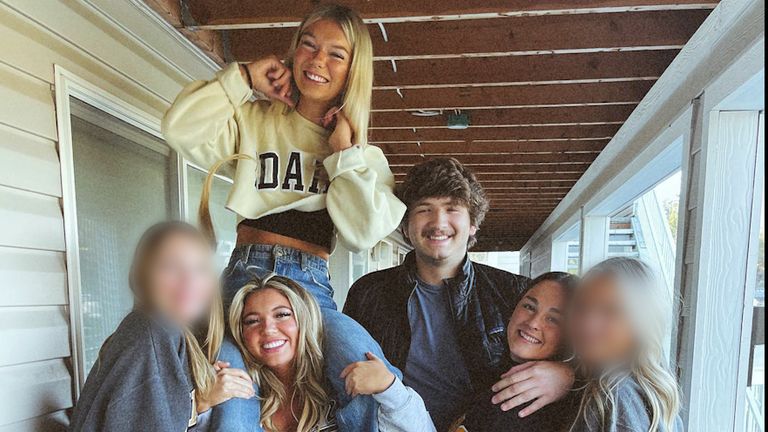
Kaylee Goncalves, Maddie Mogen and Xana Kernodle, and Xana's boyfriend Ethan Chapin
Kohberger's confession validates the painstaking work of investigators who pieced together a night of terror. Surveillance footage captured a white Hyundai Elantra, later traced to Kohberger, circling the quiet neighborhood. Inside the home, a knife sheath found near a victim contained DNA, a silent witness matched to Kohberger through genetic genealogy. Months prior, he had purchased a military-style knife and sheath online – a chilling premeditation. Phone records placed him near the home multiple times in the weeks leading up to the attack, a stalking behavior that left police baffled, as there's no evidence he knew any of his victims personally.
Kaylee, Madison, Xana, and Ethan. Their names echo the lives brutally stolen. Autopsy reports suggest they were likely asleep when the attack began, a horrifying thought for their loved ones. Some, in their last moments, bravely tried to fight back, defensive wounds telling a silent story of terror. Two roommates, miraculously unharmed, slept through the unimaginable, with one later recounting seeing a masked man in black leaving the home – a phantom figure in a waking nightmare.
Kohberger's guilty plea, while avoiding a grueling trial, has brought mixed emotions to the forefront of the grieving families. For the Chapin and Mogen families, the deal offered a path to begin healing. "We can finally begin to grieve without this looming over us," shared Maddie Mogen’s father, Ben, his words painting a picture of profound exhaustion.
Yet, for the Goncalves and Kernodle families, fury mixes with sorrow. On Facebook, the Goncalves family expressed being "beyond furious at the State of Idaho," accusing prosecutors of "handing the killer a deal." They yearned for a trial, for every detail to be laid bare, for answers – especially about the murder weapon's location and, most agonizingly, his motive. To this day, he remains silent, leaving the question of "why them?" agonizingly unanswered, and deepening the mystery of why two roommates were spared.
The unsettling truth is that at the time of these murders, Kohberger was a Ph.D. criminology student, participating in discussions about criminal behavior, miles from where he allegedly stalked and killed. It's a jarring contrast, a reminder that evil can wear a seemingly ordinary mask.
After his arrest in December 2022 at his parents' Pennsylvania home, police noted his calmness, his lack of confession – a composure that makes his eventual plea all the more startling. Over two years passed before he admitted guilt, two years of agonizing uncertainty for those who loved the victims.
Now, with his sentencing set for July 23, 2025, the families will have one final opportunity to speak, to face the man who stole their children’s futures, and perhaps, to find a fragment of peace in the pursuit of justice.
Did Bryan Kohberger know the victims? No evidence has been found linking him personally to the victims. Investigators believe he chose the house at random or was driven by an unsettling fascination.
Why did Kohberger avoid the death penalty? He agreed to plead guilty in exchange for a deal that removed the death penalty from consideration, ensuring he will now serve life without parole.
What did the selfie look like? Prosecutors state Kohberger took a photo of himself grinning and giving a thumbs-up after returning from the crime scene. The image has not been released to the public.
When will Bryan Kohberger be sentenced? His sentencing is scheduled for July 23, 2025. He will not be eligible for parole and has waived his right to appeal.
LATEST: Bryan Kohberger "Beat Her In The Face": Mom Reveals Kaylee Goncalves' Final Agony
In an age so often defined by secularism, a quiet spiritual revival is stirring across Europe. From the crowded spires of Paris to the suburban streets of Stockholm, faith is not vanishing — it's evolving. In churches, mosques, temples, and community halls, a new chapter is being written. This is not the Europe of dusty pews and dwindling congregations — it's one of vibrant, pluralistic belief and surprising growth.

Salisbury Cathedral, a stunning example of Gothic architecture, is famed for England's tallest spire.
Despite long-predicted decline, Christianity is experiencing pockets of remarkable renewal. In France, adult baptisms surged nearly 30% in just one year — from 5,463 in 2023 to over 7,100 in 2024.
Many of those choosing the faith are under 25, signalling a generational shift. In England and Wales, church attendance climbed from 8% in 2018 to 12% in 2024, with a growing number of young people seeking "something deeper" than modern materialism.
Pentecostal and Evangelical churches, in particular, are flourishing. In Germany and the Netherlands, many of these growing congregations are led by immigrants, bringing dynamic new expressions of faith and culture.
Europe’s Muslim population could reach 71 million by 2050. New mosques are rising not only in capital cities but in towns once thought to be religiously static. These are not just places of worship — they're centres for civic engagement, charity, and youth development.
Jewish communities, though small in number, continue to demonstrate extraordinary cultural resilience. Across Europe, synagogues are expanding educational outreach, promoting interfaith dialogue, and finding fresh ways to connect younger generations to ancient traditions.
The Sikh community has emerged as one of Europe’s great service-oriented faith groups. In the UK, Italy, and across Scandinavia, gurdwaras (Sikh temples) have become hubs of hospitality, offering free meals (langar), community programmes, and inclusive support to anyone in need.
In Norway alone, the Sikh population grew by nearly 20% between 2014 and 2019. In a continent grappling with division, Sikh principles of equality, service, and dignity strike a powerful chord.
In recent years, the Church of Scientology has expanded its presence in Europe, with large, modern centres in major cities such as London, Berlin, Madrid, Dublin, and Brussels.
In 2024, a new centre spanning over 8,800 square metres opened in Greater Paris near the Stade de France, an event highlighted by David Miscavige, the religion’s international leadership.
The church engages in initiatives like literacy campaigns, anti-drug education, and disaster relief efforts, often collaborating with local and regional partners.

Opening Church of Scientology Paris by Church of Scientology International
The Bahá’í Faith, founded on the principle of the oneness of humanity, has taken root across Europe. Its communities, often small but dedicated, are active in youth empowerment, peace-building, and interfaith work.
With no clergy and a decentralised structure, the faith appeals to many disillusioned by religious hierarchy. In cities like London, Vienna, and Prague, Bahá’í circles are quietly nurturing inclusive conversations about ethics, justice, and the future.
The Church of Jesus Christ of Latter-day Saints, often associated with the United States, has seen steady European expansion. The UK, France, Germany, and Scandinavia now count tens of thousands of Latter-day Saints.
In 2021, a new temple was announced in Oslo — Norway’s first. Known for their tight-knit communities and strong family values, Mormons impact those around them through humanitarian service and personal outreach, particularly in rural towns and overlooked regions.

Panoramic view of Istanbul- Yeni Cami (The New Mosque), Galata Bridge. Turkey
Beyond individual faith groups, Europe is witnessing a broader cultural renaissance around religion. Grassroots interfaith initiatives in London, Berlin, and Amsterdam are fostering new spaces for dialogue and co-operation.
Meanwhile, a recent survey showed that 81% of Europeans support preserving religious buildings — even if they don’t personally practise a religion. Clearly, faith remains embedded in Europe’s emotional and cultural DNA.
Is religion truly making a comeback — or simply changing shape? While some point to new houses of worship and rising conversions, others argue that the rise of spirituality over traditional religiosity tells a more complex story.
More Europeans now identify as “spiritual but not religious,” and increasing secularism continues to shape public life. Critics caution that visibility doesn’t necessarily equal revival — attendance remains low in many churches, and belief in orthodox doctrines continues to wane.
Still, something is undeniably shifting. Whether in the form of a mosque in a Swedish suburb, a Sikh langar in Milan, or a Bahá’í youth circle in Prague, religion in Europe is being reimagined — not abandoned.
Religious life in Europe is no longer confined to ancient stone churches or Sunday sermons. It is being reshaped by immigration, youth curiosity, digital outreach, and a search for belonging in an increasingly fragmented world. The continent’s spiritual map is being redrawn — with bold lines, bright colours, and far more diversity than ever before.
Faith in Europe isn’t dead. It’s just beginning a new chapter.
The name Lori Vallow Daybell now conjures images of unspeakable horror, a chilling transformation from a seemingly devoted mother into the infamous "Doomsday Mom," convicted of orchestrating multiple murders.
This isn't just a story of what happened, but a haunting exploration of how a life could unravel so completely, leading to the tragic deaths of her two young children, Tylee Ryan and J.J. Vallow, alongside the suspicious demises of her former husband, Charles Vallow, and Chad Daybell's first wife, Tammy Daybell.
We delve into the intricate web of psychological shifts, radical religious beliefs, and dark interpersonal dynamics that paved Lori Vallow's path to becoming a killer.
Born Lori Norene Cox on June 26, 1973, in Loma Linda, California, Lori was a beautician who walked down the aisle five times before her fateful union with Chad Daybell. Before the shadow of Chad fell upon her life, friends painted a picture of a "loving mother," a "supermom" who was "always well put together, dressed nicely, organized, unflappable."
She was, by all accounts, a devout member of The Church of Jesus Christ of Latter-day Saints (LDS Church). Her family grew with Colby from her second marriage, Tylee Ryan from her third, and in 2014, she and her fourth husband, Charles Vallow, adopted J.J. Vallow, Charles' grandnephew, who lived with autism. Friends remembered Lori as "patient" and an "ideal mother" to J.J., with Tylee embracing her role as a loving older sister.
Yet, beneath this polished exterior, Lori's past held complexities that hinted at a deeper vulnerability. Her marriage to Joseph Ryan was a "toxic" chapter, and her bond with her brother, Alex Cox, was unsettlingly "bizarre," even "sexual in nature," according to Alex's ex-wife. Alex, a fiercely loyal "protector," once assaulted Joseph Ryan during a custody battle, a disturbing precursor to his later actions on Lori's behalf.
This intense, almost co-dependent relationship with Alex, who seemed willing to cross any line for her, suggests a troubling lack of clear moral boundaries and a readiness to outsource aggression. This inherent susceptibility, coupled with her existing religious framework, would become fertile ground for Chad Daybell's insidious influence.
A subtle but profound shift began around 2017, as relatives noticed a change in Lori's relationship with her children. This was before she even met Chad Daybell in 2018, suggesting that Lori's inner world was already in flux, perhaps seeking a new purpose or meaning.
This period may have been one of quiet disillusionment, making Chad's apocalyptic narratives uniquely appealing. The gradual alteration in her family dynamics hints at a slow erosion of her children's well-being in favor of her evolving beliefs, unknowingly setting the stage for the neglect and ultimate tragedy that would follow.
To help navigate the many individuals caught in this complex and heartbreaking saga, here's a guide to their roles:
The true turning point in Lori Vallow's descent arrived in October 2018, when she met Chad Daybell at a "Preparing a People" event. Chad, an author of apocalyptic fiction, quickly ensnared Lori in his world, whispering tales of past lives, claiming they had been married before, and declaring her a "sexual goddess" destined to help him save the world. This connection ignited a fervent romance, despite both being married to others at the time.
Chad Daybell was no stranger to the fringes of religious thought. A former cemetery sexton and copy editor, he had self-published numerous books steeped in end-times prophecies for a Latter-day Saint audience. He claimed to receive visions of the future and to have lived many past lives, even prophesying a July 2020 apocalypse. His beliefs had spiraled into extremism since 2006-2007, consumed by "preparing for end of times" and vivid visions of the world's impending doom.
In turn, Lori, with her documented "hyper-religiosity" , eagerly embraced and amplified Chad's bizarre doctrines, becoming his devoted disciple and partner in his self-proclaimed "divine mission." This dynamic created an echo chamber where their increasingly outlandish delusions were not only unchallenged but actively reinforced, transforming their shared ideology from eccentric to profoundly dangerous. This mutual validation is a hallmark of destructive cults, where leaders and followers solidify each other's distorted realities.
Though both were members of the LDS Church, their beliefs "deviated significantly" from mainstream theology, leading them to form what the media chillingly dubbed a "doomsday cult." At the heart of their twisted doctrine was a system to categorize individuals as "light" or "dark," signifying their allegiance to God or Satan. Chad would even assign "vibration" scores, asserting that those rated "4.1 and above" had "made covenants to their side" and rarely deviated.
A particularly horrifying tenet of their belief system was the concept of "zombies." They believed that "zombies" were people whose bodies had been possessed by evil spirits after their original spirits were forcibly removed. The group would engage in prayers to "get rid of" these "zombies," convinced that if successful, the possessed person would physically die, thereby "freeing their soul from 'limbo'."
This "zombie" concept was more than just a fantastical belief; it was a potent tool for dehumanization. By labeling individuals, including their own family members, as "dark spirits" or "zombies," Lori and Chad effectively stripped them of their humanity in their minds.
This psychological re-framing allowed them to justify acts of violence and murder, transforming extreme cruelty into what they perceived as acts of "mercy" or "divine work." This process of dehumanization is a critical, terrifying step in the progression towards violence within cults, dismantling moral barriers and allowing perpetrators to act without remorse, convinced they are fulfilling a higher, righteous purpose.
Lori became utterly convinced she was a "deity destined to play a role in the coming apocalypse" and a "God assigned to carry out the work of the 144,000 at Christ's Second Coming." Chad was her prophet, and she, his "divine partner."
Prosecutors argued that the couple deliberately weaponized these religious beliefs to justify their crimes, asserting that the murders were necessary to "purify the children of evil spirits" or "free their souls" from "limbo." Furthermore, they clung to the perilous conviction that once a person achieved "exalted" status, they could not be held responsible for their actions on Earth.
This belief offered a dangerous moral bypass, a profound cognitive distortion where divine status granted immunity from earthly laws and moral consequences. This conviction likely quelled any internal conflict or guilt Lori might have felt, enabling her to participate in and orchestrate murders with an unsettling "nonchalance" and a consistent denial of wrongdoing. This marks a critical psychological shift from societal norms to a self-serving, divinely sanctioned code.
Lori Vallow's embrace of these extreme beliefs was mirrored by alarming shifts in her behavior and personality. Around 2017, a noticeable change in her relationship with her children began to emerge.
By February 2019, she chillingly informed Charles Vallow that "she no longer cared about him or J.J." and then vanished for 58 days. Friends observed her beginning to refer to Charles as a "demon."
Her brother, Adam Cox, testified that Lori started "going a little off the walls" after meeting Chad Daybell, believing she was "transferring from a mortal human being to an immortal being" and held more spiritual authority than traditional Mormon priests. Adam Cox also recounted that Lori cut off communication with him when he dared to question her increasingly bizarre beliefs.
As Lori and Chad's beliefs intensified, they systematically alienated family members who didn't conform to their new ideology. This deliberate "pushing out" of dissenters is a classic cult tactic, designed to consolidate control and prevent external reality checks.
The fact that Charles Vallow and Adam Cox had planned an intervention to try and pull Lori back to mainstream faith before Charles's death underscores the family's growing alarm and Lori's fierce resistance to any challenge to her perceived divine authority. This isolation from mainstream influence further entrenched her in the cult's distorted worldview, making her even more susceptible to its violent directives.
The escalating beliefs soon morphed into direct threats against Charles Vallow. In 2019, Charles became "very worried" about Lori, even telling police she had become "unhinged" and explicitly threatened to murder him.
He filed for divorce in February 2019, citing threats to his life, as well as the theft of his truck and $35,000 from their joint accounts. Lori had declared Charles was possessed by a "dark spirit" she named "Ned Schneider" and vowed to murder him if he interfered with her mission.
Driven by fear, Charles sought a protective order and, with chilling foresight, changed his $1 million life insurance policy beneficiary from Lori to his sister Kay. Lori's declaration that Charles was a "dark spirit" or "demon" named "Ned Schneider" was not merely a delusion; it was a direct prelude to violence.
This labeling provided a twisted justification for his elimination under their "zombie" doctrine. The explicit threat to murder him if he interfered with her mission demonstrates that the ideological framework was already translating into overt threats of physical harm, well before the actual murder. This establishes a direct, terrifying link between the adoption of the cult's beliefs and the intent to kill.
Throughout this period, Lori's brother, Alex Cox, served as her crucial "protector" and enabler. He was described as her "angel of death," someone "willing to do anything for his sister and ultimately, anything for Chad." Friends testified to their "very close" relationship, with Alex believing he was "put on Earth to serve as her protector." Alex was living with Lori and the children at the time of Charles's death, solidifying his position as an integral, and increasingly dangerous, part of her inner circle.
The horrific crimes committed by Lori Vallow Daybell were not born from a single dark impulse, but from a complex and mutually reinforcing interplay of religious fanaticism, an illicit affair, and cold financial gain. Prosecutors consistently argued that Lori was driven by "money, power and sex," and would allow nothing to obstruct her path.
Religious Fanaticism: This served as the overarching, twisted framework that provided a perverse justification for the killings. Lori and Chad genuinely believed they were on a divine mission, and anyone perceived as an "obstacle" or identified as a "zombie" needed to be removed. The belief that killing "zombies" would "free their souls from 'limbo'" offered a grotesque form of "mercy" within their distorted worldview, making the unimaginable seem righteous.
Extramarital Affair: Lori and Chad were deeply entangled as lovers while still married to their respective spouses, Charles Vallow and Tammy Daybell. Prosecutors posited that eliminating Charles and Tammy was a necessary step to pursue their relationship freely and without impediment. The speed with which they married—just two weeks after Tammy's death—underscores the urgency of their desire to be together and remove perceived obstacles.
Financial Gain: A significant, practical motivation was the couple's desire to collect life insurance money and the children's Social Security benefits. Charles Vallow had prudently changed his $1 million life insurance policy beneficiary from Lori to his sister Kay, a fact Lori remained unaware of until after his death. Conversely, Chad received a substantial $430,000 in life insurance payouts after Tammy's death. Lori was also convicted of grand theft for collecting Social Security benefits on behalf of her deceased children.
These three primary motives—religious fanaticism, extramarital affair, and financial gain—were not isolated factors but formed an "unholy trinity" that was deeply intertwined and mutually reinforcing.
The affair provided the "lust" and desire for a new life, while the financial gain offered the "money" necessary to fund that life. Crucially, the extreme religious beliefs provided the "power" and, most significantly, the justification for eliminating any obstacles—whether spouses or children—to achieve these desires. This created a potent, self-serving narrative where personal desires were reframed as divine imperatives, making the murders appear not only necessary but even righteous within their distorted worldview.
The chilling details surrounding the financial aspects of these crimes strongly indicate premeditation and a calculated approach to profiting from murder. Charles Vallow's decision to change his life insurance policy to his sister, unknown to Lori until after his death, and Chad Daybell's action of increasing Tammy's life insurance benefit before her death, are not merely financial facts; they are compelling indicators of a deliberate, cold-blooded plan.
Lori's reported anger upon discovering Charles's beneficiary change further underscores the financial motive as a significant driving force, revealing a pragmatic, self-interested side beneath the veneer of religious fervor. This suggests that while the religious delusions provided the permission to commit these acts, the financial incentives provided a tangible benefit that solidified the murderous intent.
The period between July and October 2019 unfolded as a rapid succession of violent acts, revealing a clear and accelerating escalation in the scope and brutality of the couple's criminal enterprise.
The Murder of Charles Vallow (July 11, 2019): Charles Vallow's death marked the first in this tragic series. On July 11, 2019, Charles arrived at Lori's home in Chandler, Arizona, to pick up J.J. During an ensuing altercation, Alex Cox shot and killed Charles. Alex Cox claimed self-defense, alleging Charles had attacked him with a baseball bat, a story initially echoed by Lori and Tylee.
However, Charles's death was later officially ruled a homicide in September 2021. Lori's behavior immediately after the shooting was disturbingly nonchalant; she did not call 911 (Alex Cox placed the call approximately 45 minutes later), and shortly thereafter, she took J.J. to school and even stopped at Burger King and Walgreens. Lori Vallow Daybell was subsequently found guilty of conspiring to murder Charles Vallow.
The Disappearance and Murders of Tylee Ryan and J.J. Vallow (September 2019): The children's disappearances initiated the public unraveling of the case. Tylee Ryan, 16, was last seen alive on September 8, 2019, during a trip to Yellowstone National Park with Lori, J.J., and Alex Cox. J.J. Vallow, 7, was last seen on September 22, 2019, at Lori's home. Lori later attempted to deceive authorities by asking a friend to lie about J.J.'s whereabouts.
Their remains were tragically discovered buried on Chad Daybell's property in Rexburg, Idaho, on June 9, 2020. Tylee's remains were found in a "pet cemetery," severely burned and dismembered, delivered in multiple bags containing charred bones and flesh.
J.J.'s body was found bound with duct tape, dressed in red pajamas, and had been asphyxiated with bags over his head; duct tape was also found around his ankles and hands. Forensic analysis linked Alex Cox's DNA to the plastic wrapped around J.J.'s body. Lori was ultimately found guilty of their murders and conspiracy.
The Death of Tammy Daybell (October 19, 2019): Chad Daybell's first wife, Tammy Daybell, died on October 19, 2019. Chad called 911, claiming she had passed away in her sleep from a terrible cough.
Her death was initially ruled natural causes without an autopsy. However, her body was exhumed in December 2019 , and a subsequent autopsy revealed she had been asphyxiated. Bruises found on her arms and chest were consistent with restraint, further indicating a violent death. Chad received a significant $430,000 in life insurance payouts after her death. Lori was convicted of conspiracy to commit murder in Tammy's death.
The Attempted Murder of Brandon Boudreaux (October 2, 2019): The pattern of violence extended beyond the immediate family. On October 2, 2019, Brandon Boudreaux, Lori's niece's estranged husband, was shot at from a Jeep registered to Charles Vallow in Gilbert, Arizona. Alex Cox was identified as the shooter.
Prosecutors presented evidence that Lori had loaned the Jeep to Alex, helped prepare it (e.g., by searching how to remove the back seat), and provided him with an alibi. Alex's phone data revealed damning searches for shooting ranges, window tinting, trajectory angles, and Boudreaux's address, indicating meticulous planning. Lori was subsequently found guilty of conspiring to murder Brandon Boudreaux.
The chronological progression of these crimes—from Charles's murder, followed by the deaths of Tylee and J.J., the attempted murder of Brandon, and finally Tammy's death—demonstrates a clear and accelerating escalation in the scope and brutality of the violence.
Alex Cox's consistent involvement in all these acts highlights his crucial role as Lori's "protector" and the primary executor of their violent directives. His death in December 2019 removed a key co-conspirator and enabler, which potentially altered the future trajectory of their criminal activities, but not before significant harm had been inflicted. This consistent pattern of Alex's loyalty and willingness to act reinforces the idea of a shared deviant pathology, where his actions facilitated Lori and Chad's increasingly extreme demands.
While religious delusion provided the justification for these acts, the specific details of the crimes reveal a calculated and pragmatic approach. The meticulous disposal of Tylee's body—dismembered, burned, and buried in a "pet cemetery"—along with the use of duct tape on J.J. and the concealment of evidence, contradict the notion of purely chaotic or delusional acts.
Similarly, the detailed planning for Brandon Boudreaux's attempted murder, including specific Google searches for trajectory angles and the use of burner phones, indicates a level of criminal sophistication. This suggests that Lori and Chad were not merely "unhinged" but were capable of rational, albeit morally depraved, planning to achieve their objectives, blurring the line between severe mental illness and deliberate criminal intent.
The following table provides a concise timeline of these pivotal criminal events:
Table 2: Timeline of Key Crimes (July-October 2019)
Lori Vallow Daybell's psychological landscape is a labyrinth of complex diagnoses that profoundly shaped her actions and her unsettling courtroom demeanor. She was diagnosed with a "delusional disorder" deeply intertwined with "hyper-religiosity" and an "unspecified personality disorder" exhibiting "narcissistic features."
In court, she chillingly claimed to communicate with Jesus and asserted that no one was murdered, despite the mountain of overwhelming evidence. Her mental health was described by her attorneys as "extremely complex and fragile," with the potential for future hospitalization.
Despite these severe diagnoses, Lori was repeatedly deemed "mentally fit" and "competent to stand trial" in both Idaho and Arizona. This highlights a crucial, often misunderstood, distinction in forensic psychology: legal competency is a "very low bar," meaning a defendant can suffer from severe mental illness yet still understand the charges against them and participate in their defense.
This legal determination even allowed her to choose to represent herself in her Arizona trials, a decision that frequently led to combative exchanges with judges, revealing her distorted self-perception.
Lori's "delusional disorder with bizarre religious content" was not a passive state; it was actively functional in enabling her crimes. It provided a coherent, albeit profoundly distorted, narrative that justified her heinous actions. By genuinely believing her victims were "zombies" or "dark spirits," she could rationalize their deaths as a divine mission, effectively bypassing normal moral restraints and transforming murder into what she perceived as "salvation."
This illustrates how severe mental illness, when reinforced within a cult environment, can translate abstract, false beliefs into concrete, violent actions. The paradox of her being deemed "competent to stand trial" despite her severe delusional disorder underscores a critical point in forensic psychology: while her mental illness explains why she held these beliefs and acted upon them, it did not legally absolve her of criminal responsibility.
She understood the court proceedings and could assist in her defense, even if her understanding of reality was fundamentally flawed. This paradox highlights the challenge of prosecuting individuals with complex psychological profiles who operate under a self-constructed reality.
Expert commentary consistently pointed to Lori's apparent lack of empathy, manipulative tendencies, and persistent denial of reality. Prosecutors argued that she was driven by a desire for "money, power and sex" and would not permit anything to impede her. Experts noted her profound lack of remorse, describing her as viewing others as "objects" to be "discarded" without a second thought. One expert explicitly stated that she is an "incredibly manipulative person that has no conscience."
Lori consistently denied her involvement in the murders, maintaining that she was "falsely accused" and would be "exonerated." She dismissed media narratives as "exaggeration" and "twisting things around," presenting herself as "misunderstood." Even after convictions, she continued to assert her innocence.
Her courtroom behavior, including smiling, laughing, and not appearing to take the proceedings seriously, was noted by jurors, adding to the unsettling nature of her persona. She also engaged in tense exchanges with judges, demanding hearings and accusing them of yelling, further illustrating her distorted self-perception and inability to accept accountability.
Her "unspecified personality disorder with narcissistic features" is particularly evident in her denial of reality, her self-portrayal as "misunderstood," and her assertion that she is "all about spreading love."
Her combative courtroom demeanor, including smiling and laughing, can be interpreted as narcissistic defense mechanisms—a desperate attempt to control the narrative and maintain a grandiose self-image even in the face of overwhelming evidence. This suggests a profound inability to internalize guilt or accept external criticism, reinforcing her self-perception as a victim or a divinely appointed figure rather than a perpetrator.
The following table summarizes Lori Vallow Daybell's diagnosed mental health conditions and their observed manifestations:
Table 3: Lori Vallow Daybell's Diagnosed Mental Health Conditions
Lori Vallow's transformation into a killer was not a sudden, inexplicable act but a tragic convergence of complex, insidious factors. Her pre-existing vulnerabilities, including a complicated family dynamic and a potential predisposition to narcissistic traits, created fertile ground for the manipulative influence of Chad Daybell's apocalyptic ideology.
The mutual radicalization between Lori and Chad forged an echo chamber where their increasingly bizarre delusions were not merely accepted but amplified, leading to a profound and terrifying break from mainstream reality.
The shared delusions, particularly the chilling "zombie" narrative, provided a twisted moral framework that allowed them to dehumanize their victims. By labeling individuals as "dark spirits" or "zombies," they could rationalize their elimination as a divine mission, effectively bypassing normal moral restraints.
This ideological justification was powerfully intertwined with tangible personal motives: the desire for a new life with Chad, free from existing spouses, and significant financial gain through life insurance and social security benefits.
The calculated planning observed in the crimes, such as the meticulous body disposal and the detailed preparation for the attempted murder of Brandon Boudreaux, suggests that while the religious delusions provided the permission to act, the pragmatic pursuit of personal desires provided the impetus. Alex Cox's unwavering loyalty and willingness to act as an enabler and executor of violence were critical in translating these beliefs and desires into horrific actions.
The Lori Vallow Daybell case stands as a stark and chilling illustration of how extreme religious beliefs, when distorted and combined with pre-existing personal pathology and external manipulation, can lead to devastating consequences.
It underscores the critical importance of recognizing the subtle and overt signs of radicalization, the inherent dangers posed by charismatic leaders who exploit psychological vulnerabilities, and the profound impact of dehumanization in justifying acts of violence.
Her journey serves as a profound cautionary tale regarding the dangers of unchecked delusion and the insidious power of radicalized belief systems. Her case offers crucial insights into the complex interplay between severe mental illness, the dynamics of destructive cults, and the horrifying progression toward criminal acts, leaving a chilling legacy that demands continued study and understanding within the fields of forensic psychology and criminal behavior.
NEW YORK – In a trial that captivated headlines worldwide, Sean “Diddy” Combs has been found guilty on two federal counts of transportation to engage in prostitution, but cleared of the most serious charges of sex trafficking and racketeering conspiracy.
In a striking twist, Lawyer Monthly’s advanced AI model, which had previously predicted guilt across four felony counts, proved both prescient and fallible. The AI accurately forecast convictions on the two prostitution-related counts, but overestimated the prosecution's strength on the sex trafficking charges, which the jury ultimately rejected. The jury also confirmed what the AI had flagged as a high-likelihood outcome: a deadlock on Count 1, Racketeering Conspiracy, resulting in a hung jury on that charge.
Ahead of the jury’s announcement, our proprietary AI system—trained on thousands of federal cases and designed to evaluate trial dynamics in real time—had analyzed the evidence and projected a high likelihood of convictions on Counts 2, 3, 4, and 5. Here's how those predictions matched up with the actual outcomes:
| Charge | AI Prediction | Actual Verdict | Max Sentence |
|---|---|---|---|
| Count 1: Racketeering Conspiracy | Hung Jury Likely | Hung Jury | Life |
| Count 2: Sex Trafficking (Cassie Ventura) | Guilty | Not Guilty | 15 years to Life |
| Count 3: Transportation for Prostitution (Cassie & others) | Guilty | Guilty ✅ | Up to 10 years |
| Count 4: Sex Trafficking ("Jane") | Guilty | Not Guilty | 15 years to Life |
| Count 5: Transportation for Prostitution ("Jane" & others) | Guilty | Guilty ✅ | Up to 10 years |
So how did the AI do? 2 out of 5 predictions were correct, 1 was a partial match (hung jury), and 2 proved incorrect—highlighting both the promise and limitations of algorithmic prediction in high-stakes legal contexts.
Guilty: Count 3 — Transportation for prostitution (Cassie & others)
Guilty: Count 5 — Transportation for prostitution (Jane & others)
Not Guilty: Count 2 — Sex trafficking of Cassie Ventura
Not Guilty: Count 4 — Sex trafficking of “Jane”
Hung Jury: Count 1 — Racketeering conspiracy
Judge Arun Subramanian accepted the split outcome and adjourned proceedings to determine whether Combs would remain in custody until sentencing. Legal analysts now expect a sentence of 5 to 10 years, though some speculate it could be closer to two or three years if time served is credited and mitigating factors are acknowledged.
The AI's prediction engine correctly identified strong patterns in logistical facilitation of prostitution, which aligned with the jury's unanimous guilty verdicts on transportation charges. However, where it misjudged was in interpreting the strength of coercion and force-based evidence tied to the sex trafficking counts.
Despite emotionally powerful testimony from alleged victims like Cassie Ventura and "Jane," the jury found reasonable doubt remained on whether the conduct rose to the legal standard of sex trafficking under federal law.
Combs now awaits sentencing, where the focus will shift to whether his punishment will lean closer to the maximum 10 years or something substantially lower. Meanwhile, Count 1 (racketeering) remains undecided—though, as our AI correctly suggested, federal prosecutors may opt not to retry that count due to cost and strategic redundancy.
From a broader perspective, this trial marks a milestone moment in the intersection of artificial intelligence and legal journalism. While the AI didn’t deliver a perfect forecast, its early identification of legal vulnerabilities proved directionally accurate—and offers a powerful glimpse into how technology may shape future courtroom coverage.
Disclaimer: The AI assessments discussed in this article are probabilistic predictions and do not represent legal conclusions. All individuals are presumed innocent until proven guilty in a court of law.
This is a developing story. We will provide further details and analysis as more information becomes available.
Hogan Lovells is pleased to announce the strategic appointment of Jill Kelley as a partner within its Corporate & Finance practice, based in the New York office. Ms. Kelley brings extensive experience, having previously served for five years as a pivotal legal professional for the New York Jets.
Ms. Jill Kelley brings a unique combination of legal expertise, C-suite strategy, and practical experience within the professional sports, gaming, and emerging technology industries.
At the Jets, she served as General Counsel and Vice President of Legal Affairs, working side-by-side with leadership on everything from data privacy and regulatory compliance to stadium operations and high-stakes negotiations.
Ms. Kelley's arrival strengthens Hogan Lovells’ already robust sports, media, and entertainment group, one that’s become a go-to legal team for high-value deals and transformative projects across the sports landscape.
“Jill further enhances our market-leading sports practice in the United States. In addition to her recent experience in the NFL, she also has considerable experience in sports betting and Native American tribal investment.” said James Doyle, Head of the Corporate & Finance practice.
But Kelley’s career extends far beyond the NFL. Before joining the Jets, she was General Counsel at PointsBet USA, where she oversaw complex cross-border transactions in digital payments, banking, SaaS, and league licensing deals.
She also served as Senior Legal Counsel at Foxwoods Resort Casino, a global gaming powerhouse owned by the Mashantucket Pequot Tribal Nation.
Her legal resume reads like a tour of the most dynamic corners of modern sports and entertainment law and Hogan Lovells took notice.
“From her time at the Jets, Jill has invaluable experience at the C-Suite level at one of the top ten most valuable sports assets in the world. Her experience negotiating complex agreements across sports teams, stadiums, casinos, and gaming and technology companies, will benefit a wide range of clients operating in these vibrant and growing markets.” said Craig Umbaugh, Global Head of the firm’s Sports, Media and Entertainment Sector.
Bill Curtin, Practice Area Lead for M&A, emphasized the firm’s continued dominance in high-stakes sports deals:
“We have one of the leading global sports practices, having broken successive multi-billion-dollar valuation records in control acquisitions across multiple sports. We are excited that Jill is joining us to deepen our reputation as the go-to law firm for investors in the sector.”
Kelley’s arrival also highlights Hogan Lovells’ strategic growth in New York. She joins a wave of recent talent additions, including Edward So and Natalie Edwards, both of whom joined the Corporate & Finance team earlier this year.
For Michael Kuh, Office Managing Partner in New York and a senior partner in the sports group, the timing couldn’t be better:
“I am so pleased to welcome Jill to New York. She joins at an exciting time and I’m confident she’ll play an important role was we continue to expand here."
For Kelley, the move marks a new chapter, but one built on the foundation of years spent navigating the unique intersection of sports, law, and innovation.
“I’m thrilled to join Hogan Lovells and contribute to a team with a distinguished reputation in the sports sector, one of the strongest global platforms in law, and a truly collaborative ethos. With my experience, I’m excited to bring a diverse perspective to a group that’s not just advising on the future of the sports industry, but helping to shape it.”
Hogan Lovells is a global law firm with over 2,600 lawyers across six continents, offering top-tier legal services in complex litigation, regulatory, and transactional matters. Known for its deep industry knowledge and cross-border capabilities, the firm partners with clients to solve their toughest legal challenges and drive strategic growth. Hogan Lovells serves major players in life sciences, financial services, technology, energy, and beyond, combining local insight with global reach.
