Project Servator Explained: What Police Can Legally Do Before a Crime Happens
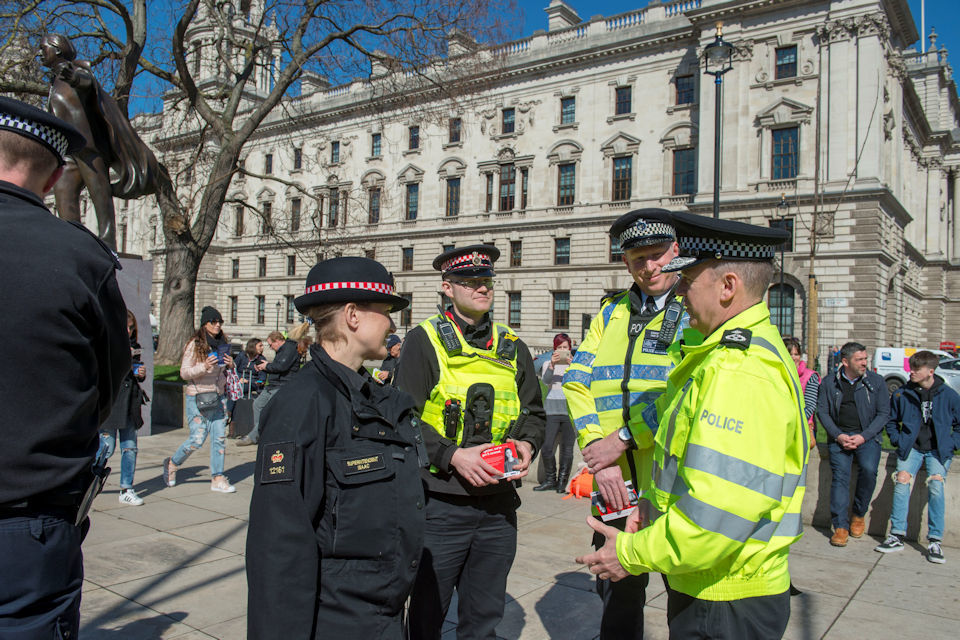
Project Servator is usually described in reassuring terms: visible police patrols, officers talking to the public, a reminder to stay alert. What it rarely prompts is a conversation about law.
Yet beneath the high-visibility presence is a subtle but important legal shift — one that affects how police interact with people before any crime has taken place.
This is not about terrorism or threat levels. It is about preventive policing, and the legal space it occupies between ordinary engagement and coercive power.
When Police Are Allowed to Act Without a Crime
Most people assume police action begins with wrongdoing. In reality, much of modern policing is built around anticipation — spotting patterns, behaviour, or movement that might suggest preparation rather than commission.
The law allows this, but only within limits that are easy to miss in real-world encounters.
An officer can approach someone, ask questions, and start a conversation without invoking any legal power at all. In law, that interaction is voluntary, even if it doesn’t feel that way.
There is no requirement to explain yourself, and no obligation to stay. The difficulty is that few people are ever told this in the moment.
The legal position changes the second an officer moves beyond conversation. A stop or search requires legal authority, and that authority normally depends on reasonable suspicion.
That suspicion does not have to be proven on the spot, but it does have to exist. When it doesn’t, the search becomes unlawful — even if the officer’s intentions were benign.
Counter-terrorism powers sit apart from both of these situations. In certain authorised locations, police may stop and search without individual suspicion.
The law permits this because the potential risk is extreme, not because suspicion disappears as a principle. These powers are narrow, time-limited, and purpose-specific, and they carry a higher standard of accountability precisely because of how intrusive they are.
Why Project Servator Encounters Feel Unclear
What unsettles many people about Project Servator patrols is not aggression or intimidation, but uncertainty.
The same officers, in the same location, may be operating under entirely different legal powers and the law does not require them to explain which one applies unless a formal threshold is crossed. From the public’s point of view, that makes it difficult to know where they stand.
Am I free to walk away? Do I have to answer questions? Is this a voluntary conversation or a lawful stop and search? On paper, the law draws these distinctions clearly.
In real life, they often blur. Preventive policing relies on that ambiguity to function, but the legal risk lies in ensuring it does not slide into arbitrariness or overreach.
In most cases, these encounters end quietly. People are spoken to, observed, and allowed to go about their day. There is no arrest, no charge, and often no visible record of the interaction.
However, information can still be noted for intelligence purposes even when no offence has occurred, and those records are rarely explained or disclosed at the time.
If something else arises — a prohibited item, an outstanding matter, or a separate offence — the encounter can escalate quickly from preventive to criminal enforcement.
Whether that escalation is lawful depends not on the outcome, but on whether each earlier step was legally justified when it happened. In policing law, the sequence matters as much as the result.
What This Means in Practice
Project Servator is lawful because UK law allows police to act preventively — not because normal legal limits disappear during security operations.
Officers can approach and speak to members of the public without giving a reason, but searches are only lawful when specific legal powers apply. Acting without suspicion is permitted only in tightly controlled counter-terrorism settings.
For anyone stopped during a Project Servator patrol, the key issue is not why police are present, but what legal authority they are using at that moment. That distinction determines whether an interaction is voluntary or compulsory, and what rights apply.
Security measures do not cancel individual rights. Instead, they place greater importance on how carefully the law is followed when no crime has yet occurred. Knowing that difference helps people understand where police powers end and where public protections still begin.