
Top eSignature Solutions for Legal Industry: A 2026 Review
The legal profession continues its shift toward digital workflows, with electronic signatures becoming standard practice for law firms of all sizes. Remote work arrangements, client expectations for faster service, and the need to reduce administrative overhead have accelerated the adoption of eSignature technology across legal practices.
Selecting the right eSignature platform requires careful evaluation of security features, compliance capabilities, and integration options. Legal professionals must balance ease of use with regulatory requirements while ensuring document integrity throughout the signing process. In this article, we’ll examine why electronic signatures are essential and review the top platforms designed to help legal teams stay efficient and compliant in 2026.
What are eSignatures, and why do they matter for legal professionals?
An electronic signature is a legally recognized way to obtain consent or approval on electronic documents or forms. While definitions vary by jurisdiction, they are governed by laws such as the ESIGN Act and UETA in the U.S., and eIDAS in the EU. These regulations define an eSignature as more than just a digital image of a handwritten signature. It is described as an "electronic sound, symbol, or process attached to or logically associated with a contract or other record and executed or adopted by a person with the intent to sign the record."
For the legal industry, electronic signatures are more than a convenience; they are essential for keeping workflows moving efficiently. eSignatures streamline document execution for retainer agreements, settlement documents, court filings, and client contracts. The technology eliminates printing, scanning, and mailing delays that previously extended turnaround times by days or weeks. Law firms report significant time savings and improved client satisfaction after implementing eSignature workflows.
Legal validity is a top priority for attorneys moving to digital signatures. In the U.S., the ESIGN and UETA Acts provide the legal framework for their use. Most modern platforms meet these standards while adding additional security layers beyond basic legal requirements.
Key eSignature features to consider
When evaluating eSignature platforms, legal professionals should prioritize several capabilities:
- Audit trails that document every action taken on a document, including views, edits, and signature timestamps
- Authentication methods, signer's such as knowledge-based authentication or two-factor verification, to confirm the signer's identity
- Encryption standards that protect documents during transmission and storage
- Template creation for frequently used legal documents to accelerate routine processes
- Mobile accessibility, allowing clients to sign documents from any device
- Integration capabilities with practice management software and document storage systems

Leading eSignature platforms for legal teams
Choosing the right eSignature tool can impact a firm's efficiency, security, and bottom line. Here are five of the top solutions that legal professionals are relying on this year.
1. pdfFiller
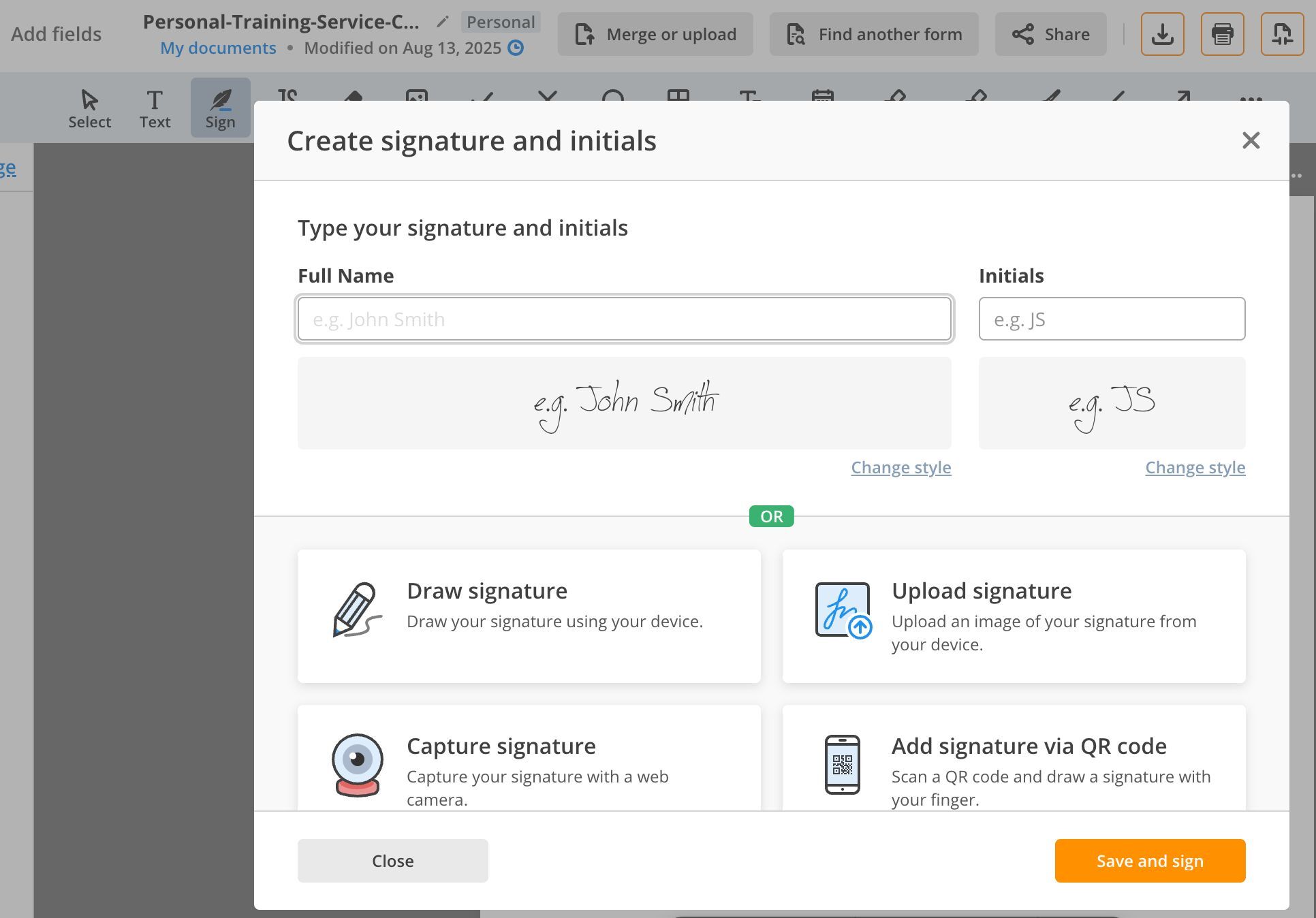
pdfFiller serves legal professionals with a comprehensive document management platform with enterprise-level security and compliance. It combines a robust PDF signature tool with intuitive features for creating custom fillable forms, editing, storing, and collaborating on documents, tailored for legal workflows. The platform also includes templates for common legal documents, saving time on routine agreements. For added convenience, it offers an online notarization service for legally binding documents.
2. DocuSign
DocuSign maintains a strong presence in legal markets with enterprise-grade security and extensive authentication options. The platform provides notary services and advanced recipient verification methods that satisfy court requirements for high-stakes transactions. Integration with popular legal practice management systems streamlines document workflows for firms using platforms like Clio or MyCase.
3. Adobe Sign
Adobe Sign appeals to legal professionals already using Adobe Acrobat for document preparation. The solution offers robust compliance features and government-grade security certifications. Legal teams benefit from seamless transitions between document creation in Acrobat and signature collection via Adobe Sign, maintaining consistent formatting throughout the process.
4. SignNow
SignNow offers an affordable online document signing solution tailored for small and mid-sized law firms. The platform delivers essential eSignature functionality with straightforward pricing and quick implementation. Template libraries, bulk sending features, and seamless API integrations empower legal firms to handle high-volume document processing with ease, streamlining workflows and boosting efficiency.
5. Dropbox Sign
Dropbox Sign (earlier HelloSign) provides intuitive signing experiences that reduce client friction during document execution. The platform emphasizes simplicity without sacrificing security, making it appropriate for solo practitioners and small firms. API access allows custom integration with existing legal technology stacks.
Best practices for using eSignatures in the legal industry
Implementing eSignature solutions in legal workflows requires more than just selecting a platform; it demands a strategic approach to ensure both efficiency and compliance. Below are key best practices to help legal teams optimize their use.
- Ensure legal compliance: Verify that the eSignature solution complies with applicable laws, such as the ESIGN Act in the U.S. or eIDAS in the EU, to ensure legal validity and enforceability.
- Maintain confidentiality: Use platforms with industry-standard encryption and multi-factor authentication (MFA) to safeguard sensitive legal documents.
- Enable Audit Trails: Implement solutions that provide a detailed log of all signing activities, including timestamps, IP addresses, and user identity verification.
- Train staff and inform clients: Offer training for your legal team on securely using eSignature tools, and inform clients about how the process works to build confidence and trust.
By incorporating these use cases and best practices, legal professionals can maximize the efficiency, reliability, and security of their eSignature processes.
Selecting the right solution
Choosing the best eSignature platform in 2026 is a critical decision for legal professionals aiming to enhance efficiency, maintain compliance, and deliver exceptional client service. The choice depends on firm size, practice areas, and existing technology infrastructure. Solo practitioners may prioritize affordability and ease of use, while large firms require enterprise features and extensive integration options.
Trial periods allow legal teams to evaluate platforms using actual firm documents and workflows. pdfFiller, along with other popular tools, lets you try out their service for free so you can decide if it's the right fit for your firm. Sign up for a trial period to see the platform in action, reducing administrative burden and focusing on what truly matters—a top-tier legal counsel.