Understand Your Rights. Solve Your Legal Problems


European users, institutions, and tech firms face a new social media option built around mandatory identity checks and EU regulation.
European backers have formally unveiled W, a new social media platform designed to operate entirely under European law and infrastructure, positioning itself as a verified alternative to X.
The service was introduced publicly in Davos, Switzerland, during events surrounding the annual World Economic Forum, and is intended for rollout across the European Union and other markets. All users will be required to complete identity and photo verification before participating.
The launch is significant as Europe tightens enforcement of digital platform rules governing transparency, accountability, and data protection.
While U.S.-based social networks continue to dominate global usage, European policymakers have increasingly argued that existing platforms do not adequately address misinformation, automated activity, or jurisdictional oversight.
W enters the market as both a technical product and a regulatory statement, testing whether a verification-first model can attract users while remaining compliant with EU law.
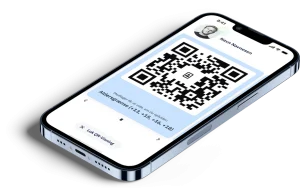
W is built as a general social media platform, but it departs from most established networks in one central way: users must verify their identity before taking part.
Anonymous accounts and automated bots are not allowed, according to the project’s backers, a choice that reflects a wider debate in Europe over how online platforms should limit abuse, whether through stricter moderation or by changing how accounts are created in the first place.
European regulators have repeatedly pointed to anonymous and automated accounts as drivers of coordinated disinformation, particularly during elections and periods of geopolitical tension.
Identity checks have therefore been discussed as a way to increase accountability online. Critics, however, argue that mandatory verification can discourage whistleblowers, activists, and others who depend on anonymity for protection.
By requiring verification at sign-up rather than relying on enforcement after problems emerge, W places that trade-off at the center of its design.
W’s operators say all user data will be stored and processed within Europe by European service providers, placing the platform fully under the EU’s General Data Protection Regulation and national supervisory authorities.
For users, this creates clearer legal jurisdiction if disputes or data breaches occur. For the platform itself, it means accepting compliance and liability obligations that many global social networks have historically sought to limit through cross-border data arrangements.
The platform’s launch comes as tensions persist between the European Union and major U.S. technology companies over competition, transparency, and platform governance.
Recent enforcement of the Digital Services Act has intensified scrutiny of large services such as X, highlighting differences in regulatory expectations on each side of the Atlantic.
W does not position itself as a replacement for U.S.-based platforms, but as a service built from the outset to meet European legal standards, reflecting how regulation is increasingly influencing platform design rather than just content moderation.
W was introduced during events linked to the World Economic Forum, placing the platform in front of policymakers, regulators, and senior corporate leaders at an early stage.
A clip from the platform’s introductory video was later shared by Ishaan Tharoor, highlighting verified accounts, the absence of automated bots, and European-based data hosting.
In Davos, there’s a launch of a new social media platform called “W” to counter the misinformation on other social media platforms. Here’s part of their introductory video at the debut event. They tout actual verification and no bots, and being hosted on European servers. pic.twitter.com/hkr7tuCktc
— Ishaan Tharoor (@ishaantharoor) January 19, 2026
For public institutions, verified platforms can offer practical advantages, including reduced impersonation risk and clearer accountability for official communications — concerns that have grown as governments rely more heavily on social media.
Early institutional use could help establish legitimacy and trust, particularly in regulatory and policy circles.
However, broader adoption will still depend on whether W can attract enough users to compete with established networks that benefit from scale and entrenched user habit
What is W?
W is a new social media platform that requires users to verify their identity and operates under European digital and data protection laws.
Is W meant to replace X?
No. W is positioned as an alternative platform rather than a replacement for existing social networks.
Why does W require identity verification?
The platform’s operators say verification is intended to reduce bots, impersonation, and coordinated abuse.
Who regulates W?
W falls under European Union regulations, including data protection and digital platform rules enforced by national authorities.
W introduces a verification-first social media model built around European regulatory standards rather than U.S.-based platform norms.
The approach has implications for users seeking greater authenticity online, for public institutions looking for compliant communication channels, and for regulators assessing how design choices can limit abuse at scale.
The platform’s prospects will depend on whether users are willing to trade some degree of anonymity for clearer accountability.
How W operates under EU oversight is likely to be monitored closely as governments and platforms weigh similar design models.