Lord Reed to Retire: Why the UK Supreme Court Is Entering a Critical Transition
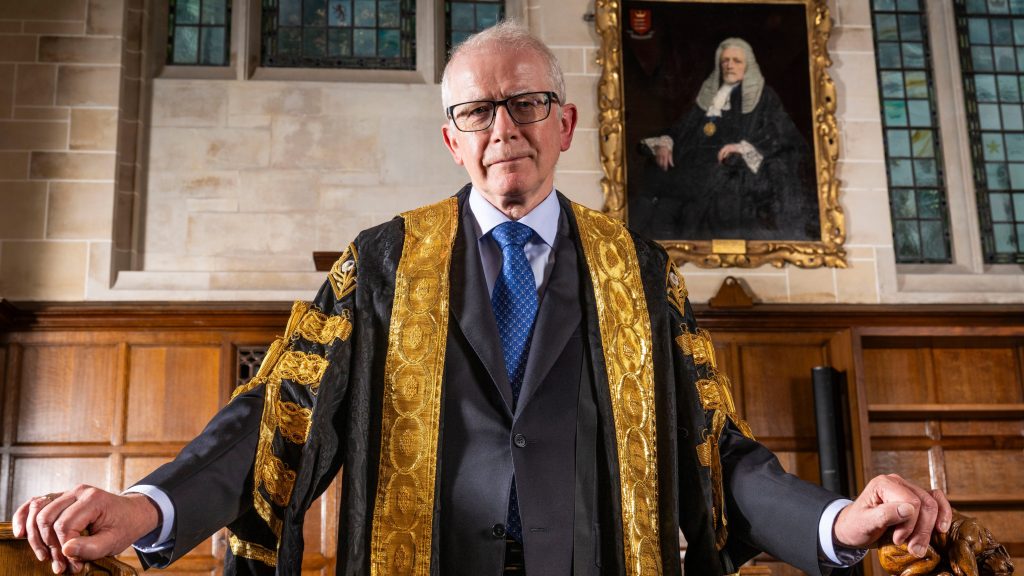
The President of the UK Supreme Court, Lord Reed of Allermuir, has confirmed he will retire from office on 10 January 2027, ending one of the most influential and stabilising judicial tenures in modern British history.
The announcement, made on Friday 16 January 2026, brings clarity to months of quiet speculation and sets in motion a formal succession process that will shape the future direction of the UK’s highest court. Lord Reed will leave after seven years as President, 15 years as a Supreme Court Justice, and 28 years in the senior judiciary.
While judicial retirements are often procedural affairs, this one carries far wider significance — not just for the legal profession, but for the balance of power between courts, Parliament, and government.
Why Lord Reed’s Retirement Matters More Than It Seems
Lord Reed has led the UK Supreme Court through one of the most politically sensitive periods in its history. His presidency spanned the constitutional aftershocks of Brexit, intensifying debates over judicial independence, and rising public scrutiny of how courts interact with elected power.
Unlike more confrontational judicial figures, Lord Reed became known for institutional restraint, legal precision, and a refusal to personalise the Court’s authority. Supporters credit him with safeguarding public confidence in the judiciary. Critics argue his cautious style sometimes limited the Court’s willingness to push back forcefully against executive power.
Either way, his influence has been decisive — and his departure opens the door to a potentially very different judicial era.
A Career That Quietly Shaped Modern UK Law
Lord Reed succeeded Lady Hale of Richmond as President of the Supreme Court in January 2020 and became a life peer upon taking office.
Educated at the University of Edinburgh and the University of Oxford, he qualified as both an advocate in Scotland and a barrister in England — a dual foundation that shaped his authority across UK jurisdictions. Before joining the Supreme Court, he practised extensively at the Scottish Bar, handling complex civil litigation and prosecuting serious criminal cases.
He later served 13 years as a senior judge in Scotland, including:
-
Membership of the Outer House of the Court of Session (1998–2008), where he was Principal Commercial Judge
-
Appointment to the Inner House of the Court of Session (2008–2012)
Since joining the Supreme Court in 2012, Lord Reed has also sat on the Judicial Committee of the Privy Council, served as an ad hoc judge of the European Court of Human Rights, and acted as High Steward of Oxford University.
Lord Reed’s Supreme Court: Stability Over Spectacle
Under Lord Reed’s leadership, the Supreme Court became known less for headline-grabbing interventions and more for carefully reasoned judgments and administrative reform.
His presidency oversaw:
-
Stronger ties with foreign supreme courts
-
The Court sitting outside London, expanding public access
-
The revival of Privy Council judges from overseas jurisdictions sitting on appeals
This approach helped position the Court as an internationally respected institution — but also leaves open the question of whether future leadership will maintain that restraint or embrace a more visibly assertive judicial role.
Key Moments in Lord Reed’s Judicial Timeline
-
1998–2008 – Judge, Outer House of the Court of Session (Principal Commercial Judge)
-
2008–2012 – Judge, Inner House of the Court of Session
-
2012 – Appointed Justice of the UK Supreme Court
-
2018 – Becomes Deputy President
-
2020 – Appointed President of the Supreme Court
-
2027 – Retirement takes effect
This timeline underscores the scale of his influence — and why replacing him will not be a routine appointment.
What Happens Next? How the Next Supreme Court President Is Chosen
Lord Reed’s retirement will trigger the creation of an independent selection commission, convened by the Lord Chancellor under rules set by Parliament. The process is designed to safeguard judicial independence while ensuring transparency and merit-based selection.
No successor has yet been identified publicly. The appointment process is expected to unfold throughout 2026, with legal and political observers watching closely for signals about the future philosophy of the Court.
The eventual choice will quietly answer a bigger question: does the UK want continuity — or change — at the top of its judiciary?
Lord Reed on Stepping Down
Announcing his decision, Lord Reed said:
“I have decided that I will retire from the office of President of the Supreme Court on 10 January 2027… It has been a privilege to serve the citizens of the United Kingdom, and the people of the Privy Council jurisdictions round the world.”
The statement reflects a judicial career defined by service rather than self-promotion — a trait that has come to characterise his leadership.
Why This Transition Comes at a Sensitive Moment
Lord Reed’s departure comes as debates over judicial power, constitutional reform, and executive accountability continue to intensify. His successor will inherit a Court that is stable, respected, and under growing public attention.
Whether that stability holds — or gives way to a more interventionist judicial era — may depend less on individual cases and more on the leadership style chosen next.
Frequently Asked Questions
When is Lord Reed retiring from the Supreme Court?
Lord Reed will retire on 10 January 2027.
Who appoints the President of the UK Supreme Court?
An independent selection commission is convened by the Lord Chancellor under parliamentary rules.
How long has Lord Reed served on the Supreme Court?
He has served since 2012 and has been President since 2020.
Who replaced Lady Hale as Supreme Court President?
Lord Reed succeeded Lady Hale of Richmond in January 2020.
Bottom Line
Lord Reed’s retirement marks the end of a defining chapter for the UK Supreme Court. The real story now is not just his legacy — but how the next appointment could reshape the balance of judicial power in Britain.
This article will be updated as the selection process for Lord Reed’s successor progresses.