Understand Your Rights. Solve Your Legal Problems


Last updated: 19 January 2026 | 16:45 GMT
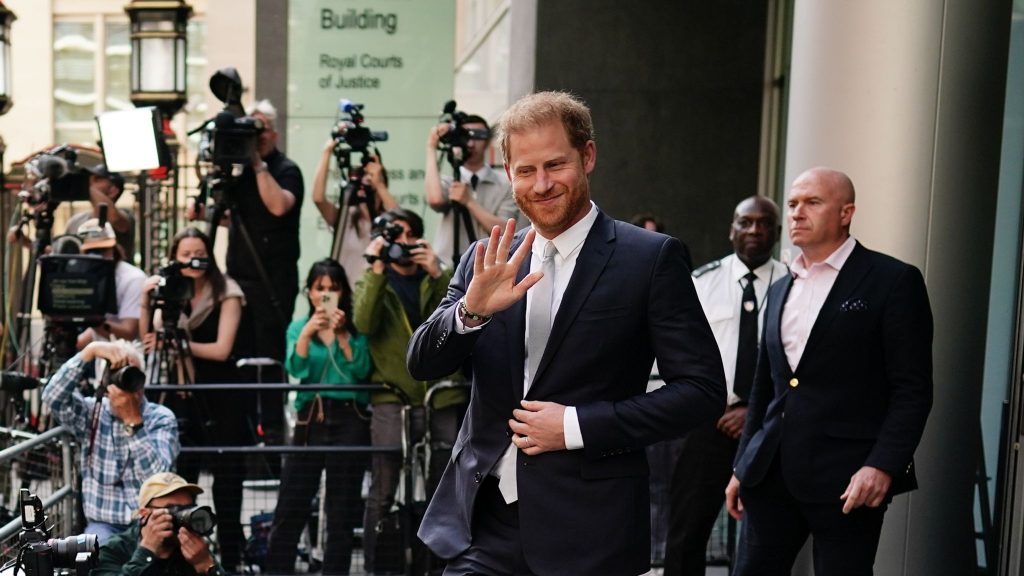
As Prince Harry’s nine-week High Court trial against the Daily Mail begins, his long-running legal battle with the British press can now be measured in outcomes, costs, and courtroom risk. This is the full record of what he has won, lost, settled — and what is now at stake.
On 19 January 2026, Prince Harry is due to return to the High Court to face his final and most formidable opponent: the Daily Mail. This is not just another hearing. It marks the opening of a nine-week trial that Harry has described as his “mission.”
Unlike earlier settlements, this trial is expected to place the Duke in the witness box to face gruelling cross-examination. He has said he is willing to risk everything on a belief that judicial scrutiny can hold powerful institutions to account. He is not alone in this fight.
The Daily Mail case is the culmination of a seven-year campaign that his father, King Charles, once referred to as a “suicide mission.” Harry views this litigation as a way to protect his family. He has repeatedly linked his hostility toward the tabloids to the circumstances surrounding his mother’s death and to what he describes as sustained press intrusion into his own adult life.
These cases now allow his record to be assessed through hard figures, formal apologies, and judicial outcomes. Supporters argue that the narrative has shifted from “troubled Prince” to a figure seeking structural accountability within the media.
Status | Outcome
Mirror Group
Partial victory — unlawful phone hacking established; first royal to give court evidence in more than 130 years.
News Group Newspapers
Settled (January 2025) — historic apology from The Sun; reported eight-figure payout.
Associated Newspapers (privacy claim)
Outright loss — a reminder that royal status does not guarantee success in court.
Associated Newspapers (Daily Mail case)
Live trial — the final and most expensive confrontation; Harry expected to give evidence on 22 January 2026.
The claim against The Sun’s publisher reached a dramatic conclusion in January 2025. This was the moment the litigation campaign took on far greater legal and financial significance.
The Duke accepted an eight-figure settlement widely reported to exceed £10 million ($12.3 million). The payment covered damages relating to alleged intrusion over a fifteen-year period. Crucially, the publisher issued what it described as a “full and unequivocal apology” for unlawful information-gathering activities connected to The Sun.
For Harry, the financial element was publicly framed as secondary to the admission itself. News Group Newspapers had not previously acknowledged unlawful conduct at The Sun, and the settlement was widely seen as an inflection point in the broader phone-hacking litigation landscape.
In late 2023, the High Court ruled that Prince Harry’s phone had been hacked “to a modest extent” between 2003 and 2009. He was awarded £140,600 in damages — a sum that represented only a fraction of the overall litigation cost.
He succeeded in establishing unlawful phone hacking, with the court criticising aspects of the publisher’s disclosure and record-keeping during the proceedings. The judgment nevertheless rejected large portions of the claim, finding that many alleged incidents were unsupported by sufficient evidence.
While financially limited, the ruling was legally significant. It marked the first time a senior member of the Royal Family had succeeded in proving phone hacking at trial and reinforced the courts’ willingness to interrogate historic newsroom practices.
Not every case has ended in success. In 2019, Prince Harry brought a privacy claim against Associated Newspapers relating to reporting on his security arrangements.
The claim was struck out, with the court holding that the articles did not meet the threshold for misuse of private information and that the publisher’s right to freedom of expression prevailed. An appeal was later dismissed.
This remains the Duke’s clearest defeat in press litigation and left him exposed to substantial unrecoverable legal costs. The outcome underscored that the High Court is not a rubber stamp for royal grievances and that privacy claims face exacting legal tests.
Across his press litigation, Prince Harry has been represented by David Sherborne, one of the UK’s most high-profile media barristers, known for leading complex and confrontational cross-examinations. Sherborne has been central to the legal strategy behind a series of cases that have placed sustained pressure on major British newspaper groups.
Litigation on this scale is rarely accessible to ordinary claimants. In the current Daily Mail case, the combined legal budget was originally estimated at approximately £38.8 million ($48 million).
However, the High Court later intervened, describing the projected costs as “manifestly excessive” and imposing a recoverable costs cap of around £4.1 million for Harry’s legal team. While this cap limits the amount he could recover if successful, it does not prevent a claimant from funding additional legal work privately.
The nine-week trial features a claimant group more commonly associated with award ceremonies than courtrooms. Prince Harry is expected to give evidence on Thursday, 22 January 2026. He will be followed by:
Sir Elton John and David Furnish, alleging covert surveillance and misuse of private information
Elizabeth Hurley, claiming systemic intrusion during periods of intense media scrutiny
Baroness Doreen Lawrence, whose participation carries significant symbolic weight given her public history with the paper
One of the most anticipated moments for media observers is the expected testimony of Paul Dacre. As editor-in-chief of DMG Media for decades, Dacre’s evidence will place historic editorial practices under direct judicial scrutiny.
Alongside the press litigation, Prince Harry has also pursued a judicial review against the UK Home Office over decisions relating to his police protection when visiting the UK.
While a 2025 appeal was rejected, a further review process by Ravec has been requested and remains subject to ongoing administrative consideration. This public-law challenge operates under a different legal framework from the press cases and does not involve damages.
For Harry, it remains one of the most personal legal disputes, as it determines the conditions under which his family can safely spend time in the UK.
As of January 2026, Prince Harry’s press litigation record stands at one partial trial win, one major settlement, and one outright loss. The Daily Mail case represents the final and most consequential test of that record.
A claimant victory in this final case could carry implications for newsroom practices, particularly in relation to historic information-gathering methods. If he loses, the financial consequences and reputational impact could be significant.
Regardless of the outcome, the litigation has already reshaped the public and legal conversation around press conduct, cost risk, and the limits of privacy law in modern Britain.
Day 1 — 19 January 2026: Opening Statements and the Shape of the Case
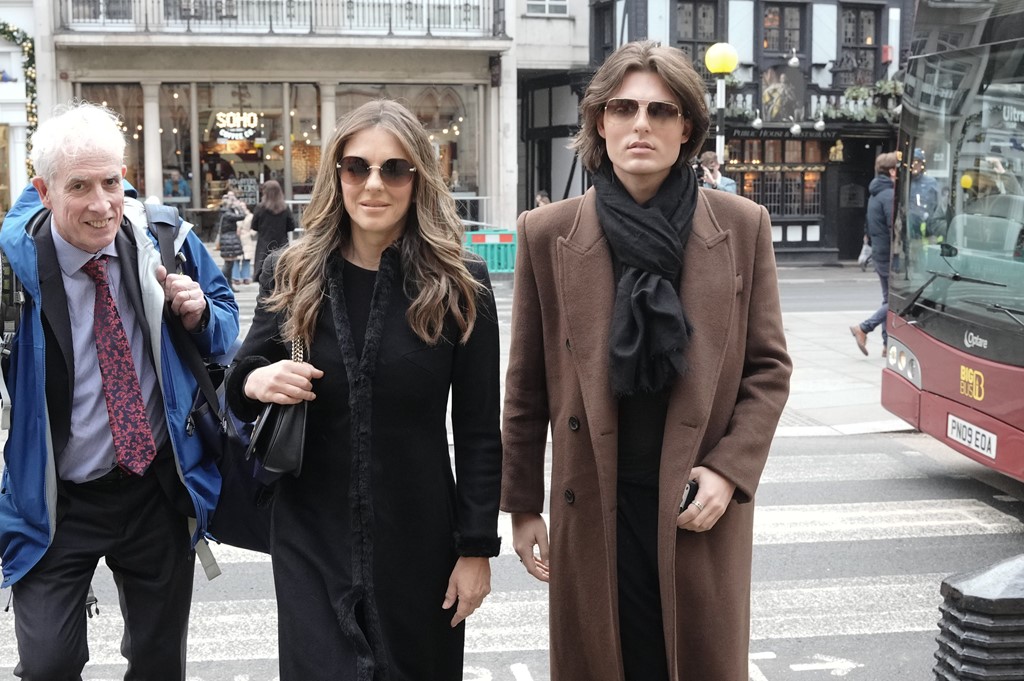
Elizabeth Hurley arriving in court this morning with her son Damian
The opening day of the nine-week High Court trial between Prince Harry and the publisher of the Daily Mail set the tone for what promises to be one of the most closely watched media law cases in modern British history.
Proceedings began shortly after 10:30 a.m. at the High Court, with the court hearing exclusively from the claimants. Defence submissions from Associated Newspapers are expected later in the week.
At the centre of the day’s hearing was a lengthy opening statement from media barrister David Sherborne, who represents Prince Harry and six other high-profile claimants. Sherborne accused the publisher of operating what he described as a “systematic and sustained” culture of unlawful information-gathering across multiple decades, alleging that senior figures within the organisation were aware of — and complicit in — the use of private investigators to obtain confidential information.
Sherborne told the court that Associated Newspapers’ historic denials of wrongdoing amounted to a “hear no evil, see no evil, speak no evil” defence, arguing that internal records, missing invoices and cash payments painted a very different picture from the publisher’s public stance. He said the claimants would seek to demonstrate that unlawful practices were not isolated incidents but part of a broader newsroom culture extending from the 1990s through to at least 2011.
Although Prince Harry was present in court throughout the day, today’s proceedings were not focused on his individual allegations. Instead, Sherborne structured the opening around the claims of other members of the group, including Elizabeth Hurley, Elton John and his husband David Furnish, actress Sadie Frost, and Baroness Doreen Lawrence.
The court heard detailed submissions relating to alleged invasions of privacy, including claims that private medical information, family communications and confidential legal discussions could only have been obtained through unlawful means. Particular emphasis was placed on the alleged repeated use of private investigators, some of whom were said to have been paid in cash, with incomplete or missing billing records.
In Baroness Lawrence’s case, Sherborne described the alleged impact of media intrusion as “hard to fathom”, given her long-running public campaign for justice following the murder of her son, Stephen Lawrence. He argued that while the Daily Mail publicly positioned itself as an ally of the Lawrence family, private information relating to sensitive legal negotiations had nevertheless appeared in print.
Associated Newspapers has categorically denied all allegations of unlawful information-gathering. In written submissions referenced in court, the publisher described the claims as “preposterous smears” and insisted that all reporting relied on legitimate journalistic sources, including public records, prior reporting and information provided by contacts within claimants’ social or professional circles.
The defence has indicated that a central plank of its case will be a limitation argument — namely, that the claims have been brought too late and should be struck out regardless of their factual basis. That issue, while flagged on Day 1, has not yet been argued in full.
Despite his central role in the wider litigation, Prince Harry’s personal claim was not examined in detail on the opening day. Sherborne confirmed that submissions relating specifically to the Duke of Sussex will begin when proceedings resume, ahead of Harry entering the witness box later this week.
Court observers noted that Harry appeared attentive throughout the hearing, though he did not address the court. His evidence is expected to be one of the most scrutinised moments of the trial, particularly given earlier judicial findings in his previous press cases.
The trial resumes tomorrow at 10:30 a.m., with Sherborne expected to continue outlining the claimants’ case — including the specific allegations made by Prince Harry. Associated Newspapers is expected to open its defence later in the week.
While no factual findings were made on Day 1, the opening submissions made clear that this case will hinge not only on individual articles, but on whether the court accepts that unlawful information-gathering formed part of a wider, institutional practice within one of Britain’s most powerful newspaper groups.
Further updates will be added as evidence is heard.