Uber Driver Killed in Phone Scam, Ohio Man Convicted of Murder
A jury has convicted an 83-year-old Ohio man of murder and kidnapping after he fatally shot an Uber driver who had been unknowingly dispatched to his home by anonymous scammers.
On January 14, 2026, a Clark County jury delivered a guilty verdict against William Brock, 83, for the March 2024 shooting death of 61-year-old Lo-Letha Toland-Hall.
Following a trial that lasted several days, Brock was found guilty of three counts of murder, one count of felonious assault, and one count of kidnapping. The incident occurred at Brock’s residence in South Charleston, Ohio, after both the defendant and the victim were targeted by the same "courier" fraud scheme.
Toland-Hall, a driver for Uber, had been sent to the property via the app to retrieve a package, while Brock had been coerced by scammers into believing she was an extortionist threatening his family.
The case has drawn national attention to the escalating dangers of "social engineering" scams, where digital fraudsters manipulate unsuspecting individuals into high-stakes physical confrontations.
While the defense argued that Brock acted in self-defense under the stress of a sophisticated extortion attempt, prosecutors maintained that his use of lethal force against an unarmed woman who was attempting to leave was unreasonable.
This verdict underscores the legal boundaries of self-defense in Ohio and highlights the vulnerability of gig economy workers who may be inadvertently used as pawns by international criminal syndicates.
Evidence of a complex deception at the South Charleston home
During the trial, the court reviewed evidence detailing the hours leading up to the shooting on March 25, 2024. Investigators found that Brock had received a series of phone calls from an individual posing as a relative in legal trouble.
The caller demanded $12,000 for "bond money" and allegedly threatened that Brock or his family would be killed if he did not comply.
Inside the home, police discovered an envelope containing $12,050 in cash and a notepad where Brock had jotted down a case number and the name "Leotha," a reference to the victim he had been told would arrive.
Simultaneously, Lo-Letha Toland-Hall accepted a request through the Uber "Connect" platform—a service designed for package delivery—to pick up an item from Brock’s address.
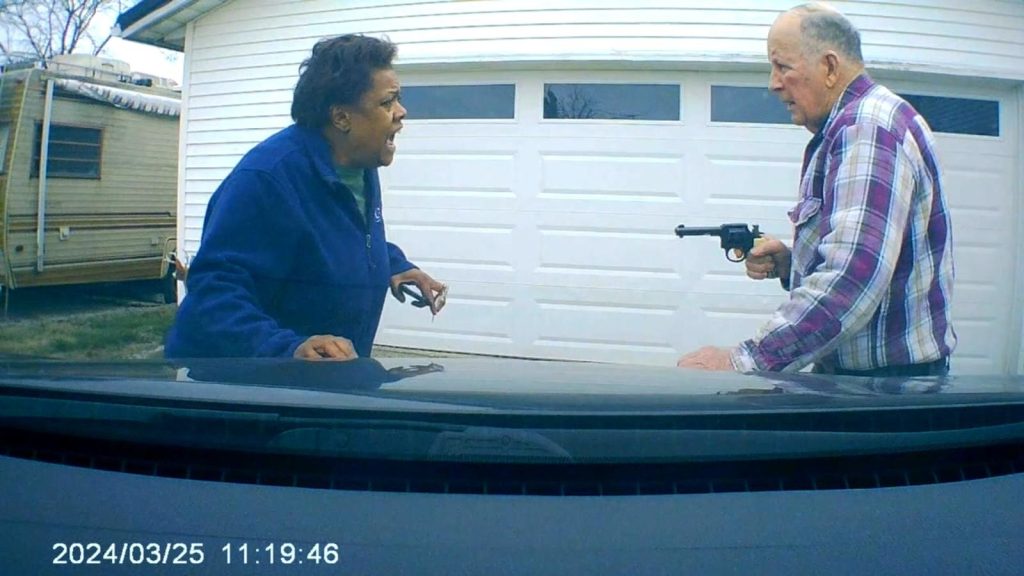
Dashcam footage from Hall’s vehicle, played for the jury, showed her arriving at the home and waiting for approximately 30 minutes before exiting her vehicle.
The footage later captured Brock holding Hall at gunpoint as she attempted to return to her car. According to court records, Brock shot Hall four times, including wounds to the leg and upper body, even as she reportedly tried to explain she was there for an Uber pickup.
The evidence showed that while Brock was a victim of financial extortion, his response involved the unlawful restraint and shooting of a person who posed no physical threat.
Prosecutors and defense clash over self-defense limits
Clark County Prosecutor Daniel Driscoll emphasized that a "reasonable person" would not have resorted to gunfire under the circumstances presented.
Although the state acknowledged Brock was targeted by professional scammers, they argued that his decision to confiscate Hall’s phone and shoot her as she moved away constituted kidnapping and murder.
"Both families have lost loved ones because of this, and there are no winners here," Driscoll stated after the verdict. He noted that the primary instigators of the scam have not yet been brought to justice, often because such operations are run by international rings that are difficult to track.
Brock’s defense team, led by attorney Jon Paul Rion, had filed motions in federal court prior to the trial, seeking assistance from the FBI to identify the scammers.
The defense argued that Brock was in a state of extreme terror, believing Hall was part of an "armed group" sent to torture him.
They contended that Brock’s age and the high-pressure tactics used by the callers created a "mistaken belief" of imminent danger that should have qualified as self-defense under Ohio law.
However, the jury's decision to convict on kidnapping charges indicates they believed Brock became the aggressor when he refused to let Hall leave.
The prosecution successfully argued that a defendant’s subjective fear does not excuse lethal force if that fear is not grounded in an objective, immediate threat.
Courier Scams Are Creating a New, Deadly Risk for Gig Workers and Homeowners
The case exposes a fast-growing and dangerous shift in so-called grandparent scams that is now putting gig workers directly in harm’s way.
The Federal Bureau of Investigation reported nearly $5 billion in elder fraud losses in 2024, up 33% from the previous year, with a rising number of cases using “courier-in-person” tactics.
In these scams, criminals use ride-sharing platforms such as Uber and Lyft to send an unsuspecting driver to a private home to collect cash or valuables, turning what appears to be a routine pickup into a high-risk confrontation. Drivers typically have no knowledge of the broader scheme, no ability to assess the mental state of the resident, and none of the security protections used by traditional delivery services.
The fallout has extended beyond the individuals involved, shaking the village of South Charleston and setting a clear legal marker in Ohio: the Castle Doctrine does not protect homeowners who escalate or detain someone with an apparent lawful reason to be on their property.
A civil wrongful-death lawsuit filed in March 2025 is now testing broader questions of responsibility, including whether the platforms that facilitate these pickups have a duty to better verify in-person courier requests.
The verdict makes one point unmistakable—being a victim of fraud does not justify lethal force, and the rise of courier-based scams has created a real-world danger that the gig economy and the law are still struggling to catch up with.
Key Questions About the William Brock Murder Case
Why was William Brock charged with kidnapping before the shooting?
Under Ohio law, kidnapping includes restraining someone’s movement through force or intimidation. Prosecutors showed that Brock took Lo-Letha Toland-Hall’s phone and physically prevented her from leaving his property, actions that met the legal threshold for kidnapping before the fatal shooting occurred.
How did the Uber Connect delivery scam lead to the fatal shooting?
Scammers used Uber Connect to send Toland-Hall to Brock’s home to collect what he believed was extortion money. She was unknowingly acting as a courier, placing her directly into a confrontation driven by a fraudulent phone scam.
Can someone be convicted if they believed they were being scammed?
Yes. The jury found that even if Brock believed he was a victim of fraud, that belief did not justify restraining or using lethal force against an innocent third party who posed no immediate threat.
What sentence is William Brock likely to face after the guilty verdict?
In Ohio, a murder conviction carries a mandatory sentence of 15 years to life in prison. Because Brock was also convicted of kidnapping and felonious assault, the judge may impose additional consecutive prison time at sentencing on January 21, 2026.
Are Uber drivers responsible if they unknowingly transport scam money?
No. Drivers who unknowingly participate in courier scams are generally treated as victims or witnesses, not suspects. Law enforcement has emphasized that responsibility lies with the scammers who orchestrate the fraud, not the gig workers used as intermediaries.
Legal Proceedings and Ongoing Federal Investigation
After the guilty verdict, William Brock was taken into custody at the Clark County Jail and his previously set $200,000 bond was revoked.
A sentencing hearing is scheduled for January 21, 2026, when the court will hear victim impact statements from the family of Lo-Letha Toland-Hall. Because of Brock’s age, prosecutors have acknowledged that any lengthy sentence is likely to result in him spending the rest of his life in prison.
Parallel to the criminal case, federal authorities are still attempting to identify the individuals behind the scam calls that triggered the fatal encounter. Although the ride-share account used to arrange the pickup was deactivated, investigators say the use of VoIP technology and overseas call routing has made tracing the perpetrators difficult.
The Federal Bureau of Investigation and its Internet Crime Complaint Center continue to encourage victims and witnesses to report courier-style scams, which investigators rely on to link patterns, phone numbers, and digital infrastructure tied to organized fraud operations.