Venezuela Reopens to U.S. Energy Capital as Sovereign Risk Shifts to Corporations
The rapid deposition and extradition of Nicolás Maduro on January 3, 2026, has fundamentally altered the risk-reward calculus for any entity holding North American energy assets.
For the non-lawyer CEO or board director, this is not merely a geopolitical headline; it is a structural trigger that has overnight introduced a massive, low-cost competitor for institutional capital.
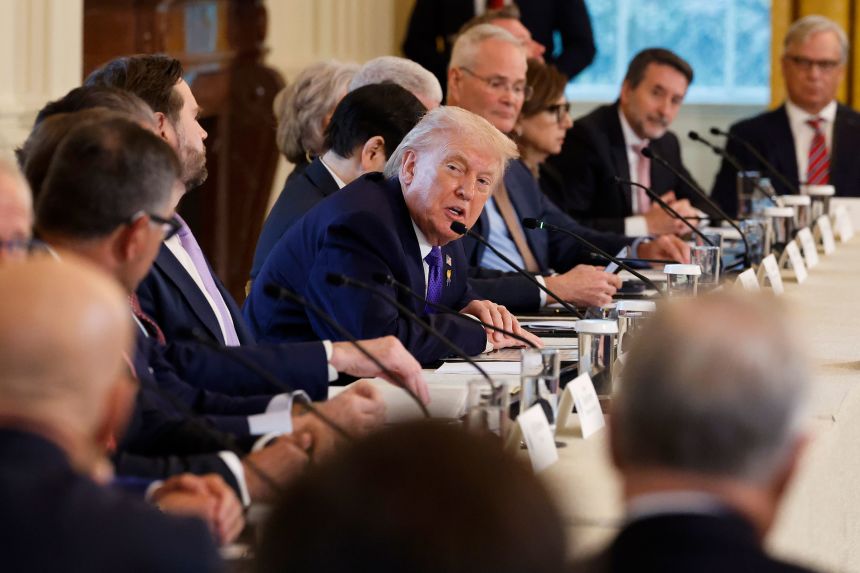
When Jeff Hildebrand of Hilcorp and Bill Armstrong of Armstrong Oil & Gas publicly committed to rebuilding Venezuela’s infrastructure at the White House last Friday, they signaled a shift that carries immediate regulatory, insurance, and reputational exposure for the entire sector.
This matters now because the "Alaska Premium"—the relative safety of domestic production—is being actively challenged by a White House-led push to pivot $100 billion in private capital toward a jurisdiction with the world’s largest proven reserves but a catastrophic record of asset seizure.
The risk is twofold: a liquidity drain from existing domestic projects and a compliance minefield for those following the administration’s lead.
If your organization is positioned in high-cost domestic basins, the emergence of "prime real estate" in Venezuela threatens to de-prioritize your capital access and destabilize your long-term insurance standing.
The immediate commercial reality is that the U.S. government is now acting as a de facto broker for Venezuelan crude, yet it refuses to provide a formal sovereign backstop.
For decision-makers, this creates a "knowledge-gap" liability: the administration expects you to invest your own capital while acknowledging that you "know the risks."
This briefing clarifies the immediate shift in liability and the institutional pressures now mounting on boards.
Capital Accountability and the Death of Domestic Certainty
The January 9 White House summit revealed a sharp divide in capital accountability.
While integrated majors like ExxonMobil remain sidelined by past expropriations—labeling the country “uninvestable” without radical fiscal reform—independent powerhouses like Hilcorp are moving to fill the vacuum.
This creates a new tier of capital accountability where the downside is no longer shared by a broad industry consensus but is concentrated in early movers who may be bypassing traditional risk-assessment hurdles to align with federal foreign policy.
| Former Status Quo | Trigger Event | Immediate Reality |
| Venezuela as a sanctioned, "dark fleet" pariah. | U.S. military deposition of Maduro (Jan 3, 2026). | Transition to "interim governance" under U.S. oversight. |
| Capital concentrated in secure U.S. basins (Alaska/Permian). | White House demand for $100B in private Venezuela investment. | Capital flight risk: Domestic projects face de-prioritization. |
| Predictable, if high, domestic regulatory costs. | Administrative "selective rollback" of OFAC sanctions. | Volatile compliance landscape with "swing" risk on licenses. |
The primary shift in liability ownership rests with the board’s fiduciary duty toward capital preservation.
If a CEO directs billions toward a "broken infrastructure" play in Caracas at the expense of domestic maintenance, they are exposed to shareholder derivative actions should the political environment destabilize—a scenario President Trump explicitly refused to backstop.
Insurance and Risk Transfer: The End of Standard Coverage
The insurance market is currently incapable of pricing the Venezuelan re-entry. Standard Political Risk Insurance (PRI) and Directors & Officers (D&O) policies are not calibrated for a jurisdiction where the legal framework is being "devised" on the fly by executive order.
Insurers like Allianz and AXA are signaling that "total safety" promised by a politician does not translate to an underwritable risk.
For the General Counsel (GC), the immediate reality is that indemnity triggers may be voided if an investment is deemed to have been made without "proper legal framework," a concern already voiced by commodity traders like Trafigura.
We are moving from a period of risk transfer to one of risk retention, where the balance sheet of the energy firm—rather than the insurer—bears the full weight of potential re-nationalization or civil unrest.
Second-Order Institutional Pressure: The Ripple Effects
The decision to pivot toward South America creates immediate friction with institutional lenders and state-level stakeholders. In Alaska, the sentiment is one of existential competition.
Lobbyists are already warning that if the state’s primary operators, Hilcorp and ConocoPhillips, divert cash flows to Venezuela, the North Slope faces a "quiet crisis" of under-investment.
Regulatory Knock-on Effects and the "Dark Fleet" Contagion
While the administration is "selectively rolling back" sanctions, the underlying legal architecture remains a compliance nightmare. Over 70% of tankers that moved Venezuelan crude last year engaged in deceptive practices, such as spoofing location signals.
-
Enforcement Posture: The DOJ and SEC have not signaled a moratorium on Anti-Money Laundering (AML) or Foreign Corrupt Practices Act (FCPA) investigations.
-
Contamination Risk: Any firm entering the market now risks "legal contagion" from existing assets that were part of the Maduro-era "dark fleet."
-
Counterparty Exposure: Identifying "clean" partners among the remaining Venezuelan authorities is virtually impossible, as many are still under U.S. FTO (Foreign Terrorist Organization) designations.
Institutional Investor Response and Premium Shifts
Institutional investors are reacting with deep skepticism. The "breakeven" for Venezuelan heavy crude is estimated at $80 per barrel once reconstruction costs are factored in, while global prices hover near $60.
-
Cost of Capital: Lenders are likely to apply a "geopolitical surcharge" to any firm expanding into Venezuela, raising the Weighted Average Cost of Capital (WACC) across the entire enterprise.
-
D&O Escalation: Underwriters are already citing "overpromise and underdeliver" risks. Boards that echo the administration’s optimistic 18-month timeline for production may face securities class actions if infrastructure delays—highly likely given the state of decay—materialize.
-
ESG and Reputational Blowback: Despite the "liberation" narrative, the environmental liability of remediating decades of Venezuelan neglect is immense. Large-scale methane leaks and soil contamination will trigger scrutiny from ESG-sensitive capital pools.
-
TAPS Viability: In Alaska, reduced throughput in the Trans-Alaska Pipeline System (TAPS) due to diverted capital could increase per-barrel transportation costs for all remaining operators, creating a negative feedback loop for domestic viability.
What This Changes for Decision-Makers
The "Maduro Raid" has not made Venezuela a safe harbor; it has made it a mandatory accounting factor for every C-suite executive in the energy and insurance sectors. You can no longer assume that domestic stability guarantees capital priority.
For the CEO and Board
You must now account for a "White House Pressure" variable in your capital allocation models. The administration is asking for $100 billion of your money, not the government's. If you decline, you risk political friction; if you accept, you risk a permanent impairment of assets that no current insurance policy will fully cover. The verdict is clear: The liability for "sovereign risk" has been shifted from the state to the individual corporate balance sheet.
For the General Counsel and Compliance Leaders
Your primary task is to prevent "sanctions whiplash." Because the current relief is driven by executive action rather than legislation, it can be rescinded with a single signature. You must ensure that every contract has an "exit-and-audit" clause that triggers if the U.S. political posture shifts—or if a future administration refuses to honor the current "security guarantees."
For the Insurance Manager
Anticipate a hard turn in your next renewal. Any exposure to Venezuela, however marginal, will likely result in broad exclusions for expropriation and a significant hike in D&O premiums. You are no longer managing a static risk; you are managing a volatile geopolitical experiment.
The commercial landscape has shifted from one of "managed decline" in Venezuela to one of "unprotected expansion." Boards must recognize that while the "prime real estate" is open, the title deeds are written in water.