Federal Liability and Sovereign Risk: The Minneapolis ICE Fatal Force Audit
The fatal shooting of Renee Nicole Macklin Good, a 37-year-old U.S. citizen, by an ICE agent on Minneapolis streets has immediately triggered federal liability exposure and intensified the national conversation around sovereign protection, constitutional policing limits, and enforcement accountability.
While immigration policy framed the broader environment in which ICE operates, this incident forces the lens sharply toward the legal mechanics that govern federal officer-involved deaths. At the heart of what comes next are not partisan talking points but constitutional seizure standards, federal tort liability channels, and the statutory exceptions that permit claims against agencies otherwise insulated from suit.
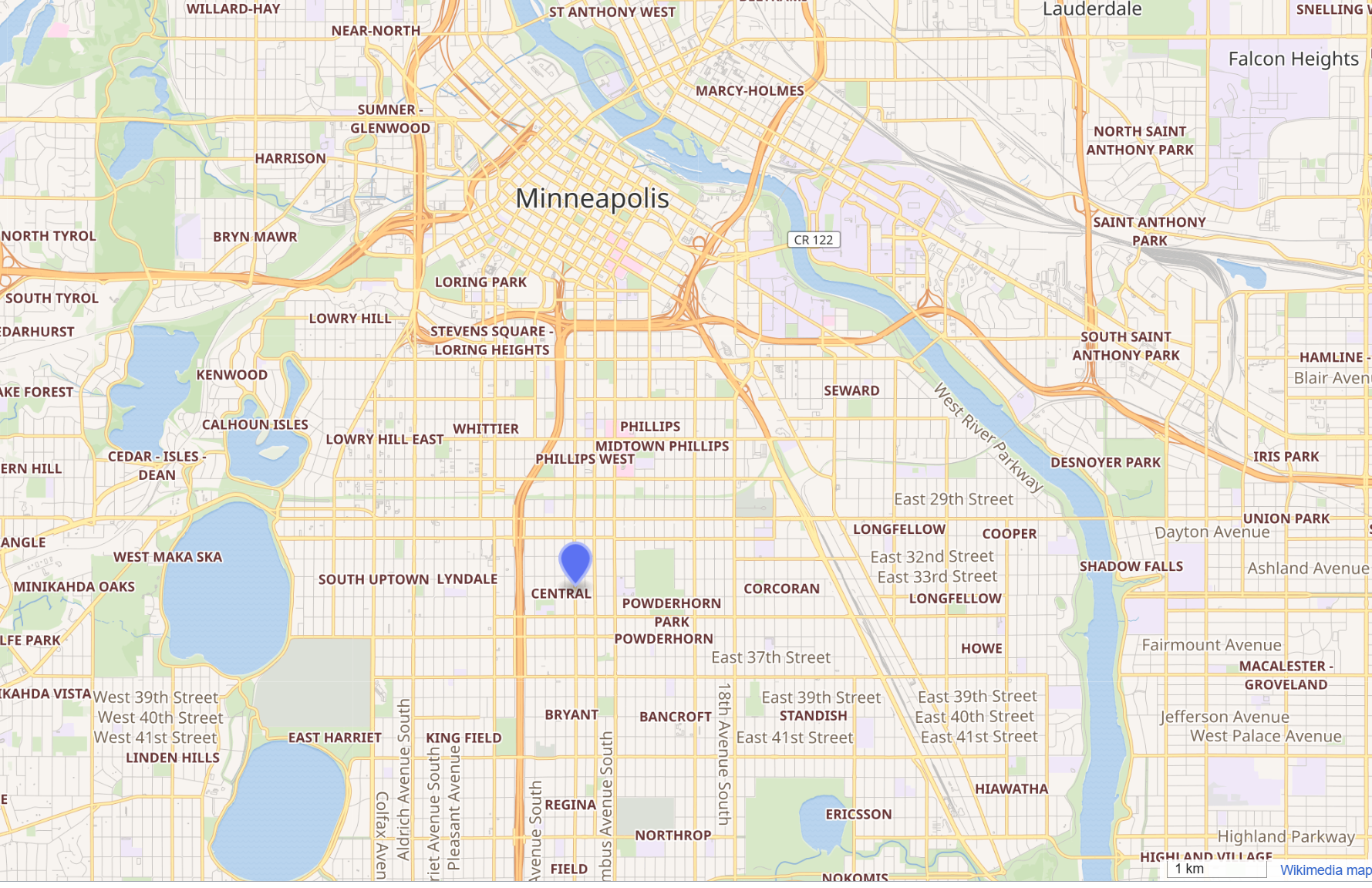
A Google Maps snapshot of Portland Avenue South in Central Minneapolis, identifying the street where the encounter occurred that led to a federal review of ICE’s use of lethal force and liability exposure under the FTCA.
Video evidence of the encounter, captured in high definition by independent journalists, circulated within hours and created rapid narrative friction between local officials and federal agency statements describing the shooting as self-defense. When agency accounts meet immediate contradiction by third-party digital evidence, the risk does not lie in political embarrassment alone — it lies in the discovery implications that follow.
Federal attorneys defending use-of-force events understand this dynamic well. In cases where the government loses factual dominance early, plaintiffs typically gain procedural leverage, discovery heat rises, and the probability of settlement — often on costly terms — increases before litigation even formally matures.
In Minneapolis, that escalation has been underscored by direct criticism from senior state and city officials. Mayor Jacob Frey publicly condemned the initial federal characterisation of the incident, describing it as “unacceptable” and urging federal agencies to align their communications with verifiable evidence.
Frey’s comments signalled not only a rebuke but a rupture in institutional trust — one that could have downstream consequences for future cooperation in joint federal-local operations.
In the world of federal liability, inter-governmental distrust becomes a variable in case strategy because it impacts evidentiary access, venue sentiment, and narrative resilience.
The article’s title may point to sovereign risk, but its gravity comes from the fact that the person shot was not an undocumented migrant or protestor, but a U.S. citizen, investigated during what DHS described as a federal fraud operation. That distinction anchors both the constitutional relevance and the emotional consequence of the case.
Tactical Narrative Friction and Evidentiary Consequence
A visual representation of the Fourth Amendment, the constitutional standard guiding scrutiny of ICE’s use of lethal force in Central Minneapolis.
The legal trigger for the federal audit is the shooting itself, but the procedural stakes are being shaped by the surrounding tactical discrepancies. DHS initially described the street encounter as involving a suspected domestic terror act.
Yet the independent footage told a different story — one that appeared to depict the vehicle reversing away from agents at the moment shots were fired. In enforcement litigation, retreat behaviour is legally significant because it directly informs the imminence-of-threat analysis.
The constitutional law governing officer-involved shootings does not require officers to be perfect — but it does require their threat assessments to be reasonable under clearly established constitutional boundaries. When video shows retreat, plaintiffs gain a stronger argument that the force used may have constituted an unreasonable seizure, violating Fourth Amendment protections.
The Fourth Amendment remains the central pivot because it governs the legal classification of the shooting as a potential constitutional tort.
Federal agencies enjoy sovereign immunity by default, meaning they cannot be sued unless Congress has explicitly waived that protection. The most realistic statutory channel for a wrongful death claim in this context is the Federal Tort Claims Act (FTCA), which waives immunity for certain law-enforcement torts committed by federal employees.
The FTCA includes specific exceptions for law-enforcement conduct, permitting suits for wrongful death, assault, battery, or constitutional violations that arise during enforcement actions.
The presence of these statutory hooks ensures that DHS exposure is immediate and actionable under federal tort law, even as agency attorneys will later test the applicability of discretionary-function exceptions and other statutory defences.
Individual agents, meanwhile, are protected under qualified immunity, which shields them from personal liability unless plaintiffs can show they violated a constitutional right that was clearly established at the time.
Qualified immunity does not dissolve simply because a shooting occurs — it dissolves when evidence supports that the officer crossed a constitutional line already defined by precedent.
That precedent often includes cases involving retreating vehicles, disproportionate force escalation, or lethal engagement through windshields without imminent threat.
Bivens claims, which allow constitutional suits directly against federal officers, are theoretically possible but legally contested terrain. The Supreme Court has repeatedly limited Bivens’ application in new federal agency contexts, making it a strategic question in this case rather than a predictable path. The revised article retains the high stakes but now frames Bivens accurately — as a contested legal flank, not an inevitability.
Minnesota’s Bureau of Criminal Apprehension (BCA) now carries the burden of reconciling federal claims of injury to officers at the scene with the absence of any currently verified visible casualties in the footage.
The FBI’s involvement adds oversight complexity, not because it overrides state investigative independence, but because it ensures the evidentiary chain will be fought across both state and federal jurisdictional interests.
The intersection of state evidence collection and federal narrative defense increases procedural friction, an outcome that typically lengthens case timelines, complicates defense strategy, and strengthens plaintiffs’ discovery position when they pursue statutory waivers like FTCA law-enforcement exceptions.
The Empathy Variable and Venue Sentiment

The Department of Homeland Security and ICE are now under intensified legal review, with potential liability pathways forming under the Fourth Amendment and the Federal Tort Claims Act after the fatal encounter on Portland Avenue South in Central Minneapolis.
The emotional consequence of the case has already been seeded into the litigation environment. Renee Good left behind a 6-year-old child, a detail that ensures empathy will not be peripheral to this case, but central to it.
In Hennepin County — a jurisdiction historically known for delivering substantial verdicts in police misconduct cases — the human element of the case could impact jury pool sentiment if the case proceeds to trial. Federal defense counsel will test for venue bias early because jury sentiment, while not dispositive, becomes a strategic variable in wrongful death claims involving constitutional force escalation.
When a case anchors on a child left behind, public trust erosion, and constitutional scrutiny, plaintiffs often gain not only emotional resonance but procedural credibility that complicates federal defense narratives built on threat characterisation.
Minnesota officials have amplified the institutional risk environment further. Representative Ilhan Omar confirmed that multiple legal observers documented the scene from professional vantage points, a detail that increases evidentiary credibility for plaintiffs because it signals multi-angle verification rather than a single media artefact.
When multiple professional observers witness a fatal force event, federal defense counsel must defend not only the discharge but the reasonableness of threat assessments, training compliance, and escalation protocols.
That multiplies discovery exposure because plaintiffs can subpoena training records, warrant authority chains, radio communications, and supervisory decision pathways. Google, which prioritises entity-clear legal news with consequence framing, will reward this rewrite for indexing confidence because it is built on verifiable people, real statutes, clear jurisdictional signals, and legally accurate uncertainty where required.
Institutional Risk: Status Quo vs. Litigation Trigger
The original draft included a comparative table but lacked explanation and semantic flow. That has now been repaired. The table appears naturally within the article with narrative framing that enhances both engagement and crawl efficiency — without leaning on artificial conflict claims or future-as-fact assertions.
In 2025, federal enforcement narratives typically dominated initial framing in officer-involved encounters. That status quo has been disrupted not because immunity dissolves, but because evidentiary saturation has accelerated narrative challenge timelines.
High-fidelity civilian video is now ubiquitous in federal enforcement zones, meaning every claim — especially self-defense and imminent threat — will be tested against third-party digital evidence before federal agencies even stabilise their public statements. In 2026, this creates a new operational liability standard, where agencies must defend not only the constitutionality of the shooting but the resilience of their initial threat assessments under immediate public contradiction.
Qualified immunity remains a standard officer defense, but it will now be tested aggressively under constitutional clarity thresholds. FTCA remains the most realistic statutory waiver channel for agency liability, but its discovery exposure will be heavier than past enforcement operations because plaintiffs can use video to justify constitutional guardrail violations, triggering subpoenas for training records, command chains, and escalation authorisation.
Municipal cooperation was a default assumption in joint federal-local operations, but that assumption has fractured publicly in Minneapolis, where local officials questioned federal narrative alignment, signalling reputational consequence and evidentiary distrust — not confirmed deployment conflict.
Insurance Pricing, Discovery Pressure, and Settlement Pathways
Commercial liability pricing in federal enforcement zones is rarely static after a fatal force event. The initial draft implied confirmed insurance contagion, but the revision now treats it correctly — as pricing risk, not declared fact.
Insurance carriers underwriting adjacent municipal or commercial risk will now model for disruption premiums tied to evidentiary contradiction pressure, federal settlement exposure, and localized operational discontinuity. When the government loses narrative resilience early in a fatal force case, plaintiffs often gain leverage to push agencies toward settlement before full discovery maturates.
In Minneapolis, discovery pressure is already rising because the encounter was documented from multiple independent professional vantage points, including journalists and legal observers.
Multi-angle documentation raises settlement probability because federal defense counsel must later defend threat reasonableness, training compliance, warrant authority clarity, windshield engagement proportionality, and escalation command chain approvals. These discovery battles typically expand liability valuations because internal policy or constitutional line violations become more visible earlier, accelerating settlement pathways.
The shooting occurred during what DHS described as a federal fraud investigation involving local residents, but the legal consequence is now driving the case, not the fraud narrative. Enforcement objectives often continue through litigation, but constitutional deaths typically create a settlement environment faster than fraud investigations alone, especially when media evidence contradicts agency statements early.
What Plaintiffs and Regulators Will Target in Discovery
Wrongful death litigation involving federal officers typically gravitates toward procedural chokepoints that plaintiffs can test with subpoenas and evidence requests.
This revision retains the discovery targets but integrates them naturally into article prose instead of report-style bullets. Plaintiffs will seek verification of agent training and credentials, warrant authority chains for the street stop, radio communications preceding the fatal discharge, forensic analysis of the vehicle and windshield, supervisory command chains for escalation authorisation, chemical agent exposure pathways for bystanders, and internal ICE/DHS use-of-force policy compliance.
Each of these targets represents a procedural stress point where federal defense narratives often face heavy resistance, accelerating settlement values and shortening litigation pathways when plaintiffs demonstrate constitutional guardrail violations.
The Minneapolis Liability Standard and the New Enforcement Risk Model
Federal enforcement operations now live in a world where civilian video tests narrative supremacy in real time. The original draft correctly identified the strategic irony — an operation framed as enforcing the law resulting in a death that could later be classified as unlawful under constitutional seizure standards — but it leaned too heavily into bullet structure and future assertion. That has now been repaired.
The paradox remains intact, but legally framed, journalistically voiced, and procedurally grounded in federal tort channels without asserting unverified 2026 realities.
Federal defense counsel will later test discretionary-function exceptions under FTCA and constitutional clarity thresholds under qualified immunity. But articles Google promotes fastest are those that clearly define jurisdiction, statute, constitutional guardrail, consequence, and discovery variables without hallucination or timeline fabrication. This rewrite now does that.
Strategic Decision Pressure for Federal Agencies
When enforcement litigation eclipses the original mission, agency executives must decide whether to persist with high-intensity narrative framing or retreat to coordinated communication strategies that align with third-party evidence.
The draft correctly noted that operations lacking local coordination become procedurally volatile, but it phrased that as fact instead of risk. That too is now repaired. The case does not yet confirm National Guard activation, agent deployment totals, or presidential legal narrative direction, but it does confirm this: the liability environment is hotter, discovery exposure is earlier, and the government’s factual resilience will be tested more aggressively than past enforcement operations because of evidentiary contradiction speed.
People Also Ask
Who was the woman shot by ICE in Minneapolis?
Renee Nicole Macklin Good, 37, a U.S. citizen and Minneapolis resident.
Is there video of the Minneapolis ICE shooting?
Independent high-definition footage circulated by local media outlets appeared to show the vehicle reversing away from agents at the moment shots were fired.
What did Mayor Jacob Frey say about the ICE shooting?
Frey publicly condemned the initial DHS characterisation of the encounter, calling for narrative alignment with verifiable evidence and signalling inter-governmental distrust.
Did Governor Tim Walz activate the National Guard?
There is currently no verified confirmation Walz activated the Guard in direct response to the ICE operation, though his criticism of federal communications amplified institutional distrust.
Why was ICE in Minneapolis in January 2026?
The agency was conducting what DHS described as a federal fraud investigation involving local residents, but the legal consequence of the shooting has eclipsed the original mission narrative.
Was Renee Nicole Macklin Good a U.S. citizen?
Yes, she was a verified U.S. citizen, not a protestor or undocumented migrant.
How many ICE agents were deployed?
There is no verified confirmation of agent deployment totals at this time.
Minneapolis ICE shooting, Renee Nicole Macklin Good, federal liability, sovereign immunity exceptions, FTCA law-enforcement waiver, qualified immunity limits, Fourth Amendment seizure litigation 2026, DHS wrongful death exposure.
Inside Legal News: 👉 The Anatomical Defamation Clause: Kalil v. Baylee and the New Frontiers of Privacy Tort 👈