Federal Charges Widen Minnesota Medicaid Fraud Probes
Authorities say alleged billing fraud and kickbacks may have diverted Medicaid funds meant for children with autism and adults needing housing and daily support.
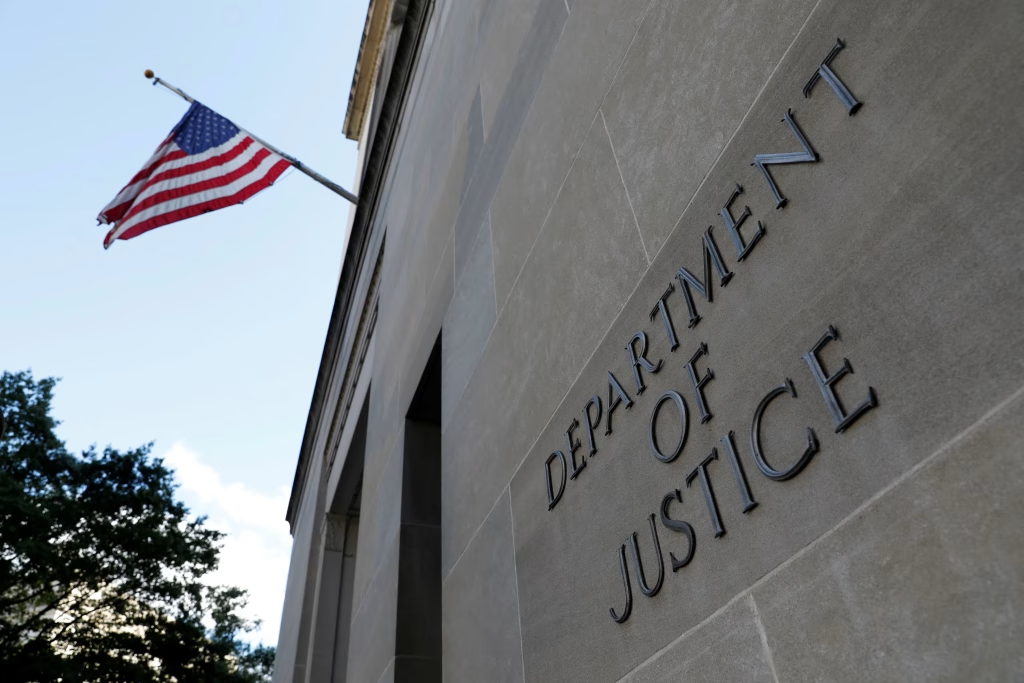
Federal prosecutors in Minnesota on Thursday announced new charges in two ongoing investigations into alleged Medicaid fraud tied to autism services and Housing Stabilization Services, and disclosed a new investigation involving Integrated Community Supports (ICS).
The U.S. Attorney’s Office said six additional defendants were charged and that Asha Farhan Hassan, 28, entered a guilty plea in federal court.
The same morning, agents executed a search warrant connected to ICS providers, with the warrant later unsealed by the court, according to the Justice Department.
The announcement matters because the three programs fund services for people who are often heavily reliant on public support, including children under 21 receiving autism-related intervention and adults who need help securing housing or living safely in the community.
Medicaid is jointly funded by federal and state government, and federal fraud cases can lead to restitution orders and exclusions from future program billing.
Minnesota’s Department of Human Services (DHS) administers these benefits and sets provider requirements under federal Medicaid rules.
Court Filings Describe Alleged Kickbacks and Unqualified Autism Staffing
Federal prosecutors charged Abdinajib Hassan Yussuf, 27, by information with one count of wire fraud related to the Early Intensive Developmental and Behavioral Intervention (EIDBI) benefit, identifying him as the president and CEO of Star Autism Center LLC.
The filing alleges the scheme ran from late 2020 through December 2024 and involved billing Medicaid for services not provided or inflated, while paying monthly cash kickbacks to parents tied to the size of authorized services.
The EIDBI benefit is a Minnesota Health Care Program intended to provide medically necessary early intensive intervention for people with autism spectrum disorder and related conditions, and it serves individuals under age 21, according to DHS program materials.
Prosecutors said Star Autism received more than $6 million in reimbursement funds from Minnesota DHS and UCare and alleged proceeds were used for purchases and transfers, including more than $100,000 for a Freightliner semi-truck and more than $200,000 sent to Kenya.
Prosecutors Cite Multi-Agency Investigations as Charges Grow
The Justice Department said Asha Farhan Hassan pleaded guilty Thursday before U.S. District Judge David Doty to one count of wire fraud connected to an autism fraud scheme, with sentencing to be scheduled later.
Prosecutors have also publicly tied her to the Feeding Our Future case in prior charging documents, according to the DOJ announcement.
In the Housing Stabilization Services cases, prosecutors announced federal informations against Anthony Waddell Jefferson, 37, and Lester Brown, 53, and indictments against Hassan Ahmed Hussein, 28; Ahmed Abdirashid Mohamed, 27; and Kaamil Omar Sallah, 26.
The U.S. Attorney’s Office said the broader investigations involve the FBI, IRS Criminal Investigation, the U.S. Department of Health and Human Services Office of Inspector General, Homeland Security Investigations, and the U.S. Postal Inspection Service.
Public response has centered on how quickly costs rose in newer Medicaid benefits and whether oversight kept pace, with renewed attention after prior major fraud cases in Minnesota drew legislative and administrative scrutiny.
What the Allegations Could Mean for Medicaid Clients and Housing Services
Housing Stabilization Services is a Medicaid benefit Minnesota launched in July 2020 to help people with disabilities, including seniors and people with mental illness or substance use disorders find and keep housing, the DOJ said.
Prosecutors noted the program was designed with relatively low barriers and limited documentation requirements, conditions they say made it vulnerable to fraud.
Prosecutors alleged Jefferson and Brown submitted about $3.5 million in claims tied to roughly 230 beneficiaries and described recruitment efforts at shelters and Section 8 housing facilities.
In separate allegations, prosecutors said Hussein and Mohamed used outside entities to generate or locate beneficiary paperwork and then billed for services that were overstated.
For the public, the practical risk is that fraud investigations can disrupt provider capacity and slow payments as agencies increase verification, even though eligibility for Medicaid itself is separate from any single vendor.
Any provider removals, suspensions, or billing holds would occur through DHS and insurer processes and were not announced as statewide actions in the DOJ release.
DHS and DOJ Figures Show Rapid Spending Growth in Newer Benefits
DHS initially projected Housing Stabilization Services would cost about $2.6 million per year, but the program paid out more than $21 million in 2021, $42 million in 2022, $74 million in 2023, and $104 million in 2024, prosecutors said.
The DOJ announcement added that another $61 million was paid in the first six months of 2025.
For Integrated Community Supports, prosecutors said Minnesota began offering Medicaid coverage in 2021 and that total payments grew from about $4.6 million in 2021 to more than $170 million in 2024, with more than $400 million paid since 2021.
DHS policy materials also state that ICS can be delivered up to 24 hours per day in a person’s living unit or in the community, depending on assessed need and authorization.
The DOJ said the unsealed warrant concerned Ultimate Home Health Services LLC, which allegedly billed more than $1.1 million for 13 clients from about June 2024 through August 2025 and included allegations of billing for services not provided.
Who Has Been Charged and What Happens Next in Court
Federal prosecutors have identified multiple defendants across the autism and housing investigations, with court filings outlining the scale of alleged Medicaid billing.
The Department of Justice says more than $6 million in EIDBI reimbursements were tied to Star Autism Center, while approximately $3.5 million in Housing Stabilization Services claims were submitted by Anthony Waddell Jefferson and Lester Brown.
Separate filings allege that SafeLodgings received nearly $1.3 million through inflated housing claims. In the Integrated Community Supports matter, search warrant materials cite more than $1.1 million billed by Ultimate Home Health Services for a small number of clients over roughly a year.
The DOJ has confirmed that one defendant has entered a guilty plea, with sentencing to be scheduled by the court. For the remaining defendants, the next procedural steps include initial appearances and arraignments in the U.S. District Court in Minnesota, though specific hearing dates have not yet been announced.
Prosecutors said the cases are being handled by a designated team of Assistant U.S. Attorneys and emphasized that all charges remain allegations unless proven in court.
Investigators also confirmed that evidence collection is ongoing in the ICS investigation following the execution and unsealing of a search warrant, with no additional arrests announced at this stage.
Why the Cases Carry Broader Public Consequences
The allegations center on Medicaid-funded programs designed to support children with autism and adults who depend on housing and in-home services to live safely in the community.
If substantiated in court, the conduct would represent a misuse of public funds and could undermine the quality and reliability of care for vulnerable populations who rely on these benefits.
Prosecutors’ spending figures also highlight how rapidly newer Medicaid programs expanded, increasing the importance of effective oversight and compliance controls.
The next developments to watch include scheduled court proceedings, sentencing outcomes, and any formal actions by Minnesota’s Department of Human Services affecting provider eligibility or monitoring standards.