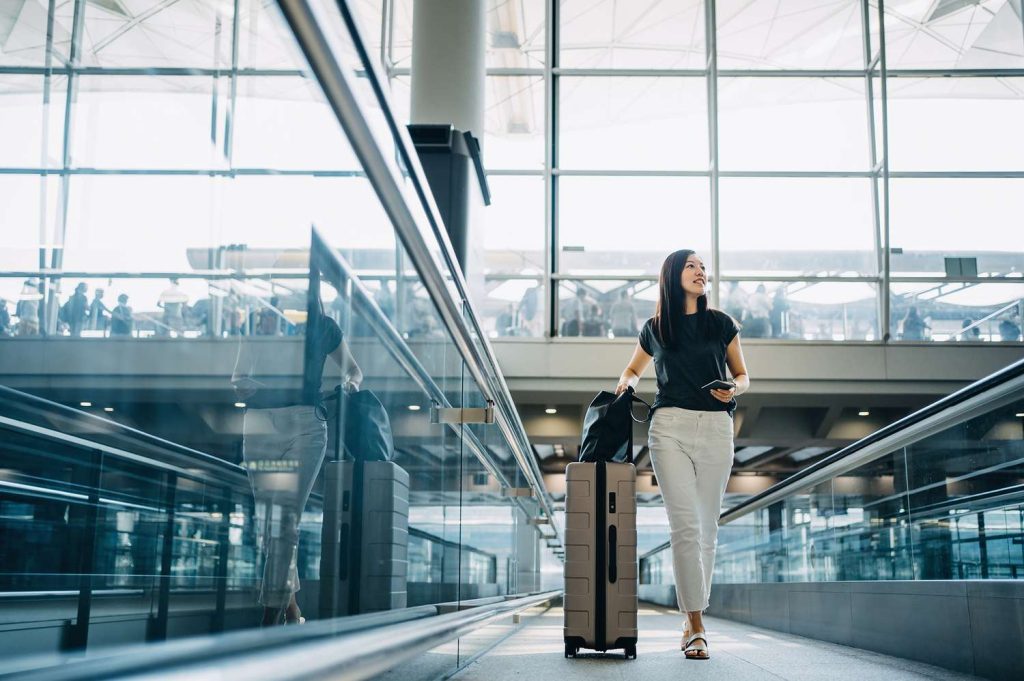
Festive travel has a way of magnifying pressure. Airports feel louder, timelines feel tighter, and minor disruptions can carry outsized emotional weight. What’s often described as “travel anxiety” during peak holiday periods is less about fear itself and more about context — a collision of expectations, visibility, and reduced margin for error.
Unlike routine journeys, festive travel is loaded with symbolic importance. Arrival times matter. Family dynamics matter. Delays feel personal rather than logistical. The result is a heightened sensitivity to uncertainty, even among people who otherwise travel comfortably throughout the year.
This doesn’t signal fragility or poor coping. It reflects how environments shape behaviour.
Why Pressure Increases During Peak Travel Periods
Crowded travel settings compress space, time, and autonomy all at once. Movement is constrained, schedules are externally controlled, and attention is constantly pulled toward updates, announcements, and comparisons with other travellers.
Psychologically, this creates a loss-of-agency effect. When outcomes feel externally dictated — weather, queues, cancellations — the mind shifts into monitoring mode. People become more alert, more reactive, and less tolerant of friction. What would normally register as a minor inconvenience begins to feel destabilising.
The festive layer intensifies this dynamic. Social expectations add a second audience: not just fellow travellers, but the people waiting at the destination.
The Behavioural Signals of Composure in Transit
Interestingly, calm during travel is rarely about eliminating stressors. It’s about how behaviour adapts in constrained environments.
Travellers who appear composed tend to display consistency. Their pace remains steady even when conditions change. Their attention narrows rather than fragments. They respond selectively instead of continuously.
This coherence is often interpreted by others as confidence or experience, even when circumstances are identical. The absence of visible urgency creates a perception of control, regardless of the situation itself.
Where Tension Quietly Builds
Stress during festive travel often escalates through amplification rather than accumulation. Constantly tracking delays, adjusting plans in real time, or scanning for potential problems increases cognitive load. The mind stays active even when no action is required.
There’s also a social element. Being surrounded by visible frustration can normalise reactivity, making tension feel contagious. In these settings, composure becomes less about solving problems and more about resisting escalation.
A Brief Reality Check
No one moves through peak travel periods unaffected. Fatigue, unpredictability, and sensory overload are built into the environment. The goal isn’t uninterrupted calm, but directional steadiness.
Moments of irritation or tension don’t undermine composure unless they take over the overall rhythm of behaviour.
When Travel Becomes a Test of Presence
Festive travel exposes how people respond when control is limited and expectations are high. Those moments tend to reveal habits rather than create them.
When movement, timing, and outcomes can’t be optimised, presence often becomes the differentiator. Not because it removes friction, but because it prevents friction from defining the experience.
In that sense, calm travel isn’t a technique. It’s an emergent quality — one shaped by consistency, restraint, and how much attention is given to what can’t be changed.