U.S. citizen families report ICE detentions of spouses at USCIS interviews, raising concerns about access to a legal path to permanent residence.
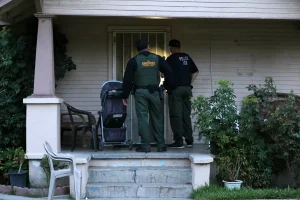
Several spouses of U.S. citizens have been detained by Immigration and Customs Enforcement during scheduled immigration appointments that families expected would be routine steps toward lawful permanent residence.
Attorneys and local reporting describe a cluster of cases in San Diego in mid-to-late November 2025, including arrests at the local U.S.
Citizenship and Immigration Services office, with additional reports from Cleveland and other locations.
Those detained arrived for interviews connected to marriage-based filings and, in multiple cases, had no criminal history.
The development matters because federal law provides a distinct adjustment pathway for “immediate relatives” of U.S. citizens, including spouses.
That pathway allows many applicants to seek permanent residence even if they previously overstayed a visa.
Attorneys say the recent detentions mark a shift from long-standing practice and have introduced uncertainty for families who believed compliance with the process protected them from enforcement actions.
The issue raises public-interest questions about access to congressionally authorized immigration benefits and the use of enforcement discretion at government service offices.
Where the Arrests Have Been Reported and When They Occurred
In San Diego, immigration attorneys said ICE agents detained applicants during or immediately after USCIS interviews in November 2025.
Local reporting described several dozen known cases at the San Diego field office, with attorneys learning of arrests through clients and colleagues in the region.
One widely reported case involved a British citizen detained during a green card interview on Nov. 20, 2025, who was released days later.
Another case involved the spouse of a U.S. Navy veteran who was released on bond and directed into immigration court proceedings.
In the Cleveland area, an attorney reported that a client was detained at a spousal petition interview on Nov. 24, 2025, despite being eligible to pursue a family-based path.
What federal law says about overstays and “immediate relatives”
U.S. immigration law allows individuals who were inspected and admitted to the country to apply for adjustment of status if they are eligible for an immigrant visa and meet other requirements.
Immediate relatives of U.S. citizens, including spouses, are treated differently from many other applicants under the statute.
Specifically, certain bars related to unlawful status or unauthorized employment do not apply in the same way to immediate relatives.
This framework has historically allowed spouses to complete the green card process even if they fell out of nonimmigrant status while waiting for adjudication.
USCIS guidance explains that eligibility depends on the individual’s full immigration history, including admissibility and any prior court orders, but the immediate-relative category remains a central feature of family-based immigration law.
What Agencies Have Said and How Communities Are Reacting
USCIS has said that apprehensions at its offices may occur when individuals are identified as having outstanding warrants, court-issued removal orders, or other immigration law violations.
Agency officials have emphasized that overstaying a visa is an immigration violation that can carry removal consequences.
ICE has stated that individuals who are unlawfully present in the United States may face arrest at federal facilities, including USCIS offices, as part of enforcement of immigration law.
The agency says such actions are carried out in accordance with federal statutes.
Families interviewed by local news outlets described shock and fear after spouses were taken into custody during appointments they believed were final steps in a lawful process.
Attorneys said they are warning clients about the potential risk of detention at interviews.
What the Shift Means for Families and the Immigration Court System
For couples pursuing marriage-based permanent residence, detention at a USCIS interview can abruptly reroute a case from routine administrative processing into the immigration court system.
Once that happens, applicants may need to request bond, respond to formal removal charges, and continue pursuing eligibility for lawful permanent residence before an immigration judge rather than through USCIS.
This change can be particularly disruptive for families who believed they were nearing the final stage of a lawful, congressionally authorized process.
The impact is not limited to any single nationality or region. Immigration attorneys note that visa overstays are common during lengthy family-based processing periods, meaning many otherwise eligible spouses could be exposed to similar risks if the practice becomes more widespread.
This is especially significant given the current state of the immigration court system. Publicly available government and research data show that immigration courts are handling millions of pending cases nationwide.
While the Department of Justice has reported progress in completing cases and reducing overall backlogs, courts remain under heavy strain.
As a result, cases shifted from USCIS to immigration court can face extended delays, additional legal costs, and prolonged uncertainty for families.
Attorneys say this dynamic increases the practical consequences of detention, even for applicants who ultimately qualify for permanent residence under the law.
How Families Can Find Official Case and Detention Information
ICE operates an Online Detainee Locator System that allows family members and legal representatives to search for individuals in ICE custody using basic identifying information.
For cases in immigration court, the Executive Office for Immigration Review provides an online case-status system and an automated telephone hotline at 1-800-898-7180.
USCIS directs applicants to its official contact channels for benefit-related case updates and inquiries, which remain separate from ICE and court systems.
Green Card Interview Detentions: Key Questions Answered
Can a spouse of a U.S. citizen still qualify for a green card after a visa overstay?
Often, yes. Federal law provides special treatment for immediate relatives of U.S. citizens, allowing many to adjust status despite overstays, depending on their full immigration history.
Why would someone be detained at a USCIS interview?
Federal agencies say detention may occur if officers identify immigration violations, outstanding removal orders, or other legal issues during the appointment.
Does detention automatically mean the marriage-based case is denied?
No. Outcomes vary by case. Some applicants have been released and later approved, while others are required to continue their cases in immigration court.
What happens to a case after ICE detention?
Detention can lead to removal proceedings in immigration court, where eligibility for relief is litigated before a judge and timelines can be lengthy.
What tools exist to locate a detained person or check a court date?
ICE and EOIR each provide official online and telephone tools for custody and court-status information, though updates may lag after transfers.
Implications for Families and the Immigration System
For spouses of U.S. citizens affected by recent detentions, the next steps are largely procedural and will unfold on a case-by-case basis.
Applicants taken into custody may face custody reviews, bond hearings where legally available, and scheduled appearances in immigration court if removal proceedings are initiated.
Attorneys say they are advising families individually, including reviewing whether older court orders, missed hearings, or administrative errors can be reopened or resolved in light of pending marriage-based petitions.
At this stage, no new statute, regulation, or nationwide policy change has been formally announced.
Any broader clarification is expected, if it comes at all, through agency guidance from the Department of Homeland Security or through court rulings rather than congressional action.
How immigration judges, prosecutors, and USCIS officers handle these cases in the coming months may shape how widely the practice spreads and how consistently it is applied.
The story matters because it affects U.S. citizens and their spouses who are using a family-based immigration pathway specifically designed by Congress to keep families together.
The reported detentions raise public-interest questions about access to lawful immigration benefits, the use of enforcement discretion at government service offices, and the predictability of a process many families rely on.
Observers will be watching for additional confirmed cases, legal challenges, or official guidance that could clarify how these interviews will be handled going forward.