Understand Your Rights. Solve Your Legal Problems


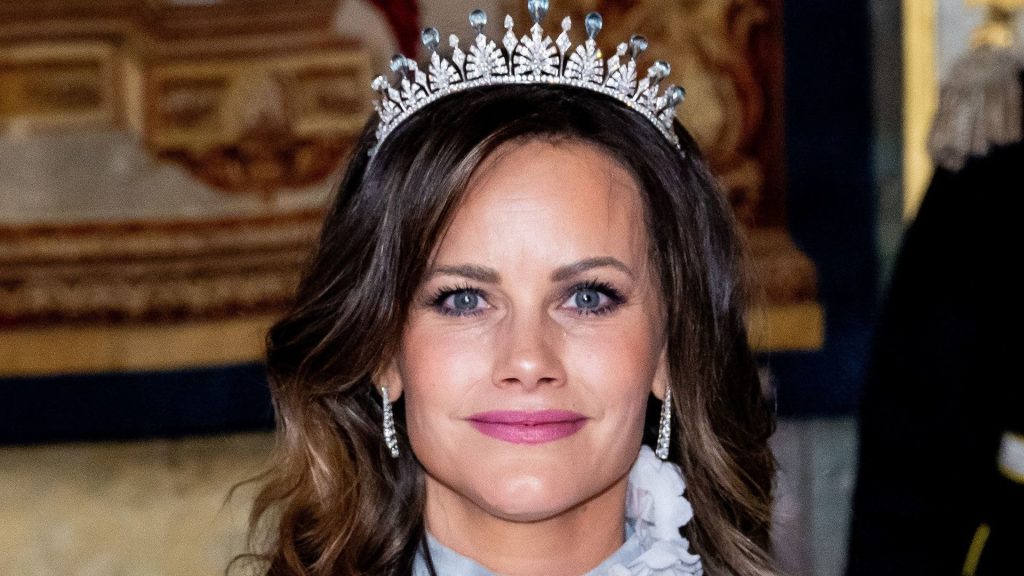
The confirmation raises questions about historic royal links to Jeffrey Epstein and how European institutions address past associations.
Sweden’s Royal Court has confirmed that Princess Sofia met Jeffrey Epstein several times in New York around 2005, before her marriage into the royal family and years before his first criminal conviction.
The court says there has been no contact for about two decades and that she did not travel to his private island in the Caribbean. Sofia, now 41, was then an aspiring actress and model living in the United States under her birth name Sofia Hellqvist.
The disclosure comes after Swedish newspaper Dagens Nyheter published emails between Epstein and Swedish-American financier Barbro Ehnbom, a long-standing mentor to Sofia who later attended her 2015 wedding to Prince Carl Philip.
The revelation coincided with Sofia’s absence from the 2025 Nobel Prize ceremony in Stockholm, where senior royals appeared without her.
The case feeds into a wider public debate over transparency, safeguarding and accountability when historical links to convicted sex offenders emerge years later.
The Royal Court has stated that Princess Sofia met Epstein on “a few occasions” in New York around 2005, describing the encounters as social in nature and occurring before his 2008 conviction in Florida.
At the time, Sofia had no royal role and had recently moved to the United States to pursue work in entertainment and modelling.
Officials have also stressed that there has been no contact between Sofia and Epstein for roughly 20 years and that she did not accept an invitation to visit his island, Little St. James, in the US Virgin Islands.
That location later became central to lawsuits and court filings alleging sexual abuse and trafficking of minors.
The current scrutiny stems from email correspondence published by Dagens Nyheter and other outlets, sourced from leaked archives associated with investigations into Epstein’s activities.
In one 2005 message, Ehnbom introduces Sofia to Epstein, while later exchanges indicate that Epstein’s staff discussed travel offers and educational opportunities for young women from Ehnbom’s professional network.
Separate reporting has shown that Ehnbom created a women’s business network, sometimes referred to as “Barbro’s best and brightest”—and maintained ties with Swedish institutions such as the Stockholm School of Economics, to which Epstein donated money for scholarships.
Earlier investigations in Sweden had already raised concerns about how this network brought young women to his New York residence.
👉 Epstein's Secret Client List: Virginia Giuffre's Memoir Just Blew the Lid Off His Power Network 👈
Sofia’s decision not to attend the Nobel Prize ceremony in Stockholm on 10 December 2025 stood out because she has been a regular presence at the annual event in previous years, including while pregnant in 2024.
This year, King Carl XVI Gustaf, Queen Silvia, Crown Princess Victoria, Prince Daniel, Prince Carl Philip and Princess Madeleine all appeared without her.
The palace has not linked her absence to the renewed reporting about Epstein, and no official explanation has been given beyond standard scheduling references.
However, the close timing between the email revelations and Nobel Week led commentators and royal watchers to question whether reputational considerations influenced event attendance.
Without a formal statement, that remains an open public discussion rather than a confirmed fact.
Princess Sofia is not the first European royal to face questions about past meetings with Epstein.
Prince Andrew, Duke of York, withdrew from public duties in 2019 after criticism of his long-running association, and in 2022 he was stripped of his military titles and royal patronages.
Newly surfaced emails and court filings in 2024 and 2025 have continued to challenge his assertion that contact ended in 2010.
Norway’s Crown Princess Mette-Marit apologised in 2019 for having met Epstein several times after his Florida conviction, saying she regretted not examining his background more closely.
Her case, like Andrew’s, has been cited in Nordic media as a precedent for royal households publicly addressing historic interactions once investigative journalism exposes them.
The Sofia story also draws attention to how philanthropic and professional networks can intersect with safeguarding risks.
Reporting in Sweden has documented how Ehnbom’s women’s scholarship initiatives and business mentoring programmes brought young Swedish women into contact with Epstein in New York, sometimes at his Upper East Side townhouse.
These links have prompted questions for universities and foundations about due diligence on donors, the power imbalance between wealthy benefactors and scholarship recipients, and the oversight of informal recruitment into social or professional events.
The Stockholm School of Economics, for example, later scaled back public references to Epstein-linked funding after his crimes became widely known.
The Royal Court’s carefully worded statement follows a broader shift toward more structured crisis communication by European monarchies.
While royal households are not elected institutions, they depend on public confidence and increasingly respond to investigative reporting with specific timelines and denials or confirmations of past events.
For Sweden, the handling of Sofia’s case will likely inform future decisions on how to address archival disclosures, particularly when documents originate overseas or from non-governmental leaks.
It also illustrates the tension between protecting individual privacy and demonstrating that modern safeguarding standards are being applied to historic relationships.
Did Princess Sofia travel to Jeffrey Epstein’s island?
No. The Swedish court has said she declined an invitation to visit Little St. James and that there is no evidence she went there.
How many times did Princess Sofia meet Epstein?
The court has described the encounters as “a few occasions” or “several times” in New York around 2005, without giving an exact number.
Was Sofia already a princess when she met Epstein?
No. She met him before 2008, when she was still Sofia Hellqvist, working in modelling and entertainment. She married Prince Carl Philip in 2015 and became Princess Sofia, Duchess of Värmland.
What triggered the Swedish court’s statement now?
The statement followed publication of emails between Epstein and Barbro Ehnbom in December 2025 by Dagens Nyheter and other outlets, which showed Sofia being discussed in Epstein’s correspondence.
Is there an ongoing investigation into Princess Sofia’s conduct?
There is no public indication of any criminal investigation into Sofia. Current reporting focuses on clarifying the extent of her past contact with Epstein and the role of intermediary networks.
The confirmation that Princess Sofia met Jeffrey Epstein in mid-2000s New York places Sweden within a wider international review of how prominent public figures engaged with Epstein before his criminal convictions.
The disclosure underscores how archival material continues to reshape expectations of transparency for institutions connected, even indirectly, to individuals later prosecuted for serious offenses.
Royal families, academic bodies and philanthropic organizations are increasingly assessed not only on present-day safeguarding policies but also on how they account for historical associations when verifiable records emerge.
For the public, the core issue is whether institutions addressing the Princess Sofia–Jeffrey Epstein revelations provide timely and clear explanations that meet contemporary accountability standards.
With additional Epstein-related documents still being released through litigation and investigative processes, similar questions are likely to reappear in Sweden and other countries as scrutiny of past interactions continues.
👉 Ghislaine Maxwell Grand Jury Files Cleared For Release Under Epstein Records Law 👈