Understand Your Rights. Solve Your Legal Problems


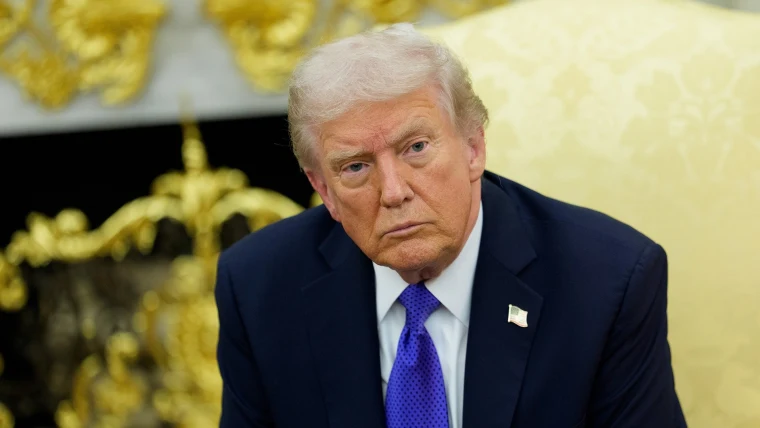
The case could redefine how federal regulators operate by deciding whether presidents may dismiss members of independent agencies at will.
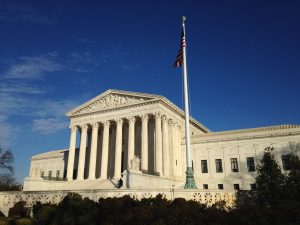
The U.S. Supreme Court heard arguments Monday in a dispute over President Donald Trump’s removal of Federal Trade Commission member Rebecca Slaughter before the end of her statutory seven-year term.
The case, arising after Slaughter’s dismissal earlier this year, centers on a federal law that restricts removal of FTC commissioners to instances of inefficiency, neglect of duty, or malfeasance.
It comes as similar challenges involving the National Labor Relations Board and the Merit Systems Protection Board move through lower courts.
The issue carries national implications because independent agencies regulate areas such as consumer privacy, antitrust enforcement, workplace protections, securities markets, and telecommunications access.
These agencies were designed by Congress to maintain continuity across administrations.
The dispute arrives at a time when rulings such as Seila Law v. CFPB (2020) have already limited certain forms of agency independence, prompting closer scrutiny of how removal protections function across federal commissions.
Congress established fixed terms and for-cause removal limits for the FTC in 1914 to ensure expertise and reduce political pressure on competition enforcement.
Similar structures govern more than 30 federal bodies, including the Federal Communications Commission and the Securities and Exchange Commission, according to the Congressional Research Service.
These agencies rely on bipartisan membership rules that prevent any single party from holding more than a statutory majority.
Lower courts held that Slaughter’s removal violated 15 U.S.C. §41, which outlines the conditions for dismissing commissioners.
The administration argues that Article II’s vesting of executive power allows the president to remove officials he appoints, citing decisions such as Free Enterprise Fund v. PCAOB (2010).
The Supreme Court’s 1935 ruling in Humphrey’s Executor is the central precedent limiting that authority and remains binding unless the justices narrow or overturn it.
The administration maintains that broad removal authority enhances electoral accountability by ensuring regulators follow the president’s policy agenda.
Several independent agency leaders and former officials counter that bipartisan, fixed-term structures guard against sudden shifts in enforcement.
National labor groups and consumer organizations have filed public statements emphasizing that leadership interruptions can delay investigations or rulemaking, pointing to past backlogs at the Merit Systems Protection Board when it lacked a quorum before 2022.
Observers note that Slaughter’s request to remain on the FTC during litigation was denied in September in a 6–3 Supreme Court order, leaving the commission without any Democratic members.
That outcome has drawn attention from stakeholders who rely on multi-member panels to reflect diverse policy viewpoints, particularly in areas such as merger review and consumer fraud enforcement.
A decision allowing at-will removal of commissioners could lead to more rapid changes in regulatory priorities.
For households, this could influence the timing or direction of actions related to privacy protections, false advertising cases, or antitrust scrutiny of digital platforms.
For businesses, reduced stability in enforcement approaches may complicate multi-year planning, especially in sectors where agencies issue interpretive guidance or consent orders that structure market expectations.
Past transitions illustrate the stakes.
For example, after the 2008 financial crisis, the SEC’s enforcement posture shifted incrementally rather than abruptly because of its bipartisan commission structure.
A system with direct presidential control could compress such transitions, affecting how quickly firms and consumers must adjust.
Analyses by the Congressional Research Service show that independent agencies with for-cause removal protections supervise markets touching nearly every U.S. household, including labor rights, transportation safety, and financial disclosures.
Recent Supreme Court rulings—Seila Law in 2020 and Collins v. Yellen in 2021 curbed removal limits for certain single-director agencies, signaling an openness to reviewing long-standing independence models.
Federal staffing data published by the Office of Personnel Management indicates that multi-member boards oversee significant adjudicatory functions, such as federal labor disputes and civil service appeals.
These responsibilities depend on predictable leadership, since panel vacancies can delay case resolution or impose procedural bottlenecks.
A ruling is expected before the Supreme Court term ends in June 2026.
Related cases involving the NLRB and MSPB will resume once the Court clarifies the governing standard for removal.
The upcoming case on Federal Reserve Governor Lisa Cook’s dismissal will provide an additional opportunity for the Court to address whether the Fed’s structure warrants a different constitutional approach.
This dispute addresses how the United States defines the balance between presidential oversight and the long-standing independence of federal regulators.
Independent agencies supervise consumer protection, market competition, financial integrity, and workplace standards, making their stability central to daily economic and legal systems.
Changes to removal protections could alter how reliably these bodies function through shifts in administration.
The Court’s decision will guide expectations for regulatory continuity and clarify the limits of presidential authority in managing these institutions.