Understand Your Rights. Solve Your Legal Problems


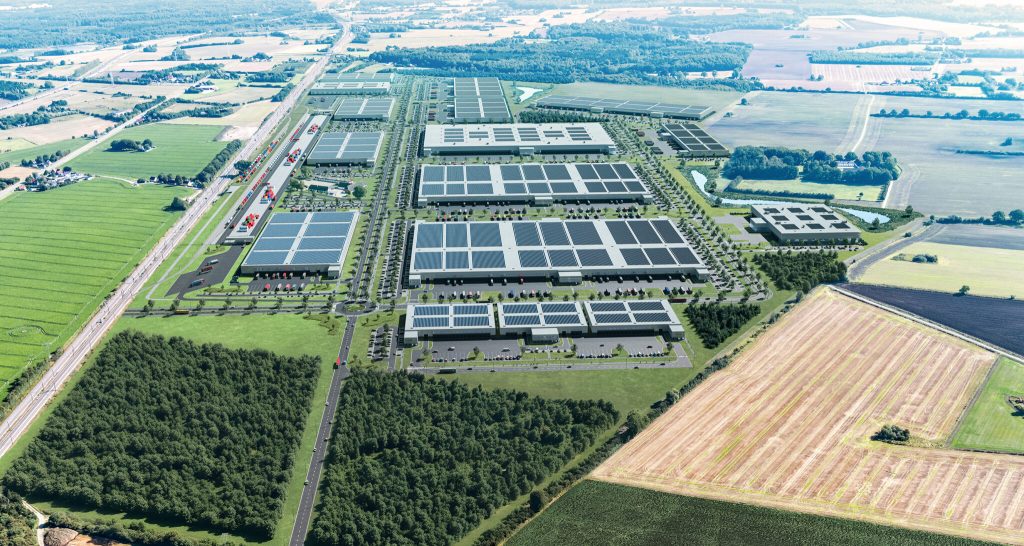
The project would create a large multimodal terminal linking Denmark’s core rail network with regional and European transport routes.
Denmark is taking steps toward establishing a new intermodal freight terminal in the municipality of Ringsted, where a private developer plans to invest approximately EUR 1 billion in a logistics and rail-handling complex.
The proposed facility would occupy several hundred hectares of privately owned land about 60 kilometers west of Copenhagen.
Designed to handle container and trailer transfers between rail and road, the site would sit at the point where Denmark’s principal north–south and east–west rail corridors intersect, alongside a major motorway connection used for domestic and cross-border freight.
The proposal arrives during an extended period of infrastructure expansion across northern Europe, as national governments prepare for higher freight volumes and stricter emissions requirements.
Danish transport officials have signaled for years that shifting a greater share of cargo to rail is necessary to meet climate commitments and reduce long-haul road congestion.
A new logistics hub in Zealand would support that policy goal while offering companies an additional option for consolidating distribution, processing, and export activity.
The location sits on two of Denmark’s busiest rail freight axes one linking Jutland and Funen with Sweden, and another connecting Zealand with ports servicing the Baltic and North Sea regions.
These lines form part of the EU’s Scandinavian–Mediterranean Corridor under the Trans-European Transport Network (TEN-T), which prioritises efficient cross-border freight flows.
The E20 motorway, which links western Denmark with the Øresund region, runs nearby, giving the site direct access to established road distribution channels.
This mix of rail and motorway access mirrors the layout of other major European freight parks, such as those operating in Germany’s Ruhr region and the Netherlands.
Large intermodal sites in Europe commonly attract logistics firms, light manufacturers, and distribution operators seeking proximity to transport infrastructure.
Danish municipalities have historically benefited from these clusters through long-term tenancy agreements, local tax revenue, and supply-chain-related employment.
Ringsted already hosts several regional distribution centers due to its road access; the addition of a rail-connected terminal could expand the region’s capacity to support industries that rely on time-sensitive freight or consolidated export shipments.
International investors have shown increased interest in Nordic logistics assets in recent years, driven by stable demand and the region’s role in north-south trade between Scandinavia and continental Europe.
Shifting cargo from long-haul trucks to electrified rail is a central element of EU transport and climate strategy.
Rail freight produces significantly lower CO₂ emissions per ton-kilometer compared with road alternatives, a factor that has led Denmark to support multimodal infrastructure in its transport plans.
Intermodal terminals also help reduce motorway congestion by concentrating heavy-vehicle movements around controlled access points rather than dispersing them across long-distance routes.
Large modern facilities in Scandinavia and central Europe routinely integrate dedicated green corridors and protected habitats to meet national environmental requirements, which the Ringsted proposal similarly incorporates through designated biodiversity areas.
The ongoing construction of the Fehmarnbelt fixed link between Denmark and Germany is expected to reshape freight patterns across northern Europe.
The immersed tunnel, once completed, will enable faster rail services between Copenhagen and Hamburg and introduce additional capacity for freight operators.
A modern intermodal terminal on Zealand would sit north of the tunnel’s alignment, creating a processing point for trains entering and exiting the Scandinavian side of the corridor.
Comparable infrastructure expansions have followed major European cross-border links, including the Brenner Base Tunnel connecting Austria and Italy, where freight hubs were established in anticipation of increased rail traffic.
What is the purpose of the proposed Ringsted intermodal terminal?
It is designed to transfer freight efficiently between rail and road and serve as a central logistics hub for Zealand and international routes.
How large is the planned development?
The project spans several hundred hectares, combining space for rail handling, logistics facilities, and designated biodiversity areas.
Who is leading the investment?
The development is being advanced by a private real estate and logistics investor, with additional contributions expected from future tenants and infrastructure partners.
How does the project relate to the Fehmarnbelt tunnel?
It would function as a northern freight processing point for increased rail capacity generated by the future Denmark–Germany fixed link.
Has an operational date been confirmed?
No confirmed opening date has been announced; progress depends on planning approvals, construction phases, and coordination with national rail authorities.
Denmark’s plan for a new intermodal freight terminal in Ringsted signals a major shift in how the country intends to manage future logistics demand.
The hub would concentrate rail and road connections in one location, providing operators with a more efficient route for long-distance freight and supporting the transition toward lower-emission transport.
Its development will require close assessment of environmental obligations, regional land use, and integration with national and cross-border rail capacity, particularly as the Fehmarnbelt link progresses.
The central question is how the Ringsted terminal can deliver long-term gains in capacity, sustainability, and network reliability for Denmark’s freight system.