New York Times sues Pentagon over press-access restrictions in major First Amendment case
The New York Times has filed a federal lawsuit challenging new Pentagon rules that limit journalists to approved material and restrict independent reporting. The case argues the policy violates First Amendment protections and could reshape national standards for press access to government institutions.
The New York Times has sued the Pentagon in federal court, alleging that newly imposed media-access contracts unlawfully curtail journalists’ ability to gather and publish information about military affairs.
The lawsuit follows a sweeping policy shift overseen by Defense official Pete Hegseth that removed major news organisations from briefings unless they agreed to limit coverage to Pentagon-approved content. The restrictions were not confined to classified matters; they applied broadly to newsgathering, off-the-record exchanges and the publication of unreviewed material.
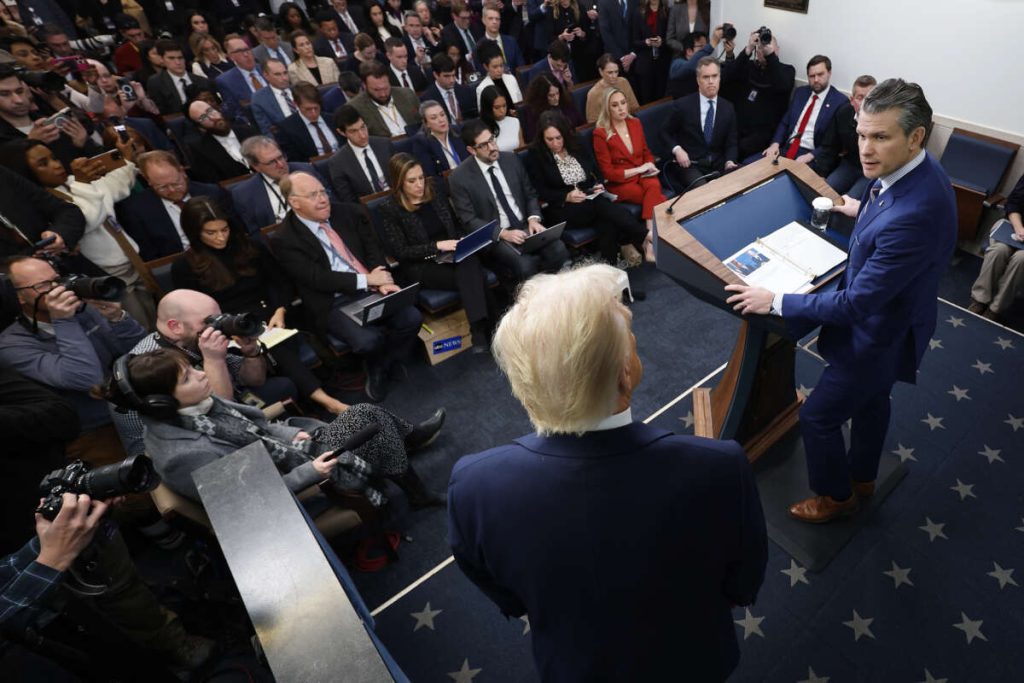
The challenge comes amid a visible transformation inside the briefing room, where legacy outlets have been replaced by ideologically aligned commentators.
Times reporter Julian Barnes and the newspaper are named as plaintiffs, represented by First Amendment lawyer Theodore Boutrous.
The complaint argues the rules amount to unconstitutional prior restraint and undermine the public’s ability to scrutinise decisions made within the Department of Defense. With the Pentagon declining immediate comment, the case raises fundamental legal questions about transparency, executive power and the role of independent reporting in national security oversight.

The New York Times is suing the Pentagon, arguing that new media-access rules introduced in October infringe on press freedoms protected by the Constitution. Journalists were seen leaving their offices that month as outlets evaluated whether to comply with the revised requirements.
What we know so far
The Times filed its lawsuit after the Pentagon introduced access contracts requiring reporters to limit coverage to pre-approved material and refrain from pursuing independent leads. Journalists who declined to sign—including CBS, ABC and The Washington Post—were removed from the briefing room.
This shift became apparent during the department’s third briefing of the year, held in a room largely populated by right-leaning online personalities. The Times argues that the restrictions interfere with constitutionally protected newsgathering and improperly condition access on compliance with content-based controls.
If successful, the lawsuit would block enforcement of the new rules and restore access for outlets that refused to sign.
Takeaway: The dispute centers on whether the Pentagon may require pre-approved reporting as a condition of attending its briefings.
The legal issue at the centre
The lawsuit invokes First Amendment protections that prohibit government agencies from restraining publication or conditioning access on content approval. Courts have long held that while officials may manage logistics and security, they cannot impose policies that suppress independent reporting.
At issue is whether the Pentagon’s agreements qualify as a form of prior restraint—typically defined as government action that prevents publication of lawful information. The Times argues the policy functions similarly by requiring pre-publication review and limiting scrutiny of military operations.
The court will examine whether the rules serve a compelling government interest, whether they are narrowly tailored, and whether less intrusive alternatives exist.
Takeaway: The case tests the boundary between permissible access management and unconstitutional censorship.
Key questions people are asking
Is the Pentagon allowed to remove major outlets from briefings?
Agencies may regulate entry to secure areas, but courts scrutinise actions that restrict access based on viewpoint or impede independent reporting. Whether these rules constitute viewpoint discrimination will be central to the case.
Do the contracts resemble prior restraint?
They bar journalists from publishing unapproved information, which may place them within prior-restraint doctrine. Courts generally view such restrictions as constitutionally suspect.
Why does off-the-record access matter legally?
Limits on informal exchanges can undermine newsgathering. Courts often treat restrictions on how journalists gather information as seriously as restrictions on publication itself.
What this means for ordinary people
Press-freedom cases directly affect how much independent information the public receives about military operations, budget decisions and national-security policy. Restrictive access rules may result in coverage that reflects only official narratives.
The case highlights the legal difference between protecting sensitive information and imposing administrative controls that suppress reporting across non-classified subjects. The outcome could influence how future administrations structure media access and whether agencies may require restrictive agreements as a condition for participation.
Takeaway: The ruling may affect the public’s ability to receive unfiltered reporting on national-security issues.
Possible outcomes based on current facts
Best-case scenario:
A court could temporarily block the policy, restoring access to all outlets while the case proceeds. Agencies sometimes revise disputed rules to avoid prolonged litigation.
Worst-case scenario:
The court could uphold the contracts, giving agencies wide latitude to condition press access on adherence to internal communication controls.
Most common procedural pathway:
Access cases often turn on constitutional arguments rather than extensive factual disputes, meaning the court may resolve the matter through motions rather than a full trial.
Takeaway: Judges will focus on whether the Pentagon’s policy burdens press rights beyond what the Constitution allows.
Frequently asked questions
Why were mainstream organisations removed from briefings?
They declined to sign contracts requiring reporting to be limited to Pentagon-approved material.
Is the lawsuit only about the Times?
The Times is the plaintiff, but its arguments apply broadly to all news organisations seeking equal access.
Can the Pentagon set reporting rules for journalists?
Agencies may set ground rules for location and security, but courts examine closely any policy that restricts lawful newsgathering.
Will this affect other federal agencies?
The ruling may influence how other departments craft press-access policies, especially where prior-restraint concerns are raised.
Final legal takeaway
The New York Times’ lawsuit against the Pentagon marks a pivotal clash over government control of public information. At stake is whether officials may tie access to pre-publication review and restricted reporting. The case now moves to federal court, where judges will consider how far the First Amendment limits agency power and whether the Pentagon’s policy undermines the public’s right to independent oversight. The outcome could reshape national standards for press access across government.