Who is Brian Cole? What we know about the January 6 pipe bomb suspect
The identification and arrest of a Virginia man in the January 6 pipe bomb case affects an ongoing federal investigation and public understanding of a long-unresolved national security incident.
Federal agents have arrested Brian Cole, a 30-year-old resident of Woodbridge, Va., in connection with the pipe bombs placed near the Democratic National Committee and Republican National Committee headquarters on Jan. 5, 2021.
The arrest occurred early Thursday as law-enforcement teams executed warrants at a suburban home, ending a years-long nationwide search for the individual seen on security footage walking through Capitol Hill the night before the attack on the U.S. Capitol.
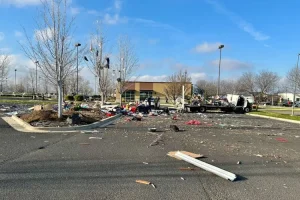
Images posted online showed a heavy police presence around the residence as FBI personnel processed evidence.
The case is significant because the devices were discovered just hours before crowds gathered at the Capitol, prompting heightened security concerns and years of unanswered questions.
Cole’s arrest gives investigators an opportunity to test earlier theories, re-evaluate digital and physical evidence and examine how federal agencies handled one of the most complex domestic investigations since the Boston Marathon bombing.

The arrest follows a recent FBI push that included a $500,000 reward for information on the person who placed devices near the Democratic and Republican National Committee headquarters in Washington, D.C.
What is publicly known about Brian Cole
Cole is a Virginia resident whose name surfaced publicly for the first time on Thursday when federal officials announced the arrest. Woodbridge, the suburb where he was taken into custody, has grown rapidly in the past decade as Washington’s commuter belt expanded, and many residents travel to federal workplaces in the region.
Public records in similar federal cases have often revealed limited background information until initial court filings become available, which outline charges, alleged conduct and procedural history.
Investigations tied to improvised explosive devices frequently begin with basic demographic details before expanding into work history, travel patterns or financial records.
In past FBI cases involving homemade explosives, such details emerged gradually as courts unsealed documents, allowing the public to see how investigators traced earlier material links.
Takeaway: Public understanding of Cole’s background will likely develop as court records become available.

Images shared on social media showed a large police presence outside Cole’s home in the Woodbridge, Va., suburb.
How investigators connected Cole to the 2021 devices
The FBI has spent years evaluating the surveillance footage captured across several blocks of Capitol Hill the night the bombs were placed. The videos showed a hooded figure walking from South Capitol Street toward both national party headquarters, setting down items before leaving the area. Although the footage gained widespread attention, investigators said early analyses yielded few identifiable traits because the suspect wore a face mask, gloves and distinct but commercially available athletic shoes.
Federal cases involving delayed arrests typically involve a renewed assessment of earlier leads, including retailer records, location data and interviews conducted shortly after the event. In previous high-profile domestic investigations, arrests occurred only after agents revisited older evidence using improved analytic tools.
Takeaway: Cole’s identification appears to follow a pattern where older materials become more useful as forensic and digital methods advance.

The devices were built using threaded galvanized pipes, kitchen timers and black powder, according to investigators. One of the recovered bombs is shown above.
Why the devices created long-term national security concerns
The pipe bombs, which were made from galvanized pipes, kitchen timers and black powder, prompted a rapid response from the FBI, U.S. Capitol Police and explosives technicians on Jan. 6, 2021.
The discovery required evacuations near both party headquarters and briefly redirected resources at a time of heightened emergency. Federal agencies later described the incident as one of the most complex improvised explosive device investigations since 2013, citing the overlapping crises unfolding that day.
Authorities have long warned that simple components can still pose significant risks, which is why agencies periodically release advisories on common materials used in homemade devices. In prior domestic cases, similar construction methods complicated efforts to trace items to a specific purchaser or manufacturer.
Takeaway: The bombs’ basic construction contributed to the prolonged difficulty in determining who built and placed them.
How unresolved questions shaped public interest
Interest in the case grew as the investigation extended beyond its first year, with online communities attempting to identify the masked individual through gait analysis and video comparison.
Several individuals were mistakenly identified by commentators, reflecting a broader trend in which high-profile cases spur public attempts at parallel investigations. False claims have appeared in other major federal cases in the past decade, prompting attorneys and officials to warn about the potential harms of premature attribution.
Federal investigators have generally emphasized that only court records and official statements should be treated as authoritative. In previous domestic security investigations, similar waves of speculation complicated public understanding as agencies continued their work.
Takeaway: Cole’s arrest provides a clearer foundation for public information after years of speculation.
What Cole’s arrest means for the wider January 6 inquiry
The identification of a suspect in the pipe bomb case arrives as federal courts continue to process hundreds of cases related to the Capitol attack.
Although the pipe bombs were discovered before crowds reached the Capitol, their placement contributed to national security concerns that intensified the response. The arrest may prompt congressional interest in how the case evolved and whether earlier evidence could have been interpreted differently.
Federal investigations involving coordinated political targets often lead to broader reviews of security practices, including guidance for federal facilities and party organizations. Similar reviews followed incidents in 2018 and 2020 in which mailed explosive devices targeted political figures.
Takeaway: The arrest adds new detail to the broader examination of security vulnerabilities exposed in early 2021.
Questions people are asking
Was anyone injured by the pipe bombs?
No. The devices were located before detonation and were rendered safe by explosives experts.
Why did it take nearly five years to identify a suspect?
The components were common, early data comparisons were inconclusive and investigators required time to re-evaluate evidence gathered in 2021 and 2022.
Is Cole connected to the broader events of January 6?
Authorities have not indicated any link beyond the placement of the devices the night before the attack.
What happens next in the case?
Further details are expected in initial court filings, which typically outline charges and factual allegations.
Will more information about Cole become public?
Yes. Background information generally becomes available through court documents and official statements as the case proceeds.
Final public-interest takeaway
Brian Cole’s identification in the January 6 pipe bomb case marks a significant shift in a long-running federal inquiry that has remained a point of public concern.
The arrest matters because the devices contributed to early security strain on a day shaped by multiple emergencies. As charges are filed and records become public, more detail about Cole's background and alleged actions will inform ongoing discussions about domestic security, investigative capacity and accountability tied to the January 6 events.