Understand Your Rights. Solve Your Legal Problems


The case could redefine how federal agencies set rules for reporters seeking access to government facilities.
The New York Times has sued the Department of Defense in federal court, arguing that the Pentagon’s new credentialing agreement unlawfully restricts how journalists collect information inside the building.
The policy, introduced in October, requires reporters to pledge not to seek any information the government has not already approved for release.
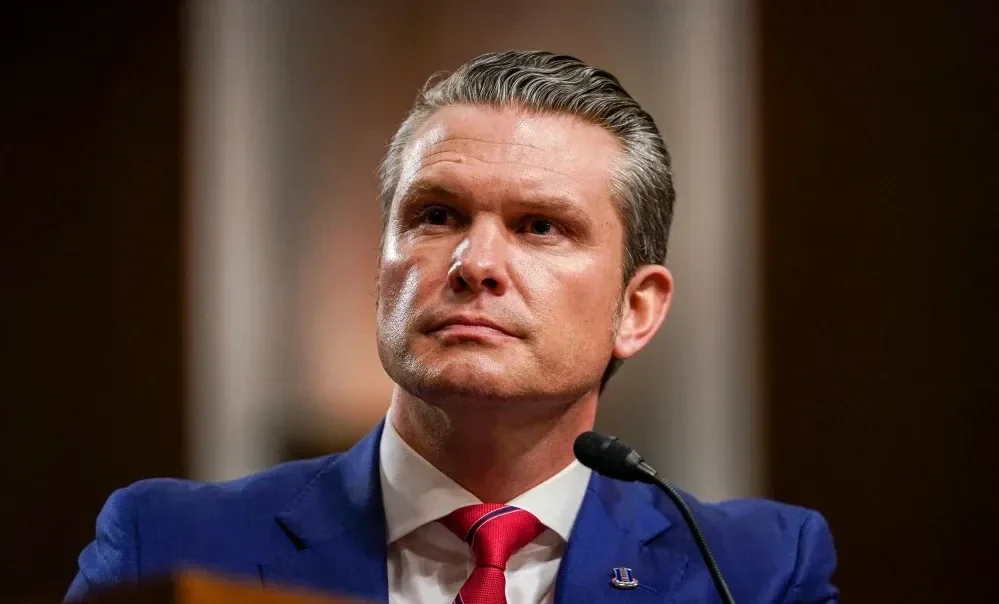
The Times filed its complaint in the U.S. District Court for the District of Columbia on Thursday and named Defense Secretary Pete Hegseth and senior Pentagon spokesman Sean Parnell as defendants.
The case raises broad concerns about transparency in national security reporting and how access rules affect public oversight of military operations.
Press groups say the policy departs from decades of Pentagon practice, which has long allowed reporters to ask questions and request background material even when officials decide not to respond.
The lawsuit comes as federal agencies face ongoing scrutiny for access restrictions, including separate disputes involving the White House and the Justice Department earlier this year.
The Pentagon’s updated agreement requires credentialed reporters to commit in writing that they will not request information unless the department has formally cleared it for release.
The Times’ lawsuit argues that this language bars routine questions about unclassified plans, budget decisions or personnel matters that federal agencies typically discuss under standard public affairs rules.
The agreement went into effect on Oct. 1, according to internal guidance cited by press associations.
The filing points to Supreme Court rulings such as Sherrill v. Knight (1977), where the D.C. Circuit held that government credentialing must follow clear, fair standards and cannot rely on broad discretion.
The Times also notes that the Pentagon’s 2014 media operations update, which governs embedded reporting and overseas access, contains no restrictions on soliciting unclassified information.
The complaint lists national security reporter Julian E. Barnes as a co-plaintiff. He returned his Pentagon badge rather than sign the document, which reporters had to submit before gaining access to briefing rooms and workspaces inside the building.
Press freedom organizations have criticized the rule since October. The Reporters Committee for Freedom of the Press said in public statements that the pledge conflicts with constitutional protections governing newsgathering.
The Pentagon Press Association noted that it raised concerns with the department after more than 50 reporters collectively returned their badges.
The White House Correspondents’ Association referenced its own recent access challenges when acknowledging the Times’ lawsuit.
The group pointed to court rulings requiring agencies to justify restrictions with specific reasons, including decisions in the Jim Acosta and Brian Karem cases. Both centered on credential suspensions during the previous Trump administration.
Pentagon officials have defended the agreement in public comments, saying it protects personnel and limits the risk of inadvertently releasing operational details.
The department has not published any technical guidance explaining how the pledge would be applied during routine interactions with reporters.
The policy has altered the makeup of reporters who can attend briefings in person. After mainstream outlets declined to sign the agreement, the Pentagon issued credentials to a smaller pool of applicants.
Public records show that the department added several outlets that had not previously covered defense matters daily.
This shift limits the number of experienced reporters able to ask questions on topics such as procurement costs, disciplinary reviews or cyber readiness.
Reduced access can affect public understanding of long-term military contracts. For example, the Government Accountability Office estimated in 2023 that lifetime costs for the F-35 program could exceed $1.7 trillion.
Reporters often question officials about those figures during routine briefings. With fewer credentialed journalists present, opportunities to press for updates on major spending programs may narrow.
Court filings in the 2018 Acosta case show that judges required the White House to follow due process standards consistent with Sherrill v. Knight.
The same principles were cited when a federal court ordered partial restoration of Associated Press access to certain White House events in 2024. That ruling is pending before the D.C. Circuit.
A Knight Foundation survey from 2022 found that 66 percent of responding journalists believed federal agencies had become less transparent over the previous decade.
The study highlighted increases in controlled briefings, background-only sessions and limits on in-person questioning.
Pentagon briefings are livestreamed on Defense.gov and archived on the Defense Visual Information Distribution Service.
Transcripts typically appear within a day, although release times vary depending on operational priorities.
Public budget documents, including the Defense Department’s annual justification books, remain available through the Office of the Under Secretary of Defense (Comptroller).
Reporters who do not hold Pentagon credentials can still submit inquiries to the Defense Press Operations team. The department maintains standard response procedures based on long-standing public affairs guidance.
Federal courts have held that agencies must use neutral, transparent standards when granting or revoking credentials. The D.C. Circuit’s Sherrill v. Knight ruling remains the leading case, requiring agencies to explain any denial and avoid viewpoint discrimination.
No. Classification rules are set by federal law and executive orders. The dispute concerns unclassified information and whether journalists may request details that officials have not pre-cleared.
Reporters who declined to sign no longer have access to briefing rooms, media workspaces or scheduled in-person events. Their coverage continues from outside the building, but they cannot pose questions during live Pentagon sessions.
Some outlets have indicated they may file separate briefs but have not announced formal participation. Amicus filings commonly occur in access-related lawsuits after initial court submissions.
Yes. The department updated embed rules in 2014 and security procedures in 2018, but neither included restrictions on soliciting unclassified information.
The government is expected to file its initial response in the coming weeks. The court may set a schedule for motions, including any request for a preliminary injunction.
Any decision could be appealed to the D.C. Circuit, which oversees many access-related disputes involving federal agencies.
The lawsuit raises broader questions about how federal agencies manage on-site reporting, especially when national security issues are involved.
It matters to journalists who track military planning, spending decisions and internal oversight, because limits on access directly shape what the public learns from those inquiries.
Any ruling could influence how other departments design their credentialing rules, particularly agencies that work with sensitive or high-risk operations.
The courts will now have to weigh long-standing press-freedom protections against the government’s security needs, a balance that has been tested many times before.