Understand Your Rights. Solve Your Legal Problems


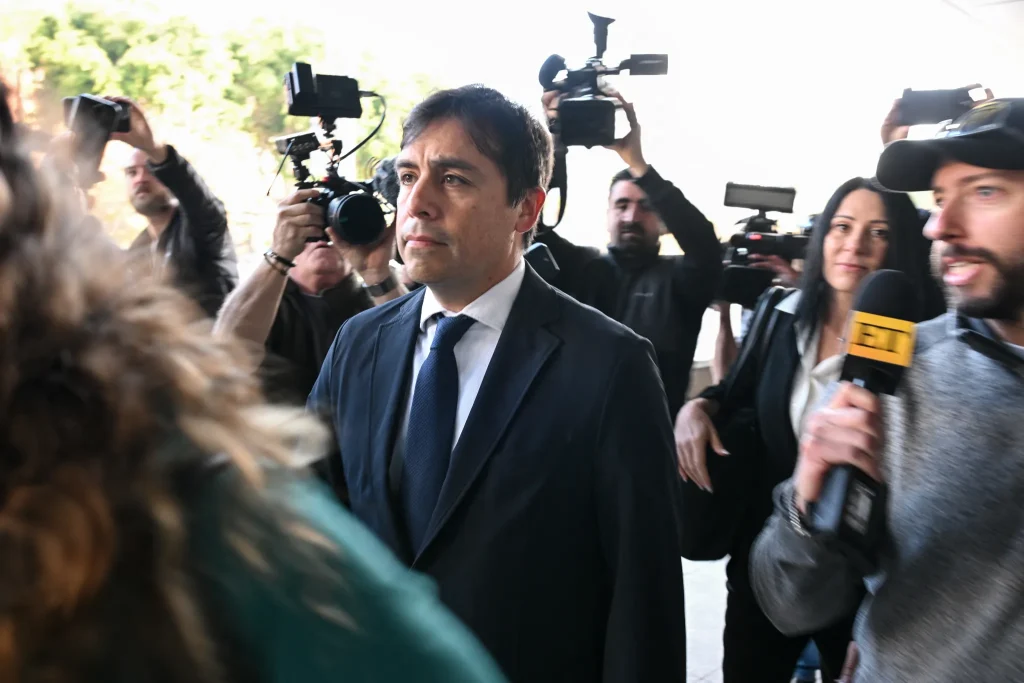
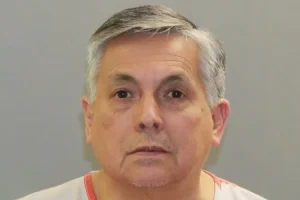
Dr. Salvador Plasencia has been sentenced to 30 months in federal prison for illegally supplying Matthew Perry with ketamine before the actor’s fatal overdose. He is the first of five defendants charged in the case to receive a sentence, setting the tone for the wider federal prosecution. The ruling highlights the legal fallout over medical misconduct and controlled substance distribution.
The Los Angeles federal courthouse fell silent on Wednesday as the first sentence in the Matthew Perry death case was delivered — a moment that forced Perry’s family to confront the doctor who illegally supplied him ketamine in the weeks leading up to his fatal overdose.
Dr. Salvador Plasencia, once welcomed into the actor’s orbit as “Dr. P,” was handed a 30-month federal prison sentence after admitting to distributing controlled substances outside any legitimate medical purpose. Prosecutors say he exploited Perry’s vulnerability during a relapse, secretly delivering vials of ketamine while fully aware of the actor’s decades-long struggle with addiction.

Matthew Perry's mother, Suzanne Perry, and stepfather, Keith Morrison, arrive at federal court for the sentencing of Dr. Salvador Plasencia on Wednesday.
Inside the courtroom, Perry’s mother, Suzanne, and stepfather, Keith Morrison, described the profound emotional damage caused by Plasencia’s actions — a “deep well” of grief that has not lifted more than two years after the Friends star was found unresponsive in his Los Angeles hot tub in October 2023.
Their statement sharpened the legal and moral stakes in a case that spans two doctors, a known drug dealer, a street supplier and Perry’s own assistant. With four defendants still awaiting sentencing, Plasencia’s punishment signals the start of a broader reckoning over medical ethics, criminal liability and the exploitation of a man who was fighting to stay alive.

Dr. Salvador Plasencia arrives at a federal courthouse in Los Angeles for his sentencing hearing. The disgraced doctor was charged in connection with the death of actor Matthew Perry.
Federal investigators spent nearly a year reconstructing how ketamine was funneled to Matthew Perry in September and October 2023. Prosecutors say Plasencia and former San Diego physician Mark Chavez sourced the drug through fraudulent prescriptions before selling it to Perry for tens of thousands of dollars in cash.
As part of the arrangement, Perry’s live-in assistant, Kenneth Iwamasa, was taught by Plasencia to inject the drug and later administered the fatal dose.
Recovered text messages revealed discussions between Plasencia, Chavez and dealer Erik Fleming about pricing and supply, including Plasencia’s remark: “I wonder how much this moron will pay.” Three co-defendants — Chavez, Iwamasa and Fleming — have pleaded guilty. Jasveen Sangha, known to investigators as the “Ketamine Queen,” later pleaded guilty to selling the batch of ketamine that reached Perry. Plasencia is the first to be sentenced, with the remaining defendants’ hearings scheduled across December 2025 and January 2026.

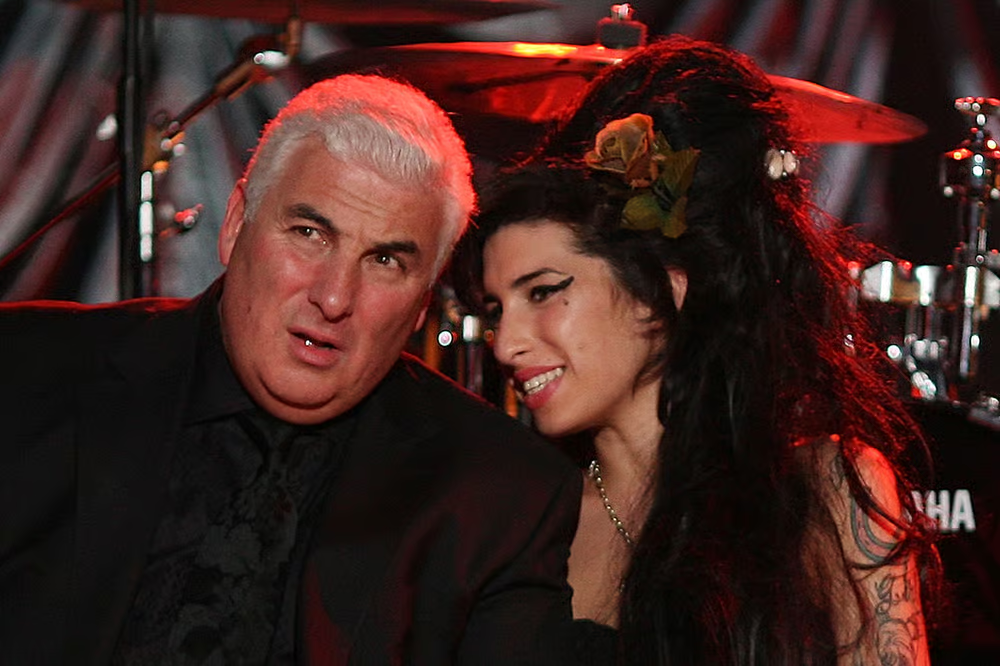
Matthew Perry pictured at a Los Angeles event during his later career.
This case centers on the illegal distribution of ketamine, a Schedule III controlled substance. Federal law prohibits anyone — including licensed medical professionals — from dispensing such drugs without a legitimate therapeutic purpose and proper documentation. To establish a violation, prosecutors must show that a defendant knowingly supplied the substance outside accepted medical standards.
Courts consider factors such as fraudulent prescribing, selling drugs for profit, administering substances without oversight and knowingly supplying someone with a history of addiction. A conviction does not require proof that the defendant intended harm. Rather, the unlawful distribution itself constitutes a felony. Sentencing then depends on the quantity involved, the degree of planning, prior conduct and whether the actions contributed to serious injury or death.
Plasencia was not charged with homicide. However, prosecutors argued that his illegal distribution significantly contributed to the circumstances surrounding Perry’s fatal overdose, which weighed heavily in the court’s sentencing decision.
Three defendants — Chavez, Fleming and Iwamasa — have already pleaded guilty to federal drug charges. Sangha pleaded guilty ahead of trial. All face potential prison sentences when they return to court in December and January.
Investigators relied on text messages, financial transfers, drug procurement logs and cooperation from co-defendants. The evidence showed a coordinated effort to obtain ketamine through illicit channels and supply it to Perry.
Authorities have not alleged that Perry understood the full sourcing of the drug. The case focuses on the defendants’ misconduct rather than on Perry’s knowledge or intent.
Because the remaining defendants have entered plea deals, the legal process is now focused on sentencing rather than new charges.
The case underscores how federal law treats controlled-substance abuse by medical professionals as a serious criminal offense. When a doctor distributes a Schedule III drug outside legitimate medical practice, the law equates the act with drug trafficking — often with enhanced penalties due to the abuse of professional trust.
It also demonstrates how criminal liability can extend across a supply chain. Even if one individual administers the final dose, others who sourced, procured or delivered the substance may still be charged if they acted unlawfully. For the public, the case highlights why strict regulations govern controlled substances and why documentation, prescription monitoring and clinician oversight are vital safeguards designed to prevent harm.
Defendants who cooperated early, played a limited role or accepted responsibility may receive shorter federal prison terms followed by supervised release. Cooperation with prosecutors often influences sentencing.
Individuals who profited from drug trafficking, exploited medical credentials or facilitated access to large quantities of controlled substances could face multi-year sentences. Abuse of a professional license is viewed as a significant aggravating factor.
Cases involving controlled-substance distribution by medical professionals typically result in custodial sentences, supervised release conditions and permanent restrictions on future medical practice. Co-defendants often receive staggered sentences based on the extent of their involvement.
No. Investigators say the ketamine supplied to Perry was obtained through fraudulent prescriptions and back-channel sources, not through legal medical treatment.
Because the distribution involved fraudulent prescriptions, controlled substances and alleged coordination across multiple individuals, federal narcotics statutes and conspiracy laws were triggered.
Prosecutors have not indicated additional charges. The remaining legal activity focuses on sentencing the four other defendants.
Yes. Convictions for unlawful controlled-substance distribution almost always trigger permanent revocation or long-term restrictions on medical licensure.
Dr. Salvador Plasencia’s 30-month sentence marks the opening chapter of a much larger federal reckoning over Matthew Perry’s death. With four defendants still awaiting sentencing, the court is now set to determine how accountability should be apportioned across the broader ketamine-supply network.
The case stands as a stark warning about the consequences of medical misconduct, the criminal risks of controlled-substance diversion and the devastating impact such actions can have on vulnerable patients and their families. As the remaining hearings unfold, this prosecution will continue shaping the legal and ethical conversation around addiction, exploitation and professional responsibility.