Understand Your Rights. Solve Your Legal Problems


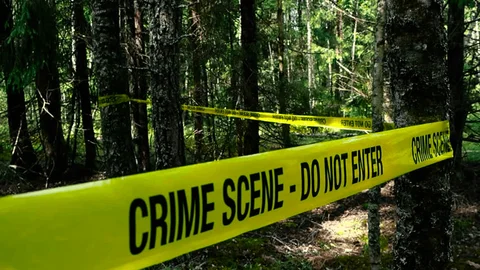
Prosecutors in northern Michigan say a mother and stepfather killed a 22-year-old pregnant woman and her unborn child in a remote national forest, raising concerns about family violence and safety in rural areas.
Prosecutors in Wexford County have charged Cortney Bartholomew and her husband, Bradly Bartholomew, in the killing of 22-year-old Rebecca Park, who was in the final weeks of pregnancy when she disappeared in early November.
Authorities allege the couple transported Park from their home area near Boon Township to a wooded section of the Huron-Manistee National Forest, where she was stabbed and her baby was forcibly removed from her womb.
Park’s body was discovered on Nov. 25 by a volunteer searcher using location information from her phone, roughly three weeks after she was reported missing.
The defendants, identified as Park’s biological mother and stepfather, face multiple life-punishable charges, including first-degree premeditated murder, felony murder, torture and assault on a pregnant individual with intent to cause miscarriage or stillbirth.
The investigation, spanning rural roads and federal forestland, has drawn support from the Michigan Attorney General’s Office and several local agencies.
The search area forms part of a forest system that covers nearly one million acres across the northern Lower Peninsula.
Park was last seen at her mother’s home in Boon Township on Nov. 3 and was reported missing the next day. Her body was located on Nov. 25 in the Manistee section of the national forest, about 20 miles west of Cadillac.
According to prosecutors, Park, who was near full term in her pregnancy, was forced to lie on the ground, stabbed and had her baby cut from her body. Both deaths occurred in the forest clearing where she was found.
Cortney and Bradly Bartholomew, aged 40 and 47, were each charged with eight counts, including murder, torture, conspiracy, assault on a pregnant individual, unlawful imprisonment and moving a dead body without medical authorization.
A habitual-offender notice was also filed in Bradly’s case.
Publicly available court documents confirm that Park was the biological child of Cortney but had been adopted and raised by another family earlier in her life.
The Wexford County Prosecutor’s Office is leading the case with assistance from the Michigan Attorney General, which frequently joins complex homicide prosecutions involving extensive forensic evidence.
Officials have said they expect to present digital records, autopsy findings and search-related materials during early hearings.
Residents from Cadillac and surrounding areas have gathered at hearings carrying signs calling for justice for Park and her unborn child.
Community members also organized search parties in the weeks before Park’s body was found, including volunteer-led grid searches through forest trails and roadside areas.
Vehicles outside the courthouse have displayed messages such as “Justice for Becca and Baby Park,” echoing advocacy displays seen in other high-profile Midwest homicide cases.
Courtroom attendance has remained high, including by residents who took part in the search efforts. Local officials have said volunteer turnout was unusually strong for a missing-person case in a rural county.
The killing has raised concerns about the challenges facing law enforcement in rural areas where missing-person searches can span vast, wooded landscapes.
The Huron-Manistee National Forests extend across more than 978,000 acres, with limited cellular coverage and difficult terrain that complicate search and rescue operations.
Family-related and intimate-partner homicide patterns also place this case within a broader national issue.
Public health research shows that homicide is a leading cause of death for pregnant and postpartum women in the United States, surpassing some medical causes in several states.
Michigan and other states strengthened penalties for harming pregnant individuals over the past two decades in response to similar incidents.
The case has received attention from regional and national news outlets, placing it among a small number of fetal-abduction homicides that have prompted public scrutiny and wider discussion about legal protections for pregnant victims.
Federal crime statistics show that family members are responsible for roughly one in five killings of female victims nationwide, a proportion that has remained stable for more than a decade.
Women face significantly higher rates of lethal violence from intimate partners or relatives compared with men.
Research from public health agencies shows that homicide ranks among the top causes of death for pregnant women, prompting several states to expand statutory protections for victims carrying near-term pregnancies.
Michigan’s criminal code includes specific penalties for assaults that cause miscarriage or stillbirth, reflecting these policy trends.
Hearing schedules for the Bartholomew case are available through Wexford County’s online district court docket.
Michigan trial courts may authorize livestreams of certain hearings under state court rules, though livestreaming is determined by individual judges.
Regional news outlets in northern Michigan have been providing regular coverage, including televised updates on afternoon and evening newscasts.
Charging documents and selected filings can be obtained through Michigan’s online court records system, where public access is available for many counties.
Each defendant faces eight counts: first-degree premeditated murder, felony murder, torture, conspiracy to commit torture, assault on a pregnant individual with intent to cause miscarriage or stillbirth, conspiracy to commit that assault, unlawful imprisonment and removal of a dead body without authorization. Several of these charges carry potential life sentences.
Authorities have stated that Park was 38 to 39 weeks pregnant when she disappeared, only days from her expected due date. An autopsy confirmed she was no longer pregnant when she was found.
Two relatives are facing separate charges. Park’s half-sister is charged with lying to police and tampering with evidence, while Park’s fiancé faces drug-related charges. Neither is charged with homicide.
Prosecutors have not disclosed a motive. Officials have said that the charges are based on physical, digital and investigative evidence but have not assigned a specific explanation for the alleged actions.
Public reporting states that Park was the biological daughter of Cortney Bartholomew but had been adopted and raised by another family. Relatives have spoken publicly about their efforts to search for her and support the investigation.
Both defendants remain held without bond. The next steps include a probable-cause conference and a preliminary examination to determine whether the charges move to circuit court.
These hearings are expected to include early testimony, forensic summaries and evidence gathered from the search and recovery efforts.
Law enforcement continues to review material from the forest site, vehicles and electronic devices as part of the broader investigation.
Authorities are also working to confirm the status and location of the baby’s remains and will release verified information when available.
The killing of Rebecca Park has drawn sustained public attention and prompted a broad response from residents, volunteers and investigators.
The allegations involve severe violence and a remote forest setting, highlighting ongoing concerns about rural safety, missing-person response systems and protections for vulnerable victims.
As the case moves through Michigan’s courts, upcoming hearings will shape which findings become public and how the justice system addresses the evidence.
👉 DNA from 1987 crime scene links Colorado killing to serial offender 👈