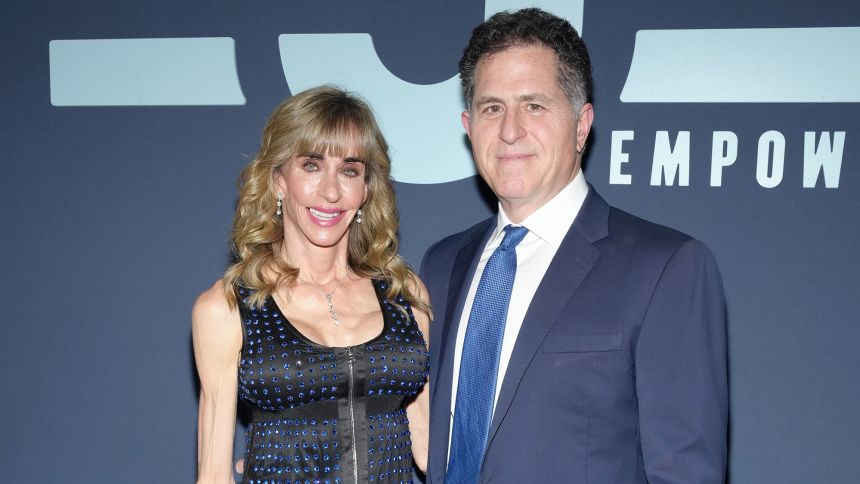
Dell family pledges $6.25 billion to seed investment accounts for 25 million U.S. children
The commitment broadens access to new federally backed children’s investment accounts for families in lower-income ZIP codes across the United States.
The Michael & Susan Dell Foundation has pledged $6.25 billion to help seed investment accounts for about 25 million children in the United States.
The announcement followed confirmation from CNBC that the pledge will work alongside the federal government’s new tax-advantaged “Trump accounts,” which begin for children born between 2025 and 2028. The Dell funding covers children who fall outside the federal birth window, focusing on those aged 10 and under in ZIP codes with median incomes below $150,000. Invest America, a policy advocacy group partnering with the foundation, described the donation as the largest private investment in U.S. children to date.
The pledge matters because it expands access to long-term savings tools beyond the federal rollout. Families with older children, who would not have received federal seed funding, gain access to a similar start. The model also signals a larger shift toward shared public and private support for children’s financial platforms, raising questions about how employers, community groups and investment firms will structure their own participation before the program’s launch.
What we know
The federal program provides a $1,000 contribution for eligible children born from 2025 to 2028. Accounts are set to open on July 4, 2026. Parents will need to open an account for funds to be deposited, with IRS instructions still pending.
The Dell commitment adds a $250 contribution for qualifying children born before 2025. This expansion brings millions of older children into a program that would otherwise focus only on newborns.
Invest America worked to advance the legislation behind the accounts and has compared the concept to earlier state-level children’s savings programs. For example, Maine’s Harold Alfond Foundation has offered universal $500 educational grants since 2008, though that effort reaches far fewer families.
The accounts can only invest in low-cost index funds tied to broad U.S. market benchmarks. This design aims to reduce risk and fee exposure over time.
The takeaway: the pledge enlarges the program’s reach and accelerates participation across income brackets.
Community and official response
Public discussion has focused on the scale of the effort and its potential effect on long-term wealth inequality. Policymakers involved in the program have emphasised the role of early financial exposure in improving long-term outcomes. Analysts in the philanthropy sector note that this is one of the few U.S. programs that links federal grants, employer matches and private donations under a unified framework.
Families have raised practical questions online, mainly about eligibility and the steps required to open an account. Comparisons to 529 college-savings plans remain common, as the Trump accounts serve a broader set of long-term financial goals.
The takeaway: reaction has centred on access, clarity and the system’s long-term potential.
Audience impact and media context
The accounts act as long-term investment tools. They are not designed for short-term withdrawals, and funds remain locked until the child turns 18. This means parents must navigate account setup, onboarding and documentation to receive federal or private contributions.
The Dell commitment also marks one of the largest private expansions of a federal savings program. Previous efforts, such as statewide college-savings incentives, reached far smaller populations. By linking employer matches, private donations and federal grants, the program could shape future benefit models in ways similar to how auto-enrolment reshaped retirement plans in the 2000s.
The takeaway: the program may influence how employers and policymakers approach children’s savings benefits.
Expert or data insight
Federal data on broad U.S. index funds shows that long-term exposure typically outperforms traditional savings accounts over decades. Studies cited by program advocates indicate that children with early savings accounts are more likely to complete higher education and maintain long-term employment. These findings align with earlier research from institutions such as the Center for Social Development, which has documented the effect of early asset ownership on long-term outcomes.
The takeaway: available research supports early investment exposure as a factor in long-term financial and educational stability.
How to watch or listen
Parents will be able to open Trump accounts from July 4, 2026, once participating financial institutions receive final guidance from the Treasury and the IRS. Children born between 2025 and 2028 receive the $1,000 federal contribution once the account is active. Children aged 10 and under in qualifying ZIP codes receive the Dell-funded $250 contribution.
Funds can only be placed in low-cost index-tracking investments. Assets transfer into an IRA when the child reaches age 18, and withdrawals follow standard retirement-account tax rules.
The takeaway: families must open the account to access either federal or philanthropic funds.
Questions people are asking
Who qualifies for the federal $1,000 contribution?
Children born in the United States from 2025 through 2028 qualify once they have a Social Security number. Parents must open the account to activate the deposit. The IRS will release detailed instructions before the launch.
Who qualifies for the Dell-funded $250 contribution?
Children aged 10 or under born before January 1, 2025, in ZIP codes with median incomes of $150,000 or less qualify. Invest America says eligibility is automatic after account creation.
How do the accounts differ from 529 plans?
These accounts support general long-term saving, not only education. They convert to IRAs at age 18. Investment options are limited to low-cost market-tracking funds, and withdrawals after rollover are taxed under IRA rules.
Can employers contribute?
Yes. Dell Technologies has said it will match the $1,000 federal grants for eligible children of its employees. Other employers may adopt similar policies.
Do other countries have comparable programs?
Several countries, including the UK, have used child trust-style accounts, but none currently operate at a scale that combines federal grants with significant private funding.
What happens next
The Treasury and IRS will issue final instructions outlining account setup, verification processes and investment guidelines. Financial institutions will prepare digital platforms for onboarding. Employers and philanthropic groups may announce additional matches or contributions as the launch approaches.
The takeaway: rollout now moves from legislation to implementation, with operational guidance pending.
Final public-interest takeaway
The Dell family’s $6.25 billion pledge expands a new national savings program to millions of additional children. The combined government-private model aims to build long-term financial security from early childhood, especially in lower-income communities. Families will soon need clear guidance on eligibility and setup as financial institutions prepare for the 2026 launch. The program’s long-term impact will depend on participation, ongoing contributions and broader support from employers and donors.
👉 Also trending: Jada Pinkett Smith sued for alleged death threat: inside the $3M claim shaking Hollywood 👈