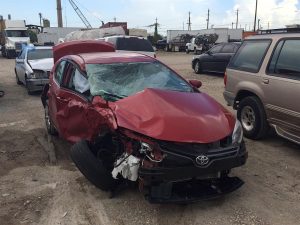
Evidence remains the backbone of motor-vehicle accident litigation, yet the types of evidence and the depth of analysis required have expanded dramatically in recent years. Attorneys handling cases that involve car accident evidence in Arizona must understand not only the traditional forms of documentation used in collision analysis, but also the complex digital data systems that now play a central role in determining liability. As vehicle technology advances and roadways become more connected, the practice of reconstructing collisions requires greater technical fluency, interdisciplinary collaboration, and strict evidentiary strategy.
The following analysis reflects the real procedural challenges attorneys face in Arizona’s modern litigation environment.
The Shift From Traditional Evidence to Multilayered Data Systems
For decades, accident litigation followed a familiar pattern built on four categories:
- Police crash reports
- Witness statements
- Vehicle damage analysis
- Medical documentation
These sources still matter, but they no longer capture the full picture of collision causation. Modern vehicles, commercial fleets, and smartphones generate enormous amounts of data that reveal operational behavior, driver decisions, and environmental conditions with far more precision than eyewitness accounts or officer narratives.
This shift requires attorneys to interpret complex data streams, understand technical terminology, and work closely with engineers and digital-forensic specialists. Where once a single photograph or officer diagram could settle a dispute, today’s collisions often require layered reconstructions involving multiple evidence categories. As a result, the traditional model of case evaluation has evolved into a multidisciplinary investigative process that rewards early action, technical literacy, and deep coordination across professional fields.
Vehicle Event Data Recorders: Precision Inside the Vehicle
Event Data Recorders (EDRs), sometimes referred to as automotive “black boxes,” capture crucial operational facts such as:
- Pre-impact speed
- Brake application
- Throttle position
- Steering inputs
- Seatbelt status
- Delta-V (change in velocity during impact)
This data is objective, time-stamped, and far more reliable than human recollection. EDR downloads frequently determine whether a driver braked before impact, how fast the vehicle was moving, and whether evasive actions were attempted. These details shape critical legal arguments regarding reaction time, negligence, and comparative fault.
Because courts increasingly treat EDR evidence as authoritative, firms have adapted their investigative protocols to secure vehicles quickly and prevent data loss. In contested-liability cases, EDR information often becomes a deciding factor in settlements and trial outcomes. Its precision allows experts to validate or challenge accident narratives with unprecedented clarity, making it one of the most influential modern evidence sources available to Arizona litigators.
ADAS and Telematics: The Next Frontier of Evidentiary Development
Advanced driver-assistance systems (ADAS) and telematics platforms add another dimension to collision analysis. These technologies capture real-time information such as:
- Lane-departure alerts
- Forward-collision warnings
- Adaptive-cruise-control behavior
- Sudden braking events
- Speed variations
- GPS route history
In commercial and rideshare contexts, telematics may also track hours-of-service compliance, harsh-driving patterns, and fleet-safety violations. These logs clarify what happened in the minutes—and sometimes hours—leading up to a crash, revealing behavior trends that a simple snapshot at impact cannot show.
When attorneys obtain these records through subpoenas or preservation requests, they gain access to behavioral evidence that can strengthen negligence claims or expose deeper systemic issues, such as inadequate driver training or corporate pressure that encouraged unsafe driving practices. The expanding use of ADAS and telematics reflects a broader trend: litigation now routinely involves data that captures not only the collision itself, but the conditions leading up to it. This granularity reshapes liability arguments, damages projections, and the negotiation landscape.
Smartphone Activity and Distracted-Driving Analysis
Distracted driving remains a leading cause of Arizona collisions. Forensic analysis of smartphone data can reveal:
- Texting or calling at or near the time of impact
- App usage (navigation, messaging, streaming, social media)
- Screen-unlock events
- GPS movement and location logs
- Sudden phone accelerations that match collision forces
These insights help determine whether the driver’s attention was diverted in the crucial seconds before the crash. Establishing distraction often strengthens liability arguments, particularly when paired with Arizona’s hands-free statute and police observations.
Smartphone forensics also play a vital role in constructing accurate timelines. By matching activity logs with EDR or telematics timestamps, attorneys can build a synchronized narrative that withstands scrutiny at trial. Because distracted-driving evidence can dramatically influence insurer evaluations, it often becomes central to settlement strategy. The increasing integration of phones into daily life ensures that device analysis will continue to grow as a decisive component of Arizona accident litigation.
Physical Evidence: Foundational Material Enhanced by Technology
Even with advancements in digital forensics, physical evidence continues to anchor collision reconstruction. Key examples include:
- Vehicle crush patterns
- Skid marks, yaw marks, and gouges
- Debris distribution
- Roadway design and visibility
- Weather and lighting conditions
These elements offer critical context that digital data cannot always capture on its own. Physical evidence helps determine vehicle orientation, impact angles, braking distances, and the sequence of impacts in multi-vehicle collisions. Investigators often enhance this information using:
- LIDAR scans
- Drone-based aerial imaging
- 3D photogrammetry
- Scene-mapping software
When physical and digital evidence align, the combined reconstruction becomes far more persuasive. Physical evidence remains especially important when explaining crash mechanics to juries, as visual models can simplify concepts that otherwise require technical expertise. Its enduring significance reflects the fundamental reality that even the most advanced digital logs must be understood within a physical context.
Medical Evidence: The Bridge Between Collision Mechanics and Damages
Medical evidence transforms a collision from an abstract event into a legal claim involving bodily harm. It includes:
- Emergency-room evaluations
- Radiology reports
- Surgical documentation
- Specialist assessments
- Rehabilitation notes
- Long-term care projections
These records help establish the causal connection between the collision and the injury, counter defense arguments about pre-existing conditions, and support claims for future medical needs. In complex cases, medical findings are paired with biomechanical analyses to show how specific forces translated into specific injuries.
As disputes increasingly center on soft-tissue injuries, concussion diagnoses, and long-term disability, medical documentation has become even more essential. Attorneys rely on it not only to substantiate current harm, but also to articulate the financial and functional implications that will extend years into the future. Medical evidence therefore serves as both a factual record and a strategic tool for structuring settlement negotiations and presenting damages at trial.
Witness Testimony: Supplemental Perspectives in a Data-Driven Era
Witnesses continue to provide valuable insight into environmental conditions, driver behavior, and events occurring outside the vehicle. Their accounts often reveal:
- Erratic driving
- Signs of impairment
- Distraction or inattention
- Weather-related challenges
- Unusual vehicle behavior before impact
Although human recollection is imperfect, witness accounts offer nuance and perspective that technical data cannot always convey. They help contextualize driver decision-making, traffic flow, and situational awareness. Witness statements also remain useful for identifying overlooked surveillance sources or corroborating other forms of evidence.
However, their reliability is frequently evaluated alongside digital timelines or physical markers. When testimony aligns with objective data, its persuasive force increases substantially. When discrepancies arise, litigators must carefully analyze whether the conflict signals a misunderstanding or a deeper factual dispute. Witness testimony therefore enhances the evidentiary mosaic, providing texture and context while relying on other evidence categories for structural support.
Chain of Custody, Authentication, and Data Integrity
Digital evidence must meet strict procedural standards to be admissible. This involves maintaining chain-of-custody records, ensuring metadata integrity, and following forensic protocols during acquisition and analysis. Attorneys and forensic experts must:
- Document each transfer and analysis step
- Preserve original files and metadata
- Create verified forensic images of devices
- Use tamper-evident storage techniques
- Authenticate digital exhibits before trial
Failure to follow these procedures can weaken or even invalidate critical evidence. Courts increasingly expect attorneys to demonstrate competence in handling digital materials, and evidentiary challenges often arise when data appears incomplete, corrupted, or inadequately documented. Maintaining data integrity is therefore not only a technical requirement, but also a strategic imperative that influences the strength of the entire case.
Arizona’s Comparative Negligence Framework and Evidence Weighting
Arizona’s pure comparative negligence model distributes liability based on each party’s contribution to the collision. Evidence plays a pivotal role in assigning these percentages. Technical data and physical findings often clarify:
- Speed differentials
- Reaction time
- Distraction
- Visibility
- Lane position
- Pre-impact maneuvers
These factors determine how fault is allocated and ultimately how damages are calculated. Even small shifts in assigned percentages can significantly affect financial recovery, especially in cases involving catastrophic injury or commercial-vehicle policies. Clear, well-supported evidence helps parties quantify driver responsibility, negotiate fair settlements, and construct persuasive arguments during arbitration or trial.
As accident scenarios grow more complex—particularly in multi-vehicle crashes—the ability to synthesize layered evidence becomes crucial. Attorneys must draw connections among digital logs, physical traces, and medical findings to build a coherent liability narrative that withstands cross-examination and judicial scrutiny.
The Critical Importance of Rapid Evidence Preservation
Evidence begins to deteriorate almost immediately after a crash. Surveillance video may overwrite within 24 to 72 hours. Vehicles may be repaired or sold. EDR data can be lost if a battery is disconnected incorrectly. Weather conditions change, debris is cleared, and witnesses become difficult to locate.
To prevent these losses, attorneys act quickly to:
- Send preservation letters
- Secure access to damaged vehicles
- Conduct scene inspections
- Retrieve surveillance footage
- Document roadway conditions
- Begin digital-forensic extraction
Early preservation ensures that critical evidence remains intact long enough for experts to analyze it. In many Arizona cases, the difference between a strong and weak liability position depends on whether key evidence was secured in the first few days. This urgency highlights how modern litigation requires rapid coordination and decisive action, with delays often resulting in diminished case value or reduced evidentiary clarity.
A More Technical and Demanding Landscape for Arizona Accident Litigation
Arizona accident litigation is entering a new era—one shaped by detailed digital logs, sophisticated reconstruction tools, and increasingly rigorous evidentiary expectations. The integration of EDR data, ADAS systems, telematics, smartphone forensics, and refined medical analysis has transformed case evaluation into a multidisciplinary exercise. Attorneys must be comfortable interpreting complex datasets, collaborating with technical experts, and preserving sensitive information under tight timelines.
The evolution of evidence has elevated the practice from a primarily narrative-driven discipline to a technically precise legal environment where objective data often carries as much weight as human testimony. As this transformation continues, practitioners who master these evidentiary tools will be best positioned to navigate liability disputes and advocate effectively for clients in Arizona’s dynamic legal landscape.