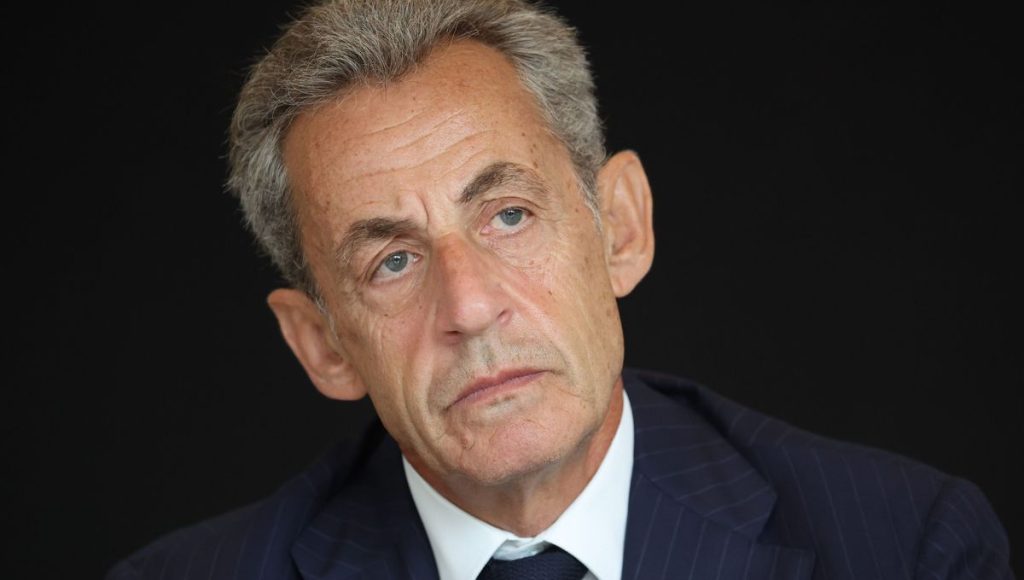
Sarkozy’s Diary of a Prisoner due in bookstores December unveils his 20-day prison diary
When Nicolas Sarkozy entered La Santé prison earlier this autumn to begin serving a five-year sentence connected to alleged Libyan financing of his 2007 presidential campaign, he reportedly carried only three books: a biography of Jesus and Alexandre Dumas’s The Count of Monte Cristo.
Twenty days later, the former French president emerged with a manuscript of his own.
His forthcoming book, Diary of a Prisoner, due in bookstores in December, offers a carefully crafted account that sits firmly within the broader legal and political battle surrounding him.
A Diary Written With an Audience in Mind
Sarkozy portrays his time at La Santé as a place of relentless noise and forced introspection. He characterises the experience as both psychologically difficult and spiritually clarifying.
But beyond the personal dimension, communications specialists interpret the diary as a calculated move.
As the first modern French president to spend time behind bars, Sarkozy understands the power of narrative in shaping public opinion.
The diary gives him a platform to appear contemplative, resilient, and unfairly targeted, an image that fits neatly within his longstanding argument that he is the victim of an overly aggressive judiciary.
The parallels he draws to The Count of Monte Cristo are far from subtle. Edmond Dantès, the novel’s protagonist, is betrayed, wrongly imprisoned, and emerges determined to restore his honour.
The symbolism is attractive, though heavily romanticised. Unlike Dantès, Sarkozy’s confinement lasted only 20 days, took place in a private cell, and included round-the-clock protection from his own security detail.
Legal Pressure Still Mounting
The publication arrives in the midst of growing legal complications. Sarkozy’s release from La Santé is only temporary: his appeal in the Libya financing case is scheduled for 16 March 2026.
Until that date, he remains under the presumption of innocence, but the conviction itself is still in force.
Compounding his challenges, France’s Court of Cassation recently upheld his conviction in the Bygmalion affair, an unrelated case involving excessive spending during his 2012 campaign.
Earlier this year, Sarkozy also completed a period of electronic monitoring following a separate conviction for attempting to obtain confidential information from a judge.
Together, these cases reflect a broader pattern: Sarkozy’s post-presidential years have been dominated by courtroom battles, each raising questions about the intersection of political influence, judicial independence, and public accountability.
Why Publish Now? The Legal and Strategic Calculus
Publishing Le Journal d’Un Prisonnier at this moment serves several purposes:
1. Reclaiming Public Narrative
A book allows Sarkozy to present his version of events unfiltered. This matters in France, where public sentiment can influence how political figures are remembered long after their trials conclude.
2. Reinforcing Support Networks
The diary provides material for allies, commentators, and sympathetic media outlets. It is a unifying symbol for those who believe Sarkozy is being unfairly pursued.
3. Maintaining Visibility Ahead of Appeal
While courts are insulated from media pressure, defendants often benefit from influencing the broader conversation surrounding their case. The timing ensures Sarkozy remains a central figure in public debate as his appeal approaches.
Sarkozy’s Narrative vs. His Legal Reality
Political memoirs are rarely revelatory, and few legal experts expect significant new information. But their influence lies not in facts disclosed, but in stories shaped.
Sarkozy’s subtle comparison of himself to Dumas’s wrongfully imprisoned hero in The Count of Monte Cristo is compelling but ultimately misleading.
Unlike Edmond Dantès, who had no legal safeguards, no right to appeal, and no access to counsel, Sarkozy has benefited from every procedural protection built into the French justice system.
Yet the analogy serves a purpose. By framing himself as a man battling injustice, he injects emotional force into a legal saga already charged with political tension and public scrutiny.
Whether 'Le Journal d’Un Prisonnier' - 'Diary of a Prisoner' becomes a bestseller is almost beside the point. Its true function is symbolic: to project resilience, to shape public perception, and to signal that Sarkozy intends to contest both the charges and the historical narrative surrounding them.
The book strengthens his connection with supporters who view him as unfairly targeted, offering them a version of events wrapped in personal reflection and literary drama.
But for France’s judiciary, the release raises broader questions. High-profile defendants often push the boundaries between public storytelling and respect for judicial process.
As Sarkozy re-enters the national conversation with his prison diary, he risks intensifying debates about political influence, judicial independence, and the delicate relationship between courts and public opinion.
His memoir may therefore reverberate far beyond his own appeal, shaping expectations for how future presidents and political leaders navigate accountability in the public eye.
FAQ: Sarkozy’s Prison Diary and the Legal Road Ahead
Is Nicolas Sarkozy considered guilty while he awaits his appeal?
No. Under French law, a conviction under appeal is not final. Sarkozy remains under the presumption of innocence, although the sentence handed down by the lower court still exists until the appeal is decided.
What does conditional release mean in his case?
Conditional release enables a defendant to leave custody under supervision while awaiting the next stage of proceedings. It does not cancel the conviction. If his appeal fails, Sarkozy may be required to serve the remainder of the sentence.
What were the main legal grounds for his five-year sentence in the Libya case?
Sarkozy was convicted on charges involving illegal campaign financing, corruption, and influence peddling. Judges concluded that funds from the Libyan regime were used to support his 2007 presidential bid—claims he firmly denies.
How does the Bygmalion case fit into this?
The Bygmalion affair concerns allegations that Sarkozy’s 2012 campaign concealed excessive spending through false billing. France’s highest court recently confirmed that conviction, making it legally final and separate from the Libya case.
Can Sarkozy run for office again?
Potentially. Eligibility depends on whether future judgments include specific ineligibility penalties. Some corruption-related convictions carry such restrictions, but this varies case by case. As of now, no permanent ban exists.
Why publish a memoir during an active appeal?
Defendants may publish accounts of their experiences provided they do not breach confidentiality rules. Strategically, such publications help shape public perception, attract media attention, and reinforce political support.
Could the book influence the appeal?
Judges decide cases based solely on legal arguments and evidence. However, high-profile memoirs can shift public sentiment and create a political context in which judicial decisions are more closely scrutinised.
Why compare himself to the Count of Monte Cristo?
The comparison reinforces Sarkozy’s claim that he is unjustly targeted. It is a rhetorical device, not a legal argument, and does not reflect the procedural protections he has enjoyed throughout the proceedings.
What will happen at the March 2026 appeal hearing?
The appeals court will reassess the entire case—facts, legal reasoning, and sentence. It may uphold the conviction, amend the sentence, or overturn the ruling entirely.
Could Sarkozy face further investigations?
Yes. Former presidents do not enjoy lifelong immunity. If new allegations arise, they can be investigated under standard French criminal procedure.